Home Blog Page 1770

Group commences 30-yr management agreement of Gashaka Gumti Park

0

In an apparent bid to boost conservation efforts in Nigeria, the Federal Ministry of Environment in Abuja on Monday, November 5, 2018 inaugurated a Local Organising Committee (LOC) to steer the implementation of a private-public partnership between the National Park Service and Africa Nature Investors Foundation (ANIF) in the management of the Gashaka Gumti National Park.
Gashaka Gumti National Park
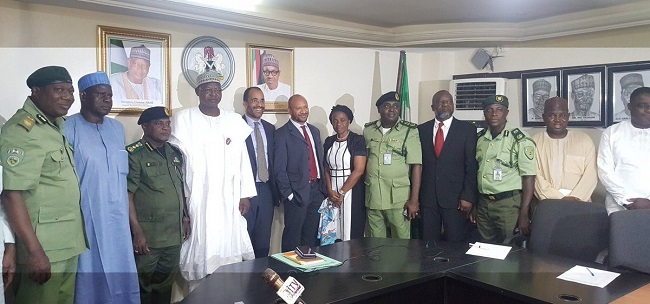
Environment Minister of State, Ibrahim Usman Jibril (fourth from left), with members of the Local Organising Committee of the Gashaka Gumti National Park after the committee’s inauguration

Inaugurating the committee, Environment Minister of State, Ibrahim Usman Jibril, expressed optimism towards the activities of ANIF in boosting ecotourism and providing technical, financial and human resource support within the National Park.

He said: “Our seven National Parks are all in a critical state. Before now, we had eight National Parks; none of them is in the best of state and there is little we can do, especially with limited funding. Understanding that we must be conscious and intentional about our strategy, we are delighted to welcome Africa Nature Investors Foundation to intervene in the conservation efforts of Gashaka Gumti National Park.”

Speaking on behalf of ANIF, a director, Tunde Morakinyo, explained that the LOC is committed to transforming the Gashaka Gumti National Park to become a national heritage that Nigerians can be proud of.

Morakinyo stressed: “We have drafted an implementation protocol that will attract investment worth millions of naira, train and equip the park rangers and attract tourists to the park.

“Poaching, logging, activities of cattle herders, poor infrastructures and security concerns are some of the major challenges that have limited the tourism potentials of Gashaka Gumti National Park. We are discussing with two international conservation NGOs – Chester Zoo and Wildlife Conservation Society – to bring technical expertise. We have a 30-year contract and our major areas of investments are infrastructure, community engagement, improving research and attracting tourists.”

Constituting the LOC are: Philip Iheanacho, Tunde Morankinyo, Olaleye Olajide, Andrew Dunn, all representing the ANIF; from the National Parks Service are Okeyoyin ‘Deji, Kolo M. Yakubu and Saidu Yohanna. Also on the committee is Mohammed Yidi who is representing the local communities, the Department of Planning, Research & Statistics, and the Department of Forestry.

By ‘Seyifunmi Adebote
Climate change, water and sustainable development

0

Prince Lekan Fadina, Executive Director, Centre for Investment, Sustainable Development Management and Environment (CISME), in a recent presentation in Abeokuta, Ogun State at a forum organised by the Nigerian Institution of Water Engineers, a division of the Nigerian Society of Engineers, explored threats posed by climate change to water, environment and sustainable development. He lists measures to address the unsavoury prospects. Excerpts:

Lekan Fadina
Prince Lekan Fadina

The effect that climate change has on our water is just one example of the impact it can have on our life. It is becoming increasingly evident that we are at a critical point in time regarding our changing climate and the future of our planet.

We must be disciplined and respect our environment; remember the Holy Book draws our attention to the instruction of God that we must protect God’s resources. We must remember that, within those six days that God worked to create the world, water was one of those resources.

We must decrease emissions by managing our water using less energy or switching to renewable energy as this helps to slow global warming.

We should imbibe the habit of turning lights off when not in use, driving less and insulating homes to make them energy-efficient as this will reduce energy use.

We must put in place focussed, sequential, instructional programmes as a regular integral part of the whole curriculum.

We must go back to the days of sanitation and water inspectors.

We must buy environmentally responsible products and eating low-impact diet.

We must have lifestyle changes that can have a positive impact.

We must express support for environmental protection, by rising to do the right thing by cultivating a culture of environmental sustainability.

We must integrate climate change and environment sustainability into overall National Development Plan.

We must be a good advocate by making our voices heard, writing government officials, voting, posting about online or simply talking with family, friends, househelps, club members, associations, churches, messages, market place and being an ambassador of environment and sustainable development.

We must strive to be a sustainable development practitioner by training, education and, luckily, this has become a global profession with specialisation in various areas.

We must change our attitude and realise that the Almighty demands of us to manage this resource well for generations unborn.

We must embark on environmental education, publications, advocacy and people-centred projects to change people’s behaviour.

We must encourage community engagement by involving our communities to see the proper management of water and environmental sustainability as their own. We should encourage them as “owners” to do things in a sustainable manner.

We must all act now because the Intergovernmental Panel on Climate Change has given us ultimatum of 12 years to do something or we perish – face the consequences of homelessness and natural calamities.

Water is life and as human beings over 70% of our body is water and if we continue to treat water badly we must be ready for the consequences.

Abuja tremors can’t lead to earthquake, says expert

The National President, Association of Hydrologists, Prof. Ehidiamhen Charles, on Tuesday, November 6, 2018 said the two recent earth tremors in Abuja could not lead to earthquake.

Abuja
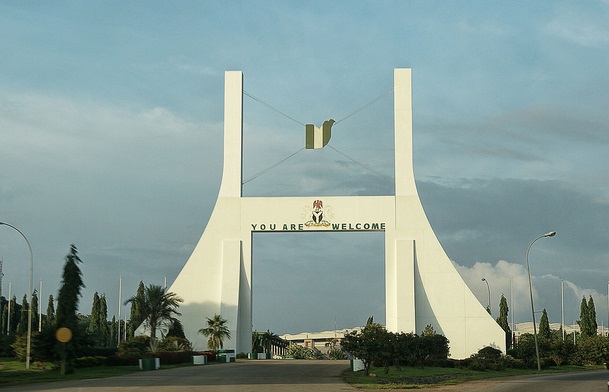
The Abuja city gate

Charles. who made this known in Minna, Niger State while speaking with newsmen, said: “The minor incidents should not cause panic among the residents of the Federal Capital Territory.

“These incidents are minor, they cannot cause any concern; there should be no cause for alarm.”

Charles described incidents as ‘‘mere earth movements” which, he said, “are normal”, asserting that the tremors could not cause damages to individuals and the community.

‘‘Tremors are a regular phenomenon; Nigeria is stable, we are not an earthquake zone. The nearest we have here is volcano, even the volcano is dormant.”

He attributed the incidents to human activities saying, ‘‘so many construction works are going on in Abuja.

‘‘So many mining activities are going on; if I use dynamite, the blasting can only cause accentuation, the tremors are not destructive.”

The hydrologist said that there was no adequate consultation with the association before raising the alarm.

“Nigerians should not be made to panic, government should not be made to spend money unnecessarily,” he advised.

He recalled that there had been similar incidents in Kaduna, Paiko in Niger State and Ijebu Ode in Ogun State in recent past, adding that since then nothing had happened in these areas.

By Aminu Ahmed Garko

Radio Report: Heavy rain in November

0

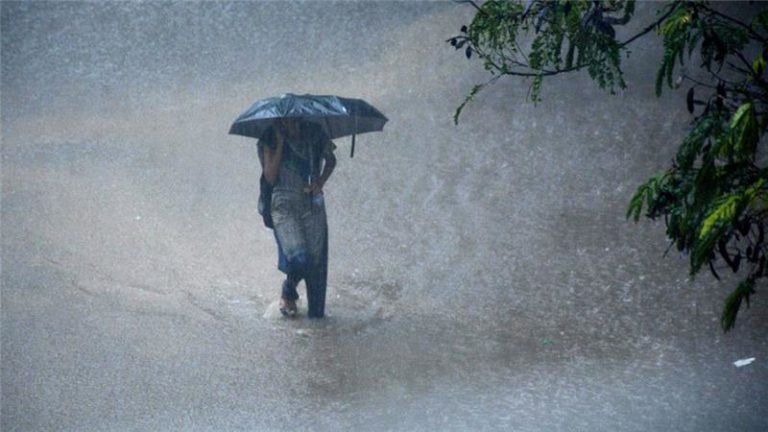
The continued heavy rainfall in Umuahia, the Abia State capital, as well as other places in the Southern part of the country, including Lagos, is nothing to worry about.

A weather expert, Professor Nasiru Idris, who is the Dean Faculty of Environmental Sciences, Nassarawa State University, Keffi, made the clarification while interacting with Correspondent, Innocent Onoh, in Lagos.


Tinubu advocates increased funding for environment ministry, agencies

0

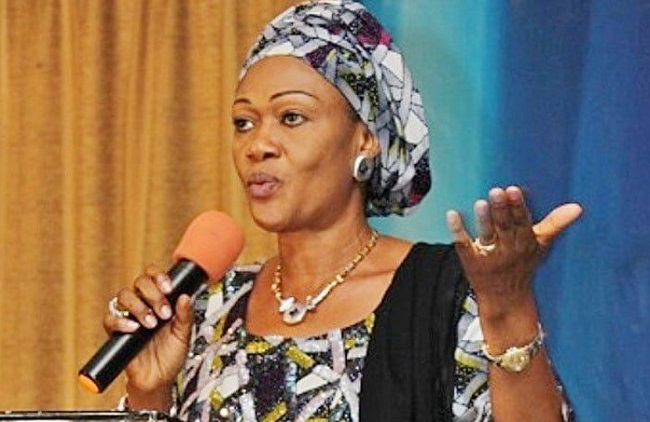
Chairman, the Senate Committee on Environment, Sen. Oluremi Tinubu, has advocated more funding for the environment ministries and agencies to function optimally.

Oluremi Tinubu
Senator Oluremi Tinubu

Tinubu made the call in Ibadan, Oyo State, on Tuesday, November 6, 2018 during a courtesy call on Gov. Abiola Ajimobi in his office.

The News Agency of Nigeria (NAN) reports that Tinubu had led other senators in the committee to Ibadan on oversight function to some agencies.

Tinubu urged the Federal Government to investigate the budget of the ministry, saying it was too small for the ministry and agencies to perform optimally.

“The budget for the environment ministry is very small and there is need for government to look into it.

“From our oversight visit to Forestry Research Institute of Nigeria (FRIN), we discovered that the institution needs lot of funding to function optimally,’’ she said.

She said that the delegation had during their visit to FRIN, presented a document containing useful environmental laws recently enacted to make the institution function maximally.

The lawmaker said that the new laws guaranteed recognition for FRIN to deal with international organisations, given it autonomy to act on environmental issues and colleges under FRIN tertiary status.

Tinubu commended Dr Sola Adepoju, FRIN Director-General for the tremendous transformation witnessed at the institute, which she described as “amazing and overwhelming’’.

“The quality of work carried out at FRIN, particularly materials and content is overwhelming. The D-G has utilised the resources allocated to the institute very well.

Responding, Ajimobi commended the senate committee for its effort toward ensuring that people enjoyed a better environment.

The governor said that the role of the environment ministry, agencies and other relevant stakeholders was very important in repositioning of the country.

He said that the state had the potential of becoming the food basket of Nigeria, considering its landmass and concentration of agricultural research institutes.

“Our administration is much committed to infrastructural development and urbanisation of the state. Our target is to make the state the third largest in Africa within 25 years,” he said.

Ajimobi said that the government had been trying to achieve the feat by doubling the Gross Domestic Product (GDP) of the state.

He commended the Senate delegation, promising that the state would harness potential in the research institutes.

NAN reports that on the senate delegation were Sen. Foster Ogola and Mr Sanni Lawan, Clerk of the committee.

By Akeem Abas

Ghana to host 2019 Africa Climate Week

0

Accra, the capital city of Ghana, will play host to the Africa Climate Week 2019, scheduled fo hold from March 18 to 22.

Accra
Accra, Ghana

The Ghanaian event will be the first Regional Climate Week to be hosted next year; and will be followed by the Asia-Pacific and Latin America and Caribbean Climate Weeks, the dates of which are still being confirmed.

Africa Climate Week will bring together diverse actors from the public and private sectors and will be instrumental in demonstrating that there is genuine international support for stepping-up climate action.

Specifically, the event will focus on how engagement between Parties to the UN-led international process to address climate change and non-Party stakeholders can be further strengthened in key sectors for Africa, including energy, agriculture and human settlements. It will also showcase the role of future carbon markets to achieve enhanced climate action, towards the goal of sustainable development.

Building on the success of last year’s event in Nairobi, the intention is that Africa Climate Week 2019 will become a wholly inclusive, “go-to” hub for showcasing groundbreaking action in the region, particularly in the lead-up to the United Nations Secretary-General’s Climate Summit in September 2019.

To that end, the goal of Africa Climate Week is to provide encouragement to the implementation of countries’ Nationally Determined Contributions (NDCs) under the Paris Agreement and climate action to deliver on the 2030 Sustainable Development Goals.

Germany to use legal options to end use of glyphosate

0

Germany has said that it will use all legal options to end the use of glyphosate-based weed-killers.

Svenja Schulze
German Environment Minister, Svenja Schulze

Environment Minister, Svenja Schulze, said on Tuesday, November 6, 2018 that the federal environment agency would announce new conditions for the approval of pesticides.

“If other, perhaps even more damaging, pesticides are used instead of glyphosate, the environment won’t be any better off.

“So, we will demand new nature conservation requirements for the approval process of every pesticide that harms biodiversity,” Schulze said.

Glyphosate-based herbicides are usually made of a glyphosate salt that is combined with other ingredients that are needed to stabilise the herbicide formula and allow penetration into plants.

It is used most heavily on cornsoy, and cotton crops that have been genetically-modified to be resistant to the herbicide.

Glyphosate and glyphosate-based herbicides have low acute toxicity in mammals.

They also have not been shown to pose a significant risk to human health during normal use, although human deaths have been reported from deliberate ingestion of concentrated RoundUp.

Kaduna fishermen decry disappearance of species of fish

0

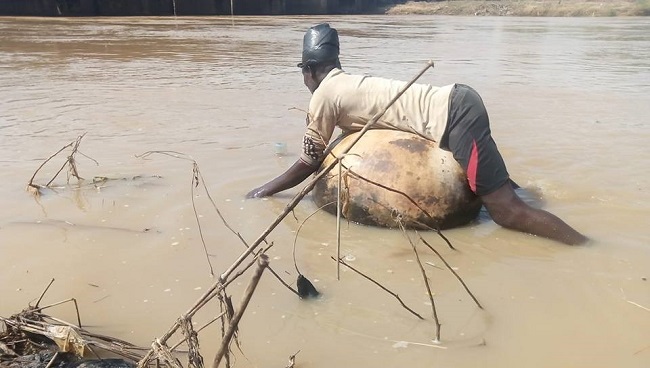
Some fishermen on Tuesday, November 6, 2018 lamented the disappearance of some species of fish in the Kangami Dam, River Kaduna.

Fisherman
A fisherman

The fishermen in an interview with News Agency of Nigeria (NAN) in Kaduna said that they were generating huge revenue from species such as sardine, tilapia and others, many of which had disappeared from the river.

They said that the population of the available species were also reducing from what it used to be some years ago.

Mallam Musa Sani, a fisher at Kangimi Dam, said that many species of fish had gone extinct, while some others were almost disappearing gradually.

He said that, for the past 10 years, fishes such as sardines and tilapia had completely disappeared, adding, “We are forced to migrate from one river to another in search of other fishes for sale.”

Musa disclosed further that even frogs and crabs had all disappeared from the river.

Another fisherman, Paul Moses, said: “Today, it is difficult to see crocodiles along the banks of River Kaduna. Similarly, frogs, tadpoles, toads, crickets have virtually disappeared or have become extinct.”

He said that because fishermen were unable to make money from fishing, many of them gone into other vocations such as guarding houses and farming.

Dr Piman Hoffman, a Climatologist and Assistant Director, African Climate Reporters, attributed this development to indiscriminate dumping of chemicals, wastes and other adverse human activities to the extinction of marine animals.

According to him, humans have introduced significant number of chemicals into the environment which are very harmful to marine animals.

He said that while some chemicals were designed to get rid of weeds and pests, a significant amount of chemicals were wastes from industrial and agricultural processes.

Hoffman expressed sadness over the attitude of companies who dumped chemicals into water sources without recourse to the consequences.

He said that an anytime chemical waste was released, it effect went into the environment and polluted the water.

“As it rains, the chemicals are washed into rivers, which in turn feed the waterfalls and then go into the ocean.”

Hoffman said that climate change and human activities had caused the extinction of many aquatic life and many were still going due to continuous dumping of hazardous wastes harmful to living organisms in water.

“We dump everything in the oceans, including plastic bags and other plastic debris, garbage, and toxic chemicals, crude oil, sewage and nuclear wastes.

“We kill thousands of aquatic animals daily without knowing the consequences, hence, there is need to halt this ugly attitude.”

By Ezra Musa

Ebola virus infects 300 people in eastern Congo

0

The deadly Ebola virus has infected 300 people in Congo since an outbreak erupted almost two months ago in the country’s east, the health ministry said on Tuesday, November 6, 2018.

Oly Ilunga
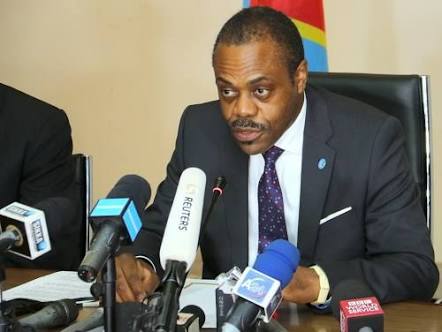
Oly Ilunga, the Congolese Minister of Health

Ebola is a disease caused by a virus, though there are five strains, and four of them can make people sick.

After entering the body, it kills cells, making some of them explode, it wrecks the immune system, causes heavy bleeding inside the body, and damages almost every organ, though it is scary, but it’s also rare.

“The virus has killed 186 people in the North Kivu and Ituri regions, while 88 others have been cured,’’ the ministry said on Monday.

According to authorities, about 26,000 people in the central African nation have meanwhile received a vaccine to prevent Ebola.

Earlier this month, the health ministry said it will install health checkpoints at the entrances to all polling stations in Congo’s Ebola-affected region during the December presidential election, when millions of Congolese are expected to come out to vote.

The outbreak is concentrated in a region where numerous militia groups are fighting over Congo’s rich natural resources.

Besides militia attacks that have hindered health workers, the region’s high population density and movements across the borders to Uganda and Rwanda pose additional risks that the highly lethal fever disease could spread in the region.

The outbreak began shortly after the government declared an end to another outbreak in the west of the country in June and lauded those involved for managing to swiftly contain the spread of the disease.

Namibia poised to eliminate local transmission of malaria

0

A strategic report released by the Namibian Ministry of Health and Social Services on Tuesday, November 6, 2018 has revealed that the Southern African country is in a unique position to eliminate the local transmission of malaria.

Bernard Haufiku
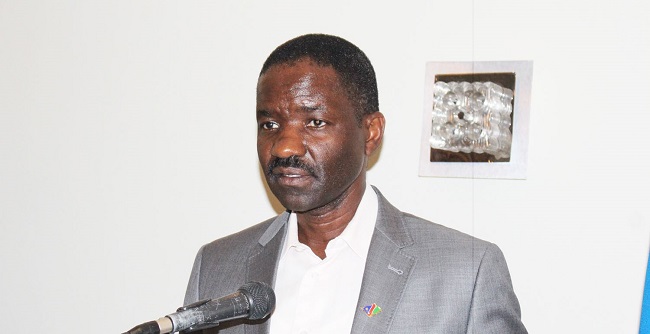
Namibia’s Minister of Health and Social Services, Bernard Haufiku

According to the report, which was signed by the country’s Minister of Health and Social Services, Bernard Haufiku, Namibia is ahead of most southern African countries in malaria elimination.

The report, therefore, called for the consolidation of current efforts at combating the disease

“The Ministry of Health and Social Services with the support of partners, has implemented a strong malaria control programme.

“It steadily improved the coverage and quality of indoor residual spraying (IRS), introducing long lasting insecticide-treated nets and increasing access to rapid malaria diagnosis and new artemisinin-based combination treatment,’’ the report said.

The report came against the background of Namibia having implemented consistent corrective measures to combat malaria in marginalised communities since the year 2010.

Malaria is a serious and sometimes fatal disease caused by a parasite that infects a type of mosquito which feeds on humans.

Once an infected mosquito bites a human, the parasites multiply in the host’s liver before infecting and destroying their red blood cells.

People who get malaria are usually very sick with symptoms such as high fevers, shaking chills, and flu-like illness.

It is transmitted to humans through the bite of the Anopheles mosquito.

Globally, the World Health Organization estimates that in 2015, 212 million clinical cases of malaria occurred, and 429,000 people died of malaria, most of them children in Africa.

Considering that malaria causes so much illness and death, the disease is a great drain on many national economies.

Since many countries with malaria are already among the poorer nations, the disease maintains a vicious cycle of disease and poverty.