Environmentalists in the U.S. have welcomed the election of candidates promising a “Green New Deal’’ but cautioned that green goals would be hard to achieve under President Donald Trump’s administration.
Donald Trump, US president
The U.S. Congress will include four new representatives who campaigned on a public works programme – like U.S. President Franklin D. Roosevelt’s New Deal that helped end the 1930s depression – aimed at building a renewable energy economy.
The plan will, however, need to be packaged differently, said University of Albany’s political scientist Brian Greenhill, given Trump’s rollback of climate regulations and his dismissal of man-made global warming as a hoax.
“I can’t imagine under the Trump administration that anything labelled a `Green New Deal’ would be successful, especially if it is framed in terms of climate change,” he told the Thomson Reuters Foundation.
However, he said that the plan seemed like a “no-brainer’’ after recent discussions between House Republicans and Democrats about infrastructure as an area where the two parties could find common ground.
Green victories came amid setbacks in Colorado, Arizona and Washington states, where voters rejected initiatives to curb fossil fuels by restricting drilling, putting a fee on carbon emissions and mandating the wider use of renewable energy.
Jason Albritton, a director at the Nature Conservancy, said that in spite of being “disappointed’’ by the rejection of those state measures, addressing environmental issues by creating jobs is “a potential path to success’’.
The most vocal champion of the Green New Deal has been Alexandria Ocasio-Cortez, a 29-year-old educator who won a seat in New York State.
Ocasio-Cortez has spoken of her vision of the Green New Deal as a programme which is comparable in scale to the “Marshall Plan”, the U.S.-backed programme initiated to rebuild Western Europe after World War II but focused on renewable energy.
But her campaign platform contains few concrete details on the topic and her representatives did not respond to a request for further information.
Cassady Craighill, a spokeswoman for Greenpeace, said that the plan could prove to be a “powerful’’ concept, even though she said that fleshing out details of “what a Green New Deal means should be a priority”.
Other candidates sliding toward victory whose platform included the ambitious proposal were Icahn Omar, victorious in Minnesota, Rash Tlaib, who ran in Michigan, and Antonio Delgado, a Harvard-educated lawyer in New York.
The Lagos State Chapter of the Nigerian Institute of Town Planners (NITP) has called on the three tiers of government to pay more attention to physical planning for a comprehensive urban development of the country.
Chairman of Lagos NITP, Mr Adebisi Adedire
Chairman of Lagos NITP, Mr Adebisi Adedire, made the call on Thursday, November 8, 2018 at a news conference to mark the 2018 World Town Planning Day in Ikeja, the state capital.
Adedire said that town planning was the bedrock of any meaningful physical and economic development of a community, city or nation.
According to him, the World Town Planning Day creates an opportunity for professional planners and the general public to come together to dialogue on necessary steps to take the pursuit of achieving an environment which is safe, economical, sustainable and convenient for habitation.
“Nigeria is yet to enjoy an environment of these characteristics.
“But we are optimistic that with continuous dialogue like this as well as involvement of town planners in policy formulation and implementation, the country will become an envy of other countries in the world,” he said.
Commending the Lagos State Government on its effort in the aspect of plan preparations, Adedire called for recruitment of town planners into the ministries both at the federal and states level.
He lamented that the governments had not recruited town planning staff in the last five years, saying that if this continued, there would be a lacuna and their positions would be filled by members of other professions.
Adedire also appealed for the creation of a full fleshed ministry of physical planning and urban development at the federal level to ensure effective operation of town planning administration and activities at the federal level.
“With the great importance attached to town planning globally, it is not wise for physical planning and urban development to be operating as a department under a ministry in the country.
“What obtains today is that physical planning is under the Ministry of Power, Works and Housing. This shouldn’t be. The country is in urgent need of proper physical planning. As such, a ministry needs to be created for this purpose,” he said.
Mr Toyin Ayinde, the 2nd Vice President of NITP, called for an ultramodern transportation system to ease the incessant gridlock across the state.
Ayinde said that transportation still posed great challenge to the state, saying that in organised societies, no government would allow numerous minibuses to apply the road as obtained in many cities in the country.
According to him, availability of too many minibuses and private cars on the road is an indication of constant violation of the traffic rules and orders as witnessed on Nigerian roads.
A Lecturer with the Department of Community Health, Obafemi Awolowo University, Ile Ife,
Dr Femi Aluko, has called for increased awareness on the role of science toward peaceful and sustainable societies.
Dr. Ogbonnaya Onu, Minister of Science and Technology
Aluko made the call on Thursday, November 8, 2018 in telephone interview with News Agency of Nigeria (NAN).
The don said that the impact of science on people’s daily activities and its profound societal implications had ethical nature and could make scientific literacy a prerequisite for effective democratic processes.
According to him, the 2018 World Science Day of Peace and Development that will be celebrated on
Saturday, Nov. 10, would focus on the role of science in the society.
He said: “World Science Day for Peace and Development is to highlight the important role that science has in the society.
“Celebrated annually on Nov. 10, it is a day set aside to highlight the need to engage the wider public in debates on emerging scientific issues.
“The day was proclaimed by the UN Educational, Scientific and Cultural Organisation (UNESCO) in 2001 and celebrated for the first time in 2002.”
He added that the event was also to underscore the role of scientists in broadening human understanding of the planet called home and making societies more sustainable.
Aluko said that the objectives of the day included promoting national and international solidarity for shared science between countries, renewal of national and international commitment for the use of science for benefit of societies.
The day is also celebrated to draw attention to challenges faced by science and to garner support for scientific endeavours.
According to him, individuals and institutions around the world are encouraged to organise events, including government officials, students, the media and schools, to mark the day.
The don said that through activities to mark the day, many science projects, programmes were executed around the world.
Ranching cannot end challenges of pastoral migration in Nigeria because it was not successful in the past, an anthropologist, Mr. Roger Blench, has said.
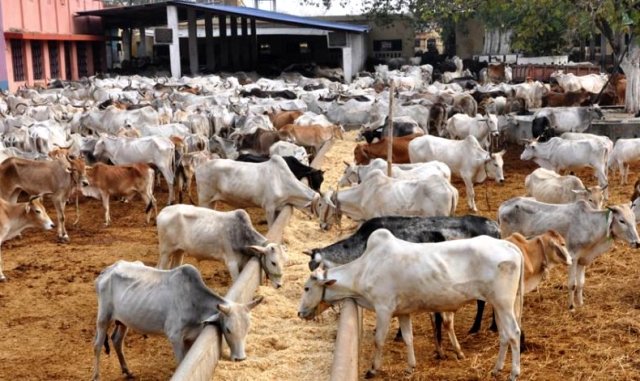
Cattle ranching
Blench, a Briton, made the assertion on Thursday, November 8, 2018 in Abuja at the public presentation of a Brochure entitled: “Towards a Peaceful Co-existence between Herders and Farmers in Nigeria.’’
The News Agency of Nigeria (NAN) reports that the brochure is a publication of Misereor, Dialogue and Partnership Service (DPS) and Catholic Secretariat of Nigeria (CSN).
The anthropologist, represented by the Project Consultant and Advisor, Misereor and DSP, Mr Olaniyan Cosmas, said that suggestions that ranching was solution to lingering violence between herders and farmers in Nigeria was misconceived.
“Ranches were first established in Nigeria in the 1920s, mainly with the objective of fattening cattle for the market.
“Ranches continued to be established into the 1960s, often with external aid, and they have all fallen into disuse for lack of effective management,” he explained.
According to him, ranches required undisputed land tenure, reliable infrastructure and utilities, and predictable input costs, none of which was present in Nigeria.
Blench, however, said that ranches would compete in a market where traditional suppliers of livestock products within Nigeria and from neighbouring countries had access to free pasture.
On agriculture, he said that land in Nigeria had historically not been fenced because it was abundant.
He said that farms moved frequently under slash and burn systems, and that disease kept pastoralist cattle out of most regions of the country, thereby reducing the problem of livestock incursions.
Blench, however, stated that unprecedented increase in human population in the 20th century has led to increasingly codified systems of land ownership and the movement of cattle into new ecological zones.
He said that such situation often led to conflict between farmers and pastoralists.
“The brochure considers technical options for enclosing land, including the comparison between industrial fencing and live fencing.
“Nigeria has changed and agricultural systems that were appropriate in pre-colonial times are no longer realistic,” Blench said.
According to him, there was lack of consistency between federal and state governments’ policies towards pastoralists as well as a lack of awareness of the effectiveness or otherwise of earlier policies.
“Uncontrolled and exaggerated media reporting and social media blogging promoted inter-group hatred and collapse of nomadic education system intended to provide schooling for pastoral people.
“Consolidation of many pastoralists into small areas in the Middle Belt, leading to entrenched positions, greater suspicion and ecological damage, were all issues needed to be addressed for peaceful coexistence between herders and farmers,” he said.
In his address, CSN Secretary General, Rev. Fr Ralph Madu, said that to stop the bloodshed, Federal Government should improve security, end impunity by assailants and hasten livestock sector reform.
Madu said that the government should better protect herders and farmers, prosecute attackers and carry out its National Livestock Transformation Plan.
He also recommended that state governments should roll out open grazing bans in phases.
The cleric appealed to community leaders to curb inflammatory statements and encourage compromise, while international partners should advocate for accountability and support livestock sector reform.
The International Union for Conservation of Nature (IUCN) has said that it is deeply disturbed as five IUCN member conservationists, including members of the IUCN Species Survival Commission (SSC), are charged with crimes punishable by death in Iran.
IUCN’s Director General Inger Andersen. Photo credit: pinterest.com
The five conservationists have been charged with “corruption on earth”, the highest penalty for which is execution, according to media reports.
“IUCN is deeply alarmed by the charges against these dedicated women and men committed to protecting Iran’s rich natural environment and unique species,” said IUCN Director General Inger Andersen. “Their work is of crucial importance to their country and its people, particularly at a time of severe environmental challenges in Iran. IUCN and its Commissions stand in solidarity with them.”
The five environmentalists from IUCN Member organisation Persian Wildlife Heritage Foundation (PWHF) are Niloufar Bayani, Taher Ghadirian, Sepideh Kashani, Houman Jowkar and Morad Tahbaz. Taher Ghadirian and Houman Jowkar are members of the IUCN SSC Cat Specialist Group; Taher Ghadirian is also a member of the IUCN SSC Bear Specialist Group. They undertake vital conservation work including efforts to conserve the Critically Endangered Asiatic cheetah.
“Monitoring and researching species that live in remote landscapes, such as the Asiatic Cheetah, is a challenging task,” said Jon Paul Rodriguez, IUCN Species Survival Commission Chair. “As their numbers have dwindled, Asiatic cheetahs have become elusive, making it difficult for researchers to observe them directly. Novel techniques such as camera traps have proven indispensable in helping researchers gain valuable insights into the status and biology of threatened species worldwide.”
The five conservationists had been detained by Iran’s Revolutionary Guards in January along with four others and charged with espionage. Human rights campaigners and Iran’s government have said the charges against them are unfounded, according to media reports.
IUCN’s Director General raised the matter as soon as the colleagues were arrested and met with the Iranian authorities asking for transparency and justice. She recalled IUCN resolution 2.37 adopted at the 2000 IUCN World Conservation Congress, ‘Support for Environmental Defenders’, which calls for the Director General to speak out publically and forcefully to discourage harassment or persecution of environmental advocates.
The four others detained in January are Amir Hossein Khaleqi, member of the IUCN SSC Cat Specialist Group, of the IUCN Commission on Education and Communication and of the IUCN World Commission on Protected Areas, Sam Rajabi, AbdolReza Koupayeh, and Kavous Seyed-Emami. Kavous Seyed-Emami died in prison for unknown reasons following his detention. IUCN has called for an independent inquiry into his death.
Iran is said to be facing environmental challenges including drought, water scarcity and dust storms, which have led to nationwide protests this year.
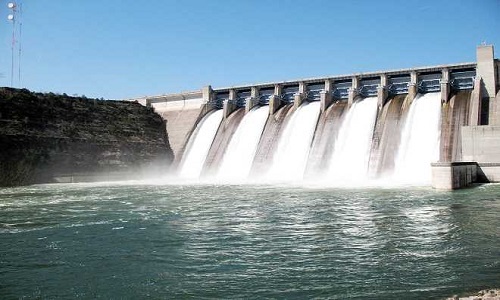
A new research has found that large-scale hydropower dams are unsustainable in the developing world.
Hydropower dam
Hydropower is an important source of energy and makes up more than 70 per cent of all renewable energy globally as of 2016.
However, new research, published in the journal Proceedings of the National Academy of Sciences of the United States of America, has found that large-scale hydropower dam projects have had an adverse effect on the environment.
In the 1970s, the construction of dams began in developing countries, notably along the Mekong River Basin and the Congo River Basin.
The construction of these large-scale hydropower dams has reportedly contributed to the destruction of the environment, disrupting river ecology, deforestation, losing aquatic and terrestrial biodiversity and releasing substantial greenhouse gases into the atmosphere.
The dams, according to the report, have also had a negative effect on livelihoods, as the construction has displaced thousands of people and affected food systems, water quality and agriculture in the surrounding areas.
The report looks at the reliability of hydropower under projected climate change and whether it is worth the environmental side effects.
The report notes that hydropower needs to be transformed for it to be a truly sustainable source of energy. It suggests that hydropower designs need to truly allow fish passage and mimic the seasonal river flows. They also note the importance of Environmental Impact Assessments (EIAs) in being able to stop a dam being built.
This follows the WWF releasing its 2018 Living Planet Report, which stated that freshwater species are under threat from pollution and dam development.
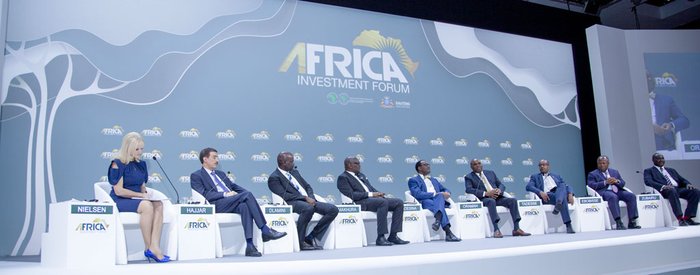
In a bid to have Africa commit to 100% renewable energy and to increase transparency in the continent’s energy sector, Zero – a coalition campaign between climate change volunteers and Non-Profit Organisations (NGOs) around the continent – was launched on Wednesday, November 7, 2018 in Johannesburg, South Africa at the Sandton Convention Centre on the side-lines of the African Development Bank’s (AfDB) Africa Investment Forum.
A session at the AfDB Africa Investment Forum
The African Climate Change Reality Project (ACRP) – the African branch of Nobel Laureate and former US Vice President Al Gore’s The Climate Reality Project – is leading the campaign. The campaign is driven by Africans for Africans to build a movement towards clean energy from the grassroots up.
“Our ultimate goal is for a low carbon sustainable future for all Africans and the shift from fossil fuels like coal, oil, and gas to renewable energy is vital as the latter is less costly and will create more jobs, build sustainable infrastructure, and does not contribute to pollution or harmful emissions which cause irreversible damage to our climate.
“We believe the AfDB is moving in the right direction in terms of clean energy finance for the future of Africans, but they continue to invest in new fossil fuel development in Africa and are not as transparent as they should be,” says Nicole Rodel, African Climate Reality Project’s Communications Coordinator.
In 2017 the AfDB’s energy investments portfolio consisted of 100% renewable energy, amounting to 1.4 GW of clean electricity, indicating the bank may be leading Africa towards the energy of the future. The AfDB has approved power generation projects with 1,400 megawatts cumulative specifically from renewables in 2017. Both show its commitment towards achieving the Paris Agreement’s target of keeping the global temperature increase to 1.5°C above pre-industrial levels.
“We have been tracking the Bank’s progress towards transparency and easy access to information and have noticed that the AfDB is ranked fourth in the 2018 Aid Transparency Index. However, we feel that in an industry where standards are low this could be improved,” says Ahmed Mokgopo, 350Africa.org campaigner.
The Zero coalition calls on the bank for increased transparency concerning the disclosure of possible and impending investments. The improvement in transparency gives public citizens a chance to voice their opinions on investments that threaten their well-being and quality of life and allows the AfDB to explore alternative options to development. Furthermore, the campaign calls on the bank to disclose and share the greenhouse gas (GHG) emissions data for the projects and portfolios it supports.
This, it was gathered, will send a message to potential investors and policymakers of the importance of decoupling Africa’s growth and development from GHG emissions.
All African countries have endorsed the Paris Climate Agreement and the goal to limit global temperature increase to 1.5ºC above pre-industrial levels. In accordance with international reports, most notable the recent report by the Intergovernmental Panel on Climate Change (IPCC), African countries are among the most vulnerable countries to climate change.
The IPCC report also warns of the devastating impacts of warming beyond 1.5ºC. As temperatures continue rising, Africans will experience catastrophic impacts related to climate change, according to the report.
“The costs of this damage, including increased civil unrest, migration and destruction of infrastructure, will require significant funding to ensure the wellbeing of African lives – and it becomes the responsibility of the region’s governments and public institutions, like the AfDB, to lead the world by example towards demonstrable and marked reduction in emissions,” says Rodel.
While the AfDB claims to support the shift to renewable energy, it is unfortunate that the Bank’s energy portfolio still consists of more than 45% of fossil fuels investments from coal, oil and gas. This stands in contrast to the 100% renewable energy vision of the Climate Vulnerable Forum, of which many African countries are a member.
“We are sure that AfDB can offer more support for this important endeavour which will lead to rapid advancement and support energy players on the African continent to shift to renewable energy projects. The transformation will inevitably begin by using a robust methodology to comprehensively measure and report emissions from its portfolio, including emissions from non-energy sectors and financial intermediaries,” concludes Michael David Terungwa, Climate Reality Leader and founder of Global Initiative for Food Security and Ecosystem Preservation (GIFSEP).
“Renewable energy solutions will not only not help Africa achieve universal access to modern energy, but they also represent the viable alternative to meet African countries’ nationally determined contributions which pursue low-carbon development pathways. A rapid and sustained shift to 100% renewable energy investment will prevent the continent continue experiencing extreme weather events and other devastating impacts related to climate change. We, therefore, urge the AfDB to immediately freeze all fossil fuels investments on as most of the financial institutions have committed to do,” adds Landry Ninteretse, 350Africa.org.
Nadine Bugaighis, Africa Green Concern Group, notes: “Climate Change is an increasingly urgent problem that we must react to now. The Zero campaign is giving us a chance to call on big African public organizations like African Development Bank to take the lead in eliminating fossil fuel projects that are destroying the future of Africa. The Bank also needs to be more transparent concerning potential fossil fuel projects to give the communities a chance to voice their opinions on such investments that can harm their wellbeing.”
Ivy Chipasha, AFRICA Renewable Energy Alliance: “Now is the time to set the course towards a substantial uptake of renewable energy for all people in urban and rural Africa to improve their livelihoods and to protect the environment.”
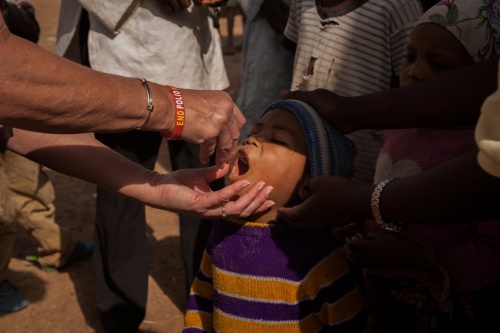
The World Health Organisation (WHO) says it immunised about 79, 000 children of below five years against polio during the just concluded polio immunisation in Kuje Area Council, the Federal Capital Territory (FCT).
Polio immunisation. Photo credit: Ruth McDowall for Rotary International
Mr Shola Ayeniyi, the WHO Local Government Facilitator, made the disclosure during a general review meeting at the end of the polio immunisation at the Primary Health Care Centre in Kuje on Wednesday, November 7, 2018.
He stated that the polio immunisation, titled “End Polio Now”, commenced on Nov. 3 and ended on Nov. 6.
Ayeniyi explained that the exercise was aimed at ensuring children were vaccinated for eradication of the virus to ensure their healthy growth.
The facilitator said the exercise, with the help of massive awareness creation through media sensitisation in the area, yielded 95 per cent coverage.
He, however, noted that there were pockets of non-compliance and rejection in some communities, stressing that this was quickly addressed with proper sensitisation by the district heads.
Ayeniyi also called on the council administration to fix dilapidated roads in some communities to help facilitate coverage in subsequent exercise in the area.
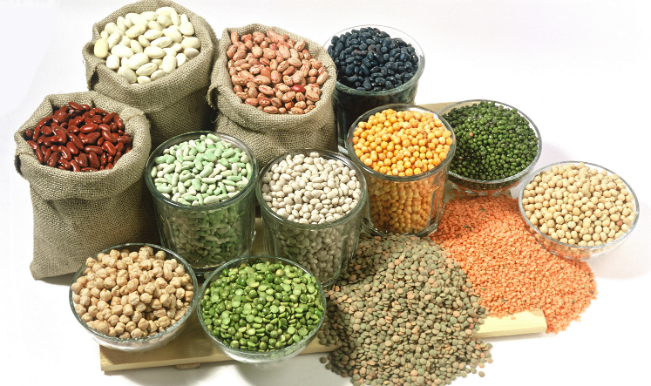
A biotechnology expert, Mrs Eniyekpemi Ebimoboere, has said that development of environment-friendly hybrid seeds will boost production of local vegetables and food security in the country.
Hybrid seeds
Ebimoboere, the CEO of Afritropic Farming and Agric Services, disclosed this to the News Agency of Nigeria (NAN) in an interview on Wednesday, November 7, 2018 in Lagos.
She said the availability and development of the hybrid seeds would help tackle malnutrition and health challenges among Nigerians.
“The development of hybrid seeds plays a major role in boosting food security in the country.
“Hybrid seeds also help in the fight against malnutrition because it is very important to have vegetables to support our highly carbohydrate-based diet.
“This is possible when individuals purchase these hybrid seeds and cultivate these vegetables around their homes.
“With this hybrid seed technology Nigerians can eat healthy with the availability and accessibility of highly nutritious vegetables. We can tackle food insecurity across the country,” she said.
She harped on the necessity of developing the seeds and how compliant they were to the soil in any environmental location.
“Most conventional vegetable crops like tomatoes, peppers, cucumbers and onions may not thrive in the South-West or South-South as much as they will in the northern region of the country.
“That is why we have worked on these hybrid vegetal seeds to improve seeds so that they can stand the environmental and climate conditions in all parts of the country.
“They are hybrid seeds and not Genetically Modified seeds (GMOs), they are conventionally processed. These seeds are bred to suit the environment,’’ she said.
She added that they had low health risks, more qualitative, affordable and nutritious among other advantages.
“We develop these hybrid seeds to ensure the presence of nutritious vegetable in local meals across the country.
“We like seeing quality produce and that is why we organise trainings and seminars on the benefits of these hybrid seeds.
“Hybrid seeds have varieties and the number one benefit is that their yield is far higher than what the conventional seeds would produce.
“Hybrid seeds also have shorter duration in crop production than regular seeds.
“For example, our hybrid cucumber seedlings when planted can be harvested within forty-five days, it is healthy, and the yields are high in quality,” she said.
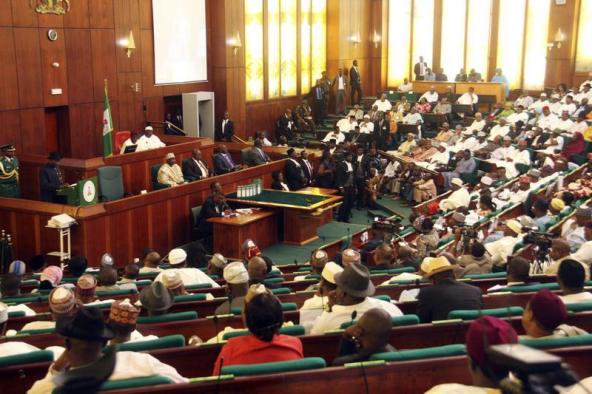
The House of Representatives on Wednesday, November 7, 2018 mandated its Committee on Environment to interface with relevant ministries, departments and agencies (MDAs) to ascertain the level of monitoring and compliance with world global standards in blasting, mining and borehole drilling.
House of Representatives
This was sequel to a motion under matters of urgent national importance by Rep. Johnson Oghuma (APC-Edo), at plenary on the “urgent need to forestall impending earthquakes in Nigeria.”
Moving the motion, Oghuma expressed concern over the recent cases of earth tremor experienced in September and October in the Federal Capital Territory (FCT) around Mpape and Maitama areas, raising fears of imminent earthquake.
According to him, earth tremor is a form of seismic movement within the earth which occurs at a small scale but can lead to earthquakes if preventive measures are not taken to reduce the stress.
“The reports by Federal Capital Territory Emergency Management Agency (FEMA) indicates that the incidence was likely caused by stress in underground rocks resulting from human activities which include blasting and mining of rocks.
“The National Space Research and Development Agency had reported that communities in four states and Abuja might witness earthquakes if necessary, preventive and monitoring devises are not employed immediately,” he said.
The lawmaker emphasised that it was necessary that preventive measures were taken to stop the catastrophe from happening.
Contributing to the motion, Rep. Johnson Agbonayinma (APC-Edo), said the issue of the tremor was important and should be taken seriously.
“What is happening these days is worrisome. Nobody knows which neighborhood will be next. Presently, we have nothing on ground on how to prevent, monitor or manage such occurrence.
“In developed countries like America, they plan for the future, they plan ahead for such occurrences but in Nigeria, we don’t plan. Once we fail to plan, we automatically plan to fail.
“The issue of boreholes is taking center stage in this matter. The drilling of boreholes must be regulated.
“I am appealing to government to rise up to the occasion and begin to do the needful,” he said.
Also, in his contribution, Rep. Abiante Awaji-Inombek (PDP-Rivers), said that for tremor to happen in Abuja, it showed that something was happening to the management of our environment.
“The suspicion that the tremors might be as a result of mining activities should not be over looked. There must be a holistic approach to this issue.
“We simply have to rise to the challenge before us. We should not restrict our attention to Abuja only, we should look at potential hotspots,” he said.
The motion was unanimously adopted by members when it was put to a voice vote by the Speaker, Mr Yakubu Dogara.
The House further mandated the Committee on Environment to report its findings within six weeks for further legislative action.