President Bola Tinubu has approved the removal of Mr. Saidu Mohammed as the Authority Chief Executive of the Nigerian Midstream and Downstream Petroleum Regulatory Authority (NMDPRA).
The President also approved the nomination of Mr. Rabiu Umar as the new Chief Executive of the authority, subject to Senate confirmation.
This is contained in a statement issued by Presidential Spokesperson, Mr. Bayo Onanuga, on Wednesday, April 29, 2026, in Abuja.
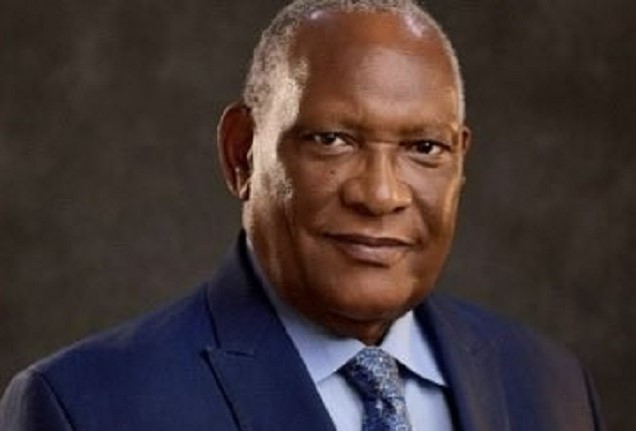
Rabiu Umar
The Presidency said the decision was made pursuant to the Petroleum Industry Act 2021.
The move was aimed at strengthening regulatory effectiveness in the midstream and downstream petroleum sector, in line with the Renewed Hope Agenda.
Umar is an experienced executive with over 25 years of service across the energy, manufacturing and infrastructure sectors.
He is also credited with a track record in strategic leadership, operational transformation and large-scale project delivery.
Umar studied Accounting at Bayero University and is an alumnus of Harvard Business School.
Pending senate confirmation of the nominee, the most senior official of the authority will oversee operations in acting capacity.
Tinubu thanked the outgoing chief executive for his service and wished him success in future endeavours.
The President reaffirmed commitment to capable leadership in key regulatory institutions to advance energy security, sector reforms and sustainable economic growth.
As heat intensifies across Nigeria, a new cohort of ventures is developing solutions to protect crops, reduce food spoilage and livestock losses, and equip hospitals and outdoor workers to anticipate and withstand extreme conditions.
BFA Global, FSD Africa, ClimateWorks Foundation, and the UK’s Foreign, Commonwealth & Development Office (FCDO) Nigeria have selected 10 early-stage ventures to join the inaugural cohort of the TECA Heat Action Wave (THAW) program focused on accelerating solutions to extreme heat.
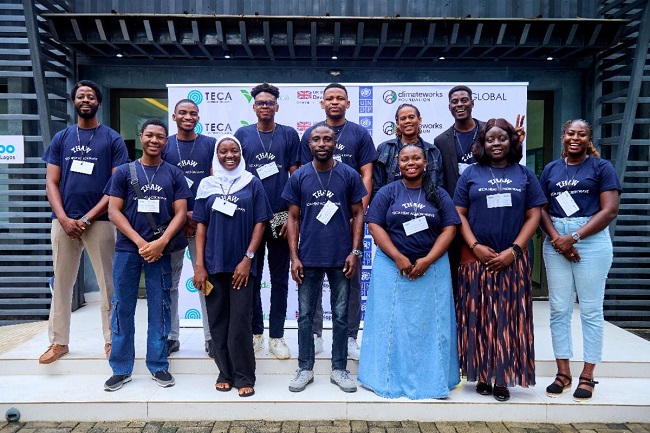
Representatives of the new cohort of 10 selected ventures
The 10 selected ventures are:
Ofemini Global Limited provides a heat-resilient logistics platform that helps farmers transport perishable goods efficiently, reducing spoilage caused by extreme temperatures through optimised routing and heat monitoring.
Agiletech Operations Consulting Limited provides a hyperlocal early-warning system that delivers climate and heat alerts through accessible channels, enabling farmers and micro-entrepreneurs to anticipate risks and take preventive action.
Emplaris develops a predictive energy and heat-risk intelligence system for healthcare facilities, helping hospitals anticipate outages and manage equipment stress during extreme heat events.
Doorcas Africa delivers an AI-powered livestock health and co-ownership platform that enables early disease detection and prevention, helping farmers reduce heat-related livestock mortality and improve productivity.
Farmxic offers an AI-driven soil and crop diagnostics platform that helps farmers adapt to heat-induced soil degradation and crop stress through real-time insights and personalised recommendations.
Farm Fresh Grocery Ltd. builds a climate-resilient agricultural system combining heat-adaptive beekeeping, herb production, and consumer products to stabilise yields and supply under rising temperatures.
Farmslate Technologies Limited provides a climate intelligence platform that translates satellite and weather data into actionable insights, enabling farmers and financial institutions to manage heat-related risks and improve decision-making.
Let-It-Cold offers a solar-powered, portable cooling solution that helps small businesses and households preserve perishable goods during extreme heat and power outages.
Pod develops a climate-resilient sanitation system that prevents failure and contamination in heat- and flood-prone environments through on-site treatment and water reuse.
TheHyWing Ltd provides a climate-smart digital health platform that combines heat alerts, AI diagnostics, and telemedicine to prevent heat-related health risks among outdoor workers and vulnerable populations.
Together, the ventures address some of the most immediate and under-addressed impacts of extreme heat across Nigeria, including food spoilage and cold chain gaps, heat-induced soil degradation and crop stress, livestock disease and productivity loss, health risks for outdoor workers, and system failures in energy, healthcare, and sanitation infrastructure.
They range from early-stage concepts to minimum viable products, reflecting both the urgency of the problem and the early development of solutions in this emerging space.
The cohort reflects a growing innovation ecosystem across Nigeria, with ventures operating in multiple regions. The companies are based in Lagos, Kaduna, and Edo states. This geographic spread underscores the breadth of climate innovation emerging across the country and reinforces TECA’s commitment to supporting founders building locally relevant solutions nationwide.
Selected from a competitive pool, the ventures will each receive $56,000 in funding along with hands-on venture-acceleration support, including user validation, product development, business model design, and investor readiness. Each team will work with embedded venture builders and technical experts to accelerate their path to scale. Six of the 10 selected ventures have a female co-founder.
“Extreme heat is rapidly becoming one of the biggest operational risks facing African economies, yet it remains dramatically underinvested,” said Tyler Ferdinand, TECA Director at BFA Global. “Through TECA’s Heat Action Wave, we’re backing entrepreneurs building the tools, services, and financial products that will allow people, businesses, and cities to function in a hotter world. Our goal is not only to support these ventures but to prove that climate adaptation can become a powerful new investment frontier.”
Juliet Munro, Director, Early Stage Finance, at FSD Africa, said: “If climate adaptation finance is going to scale in Africa, it has to be grounded in real, investable solutions. This group of innovators tackling extreme heat is important because it shows what those solutions look like in practice, and that’s what gives markets the confidence to follow. At FSD Africa, our role is to help turn early innovation like this into something markets can actually back.”
“The cost of inaction on climate change is growing, as over 70% of workers around the world are at risk from deadly extreme heat. At the same time, momentum for adaptation is growing, as we see both more funding and more innovation. These new business ventures are strong, community-led solutions that can accelerate resilience in Nigeria and more broadly in the West African region,” said Jessica Brown, Senior Director of Adaptation and Resilience at ClimateWorks Foundation.
“Responding to climate change is central to Nigeria’s future growth and resilience. The UK is excited to support this cohort of ambitious Nigerian businesses developing transformative solutions to extreme heat. TECA’s Heat Action Wave is part of a broader UK partnership with Nigeria that backs private sector–led innovation, creates jobs, and drives shared prosperity for both our countries as we transition to a greener economy,” said Temi Akinrinade, Foreign, Commonwealth & Development Office, Nigeria.
The programme will run through 2026, culminating in demo days and investor engagement opportunities, with follow-on support available for top-performing ventures.
Tropical rainforest loss fell 36% in 2025 from the record high of 2024, according to new data from the University of Maryland’s GLAD Lab, available on World Resources Institute’s Global Forest Watch platform and Global Nature Watch.
The findings suggest that strong policies and enforcement can curb forest loss. However, climate-driven fires are a dangerous new normal, threatening to reverse recent gains.
In 2025, the world lost 4.3 million hectares (10.6 million acres) of tropical primary rainforest, an area roughly the size of Denmark. Despite the decline, loss remains 46% higher than a decade ago, with primary forests disappearing at a rate of 11 football (soccer) fields every minute.
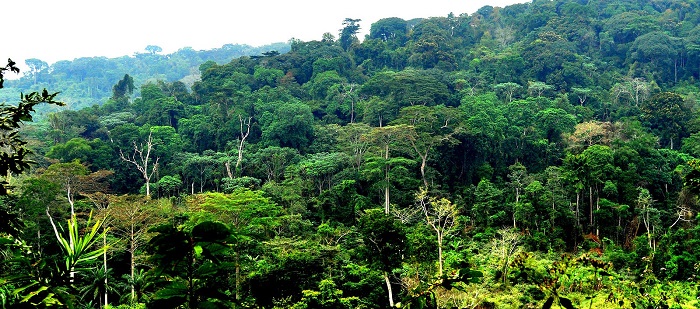
Congo Basin rainforest
“A drop of this scale in a single year is encouraging — it shows what decisive government action can achieve,” said Elizabeth Goldman, Co-Director of Global Forest Watch, World Resources Institute. “But part of the decline reflects a lull after an extreme fire year. Fires and climate change are feeding off each other, and with El Niño on the horizon for 2026, investments in prevention and response will be critical as extreme fire conditions become the norm.”
Despite recent progress, global forest loss remains far above the level required to meet the 2030 goal of halting and reversing forest loss, a commitment made by more than 140 countries under the Glasgow Leaders’ Declaration. Current levels are about 70% too high.
Tropical primary forests are vital for climate stability, biodiversity and the millions who depend on them for food, income and protection from extreme weather. Their loss releases vast amounts of carbon and weakens one of the planet’s most important natural defenses against climate change.
Policy Progress Drives Declines in Key Countries
Much of the global reduction was driven by Brazil, home to the world’s largest rainforest. In 2025, Brazil cut non-fire primary forest loss by 41% compared to 2024, reaching its lowest level on record.
The decline coincides with stronger environmental policies and enforcement under President Luiz Inácio Lula da Silva, including the relaunch of the PPCDAm federal anti-deforestation plan and increased penalties for environmental crimes.
Although Brazil still has the largest absolute area of primary forest loss due to its size, its rate relative to forest area (0.5%) is now lower than several other tropical countries.
“Brazil’s progress shows what’s possible when forest protection is treated as a national priority,” said Mirela Sandrini, Executive Director, WRI Brasil. “But Brazil’s landscape is becoming more flammable, and growing fire risk means enforcement alone won’t be enough. Protecting these gains will require scaling community-led prevention and building an economy that rewards standing forests.”
Other countries also showed progress. Indonesia and Malaysia maintained relatively low rates of primary forest loss, while Colombia reversed a spike seen in 2024. Progress in these countries reflected improved governance, recognition of Indigenous land rights and corporate commitments to deforestation-free production.
“Indonesia managed to keep forest loss largely under control in recent years, supported by policies that limit new forest clearing and give communities greater rights to manage forests,” said Arief Wijaya, Managing Director, WRI Indonesia. “That shows a strong commitment to more sustainable land use. But rising economic pressures could test that progress – and whether it can hold under pressure will depend on how well growth is balanced with climate and nature.”
“Colombia’s story is one of fragile progress: deforestation slowed not because pressure eased, but because governance held the line,” said Joaquín Carrizosa, Senior Advisor, WRI Colombia. “2026 will be the real test – without sustained enforcement and economic alternatives to clearing forests, this progress could quickly reverse. There’s a credible path to lasting change: increase investment in protecting the Amazon, back Indigenous leadership and build local economies that rely on forests staying intact.”
Fires Emerge as a Growing Global Threat
While agricultural expansion remains the leading driver of tree cover loss overall, fires were a major contributor in 2025, accounting for 42% of the 25.5 million hectares (63.1 million acres) of tree cover loss worldwide, an area slightly larger than the United Kingdom.
Climate change is increasing fire risk by creating hotter, drier conditions that allow fires to spread more easily. In turn, these fires release vast amounts of stored carbon, accelerating climate change and reinforcing a dangerous feedback loop.
While fire risk is growing in the tropics – where most fires are human-caused – the most visible impacts in 2025 were in boreal and temperate regions, where climate change is intensifying naturally occurring fire cycles.
Fire-driven loss was especially severe in Canada, where wildfires burned 5.3 million hectares (13.0 million acres), making 2025 the country’s second-worst fire year on record. Significant fires were also recorded in parts of southern Europe.
“Climate change and land clearing have shortened the fuse on global forest fires,” said Matthew Hansen, Professor at the University of Maryland and GLAD Lab Director. “They are turning seasonal disturbances into a near-permanent state of emergency. Without urgent action to stop burning and manage fire more effectively, we risk pushing the world’s most important forests past recovery.”
Loss Remains High in Other Regions
Forest loss remained high in countries including Bolivia, the Democratic Republic of the Congo (DRC), Peru, Laos and Madagascar. Drivers vary by region, but include agricultural expansion, mining, fire and local reliance on forests for food and fuel.
Bolivia recorded its second-highest level of primary forest loss on record after severe fires in 2024 and now ranks second for tropical primary forest loss – surpassing the Democratic Republic of the Congo despite Bolivia having 60% less primary forest.
“In Bolivia, as in many other countries, forest loss is closely tied to agricultural expansion, with fire often used to clear and prepare land for production,” said Stasiek Czaplicki Cabezas, a Bolivian researcher and data journalist for Revista Nómadas. “Those ties keep pressure on forests persistently high. Breaking this cycle will require tighter controls on fire and hard restrictions on land conversion in forest areas.”
In the Congo Basin, primary forest loss continues in several countries. In the DRC, total loss dipped slightly in 2025, but non-fire loss hit a record high, largely linked to small-scale farming, firewood and charcoal production, conflict-related displacement, and pressure from mining.
“There’s progress in parts of the Congo Basin, but in others deforestation remains alarmingly high,” said Teodyl Nkuintchua, Congo Basin Strategy and Engagement Lead, WRI Africa. “Mining is a far greater indirect driver of deforestation than previously recognised, and forest loss is happening even in community-managed areas. Support and investment are essential to making community forest management viable and enabling Indigenous Peoples and local communities to meet their basic needs.”
Scaling Action to Get on Track for 2030
Meeting global forest goals will depend not only on sustained political leadership and investment, but also on how key policy and financial developments unfold – including whether the Tropical Forest Forever Facility (TFFF) secures sufficient funding and how effectively regulations such as the EU Deforestation Regulation (EUDR) are implemented and enforced.
“The progress we’re seeing in countries like Brazil and Colombia is heartening – but far from assured,” said Rod Taylor, Global Director of Forests, World Resources Institute. “These are inspiring examples of what can be done to curb deforestation, but also a reminder of how much the fate of our forests hinges on political will and the resilience that can be built now in the face of a changing climate.”
2026 will put that to the test – with El Niño likely to intensify fire risk and national elections in several forest countries poised to shape whether progress continues.
Technological Innovation on the Horizon
Next year, the release of the tree cover loss data will be fully integrated into Global Nature Watch, WRI’s AI-powered platform built on peer-reviewed research from Global Forest Watch and Land & Carbon Lab. With a simple, chat-style interface, it makes complex land data easy to explore.
Over the coming year, Global Nature Watch will expand to deliver the full depth of analysis and country-level insight that users rely on today from Global Forest Watch, making vast amounts of data more accessible, timely and actionable than ever before.
“Last year’s progress in reducing forest loss shows what’s possible, but with El Niño set to raise the stakes, now is the moment to double down and turn gains into lasting protection,” said Dr. Kelly Levin, Chief of Science, Data and Systems Change at the Bezos Earth Fund, a founding partner of Global Nature Watch. “With tree cover loss data available through Global Nature Watch, it will be easier for people working to protect and restore nature to spot change earlier and respond with confidence.”
About the annual Tree Cover Loss data analysis
World Resource Institute’s Global Forest Watch provides annual analysis of global tree cover loss, showing when and where forests are disappearing. The data – produced by the GLAD (Global Land Analysis & Discovery) Lab at the University of Maryland – captures changes at approximately 30 × 30-metre resolution across all global land areas, except Antarctica and other Arctic islands.
TotalEnergies has announced the completion of the acquisition agreed on November 16, 2025, of 50% of EPH’s flexible power generation platform in Western Europe. Approved by all competent authorities and by the Boards of Directors of both TotalEnergies and EPH, this transaction leads to the creation of TTEP, the 2nd largest flexgen player in Europe, headquartered in Amsterdam.
The company, TTEP, owns and operates, through its subsidiaries, flexible natural gas and biomass-based power plants and BESS assets across Italy, the United Kingdom, Ireland, the Netherlands and France, for a total capacity of 14 GW installed or in construction. Its production reached close to 30 TWh of electricity in 2025.
EPH’s power generation platform
TotalEnergies and EPH have agreed on tolling contracts with TTEP, allowing both partners to market their own share of production. Furthermore, TTEP has a 5 GW projects portfolio and will serve as the preferred investment vehicle for both shareholders to develop their flexible power generation activities and large-scale battery storage solutions across the five countries concerned.
The transaction becomes effective on April 29, 2026. Pursuant to the powers delegated to it by the Shareholders’ Meeting of May 24, 2024, the TotalEnergies SE Board of Directors has approved the issuance of around 95.4 million shares to EPH, representing approximately 4.2% of TotalEnergies’ share capital, making EPH one of the Company’s main shareholders.
In a related development, 350.org campaigners in France and Africa on Wednesday, April 29, 2026, called for a permanent windfall tax on fossil fuel profits, as French oil giant TotalEnergies announced “indecent” first quarter profits, and new analysis by 350.org reveals that oil and gas price spikes have cost ordinary people and businesses in France over €2 billion (€1.97bn – €2.29 billion) since the start of the Iran war.
Around 30 activists from 350.org, Action Justice Climat, Attac France, Greenpeace France and Extinction Rebellion unfurled a banner reading “TotalEnergies profits, we foot the bill” outside one of the multinational’s petrol stations in north-east Paris, as TotalEnergies published its first-quarter 2026 financial results in the morning, amounting to $5.4 billion.
The groups urged the French government to “show political courage” and introduce a tax on the excess profits of fossil fuel giants, whose revenues can be used to protect households in France from soaring energy bills and fund the transition to affordable clean energy and climate finance for the most vulnerable countries.
Fanny Petitbon, 350.org France Country Manager, said: “While families watch their bills skyrocket, TotalEnergies posts some of its best financial results without even paying its fair share of taxes. We are witnessing an obscene transfer of wealth: the war enriches shareholders as it impoverishes citizens. This dependency is a political choice but the antidote exists. We demand that France stop yielding to oil lobbyists and introduce without delay a permanent and ambitious tax on fossil fuel profits. Every day of inaction is a deliberate political choice in favour of shareholders and against citizens.”
Campaigners say that while the EU’s crisis response package stopped short of including a windfall tax, France has upcoming opportunities to advance the measure, including a National Assembly deliberation in early June on a proposed law targeting the super-profits of oil and gas companies, and UN tax negotiations in August in New York.
350.org campaigners in East Africa also condemned TotalEnergies’ massive profits, which were made on the back of the suffering of communities displaced by the East African Crude Oil Pipeline, one of the French oil giant’s major investments in the region that is set to begin operating this year.
Rukiya Khamis, 350.org East Africa Country Manager, said: “It is a staggering injustice that fossil fuel corporations are once again posting record-breaking profits while families struggle to keep the lights on. Right now, power is concentrated in the hands of those who thrive on crisis and scarcity. We need to put that power back where it belongs: with the people. It’s time to end our forced dependence on fossil fuels, tax the profiteers who benefit from our hardship, and redirect that wealth into building a fair, clean energy system. We aren’t just asking for a lower bill; we are demanding a system that values human dignity over corporate greed.”
350.org campaigners also pointed out the contradiction in France’s fossil fuel phase-out roadmap, published in time for the First Conference on Transitioning Away from Fossil Fuels in Santa Marta, Colombia where more than 50 countries are presently gathered.
Clémence Dubois, 350.org Global Campaigns Manager, said: “France arrived in Santa Marta with a phase-out roadmap in one hand – and in the other, a quiet veto on making polluters pay for it. While Germany, Italy, Spain, Portugal and Austria jointly called on the EU to tax the windfall profits of energy companies cashing in on the Southwest Asia war, France was absent. PM Lecornu is asking French households to carry the cost of the transition, while TotalEnergies posts war profits untaxed. A phase-out roadmap without a funding mechanism isn’t climate leadership. That gap is a political choice, not an oversight.”
The Kaduna State Emergency Management Agency (KADSEMA), in partnership with Christian Aid, has in a meeting validated data from a rapid multi-hazard mapping exercise across nine local government areas as the rainy season sets in.
The validation followed a 10-day field enumeration to confirm community-level observations, correct gaps, misclassifications, and prioritise high-risk hotspots for urgent intervention.
The meeting also endorsed the dataset for integration into the 2026 State Emergency Preparedness and Response Plan (SEPAP).
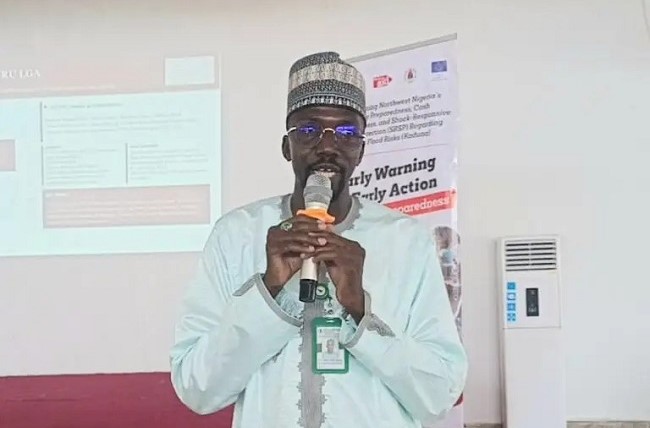
Dr Usman Mazadu, Executive Secretary of KADSEMA
Dr Usman Mazadu, Executive Secretary of KADSEMA, said credible data remained central to effective disaster management.
“We cannot act without understanding the hazards we face. Validation ensures accuracy and supports evidence-based response.”
Mazadu said the exercise identified 178 hazards across the LGAs, drawing inputs from enumerators and 435 community information coordinators.
He added that the state had strengthened its disaster risk governance with the approval of a policy framework and related instruments to improve coordination and response.
According to him, proactive measures have been deployed in flood-prone areas including early warning systems, public sensitisation and establishment of safe-haven centres.
Mazadu said sustained interventions such as desilting, dredging and awareness campaigns had helped to reduce flood impact in recent years.
Tabat Baba, Programme Officer, Disaster Risk Reduction, Christian Aid Nigeria, said the exercise profiled vulnerabilities and capacities at the grassroots to enhance preparedness.
“The goal is to prepare communities ahead of the flood season using climate predictions and flood outlooks for 2026,” she said.
Baba noted that the mapping also captured risks related to conflict and insecurity, urging communities to take ownership of early warning systems and response plans.
Officials of participating local governments described the initiative as timely and pledged to cascade sensitisation and preparedness measures to their communities.
The Federal Government says Nigeria loses about 24 million tonnes of topsoil annually due to erosion and land degradation, warning that the trend poses a serious threat to food security and climate resilience.
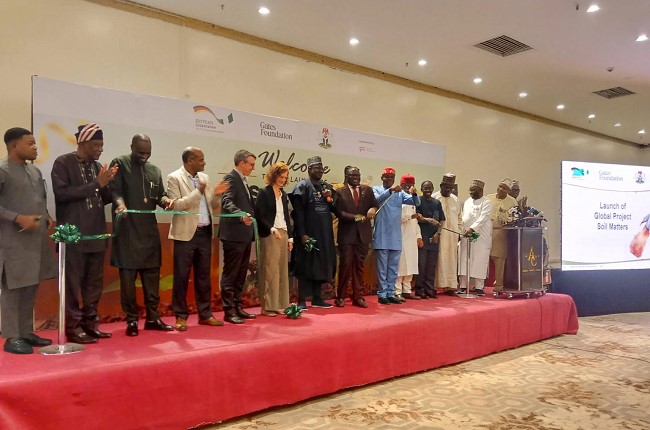
The Minister of State for Agriculture and Food Security, Sen. Aliyu Abdullahi, stated this on Wednesday, April 29, 2026, in Abuja at the unveiling of the Global Project – Soil Matters.
Abdullahi said healthy soil plays a critical role in water retention, drought resistance and carbon sequestration, stressing that restoring soil organic matter had become imperative amid rising climate shocks.
Participants at the unveiling of the Global Project – Soil Matters in Abuja
“Soil is not merely the dirt beneath our feet; it is the cornerstone of our food security, economy and climate resilience.
“Over 70 per cent of Nigerians depend on agriculture, yet the country continues to lose approximately 24 million tonnes of topsoil annually due to erosion and degradation.
“A nation that destroys its soil destroys itself. Nigeria will not be that nation,” he said.
He noted that under President Bola Tinubu’s Renewed Hope Agenda, the government aims to boost productivity, feed over 220 million Nigerians, create jobs and position Nigeria as a net food exporter.
According to him, these targets cannot be achieved without restoring soil health.
The minister recalled that the government, in collaboration with the International Institute for Tropical Agriculture (IITA), had earlier launched the Nigerian Soil Information System (NiSIS) and the Coalition of the Willing (CoW) to strengthen soil management.
He explained that NiSIS is a digital platform providing real-time data on soil properties, nutrient levels and management recommendations to farmers, researchers and fertiliser blenders.
“The goal is to address nutrient deficiencies and promote site-specific fertiliser application.
“The Coalition of the Willing brings together government, private sector actors, farmers and researchers to share knowledge and resources for improved soil health,” he said.
Abdullahi added that the Soil Matters – Innovations in Soil Health and Agroecology project, implemented by the German International Cooperation (GIZ), would promote sustainable business models for soil services, especially targeting youth and women.
He said the initiative would also support policy incentives, including tax reliefs and standards for soil restoration.
The minister urged state governments to domesticate the National Soil Policy and called on stakeholders to prioritise soil as a national asset.
“No soil, no food; no food, no peace,” he said.
In his remarks, the Permanent Secretary, Federal Ministry of Agriculture and Food Security, Dr Marcus Ogunbiyi, said agricultural transformation would remain elusive without sustained investment in soil management.
Ogunbiyi outlined the project as a platform to strengthen collaboration, drive innovation and promote farmer education on sustainable practices.
“It is an opportunity to mobilise action toward healthier soils and a more food-secure Nigeria,” he said.
Also speaking, Dr Erkossa Teklu, Project Manager, Global Project Soil Matters at GIZ, said the initiative was designed to establish a self-sustaining system for soil management in Nigeria.
“By 2028, the Coalition of the Willing and NiSIS platform are expected to operate independently under Nigerian leadership,” he said.
The Senate has approved $516,333,700 syndicated financing facility for the construction of Sokoto-Badagry Superhighway.
This followed the consideration and adoption of the report of the Senate Committee on Local and Foreign Debts during plenary on Wednesday, April 29, 2026.
The approval followed a letter from President Bola Tinubu dated April 20, requesting legislative backing for external borrowing in line with the provisions of the Debt Management Office Establishment Act 2011 and the Fiscal Responsibility Act 2007.
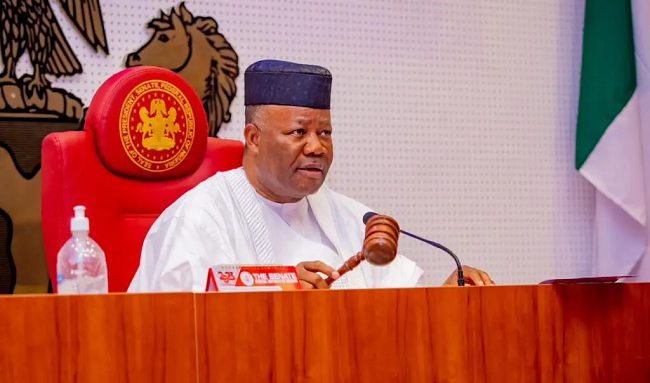
Senate President, Godswill Akpabio
The request was referred to the Senate Committee on Local and Foreign Debt on April 23.
The committee subsequently presented its report recommending approval of the loan.
Sen. Adamu Aliero (APC-Kebbi) presented the report on behalf of the committee’s chairman, Sen. Aliyu Wamakko (APC-Sokoto).
He explained that the facility would finance Section One, Phase One (A and B1) of the highway, covering about 120 kilometres, as part of a broader corridor expected to span approximately 1,000 kilometres from Sokoto to Badagry.
The lawmaker noted that the project was strategically designed to enhance national connectivity by linking Sokoto, Kebbi, Niger, Kwara, Oyo, Ogun and Lagos states.
He described it as a major infrastructure initiative aimed at improving trade, transportation efficiency and national integration.
Aliero further stated that the project would reduce travel time, lower logistics costs, improve access between agricultural zones and markets and strengthen supply chains across key sectors, including agriculture and manufacturing.
According to him, the financing arrangement is structured as a syndicated facility provided by Deutsche Bank, with partial credit enhancement support from the Islamic Corporation for the Insurance of Investment and Export Credit.
He said that the facility has a tenor of nine years, including a grace period of up to three years, with an interest rate benchmarked at CME SOFR plus 5.35 per cent per annum.
The senator also noted that although the loan would add to Nigeria’s external debt stock, it was tied to long-term capital development projects expected to generate significant economic returns.
Following the presentation of the report, the request was subjected to debate by the senators, with many of them describing the project as a strategic infrastructure link capable of boosting economic growth across geo-political zones.
Sen. Mohammed Monguno (APC-Borno) argued that the project would unlock agricultural and transport value chains, while reducing unemployment and insecurity along the corridor.
Deputy Senate President, Jibrin Barau, emphasised its national integration benefits, noting that it would connect the northern and southern parts of the country more efficiently.
Sen. Adetokunbo Abiru (APC-Lagos) referenced previous loan approvals that had yet to be fully disbursed due to global financial constraints, arguing that the current arrangement provided an alternative funding structure for ongoing projects.
Ruling on the motion, the Senate President, Godswill Akpabio, put the recommendation to a voice vote and it was overwhelmingly adopted.
The senate, thereafter, approved the $516.3 million syndicated loan for the phase one, section one (A and B1) of the project and mandated strict oversight by relevant committees.
The upper chamber also directed quarterly reporting by the Federal Ministry of Finance, Debt Management Office, and Federal Ministry of Works as well as submission of the financing agreement within 30 days.
The lawmakers further stressed the need for transparency, competitive procurement and periodic project evaluation to ensure value for money and timely delivery.
Following the approval, the request now awaits transmission to the executive for final processing and implementation.
Australian scientists are developing solar-powered technologies to convert plastic waste into clean fuels, offering potential solution to both pollution and energy challenges.
The research explores how sunlight-driven processes can transform discarded plastics into hydrogen, syngas and other industrial chemicals, offering a pathway toward a more sustainable, circular economy, the Australian study revealed on Wednesday.
Global plastic production exceeds 460 million tonnes annually, with large volumes leaking into the environment, according to the research.
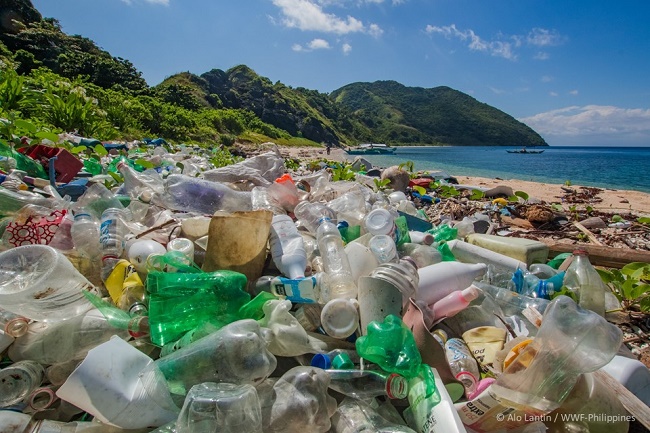
Plastic waste pollution
The research also highlights the rich carbon and hydrogen content of plastics, which it adds that it can be repurposed as an untapped resource rather than waste.
The process, known as solar-driven photoreforming, uses light-activated photocatalysts to break down plastics at relatively low temperatures.
“These reactions can produce hydrogen, a clean fuel with zero emissions at the point of use, as well as other valuable chemicals used in industry,” the study, published in Chem Catalysis, shows.
Compared with conventional water-based hydrogen production, plastic photoreforming is more energy-efficient because plastics are easier to oxidise and potentially easier to scale, researchers said.
However, they cautioned that significant challenges remain, including the complexity of mixed plastic waste, catalyst durability and the energy-intensive purification steps.
“With continued innovation, we believe solar-powered plastic-to-fuel technologies could play a key role in building a sustainable, low-carbon future,” said Adelaide University PhD candidate, Lu Xiao, who led the study.
The Executive Secretary, Economic Commission for Africa (ECA), Claver Gatete, has called for coordinated and transformative action to advance Africa’s development goals.
Gatete made the call in his opening address at the 12th Africa Regional Forum on Sustainable Development (ARFSD-12) in Addis Ababa monitired virtually.
He said the continent must accelerate progress towards the 2030 Agenda and the African Union’s Agenda 2063.
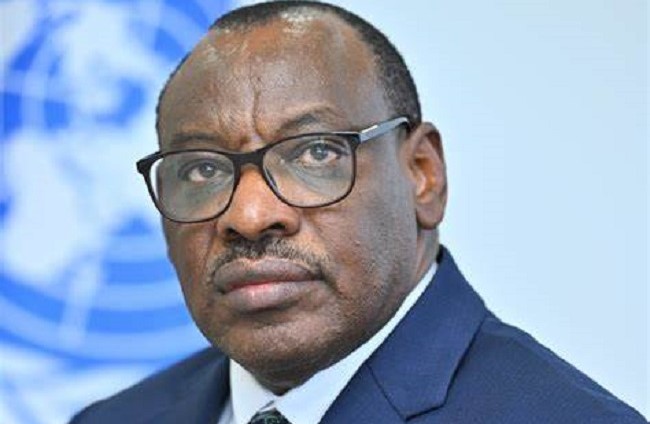
Claver Gatete, Under-Secretary-General and Executive Secretary of the UN Economic Commission for Africa (ECA)
According to him, Africa faces slowing global growth, rising inequalities, climate shocks and mounting fiscal pressures.
He said that geopolitical tensions were also affecting global stability and development prospects.
Gatete said these challenges should not limit ambition but inspire innovation and stronger commitment to solutions.
He commended Ethiopia for hosting the forum and its leadership in advancing climate action.
Gatete said that Ethiopia’s Green Legacy Initiative had resulted in the planting of billions of trees.
He said that the country had made significant progress in renewable energy and climate-smart agriculture.
The ECA executive secretary said climate change was already affecting food security, water availability and infrastructure across Africa.
He said that climate action and sustainable development must be pursued together while urging African countries to move from sector-based planning to integrated systems approaches.
Gatete further reiterated the need to shift from policy discussions to large-scale implemrntation, saying that foundational services such as water, energy and infrastructure must be treated as economic assets.
He called for increased financing, including private sector investment, to close Africa’s infrastructure gap and highlighted the importance of urbanisation, saying cities must be leveraged for jobs and productivity.
The ECA boss called for alignment of digital and green transitions to drive sustainable growth, adding that strong institutions, data and regional cooperation were key to delivering results.
He said Africa’s main challenge was not lack of frameworks but implementation at scale.
Gatete then reaffirmed the commitment of the commission to support member states with policy advice and partnerships.
He urged stakeholders to use the forum to move from “diagnosis to delivery” in achieving development goals.
The Kano State Government has announced plans to distribute 10 million tree seedlings for planting across the state, as part of efforts to improve the environment and mitigate the effects of climate change.
The Commissioner for Environment and Climate Change, Dahir Muhammad-Hashim, disclosed this during an inspection visit to tree nurseries in Gwarzo and Dawakin Kudu Local Government Areas.
He said the seedlings to be distributed include moringa, baobab, lemon, neem, mango, orange, and locust bean trees which are expected to be planted within communities.
Dr. Dahir M. Hashim, Commissioner, Ministry of Environment and Climate Change, Kano State
According to the commissioner, the initiative is being implemented under the leadership of Governor Abba Kabir-Yusuf which has committed to ensuring a cleaner and healthier environment.
Muhammad-Hashim called on community groups and schools to take advantage of the programme by applying through designated forms or contacting the ministry to obtain seedlings for planting in their respective areas.
The commissioner added that the initiative forms part of the government’s broader strategy to improve the wellbeing of residents and protect the environment across Kano State.