A new vehicle, powered by the sun and made from plastic waste, is set to explore Antarctica.
The Solar Voyager. Photo credit: Clean2Antarctica
A team from Clean2Antarctica has built a vehicle, named the Solar Voyager, to explore Antarctica to learn from the continent’s sustainable nature.
The Solar Voyager is built from plastic waste and is powered by the sun by ten solar panels to ensure the journey is sustainable. The vehicle is lightweight and has vacuum pipes that can melt the ice. It weighs around 1,485 kilograms and is 16 metres long.
The expedition, starting in November, will begin at Antarctica’s base camp and from there the explorers will make a journey of 2,400 kilometres across an icy desert to the South Pole and back.
Antarctica contains 90 per cent of the world’s ice and is zero waste by law. The explorers from Clean2Antarctica want to learn from this zero-waste zone and make sure it stays this way. They also hope to raise awareness for the Antarctic treaty, which if not extended in 2048 will put the continent at risk for commercial exploitation.
They successfully tested the vehicle in Iceland earlier this year and the journey to the South Pole will begin on November 26th. The team have a blog that will be updated throughout the expedition.
Clean2Antarctica said: “We want to accelerate the transition to a circular society because it is the right thing to do. We need to venture out into the unknown, since we don’t exactly know how to build a circular society. Therefore, we need to experiment. Our expedition will result in new building blocks that will help us to build a circular society.”
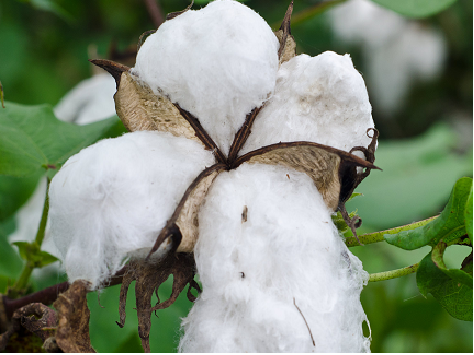
An international organisation, Open Forum on Agricultural Biotechnology in Africa (OFAB), has advised Nigerian farmers to take advantage of the newly approved Genetically Modified (GM) cotton varieties to boost cotton production.
The GM Bt Cotton is said to have failed in Burkina Faso, with farmers making claims from Monsanto
Country Coordinator of OFAB, Dr Rose Gidado, gave the advice in an interview with News Agency of Nigeria (NAN) in Abuja on Friday, October 12, 2018.
She said that the cultivation of the GM cotton varieties would significantly improve cotton production, when compared to the use of the conventional varieties.
She added that the average yield of the GM cotton varieties was about 4.1 to 4.4 tonnes per hectare, while the average yield of the local varieties was about 250 to 900kg per hectare.
“I want to inform you that we have two GM varieties of cotton that have been released for commercialisation so that farmers can have access to these varieties that have very high yields.
“With encouragement and support from the Federal Government, Nigeria has registered its home-grown GM cotton varieties, saving our farmers the trouble of contending with the local conventional variety which is no longer accepted at the international market.
“These new varieties, which have just been officially registered, have the potential of being adopted in all the cotton growing zones of Nigeria and they have a maturity period of 150 to160 days,’’ she said.
The cotton varieties, which are Nigeria’s first home-grown GM cotton varieties, were approved at the 26th meeting of the National Committee on Naming, Registration and Release of Crop Materials in Ibadan, Oyo State, in August.
The GM cotton varieties were developed by Mahyco Nigeria Private Limited, in collaboration with the Institute for Agricultural Research, Ahmadu Bello University, Zaria.
Gidado stressed that Nigeria’s economic diversification efforts would depend largely on agriculture, urging cotton farmers to take advantage of this window of opportunity to increase their productivity.
She said the GM cotton varieties crops were resistant to cotton bollworm complex and had high cotton yield, while they were early-maturity tolerant to suckling insect pest, among others.
“You can see the differences in terms of yield when use the improved and conventional crop varieties,’’ he added.
The OXFAB country director stressed that nascent efforts to view agriculture as a business would necessitate the adoption of appropriate technologies such as the biotechnology, even though the use of biotechnology had generated some controversies.
“Biotechnology has been used safely in other parts of the world and in all the developed economies today. Countries like the U.S., Brazil, Japan, India and China have positive stories to tell about biotechnology.
“In Africa, South Africa and Sudan are benefitting from this technology. This technology has been in existence for the past 20 to 25 years without causing any health risks because there are regulatory frameworks in place.
“Here in Nigeria, we also have regulatory agencies like the National Biosafety Management Agency, which are saddled with the responsibility of ensuring that biotechnology is safely used and practised in the country,’’ she said.
Besides, Gidado urged farmers to desist from using adulterated seeds, saying they should rather go for improved seeds which could withstand all weather conditions and be pest-resistant as well as drought tolerant.
She added that the adoption of improved seeds and seedlings by farmers for their crop growing would engender bumper harvests and boost incomes.
President Muhammadu Buhari’s decision to decline assent to the Petroleum Industry Governance Bill (PIGB) represents a disheartening setback on efforts to actualise policy reforms in the Nigerian Oil and Gas sector.
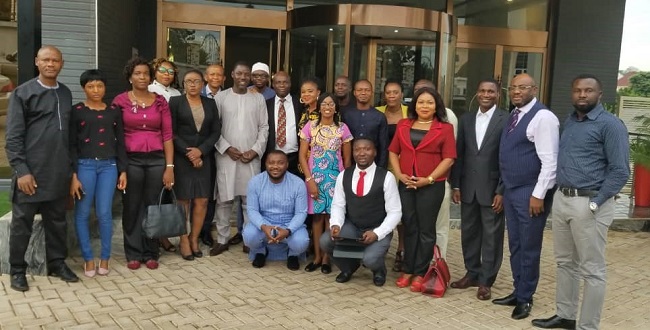
Participants at the Media Stakeholders Roundtable on Petroleum Industry Bills in Enugu
This was the view of a team of journalists from print, broadcast and online media organisations across Nigeria who met on Thursday, October 11, 2018 in Enugu, Enugu State, to discuss the state of the PIGB. The quest to actualise the PIGB was initiated about two decades ago.
According to the media executives, the decline of assent to the PIGB is a missed opportunity to advance a token of the commitment of the Nigerian government to modernising the architecture of Nigerian petroleum laws in order to rid it of opaqueness and inefficiency and introduce it to the regime of international best practices, transparency and accountability.
The journalists observed in a communique released at the close of the daylong forum that the decline of assent to the PIGB signals to prospective investors and industry players’ absence of the political will on the part of the Nigerian government to change the fundamentals of the landscape of the Nigerian Oil and Gas sector.
This, they stated, would inevitably escalate the trend of loss in withheld and diverted capital investments which is plaguing the sector.
“The huge potential of the Petroleum Industry Bills to create wealth, generate jobs and increase Nigeria’s competitiveness in the global energy market ought to take precedence over all political considerations and the security and comfort of the vested interests,” they declared, warning that the descent of Venezuela to a dystopian basket case is a cautionary warning that the failure to reform will ultimately culminate in devastating consequences.
The communique further reads: “The Nigerian petroleum industry is the national cash cow and the most critical sector of the economy. The industry’s capacity to fulfill its traditional role in the Nigerian economy is increasingly being undermined by obsolete petroleum legislation. The recurrent deferment of necessary policy reforms in the Nigerian Petroleum Industry is setting Nigeria up for an existential economic crisis on the scale of the Venezuela nightmare.
“Nigerian journalists have a responsibility to deploy their skills and platforms towards pressurising all key actors to take the urgent actions needed to reposition the Petroleum Industry in order to benefit all stakeholders and guarantee sustainable business environment.
“Nigerian journalists can be the game changers in this seemingly intractable reform process. They are well positioned to make exert influence on the general public and the critical mass of key actors.
“It is possible to mount an inclusive advocacy campaign that will rally all Nigerians around the win-win positives of the Petroleum Industry Bills.
“Going forward, we will accord the Petroleum Industry Bills the priority attention they deserve in our reportage.”
The event featured presentations by industry analysts and discussion by participants.
Africa’s top environmental journalists were honoured on Thursday, October 11, 2018 at a glitzy ceremony at the Seventh Climate Change and Development in Africa (CCDA-VII) conference that ended on Friday, October 12 in Nairobi, Kenya.
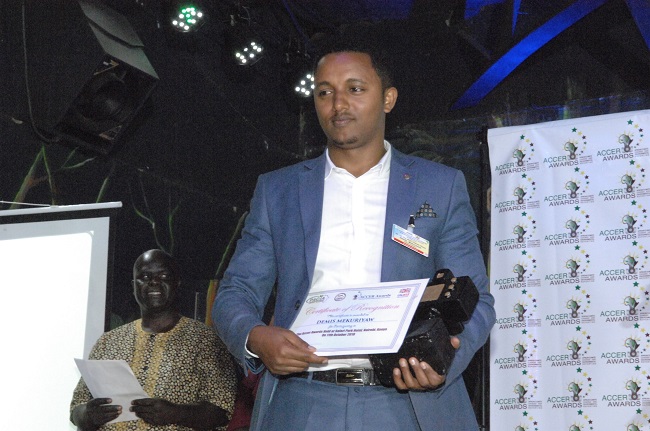
Demis Mekuriyaw
The overall winner of the African Climate Change and Environmental Reporting (ACCER) Awards was Ethiopian Demis Mekuriyaw, who was praised by the judges for outstanding coverage of environmental issues in his country.
“Mekuriyaw is a highly organised and efficient journalist, whose thorough and precise approach to projects has yielded excellent results. He went out of his way on a shoe-string budget to report on climate change and environmental issues affecting his country,” the judges said.
He works for etv Broadcasting Corporation.
“I’m elated to be honoured for simply doing my job. I really am grateful, and I pledge to continue to do my best in investigating and reporting environmental challenges in my country and elsewhere,” said Mekuriyaw.
The ACCER awards are meant to encourage journalists on the continent and their media houses to cover the environment issues.
Guest of honour, Kenya’s Environment and Forestry Chief Administrative Secretary, Muhamed Elmi, said climate and environmental issues were too important to be left to politicians alone.
“I will continue to say it again and again that climate change will deal with us if we do not deal with it,” he said. “This is where our journalists come in. We also need to put in place incentives for media houses to support their journalists who cover the environment otherwise the journalists will do their work, but their newsrooms will not publish. This subject is too important to be left to governments and politicians alone.”
Mithika Mwenda, Secretary General of the PanAfrican Climate Justice Alliance (PACJA), which organised the awards and CCDA-VII in partnership with the Economic Commission for Africa (ECA) and the Kenyan government, said PACJA was happy with the response of environmental journalists from across the continent though more still needed to be done.
“We have seen over the years that environment and climate change issues are relegated in terms of news with politics taking centre stage. In this world with multiple problems competing for attention, climate change and environmental destruction, the root causes of global problems hardly receive priority, so we hope the awards will make a difference. We are seeing the difference,” he said.
James Murombedzi, Officer in Charge of the Economic Commission for Africa’s African Climate Policy Center (ACPC), challenged the environmental journalists to write their stories in local African languages for maximum impact.
“There are many words that are used that we do not even have in our languages on the continent and the challenge is upon you as journalists to coin the words and the language that our people can understand in the discourse aimed at forging a collective effort to curtail climate change, reduce poverty and ensure sustainable and equitable development is attained on the continent,” he said.
Representatives from the African Union Commission and the African Development Bank also spoke and pledged to support the continent’s environmental journalists to increase their capacity, understanding of science and related issues, working with the ECA, PACJA and other partners.
PACJA hosted a three-day training workshop for Africa’s environmental and climate journalists ahead of CCDA-VII in a bid to build their capacity on climate and environmental issues; to build a critical mass of African journalists with a special focus on climate and the environment; to simplify and demystify the jargon used; and create a platform where journalists and other stakeholders can interact.
Victor Bwire, Wanjohi Kabukuru and Michael Simire were trainers at the workshop.
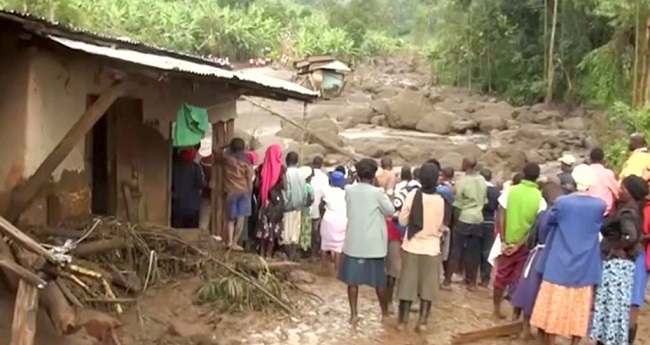
A massive landslide hit Bududa district in Uganda again on Thursday, October 11, 2018 following a heavy downpour and hundreds of people are feared dead.
Scene of the Bududa landslide
Although 40 bodies had been recovered, by press time, hundreds are feared dead because some areas were still inaccessible.
According to preliminary information, two market centres on the slopes of Mt. Elgon and two schools were completely decimated when River Tsuume in Bukalasi sub-country in the landslide-prone district burst its banks, carrying whatever if found in its way into River Manafwa.
There were also reports that a big number of pupils and their teachers could have been killed in the massive landslide.
“A river burst its banks in Bududa following a heavy downpour and caused a landslide up the mountain. It rolled big boulders through a village in Bukalasi sub-county, killing several people,” Martin Owor, the commissioner for disaster management in the Office of the Prime Minister (OPM), said.
“Several people are injured and many displaced. A detailed report will be issued after the on-going assessment, “Owor added.
Last evening, Bududa district chairperson Wilson Watira said 40 dead bodies had been recovered so far.
He said recovery efforts had been restricted due limited accessibility and navigation in the area as the river carried away all bridges linking the remote villages to the rest of the district, creating a huge sludge rift separating either side.
“Disaster alert! Massive landslide occurrence in Bukalasi sub-county, Bududa district. It has just happened 50 minutes ago,” the Uganda Red Cross public relations officer, Irene Nakasita, said.
The preliminary report indicates that the number is likely to increase. The situation is tense as community members are scared and fleeing their homes for safety.
In the meantime, the whole district is still experiencing heavy downpour and we are expecting more of the same in other landslide-prone areas,” she added.
Nakasita said the situation had been complicated by the fact that the affected area was not accessible.
“It was still raining heavily, and the ground is soggy; you cannot just dare it – you can equally just get buried,” she said, adding that the Red Cross response action team from Mbale was heading to the area.
The incident took place during the mid-day downpour and most of the victims were those who were operating in the two trading centres of Nalutungu and Anchenor.
According to reports, other people affected were those whose homes were in the vicinity of the river banks or those whom floods found on the roads.
Reports say there were heavy rains in the Mt. Elgon National Park that had triggered heavy flooding and mudslides that gained momentum, carrying trees and rocks as they rolled down the mountain slopes.
Survivors talked of hearing a rumbling sound and tremors followed by flying rocks. Hundreds of acres of crops that include bananas, cassava, beans, coffee and other crops were also destroyed.
The rains have also caused River Manafwa to burst its banks, causing more flooding. The disaster occurred just a few kilomenters from the 2010 disaster in Nametsi village, where over 30 homesteads were buried and over 150 lives lost.
Similar disasters are common in this area, but residents have made a slow response to the Government efforts to relocate them from the mountainous areas.
According to several studies carried out, Mt. Elgon region has the highest rate of landslides and floods in Uganda.
The recent wave of landslides is attributed to multiple factors such as climatic changes, for example El-Nino rains, deforestation, deeply weathered soils underlain by tertiary and pleistocene volcanic rocks, steep topography and human activities such as cultivation.
Experts argue that human activities, such as poor logging practices and overplanting on steep slopes, accelerate landslide occurrence.
Recent Bududa Landslides
March 2010: Landslides killed about 150 people and displaced over 10,000, in Nametsi sub-county, Bududa district.
March 2011: A landslide swept the slopes of Mt. Elgon, razing three villages in Bududa district (Kubehwo, Namangasa and Nametsi) located in Bukalasi sub-county. Ninety-two bodies out of the 365 people were recovered and only 31 survivors were rescued from the three affected villages.
June 2012: Landslides occurred at Bunakasala parish, Bududa district, sweeping through four villages after a heavy downpour in the area for two days. At least nine were injured and 15 houses were buried.
August 2013: A four-year-old child, John Mangoye, the son of Stephen Waninga, a resident of Matuwa parish, was killed after a hailstorm ravaged several villages causing multiple mudslides and floods in Bushiyi sub-county in Bududa district. At least 17 other injured persons were admitted to Bududa Hospital, while an un specified number mostly children, the elderly and disabled were unaccounted for and feared dead.
Stakeholders in the agriculture sector of the economy have called for total transformation of the nation’s food systems to prevent hunger and arrest incidence of poverty.
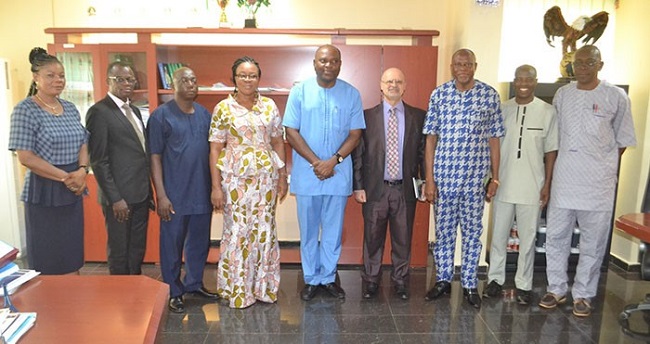
L-R: Dean, Faculty of Agriculture, Dr. Tina Igberi; Rep. of NAFDAC DG, Dr. Isaac Kolawole; Bursar, Alhaji Rafiu Aliu; Registrar, Mrs Odisa C. Okeke; VC, Professor Chinedum Nwajiuba; Deputy Director-General, IITA, Dr. Kenton Daschiell; DVC, Professor Sunday Elom; Chairman, LOC, Professor Dr. Jonny Ogunji, and Dean, PG School, Professor I. I. Osakwe, when the keynote speaker paid a courtesy call on the Vice-Chancellor in his office
They made the call recently during the 2nd International Conference hosted by the Faculty of Agriculture, Alex Ekwueme Federal University Ndufu Alike, Ebonyi State, with the theme, “Transforming National Food Systems to Prevent Hunger” as part of their Food Security and Hidden Hunger series.
While delivering the keynote speech, the Deputy Director-General, International Institute for Tropical Agriculture (IITA), Ibadan, Oyo State, Dr. Kenton Daschiell, noted that it was possible to achieve zero hunger in Nigeria if the right systems were put in place. He also opined that zero hunger would be attained in Nigeria when farmers grow what they eat and eat what they grow.
He further revealed that series of meetings have been held by the Zero Hunger Forum championed by former president, Olusegun Obasanjo, in Benue, Borno and Ebonyi states, adding that these interactions have led to increased results in food production and extensive agricultural produce.
Dr. Daschiell also stated that Nigeria has done well in achieving some of the Sustainable Development Goals (SDGs) by providing nutritional food that reduces infant mortality among primary school pupils, bio-control products containing beneficial fungi that reduce afflation concentrations in groundnut and maize by 99% compared to untreated crops and increased growth opportunity for cassava products in the food sector. He further acknowledged that Nigeria has an enormous potential for industrialisation through cassava processing.
He, however, pointed out that some of the major bottlenecks that Nigerians were encountering in food production to include high production cost due to low yield, leading to lack of global competitiveness and lack of good road network and new technologies. And stated that, for agricultural sector to close the yield-gap in produce, they must involve new technologies and increase cassava competitiveness to fight hidden hunger in Nigeria.
While declaring the conference open, the Vice-Chancellor, Professor Chinedum Nwajiuba, expressed satisfaction on the academic trajectory being charted by the Faculty of Agriculture of the university, adding that they have made the institution proud by being practical-oriented in the delivery of their academic brief and thereby enhancing food production.
He stressed that transforming national food system demands SMART policymaking and programme formulation which was the reason for the annual conference on Food Security and Hidden Hunger in the university. He advised government to think out of the box to identify new ways the country should go so that it would not be stocked in the 17th century policy model.
The Vice-Chancellor assured that students of the university would be trained to be productive, employable and employers of labour in the agricultural sector, particularly now that there is a global effort to build a resilient and sustainable food systems for securing a healthy future for everyone.
Also speaking at the event, the Chairman, Local Organising Committee, Professor Dr. Johnny Ogunji, said that hunger may not only be evident in the quantity of food eaten, “as you may eat a lot but still derive nothing from it”. He stressed that the food sector has undergone rapid but unsustainable changes in the last few decades leading to changes in the food eaten, processed and marketed, which has led to high incidence of diseases such as diabetes, cancer, hypertension and different degrees of malnutrition among the people. He therefore advised the Nigerian government to ensure the country makes progress in agriculture to end all forms of malnutrition and make food systems more sustainable.
While welcoming the participants, the Dean, Faculty of Agriculture, Dr. Christiana Igberi, said the university has taken the lead in the transformation of the agricultural sector by creating several hotspots for capacity building, innovative approach and incorporating the indigenous knowledge and local content for adaptability in order to realise the stated goals. She informed the participants that the faculty had embarked on the production of cucumber, maize, pepper, tomatoes and other vegetables through its farm, which has been scientifically tested as safe product though not yet in commercial quantity due to lack of land.
She maintained that every student was meant to engage in practical agricultural activities to complement the theories learnt in class in pursuance of their vision to proffer solution to the alarming food insecurity in the country.
The highlight of the conference, which was chaired by the Director of International Cooperation, Babcok University, Professor Cyril Nwagbuika, includes displaying of some agricultural produce such as packaged cassava flour, packaged “fufu”, cucumber and others from the university farm.
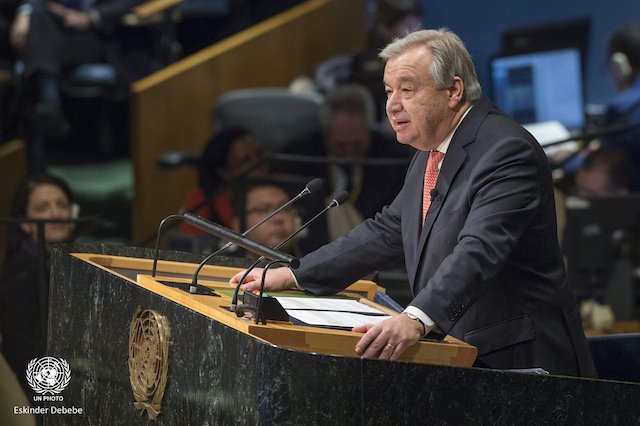
UN Nations Secretary-General, Antonio Guterres, on Thursday, October 11, 2018 said he was “deeply saddened’’ by reports that 200 people have died in floods in Nigeria.
Antonio Guterres, UN Secretary General
“The secretary-general extends his condolences to the families of the victims and to the Government and people of the Federal Republic of Nigeria and wishes the injured a speedy recovery,” said a statement issued by the secretary-general’s spokesman.
“The UN expresses its solidarity with Nigeria during this difficult time and stands ready to support as required,” said the statement.
In addition to the rising death toll, 1,300 people have been reportedly injured and nearly two million affected by the recent flooding in areas along the Niger and Benue rivers in Nigeria.
More than half a million have been displaced and over 350,000 are in need of immediate humanitarian assistance.
Torrential rains have unleashed floods in different parts of Nigeria over the past few days, killing at least 200 people and damaging thousands of homes, according to officials.
A national disaster was initially declared in four states – Kogi, Niger, Anambra and Delta – over the flooding, meaning that the Federal Government had taken over the search, rescue and rehabilitation of victims.
“Based on the data available, 100 people have so far died in 10 states,” Sani Datti, spokesperson for the National Emergency Management Agency (NEMA) said.
A national disaster was declared in four states – Kogi, Niger, Anambra and Delta. Kogi and Niger are in central Nigeria whereas the other two are in the south.
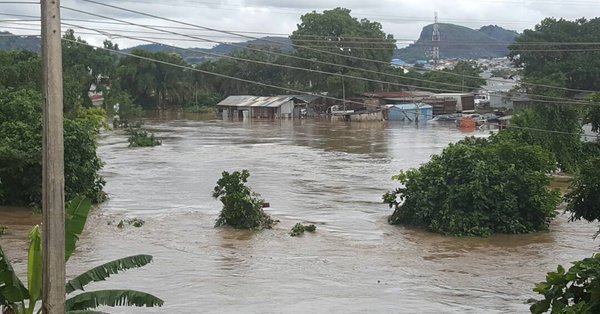
In Lokoja, the state capital of Kogi, floods partially submerged several houses. The city lies at the confluence of the Benue and the Niger, Africa’s third-longest river, making it particularly vulnerable to high waters.
Nigeria’s rainy season, which typically runs from March to September, brings with it inevitable flooding.
Such flooding is exacerbated by poor infrastructure and lack of planning to protect against the waters, but this year the destruction has been the worst since 2012.
At least 140 people were killed and tens of thousands forced to abandon their homes in 2012, in Nigeria’s worst flooding in more than five decades.
The Nigeria Hydrological Services Agency (NIHSA) said that nine states on the River Niger trough and three others on River Benue trough may experience flooding this year, following persistent rainfall.
Some the states are: Niger, Anambra, Kwara, Kogi, Kebbi and Jigawa and Benue among others.
Besides the alert by relevant agencies, Nigerians are daily being inundated with news of effects of flooding, especially in Niger, where flood has led to loss of lives and destruction to farmlands, houses and other valuable property.
Hydrological experts have disclosed that the water level in some riverine state had risen to 10. 66 metres above the sea level.
The National Emergency Management (NEMA), has declared five more states – Adamawa, Taraba, Kebbi, Bayelsa and Rivers – as “National Disaster” following the recent flooding that has ravaged the states.
Flooding in Suleja
Mr Sani Datti, Head of Media and Public Relations, NEMA, made this known in a statement on Thursday, October 11, 2018 in Abuja.
According to Datti, Mr Mustapha Maihaja, Director General, NEMA, made the declaration following the ongoing efforts of the agency to tackle and assist flood victims across the country.
He said that the declaration of the five new states now puts the numbers of flood affected states under flood emergencies to nine.
“It would be recalled that on Sept. 17, a National Disaster was declared in Kogi, Niger, Delta, Anambra States.
“In consideration of the data and information being received, in particular the Preliminary Damage Assessment (PDA) and guided by relevant NEMA Policy documents, additional 5 states are observed to have been impacted severely by the disaster.
“On the consultation, subsequent endorsement of all the stakeholders here present, and the delegation of Authority conferred on me by the President and Commander-in-Chief of the Armed Forces of the Federal Republic of Nigeria.
“I, Mustapha Yunusa Maihaj, the Director General, NEMA hereby declared National Disaster in the five states of Adamawa, Bayelsa, Kebbi, Rivers and Taraba,” Maihaja said.
Maihaja commended the efforts and commitments of all stakeholders, and the International Partners for their contribution so far to the success of the operation.
He explained that the addition of the five states recently declared expands the scope and the need for response and call for more support accordingly.
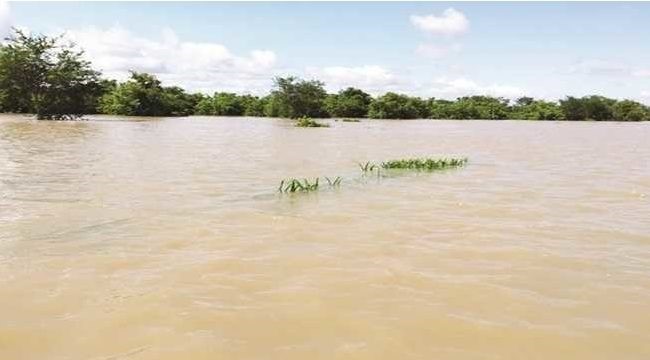
Flood has destroyed 280 hectares of rice farm in Iguoriakhi and Iguomo in Ovia North-East and Ovia South-West local government areas of Edo State.
A flooded farm
The state Chairman of Rice Farmers Association of Nigeria (RIFAN), Mr Dirisu Abdulsalam, told newsmen on Thursday, October 11, 2018 in Benin Cty, the state capital, that farmers close to the riverine areas in the state were worst hit by the flood.
He appealed to government at all levels to come to assist farmers following the destruction of thousands of hectares of rice farmlands by flood in several communities in Edo North, Edo Central and Edo South senatorial districts.
Abdulsalam noted that the flooding would negatively affect government’s drive at sufficiency in rice production in the country.
He said that the association was evolving modalities to ensure the farmers were ready for dry season farming, to make up for the destruction.
“The association will be sensitising rice farmers for dry season farming to make up for the shortfall occasioned by the destruction of rice fields by flood.
“There are many problems in rice production and the worst of it now is that flood has eroded or washed away crops and even submerged some of our members’ houses.
“Therefore, we appeal for assistance from government and international donors so that our farmers will not go and commit suicide,” he said.
According to him, flooding will reduce rice production chain in the state, adding that the affected farmers have lost millions of Naira investment.
He, therefore, appealed to the state government to make tractors available to rice farmers, noting that the state had no single tractor.
Abdulsalam said Edo was one of the major rice producing states in the country.
He expressed regrets that the state government was not giving priority to rice farmers in terms of provision of certified seedlings and funding.
Three ecologists from the United Kingdom, Malaysia and Lebanon were on Thursday, October 11, 2018 announced winners of the MIDORI Prize for Biodiversity 2018.
Dr. Kathy MacKinnon, Chair of the IUCN World Commission on Protected Areas, one of the three winners of the the MIDORI Prize for Biodiversity 2018
The MIDORI Prize is a prestigious biennial international prize organised by the AEON Environmental Foundation and the Secretariat of the Convention on Biological Diversity. It honours individuals who have made outstanding contributions to the conservation and sustainable use of biodiversity at global, regional, or local levels.
The winners of the 2018 MIDORI Prize are: Dr. Kathy MacKinnon, Chair of the IUCN World Commission on Protected Areas; Mr. Assad Serhal, Director General of the Society for the Protection of Nature in Lebanon; and Dr. Abdul Hamid Zakri, Joint-Chair of the Malaysian Industry-Government Group for High Technology.
Each of the prize winners is awarded a monetary prize of $100,000 to support their work. They will be honoured and will deliver public lectures at an award ceremony October 31, 2018 in Tokyo, Japan. The three prize winners will be featured in a video and an exhibition at the 14th meeting of the Conference of the Parties to the Convention on Biological Diversity (CBD) which will be held from November 17 to 29, 2018 in Sharm El-Sheikh, Egypt.
“The conservation of the world’s biodiversity and the prevention of climate change are two of the greatest challenges of our time,” said Mr. Takuya Okada, Chairman of the AEON Environmental Foundation. “We hope that the MIDORI Prize will contribute to meeting this global challenge through mainstreaming biodiversity and promoting further actions to safeguard biodiversity.”
“The three exceptional individuals who have been awarded this year’s MIDORI Prize for Biodiversity have made outstanding contributions to the conservation and sustainable use of biodiversity and the fair and equitable sharing of its benefits,” said Dr. Cristiana Pașca Palmer, United Nations Assistant Secretary-General and Executive Secretary of the Convention on Biological Diversity. “I sincerely congratulate the 2018 winners for their numerous achievements. Their work represents the kind of energy, action and inspiration we need to improve the relationship between humans and nature.”