Namibia has made significant strides in wastewater management by converting sewage water to tap water over the years, the Windhoek Municipality said on Monday, October 15, 2018.
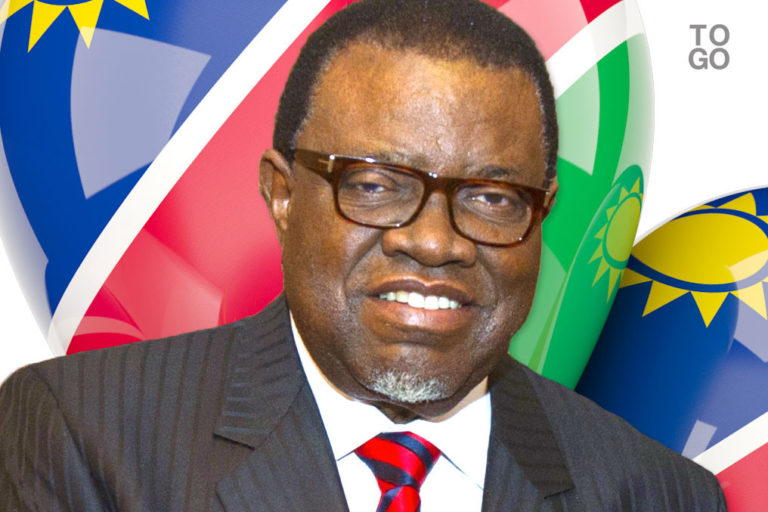
Hage Geingob, President of Namibia
It said that the country would celebrate the 50th anniversary of Direct Potable Reuse (DPR) on Oct. 18 and 19, and global experts from Australia, Europe and the U.S. will be in attendance.
The event will run under the theme “Direct Potable Reclamation with a Clean Bill’’.
According to the municipality, a special session will take place, which will also focus on the current developments and future of DPR not only in the country but also globally.
Windhoek, being driven by continuous water scarcity and exceptional challenges in term of supply, innovatively took the step to introduce purified sewage effluent into the drinking water system way back in 1968.
“Over the years, this unconventional supply source has gone through various stages of refinery and maintained as an important source of supply to the ever-growing city.
“Windhoek is regarded as one of the world leaders in DPR.
“It remains one of the only places in the world where this is practised on a significant scale and continuous basis to supply the residents of the city with drinking water,’’ the municipality.
The Environmental Rights Action/Friends of the Earth Nigeria (ERA/FoEN) has eulogised the Nigerian delegation that attended the Eighth Conference of the Parties (COP8) to the World Health Organisation Framework Convention on Tobacco Control (WHO-FCTC) that held recently in Geneva, Switzerland.
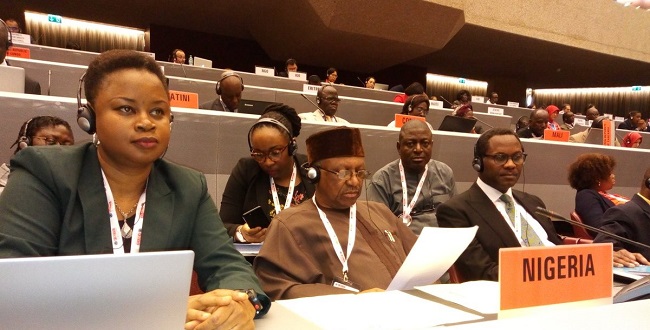
L-R: Florence Adeyemi, Permanent Missions Geneva; Dr. Osagie Ehanire, Minister of State, Health; and Mr. Babatunde Irukera, Director-General, Consumers Protection Council, at the Eight Conference of Parties of the Framework Convention on Tobacco Control, in Geneva
The ERA/FoEN in a statement issued in Lagos on Monday, October 15, 2018 said that, with the strong stance of the delegation throughout the talks on issues bothering on protecting the treaty from tobacco industry interference, Nigeria has taken its pride of place in the tobacco control community.
The delegation, led by Minister of State for Health, Dr. Osagie Ehanire, also had Director, Department of Public Health of the Federal Ministry of Health, Dr. Evelyn Ngige; National Coordinator of Non-Communicable Diseases, Department of Public Health, Dr. Nnenna Ezeigwe; and the Director-General of the Consumer Protection Council, Mr. Babatunde Irukera. The Nigeria Customs Service (NCS) and the Standards Organisation of Nigeria (SON) were also on the delegation.
The group stated that the Nigerian delegation was not only united in advocating that the tobacco industry be held accountable for tobacco harms but also became one of the standard bearers in ensuring that the treaty talks remained focused on stamping out loopholes that might be exploited by the tobacco industry to infiltrate country delegations.
ERA/FoEN Deputy Executive Director, Akinbode Oluwafemi, said: “The Nigerian delegation was exemplary. We anticipate that post-COP8 the federal government will move speedily to remove all the bottlenecks to effective tobacco control in the country, particularly the draft regulations for the enforcement of the National Tobacco Control Act.”
Oluwafemi added that Nigeria stood solidly behind the review of the public badges policy which had hitherto been exploited by the tobacco industry to pressure delegates to take a soft stance on implementing the treaty.
“To demonstrate that heightened transparency and that no member of the Nigerian delegation had any conflict of interest that might influence their position on the treaty talks, Health Minister, Dr. Ehanire, compelled them to sign a mandatory declaration of interest form and insisted this would be the practice henceforth. This is unprecedented.”
According to him, this decision drew applause from other Parties and informed the decision of non-governmental organisations under the Framework Convention Alliance to award Nigeria the orchid reserved for Parties that take courageous decisions on fully implementing the WHO-FCTC.
The ERA/FoEN boss noted that, with the strong statement in support of tobacco control that the minister made during his intervention at the treaty talks, Nigerians should expect expedited action in the processing of Nigeria’s ratification of the trade protocol so that the instrument of the ratification can be deposited at the WHO.
UN Climate Change Executive Secretary, Patricia Espinosa, and UN Secretary-General’s Special Representative for Disaster Risk Reduction and head of the UN Office for Disaster Risk Reduction (UNISDR), Mami Mizutori, in an op-ed published on October 11, 2018 by the Thomson Reuters Foundation, insist that climate change is now a major multiplier of disaster losses worldwide
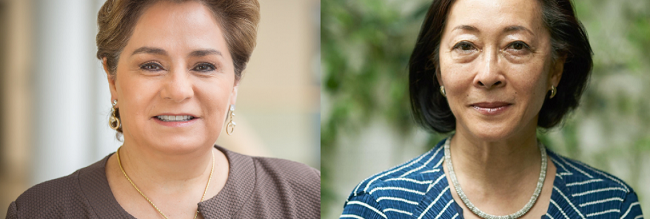
UN Climate Change Executive Secretary, Patricia Espinosa (left0, with UN Secretary-General’s Special Representative for Disaster Risk Reduction and head of the UN Office for Disaster Risk Reduction (UNISDR), Mami Mizutori
There has been a doubling of extreme weather events in the last twenty years which have experienced some of the hottest years on record.
A new report published to mark the International Day for Disaster Reduction spells out clearly that 91% of major disaster events are extreme weather events and they account for 77% of the recorded economic losses from climate and geophysical events.
Total recorded economic losses for the last 20 years are significantly under-reported but come to a total of almost $3 trillion, according to an analysis of the global data base maintained by the Centre for Research on the Epidemiology of Disasters (CRED).
And, a whopping $2,245 billion of that is attributed to climate-related disasters.
At the end of this year in Poland, governments are set to complete the implementation guidelines of the Paris Climate Change Agreement – a crucial step to ensure that the agreement can be truly effective.
The international community needs to support all nations in their efforts to develop national adaptation plans and to integrate climate change and disaster risk reduction fully into their development objectives.
For this, the developed country pledge of mobilising $100 billion per year by 2020 for developing countries’ climate change efforts will be crucial.
This is a relatively small investment in light of the size of economic losses from extreme weather events.
Last year set a record for economic losses caused by extreme weather events, notably floods and storms, which are aided and abetted by record rises in land and sea surface temperatures, rising sea levels and more vapor in the atmosphere.
Global mean temperatures last year were 1.1˚C above pre-industrial temperatures and the world’s nine warmest years have all occurred since 2005. Odds are that 2018 will become the fourth hottest year on record.
These profound changes often find expression in unspeakable tragedies such as the loss of lives, homes and livelihoods in wildfires. Droughts are contributing to a rise in world hunger for the first time in a decade.
Unprecedented levels of rainfall contribute to the loss of many lives in events such as the collapse of a hillside in Sierra Leone or a dam in Laos. Atlantic hurricane seasons can kill thousands of people. Typhoons in Asia force the evacuation of millions.
Integrated Approach
What these events are telling us is that the level of risk that already exists is being heightened in an unprecedented way by climate change.
The community of nations has recognized that measures to adapt to the inevitable impacts of climate change are just as important as cutting greenhouse gases.
The world requires an integrated approach to disaster risk reduction and tackling climate change. This means integrating implementation of the Paris Agreement and the global plan for reducing disaster losses, the Sendai Framework for Disaster Risk Reduction.
The push agreed by UN member states to increase national and local strategies for managing disaster risk includes taking account of the impacts of climate change, poverty, rapid urbanization, environmental degradation and weak regulation of land use and construction.
The failure to adopt a risk-informed approach to social and economic development would have dire consequences in a world that is on course not for the desired 1.5˚C rise in temperatures but 3˚C at current levels of ambition.
There are promising signs regarding action as cities, regions, businesses, investors and non-governmental organisations are increasingly developing resilience and adaptation strategies to cope with climate change impacts.
Many of these stakeholders have begun aligning their strategies with the Paris Agreement, which is encouraging given that governments cannot rise to the challenge on their own.
While governments continue to take the lead, the increasing involvement of other actors is creating a new, more inclusive multilateralism to tackle climate change.
The clock is ticking down. Only by fully translating strategies such as the Sendai Framework, the UN’s Sustainable Global Goals and the Paris Agreement into concrete action at all levels can we adequately protect the peoples of the world and the economies they depend on.
The Word Bank Board of Directors says it has approved the third Regional Disease Surveillance Systems Enhancement (REDISSE) Project and committed additional $120 million to the work plans.
World Bank Group President, Jim Yong Kim. Photo credit: static.guim.co.ukMr John Paul Clark, the World Bank Senior Health Specialist, made the disclosure on Monday, October 16, 2018 in Lagos at the opening of the ongoing technical sub-committee meeting of the REDISSE project.
According to him, the project has a total of $367.8 million and aims to strengthen disease surveillance and response systems at regional level and in ECOWAS Member States and Mauritania.
The REDISSE project is a Regional project funded by the World Bank, covering all the 15 ECOWAS countries and Mauritania in five-year phases from 2016 to 2023.
The first phase covers three countries, including Guinea, Senegal and Sierra Leone, while the second phase covers four countries of Nigeria, Guinea-Bissau, Liberia and Togo.
Its implementation is in the third phase, covering four countries – Benin, Mali, Niger and Mauritania.
Clark said: “REDISSE project is now providing credits and grants to 11 countries in and West African Health Organisation (WAHO) with the budget growing to $400 milion.
“REDISSE is the World Bank’s flagship investment in both Health Security and the One Health agenda,” he said.
Reviewing implementation of the programme, Clark expressed displeasure that REDISSE 1 (Guinea, Sierra Leone and Senegal) has a disbursement ratio of only 14 per cent, compelling the downgrading in June 2018 from Satisfactory to Moderate.
According to him, this can fall to unsatisfactory “unless the pace of implementation increases”.
The REDISSE 2 (Togo, Guinea Bissau, Nigeria and Liberia) has disbursement ratio of nine per cent; a big portion of which is for activation of the CERC in Nigeria due to the Lassa Fever.
“It also warns that the project is at risk of ratings down-grade this year.
“As such, we need to take our work here very seriously; we need to see both what is and what is not working well in planning and implementation.
“What can we do better?
“This is our opportunity to discuss the challenges we face openly.
“It is to identify some best practices and to advise each other on how best to move forward toward our objective of building capacity to prevent, detect and respond to disease threats in West Africa,” Clark said.
Declaring the meeting open, the WAHO Director-General, Prof. Stanley Okolo, charged participants to assess the status of implementation of the recommendations of the first Regional Steering Committee Meting.
The director-general, represented by Dr Carlos Brito, said the meeting has a “heavy task” of producing strategy for implementation of the REDISSE Project.
“Success of the implementation of the project is very important to us.
” I commend and thank the technical partners – WHO, OIE, RAHC, CCISD, FMx and other partners.
“I also commend the Nigerian Government for accepting to host the meeting,” he said.
The two-day technical sub-committee meeting is being attended by all the 15 ECOWAS member States and Mauritania.
Agriculture economists have expressed concern about how agricultural activities in the country have taken the back stage since the discovery of oil.
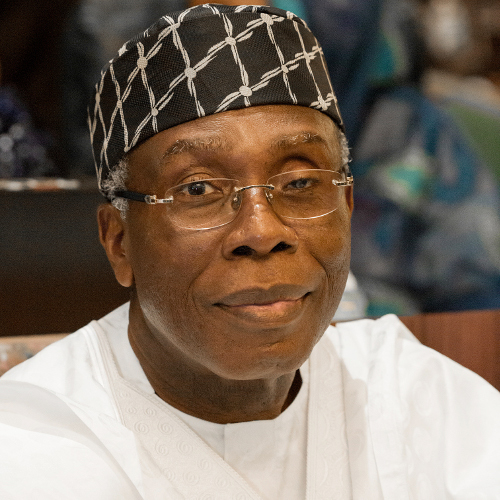
Minister of Agriculture and Rural Development, Chief Audu Ogbeh
They note that agriculture sector, comprising the cultivation of and keeping poultry and livestock, among others, has played a dominant role in the country’s economy in the past.
They observe further that as the major hub of the country’s economy in the past, agriculture provided more than 70 per cent of employment and resources in the country.
Realising the danger in somewhat abandonment of farming on large scale, the Federal Government has made efforts by successive administrations to revive the sector.
Agricultural reforms ranging from the Operation Feed the Nation, the Green Revolution and the Structural Adjustment Programme to series of agriculture development programmes by the International Fund for Agricultural Development (IFAD), Food and Agriculture Organisation (FAO) and World Bank, have played significant roles in revolutionising the sector to some extent.
In the same vein, successive governments in the country have sunk huge amount of money in the sector but most farmers argue that farming in Nigeria is not encouraging.
Mr Akin Akintuberu, a cocoa farmer in Idanre, Ondo State, argued that smallholder farmers in rural areas faced short supply of inputs.
He said most rural farmers “do not have asses to subsidised agriculture inputs as announced by government.
“Lack of certified seeds and fertiliser are major challenges, it is so unfortunate that while everyone is busy developing every sector of the economy, farmers we are completely forgotten as if farm produce is of no value.
“High interest rates on loans from banks across the country without consideration for the gestation period give us concern, threatening the capacity of the farmers to make profit from the produce’’.
He called on the Federal Government to review downward the interests on bank loans to farmers.
In his opinion, Mr Atolagbe John, a farmer, noted that most farmers live in poverty because almost all of them might not have land to farm in large scale.
“Most of the poor farmers grow produce on a small scale, that is, they own a field or two and some even have to lease land, a lot of them take loans to buy seeds, fertiliser and other farm inputs at a high interest rate,’’ he noted.
But Malam Adamu Malunfachi, a farmer in Kaduna, identified the activities of middle men who take away the bulk of the profits away from farmers as major problem of farmers.
“Middle men are always at the farm gate to dictate the price that suits them.
“They buy crops in big quantities, keep their stock and wait for the prices to go up and sell.
“Also acknowledge illiteracy rate among the farmers in many cases affects their decisions and ability to adapt to new crops,’’ he said.
Mr Ignatius Okorocha, a farmer in Enugu, said that farmers were not getting reward for their efforts.
“Price of feeds, chemicals, cutlass, hoes, rakes and labour have gone up forcing many farmers to abandon farming,’’ he noted.
In his view, Mr Adebisi Ojurongbe, a cash crop farmer in Oye, Ekiti State, noted that rural development aimed at actualising the dream of improving the people’s socio-economic welfare remained at policy level.
“It is unfortunate considering the fact that the peasants who feed the nation are in the rural areas, yet government cannot implement rural development policies to set agenda for the future.
“Go to all the rural areas across the country, you will see them in a very terrible state and the produce we struggle to produce are perishing because of lack of transportation.
“If basic infrastructure is produced it will reduce if not eliminate the exodus of young men and women from rural areas to urban areas,’’ he said.
Sharing similar sentiments, Mrs Eunice Jejelowo, a cassava farmer at Okeluse, Ondo State, said that with the provision of basic infrastructure, employment would be created, and many people would leave the city for the grassroots.
“If this happens, there will be rapid development in the rural areas and more people will go into commercial farming and boost food production,’’ she observed.
Malam Abdullahi Sharfa, a Fadama farmer in Giri, Abuja, nonetheless, identified inadequate tractors supply as one of the major problems militating against mechanised farming in the country.
“For us to break even and meet the standards of Food and Agriculture Organisation in terms of mechanised agriculture of this country, we need a minimum of about 80,000 tractors.
“The mechanisation team leader of the Agriculture Transformation Agenda committee has completed the public sector mechanisation framework.
“But the scheme might be thrown into the bin when another government comes to power for another programme,’’ he said.
In his opinion, Mr Badmus Arogunsola, a poultry farmer, said that research into best agricultural practices in Nigeria had declined in recent times due to acute shortage in funds for infrastructure and operations.
He argued that the challenge could be solved be making use of agricultural research institutes and universities of agriculture across the country.
“Many developing nations have reformed their agriculture research councils with very satisfactory results for their economy.
“With over 18 agricultural research institutes in Nigeria, most of their research findings are now book shelf materials rather than transforming the knowledge to farmers,’’ he observed.
However, some farmers on the platform of All Farmers Association, Ekiti Chapter, agreed that farmers are not breaking even because “the lands are fragmented, unproductive, degraded and scattered.
“Almost 95 per cent of the farms depend on rain due to lack of irrigation facilities and most of us are depending on rain for farming’’.
The association alleged that most of government agricultural programmes were not reaching the right farmers in the grassroots.
But some farmers in Kwara observed that apart from the enumerated challenges in farming sector, “most farmers are aged and the youth are not embracing agriculture’’.
The farmers also observed that loss of soil fertility “is responsible for the low crop yields while most of the farmers use old and inefficient techniques of farming’’.
They noted that storage facilities in rural areas were either not there or grossly inadequate “by which farmers sell crops immediately even if market prices are low to avoid post harvest loss’’.
In the light of the various concerns expressed by farmers, the African Development Bank (AfDB) and other stakeholders, therefore, advised that the Federal Government should develop high-yield crops by increasing research into plant breeding.
According to the bank, such measures should also consider the peculiar types of soil in Africa.
In addition to this, soil scientists note that with the growing effects of climate change and weather patterns, more irrigation programmes are necessary.
They call for increased use of fertiliser, observing that soil fertility deteriorates, and governments should guarantee the availability of fertiliser at subsidised rate at the right farming season.
According to them, improved market access, regulations of farming activities, provision of rural infrastructure and incentives to farmers, including reductions in interest rates on agricultural loans to one digit, among others, will enhance farming activities.
Stakeholders in the water sector have called on government at all levels to prioritise provision of Water, Sanitation and Hygiene (WASH) facilities to tackle spread of diseases in Nigeria.
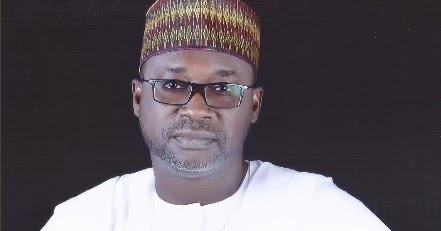
Suleiman Adamu Kazaure, Water Resources Minister
They made the call on Monday, October 15, 2018 in Abuja at an occasion to mark the global Handwashing Day, jointly organised by the Federal Ministry of Water Resources in collaboration with other stakeholders in the sector.
Oct. 15 of every year has been set aside to celebrate hand-washing to foster and support the culture of hand-washing with soap across the globe.
The theme for 2018 celebration is ‘’Clean Hands – A recipe for Health’’.
Mrs Ebele Okereke, the WASH Ambassador for Nigeria, said the 2018 celebration is focused on the links between handwashing and food, including food hygiene and nutrition.
According to Okereke, the 2018 theme is coming at a time when Nigeria is faced with several sanitation and hygiene-related diseases such as cholera, diarrhoea, typhoid among others.
She said the diseases, despite being preventable, remained the leading causes of deaths in Nigeria especially in children under the age of five years.
“Of recent, several cases of cholera outbreak have been recorded in different parts of the country especially in the Internally Displaced Persons (IDP) camps which have claimed the lives of many, children in particular.
“Potable water, proper sanitation and good hygiene are essential ingredients in ensuring a healthy life,” she said.
Similarly, Mr Attah Benson, National Coordinator, Society for Water and Sanitation (NEWSAN), explained that about 39,000 Nigerians contracted cholera disease in the recent time which, according to him, was traced to poor hygiene.
Benson said the country would not celebrate a successful handwashing day without adequate WASH facilities in strategic places like schools, hospitals, market and other public places we could think of.
He described handwashing with soap as an effective and affordable means of preventing the widespread of diseases.
In her contribution, Dr ChiChi Aniagolu-Okoye, WaterAid Country Director, said handwashing had a live-saving potential and it was the single most cost-effective and efficient way to prevent diseases.
Represented by Mr Saheed Mustafa, Coordinator, Policy and Sector Capacity to the organisation, Aniagolu-Okoye said over 157 million people (87 per cent) lacked access to WASH facilities across the country.
She therefore, urged policy makers to integrate WASH services into action to be able to end malnutrition in Nigeria.
“Although hygiene is known to improve nutrition, it is not a stand-alone solution; therefore, handwashing with soap is a nutrition-sensitive intervention.
“Promotion of handwashing is estimated to reduce diarrhoea diseases by between 27 and 48 per cent,” she said.
The United Nations (UN) has urged the Australian Government to address the collapsing health situation among refugees and asylum-seekers at its offshore detention centres in Papua New Guinea and Nauru.
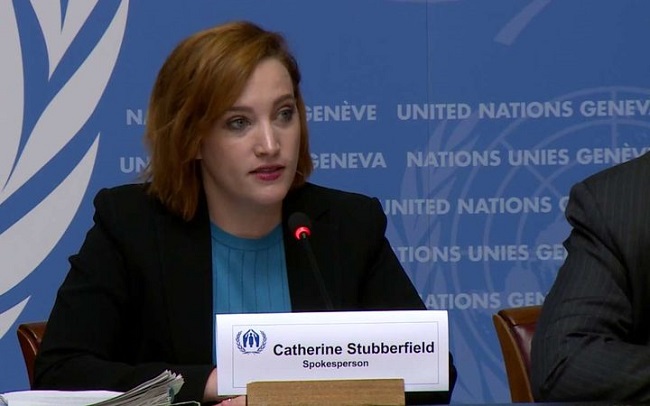
Catherine Stubberfield, UNHCR spokesperson
Although according to a Guardian report at the weekend, the Department of Home Affairs of Australia said in a statement that it took refugee health and welfare “seriously,’’ the UN refugee agency renewed its call for refugees and asylum-seekers to be moved immediately to Australia where they can receive adequate support and care.
Speaking on Friday, October 12, 2018, spokesperson for the United Nations High Commissioner for Refugees (UNHCR), Catherine Stubberfield, talked about a suicidal pre-teenage girl who doused herself in petrol in September.
She remained in Nauru although doctor suggested that she be evacuated.
The girl is not the only one refugee who attempted to flee to Australia only to end up in detention centres in Nauru or Papua New Guinea.
Since its introduction in 2013, a current policy of Australia has put about 3,000 refugees and asylum-seekers forcibly to offshore processing facilities in Papua New Guinea and Nauru, where 1,450 remain.
According to the policy, those who try to arrive in Australia by boats are to be placed on Nauru or Manus Island of Papua New Guinea.
Seemingly hopeless to reach Australia ultimately, many of those people there are in a poor state of health, both physically and mentally.
According to Stubberfield, 12 people have died in the detention centres since 2014.
Over the past year, the centre in Nauru had seen 78 cases of attempted suicide and self-harm.
Another tragic case was a young man from Iran.
He asked for help in 2014, saying that he had suicidal thought.
His mother also repeatedly begged for medical aid but to no avail.
The man took his own life in June.
Robert Manne, emeritus professor of politics and vice-chancellor’s fellow at La Trobe University, published an article in September’s titled “It pains me, but it’s time to compromise on Australia’s cruel asylum seeker policy’’.
In the article, he noted that there had been reports that “many of the children on Nauru are suffering from a rare psychological condition, withdrawal from the world, barely talking, eating and drinking with indifference, sometimes urinating and defecating in their beds’’.
While New Zealand offered to resettle some of the refugees, or fund for improving conditions for them, Australia turned down the offer.
A Guardian report once quoted the Australian government in 2017 as saying that the offer “dilutes the ‘stop the boats’ deterrent’’.
In November 2017, thousands of people took to streets in Australia, calling for refugees to be evacuated to Australia following denial of Australia government for Medecins Sans Frontieres’ access to asylum seekers and refugees on Manus Island.
“Now we are seen globally as the inventors of a particularly vile form of 21st century repression, in which the innocent are subjected to suffering in a prison where the crime is never named, no sentence is ever passed, and punishment is assured,’’ said Man Booker prize winner Richard Flanagan in a Guardian article.
“For this achievement Australia now enjoys the praise of European neo-fascists and American white supremacists’’.
Stubberfield urged the Australian government to take up New Zealand’s offer.
“Australia (has) simultaneously designed, financed and managed the system,’’ she said, adding that therefore it had to shoulder the responsibility of its offshore detention camps.
A non-governmental organisation, the Environmental Management and Development Trust (EMADET), has taken up a campaign to promote the use and conservation of the local wrapping leaf.
The wrapping leaf
The wrapping leaf, otherwise known as Thaumatoccocus danielli (or Ewe-eran in south west, Nigeria), is a kind of leaf that is used for wrapping hot local food.
Director of Programme, EMADET, Mr Alade Adeleke, made the disclosure in Ile-Iran, Osun State on Sunday, October 14, 2018, on the sideline of the Global Environment Facility (GEF) inspection and evaluation visit to the group’s project site in Ile-Iran community.
“Women use it in wrapping bean cake (Moin-moin) and corn meal (Eko or Agidi) in major urban centres,’’ the programme director said.
Adeleke said that the organisation had a nursery that had more than 10,000 leaf sampling.
“We decided to be taking the leaf from nursery to other places to plant in each of the farms where we go and do the farmers face school,’’ he said.
“We also realise that people use nylon because of the depletion of forests and non-availability of wrapping leaf.
“Our survey across the 10 towns of Osun State and even in Lagos showed that wrapping leaf is scarce and lack in demand.
“The need for wrapping leaf is so high that everybody knows the implication of using nylon that is not good; the aroma, the feeling about heating local hot food from nylon is not as good as wrapping leaf.’’
“Another thing we noted was that new generations were losing cultural method of using the leaf to turn the food.
“When the mother does not know how to turn the leave, how will the child know how to use the leaves?
“So, we brought about 10 children together to do competition on how to quickly turn the leaves so that they will know how to use it domestically.
“We introduce a leave exhibition and, by the grace of God, EMADET will continue the leaf exhibition annually,’’ Adeleke said.
He said that the organisation also observed that the traders of the leaf had to travel out of Osun State due to non-availability of the leaf.
“Women that sell the leaf around say they use more days to go and get their products. Some travel to as far as Edo State to get the leaves.
“This leaf grows where forests are intact. It can only grow with cocoa agro-forest. When you plant cocoa, it is only forest ecosystem that grows it. So, cocoa agro-forest mixes natural forest,’’ he said.
According to him, the leaf grows in the floor of agro-forest plantation. Ordinarily, it spreads easily, and it grows through its own root and multiply easily.
“It used to occupy the tropical rain forest easily without any problem but where forest is depleted, the leaves will be off,’’ he said.
According to him, people see environmental value in the leaf because it bio-degrades easily.
EMADET, a grantee of the GEF/United Nations Development Programme (UNDP) Small Grants Programme (SGP), is likewise training farmers on agro-forest production in the community, which is in Ayedire Local Government Area of Osun State.
GEF is supporting EMADET with a grant of $49,938 to execute a project titled “Integrated Agro-Forestry, Waste Management and Livelihood Enhancement” in Ile-Iran and its environs.
Adeleke, who said that his organisation began the training programme on Feb. 13, added that the idea was to teach farmers how their farms could perform better.
“The training is Farmers Face School Programme because the programme was held and delivered in each of the farmers’ farms.
“We have carried out Farmers Face School Programme in six places. For every farm we go, we distribute some farm material such as cutlasses, hoes and farm chemicals,’’ he said.
The nursery of wrapping leaves initiative preceded the Farmers Face School Programme.
He said that the training focused on the new approach to agro-forest production to bridge the gap of deforestation in South west, Nigeria, using Ileran and its environs as its local example.
According to him, Ileran was chosen because of its location that is near the Osun River and also the tail end of tropical rain forest area.
“Cocoa agro-forest is common in this area over a long time; but cocoa agro-forest is dying, and forest is depleting.
“Because forest is depleting, most of our land are being converted to savanna.
“EMADET as an organisation feels that something must be done as example to arrest the growing rate of deforestation,’’ the programme director said.
According to him, the organisation chooses wrapping leave as element that makes the forest to look better.
The village head, Ifesowapo Ile-Iran Community, Mr Sawiyu Alao, thanked EMADET for giving rural farmers the training on agro-forestry.
Alao said that the programme had changed farmers’ old practice to agro-forest’s cultivation, production and chemical application.
“Before we don’t know that the way we apply chemical kills our farm produce and the forest but when we apply what EMADET taught us, things in our farms are doing well.
“Apart from giving us training, the organisation also gave us farm implements such as hoes, cutlasses and chemical to fumigate our farms,’’ he said.
Mrs Hadijatu Ileowo, a farmer, said that she increased the cultivation of wrapping leave through the training programme given to them by EMADET.
The Balogun of Ile-Iran, Mr Asifatu Awesu, who said that villagers fetched river water for domestic use, thanked the organisation for repairing their damaged borehole.
WaterAid Nigeria says about 60,000 children below the age of five years still die every year in Nigeria, owing to diarrhea infections.
According to WaterAid, 600,000 under five children die every year from diarrhea
The group made the disclosure in a statement endorsed by Oluseyi Abdulmalik, its Communications and Media Manager, and released on Sunday, October 14, 2018 in Bauchi, to mark the Global Handwashing Day, celebrated annually on Oct. 15.
“We already know progress is not fast enough; about 60,000 children under five years in Nigeria still die each year because of diarrhea.
“That is linked to dirty water, poor toilets and poor hygiene, pointing out that everyone has a right to water and our leaders must act to leave no one behind,” WaterAid stated.
According to the organisation, washing hands with soap and water reduces cases of diarrhea by almost 50 percent, yet on average, around the world only 19 per cent of people wash hands with soap after defecation.
WaterAid urged governments to prioritise the promotion of handwashing, along with water and sanitation to save lives.
Dr ChiChi Aniagolu-Okoye, the WaterAid Nigeria Country Director, advised on personal hygiene and an intake of good diet as health boosters.
“Handwashing with soap and good food hygiene brings health and economic benefits.
“Handwashing with soap is essential for health workers, improving quality of care and reducing risk of cross-infection. It also makes children healthier.
“We are advocating alongside our partners, Action Against Hunger, to demand that governments should develop cross-ministerial coordination mechanisms between the WASH and nutrition sector championed at the highest level to support sharing of information and joint planning and implementation of policies.
The group urged policy makers to prioritise nutrition-sensitive WASH interventions and include specific objectives to improve WASH within nutrition plans and policies.
“Clear entry points to integrate WASH and nutrition include behaviour change promotion and improvement of provision of WASH in healthcare facilities and schools,” it said.
WaterAid also advocated more investments to improve handwashing practice and access to basic handwashing.
“For citizens to join in making this happen by using the power they wield in their hands to vote in the coming elections for leaders, who pledge commitment to improving WASH access,” it said.
WaterAid, however, enjoined all citizens to participate in the WASH project, to achieve a healthier environment and country.
A cross section of line Ministries, Departments and Agencies (MDAs) in collaboration with the National Biosafety Management Agency (NBMA) have reviewed and validated a National Biosafety Mainstreaming Strategy that will further strengthen the biosafety regulatory regime and its inclusion in various sectors of the economy.
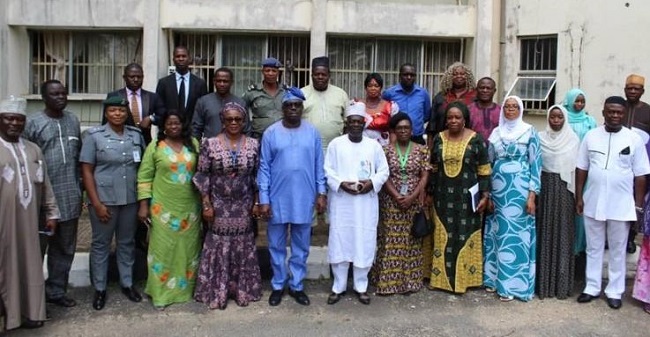
A cross section of participants of the seminar
The National Biosafety Mainstreaming Strategy document developed by the NBMA was presented, reviewed and validated by representatives of line Ministries, Departments and Agencies (MDAs) at an awareness seminar for key policy and decision makers which held on Friday, October 12, 2018 in Abuja.
The strategy is to among other things ensure continued effectiveness of the national biosafety system and synergy with sister MDAs for national growth and economic development.
In his opening remarks, the Director General/Chief Executive Officer, NBMA, Dr. Rufus Ebegba, stated: “In line with the need for collaboration and partnership among government institutions underscored by the present administration, the Agency has taken it upon itself to regularly engage relevant stakeholders for their input in its decision-making process.”
The strategy document identifies legislations and policies of line MDAs and analyses the entry points for biosafety to ensure smooth synergy with each institution. Some MDAs included in the strategy are: Federal Ministry of Environment (FMENV), Nigeria Customs Service (NCS), Nigeria Agricultural Quarantine Service (NAQS), National Agricultural Seed Council (NASC), Consumer Protection Council (CPC), National Agency for Food and Drug Administration and Control (NAFDAC), Federal Ministry of Agriculture and Rural Development (FMARD) and Federal Ministry of Industry, Trade and Investment (FMITI).
Representatives of the MDAs present conveyed their willingness to continue to work with NBMA in the regulation of genetically modified organisms (GMOs) to ensure that the practice of modern biotechnology does not pose any harm to human and the environment.
Recall that NBMA already has functional MoUs with NAFDAC, NASC, NAQS and the Standards Organisation of Nigeria (SON) in line with the fulfilment of its mandate to ensure adequate level of protection in the field of safe transfer, handling and use of GMOs.