Home Blog Page 1760

Moving against eco-colonialism, by Bassey

0

In his welcome words at the School of Ecology on Eco-Colonialism in Abuja on Tuesday, October 16, 2018, Nnimmo Bassey, Director, Health of Mother Earth Foundation (HOMEF), frowns at new forms of genetic engineering including synthetic biology and gene drives. He calls for the maintenance of the moratorium on extreme genetic engineering as imposed by the Convention on Biological Diversity
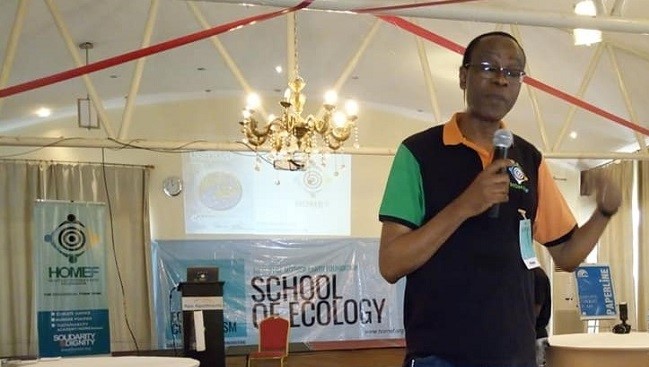
Nnimmo Bassey
Nnimmo Bassey at the School of Ecology on Eco-Colonialism in Abuja

Colonialism is alive and well and manifests in expected and unexpected forms. It started as a practice of taking political control of another country or territory, occupying it and exploiting it economically. The primary aim of colonisation was, and remains, the exploitation of resources and territories for the benefit of the coloniser. The basic impetus has always been economic and corporate entities remained firmly behind the colonial masks.

Today, most nations have obtained levels of political and flag independence. Economic independence is still a huge struggle with several factors often arising as impediments to its attainment. These include geopolitical power structures, social and cultural imperialism and institutional arrangements that ensure continued control and exploitation. This has been aided to a large extent by corporate capture and control of political levers across the globe.

Thus, Colonialism is not only alive but has grown and metamorphosed into forms that subvert the rising of a truly postcolonial state. This has partially happened because the colonised is content to take the place of the colonial master and to continue as a middle man for the old system rather than to overthrow it. As Frantz Fanon noted in The Wretched of the Earth, “The national bourgeoisie will be quite content with the role of the Western bourgeoisie’s business agent, and it will play its part without any complexes in a most dignified manner… In its beginnings, the national bourgeoisie of the colonial country identifies itself with the decadence of the bourgeoisie of the West. We need not think that it is jumping ahead; it is in fact beginning at the end. It is already senile before it has come to know the petulance, the fearlessness, or the will to succeed of youth.”

This state of affairs can also be described as coloniality – originally the state of relations in a colony but today being driven by persistent and undergirding reign of colonial mentality.

Our School of Ecology provides spaces for the interrogation of colonialism in the framework of the colonisation of Nature.  We look at the exploitation and commodification of Nature in ways that subvert natural evolution and creates economic levers for the domination and control of species and planetary systems. The sessions look at the emergence of new technologies and production methods that ignore or outstrip existing regulatory frameworks and which are pushed willy-nilly without regard to the current capacity of humankind to fully understand the intricacies and interdependences of the webs of life on Planet Earth.

The present School of Ecology is looking particularly at new and extreme forms of genetic engineering including synthetic biology and gene drives. We are also looking at geoengineering experimentation aimed at having humans and corporations literally assume control of the planetary thermostat.

We are conscious of critical voices that have called for the restriction of these experimentations to laboratories and for diligent precaution until the harms and goods of the proposed systems can be fully evaluated, understood and accepted.

A Manifesto issued by over 110 civil society groups against geoengineering stated among other things, “Geoengineering technologies may disrupt local and regional weather patterns and further imbalance the climate, with potentially catastrophic effects for some regions, including on water availability and food production. The adverse impacts and side effects could cause more regional and international conflicts.” The Manifesto calls for, “Respect and effective guarantees for the right of Indigenous Peoples and local communities to free, prior and informed consent for any geoengineering experiment or project that may impact their territories or human rights.

“Respect for peasant rights, lands and territories, acknowledging that their livelihoods, including Indigenous Peoples’ communities, forest dwellers, artisanal fishers and pastoralists, are a vital source of food for most of the world’s population; pave the way for food sovereignty; contribute to mitigating greenhouse gas emissions; and regenerate soils and ecosystems. Their lands are particularly vulnerable to being grabbed and exploited for geoengineering experiments and deployment, and their agriculture is threatened by the side effects.”

We join in the call for the maintenance of the moratorium on extreme genetic engineering as imposed by the Convention on Biological Diversity (CBD) as they threaten to wipe out species. Extreme and even old fashion genetic engineering threaten our biodiversity, overall ecological health and our food sovereignty. We also join the call for a ban of all geoengineering experiments and deployment as they threaten our very lives. Geoengineering’s side effects will obviously be deflected to already vulnerable regions and territories and Africa will be among the worst hit as present computer models show. Besides, geoengineering presents false solutions to the climate crises and will lock in polluting production systems that are driving the Earth towards catastrophic temperature rises as recently captured in the 15th Special Report of the Intergovernmental Panel on Climate Change (IIPC).

We call for total decolonisation of Nature and for the global measures for the securing of justice and allocation of responsibilities for outlaws or neo-colonial lords. Without strict responsibility, exploitation quickly spirals into the worst forms of imperialism, according to Kwame Nkrumah. Nothing can be worse than irresponsible disruption of our life support systems.

Today we have seasoned and experienced instigators in the house. We also have eager and open-minded participants. Our target is the interrogation of our mindsets and objective realities. We stand firmly against eco-colonialism. Where do you stand?


Over 131,000 people affected by flood in Niger, says NEMA

The National Emergency Management Agency (NEMA) on Tuesday, October 16, 2018 said that 131,432 residents of Niger State were affected by the recent flood, of whom 17,631 were in urgent need of relief materials.

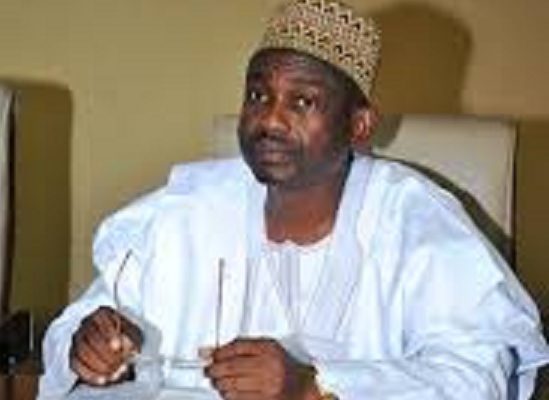
Alhaji-Abubakar-Sani-Bello
Alhaji Abubakar Sani Bello, Governor of Niger State

Malam Idris Mohammed, Incident Commander in Charge of Emergency Operation Centre (EOC) for Niger, Kwara and Kebbi states, disclosed this in an interview with the News Agency of Nigeria (NAN) in Minna, the Niger State capital.

He said that “131,432 persons are affected while 17, 631 are internally displaced and 17,154 people in various communities are affected.

“The 17,631 affected persons need relief materials such as foods and shelter.

“Forty-nine persons lost their lives during the flood and 65 were injured while 2430 houses were affected, and 27,632 hectares of farmlands was washed away.

“Some of the victims are taking shelter in camps while majority of them are living with friends and relatives in other communities.”

Mohammed explained that the team was deployed to put together a coordinated assessment of the three states and help guide the Federal Government provide support to the victims.

“We are in the state to do needs assessment and send report to the federal government for relief intervention such as foods, medicals, household utensils and long-term rehabilitation of affected persons,” he said.

He said that the agency had been working with the State Emergency Management Agency (NSEMA) to compile and coordinate assessment.

Mohammed said that NEMA had started providing relief materials to the affected local government areas in collaboration with the state government,” he said.

NAN reports that NEMA officials commenced moves to assist flood victims in Niger, following a directive from Vice President Yemi Osinbajo during his recent visit to the IDP camp in Zungeru.

By Rita Iliya

Disasters lead to drop in visitors to Japan for first time since 2013

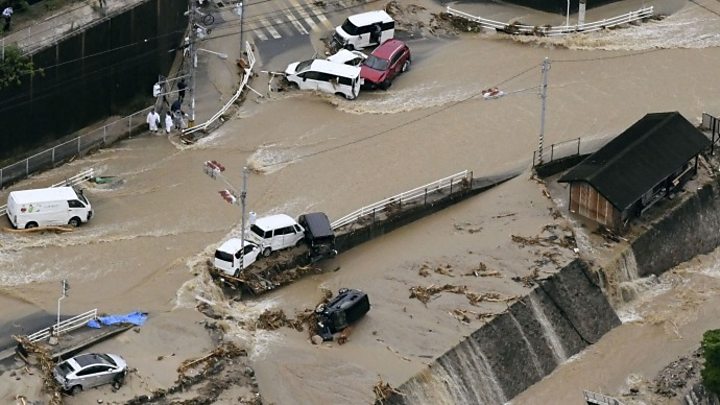
The number of monthly overseas tourists to Japan declined for the first time in more than five years as the country suffered powerful typhoon and a major earthquake, the government said on Tuesday, October 16, 2018.

Japan flooding
Japan has suffered the worst flooding and landslide in decades. Photo credit: BBC.com

According to the Japan National Tourist Organisation (JNTO), the country received 2.16 million visitors in September, down 5.3 per cent, marking the first year-on-year fall since January 2013.

Typhoon Jebi pummelled western Japan on Sept. 4, leaving 11 dead and hundreds injured and inundating Kansai International Airport, located on an artificial island.

The airport, a major gateway to western cities such as Osaka and Kyoto, fully reopened 17 days later.

Two days after the storm, a magnitude-6.7 earthquake rocked the northern island of Hokkaido, killing over 40 people and triggering a blackout across the prefecture, resulting in almost 3 million households losing electricity.

New Chitose Airport, the island’s main airport, was temporarily closed due to the blackout and the damage to the terminal building.

According to JNTO, in September, Japan received 652,700 visitors from China, the largest market, down 3.8 per cent from a year earlier.

Meanwhile, the number of tourists from South Korea, the second-largest market, fell 13.9 per cent to 479,700.

In 2017, a record 28.7 million people travelled to Japan, which marked the sixth straight year of increases since 2011, the year the country suffered a powerful earthquake, resulting tsunami and its worst nuclear disaster.

Report says Japan aims to boost the number of overseas visitors to 40 million in 2020, when Tokyo hosts the Olympic Games.

Don flays charcoal use, urges provision of alternatives

0

Former Deputy Vice-Chancellor, Management Services, University of Ilorin, Prof. Albert Olayemi, on Tuesday, October 16, 2018 called for provision of alternative to charcoal fuel to discourage deforestation.

Forest
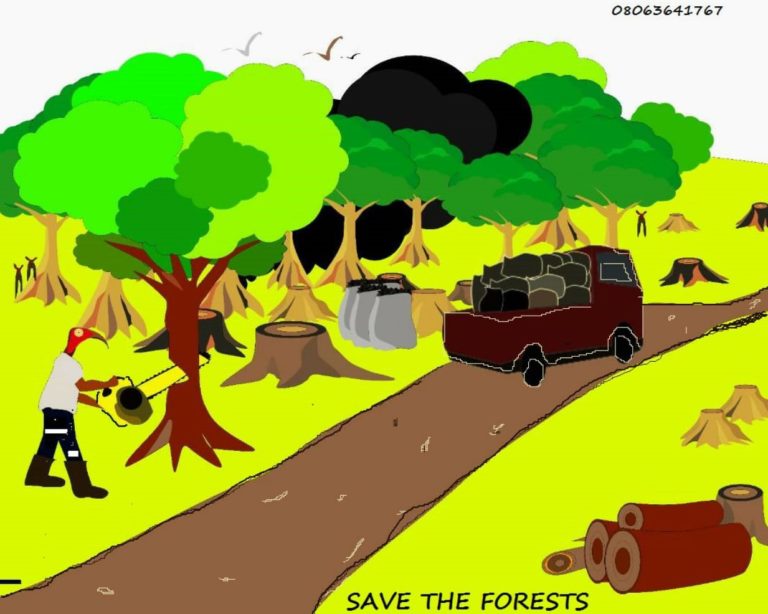
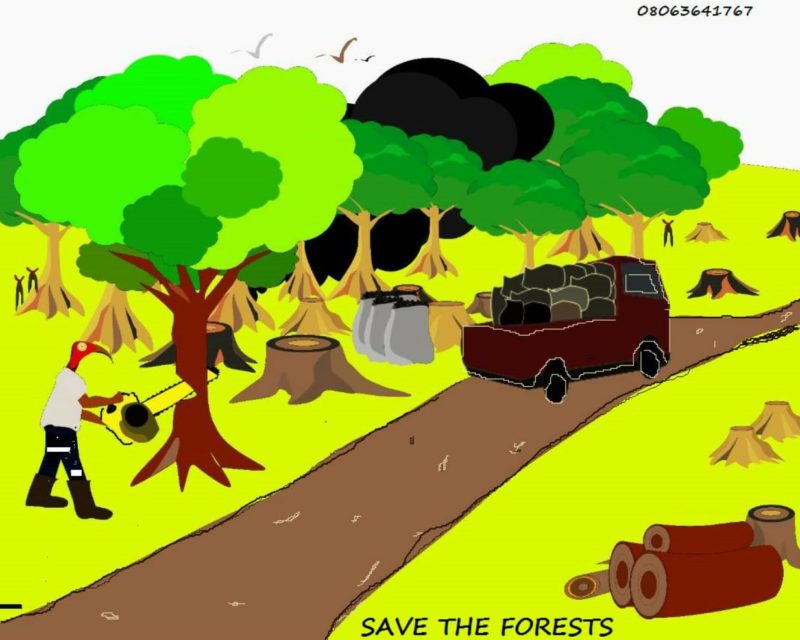
Saving the forests from charcoal merchants

Olayemi made the call at the sensitisation programme organised by the Agricultural and Rural Management Training Institute (ARMTI) in conjunction with the Regional Centre of Expertise on Education for Sustainable Development for farmers in Kwara and Kogi states.

He urged government to make kerosene and cooking gas available and affordable to Nigerians to discourage people from using charcoal as an alternative cooking source.

In a paper entitled: “Charcoal Production: Burning for Sustainability”, he said that the use of other sources for cooking would prevent indiscriminate cutting of trees.

Olayemi, who is a Focal Person of the Centre, said that it would prevent charcoal production and curb deforestation in the country.

The don called for more enlightenment programmes to sensitise the public on the dangers associated with cutting of trees and making of charcoal from the forests.

Olayemi said that the use of other sources of cooking would prevent indiscriminate cutting of trees, prevent charcoal production and curb deforestation in the country.

He called for more enlightenment programmes for the public to be aware of the dangers associated with cutting of trees and making of charcoal from the forests.

He noted that the aim of the sensitisation outreach was to discuss ideas, problems and issues in the charcoal sector in Kwara and Nigeria in general.

The don said that the programme specifically aimed at finding out the options for those whose livelihoods were affected by the ban on the production of charcoal.

“It is also to identify follow up action with the policy makers and allow participants to agree on a list of what the issues are and suggest solutions on the way out,’’ he said.

Earlier, the Executive Director of ARMTI, Dr Olufemi Oladunni, said that the Centre had identified 72 farmers from Kwara and Kogi states to be sensitised on the subject matter.

“When we are aware of the environmental, socio-economic and health impacts of charcoal production, we would not need any prosecution or threats to deter people, rather, the people would be the ones sensitising others against the practice,” he said.

By Fatima Mohammed-Lawal

Lagos to improve officers’ capacities in processing building plan permit

0

The Lagos State Physical Planning Permit Authority (LASPPPA) on Tuesday, October 16, 2018 restated its commitment to train and improve the capacities of district officers that process planning permits across the state.

Funmi Osifuye
Funmi Osifuye

Mr Funmi Osifuye, the General Manager, LASPPA, made the disclosure while speaking with the News Agency of Nigeria (NAN) in Lagos.

Osifuye said the training was necessary to improve the technical and professional skills of the officers for efficient and effective service delivery to the public.

He said the training would educate the officers on the ethics/conducts of processing building permits.

According to him, the training will help to address and avert some of the issues/challenges that emanate while granting building permits.

“The training which will be an in-house quarterly programme for the district officers and management staff in the planning field will treat 10 carefully selected professional and technical topics in town planning profession.

“The topics include: Planning Permit Application Processing, Guidelines and Procedure; Strategies for Increase in Revenue Generation; Site Monitoring and Public Relations; Planning Information and its Relevance to Planning Permit Processing.

“Some others are Report, Memo Writing and File Management; Importance of Technical Report in Planning Permit Processing; Unified Assessment Rates; and Ethics, Conduct and Responsibilities of a District Officer.

“The last topic is State Land Acquisition and Revocation: Its Implications on the Grant of Planning Permit.

“The major focus for the training is to expose the planners to requisite skills and knowledge of modern planning. And the agency has just concluded the second in the series of the training,’’ Osifuye said.

Also, Mr Lateef Oladeinde, a Deputy Director in the Development Permit Department, LASPPPA, urged the district officers to seize the opportunity to enhance their technical knowledge about planning permit processing.

Oladeinde said the lectures would re-fresh the officers’ knowledge and also re-echo what was expected of them at their duty posts.

According to him, the officers sometimes deviate from the statutory duties in their job description, resulting in lots of complaints and criticism from the public.

“During the course of the training, officers will be exposed to requisite skills and knowledge of modern planning concerning the process of planning permit for efficient service delivery to the public,’’ the deputy director said.

He advised the public to always contact either the agency’s district offices or head office whenever notices for auditing of buildings, contraventions such as illegal conversion or non-compliance with approved permit were served.

“This is necessary to avert loss of funds through payments to the wrong person, quacks and impersonators.

“The agency’s monitoring officers in the field are not obliged to collect payments of any kind from the developers/owners of property,’’ Oladeinde said.

By Lilian Okoro

IITA launches global initiative to boost cocoa production

0

The Cocoa Research Institute of Nigeria (CRIN), and Institute of Agricultural Research and Training (IITA), Ibadan on Tuesday, October 16, 2018 launched a five-year “Cocoasoil Project’’ to improve cocoa production in Nigeria.

Cocoa
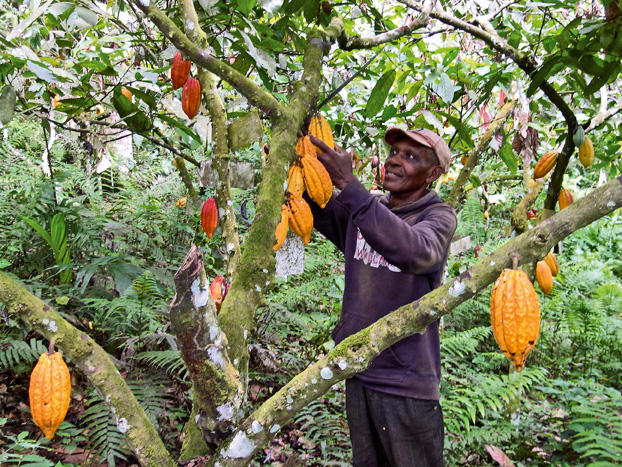
Harvesting cocoa

The programme is themed: “Sustainable intensification of cocoa production through the development and dissemination of integrated soil fertility management”.

Speaking at the occasion in Ibadan, the Oyo State capital, Project Coordinator, Dr Richard Asare, said that the project was a global initiative with an African focus funded by the Norwegian Government.

Asare said it was a public-private partnership led by IITA, Wageningen University and Research (WUR), Cocoa Research Institutes of Cameroon, Cote d’Ivoire, Ghana, Nigeria, and International Centre for Tropical Agriculture, among others.

According to him, the main objective is to develop Integrated Soil Fertility Management (ISFM) recommendations to be brought into extension messages for cocoa intensification and avoided deforestation.

“This will be done through an integrated ISFM approach that uses a stepwise cocoa intensification process that combines improved planting materials, canopy cover management, and pest/disease control with targeted fertilizer application to enhance sustainability.

“The program currently has 8 confirmed trials in Ghana, Cote d’Ivoire, Cameroon and Nigeria being undertaken by CRIN, Cocoa Research Institute of Ghana (CRIG), private chocolate manufacturing companies and others.

“There are also on-going discussions to conduct similar trials in Ecuador, Brazil and Indonesia with interested partners and stakeholders.

“It’s our strong belief that at the end of the first five years, the project would have achieved its goals,” he said.

Also speaking, Chief Audu Ogbeh, Minister of Agriculture and Rural Development, said that the project would serve as investment guide for investors in cocoa value chain and improve rural household income.

Ogbeh, who was represented by Dr Lekan Quadri, Director of Tree Crop in the ministry, said the planned inclusion of cocoa drink in School Feeding Program would transform the cocoa sector.

“One of the reasons cocoa farming seems to not to be profitable today is because of low productivity occasioned by poor soil fertility management among other contemporary issues.

“Therefore, this project has come at an auspicious time to save our numerous cocoa farmers from colossal losses, whose livelihood depend on this singular commodity,” he said.

Earlier, the CRIN Executive Director, Dr Olayiwola Olubamiwa, emphasised that the programme would improve cocoa production in Nigeria.

Olubamiwa said cocoa was one of the greatest foods given to mankind with numerous health benefits.

“Since I started taking cocoa powder in 2006, I only experienced two episodes of malaria, because of cocoa’s health benefits alone, its production shouldn’t go down in the country.

“We hope the project accomplishes its purpose and it shall be well with Nigeria,” he said.

By Chidinma Ewunonu-Aluko

NASRDA seeks patenting of Automated Irrigation System for improved farming

0

The National Space Research and Development Agency (NASRDA) on Tuesday, October 16, 2018 said patenting of its Automated Irrigation System (AIS) would enable mass production and improve mechanised farming in the country.

Prof. Seidu Mohammed
Prof. Seidu Mohammed, Director-General of the National Space Research and Development Agency (NASRDA)

Dr Bonaventure Okere, the Acting Director of the agency’s Centre for Basic Space Sciences (CBSS) in Nsukka, Enugu State, made this known in an interview with the News Agency of Nigeria (NAN) in Abuja.

Okere said that the AIS had been approved by the Ministry of Science and Technology but required patenting by the National Office for Technology Acquisition and Promotion (NOTAP).

According to him, designing and manufacturing of the AIS is targeted at achieving the Sustainable Development Goals (SDGs) to meet the need for year-round farming and enhance agricultural produce.

“The challenges posed by conventional irrigation practices are better appreciated with large-scale farming, where it often requires days to manually irrigate a farm.

“Conventional methods of irrigation are labour-intensive, relatively ineffective due to poor water distribution and lack of monitoring and smart control mechanisms.

“This motivated us to develop an automated irrigation system that will perform intelligent and independent farm irrigation and characterise crop environmental thriving conditions.

“The design of this system features an automation and control implementation board where the system’s logical itinerary is handled.

“It is interfaced with advanced communications modules for wireless operation capabilities; sensor array for specific science interest are interfaced and programmed in the system to provide information on crop environmental thriving conditions.

“We are waiting for NOTAP to finish the processing for the patent of the AIS. When it is patented, it will enable us mass produce it and enhance agriculture,” Okere said.

The director also described the AIS as having a timing system embedded in it to implement time-related automation.

According to him, the solar power system will be designed to provide adequate and reliable power for both the pump system and the control systems.

Okere said that the AIS was designed to automatically alert the farmer when the soil moisture level of the farm was low and needed watering.

He said that the farmer would be prompted through Short Message Service (SMS) once the irrigation system was activated to switch the irrigation pump “on”.

According to him, a user of the irrigation system will also have the privilege of querying the system via simple SMS command to get real time readings of the farm environment.

“A user can query soil moisture values, soil temperature values, ambient temperature and humidity, which will be sent as SMS from the system to the users’ mobile phone,” he said.

Okere said that the AIS could foster research in crop sciences by supplying data on environmental parameters critical to crop yield.

He said that if the AIS was installed and commissioned, it had the capacity to perform independent smart irrigation under dynamic environmental conditions.

“The AIS has the capability to perform farm environmental characterisation and data presentation that affords research and good knowledge of crop thriving conditions.

“It is an equipment that can be remotely operated using mobile phones and can send feedbacks to authorised users,” he said.

NAN reports that Prof. Seidu Mohammed, the Director-General, NASRDA, presented the AIS to Dr Ogbonnaya Onuh, the Minister of Science and Technology in June.

The AIS will be utilised as the first equipment for mechanised farming which will deploy satellite technology to boost food security in the country.

By Ijeoma Olorunfemi

Marketers advocate increased cooking gas usage for cleaner environment

0

The Nigeria Association of Liquefied Petroleum Gas Marketers (NALPGAM) on Tuesday, October 16, 2018 urged the Federal Government to intensify campaign among Nigerians on the need to use cooking gas for cleaner and safer environment.

Gas cylinders
Gas cylinders

The association’s Executive Secretary, Mr Bassey Essein, who gave the charge in an interview with the News Agency of Nigeria (NAN) in Lagos, urged the country to fast-track its attainment of greater per capita consumption of gas.

Essein decried the rise in the use of kerosene, firewood and other fuel-powered apparatuses by many households for cooking, in spite of the attendant negative implications on the environment.

He urged women to be at the forefront in the fight for renewable energy and total conversion to Liquefied Petroleum Gas (LPG), commonly known as cooking gas in Nigeria.

“There is the need for a massive outreach to women, and indeed the need to embrace the use of LPG, which is healthier, safer and even more cost-effective.

“Cooking gas remains cleaner and cheaper, and therefore, should be the preferred option for fuel users.

“Government should fast-track its plans to transmit cooking gas for the use of one million homes in the next two years,’’ the NALPGAM scribe said.

According to him, there is no doubt that the socio-economic benefits of switching from kerosene, firewood and charcoal to LPG are innumerable.

“For instance, Nigeria has commercial reserves of natural gas. LPG is also known to be cheaper and cleaner than other domestic fuels

“Ironically, the nation remains the lowest consumer of cooking gas in Africa, while statistics have shown that poor households in neighbouring countries like the Republic of Benin, and Ghana are already using gas for everyday cooking.

“Nigerians have remained on the threshold of using kerosene, firewood, charcoal and animal waste or sawdust for cooking.

“Apart from its negative environmental effects, the health implications are also worrisome,’’ Essein said.

The NALPGAM scribe said that government could contribute in a variety of ways to facilitate expanded LPG use by households through actions, both within and outside the sector.

He said that government could establish a virtuous circle of growing demand, increased investment and expanded availability of the product.

Essein said that LPG demand was growing and that NLNG was saddled with the responsibility of supplying the product to the domestic market.

He, however, added that the union had increased its supply volume from 150,000 metric tonnes per year to 300,000 metric tonnes per year.

According to him, the only way to achieve expanded usage is for the government to begin implementation of its plans to transmit cooking gas into one million homes in the next two years.

“The annual target of cooking gas consumption volume of at least five million, up from the current annual consumption rate of about 400,000 metric tonnes is achievable.

“This can be achieved by replication of Indonesia’s success story, which was able to get 53 million homes to use gas in three years.

“Today, in the energy mix of cooking gas, firewood takes the pride of place with 60 per cent, kerosene 30 per cent, coal five per cent and cooking gas a dismal five per cent,’’ Essein said.

He said that with such percentages came a lot more responsibilities and advocated for more efforts to be directed toward developing the local market for cooking gas.

The LPG expert said that the world was “awash with gas’’, adding that the times were not suited for the continued reliance on oil exports either.

Essein identified lack of infrastructure, an underdeveloped market structure and a widespread but inaccurate belief that gas was more expensive than traditional fuels as the major obstacle impeding the progress of Nigeria’s LPG industry.

By Yunus Yusuf

Ebonyi signs $4m solar power agreement with Chinese firm

0

The Ebonyi State Government on Monday, October 15, 2018 signed a $4 million solar system production agreement with the Foshan Sunchees Energy Company of China.

David Umahi
Governor David Umahi of Ebonyi State

Gov. David Umahi, represented by his Deputy, Dr Kelechi Igwe, said in Abakaliki, the state capital, that the agreement included the establishment of a solar power factory in the state.

The governor said that the occasion marked the realisation of the state government’s vision and aspiration toward industrialising the state.

“Our vision is to make Ebonyi the leading industrialised state in the country as it is the first time in the country that a government is aiming at energising the entire local government areas of a state.

“The 13 LGA Chairmen of the state have appended their signatures in support of the project and we assure our citizens that we are not purchasing energy from China,” he said.

Umahi said that the agreement was a product of his economic trip to China, saying “the company is reputed globally in solar power manufacturing and distribution.

“It will establish a factory to manufacture solar panels in the state and subsequently make Ebonyi, a leading manufacturer, distributor and marketer of solar panels in the country.

“We are hopeful that in the future, the state will be exporting solar energy beyond Africa,” he said.

He pledged that the government would abide with the terms of the agreement and demonstrate a good maintenance culture.

“The problem of poor execution and maintenance of projects experienced by most governments in the country is due to lack of due diligence in supervision and maintenance.

“The situation is however different with Ebonyi as we will monitor, supervise your work and not rest until you execute all you stipulated in the agreement.

“We are eagerly waiting for you to mount the first solar panel factory in the state as this would make our industrial dream come true,” he said.

Umahi appreciated the local government chairmen for their diligence and partnership in the project, noting that it would be one of the legacies they would leave behind as council chairmen.

Mr Jack Chen, the leader of the Chinese team thanked the state government for its reception and belief in the project, pledging to abide by all the terms of the agreement.

“We are happy to be in partnership and sign this agreement with Ebonyi government.

“We know the state’s logo to be the ‘Salt of the Nation’ but we hope that in the future, it will be Power of the Nation,” he said.

By Chukwuekemeka Opara

Britain tasks experts over net zero emissions climate target

0

Britain has asked its climate change experts to advise on whether it should set a date to meet a net zero emissions target, the government said on Monday, October 15, 2018.

Claire Perry
Claire Perry, Britain’s Energy and Clean Growth Minister

Britain has a target to cut its greenhouse gas emissions by 80 per cent compared with 1990 levels by 2050.

However, campaigners have warned this does not go far enough to meet pledges made under the Paris climate agreement.

The move also comes a week after a United Nations report warned the world needs to make unprecedented changes in the way people use energy to curb global temperature rises.

They will also limit the worst effects of climate change such as more extreme weather and loss of species.

Britain’s Energy and Clean Growth Minister, Claire Perry, has asked the Committee on Climate Change (CCC) to examine whether the target should be reviewed and whether the country should set a date to meet net zero emissions.

“The evidence is clear – governments, businesses and communities must take further action to confront one of the greatest global challenges we’ve ever faced,” Perry said in a statement on Monday.

Under the Paris agreement more than 190 nations agreed in 2015 to pursue efforts to limit a rise in global temperatures this century to 1.5 degrees Celsius.