The World Wide Fund for Nature (WWF) has found, in a new major report, that wildlife has declined 60 per cent since 1970 due to human causes.
The endangered snow leopard. Photo credit: wikipedia
The Living Planet Report 2018 has highlighted the devastating anthropogenic effects on wildlife and how urgent action needs to be taken to ensure this trend does not continue.
Biodiversity is the foundation of our food and security. Medical treatments to food production, biodiversity is critical to society and people’s well-being.
The world’s economic activity is also reliant on biodiversity, it is estimated that globally nature provides services worth around $125 trillion a year.
Mike Barrett, executive director of science and conservation at WWF, said: “We are sleepwalking towards the edge of a cliff. If there was a 60% decline in the human population, that would be equivalent to emptying North America, South America, Africa, Europe, China and Oceania. That is the scale of what we have done.”
The report also focuses on marine and freshwater ecosystems and the role plastic pollution has had in destroying them. They noted how humans are consuming the world’s resources faster than nature can replenish them, creating more waste than our planet can absorb.
This has resulted in over six billion tonnes of fish and invertebrates being taken from the world’s oceans since 1950. The Living Planet Index also shows that there has been an 83 per cent decline in freshwater species since 1970.
The report looked at the role deforestation has in the decline of biodiversity. A recent study of more than 19,000 species of birds, amphibians and mammals found that deforestation significantly increased the chance of a species being listed as threatened or exhibiting declining populations.
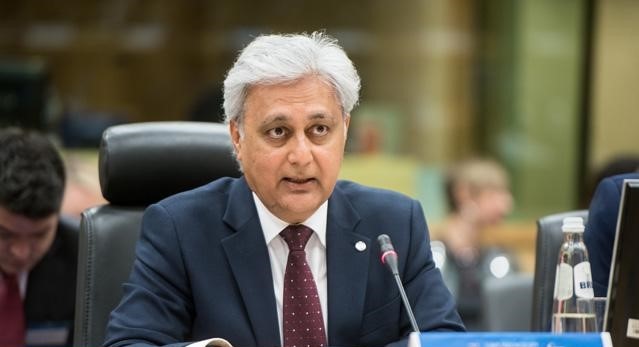
UN Climate Change (UNFCCC) Deputy Executive Secretary, Ovais Sarmad, on Thursday, November 1, 2018 underlined the interlinkages between climate change and air pollution at the First World Health Organisation (WHO) Global Conference on “Air Pollution and Health: Improving Air Quality, Combatting Climate Change – Saving Lives” that held in Geneva, Switzerland. Ovais Sarmad urged participants to impress it upon their respective government to finalise the Paris Agreement Work Programme at the next UN Climate Change Conference in Katowice, Poland, in December.
Ovais Sarmad
The partnership between the WHO and UN Climate Change is very strong and we are grateful to the Director General for bringing the focus to the linkages between health and climate change and this conference is all about that.
Let me share with you the context: Never has humanity been this mobile, this connected, this socially aware, or had the tools to affect change like we do right now.
This connectivity has helped people around the world address many big, interlinked challenges.
For example, life expectancy has increased more than 20 years in the past half century.
Death rates in children under five have decreased.
And the total number of people living in extreme poverty has fallen by 700 million people over the past 30 years.
While we’ve accomplished so much in many areas, we’re doing less well protecting our environment – much less.
Many have forgotten that the health of humankind is intricately connected to the health of the environment.
Climate change is intricately tied to air quality.
For many years, air pollution was the only tangible connection people had with climate change. They knew climate change had something to do with greenhouse gas emissions, and exhaust from car emissions – which was something they could see – was the first connection they made.
Of course, emissions do lead to air pollution and climate change.
This is a connection that is easy to understand and, thus, to motivate people. Reduce air pollution and we can address climate change, and vice versa, reduce carbon emissions and address the environmental determinants of health.
Of course, it’s more nuanced than that. Air pollution isn’t restricted to emissions from tailpipes, and climate change contributes to several serious health challenges throughout the world, ranging from malnutrition to nutrient-deficient crops to water safety.
UN Climate Change will continue to work in all possible ways with the WHO and other organisations and partners to address air pollution, climate change impacts, and improve human health conditions in all parts of the world and societies.
As many of you know, the COP has become a major UN conference. This year, COP24 is going to be held in Poland.
Last year the Director General of the WHO was at the COP where we signed an MOU. He was asked by the Fijian President of COP23 to produce a report on health and climate change.
I am very pleased to note that the report has been prepared and will be released at this year’s COP and we are very much looking forward to it. I think it will make a very strong contribution to the climate change discussion by informing the Parties.
The 24th Conference of the Parties to the United Nations Framework Convention on Climate Change, COP24 that will be in Katowice, this December. At COP24 we face a significant challenge, and that is to get nations to finalise the Paris Agreement Work Programme. Parties must address several issues, but this is the most important one.
The reason it’s important is because it sets the guidelines for how the Paris Agreement will work. And that is important because it ensures the true potential of Paris can be unleashed – including ramping up climate action so that we limit climate change to 1.5C.
The recent IPCC’s Special Report was yet another reminder why that number is important. But here’s why it’s important to the work all of you are doing and your engagement.
It’s important because climate change is a threat multiplier. It takes almost every single challenge humanity faces and makes it worse. This includes air quality.
On the other hand, address climate change and we can tackle those issues in a much more positive way.
It means involving public and private institutions – we know governments alone cannot solve climate change. We need climate action from all people at all levels in all sectors.
One of the most important goals is to get all governments, people and businesses to make the immediate transition from fossil fuels to more renewable forms of energy.
This contributes to our climate goals and it means boosting the health of our overall environment and the quality of our food and water.
Tthe most important of our tasks – and directly connected to your work – is finalising the Paris Agreement Work Programme.
That’s why today I’m urging you to use all influence at your disposal to send a message to your government representatives or those in your organisation.
Tell them we have an extremely small window of opportunity left to address climate change.
Tell them that it’s time to get the work done that we all committed to do.
Tell them that it’s not just of economic importance, but of human importance. Our health – the health of our families and our children and future generations – depends on it.
Like for all of you, it is unpleasant for me to look out the window at the smog that envelops so many of our great cities in a poisonous grey shroud.
While it’s unpleasant to see, it’s doing worse to our bodies. So many people are suffering because of the negative impact of climate change.
Let’s focus our attention on the things we can do right now. At the top of that list is to accomplish the Paris Agreement Work Programme at COP24.
Success at COP24 means finalising the Paris Agreement Work Programme. That will include transparency of action, measuring, monitoring and reporting on actions.
A completed Work Programme will not only provide guidelines for the Paris Agreement, but unleash its full potential. More than that, it sends a signal of trust that nations are serious about addressing climate change.
We need progress on several other issues as well, including commitments to boost global climate action and ensuring nations fulfill their financial pledges to support the climate regime.
All of this will help us tackle issues such as air pollution and make significant progress on the SDGs. We don’t have much time to lose. Urgent action at all levels is needed.
UNFCCC is a strong and willing partner and we are pleased to be here together with WHO and other partners to provide any support we can – beyond this conference.
The Association of Nigeria Geographers (ANG) says it is set to host geographers and delegates from around the world at its 2018 annual conference scheduled for Nov. 5 to Nov. 9.
University of Ibadan, Ibadan, Oyo State, is hosting the 2018 annual conference of the Association of Nigeria Geographers (ANG)
The event is to hold at the Department of Geography, Faculty of the Social Sciences, University of Ibadan, Oyo State.
A statement issued by the Chairman, Local Organising Committee of the conference and Head of Department of Geography, University of Ibadan, Dr Dickson Ajayi, on Sunday in Abuja, said the theme of the conference is: “Geography and Sustainable National Development”.
Ajayi noted that the conference was unique because, according to him, it coincided with the 70th Anniversary of the establishment of the institution, and the Department of Geography which is the first in Nigeria.
“This is a landmark occasion for the community of geographers to showcase their achievement and contributions to national development,” Ajayi said.
He said that the conference would engage delegates through parallel technical sessions, secondary schools quiz competition, and networking.
The highlight of the event includes presentations by Malam Kabir Yari, UN-Habitat; Prof. Akin Mabogunje, the first African President of the International Geographical Union; and Prof. Sani Mashi, Director-General, Nigerian Meteorological Agency (NIMET).
Others are: Prof. Demola Omojola from UNILAG on Remote Sensing and the Sustainable Development Goals; and Prof Emmanuel Oladipo, on International Development Agencies and the Sustainable Development Goals.
Also to make presentations are: Mr Soji Taiwo, on Sustainable Development Agencies and the Sustainable Development Goals as well as Dr Wale Oduwole.
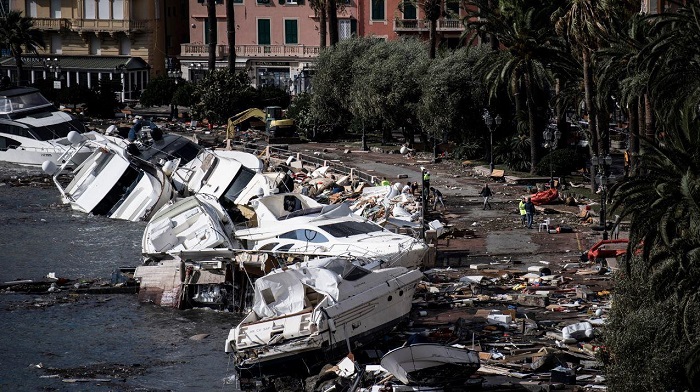
No fewer than 12 people have been killed by severe weather on the island of Sicily, bringing the overall death toll from the storms sweeping Italy to 29, officials said on Sunday, November 4, 2018.
A devastated shoreline after the storm
Torrential rain triggering landslides and flood waters led to the death of 10 people in the region around Palermo, a spokesman for the Sicilian capital’s Prefecture said on Sunday.
“There are still some people missing,” he added.
Two more fatalities occurred in the region around the Sicilian town of Agrigento when the car they were traveling in was hit by a landslide, another official said.
A German tourist died on Friday when hit by lightning on the island of Sardinia while another person struck by lightning several days ago died in hospital, Italy’s Civil Protection Agency said on Saturday.
Many of the victims to date have been killed by falling trees.
Coldiretti, the association of Italian agricultural companies, said in a statement that gales had destroyed around 14 million trees, many in the far north.
“We’ll need at least a century to return to normality,’’ it said.
Areas from the far northeast to Sicily in the southwest have been affected.
The worst damage is in the northern regions of Trentino and Veneto – the region around Venice – where villages and roads have been cut off by landslides.
Many of Venice’s squares and walkways have been submerged in the highest floods the canal city has seen in a decade.
The governor of Veneto, Luca Zaia, said the region’s storm damage amounted to at least €1 billion ($1.1 billion).
Angelo Borrelli, Head of the Civil Protection Agency, said Veneto had seen winds of up to 180 kph (112 mph) and that the situation there was “apocalyptic”.
India has successfully begun making use of inland waterways to move heavy containers to reduce road and rail traffic, to make optimum utilisation of natural resources.
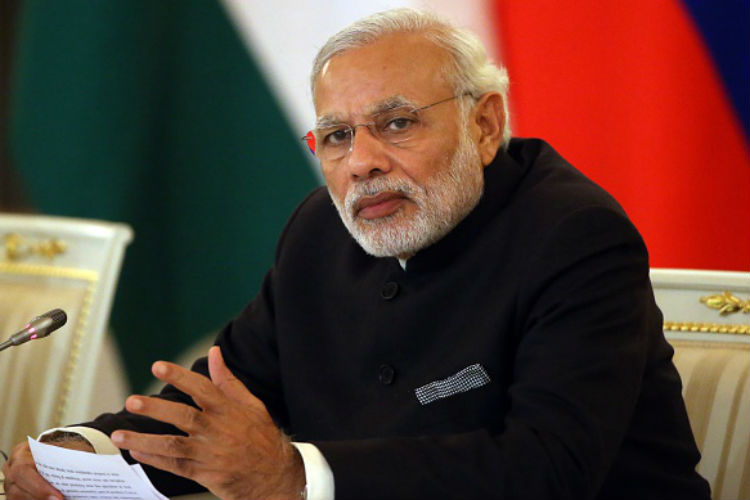
Shri Narendra Modi, Prime Minister of India
A cargo vessel with as many as 16 containers belonging to “Pepsico’’ is currently moving on River Ganges from the eastern city of Kolkata to Varanasi, a city in the northern state of Uttar Pradesh.
According to the country’s Minister of Shipping, Nitin Gadkari, Prime Minister Narendra Modi will himself receive the consignment in Varanasi, which is also his parliamentary constituency on Nov. 12.
“Modi would travel for the first time on inland waterways ‘NW-1’ Ganga at Varanasi to receive the container vessel on Nov. 12th at newly developed Multimodel Terminal and shall dedicate the terminal to the nation,’’ tweeted Gadkari.
This is the country’s first container movement on inland vessel since independence from Britain in 1947 and a milestone moment in the history of India’s inland waterway transport sector, said an official statement issued by the Indian government’s ministry of shipping.
The containers are being transported by and under the direct supervision of the Inland Waterways Authority of India on River Ganges, which is also called the National Waterway-1.
Onboard the vessel MV RN Tagore are 16 containers, equivalent to 16 truckloads filled with food and snacks and it will take around nine to 10 days to reach its destination.
The vessel is expected to make its return journey with fertilisers belonging to the Indian Farmers Fertiliser Cooperative that will be procured from its manufacturing plant in the state of Uttar Pradesh, said official sources.
The Indian government is developing the 1,390-km long National Waterway-1 under its ambitious Jal Marg Vikas Project from Haldia in the eastern state of West Bengal to Varanasi with the technical and financial assistance from the World Bank at an estimated cost of about 807 million U.S. dollars.
The project is expected to enable commercial navigation of vessels with capacity of 1,500 to 2,000 deadweight tonnage.
According to a report published by media organisation India Today, “the new vessels that will be ferrying cargo on the routes are capable of operating in shallow waters with a depth of 2 to 3 meters.
This will make waterways a viable alternative to road and rail transport.
The report quoted a government official as saying: “These vessels will need only 2 to 3 metres of depth and 45-metre wide water channel.
One of such vessels with 2,000 tonnes capacity will remove nearly 140 truckloads of pressure from the road.
Once developed, inland waterways will significantly decongest the highways across the country’’.
The feasibility of water-based transportation in and around the Indian capital Delhi will also be examined as such specification of the vessels is also suitable for river Yamuna, which flows through Delhi and has high silt deposit.
This is also crucial for decongestion of roads in and around the national capital where several experiments to decongest roads have failed to yield results.
The UN Environment on Friday, November 2, 2018 called on African governments to increase budgetary allocations for the management of environment.
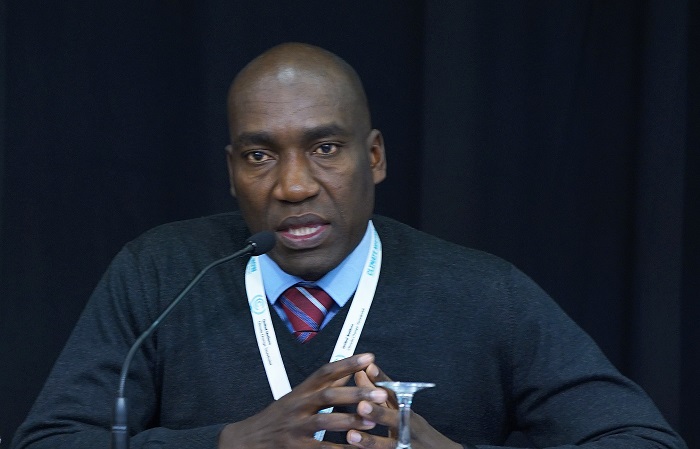
David Ombisi
David Ombisi, Head of African Ministers of Environment secretariat (AMCEN), at the UN Environment, said an allocation of one per cent annually is not enough to help tackle environmental problems.
“More than 23 per cent of premature deaths in the continent are attributable to environmental causes,” Ombisi told journalists in Nairobi.
Ombisi noted that Africa’s figure is the highest for any region in the world.
He said that less allocation of money to the environmental sector is to blame for the spread and outbreak of several diseases in the continent.
Ombisi noted that AMCEN saw the need to incorporate ministries of health, finance and planning to help discuss the funding aspect of environmental programmes.
“The Inter-Ministerial Conference on Health and Environment has since 2010 been discussing how to enhance investment to address challenges posed by environment,” Ombisi revealed.
The UN official observed that while the continent has long been plagued by problems relating to access to safe drinking water, inadequate sanitation and poor infrastructure, new environmental threats including climate change and rapid and unplanned urbanisation have emerged.
He noted that it was unfortunate that according to latest data from the World Health Organisation deaths linked to the environment are increasing.
“It is important that African governments build an integrated and well funded approach to health and the environment in the African region,” Ombisi added.
He said that with proper funding to the environment sector, people will be living healthy lifestyles as there will be fewer diseases.
He said that the third inter-ministerial conference on health and environment will be held from Nov. 6 to Nov. 9 with about 350 delegates in attendance.
It is jointly organised by the World Health Organisation (WHO) and UN Environment.
A man-eating tigress, believed to be responsible for killing 13 people in Western India, was shot dead after an elaborate hunt involving forest guards and sharpshooters, officials and news reports said on Saturday, November 3, 2018.
Tigress
The six-year-old cat, nicknamed Avni, had claimed the lives of villagers near the Ralegaon forest in Maharashtra state’s Yavatmal District since June 2016.
The tigress, known as T1 officially, was killed in the region late on Friday after a three-month search, senior police officials confirmed.
The state forest department had hired an expert hunter and sharpshooter, and mounted an extensive operation involving nearly 200 personnel, trap cameras, drones, a pack of trained sniffer dogs and a hang-glider to trace her, broadcaster NDTV reported.
In September, the Supreme Court refused to suspend shoot-on-sight orders for Avni, mother to two 10-month cubs, prompting a flurry of online petitions.
Wildlife activists went online to protest Avni’s killing, saying the forest department could have captured her instead of killing her, which orphaned her cubs.
Elsewhere, TV footage showed locals celebrating and distributing sweets, saying they were relieved that the terror unleashed by the tigress was over.
DNA evidence had linked Avni to five of the 13 deaths in Yavatmal, NDTV reported.
Forest surveyors said there was a male tiger in the forest whose DNA was found on one of the bodies.
India is home to the world’s largest number of tigers in the wild.
The count was at 2,226 in 2015, according to India’s National Tiger Conservation Authority.
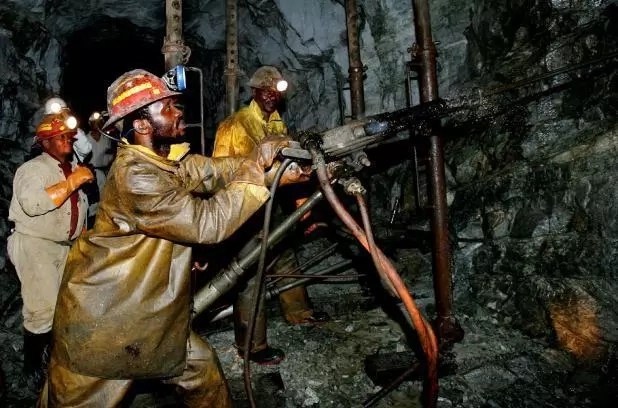
The Ministry of Mines and Steel Development says it has commenced nationwide environmental monitoring to ensure mining title holders comply with mining laws and regulations.
Mining in Nigeria
Mr Sallim Salaam, the Director, Mines Environmental Compliance Department of the ministry, told the News Agency of Nigeria (NAN) on Sunday, November 4, 2018 in Abuja.
Salaam said that the programme would be conducted in the six geo-political zones of the nation.
He said that the states selected from the six political zones include Edo, Cross River, Oyo, Ebonyi, Nasarawa, Benue, Kogi, Kaduna and Zamfara, as well as the Federal Capital Territory (FCT).
The director said that some teams from the department had visited six mining sites in Ogun and six others in Edo, adding that samples were taken from all the sites for analysis.
“We also visited lead and zinc mining sites in Ebonyi and a granite mining site in Calabar.”
He added that the programme, which started in October, would be completed by middle of December.
Salaam said the essence of the programme was to monitor mining title holders in those states to ensure that their mining activities did not pose environmental, social and health hazard to their host communities and workers.
” We want to ensure that they comply with all environmental requirements about fulfilment of “Environmental Protection Rehabilitation Programme.
“The idea of this programme is to also ensure that all title holders reclaim all sites mined and to revert to the status-quo as required by the law,” he said.
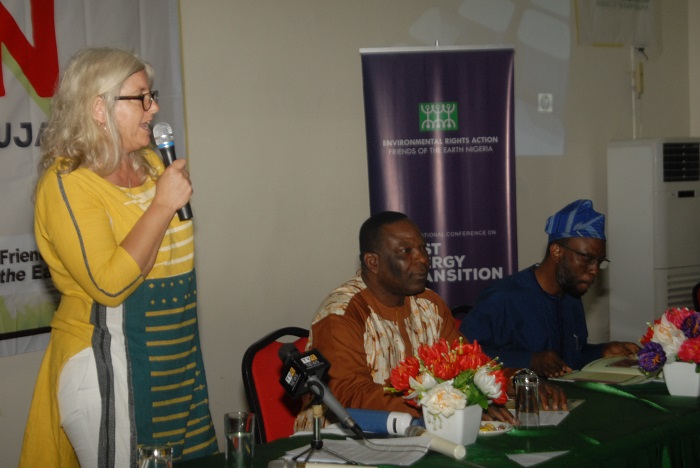
Member groups of Friends of the Earth International (FoEI) have called on governments of Africa to look beyond oil in their quest for development. The call was made at a conference on Just Energy Transition orgamnised by the Environmental Rights Action/Friends of the Earth Nigeria (ERA/FoEN) in Abuja.
L-R: Karin Nansen, Chair of Friends of the Earth International; Dr. Godwin Uyi Ojo, ED of ERA/FoEN; and Professor Lanre Fagbohun, Vice chancellor of Lagos State University, at the Just Energy Transition Conference in Abuja
In his opening remarks, Dr Godwin Uyi Ojo, Executive Director, ERA/FoEN, said that while Nigeria and other African countries continue in the quest to transit from oil, the developed world should not exploit this quest to recolonise Africa and perpetrate inequalities.
Ojo noted that while there has been tremendous growth across the globe from the start of the industrial revolution to the present, the consequence of unrestrained economic expansion has been the incredible increase in greenhouse gas emissions and the warming of the climate.
He disclosed that scientists recently revealed that the warmest years recorded in history have occurred in the last five years and that every year gets progressively warmer than the last with many communities experiencing first-hand, the impact of the climate crisis.
He also pointed out that a recent Inter-governmental Panel on Climate Change (IPCC) special report released on October 8, 2018 paints a frightening scenario of “irreversible impacts on humans and the ecosystem if we fail to act.”
The same report, he said, calls on the global community to act immediately and show more ambition so that rising temperature does not exceed the 1.5-degree Celsius threshold, if the earth is to have the opportunity of containing the impacts of climate change.
To achieve this there must be comprehensive phase out of fossil fuels, faster electrification, lower energy demands, changes in consumption and dieting patterns as well as protecting and restoring degraded ecosystems.
Because of these, he said there is need for urgency and ambition for a Just Energy Transition which developed nations have leapfrogged into.
According to him, the national budget for renewable energy has reached an investment of US$286 in 2015 alone.
Despite this, he explained that more than 1.6 billion people have no access to electricity and about 2.4 billion depend solely on fuel wood.
“The rising energy demand is also leading to increasing violent resource conflicts at the sites of extraction. Nigeria is nowhere near meeting its nationally determined commitment to addressing climate change and reducing carbon emissions. About 70 percent of the 170 million population depend solely on fuel wood for energy and representing one of the world’s highest deforestation rate of 3.5 percent annually.”
He added however, that, “while over-consumption continues unabated in rich and industralised countries, others that are less endowed face energy poverty on a daily basis. Energy Colonialism is killing Africa and replicating already existing inequalities in renewable energy access hence the need for Energy Democracy. “
The ERA/FoEN boss noted that, theoretically, Nigeria has shown some ambition to reduce its carbon emissions by 20% unconditionally and 45% conditionally by 2030 given the needed finance and technology by rich countries.
He however pointed out that one fundamental challenge facing Nigeria and other African countries is minerals and oil-dependency on raw materials and sources of revenue.
ERA/FoEN, according to him, has a manifesto on the way forward. He said the conference, which coincides with the 25th anniversary of ERA/FoEN, presented the opportunity to present the manifesto to the Nigerian government.
The event was graced by representatives of government, civil society and communities from across Africa, Latin America, Asia, United States and Europe. Speakers included Karin Nansen, chair of Friends of the Earth International; Professor Lanre Fagbohun, the Vice Chancellor of Lagos State University; and Comrade Uche Onyeagucha, former House of Representatives member, among others.
Over 75% of the world’s land surface is said to be significantly impacted by human activity. The consequences are evident in more and severe droughts, high loss of wildlife and new trends in internal displacement and forced migration, say observers, adding that inaction on land degradation for most of the 169 countries affected by land degradation is due to the lack of accurate data and the tools to monitor it.
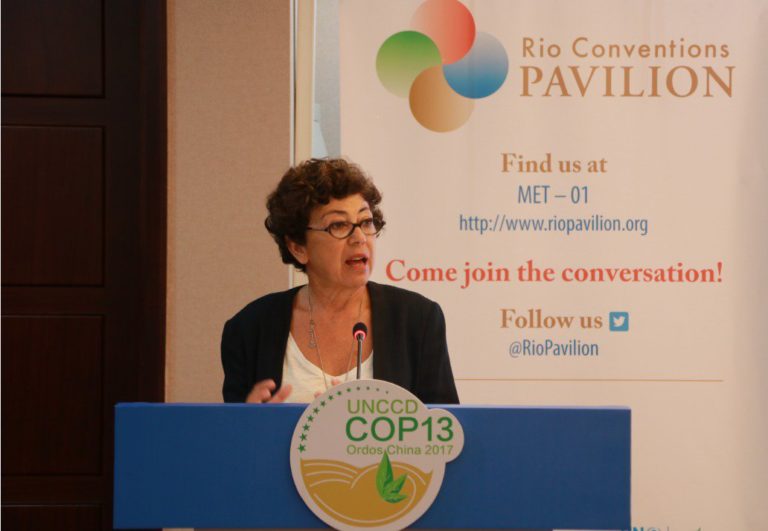
Monique Barbut, Executive Secretary, UNCCD, speaking during the conference
In what appears to be a landmark decision, the Group of Earth Observations (GEO) has launched a new, innovative initiative that will put Earth Observation (EO) data in the hands of national and local decision makers, thereby addressing this need.
The GEO LDN Initiative unveiled in Kyoto will bring together Earth Observation data providers and governments to develop the quality standards, analytical tools and capacity building needed to strengthen land degradation monitoring and reporting, using remote sensing and data collected on site. At the touch of a button, governments will have the right data to prioritise interventions and monitor outcomes to plan and manage land better. Following the announcement, Germany pledged an initial contribution of €100,000 ($113,000) for the initiative.
To date, 119 governments have pledged to take the measures needed to avoid, halt and reverse land degradation to ensure the amount of productive land stabilises by 2030 and beyond.
“The world is gripped by a growing sense of crisis regarding the sustainability of the global environment, and the deteriorating global environment affects our daily life. Within this context, we are being tasked with acting, as ‘global citizens’, against the various global issues that cannot be solved by one country alone,” said Keiko Nagaoka, Japan’s State Minister of Education, Culture, Sports, Science and Technology, when he opened the GEO 2018 Congress.
GEO, an intergovernmental organisation whose mandate is to improve the availability and sharing of data on Earth observations to benefit all life on Earth, is made up of government, academic and research institutions, data providers, businesses, engineers, scientists and experts who share data to create innovative solutions to pressing global problems.
“Land degradation is an existential crisis. Until now, monitoring it in real time felt like an insurmountable challenge. No longer. With Earth observation datasets and the practical tools to use them readily available, decision-makers and land users will have immediate and actionable information to scale up sustainable land management and planning. It is a first step to boosting our resilience,” said Monique Barbut, Executive Secretary, United Nations Convention to Combat Desertification.
The Initiative responds to a call made from the UNCCD’s Conference of the Parties last September to bring data providers and data users together to support global efforts to avoid, reduce and reverse land degradation globally.
Welcoming the Initiative, Jennifer Morris, President of Conservation International said, “it is time to move from measurement and monitoring to action. From Conservation International’s experience in the field we know restoring nature is an important piece of building healthy lands that can support productive and sustainable landscapes. Earth observation, and tools like Trends.Earth, can support local and national governments in prioritizing and implementing restoration actions.”
To ensure the initiative gets off to a flying start, three Working Groups emerged from the discussions in Kyoto. One will focus on building national capacities; the second will develop data quality standards and protocols for the SDG indicator land degradation (15.3.1) and its sub-indicators; and, the third will establish platforms with high computing capacities so partners can collaborate on big data analytics, such as open data cubes.
According to Barron Joseph Orr, Lead Scientist, United Nations Convention to Combat Desertification, “if the ability to process, interpret and validate geospatial data can be enhanced, it would lead to real national ownership. UNCCD Parties are clear about their data needs so delivering for governments and local communities will drive the work programme of the new GEO LDN Initiative.”
The partnership and cutting-edge technology developed for the GEO LDN initiative will move efforts to achieve the Sustainable Development Goals target on land degradation into the fast lane. The target of achieving land degradation neutrality is widely accepted to be an accelerator and integrator for achieving the other 17 Goals.