The Network of Civil Societies on Water and Sanitation (NEWSAN) has called for the provision of hand washing facilities in all health centres to promote hygiene and effective service delivery.
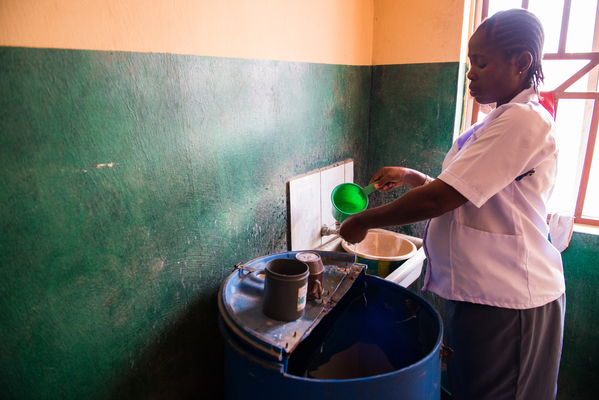
Nkiruka Okafor, 40, a volunteer nurse washing her hands thoroughly with water bought and stored, before attending to patients at the Zuma Primary Health Centre, Abuja, Nigeria
National Coordinator, NEWSAN, Mr Benson Attah, made the call at a sensitisation campaign on hand washing to pregnant women at the Township Clinic, Gwagwalada, FCT on Wednesday, October 31, 2018.
He noted that the group had always re-echoed the need for all tiers of government to ensure the provision of basic hygiene facilities in public places, especially in health centres.
Attah said that the intervention was in line with the mandate and commitment towards the enhancement of life, health and wellbeing of the citizens through improved service delivery.
He said the choice of the maternity section of the hospital followed an outcome of assessments carried out between June and July, which saw a huge gap in access to hand washing facilities.
“This year alone, not less than 20 states in the country have recorded no fewer than 30,000 cases of cholera and we all are aware of the socio-economic implications of such situation on the citizens.
“Needless to say that Water, Sanitation and Hygiene (WASH) is the gateway to both national and personal development, as it impacts directly on most of the Sustainable Development Goals (SDGs),” he said.
He said that any country that has not attained improved WASH services delivery cannot attain development.
“Access to WASH is central to National Development, we hereby call on mothers and indeed all women to lead their families in ensuring that every family member imbibe the Hand Washing Practice,” he said.
He said the availability and use of hand washing facilities would prevent infections arising from poor hygiene, noting that lack of hand washing facilities poses health risks to patients, health workers and nearby communities.
The coordinator said that when such facilities were in place, it would augment efforts of the Ministries of Health and Water Resources in scaling up hygiene promotion and practices in the country.
He said that there was the need for sector collaboration and support to the civil societies to monitor access and implementation of programmes towards meeting the Sustainable Development Goals before 2030.
“Adopting the behavior of hand washing with soap, ash and water is adjudged to be one of the most cost-effective and inexpensive ways to prevent diseases, cutting deaths from acute respiratory infections by nearly one-quarter.’’
The FCT Coordinator of NEWSAN, Mr Williams Ngwakwe, said the sensitisation campaign was targeted at expectant mothers because it has been reported that diarrhoea kills under-five children most.
He said that equipping them with the knowledge and skills of hand washing would make them imbibe the culture and overall behaviour change.
Ngwakwe said addressing the issue of hygiene through hand washing was more beneficial than treatment.
Mr Umar Bako, the clinic’s Chief Nursing Officer, while commending the team on the awareness campaign, called for interventions to renovate the clinic.
He said the area, which was already water-logged due to poor drainage system, needed immediate interventions, while calling for the construction of more toilets in the area.
A new United Nations-backed report has revealed that fungi can help wean the world off its plastic addiction by degrading polyurethane in just a matter of weeks.
Senior Kew Gardens Scientist, Ilia Leitch
According to the first-ever “State of the World’s Fungi” report, Scientists at London’s Kew Botanical Gardens reported that these organisms have the potential to break down waste plastic.
The report is an important advance in a world where momentum is building to reverse the toxic tide of plastic that is killing marine life and polluting the ocean.
According to the UN, at least eight million metric tonnes of plastic end up in the sea every year, sometimes decomposing into tiny micro-plastics that make their way into the food chain.
Senior Kew Gardens Scientist, Ilia Leitch, said that other fungi and microorganisms were also being explored for their potential to degenerate different types of plastic.
The report explained that, by understanding how the fungi break down these bonds and what the optimal conditions are, “you can then increase the speed at which they do it”.
Noting that there may be as many as 3.8 million fungal species, with only 144,000 named, the authors – a team of some 100 scientists from 18 countries – argue that further research into these organisms could provide answers to some of humanity’s greatest challenges.
The report spelt out that advances in their agricultural applications could translate into improved food security, environmental sustainability and increased production revenues.
In addition to recycling nutrients and helping crops to grow efficiently, fungi also provide compounds that produce antibiotics, immune-suppressants and statins that block cholesterol-producing liver enzyme action.
According to the UN Environment Programme (UNEP), there is mounting evidence that climate change is affecting the ranges of species and biodiversity in ways that are still not comprehensible.
Fungi themselves are also under threat, particularly in high latitude areas where average temperatures continue to rise, such as the Arctic, UNEP said.
The UN environment agency said these changes were already affecting fungi reproduction, geographic distributions and activity, with possible knock-on effects for ecosystems.
Niklas Hagelberg, a UNEP climate change and ecosystems expert, said: “Species react differently to climate change, which disrupts the delicate interaction between them.
“This further complicates conservation; we need to quickly add climate change to our ecosystem management effort.”
Meanwhile, the Kew Gardens report showcased the kind of pioneering thought that would be at the heart of the fourth UN Environment Assembly in March 2019, on “innovative solutions for environmental challenges and sustainable consumption and production”.
Ahead of the 2019 assembly, UNEP is urging people to “think beyond and live within,” a motto that is aimed at tackling environmental challenges and assuring a prosperous future – that may include a role for fungi, that was unthinkable just a few years ago.
The Federal Government on Wednesday, October 31, 2018 urged state governments to judiciously use ecological funds to complement its efforts in addressing the multifarious ecological challenges in various communities across the country.
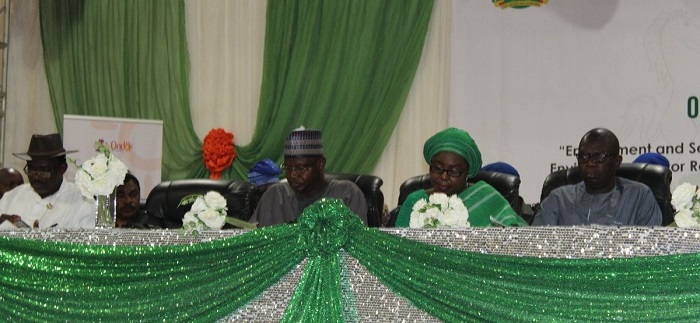
Minister of State for Environment, Alhaji Ibrahim Jibril, with other dignitaries at the National Council on Environment in Akure, Ondo State
The Permanent Secretary, Ecological Fund Office, Dr Habiba Lawal, gave the advice at the 2018 National Council on Environment (NCE) Meeting in Akure, Ondo state.
The theme of the meeting is “Environment and Security: Consolidating Nigeria’s Environmental Reforms towards Sustainable Development’’.
According to Lawal, the Federal Government will continue to promote and ensure successful partnership critical to the effective management of the environment.
“However, the state governments should also ensure that the shares of their Derivation and Ecological funds are judiciously expended.
“By so doing, the huge cost on intervention projects will be far reduced and the savings thereof will be harnessed to address other national developmental needs,’’ the permanent secretary said.
According to her, the sharing formula of the fund is as follows: Federal Government collects one per cent as its monthly share; state governments get 0.72 per cent while local governments have 0.60 per cent as their monthly share.
“The one per cent Federal Government’s share is domiciled in the Central Bank of Nigeria and managed by the Accountant General of the Federation.
“The National Emergency Management Agency benefits 20 per cent of the Federal Government’s share monthly.
“The state and local governments collect their shares monthly at the Federal Account Allocation Committee’s meeting,’’ she said.
The permanent secretary said that since the inception of President Muhammadu Buhari’s administration, 150 projects had been approved by the Federal Government.
She said that, out of the figure, 63 projects had been inaugurated and handed over to the affected communities while 16 were waiting to be inaugurated.
According to her, the remaining projects are ongoing and at various stages of completion.
“It has become glaring that the Federal Government cannot address these challenges alone.
“So, the state and local governments should intensify more efforts to ensure full participation to complement the Federal Government’s efforts,’’ Lawal said.
The Minister of State for Environment, Alhaji Ibrahim Jibril, urged the Ondo State Ministry of Environment to turn the ministry around, to ensure that relevant stakeholders paid attention to the issues of environment.
Jibril, who visited a coastal area “Aiyetoro’’, in Ilaje Local Government Area of Ondo State, expressed shock over sea incursion that displaced many houses in the community.
“What happens in Aiyetoro shows that climate change is real because it is high sea level that causes it and it is sad to see school children studying under such inconducive condition,’’ he said.
The minister called for synergy among the tiers of government and relevant stakeholders to address the problem.
Gov. Rotimi Akeredolu of Ondo State, who called for the Federal Government’s intervention to address ecological problem in Aiyetoro community, commended the minister and other stakeholders for visiting the community.
Akeredolu, who was represented by his Deputy Governor, Mr Agboola Ajayi, said that the minister’s visit to Aiyetoro would assist in addressing sea incursion in the area.
The World Igbo Environment Foundation (WIEF) has called for the dredging of River Niger and de-silting of water bodies to solve the perennial problem of flooding in Nigeria.
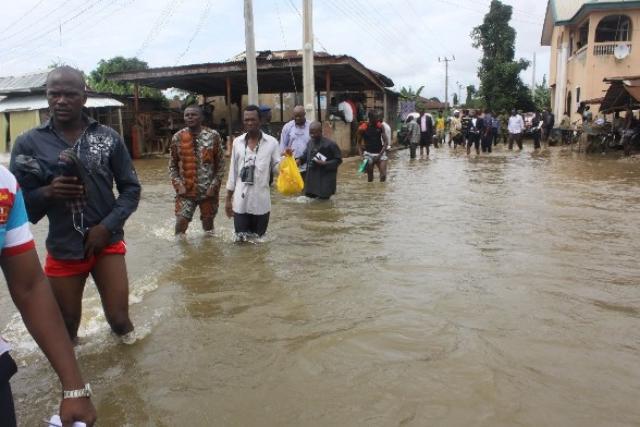
Flooding in Anambra State
The foundation’s Executive Director, Dr Odili Ojukwu, suggested this in an interview with the News Agency of Nigeria (NAN) on Wednesday, October 31, 2018 in Awka, the capital of Anambra State.
Ojukwu said that apart from mitigating the impact of flooding on the lives in affected communities and the national economy, dredging had immense potential for trade and industry.
He said climate change had come to stay with all its consequences and called on the Federal Government to come up with sustainable ways of managing it and exploring other opportunities.
The foundation said it would also facilitate the development of vibrant economy along the coastal lines and decongest some major cities of the country.
“River Niger needs to be dredged for the benefit of the entire Nigeria; this flood would have been effectively contained if river Niger was appropriately dredged before now.
“The streams and rivers which serve as flow corridors for floods are clogged up, they have to be de-silted so that they can withstand flood considerably when it comes.
“The benefit of dredging is so enormous; it will increase coastal transport system, easier and cheaper movement of goods and also enhance irrigation for farming,” he told NAN explaining the causes and benefits of dredging.
“Again, it will help to develop the glass industry because sand is a major raw material in the production of glass and reduce the indiscriminate mining of sand which leads to erosion of the environment.
“Why should we continue to neglect a critical sector like that which borders on the human person, ecology, environment, economy and industry.
“We are having issues of congestion in Lagos, Kano, Abuja, Kaduna while we can open up other areas for economic purposes and move some of our population there,” he said.
The WIEF chief also called for an environmental policy that would be proactive, people oriented and cost efficient.
He decried the huge amount of money spent on relief materials and rebuilding of destroyed properties and livelihoods because of flood disaster.
“I can challenge anybody; the cost of responding to flood and erosion emergencies (relief materials and repairs) is much higher than the budget for environment ministry both at the federal and state levels.
“The approach of government to these emergencies is more of reactionary that proactive, when the alarm is sounded by the National Emergency Management Agency (NEMA), the next move be `what can be done to reduce the effect’?
“But they were busy setting up Internally Displaced Peoples (IDPs) camps without working on possible mitigation of factors like what we see in Asia and America.
“They don’t have to wait until erosion by flood cuts off major roads and vehicles plunge into them and when it begins to claim human lives,” Ojukwu said.
“Nigeria needs actionable environmental policy which is people-driven, gone should be the days when Abuja conceive projects and give it to people without knowledge of the terrain to implement.
“There are non-structural issues that can be done without much money, but government will not deal with those issues until the whole issues degenerate.”
Ojukwu said Ecological Fund should be scrapped and be made part of the federal allocation so that states could use the increase to deal with their peculiar challenges.
According to him, the Ecological Fund is just free money for politicians; it should be scrapped completely because it was no longer serving the original purpose.
“Rather, the Federal Government should make it part of the money shared among the tiers of government, this will increase what is available to states to fund the various sectors of their economy,” he said.
Gov. Umaru Al-Makura of Nasarawa State has urged the federal and state governments to set up grazing areas to address the incessant clashes between herders and farmers in the country.
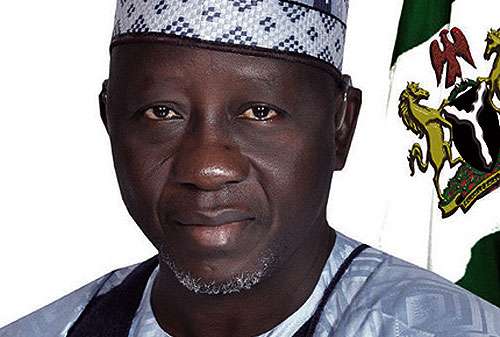
Governor of Nasarawa State, Umaru Tanko Al-makura
Al-Makura made the call on Wednesday, October 31, 2018 in Lafia, the state capital, at the stakeholders’ meeting organised by the Presidential Committee on Farmers/Herders crises in collaboration with the Nasarawa State Government.
Represented by Haruna Osegba, the state Commissioner for Local government and Chieftaincy Affairs, the governor also called on private individuals, groups and organisations to set up private ranches to curb the farmers/herdsmen clashes.
He maintained that all established cattle routes should not be blocked during and after harvest to guarantee the constitutional rights to the free movement of citizens.
Al-Makura stressed the need to intensify surveillance and patrol by security agencies and urged farmers and herders to refrain from taking laws into their hands but rather report cases of trespass to constituted authorities for redress.
The governor said perpetrator and sponsors of heinous crimes, including the farmer/herder conflicts, should be promptly arrested and prosecuted to serve as a deterrent to others.
Al-Makura noted that the establishment of the Community-Based Conflict Resolution Committees at the state, local government, district and village levels by his administration had yielded tremendous results in resolving conflicts among individuals and communities.
He lauded the intervention of the Federal government over the farmers/herder crises, especially the establishment of the Presidential committee headed by the Vice President, Prof. Yemi Osinbajo.
“Let me commend the efforts of the presidential committee for your commitment toward engendering symbiotic and peaceful relationship between farmers and herders with a view to harnessing our agricultural potential for socio-economic growth of the country.’’
He stated that the assignment of the committee was in line with the vision of the President Muhammadu Buhari-led administration.
Al-Makura added that hosting the meeting in Nasarawa state was apt, particularly as harvest season usually characterised by incessant farmers/herder conflicts was approaching.
“It’s my belief that this meeting will draw inspiration from our unique broad-based community-based conflict resolution mechanism for possible adoption,” Al-Makura added.
Earlier, Dr Andrew Kwasari, secretary of the Presidential Committee, said the meeting was the third in the state since its inauguration in 2017.
He said the essence of the stakeholders’ meeting was to put in place machinery for the commencement of the implementation of resolutions reached by stakeholders in the previous engagement toward resolving such crises.
Kwasari noted that the harvest season (November-February) mostly witnessed perennial crises, hence the need to build the capacity of the local communities to be able to amicably resolve conflicts that might arise between farmers and herders during the period.
He explained that the Federal and state government had developed an expanded plan following inputs from the stakeholders in the state during the fact-finding visits of the committees earlier in this year.
He said the 10-year plan aimed at developing a robust livestock and crop production system in the country could only be implemented with the support and commitment to conflict resolution by all stakeholder, especially those in the rural communities.
The World Health Organisation (WHO) has advised governments to ensure that schools and playgrounds are constructed away from busy roads, factories and power plants to reduce children’s exposure to air pollution.
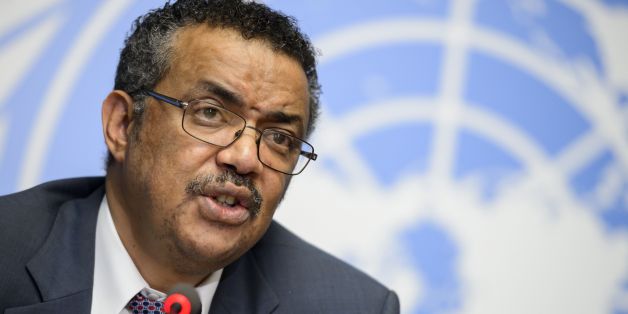
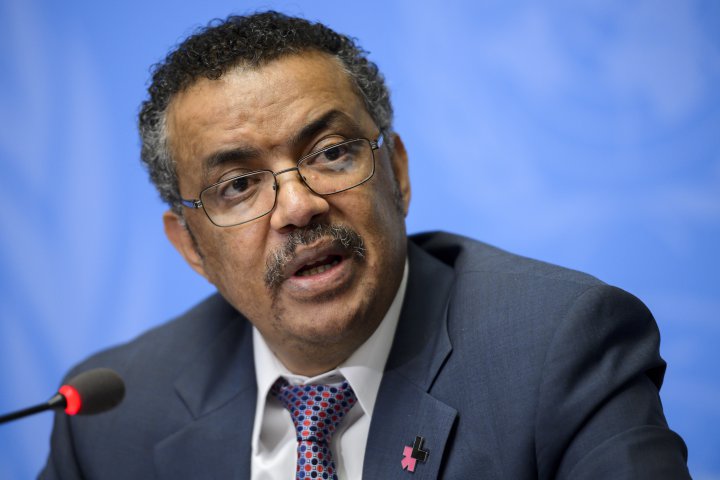
Dr Tedros Adhanom Ghebreyesus, Director General of the World Health Organisation (WHO). Photo credit: FABRICE COFFRINI/AFP/Getty Images
Dr Tedros Ghebreyesus, the WHO Director-General, gave the advice in a New WHO Report on “Air pollution and child health”, released by the organisation on Wednesday, October 31, 2018.
The report was launched on the eve of WHO’s First Global Conference on Air Pollution and Health holding at the WHO Headquarters in Geneva from Oct. 30 to Nov. 1.
The WHO director-general noted that busy roads, factories and power plants were major sources of air pollution, stating that constructing schools away from these would limit children’s exposure to polluted air.
He said that around 93 per cent of the world’s children under 15 years breathe air that is so polluted and puts their health and development at risk everyday.
Ghebreyesus said that tragically, many of these children die as WHO estimates in 2016 showed that 600,000 children died from acute lower respiratory infection caused by polluted air.
“Polluted air is poisoning millions of children and ruining lives; this is inexcusable. Every child should be able to breathe clean air so that they can grow and fulfill their full potential.
“One reason why children are particularly vulnerable to the effects of air pollution is because they breathe more rapidly than adults and so absorb more pollutants.
“They also live closer to the ground where some pollutants reach peak concentrations, and this is a time when their brains and bodies are still developing.
“The new report reveals that when pregnant women are exposed to polluted air, they are more likely to give birth prematurely and have small, low birth-weight children.
“Air pollution impacts neuro-development and cognitive ability and can trigger asthma and childhood cancer.
“Children who have been exposed to high levels of air pollution may be at greater risk for chronic diseases such as cardiovascular diseases later in life,” the WHO director-general said.
The report further revealed that air pollution was one of the leading threats to child health accounting for almost one in 10 deaths in children under five years.
According to the report, more than 40 per cent of the world’s population, which includes one billion children under 15 years, is exposed to high levels of household air pollution.
“This pollution comes mainly from cooking with polluting technologies and fuels.
“In low and middle-income countries around the world, 98 per cent of all children under five are exposed to ambient fine Particular Matter (PM2.5) levels which is above WHO air quality guidelines as against 52 per cent in high-income countries,” the report read in part.
The UN health body therefore urged countries to work towards meeting the WHO global air quality guidelines to enhance the health and safety of children.
The organisation said governments should reduce over-dependence on fossil fuels, invest in improving energy efficiency and facilitate the uptake of renewable energy sources to achieve this.
WHO said that better waste management methods should also be adopted which could include reducing the amount of waste burned within communities in order to reduce ‘community air pollution’.
The three-day conference aims to provide opportunities for world leaders, ministers of health, energy and environment, mayors, scientists, heads of intergovernmental organisations and others to commit to act against air pollution.
The UN says no fewer than 1.4 million people migrate every week to cities around the world.
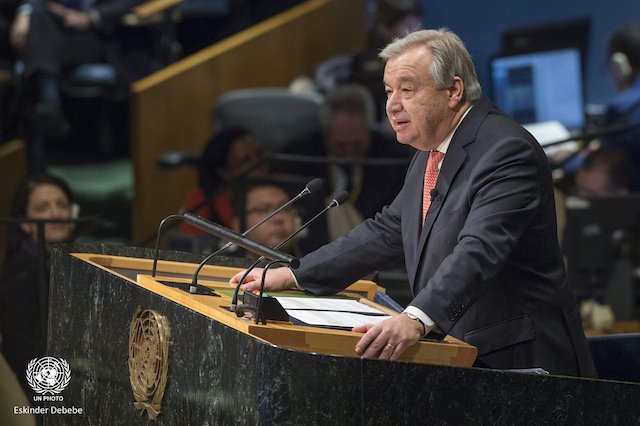
Antonio Guterres, UN Secretary General
Secretary-General António Guterres warned that the weekly migration could contribute to “disasters”.
The UN chief said the development “can strain local capacities, contributing to increased risk from natural and human made disasters”.
In his message for World Cities Day, celebrated annually on Oct. 31, Guterres stressed that “hazards do not need to become disasters”.
“The answer is to build resilience – to storms, floods, earthquakes, fires, pandemics and economic crises,” he said.
Guterres explained that cities around the world were doing just that, forging new ways to increase resilience and sustainability.
He noted that the capital of Thailand, Bangkok has built vast underground water storage facilities to cope with increased flood risk and save water for drier periods.
In Quito, the capital of Ecuador in South America, local government has reclaimed or protected more than 200,000 hectares of land to boost flood protection, reduce erosion and safeguard the city’s freshwater supply and biodiversity, he noted.
The UN chief also indicated that the city of Johannesburg in South Africa “is involving residents in efforts to improve public spaces so they can be safely used for recreation, sports, community events and services such as free medical care”.
Guterres said a range of UN-backed international agreements provided “a roadmap for a more sustainable and resilient world”.
The agreements include the 2030 Agenda for Sustainable Development, the Paris Agreement on climate change, the Sendai Framework for Disaster Risk Reduction and the New Urban Agenda
World Cities Day was established by the UN to promote the international community’s interest in global urbanisation, push forward cooperation among countries in meeting opportunities and addressing challenges of urbanisation, and contributing to sustainable urban development around the world.
Maimunah Sharif, Executive Director of the UN Human Settlements Programme (UN Habitat), flagged the importance of investing in resilience or face growing “economic, social, political and human” risks.
“It has been estimated that without action on climate change – which accounts for just one facet of resilience – some 77 million urban residents risk falling into poverty,” she warned.
Sharif elaborated that human-made and environmental threats ranged from droughts, floods and fires to economic shocks, disease outbreaks, war and migration.
“Investing in resilience is a wise investment,” the UN Habitat chief said.
The theme of the 2018 commemoration, “Building Sustainable and Resilient Cities”, focuses on the need to preserve human life and limit damage and destruction while continuing to provide infrastructure and services after a crisis.
Expansive lush sugarcane plantations stretching to 8000 hectares in Kenya’s semi arid Kwale County along the coastal line is a clear testimony that irrigated agriculture could be the magic bullet for a green revolution in Africa.
Prof Nuhu Hatibu, the regional head of the Alliance for a Green Revolution in Africa (AGRA)
Yields at the Kwale sugar plantation are higher than they would be were it to be rain-fed, and there is no need to worry about variations in seasonal rainfall, said Pamela Ogada, the general manager for the KISCOL Sugar Company, which owns the site.
Irrigation has been “the magic bullet” for the global agricultural revolution, said Prof Nuhu Hatibu, the regional head of the Alliance for a Green Revolution in Africa (AGRA), which works to improve farming across the continent.
Now AGRA has said it will work to mobilise billions of dollars in cash and kind through different partners to ensure that smallholder farmers – from individuals to cooperatives – can benefit from irrigation.
This $9 billion, according to Hatibu, was promised by the World Bank, and it will be through loans to governments.
The World Bank has pledged to work with the African Development Bank (AfDB) and other organisations to provide the money to African governments to improve irrigation, said Steven Schonberger, the World Bank’s global lead for water in agriculture.
Financing for the effort is still being put together, Schonberger said, but “we are very optimistic about it because a lot of financing is already there.”
The money could begin to flow as soon as 2019, he said.
The project will target water from multiple sources that include rivers, streams, stored rain water and groundwater.
They are still in the planning stage and, so far, they cannot tell how many African countries will express interest and have not decided when the funding will be rolled out. AGRA will help countries develop national strategies and also capacity building. The starting point according to Hatibu will be mapping of the groundwater aquifers in various countries before deciding on which crops to be grown.
He says that AGRA will have a microfinance facility known as “Irrigation Fund” through which the private sector can access money for putting up the infrastructure, such as constructing dams, wells, piping and different forms of storage.
Nearly all countries in Africa set up large projects post-independence to support irrigation and mechanisation programs after independence, Hatibu said. But they were not properly implemented, and all failed.
“What happened in other countries – those failures pushed them to look for solutions. But in Africa, we got paralysed and declared that irrigation was bad,” he told PAMACC News.
Raj Shah, the president of the Rockefeller Foundation, one of AGRA’s key funders, said Africa’s challenge was not over-irrigation but under-irrigation.
“Compared to any other agriculture-producing economy on the planet, Africa uses very little irrigation and very little fertiliser,” he said.
And, he added, the Green Revolution should be unique to Africa and should take water scarcity into account.
“Especially now that it’s been 40 years and we know how to avoid the negative environmental consequences of nitrogen runoffs, excess fertiliser use and over irrigation,” he said.
Groundwater
But how is this going to be possible without running into the same problems as India, whose quest to improve productivity through irrigation ended up depleting all the underground aquifers faster than they expected?
Research funded through the British government’s UK Aid programme – Unlocking the Potential of Groundwater for the Poor (UpGro) – has shown that the water table in some African countries is declining.
One project looked at shallow groundwater systems used by smallholder farmers in Ethiopia, and found increased competition for the resource, said Behailu Berehanu, a hydrologist at the Addis Ababa Science and Technology University and one of the researchers.
“With the growing trends of water use for industry, community water supply, rapid urbanisation, rapid growth of irrigated areas – definitely sustainability will be questionable,” he told PAMACC News.
“The main problem, and it cuts across many African countries, is that we do not have proper integrated groundwater resources management practices,” he said.
AGRA’s Hatibu said the irrigation project would benefit from applying technology and best practice from other parts of the world to ensure there is sustainable and efficient use of water.
“We must not run away from our problems. All we need is to look for solutions to those problems,” he said, adding that Ethiopia, for instance, was promoting irrigation by mapping shallow and medium- aquifers across the country.
“That is a very important investment to deal with resilient systems. This will help to have a well-balanced design of how much pumping is happening in relation to the recharge,” he said.
With increased knowledge, Hatibu said, it was possible to recharge artificially – especially with shallow aquifers.
“For example, rice fields are very good recharge mechanisms for groundwater systems,” he said.
The solution, he added, required identifying where the recharge basin for the aquifers was located, then finding a mechanism to direct rain- or river-water to the aquifer to recharge it.
And while some aquifers might require just one season to recharge, others might need longer.
“So, whenever you decide to use an aquifer, ask yourself: what is the recharge basin for that aquifer? If the recharge basin can be used for rice paddies, then you can grow rice as you recharge the groundwater system at the same time,” he said.
So far, the Rockefeller Foundation (one of the AGRA funders) is working to bring the ‘Smart Power’ programme to East Africa in order to help rural communities take advantage of new solar technology that makes it cheap and affordable to reach rural communities with off-grid renewable energy solutions.
The Smart Power programme has been highly successful in India where communities have been able to set up mini-grids. Through the programme, farmers have put up agro processing equipments and irrigation projects that can run on solar power. Excess power is also sold to the national grid to fetch income for communities.
Shah said that he has already discussed with Uganda’s President Yoweri Museveni, and they had agreed on implementing the Smart Power Programme in Uganda, as a starting point.
“That is what is required to be successful in agriculture,” said Shah.
Following the successful issuance of its first Sovereign Green Bond, Nigeria has embarked on a follow up scheme for 2018/2019.
Director, Department of Climate Change in the Federal Ministry of Environment, Dr Peter Tarfa (left), with Director General/CEO of the National Biosafety Management Agency (NBMA), Dr. Rufus Ebegba, during a session at the National Council on Environment in Akure, Ondo State
The initial issuance, which enabled the Federal Government raise some N10.69 billion to fund 2017/2018 appropriation projects with climate benefits, is now being followed up with issuance targeting a maximum amount of N50 billion, according to a memo by the Federal Ministry of Environment to the National Council on Environment (NCE), which is meeting in Akure, Ondo State, from Monday, October 29 to 31, 2018.
The green bond is a financial mechanism to facilitate Nigeria meet its Nationally Determined Contribution (NDC) target and low carbon pathway for socio-economic development in line with the Economic Recovery Growth Plan (ERGP).
Director, Department of Climate Change in the Federal Ministry of Environment, Dr Peter Tarfa, at the NCE further described the green bond process as an alternative source of financing to green the budget, fund green projects with measurable emission reduction calculations towards meeting the nation’s commitments in the NDC”.
Minister of State for Environment, Alhaji Ibrahim Jibril, disclosed recently that government would spend N10.6 billion Green Bond to execute its Energising Education Programme, which entails the provision of solar power to power higher institutions.
In the memo, the Environment Ministry urged the Council to, apart from supporting the development of bankable climate resilient and low carbon projects and programmes, encourage broad-based participation of all stakeholders for the dissemination of information on the green bond process as a source of financing for the implementation of the NDCs.
On the 24th Session of the Conference of the Parties (COP24) to the United Nations Framework Convention on Climate Change (UNFCCC) hold in December in Katowice, Poland, Dr Tarfa disclosed that, for the first time in its history, Nigeria would have a pavilion at the global climate talks.
“Stakeholders are invited to take up space at the pavilion. We are not charging them, but we will appreciate their support towards ensuring that the country’s participation at COP24 is a huge success,” he said.
A report on the state of the environment and socio-economic conditions in fragile ecosystems reveals the extent of land degradation in dryland Africa and shows how closely it is related to hunger and poverty. The report’s authors make an urgent call for increased investment in land restoration for small-scale farmers.
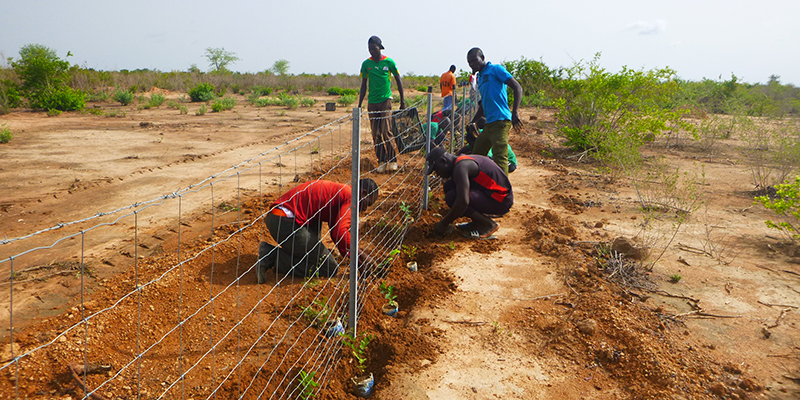
Combating desertification: Planting some 20,000 trees to create living hedges in Burkina Faso
The report was carried out by a major EU-funded Food and Agricultural Organisation (FAO) programme called Action Against Desertification. It states that over half of the area in the six African countries, where the programme operates – Burkina Faso, Ethiopia, The Gambia, Niger, Nigeria and Senegal – need restoration, an estimated 14 million hectares (ha), nearly half the size of Belgium.
“These findings again show what a huge challenge land degradation really is,” said Moctar Sacande, lead author and in charge of Action Against Desertification. They also make clear how closely land degradation is linked to poverty, he added. “80% of the area’s inhabitants, which is home to 1.8 million people, said they experienced food insecurity.”
Pietro Nardi of the European Union, the programme’s major sponsor, said: “Despite the momentous challenge, land degradation is not yet irreversible.” He explained that Action Against Desertification, now in its final stages, has covered an estimated 45 000 hectares of degraded land in four years, reaching around 500,000 people.
The study combines biophysical data to analyse the state of the environment in the areas of intervention with household surveys to determine the living conditions of the people concerned.
A grim picture emerges from the biophysical data, collected with Collect Earth, an innovative tool developed by FAO using high-resolution satellite imagery. In Nigeria, for example, half of the forests in the area where Action Against Desertification works have disappeared in less than 10 years. Desertification affects an estimated 71% of the area in neighboring Niger.
Data on local living conditions, obtained following the Sustainable Livelihood Framework, reveal a close relationship between poverty and land degradation. Nearly all interviewed households in Burkina Faso had experienced uncertainty about their food supply in the preceding year. In Fiji, where rising sea levels are a major threat, a majority said that water supplies sometimes runs dry.
Bringing restoration to scale
This study is a high point of Action Against Desertification’s monitoring and evaluation efforts. Earlier research made it into Science magazine, as it found that forest in drylands are much more extensive than previously assumed. The same research allowed to map restoration needs and opportunities for Africa’s Great Green Wall for the first time.
Monitoring and Evaluation is a key element of Action Against Desertification’s successful land restoration approach. It allows to measure the progress and the impact of activities on the ground. At the same time, it generates a wealth of knowledge on dryland restoration for application well beyond the project itself.
Central to the success of Action Against Desertification is a restoration method that places rural communities at the heart by focusing on their needs for useful species and preferences in support of their livelihoods. A lot of effort also goes in improving the living conditions of local communities by developing the economic potential of non-timber forest products, such as fodder and gum Arabic.
Currently, the initiative is expanding its activities in African countries. But a lot more is needed, Sacande argues, pointing out the findings of the survey. “Action Against Desertifcation can be a game-changer for Africa’s drylands and beyond. But it will require major investments to bring its activities to scale.”
Action Against Desertification is an initiative of the African, Caribbean and Pacific Group of States (ACP) in support of the Great Green Wall initiative and UNCCD national action programmes to combat desertification. It promotes sustainable land management and restoration of degraded land in Africa, the Caribbean and the Pacific. Action Against Desertification is implemented by FAO and partners with funding from the European Union.