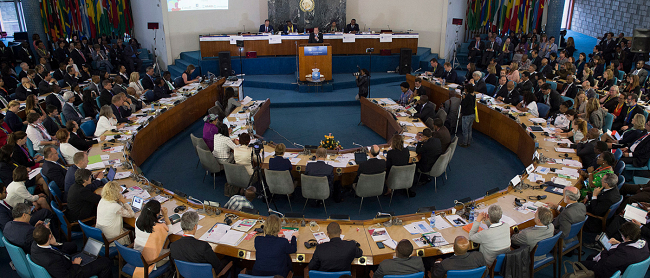
Switzerland has ratified the Kigali Amendment to the Montreal Protocol. It is the 60th Party to the Amendment.
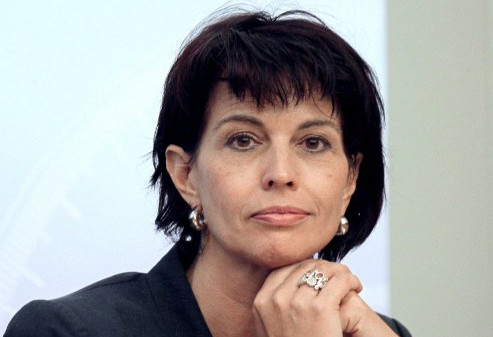
Doris Leuthard, President of Switzerland
The Kigali Amendment to the Montreal Protocol aims to bring about a global phasedown of hydrofluorocarbons (HFCs), which are powerful greenhouse gases.
HFCs, used mainly in refrigeration, air conditioning and heat pump equipment, are thousands of times more harmful to the climate than CO2. In response to the rapid growth of HFC emissions, the 197 parties to the Montreal Protocol adopted the Kigali Amendment in 2016 to reduce gradually their global production and consumption.
The Kigali Amendment was adopted by 197 parties meeting in the Rwandan capital on October 15, 2016. The amendment sees developed countries take the lead on phasing down HFCs, starting with a 10% reduction in 2019 and delivering an 85% cut in 2036 (compared to a 2011-2013 baseline).
Kigali has already reached the threshold to enter into force, having been ratified by the required 20 parties at the end of 2017.
“We encourage all Parties to the Montreal Protocol to take action on HFCs as soon as possible,” said Miguel Arias Cañete, the EU commissioner for climate action and energy. “Delivering on the Kigali commitments will play a vital role in our global efforts to tackle climate change, as well as driving innovation and creating new economic opportunities in the refrigeration and air conditioning sector.”
Global implementation of the Kigali Amendment would prevent up to 80 billion tonnes CO2 equivalent of emissions by 2050. This would make a significant contribution to the Paris Agreement objective of limiting the global temperature rise to well below 2°C.
Head of UN Environment, Erik Solheim, described the development as “absolutely critical to addressing climate change and rising temperatures around the world”.
“The Kigali Amendment to the Montreal Protocol can bring critical benefits to our planet by fighting global warming. The Kigali Amendment could avoid up to 0.50C of global warming by the end of the century while continuing to protect the ozone layer,” said the UN body.
The Kigali Amendment will enter into force on January 1, 2019.
The World Health Organisation (WHO) and the UN Organisation Stabilisation Mission in the Democratic Republic of the Congo (MONUSCO) say the Ebola outbreak in DRC remains dangerous and unpredictable.
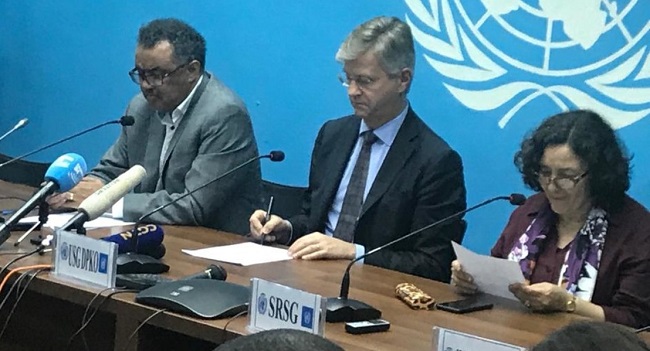
Director General of WHO, Tedros Ghebreyesus (left), with UN Peacekeeping chief, Jean-Pierre Lacroix
The Director General of WHO, Tedros Ghebreyesus, and UN Peacekeeping chief, Jean-Pierre Lacroix, sated this after a joint mission to the epicentre of the epidemic, around the city of Beni close to the Ugandan border,
Ghebreyesus and Lacroix saw conditions on the ground for themselves, along with Minister of Health Oly Kalenga, and they met local officials, health workers, civil society leaders, and peacekeepers.
The top UN officials, however, noted that new measures to tackle the Ebola outbreak in DRC were working.
Since the outbreak began in August, there have been 308 cases and 191 deaths, about half of which have been in Beni, which has a population of around 800,000.
The UN Stabilisation Mission in DRC, MONUSCO, said it has taken an active approach in recent weeks to quell armed group activity in the North Kivu area, and protect Beni from conflict.
“While this has contributed to a decline in new cases over the past two weeks, the situation remains of grave concern,” WHO said in a press statement.
Under the leadership of the Ministry of Health, WHO and partners are using community surveillance in areas which are difficult for outsiders to navigate, allowing workers to trace the contacts of anyone who has been infected.
“We are facing numerous complex challenges, but it’s encouraging and inspiring to see that our efforts to deliver as one UN, have been extremely successful in many hotspots and will help to end the outbreak and save lives,” Lacroix said.
The current epidemic, the country’s 10th, is on track to surpass the previous largest outbreak in 1976, which saw 318 cases in total, leading to 280 deaths, WHO said.
Since the outbreak began, MONUSCO said it assisted in the Ebola response by providing logistical support, office facilities, transportation, communication and with keeping staff safe, from security threats.
After decades of conflict, Ebola response teams have faced misinformation and mistrust from some local populations who are reluctant to allow vaccination programmes or follow rules for contact tracing and safe burials.
The WHO chief said: “The fact that we have so far prevented Ebola from spreading into neighbouring countries is a testament to the hard work and determination of staff from all partners.
“As complex and challenging as this outbreak is, I am confident that working together with the Ministry of Health, MONUSCO and all our partners, we can and will end it”.
Patients are being treated in six newly-build centres that are operated by the Ministry of Health and partners, with each supported by a mobile laboratory to rapidly diagnose cases and guide treatment.
“To date, 27,000 people have been vaccinated against Ebola, and almost every new patient receives one of four investigational treatments, something which was never previously possible during an Ebola outbreak,” WHO said.
The UN agency noted that despite the loss of life, 91 people have recovered and returned to their communities due to the hard work and joint efforts of national and international responders.
The Civil Society Legislative Advocacy Centre (CISLAC), a civil society organisation (CSO), has called for repair or removal of non-producing oil installations in the Niger Delta region.
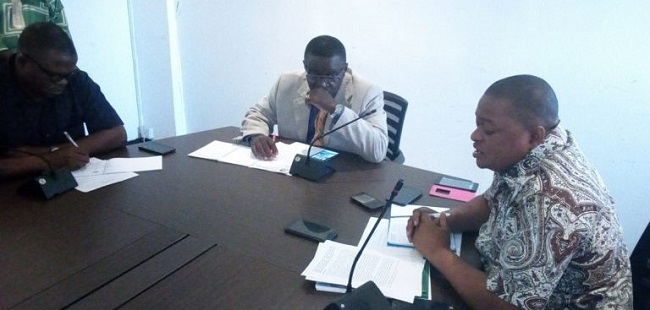
Director-General of NOSDRA, Mr Peter Idabor (middle), with the Senior Programme Officer of CISLAC, Mr Salaudeen Hashim (right), at the meeting
Executive Director of CISLAC, Malam Auwal Ibrahim, made the call during a courtesy visit to Mr Peter Idabor, the Director-General, National Oil Spill Detection and Response Agency (NOSDRA), in Abuja on Friday, November 9, 2018.
Represented by Mr Salaudeen Hashim, the Senior Programme Officer of the centre, Ibrahim said the repair or removal of idle oil facilities was key in any environmental remediation.
The appeal comes ahead of the commencement of the much-awaited cleanup of Ogoni land in December.
‘‘Oil assets in the area still have the tendency of repoluting the environment when they are not serviced or decommissioned.
‘‘So, we believe that we need to strengthen collaboration and coordination, among agencies of government, toward the realisation of a successful remediation, restoration and rehabilitation of Ogoni land,’’ he said.
Ibrahim also said that getting multinational oil companies to properly handle their facilities in the region was part of an advocacy partnership deal that CISLAC was seeking with NOSDRA.
The proposed partnership is aimed primarily to support implementation of the United Nations Environment Prgramme (UNEP) report on the Niger Delta.
Under the proposed collaboration, the group is asking NOSDRA to institutionalise regular interface between the oil corporations operating in the region and CSOs.
‘‘The objective is to strengthen collaboration and coordination among agencies of government toward the realisation of a successful remediation, restoration and rehabilitation of Ogoni.
‘‘Such forum would enable stakeholders to further review remediation techniques, where necessary, and appraise the performance of the emergency measures to see where gaps exist and the available alternatives.
‘‘It would also support regular and objective feedback on what is happening and what needs to be done toward creating a safe and healthy Ogoni in particular and the Niger Delta in general.
‘‘NOSDRA can do this under its mandate of striking partnership with internal and external stakeholders, including multinational oil companies, private interest, communities and civil society groups,’’ he said.
Responding, Idabor lauded CISLAC for the idea which he said was a commendable departure from the antagonistic disposition of most CSOs to government.
Idabor said NOSDRA was willing to partner with CISLAC, noting however that the agency’s role in the Ogoni cleanup was mainly regulatory.
He immediately directed his officials to raise a three-man team to liase with CISLAC to work out the proposed partnership deal.
The NOSDRA boss sought the assistance of CSO in producing database of abandoned installations in the Niger Delta to guide the anticipated engagement with the companies concerned for necessary action.
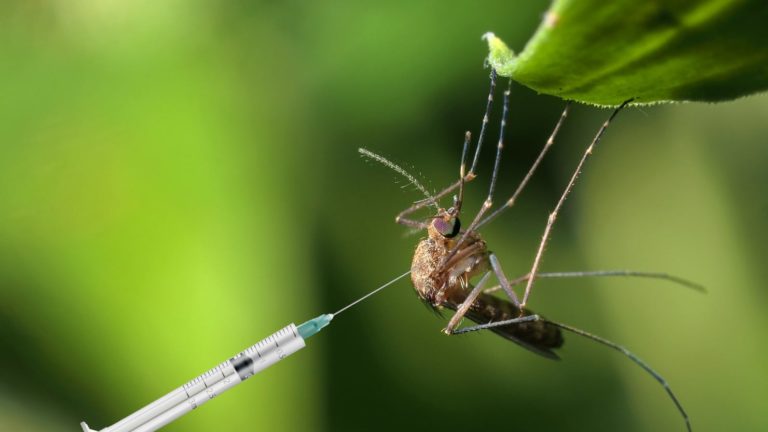
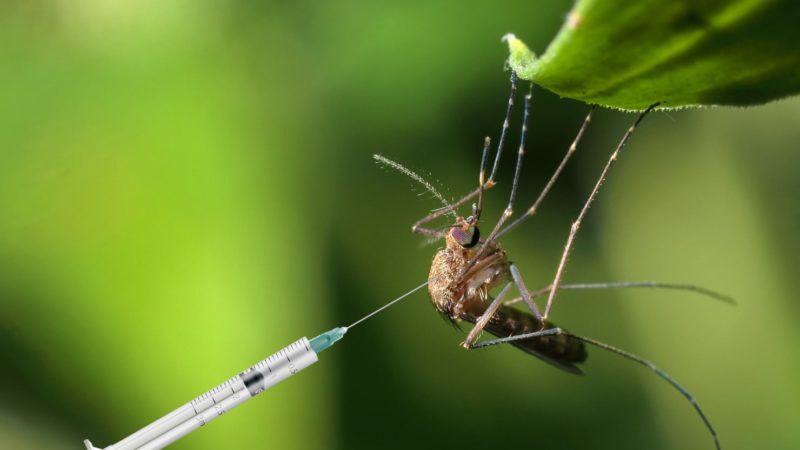
Genetically modified (GM) “male-sterile” mosquitoes are due to be released in the very near future, in Burkina Faso by the Target Malaria research consortium, the African Centre for Biodiversity (ACB) has disclosed.
Target Malaria acknowledges however that there are no benefits to the proposed GM mosquito release.
The National Biosafety Agency of Burkina Faso is under pressure not to release sterile genetically modified male mosquitoes as planned
According to Mariam Mayet, Executive Director of the ACB, “There is absolutely no justification for releasing these GM mosquitoes. It is highly unethical and totally unacceptable to conduct experiments which carry risks, yet do not bring any benefit for malaria control in Burkina Faso.“
The application to make open releases of GM mosquitoes was reportedly approved by the National Biosafety Agency (Agence Nationale de Biosécurité, ANB) in Burkina Faso in September 2018 and, as a result, the first open releases of GM mosquitoes in Africa are planned for the coming year.
The open release is intended to test the infrastructure and systems for future release for, as yet, experimental technologies, notably “gene drive” mosquitoes. Target Malaria’s ultimate aim is to release gene drive mosquitoes, with the aim of reducing the population of Anopheles mosquitoes, which can transmit the parasite that causes malaria. The hope is that reducing the mosquito population will reduce the risk of malaria transmission and hence disease incidence.
However, the proposed release of GM “male-sterile” mosquitoes, meant to only be for training purposes, is not expected to deliver any benefits for malaria control in Burkina Faso. This is not an early stage trial for later releases of the gene drive mosquitoes, but releases of an entirely different GM mosquito.
Instead, the release of the GM mosquito poses risks, including the incidental release of some biting female GM mosquitoes during the experiments, according to the ACB. While Target Malaria claims that the number will be small, nevertheless, since GM female mosquitoes can bite humans and spread disease, the release of biting females still poses some risk to local people.
ACB claims it has evidence that Target Malaria is paying compensation of 400 CFA francs (approximately 70 US cents) per hour to local villagers to allow for the collection of biting female mosquitoes from their own bodies.
“The use of a financial incentive to individuals to expose themselves to biting female mosquitoes, and potentially to malaria, is also ethically extremely questionable,” said Dr. Helen Wallace, Director of GeneWatch UK.
There is no published environmental risk assessment (ERA), other than that published by Target Malaria and there has been no public consultation, apart from “public engagement” activities conducted by Target Malaria (the organisation proposing the releases). Any decision on open releases of GM mosquitoes requires meaningful public consultation, as mandated by the Cartagena Protocol on Biosafety, to which Burkina Faso is a Party, insists the ACB.
“The lack of a comprehensive, published ERA, which has been subject to a full public consultation, undermines the legitimacy and credibility of the reported approval of these experiments,” said Lim Li Ching, Senior Researcher from the Third World Network. “Without this, local people cannot be fully informed about the risks before making a decision on whether to accept them.”
According to scientists, malaria is a serious public health issue that disproportionately affects Africa.
“Instead of investing in risky GM technologies, what is needed is a more holistic approach to significantly and sustainably decrease the burden of malaria – one that integrates interventions and research on health, climate, agriculture (and eventually economics and housing) – in tackling the main factors contributing to the disease and its transmission,” said the ACB.
African ministers of health and environment have agreed on a 10-year strategic plan to increase investment and accelerate joint health and environment priorities.
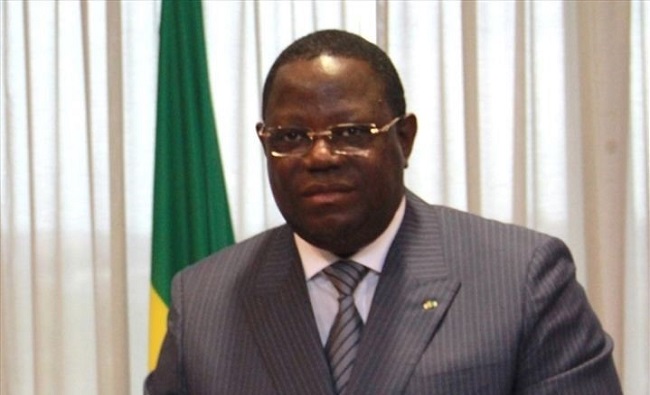
Prime Minister of Gabon, Franck Emmanuel Issoze-Ngondet
The “Strategic Action Plan to Scale Up Health and Environment Interventions in Africa 2019 – 2029 to the African Union” was adopted on Friday, November 9, 2018 at the closing of the Third Interministerial Conference on Health and Environment held in Libreville, the Gabonese capital, from November 6 to 9.
The Prime Minister of Gabon, Franck Emmanuel Issoze-Ngondet, said: “We must go further, particularly in terms of mobilising material and financial resources for the implementation of national plans, but also in terms of clarifying and sharing responsibilities.”
Nearly one in four premature deaths in Africa are linked to the environment and climate change threatens to increase the number of health emergencies and outbreaks in the coming years. African leaders have recognised the need for health and environment sectors to work together since the 2008 Libreville declaration and in 2010 the Luanda Declaration led to the creation of the Health and Environment Strategic Alliance, which is viewed as a pathmaker.
“The Health and Environment Strategic Alliance in Africa represents a powerful model of multisectoral partnership, which is exactly what we need to achieve the sustainable development goals,” said Dr Tedros Adhanom Ghebreyesus, WHO Director-General in a video message.
Ministers agreed to strengthen policy frameworks and institutional mechanisms for more integrated interventions as well as develop innovative platforms for funding, including more domestic resources allocated to joint actions on health and environment.
Rapid and unplanned urbanisation and industrialisation in Africa is increasing the risk of chronic diseases such as cancer, heart disease and stroke.
“We must act on air pollution, the biggest killer of humans that causes 7 million deaths annually on our planet. Governments, businesses and citizens are stepping up responses to pollution and environment degradation, but we need to do far more,” said Erik Solheim, Head of UN Environment Programme (UNEP).
“There are inspiring examples across Africa. We must take the opportunity to share best practices and learn from each other. We need urgent, large scale and coordinated actions. We need to scale-up government and private sector investments. Together we can beat pollution and improve the health of our citizens,” he added.
Supported by the WHO, UNEP and development partners, the action plan can positively change the course of sustainable development in Africa, it was gathered.
“A penny saved today in avoiding the prevention of ill health, is a pound spent tomorrow on rising hospital bills, lost work days, and cleanup costs,” said Dr Matshidiso Moeti, WHO’s Regional Director for Africa. “We need a new business model based on an integrated approach to programming and service delivery.”
The economic cost of premature deaths from air pollution is estimated at $450 billion. The economic loss due to the lack of access to safe drinking water and sanitation is estimated to be 5% of the region’s gross domestic product.
The return on investment in health and environment will have significant social and economic impact for Africa. For instance, the benefits from eliminating lead in gasoline on a global scale have been estimated at $2.45 trillion per year, saving an estimated one million premature deaths per year.
The Ministers at the conference called on the President of Gabon as host country to present the strategic action plan for endorsement by the African Union and the outcomes will provide invaluable inputs to the fourth session of the United Nations Environment Assembly to be held from March 11 to 15, 2019 in Nairobi, Kenya.
The Senate Committee on Environment has lauded the National Biosafety Management Agency (NBMA) over its modern state-of-the-art Genetic Modification (GM) Detection and Analysis Laboratory.
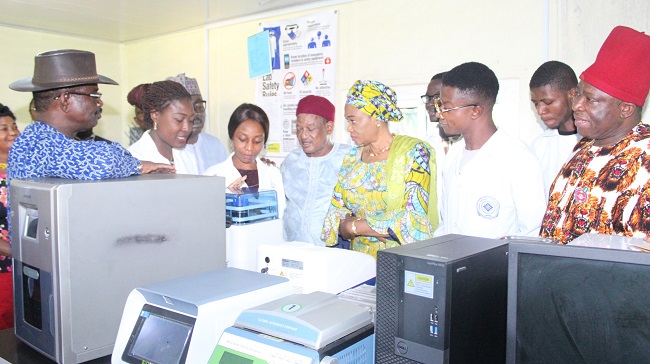
Officials of the NBMA briefing members of the Senate Committee on Environment during the visit
The senators made the commendation during an oversight visit to the agency in Abuja on Thursday, Nov. 8, 2018 while they were taken on a tour of the agency’s laboratory.
Chairman, Senate Committee on Environment, Senator Oluremi Tinubu, said that, in such a short time of establishment, the agency has achieved a lot in terms of equipment, personnel and performance.
Senator Tinubu, who said the committee came to ascertain the level of performance for the years 2017 and 2018 of the agency’s budget, also commended the Director General/CEO of the agency, Dr Rufus Ebegba, for achieving so much in a short time.
Dr Ebegba presented the 2017 and 2018 budget performance to the committee, noting that the essence of the GM detection and analysis laboratory is to ensure that no Genetically Modified Organism (GMO) is allowed into the country without proper verification and authorisation.
While presenting the budget, the DG/CEO said that, in 2017, about N243,734,400 was appropriated, about N170,806,235 was released and N170,806,235 was expended.
Dr Rufus said for 2018, about N258,069,920 was appropriated, N25,860,992 was released and about N25,851,051 has been expended so far.
The eight-man Committee promised to relate the progress and needs of the agency back to the National Assembly for onward action.
The DG/CEO thanked the Senate Committee on Environment for the encouragement during the visit.
The Intergovernmental Panel on Climate Change (IPCC) on Friday, November 9, 2018 invited experts and governments to review the Second Order Drafts of two Special Reports that will be launched next year.
The Expert and Government Review for the Special Report on the Ocean and Cryosphere in a Changing Climate (SROCC) takes place between November 16, 2018 and January 11, 2019. The Special Report on Climate Change and Land (SRCCL) can be reviewed from November 19, 2018 to January 14, 2019.
The two reports, to be finalised in the second half of 2019, follow the Special Report on “Global Warming of 1.5ºC”, which was released on October 8.
All IPCC reports go through multiple stages of formal review. After the Expert Review of the First Order Draft, the Second Order Draft is produced and reviewed by both governments and experts alongside a first draft of the Summary for Policymakers (SPM). Once the second round of review comments have been considered, governments review the Final Draft of the report and offer comments on the SPM.
Finally, governments meet to approve the SPM line by line and accept the underlying report. The thorough review process ensures that IPCC reports consider objectively the full range of scientific, technical and socio-economic information from around the world.
Expert Reviewers, according to the IPCC, can register with a self-declaration of expertise up to a week before the end of the review period.
For the “IPCC Special Report on the Ocean and Cryosphere in a Changing Climate” (SROCC), more than 100 scientists from more than 30 countries are assessing the latest scientific knowledge about the physical science basis and impacts of climate change on ocean, coastal, polar and mountain ecosystems, and the human communities that depend on them. Their vulnerabilities as well as adaptation capacities are also evaluated. Options for achieving climate-resilient development pathways will be presented.
The SROCC is prepared under the joint scientific leadership of Working Group I and Working Group II, with operational support from the Working Group II Technical Support Unit. It will be launched in September 2019.
“Climate Change and Land: an IPCC special report on climate change, desertification, land degradation, sustainable land management, food security, and greenhouse gas fluxes in terrestrial ecosystems” (SRCCL) assess topics such as the interactions between climate change and desertification, land degradation, food security, sustainable land management, and opportunities and risks associated with land-based adaptation and mitigation responses to climate change.
The SRCCL is being developed under the joint scientific leadership of Working Groups I, II and III and the Task Force on National Greenhouse Gas Inventories, with operational support from the Working Group III Technical Support Unit. It will be launched in August 2019.
The Global Financing Facility (GFF) in Support of Every Woman Every Child in Oslo, Norway on Tuesday, November 6, 2018 announced $1.005 billion in contributions from the Bill & Melinda Gates Foundation, Burkina Faso, Canada, Côte d’Ivoire the European Commission, Denmark, Germany, Japan, Laerdal Global Health, the Netherlands, Norway, Qatar and the United Kingdom. This will help the GFF partnership on the pathway toward expanding to as many as 50 countries with the greatest health and nutrition needs and contribute to saving and improving millions of lives by 2030.
Former U.N. Secretary-General Ban Ki-moon addresses the launch of the Global Financing Facility in support of the “Every Woman Every Child” initiative for maternal, newborn, and child health, in Addis Ababa, Ethiopia. Photo credit: Eskinder Debebe / U.N.
Tuesday’s event has been described as an important milestone toward the goal of raising as much as $2 billion to expand to a total of 50 countries; the GFF is expecting additional pledges from new and existing investors who are considering new multi-year commitments.
The GFF is a catalyst for health financing that is helping countries to transform how they invest in women, children and adolescents because for too long, their health and nutrition has been chronically and persistently de-prioritised and underfunded – resulting in the preventable deaths of five million women and children every year. The GFF helps countries in three specific ways:
developing an investment case and implementation plan prioritizing reproductive, maternal, newborn, child and adolescent health and nutrition and a strong primary health care system;
strengthening a country-led platform that aligns all key stakeholders around a prioritized health and nutrition plan; and
working with countries to mobilise and coordinate the financial resources needed to accelerate progress for the most vulnerable populations in the hardest-to-reach regions.
“Today there is great hope that the world’s poorest countries can build healthy, vibrant futures where no woman, child or youth is left behind. The GFF partnership is effective and efficient – working with countries to develop the capacity to build and sustain the health systems their women and children need to survive and thrive,” said Erna Solberg, Prime Minister of Norway and Co-Chair of the Sustainable Development Goals Advocates.
More than two billion people live in countries that spend less than $25 per capita on health, which is said to be less than a third of what is needed for countries to provide basic, life-saving health services for their people.
Through working with the GFF, Burkina Faso, Côte d’Ivoire, Nigeria and other GFF-supported countries have shown that it is possible for all countries to improve their future and invest in the most vulnerable people in their societies by increasing investment in health, says the GFF. It says that it also demonstrates that generous, but relatively small financial contributions can – when aligned and spent catalytically and efficiently in support of national investment cases – have exponential impact by mobilising additional financing and saving millions of lives.
On Tuesday in Oslo, Burkina Faso reaffirmed its commitment to allocating at least 15% of its annual budget to improve health; Côte d’Ivoire committed to increasing its health budget 15% annually; and Nigeria recommitted to investing $150 million per year from its budget to sustainably finance health and nutrition of women, children and adolescents. Increasing domestic resources is an integral focus of GFF-supported countries.
“The GFF is about country-ownership – working with countries to set priorities, and drive domestic resource mobilisation. These are the GFF’s great strengths. It makes the most compelling case for why countries must lead and put their own money on the table, and it reinforces the prioritization of resource allocation for basic social sectors, particularly the health sector,” said Roch Marc Christian Kaboré, President of Burkina Faso.
Donors and countries reportedly responded to an urgent need for countries to transform health financing in order to accelerate progress on universal health coverage and to contribute to the achievement of the Sustainable Development Goal (SDG) targets of ending preventable maternal, newborn, and child deaths and improving the health and nutrition of women, children and adolescents.
“In 2018, all mothers should be able to protect their own health, and the health of their babies and children. But each day, 830 women die from complications related to pregnancy or childbirth and 450,000 children under five die needlessly every month,” said Kristalina Georgieva, CEO of the World Bank. “The GFF brings bold new thinking that aims to end this injustice through smart interventions and coordinated finance that can transform the health, wellbeing and life-chances of women, children and adolescents in developing countries.”
The World Bank, which hosts the GFF, announced on Tuesday that, in just the last three years, $482 million in funding from the GFF Trust Fund had been linked to $3.4 billion in funding from the World Bank’s International Development Association (IDA) and International Bank for Reconstruction and Development (IBRD). The $1.005 billion pledged to the GFF Trust Fund in Oslo is expected to link to an additional $7.5 billion in IDA/IBRD resources for women, children and adolescents’ health and nutrition.
Additionally, in partnership with the GFF, the World Bank announced that the World Bank Treasury had launched a series of Sustainable Development Bonds to raise awareness among investors of the significant and long-lasting benefits of investing in the health and nutrition of women, children and adolescents, and that these have raised $935 million since June 2018. These bonds are said to bring private capital into the IBRD financing pool and serve as an entry point for investors to become aware of the growing opportunities in sustainable investments. To reduce barriers for countries to access these funds, the GFF provides co-financing and loan buy-down grants that enable governments to catalyse public and private funds for investing in the health and nutrition of women, children and adolescents.
A recent peer-reviewed study published in The BMJ Global Health – reflecting the combined efforts that contribute to bending the curve on maternal, newborn and child mortality rates, including by the GFF; Gavi, the Vaccine Alliance; the Global Fund to Fight AIDS, Tuberculosis and Malaria; UNAIDS; FP2020; and other partners – estimated that countries can save as many as 35 million lives by 2030 if global health investment continues to grow at current rates and if other global health initiatives hit targets, and if the GFF partnership can extend its reach and help all 50 countries with the greatest health and nutrition needs. It also estimated that the GFF Trust Fund financing had the potential to mobilise as much as an additional $50-75 billion for women, children and adolescents’ health and nutrition, 70% of which would be from countries’ domestic resources.
“Healthy women, children and adolescents contribute to a virtuous cycle,” said Melinda Gates, Co-Chair of the Bill & Melinda Gates Foundation. “With health comes the ability to go to school and learn, which helps people prosper as adults, who are then able to raise empowered children who continue the cycle. That’s why the GFF is such a great investment.”
With the commitments announced on Tuesday, a total of $1.005 billion in commitments has been raised for the 2019-2023 replenishment period, which aims to raise $2 billion in total to expand the GFF to reach a total of 50 countries.
“Today we are on the cusp of transformative change in global health when no woman, child or adolescent will be left behind. The GFF partnership is helping countries to transform the futures of their people by embedding the prioritization of health culturally, politically and financially. Supporting leaders around the world to make these changes is vital and we are thrilled today to have the support of so many to make this vision a reality,” said Mariam Claeson, Director of the GFF.
The GFF was founded in 2015 by the World Bank, the governments of Canada and Norway, the United Nations and other partners. As a pathfinder for innovative financing of the SDGs the GFF is helping to address the unfinished agenda of women, children and adolescents’ health and nutrition and to close the financing gap.
Development Partners have commended President Muhammadu Buhari for declaring a state of emergency in the Water and Sanitation Sector, calling for deliberate political will to improve the sector.
They told the News Agency of Nigeria (NAN) on the sidelines of the inauguration of the National Action Plan for the Revitalisation of Water Supply and Hygiene Sector in Abuja on Thursday, November 8, 2018.
According to them, this has shown the highest commitment of the country toward changing the narratives of the water and sanitation sector.
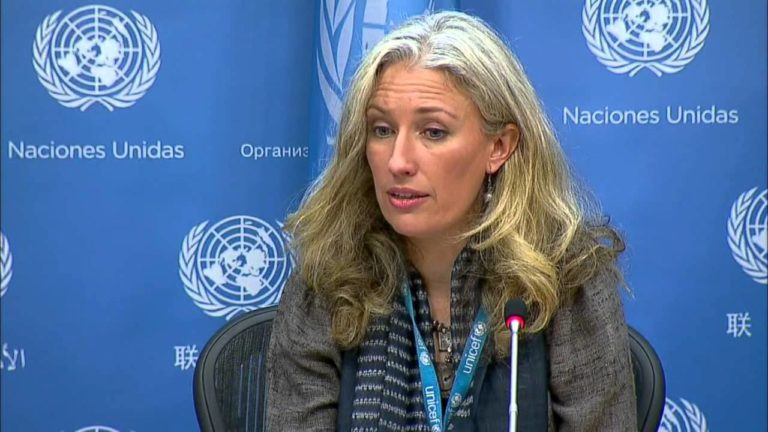
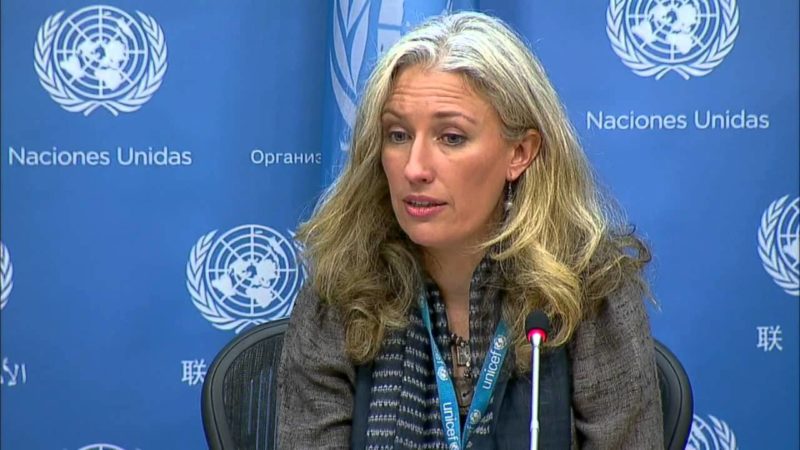
The Deputy Representative, UNICEF Nigeria, Ms. Pernille Ironside, said the declaration was not just historic for Nigeria, but a call to action to improve the wellbeing of all Nigerians.
“It is truly historic to witness such a commitment coming from the highest level for Nigeria.
‘‘It is a commitment that will genuinely make a difference for all Nigerians; it is not just historic for Nigeria, its district for the world.
“With the commitment of Nigeria, it is possible for the world to achieve Sustainable Development Goals, so I congratulate you on behalf of the development partners group for playing such a critical role toward sustaining this milestone.’’
She said no fewer than a million children were affected daily globally from preventable diseases and deaths from poor access to water and sanitation.
The Deputy Representative said that these diseases also affect under-five children from diarrheal-related deaths.
Ironside noted that within six weeks, many families affected in both urban and rural areas suffered bouts of diarrhea, saying this was not a good circumstance for anyone to witness.
She added that the implications of poor access to water and sanitation were critical on humans in areas of education, health, loss of dignity and economy.
She, therefore, called for more commitment from all tiers of government to reverse the statistics and make a difference.
“There is the need for capital investments to ensure access to the un-served and the under-served, it is sound sector institutions that are needed to sustain the existing and the new WASH related efforts.
“It is investing in systems for sustainable performances that is critical, not only ensuring service quality, but conserve capital investments.’’
She urged all Nigerians to play their parts by constructing toilets and contributing finances toward water taps for sustainability.
WaterAid Nigeria Country Director, Dr Chichi Aniagolu-Okoye, told NAN that the sanitation condition of the country was an embarrassment.
She said there was the need for willingness from state actors and other stakeholders to ensure that they invested in the sector.
Aniagolu-Okoye expressed regret that, with current investments, Nigeria might not meet the Sustainable Development Goals target on water and sanitation.
“In Nigeria today, we have people building houses without toilets, how is that allowed to happen?
‘‘It is not all about resources, we are always talking about resources; it is just about ministries doing their work.
“The issue of regulation, just getting the ministries more coordinated, like education and health, and how important water and sanitation is to those ministers, and yet, to try to get that coronation to happen, is not as well as it should be going,” she said, adding:
“With one in three Nigerians without clean water, and two in three Nigerians without decent household sanitation, strong political will is what is needed to address the water and sanitation crises in Nigeria and at WaterAid we are delighted that the Federal Government and President Muhammadu Buhari is demonstrating the needed political will with the launch of the Action Plan.
“The National Plan of Action is a significant political milestone towards achieving the UN Sustainable Development Goal 6 to reach everyone, everywhere with clean water and decent sanitation by 2030 and our expectation is that state governments will follow suit in developing Action Plans to address the Water and Sanitation crises in their respective states.”
President Muhammadu Buhari on Thursday in Abuja declared a state of emergency on Nigeria’s water supply, sanitation and hygiene sector.
The president said that the declaration had become imperative to reduce the high-prevalence of water-borne diseases in different parts of the country to save people from preventable deaths.
Buhari directed government at all levels to redouble efforts and work toward meeting the nation’s water supply and sanitation needs.
The president described statistics on open defecation, access to piped water services and sanitation in the country as “disturbing”.
He warned that, henceforth, Federal Government’s support to state governments would be based on their commitment to implement the National WASH Action Plan in their respective states and to end open defecation by 2025.
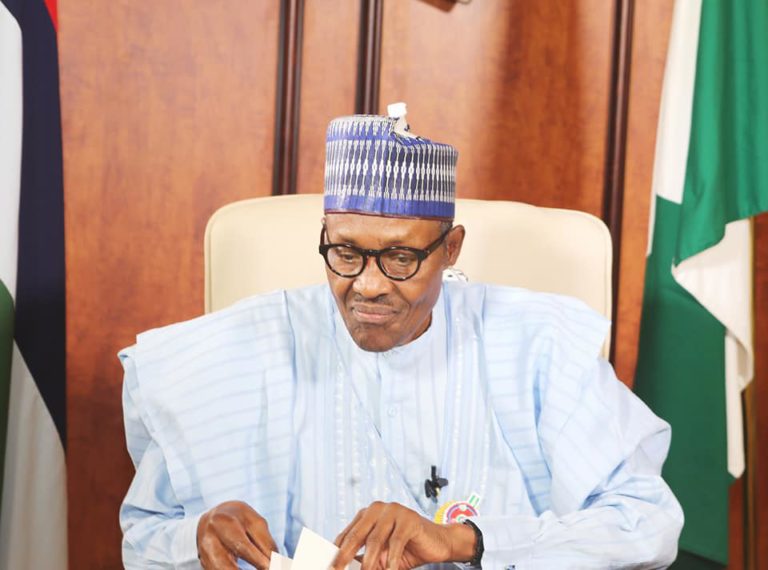
President Muhammadu Buhari has declared a state of emergency on Nigeria’s water supply, sanitation and hygiene sector.
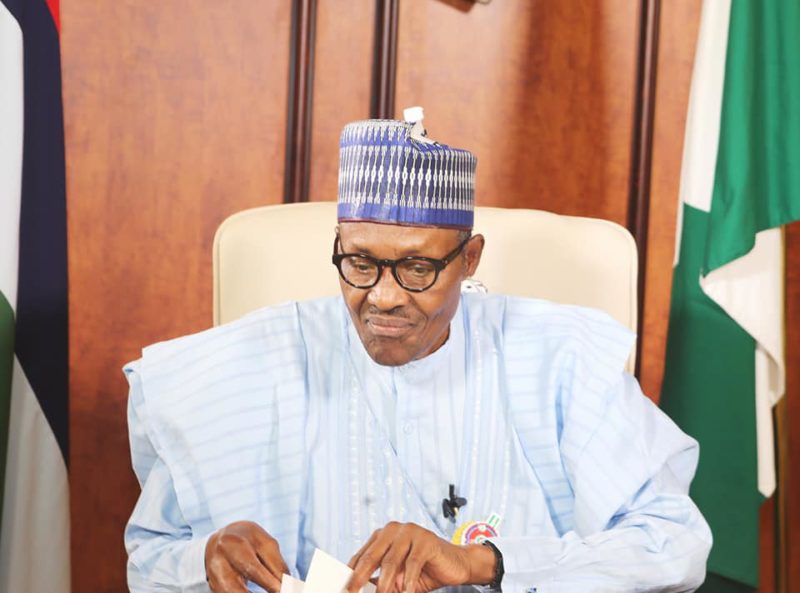
President Muhammadu Buhari
Buhari made the declaration at the inauguration of the National Action Plan for Revitalisation of Water Supply, Sanitation and Hygiene (WASH) Sector at State House Conference Centre on Thursday, November 8, 2018 in Abuja.
He directed governments at all levels to intensify efforts and work towards meeting the nation’s water supply and sanitation needs.
Buhari warned that, henceforth, Federal Government’s support to state governments would be based on their commitment to implementing the National WASH Action Plan in their respective states and to end open defecation by 2025.
The president said the declaration had become critical to reduce the high-prevalence of water-borne diseases in different parts of the country, which has caused preventable deaths.
He described statistics on open defecation, access to piped water services and sanitation in the country as “disturbing”.
“Access to piped water services which was 32 per cent in 1990 has declined to seven per cent in 2015; access to improved sanitation has also decreased from 38 per cent in 1990 to 29 per cent in 2015.
“Our country now ranks number two in the global rating on Open Defecation as about 25 per cent of our population are practicing open defecation.
“WASH services at the rural areas are unsustainable as 46 per cent of all water schemes are non-functional, and the share of our spending on WASH sector has been declining from 0.70 per cent of the GDP in 1990 to about 0.27 per cent in 2015, which is far below the 0.70 per cent at the West African regional level,” Buhari said.
The president restated that the provision of potable water supply, adequate sanitation and hygiene were primarily the responsibilities of State and Local Governments.
According to him, water supply and sanitation are not being given the required attention judging from the high prevalence of water-borne diseases that are being reported in different parts of the country.
He said that the stakeholders could not and would not continue to allow the preventable occurrences to decimate Nigeria’s population.
Buhari said that he was aware that Nigeria did not meet the MDG targets for Water Supply and Sanitation that ended in 2015.
“The Sustainable Development Goals (SDGs) targets (6.1 and 6.2) for WASH are even more demanding as they require WASH services to be provided in adequate quantity and quality on premises at affordable prices.
“This cannot be achieved if we continue with ‘a business as usual’ approach.
“It is on this premise that I fully endorse the decision taken at the meeting of the Federal Executive Council in April this year to declare a State of Emergency on our WASH Sector.
“I call on all state governments to complement this effort by according the sector similar recognition to enable us work together to achieve the SDG targets for WASH by 2030.’’
At the federal level, Buhari pledged that his administration would continue to place priority on infrastructure development including those of water supply, sanitation and hygiene services towards ensuring a better life for Nigerians.
According to him, the commitment is being demonstrated through faithful implementation of the Economic Recovery and Growth Plan (ERGP) – which is the present administration’s blueprint for infrastructure and economic development.
“From the inception of this administration, we have demonstrated serious commitment to the development of the Water Sector by preserving the Ministry of Water Resources and subsequently approving the 15-year roadmap developed for the sector.
“The transformation being witnessed in the sector since then is highly commendable.
“I have no doubt that the on-going initiatives including the implementation of the Partnership for Expanded Water Supply, Sanitation and Hygiene (PEWASH) in the Ministry will take the water sector to improved performance and supply, thereby meeting the national aspirations as well as the SDGs,” he said.
The event was attended by representatives of state governments and development partners.