The Shehu Musa Yar’Adua Foundation is set to promote climate-smart agriculture as a strategy to boost food security in the country.
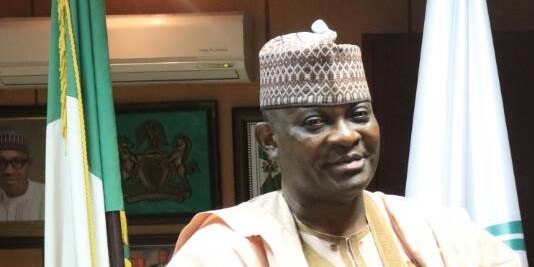
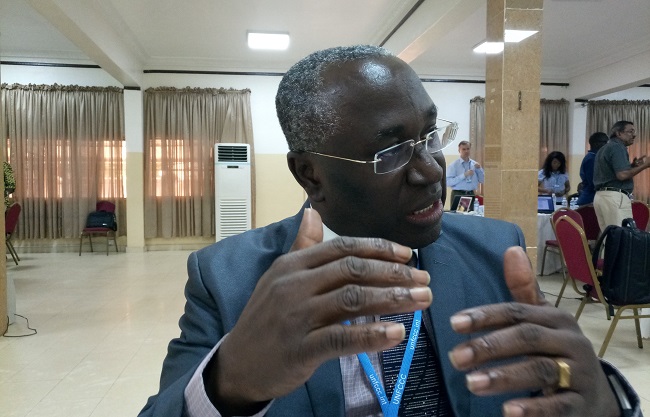
Nigerian Ambassador to Belgium, Ahmed Inusa
Mr Amara Nwankpa, Director, Public Policy Initiative of the Foundation, disclosed this to the Europe Correspondent of the News Agency of Nigeria (NAN) on Monday, November 12, 2018 in Brussels.
Nwankpa spoke to NAN on the sideline of the screening of the film “Swallow”, held at the EU Secretariat and the Nigerian Embassy in Brussels.
He said the nation was faced with major food security challenges, owing to climate change – a situation that would get worse if not addressed – as the nation’s population is estimated to hit 400 million by 2050.
“People knew of the signs but couldn’t associate delayed and unpredictable rains, drought and ocean acidification to climate change.
“A lot of these changes are irreversible as the soil will not renew itself as it used to, a 100 years ago.
“The rains will not return to how it used to be, and these changes are permanent.
“So, the message now is adaptability and coping strategies.
“We have to start thinking of innovative strategies on how to cope with the loss of the savannah region and erosion in the south-east,’’ Nwankpa said.
To address the challenges, he said that the Yar’Adua Foundation would support young farmers through advocacy on how to manage scarce land for agriculture and grazing of cattle.
“We will also educate fish farmers on how to adopt new fishing methods owing to lack of fresh water sources and effect of ocean acidification.’’
Similarly, the Nigerian Ambassador to Belgium, Ahmed Inusa, said that the film showcased the effect of climate change in Nigeria and served as a call for action to address the challenges.
Inusa noted the various investment opportunities arising from wastages of produce due to inadequate infrastructure and agricultural practices.
He, however, commended the government’s continuous effort in promoting agriculture in the country.
NAN reports that the film “Swallow” featured inspiring stories and explored opportunities and solutions to the nation’s food security challenge.
The event was attended by members of the African diplomatic core in Belgium, EU officials, the Nigerian Diaspora Organisation and experts on food security.
Agri-food actors across the supply chain urgently need to put protective measures in place, whilst making use of trade opportunities and innovative adaptation technologies. That was the key conclusion of a recent Adaptation Committee workshop in Geneva co-hosted by UN Climate Change and the International Trade Centre (ITC).
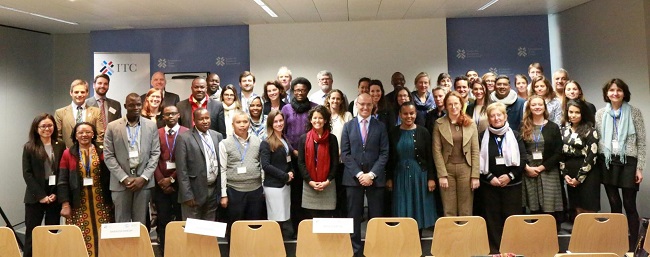
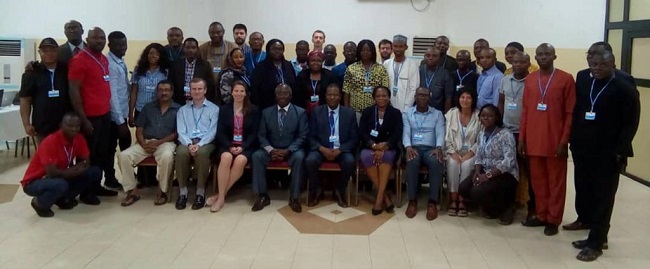
Participants of the meeting in Geneva
“Food security is at the core of sustainable development and adaptation action. And yet, the latest available science is indicating that food security is at serious risk from climate change,” said Julio Cordano, UNFCCC Adaptation Committee member, at the launch of the event on October 29, 2018.
The workshop convened entrepreneurs, government representatives, farmers, scientists, researchers, business owners, as well as representatives of civil society and banks. Talks focused on ways to help small and medium-sized enterprises (SMEs) adapt to climate change.
“Climate change is a threat to SMEs and those working in their supply chains, especially in developing countries,” said Dorothy Tembo, ITC Deputy Executive Director.
She added: “There is another side to the coin, which is that there are market opportunities for goods and services associated with climate adaptation and mitigation. By realising these opportunities, companies can turn climate-related risks into new business and income.”
Innovating to adapt
Experts stressed data gaps as a key barrier to building climate resilience of the agri-food sector.
The challenge is particularly acute for SMEs and smallholder farmers who lack the financial and technological resources of larger firms.
But clever innovations can help overcome these obstacles. For example, the company Ignitia is tackling the data challenge by bringing local tropical weather forecasts to West African farmers via SMS that are low-cost and twice as accurate as global weather forecasts.
This information helps farmers optimise their planning and resource use, decrease their losses and increase their income, thereby bolstering their capacity to adapt to the changing climate.
While the workshop focused on the risks of climate change impacts on the agri-food sector, it also covered the benefits that adaptation can bring.
The Brazilian MAIS project, which recently received the UNFCCC Momentum for Change award, demonstrated how it cultivates these opportunities by working with farmers, financial institutions, technical experts and companies to build resilience through climate-smart, regenerative agricultural practices.
The project restores degraded land, boosts the productivity of the food system, increases farmers’ incomes, and can yield $7 in social and economic output for every $1 invested.
Building resilience through trade
Discussions and case studies featured during the workshop highlighted the role of trade in bolstering the resilience of the agri-food sector.
Carolyn Rodrigues Birkett, Director of the UN Food and Agriculture Organisation (FAO) Geneva, said: “In the short term, trade can help to address production shortfalls due to extreme weather events and support adaptation efforts by stabilising markets and reallocating food from surplus to deficit regions.”
She emphasised that trade can yield additional long-term benefits: ‘It can help to adjust agricultural production in an efficient manner across countries. This will not only enhance the resilience of the private sector, but of the international food system as a whole.”
ITC is working with SMEs, international buyers, and trade and investment support institutions, to strengthen climate resilience through global value chains. The ITC project Strengthening Competitiveness through Climate Resilience in International Value Chains deploys technical assistance, including online and face-to-face training, to improve climate risk management across value chains.
Implementing national adaptation plans
The national adaptation plans under the UNFCCC, which are being developed by over 80 developing countries, also offer governments and the private sector an opportunity to shape an enabling environment for adaptation for the next five to 10 years. Investment plans are created through public-private partnerships and enable easier access to finance for farmers and SMEs.
The Food and Agriculture Organisation (FAO) has identified Transboundary Animal Diseases (TADs) and Zoonosis as one of the major challenges constraining the country’s agricultural sector.
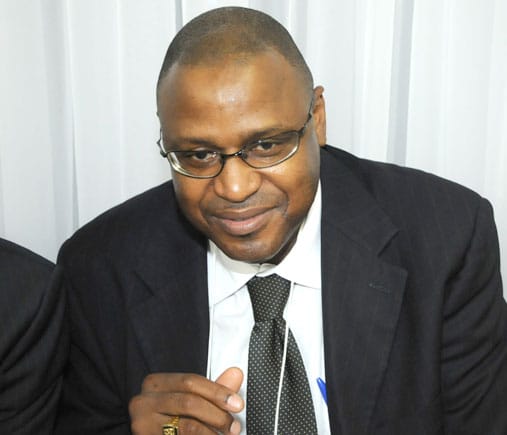
Suffyan Koroma, FAO Representative in Nigeria
Zoonosis is animal diseases transferable to man.
Mr Suffyan Koroma, the FAO Country Representative made this known in Abuja on Monday at a three-day training on Good Emergency Management Practices (GEMP).
Koroma, who was represented by Mr Columba Vakuru, an Officer in FAO, said that in Nigeria, even though most of the population was rural dwellers who engage in animal herding and subsistence farming, livestock contributed only about one-third to the agriculture sector.
“Apart from the income the country derives from oil production, the full potential of its livestock resources remains under exploited.
“This is because there are many challenges presently constraining the sector which include the occurrence of TADs and Zoonosis such as Foot and Mouth Diseases (FMD),” he said.
He identified other challenges to include an under resourced veterinary services, limited technical expertise, lack of appropriate policy and regulation frameworks.
Others are poorly organised livestock value chains and low capacities for effective animal diseases surveillance, detection, preparedness and response to outbreaks.
“Since 2015, several outbreaks of highly pathogenic avian influenza (HPAI) and H5N8 in many states have underlined the ever-present threat of emergence and re-emergence of TADs and Zoonosis.
H5N8 is a sub type of Influenza A virus considered one of the less pathogenic sub types for humans.
“Therefore, an animal disease emergency such as an outbreak of a transboundary animal disease has always serious socio-economic consequences if there are no proper emergency planning and response team.
“Emergency management planning principles are essential to effectively manage TADs toward the common goal of protecting animal resource, sustaining livelihood and safeguarding the public and environment.
“This training will prepare competent hands to promptly and swiftly respond to any emergency zoo sanitary situations in the country,” he added.
The country representative, however, said that for effective prevention and control of animal diseases, FAO would wish to emphasise that harmonisation and coordination of disease control measure was a way to go in Nigeria, Africa and beyond.
He further enjoined participates to galvanize their intellects and focus their energies to meet the set objective of the training.
Dr Olaniran Alabi, the Director, Department of Veterinary and Pest Control Services, Federal Ministry of Agriculture, said that the ability to manage disease events effectively depended on preparedness, skills and utilisation of resources.
Alabi said that the training would therefore enhance the participants’ knowledge and skills in best practices, while managing emergency situations at all levels.
“I have been informed that the resource persons on this subject matter are experts who have interacted with others across the globe and are generous to have come and share their vast experiences with us.
“I will like to appreciate the efforts and support of the FAO for supporting this training. FAO has always been with us particularly in our moments of critical needs,” he said.
NAN reports that the training with the theme: Strengthen Capacity to Manage Animal Disease Emergencies in Nigeria brought participants from the federal and state ministries of agriculture.
Speaking on the need for and the implications of the Greenhouse Gas (GHG) Inventory Quality Assurance Workshop that held recently in Abuja and Lagos, Director, Department of Climate Change in the Federal Ministry of Environment, Dr Peter Tarfa, says that, besides being very fortunate to be picked for the training programme, Nigeria will immensely benefit in terms of socio-economic development
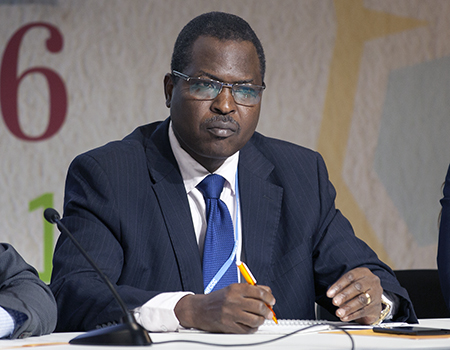
Dr Peter Tarfa, Director, Department of Climate Change (DCC) in the Federal Ministry of Environment
We are here for an international training supported by the UNFCCC with the assistance of the UNDP Regional Office in Lome, Togo. We are to train national experts on greenhouse gas (GHG) Inventory for Quality Assurance. This is a very critically required training that Nigeria has been able to get from the United Nations Framework Convention on Climate Change (UNFCCC). Several countries are clamouring for it; we have been fortunate to be picked.
Need for qualitative data
Under the Paris Agreement, there is the aspect of reporting and our report should be qualitative and transparent. To be able to do that, we need assurance on the quality of the data we are generating. We have been engaging consultants in the preparation of our National Communications and Biennial Update Report (BUR), among others. We as government are responsible for ensuring that what is submitted to the international community is factual and transparent and verifiable.
How do we do that if we don’t have the capacity to determine the quality of work, especially the data? How do we critique and say, “No, consultant, you did not give me the appropriate data?” How are we sure that the data from in an area (say energy or steel industry) are apt and reflective of the sector?
Transforming the economy
The whole idea about this reporting is to help the countries to go towards the low carbon development pathway. It will transform the economy, it will help us to be able to advise government appropriately. What will be the benefit now to the economy if we have energy generation through renewable energy, and then we have a healthier environment by being able to eliminate the generators. I can assure you that virtually every household in Nigeria owns a generator.
So, what is the contribution of that to the quality of our air? So, the climate change regime is a tool that is used for socio-economic development and by really getting all the data we can determine whether there is an emission reduction down the line it will help us to inform government to form policies that will lead to development.
Why Nigeria was selected
Nigeria was selected because: we have the largest economy in Africa; we are a major contributor to global emissions; and because of our socio-economic development, population, as well as level of industrialisation, given the oil and gas sector alone.
So, if we get it right, it is going to have a major input on the economy, and in meeting obligations under the Paris Agreement.
Implication of training for Nigeria at COP24
It will help us to clearly understand what kind of Rulebooks we should be clamouring for. When we are looking at the aspect of mitigation as a component of the Rulebook, we will be able to say okay, countries should be encouraged financially and technically including capacity building to put in place a robust natural GHG inventory framework.
Once we can do that, and it is continuous and becomes a seamless exercise, we will have data that will be useful for research, useful for economic planning, and meeting our obligation on NDCs. So, it is a very, very significant gathering and I must inform you also that the participants cut across all the major priority sectors like transport, agriculture, industry, power, oil & gas (NNPC), and private experts, who should be responsible for quality assurance when data is generated. All these entities are the data providers, including NiMET, we are the data controllers. But the quality assurance is supposed to be a national independent outfit.
Need for accredited entities
So, we will get to a stage where we accredit entities across the IPCC structure; we will accredit Nigeria entities the way you have accredited banks to do banking business. So, similarly, we must accredit these entities. They will be responsible for quality assurance in the area of energy, etc. All the criteria must be developed for accrediting them. It is a major requirement and if we set this right it will help us in creating jobs; it will transform the economy in the sense that the way we do business will change.
If we can eliminate all these emissions coming from generators, you have a serene, healthier environment. If you can also put in place quality and environmentally friendly transportation system in a city like Lagos, it will also lead to reduction of emissions and it will give us a healthier environment and people can move around in mass and more seamlessly via a cleaner transportation system. To do all these, we need to have data – quality data. The training is to ensure that the data being generated is qualitative for the different sectors.
Impact on the NDCs
It will have an impact on the Nationally Determined Contributions (NDCs) in the sense that, down the line in the year 2020, we must revise the NDCs. Our NDCs and the revision will be based on data. We will not backslide; rather we have committed to 20%. If we have data and see how what we are in, we can even beat our chest to say we are able to do up to 50% unconditionally. Nigeria is indeed very fortunate to be picked for this programme.
In the sidelines of the Greenhouse Gas (GHG) Inventory Quality Assurance Workshop that held recently in Abuja and Lagos, William Agyemang-Bonsu, Manager, Mitigation and Transparency Support (Mitigation, Data and Analysis) at the United Nations Climate Change Secretariat, says emissions estimate should be the basis for which Nigeria decides what climate policies are appropriate
William Agyemang-Bonsu, Manager, Mitigation and Transparency Support (Mitigation, Data and Analysis) at the United Nations Climate Change Secretariat
We are holding this training to assist Nigeria to be able to prepare qualitative and robust greenhouse gas (GHG) inventory. If our goal is only to produce the numbers, the emission estimates and that’s the end of it, then we have not been helpful to Nigeria, or the expertise in Nigeria has not been utilised to the maximum.
And therefore, we want to see where the sources of emissions are and how averagely they are estimated. And this depends on several factors, the latest that is used for estimation and the activity data that goes into estimating the emissions as well as the choice of emission factor, and all these together and now for these sectors we have emission estimates in the sector.
The industries in Nigeria wil have their own categorisation in terms of how much emission is coming from that sub-sector of industry. If you go to cement production, you have a similar type of emissions happening over there. If you go to energy, power production, you also have some emissions there. Various sectors have their sources of emissions and these emissions must be estimated.
Waste sector – management or wastewater treatment plat – all these facilities potentially have emissions that are GHG emissions, carbon dioxide (CO2), methane or nitrous oxide. And the discussions we’ve been having is that we want to ensure that these estimates are of the highest quality possible and you are using the approved methodology which is the IPCC 2006 Guidelines.
If I may retract a bit, that during the emission estimate, if our goal as Nigeria is only to get these numbers and report to the Climate Change Secretariat that this is where Nigeria’s emissions are, then we have failed the country. I’m repeating that because it’s very important. This is because the emission estimate should be the basis for which Nigeria will decide what climate policy in terms of emission reduction policy are appropriate to be put in place in the country.
Going beyond even the policy development, for me what is critical is that it becomes the basis of very many development interventions in various sectors. For example, if you look at Ikeja in Lagos, you see clearly that there is traffic congestion problem, and because we have those volumes of traffic, we would have high levels of GHG emissions especially CO2. So, what Nigeria, especially the municipality of Ikeja or the state of Lagos, could be doing would be to look at how to develop infrastructure such that congestion can be reduced.
But in doing that, the benefit of that intervention is that it would reduce not only GHG, but also particulate matter or emissions which normally would have implications for human health in the urban centre. So, even though we set out to do a climate intervention which was reducing congestion to reduce GHG emissions, we would have development benefit, health impact is reduced.
And I’m saying again and again that should be what drives us as Nigerians to do climate policy and interventions; take climate actions. We need to do that because its of development benefit. The other benefits that will arise as a result of the interventions in GHG emissions. And I would encourage you to look at those reductions as rather the co-benefit – benefit resulting as a result of development. So, that should be the goal, and that’s what we are trying to understand how these emissions are properly estimated already informs policy making.
So, it’s a more scientific technical work, but the goal is not only to do the technical work and let it rest there, the goal is to bring up the policy and inform development. There are several areas where we can do climate interventions, but what comes out of it is more of development benefits, and that’s what I will encourage that we do to help our development in the country.
Another point fundamentally linked with GHG emission inventory which is for the future is to look at over the years, working with other stakeholders at the national level, including all the MDAs, private sector, research, academia and NGOs, how we can base the work being done, make this national system for GHG inventory an important foundation for measurement reporting and verification. But at the same time, lay a foundation for potential future work.
Nigeria is one of the biggest economies in Africa with a large skill base and when able to lay this good foundation of inventory across sectors, the goal is to help Nigeria into the future to develop what we call an Emissions Trading Scheme. This is something a little bit into the future and will only happen this foundation works. That’s why the robustness of the estimates is critical.
Once we can estimate the GHGs, attributing the emissions to specific sources within the country, we can have a scheme as is being done in other countries, including some developing countries such as Korea and China. Because of the size of the economy in Nigeria, we can start to do that. This is the foundation.
Because you know where they came from, you can allocate actions to reduce emissions to these various sources where they are coming from. And the beauty of it is that it gets to a stage where a lot of these actions would not be driven by government, but by either the private sector or other entities that are interested in contributing to addressing those emission reductions.
Additionally, what happens is that Nigeria under the Paris Agreement has committed to do some voluntary reductions. And what the Paris Agreement requires is that Parties under the Agreement over time will increase their mitigation ambition. So, if you have laid this foundation when you know all the sources and are adequately estimated and you have other actors beyond government contributing to these reductions, Nigeria can confidently stand up before the international community and tell them: “We can do 50% reduction by 2030 because we know that other partners out there will be able to do some reductions on their own, in addition to what the government can do.”
And you can only make that proclamation that we will do 50% reduction when you know where you are. You must know where you are – in terms of accurate emission sources – and you will be able to say: “I will reduce that where I am to that level and compare that level to where I was, and the reduction is 50%.” So, its not mere saying do this and that; no. Yo have to know where you are in terms of emissions and therefore you can say: “Based on our experience, the contributions we have had from the private sector, philanthropies, donors as well as our own contributions as government, we are able to do the 50% reductions.”
This is critical and should not only be driven by the Department of Climate Change because it has implications for the whole economy and therefore all hands should be on deck. There should be research and academia bringing in their expertise; there should be other private sector entities, NGOs, municipalities, various MDAs participating in that.
So, we have a core group that we’ve started working with, trying to explain some of these methodologies and discussing looking at what they have done so far and the areas they can improve and discussing the improvements, we are looking at within the time span of now and into the future which activities can be done in terms of improvement immediately, in to the medium term and which can we look at in the long term.
Nigeria’s bid to prepare qualitative greenhouse gas (GHG) inventories has received a boost, thanks to a fatherly arm extended by the United Nations, whose bodies are collaborating in the landmark initiative.
Participants at the International GHG Inventory Quality Assurance Training for Nigeria organised by the UNFCCC Secretariat, in collaboration with the FAO, UNDP and UNEP Global Support Programme on National Communications and BUR, held in Lagos
At the International Greenhouse Gas (GHG) Inventory Quality Assurance Training for Nigeria organised by the United Nations Framework Convention on Climate Change (UNFCCC) Secretariat, in collaboration with the Food and Agriculture Organisation (FAO), United Nations Development Programme (UNDP) and United Nations Environment Programme (UNEP) Global Support Programme on National Communications and Biennial Update Report (BUR) held in Lagos from November 5 to 9, 2018, experts from various sectors were skilled on GHG inventory strategies.
In his opening remarks at the workshop, Director, Department of Climate Change (DCC) in the Federal Ministry of Environment, Dr Peter Tarfa, emphasised that there is a growing understanding that the response to climate change can only be effective if the knowledge of climate change is linked across all stakeholders.
Tarfa, who was represented by Mrs Iniobong Abiola-Awe, a Deputy Director in the DCC and National Coordinator, National GHG Inventory Management System, said: “Quality control in climate change reporting entails how we review the quality of all factors involved in the production of our national reporting. It is a good practice to document and archive all information required to produce the national emissions inventory estimates with all the quality checks at each level of preparation to such a way that the reported emissions estimates are transparent and steps in their calculation can be retraced.”
According to him, one of the goals of the Intergovernmental Panel on Climate Change (IPCC) on good practice guidance is to support the development of national GHG inventories that can be readily assessed in terms of readiness and completeness.
“It is a good practice to implement quality assurance procedures in the development of national GHG inventory to accomplish this goal. Understanding all the necessary check points to undertake quality assurance right from the process of data collection to report compilation is necessary. There is a great need to draw attention of all stakeholders and to disseminate knowledge, promote awareness and understanding of effective climate change knowledge reporting for national development.”
One of the trainers at the workshop, Rasack Nayamuth, said: “The training covers quality assurance and on how to compile, including the computerisation, of the GHG inventory. It is following last week’s training in Abuja that covered hands-on training for national experts on how to run the 2006 IPCC software, which is the methodology recommended by the Conference of the Parties of the UNFCCC to do inventories. All countries follow the same method so that it can be comparable over the years, over time and between countries.
“Nigeria is a signatory Party to the Convention (UNFCCC) and as such has obligations to report what it is achieving in terms of implementation of the Convention. The ultimate objective of the Convention is to stabilise the level of GHG in the atmosphere to eventually try to reduce global warming over a longer period which the IPCC is measuring.”
Manager, Mitigation and Transparency Support (Mitigation, data and Analysis) at the United Nations Climate Change Secretariat, William Agyemang-Bonsu, stressed that the benefit of the intervention is that it would reduce not only GHG, but also particulate matter or emissions which normally would have implications for human health in the urban centre.
“The goal is not only to do the technical work and let it rest there, the goal is to bring up the policy and inform development,” he said, adding that the nation should not only look at making the national system for GHG inventory an important foundation for measurement, reporting and verification, but at the same time lay a foundation for potential future work.”
A UN Department of Economic and Social Affairs (DESA) publication has found that nearly three in five cities with populations greater than 500,000 people are at high risk of a natural disaster. The information is contained in a data booklet titled, “The World’s Cities in 2018” and released recently.
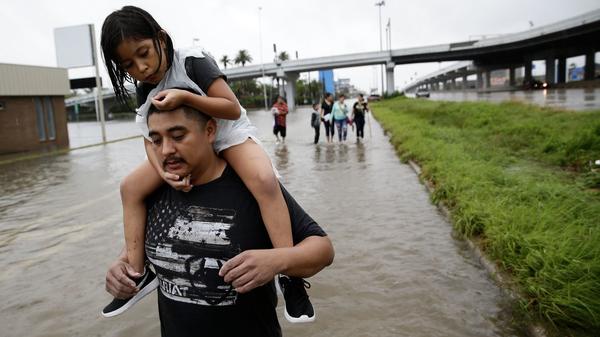
In Houston, Jesus Nunez carries his daughter Genesis, 6, as he and other family members flee their flooded home. Photo credit: Robert Gauthier / Los Angeles Times
According to the publication’s findings, 679 of 1,146 cities inhabited by more than half a million people are vulnerable to cyclones, floods, droughts, earthquakes, landslides or volcanic eruptions. Combined, these cities are home to 1.4 billion people – a third of the world’s population. The booklet draws on projections from DESA’s “World Urbanisation Prospects: The 2018 Revision” report and notes the importance of understanding urbanisation trends as being key to implementing SDG 11 (sustainable cities and communities).
The data booklet offers a definition for the term “city,” distinguishing between administrative boundaries, those delineated by “contiguous urban areas,” and broader metropolitan areas that feature a degree of economic and social interconnectivity. The means of defining a city, it stresses, affects the assessment of its population, with metropolitan areas being home to significantly larger numbers of people than the “city proper” as defined by an administrative boundary.
The publication notes that the world’s cities are growing in both size and number, with most megacities – defined as having more than 10 million inhabitants – being in the global South. Nine of the 10 cities projected to become megacities by 2030 are in developing countries.
In a news release, lead author of the publication Danan Gu, DESA, emphasises the importance of cities, noting that urban areas produce approximately three quarters of the world’s economic output. The study, he highlights, aims to better understand cities’ vulnerability, in order to both protect human life and limit economic and infrastructural damages from natural disasters. Key to doing so, he adds, is ensuring preparedness, good governance and resilient infrastructure.
However, these features are more commonly found in cities within high-income countries. Thus, with most of the world’s fastest growing cities being in Asia and Africa, the study reveals a gap, and a need to ensure that cities in developing regions are resilient to natural disasters. DESA’s press release points to a recent report by the UN Office for Disaster Risk Reduction (UNISDR) which finds that only one high-income territory in the past 20 years ranks in the top ten for economic losses as a percentage of gross domestic product (GDP).
The World Health Organisation (WHO) is collating empty viles of polio vaccines used in Dange Shuni Local Government Area of Sokoto State for accountability, reports the News Agency of Nigeria (NAN).
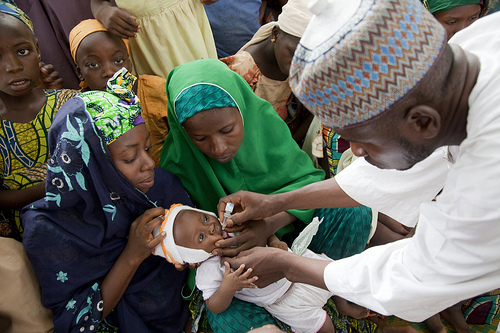
Polio immunisation in Nigeria. Photo credit: comminit.com
Malaw Zayyanu Muazu, WHO Accountability Officer, disclosed this in an interview with NAN on Sunday, November 11, 2018 hinting that the measure is to ensure proper accountability of vaccines.
Muazu explained that this was also to ensure that the viles cover the number of eligible children in the area.
“We are collecting all the used viles in order to curb diversion of vaccines in the local government.
“We have 11-man team posted to Dange Shuni Local Government Area to ensure accountability which will reveal if the eligible children are all immunised,” he said.
Muazu added that the number of viles received in the local government for Oral Polio Vaccines (OPV) are 3,090 while the Injectable Polio Vaccines (IPV) are 1,235.
NAN reports that a team coordinator in charge of polio immunization at Bangida Baga ward in Bodinga Local Government Area of Sokoto state was recently arrested over alleged diversion of oral and injectable vaccines.
The coordinator (name withheld) was said to have taken the vaccines meant for the ward in Bodinga to his personal residence.
The Executive Director of the state Primary Health Care Development Agency, Alhaji Adamu Romo, told NAN that the suspect was paid his dues for the exercise but wondered he betrayed the trust invested in him (coordinator).
“We gave him the vaccines, his allowance and all that he requires for the commencement of the exercise at the ward which he diverted to his personal residence,” Romo said.
The director said both the vaccines and the money have been recovered by the police from the suspect, assuring that they will follow the case to its logical conclusion.
He said that the agency had taken strict measures to forestall reoccurance.
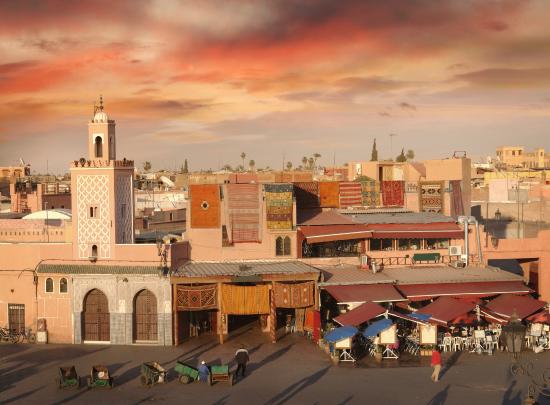
City dynamics and sustainable development will be tabled for discussion as the United Cities and Local Governments of Africa (UCLG Africa) holds the eighth edition of the Africities Summit (Africities 8) in Marrakesh, Morocco, from November 20 to 24, 2018.
Marrakech, Morocco will host the Africities Summit (Africities 8)
The UCLG Africa, described as the Pan-African Organisation of Local, Regional and Sub-national Governments, is holding the event in collaboration with the Moroccan Association of Presidents of Communal Councils (AMPCC), with the support of the Ministry of the Interior of the Kingdom of Morocco.
The theme for Africities 8, considered the “largest democratic gathering on the continent”, is: “The transition towards sustainable cities and territories: The role of Local and Sub-national governments of Africa.”
According to UCLG Africa, Africities 8 will examine the challenges of Africa in a globalised and urbanised world, while highlighting the dimensions of transition from the current mutations to focus on the role and strategies African local and sub-national governments can adopt.
“The Africities Summits is Africa’s most important platform for dialogue on decentralisation, local governance, and the contribution of local and regional governments to Africa’s development and integration. Africities 8 in Marrakesh aims to link long-term thoughts of the future, to actions that need to be taken, in order to define the bifurcation of the cities and territories of Africa towards a path of sustainable development,” submits UCLG Africa.
In order to identify the mutations that define transition, Africities 8 adopts the following dimensions:
Demographic transition;
Ecological transition;
Democratic and political transition;
Political and democratic transition;
Economic and social transition;
Geopolitical transition; and
Cultural and communicational transition.
The challenge for African local authorities is to define and implement a new approach that encourages coalitions between institutions, populations and territories, notes the organisers, saying that the Summit will be attended by over 5,000 participants including ministers, governors, city mayors and other local elected officials, officials of central and local administrations, civil society organisations and NGOs, associations and trade unions, economic operators in the public and private sectors as well as representatives of the social and solidarity-based economy, traditional authorities, researchers and members of the academia, international cooperation agencies, associations of inhabitants, and other stakeholders.
The Africities Summit will also host the Africities International Exhibition, which will allow institutions, and businesses from both the public and private sectors, associations and other stakeholders, to present their experiences, products, methods and tools.
President Muhammadu Buhari says his administration will continue to keep the issue of reviving the Lake Chad on the front burner and exert more commitment from the developed countries to do the needful.
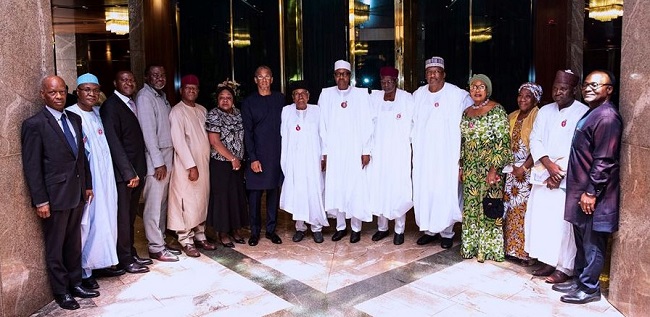
President Muhammadu Buhari with members of the NCF delegation during the visit to State House, Abuja. Photo credit: Sunday Aghaeze
Buhari gave the assurance when he received the Nigerian Conservation Foundation (NCF) and his investiture as Patron of the Foundation, at the State House, Abuja, on Friday, November 9, 2018.
The president said it was regrettable that the issue of the receding Lake Chad had not been addressed till recent times.
He said: ‘‘The problem of climate change is real. The desert encroachment is aggravating it. The population explosion in Nigeria is another big challenge.
‘‘The drying up of Lake Chad is a serious thing for Nigeria and the Lake Chad Basin countries. Nigeria is much more affected because fishing, animal husbandry and farming are affected very seriously.
‘‘We are trying to prick the conscience of the developed countries that have the resources and the technology to quickly execute the inter-basin transfer from Congo Basin to Chad Basin.’’
President Buhari also welcomed the advocacy by the Foundation on the need to protect endangered plants and animals in the country.
To this end, the President directed the Federal Ministry of Environment to reflect this in its budgetary requirements in the next fiscal year.
He added that ‘‘the rate at which animals are being hunted and eliminated around the country, we must seriously give the forest reserves our support and attention as much as we can’’.
Earlier in his remarks, Alhaji Ahmed Joda, Member, Board of Trustees of the NCF, told the President that the nation’s wildlife was fast becoming extinct.
He added that, for more than 10 years, the rate of deforestation in Nigeria had been one of the highest in the world with the country losing close to 95 per cent of its original forest cover.
Joda thanked the President for placing great emphasis on environmental issues, especially the aspect of climate change, and invited him to take charge of “Greening Nigeria”.
He said: ‘‘We are all proud of the role that the Nigerian delegation headed by Mr President played during the climate change agreement in Paris and your single-minded determination to keep the issue in the front burner both at home and abroad.
‘‘Your Government has also recorded remarkable achievements in addressing soil erosion with about 60 projects executed by the Ecological Funds all over Nigeria.
‘‘This is not surprising when we remember that it was you, in your first coming as Head of State, that signed the first comprehensive law that addressed the protection of endangered plants and animals in Nigeria through the ‘Endangered Species Decree of 1985’.’’