Italy’s lagoon city of Venice is bracing itself for the worst flooding event since 1979, amid a nationwide weather alert across Italy, local authorities reported on Monday, October, 29, 2018.
Venice
“The high tide was due to reach 160 centimetres, a level that leaves 77 per cent of Venice’s historic centre under water,’’ the authorities said.
On Dec. 22, 1979, the high tide rose to 166 centimetres above the zero-reference point at Punta della Salute, the Southern entrance of the Grand Canal in front of St Mark’s Square.
The worst flooding of modern times for Venice was a 194-centimetre-high tide in 1966.
Civil protection officers were on high alert in many parts of Italy as heavy rains and strong winds plagued much of the country.
In the Southern region of Calabria, a man was reported missing after his boat crashed against a pier on Sunday while he was trying to enter the port of Catanzaro during stormy weather.
Rail and motorway traffic near the Brenner Pass, which links Italy to Austria, was temporarily suspended both on Sunday and Monday, and parts of the Milan-Bologna motorway were flooded.
As a precaution, schools were closed in several areas, including in the Northern Veneto and Liguria regions, in parts of Abruzzo and in Rome.
The Federal Government on Monday, October 29, 2018 urged stakeholders in the environment sector to support its efforts to tackle the incessant herders-farmers conflicts in the country.
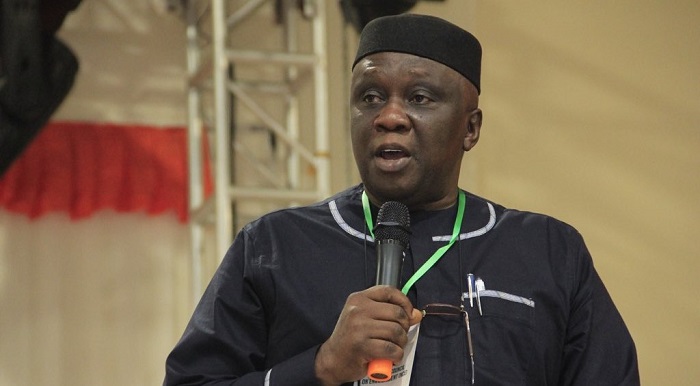
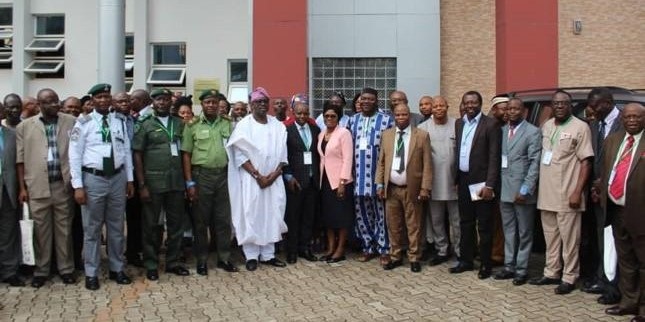
Mr Lawrence Aliboh, Permanent Secretary, Federal Ministry of Environment, speaking at the opening of the 12th National Council on Environment (NCE) meeting in Akure, Ondo State
Mr Lawrence Aliboh, the Permanent Secretary, Federal Ministry of Environment, gave the advice on in Akure, Ondo State, at the opening of the 12th National Council on Environment (NCE) meeting.
He said that relevant stakeholders had a role to play in addressing the problem.
The theme of the meeting was “Environment and Security: Consolidating Nigeria’s Environmental Reforms towards Sustainable Development’’.
Aliboh said that the theme was very apt in view of the increasing challenges facing in the country which were somewhat related to the use of the environment and its resources for various economic activities.
“An immediate case in point is the avoidable herders-farmers conflict that is being accentuated by resource use challenges. This is where stakeholders in the environment sector have a key role in their resolutions,’’ he said.
The permanent secretary, who described NCE as the highest policy making body for the environment sector in Nigeria, urged the council to deliberate on critical decisions aimed at addressing environmental degradation.
Aliboh urged the council to proffer sound recommendations, most especially in the context of the growing global emphasis on the importance of the environment sector.
According to him, the assignment of the council is to review the level of implementation of the decisions taken at the previous council meetings and assess the progress made so far in the sector.
Aliboh, who said that the three tiers of government and relevant stakeholders had submitted memoranda on current environmental issues and perceptible challenges, said that memoranda were classified into six thematic groups.
“The technical groups are Flood, Erosion and Coastal Zone Management, Pollution Control, Environmental Health, Climate Change and Renewable Energy.
“Others are Forestry, Drought and Desertification Amelioration, Environmental Assessment and Institutional Governance,’’ he said.
Aliboh said that the classification was geared towards proffering solutions to these environmental challenges to enhance their implementation at all levels.
Mr Funso Esan, the Ondo State Commissioner for Environment, urged the Federal Government to encourage state governments to accord the environment sector the importance it deserved in terms of political will, commitment and funding.
He said that it was also imperative to ensure the judicious management of the environment and its resources to spur sustainable national socio-economic development.
“Sustainable environment is a precondition for the attainment of sustainable inclusive growth and development.
“It is, therefore, pertinent to mainstream environment into all sectors of the economy as a cross-cutting issue in development,’’ he added.
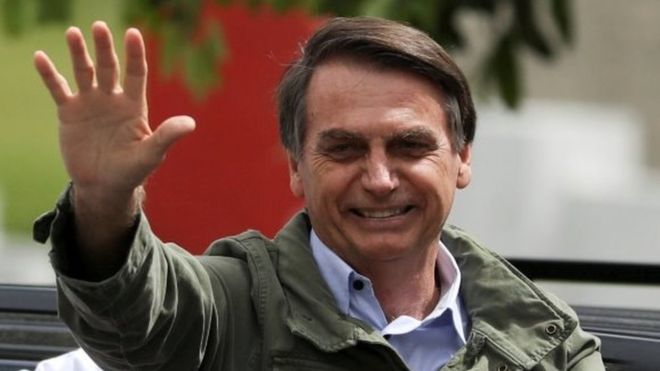
After what seemed a polarising electoral campaign that promoted hatred and division, candidate Jair Bolsonaro won the runoff for the presidency of Brazil on Sunday, October 28, 2018.
Jair Bolsonaro
Bolsonaro had vowed to withdraw the country from the Paris Agreement but retracted that proposal days before the election. However, he has indicated he will weaken the form and enforcement of Brazil’s climate policies, including allowing the development of fracking in Brazil.
He has said he will loosen regulation protecting Indigenous Peoples’ rights and will not allow one square centimetre more to be managed by Indigenous Peoples. He has also stated he wants to restrict NGOs and civil society activism, including by restricting rights to public protest and other forms of democratic participation.
Brazil’s Paris commitment is to reduce emissions by 37% on 2005 by 2025 by increasing zero carbon energy, promoting reforestation, and stopping illegal logging, particularly in the Amazon.
International environment and rights activist group, 350.org, has however frowned at the new leader’s submissions, saying that he should, among other issues, keep to the country’s climate commitment.
May Boeve, 350.org Executive Director, said in a statement made available to EnviroNews: “The election of far-right candidate Bolsonaro to the highest office in Brazil represents a real threat to human rights at home and a risk to the momentum for climate action abroad. Brazil’s Paris commitment is of global significance, and any retreat from it would be deeply concerning. If Brazil steps back from the content of its commitment on forest protection and switching to zero-carbon fuels it could unravel the progress made on climate action in recent years and would be deeply unpopular and dangerous.
“The right of Brazilians to protest and to hold their elected representatives to account on environmental, or any issue, must be respected and protected. Brazil has a leadership role to play in protecting and uplifting Indigenous Peoples’ rights and has committed to reach zero deforestation by 2030 and restore forests by 12 million hectares, among other goals. Brazilians do not want to abdicate that leadership.
“Some 85% of Brazilians are concerned about climate change, they know they are in fact one of the countries most vulnerable to ever-increasing climate impacts, and they want more action; not less. Mr. Bolsonaro must work in the interest of all Brazilians, including Indigenous Peoples whose rights to their ancestral land continue to be challenged, but who hold extraordinarily valuable traditional knowledge on how we can live sustainably on this shared planet.
“A warming planet will be deadly for many in Brazil. The poorest will be the hardest hit by unchecked climate change. Poor and vulnerable communities in Brazil also suffer most from the activities that drive climate change – ike fossil fuel extraction, fracking, and deforestation. These people must be at the forefront of the mind of the new President.
“For our part, we will keep promoting civic engagement and grassroots organising to stop fossil fuels and to support a rapid and just transition powered by renewable energy. We will keep the need for Brazilian leadership on climate on the national and global agenda.
“We will be resilient. Our team in Brazil is resilient and will support and engage all people who are committed to defending human rights and a safe and healthy environment. In this climate we must all be resilient.”
As part of efforts to provide the necessary technical support to countries for effective monitoring and reporting on human settlements indicators for the Sustainable Development Goals (SDGs) and the New Urban Agenda (NUA), the United Nations Human Settlements Programme (UN-Habitat) in collaboration the European Commission, Organisation for Economic Co-operation and Development (OECD), Food and Agriculture Organisation of the United Nations (FAO) and the World Bank have embarked on the implementation of a project titled “Assessing the feasibility of applying a global definition of cities/urban areas in support of global monitoring of SDGs and NUA urban targets”.
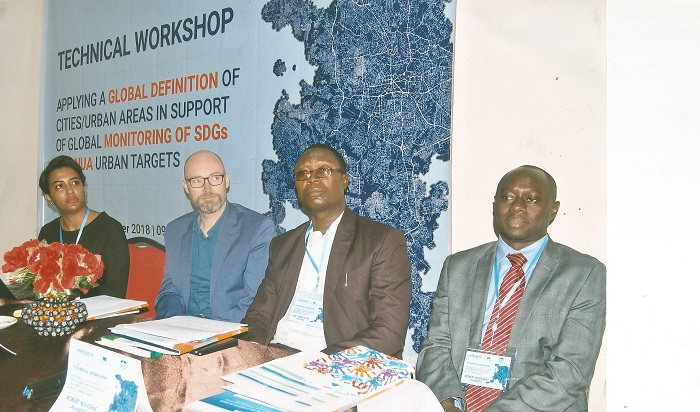
L-R: Edlam Yemeru, Chief of the Urbanisation section of Social Development Division at United Nations Economic Commission for Africa (UN-ECA); Lewis Dijkstra, Deputy Head of the Economic Analysis in the Directorate-General for Regional and Urban Policy of the European Commission; Mustapha Daramola, representing the Statistician-General of the Federation; and Robert Ndugwa, Officer in charge of the Global Urban Observatory Unit in the Research and Capacity Development Branch at the United Nations Human Settlements Programme (UN-Habitat), at the technical workshop in Abuja
The initiative is aimed at testing and applying the degree of urbanisation (DEGURBA) approach in defining city boundaries in selected countries in Africa, Asia including Arab States, and Latin America.
The project comprises a series of training and consultative sub-regional workshops, during which participants are introduced to the DEGURBA approach, compare contexts, examine gaps, and share best practices and lessons.
Essentially, the workshops aim to contribute towards the ongoing efforts on having a harmonised global city definition particularly for the SDG 11 (Sustainable Cities and Communities) targets and indicators that require reporting at city levels.
According to the UN-Habitat, a global city definition would assist in the monitoring of the SDGs by ensuring that the study areas for the spatial urban SDG are standardised and easily reproducible and will add clarity to the methodologies and approaches for collection of data to support the land and rural related indicators.
The first workshop was conducted in Abuja from October 15 to 19, 2018 for participants from selected countries in West Africa and East Africa, including Nigeria, Ghana, The Gambia, Sierra Lone, Liberia, Ethiopia and Kenya, among others.
Participants included urban planners, statisticians, officials of relevant ministries/agencies, as well as representatives of international organisations.
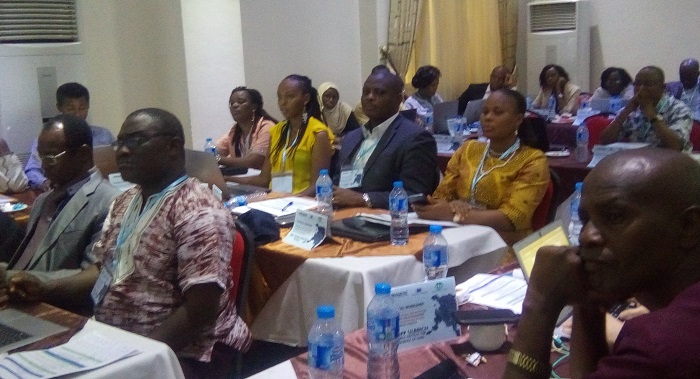
A view of participants at the workshop
Statistician-General of the Federation & Chief Executive Officer, National Bureau of Statistics (NBS), Dr Yemi Kale, in his welcome remarks, said that although a planned settlement, Abuja has evolved into a rapidly urbanising city, becoming one of the fastest growing cities in the world, with official population estimates at about four million persons in 2016.
“The result of rapid urbanisation and influx of new residents to the city has continued to put pressure on social services and infrastructure both within the city and in the satellite towns. Better city planning will require data that is linked to sound methodology and definitions that take into consideration as much as possible the peculiarities of the local context including the way of life and livelihoods of its inhabitants. Adequate consultation is crucial to ensuring that definitional and methodological changes can be locally adapted,” he said.
He pointed out that, as the national statistical office, the definition and classification of an area as a city or otherwise, or as urban or rural, is even more crucial, “as it influences the selection of survey samples, designation of enumeration areas, the selection of reporting domains and the determination of nationally-representative aggregates”.
“This explains why we are also keenly interested in the outcomes of the workshop and its operationalisation in the future,” he stressed, adding that, in recognition of the increasing attention to the importance of data and statistics for policymaking, NBS has continued to promote improvements in all aspects of data production, from data collection to data processing to dissemination and advocacy.”
Besides DEGURBA, the city is also defined by its urban extent (built-up and urbanised open space).
Instead of using population/demographic trends, the urban extent concept employs satellite imagery analysis techniques to extract information on human settlement morphology and density of built-up structures. The information is then used to define an operational city boundary that can be applied to compute the selected indicators.
A resource person at the workshop, Lewis Dijkstra, observed that DEGURBA relies on a population grid to classify local units into three classes: cities, towns & suburbs, and rural areas.
“These three classes can be further disaggregated into cities, towns, suburbs, villages, dispersed rural areas and mostly uninhabited areas. The population share in rural areas as defined by the degree of urbanisation is like the share reported based on national definitions in most countries in the Americas, Europe and Oceania, but radically different in many African and Asian countries. A possible explanation for these differences is that in Africa and Asia smaller settlements are considered rural, while they are classified as urban in the rest of the world,” said Dijkstra.
The National Biosafety Management Agency (NBMA) has assured Nigerians of the protection of their health and the environment on matters concerning genetically modified organisms (GMOs).
Director General/CEO, National Biosafety Management Agency (NBMA), Dr Rufus Ebegba (in white), in the company of other delegates at the conference
This submission is contained in a communiqué issued at the close of the 4th National Biosafety Conference of the NBMA held from September 12 to 13, 2018 at the Ambrose Alli University, Ekpoma, Edo State.
According to the communique, the debate around genetically modified products is “as a result of widely-circulated misleading information about purported dangers that are not supported by any scientific evidence by those whose knowledge about the technology is limited and questionable”.
“The public should therefore trust the agency’s decisions and avoid unscientific information and acts capable of causing public distrust and panic. In the event of any doubt on matters concerning biosafety, the NBMA is available for the clarification. the Agency should partner with all stakeholders in the discharged of its functions,” participants at the forum agreed.
Emphasising that the NBMA Act is in full force, companies involved in GMOs activities were encouraged to formalise their dealings with the agency “to avoid being sanctioned”.
“There is also need for government, international and national non-governmental organisations and private enterprises to strictly comply with the regulations of modern biotechnology application and its products as stipulated by NBMA as breach of the NBMA Act 2015 and other pursuant regulations has severe consequences,” noted participants at the event.
Besides ensuring appropriate labelling and effective monitoring and control in the release of GM products in the country, the NBMA was asked to establish zonal/state offices across the country to enhance its effective performance nationwide.
While recommending that the private sector should be encouraged to take the initiatives of funding research endeavours, professional bodies and the academia are to synergise with biotechnology promoters and regulators to promote research on genetically modified crops and products to enhance acceptance of the gains of modern-biotechnology in the country.
Participants further recommended that the NBMA should be made by law, a certification and accreditation body for biosafety courses and programmes in Nigeria.
“All institutions in Nigeria, both private and public dealing with and/or on modern biotechnology, are encouraged to establish an Institutional Biosafety Committee (IBC), which will be responsible to and co-operate with the NBMA. The institutions must also obtain accreditation of the institute to deal in modern biotechnology and certification of their Biosafety Containment from the NBMA,” says the communique.
Conservator-General of the Nigeria National Park Service (NNPS), Alhaji Ibrahim Goni, says the Federal Government is set to commercialise three national parks to key into the Economy Recovery and Growth Plan (ERGP) to diversify the economy.
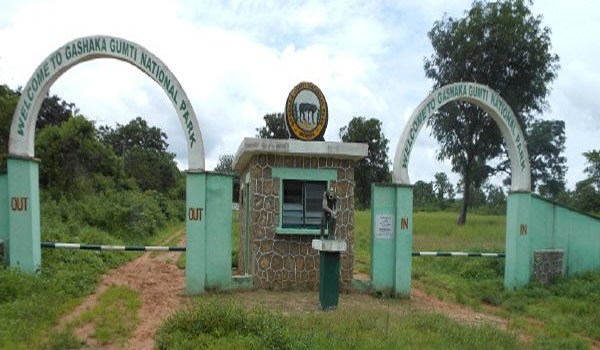
The Gashaka Gumti National Park
Goni made this known in an interview with the News Agency of Nigeria (NAN) on Saturday, October 27, 2018 in Abuja.
The Conservator-General, who was recently awarded Fellow of Hospitality and Tourism Management Association of Nigeria (HATMAN), said that the thrust of ERGP was the diversification of the economy from oil and agriculture to tourism.
“National Council on Privatisation has identified three major parks out of the seven to be partially commercialise and a transaction adviser has been appointed who will very soon swing into action.
“The three national parks are the Gashaka Gumti National Park between Taraba and Adamawa states, Kainji Lake National Park between Niger and Kwara states and Cross River National Park in Cross River State.
“This is trying to bring up the national park so that they can be equal in standard with others in parts of the world like South Africa, Kenya, Tanzania, US, UK and the rest of them.
“It is aimed at trying to key into the Economy Recovery and Growth Plan of the current administration,’’ Goni said.
The NNPS boss said a lot of transformation was ongoing at the service, adding that uniform ethics is being enforced at the service.
“If you observed my men, you will see them in uniform, this is because the service has become paramilitary since 2014; we are also reforming the infrastructure.’’
Goni admonished HATMAN to build bridge and collaborate with NPS, Nigerian Immigration Services, Nigerian Tourism Development Corporation and other stakeholders to boost the tourism sector and generate more revenue for the country.
The Food and Agriculture Organisation (FAO) has distributed fertilisers and seeds to 790,000 farmers to accelerate crop production.
Suffyan Koroma, FAO Representative in Nigeria
The benefiting farmers are those displaced by Boko Haram insurgency in the northeast.
FAO, in its October Situation Report, said that the fertilisers and inputs were provided to the benefiting farmers during the 2018 cropping season.
The fact sheet indicated that 112,000 households, with a projected population of 790,000 farmers benefited from the exercise in Adamawa, Borno and Yobe states.
It said: “in northeast farmers have begun harvesting cereal, vegetable and cash crops such as cowpea, groundnut and sesame; following provision of seed and fertilisers to 112,000 households under the 2018 rainy season programme.
“The season appears to have been effective for numerous farming households, lessening the need for food assistance in some areas.”
FAO noted with satisfaction that the number of people facing acute food insecurity in the region dropped to 2.9 million (June to August 2018); as against 5.2 million (June to August 2017).
However, the fact sheet showed that the northeast region faced severe climate variability negatively affecting production system, which resulted to low yields and livestock production as well as attendant consequences on agricultural livelihoods.
The UN agency noted that due to increased influx of displaced persons and tense security situation, host communities were facing reduced access to lands and other resources needed for production.
It explained that the trend resulted to high level poverty and malnutrition in the war-ravaged region.
The document further gave a highlight of priority response by the organisation between October and December.
These included the distribution of fertilisers and seeds to 61,300 households, provision of goats, poultry kits and veterinary services to 10,589 households.
Other key interventions include distribution of micro-gardening kits to 7,500 deserving families and fuel-efficient stoves to 6,000 households, while 2,500 families would receive emergency safe kits.
According to the document, the organisation faces a funding gap of $13.9 million to facilitate implementation of its agriculture production for the 2018/2019 dry season activities, as well as all year-round livelihood support programme.
“Under the 2018 Humanitarian Response Plan (HRP), FAO is seeking for $31.5 million to assist 1.7 million people. So far, FAO has mobilised $17.6 million, which included a carry-over from 2017.
“Resource partners include the European Union Directorate for Humanitarian Aid and Civil Protection (ECHO); the governments of Belgium, Canada, France, Ireland, Kuwait, Norway, Sweden, Switzerland and USA.”
The European Parliament has approved a single-use plastic ban which will be put into place from 2021.
The European Parliament
The ban was first proposed in May following a flood of public support when the David Attenborough Blue Planet II series aired. Members of the European Parliament (MEPs) approved the ban on Wednesday, October 24, 2018.
At present, an estimated 12.7 million tonnes of plastic end up in our oceans each year. This has resulted in over 267 species worldwide being affected and 700 species at risk of becoming extinct. It has also been reported that 90 per cent of seabirds have plastic in their stomach.
A new study published on Tuesday, October 23 also found that humans are now ingesting microplastics.
The ban will include single-use plastic items such as plates, cutlery, straws and cotton buds, today MEPS also added oxo-plastics and certain polystyrenes to that list.
The consumption of several other items, for which no alternative exists, will have to be reduced by member states by at least 25 per cent by 2025.
MEPs also agreed that reduction measures should also cover waste from tobacco products, in particular cigarette filters containing plastic.
One cigarette butt can pollute between 500 and 1000 litres of water, and if thrown on the roadway it can take up to twelve years to disintegrate. They are the second most littered single-use plastic items.
Frédérique Ries, MEP and rapporteur, said: “Today’s vote paves the way to a forthcoming and ambitious directive. It is essential in order to protect the marine environment and reduce the costs of environmental damage attributed to plastic pollution in Europe, estimated at €22 billion by 2030.”
The report was adopted with 571 votes to 53 and 34 abstentions. Parliament will now enter into negotiations with Council when EU ministers will have set their own position on the file.
This news follows the UK Government’s plans to ban plastic straws, cotton-buds and stirrers.
The president, Board of Trustees (BoT), Nigerian Conservation Foundation (NCF), Chief Philip Asiodu, has called for the reconstitution of sanitary inspectors to monitor the environment and mete out sanctions to defaulters.
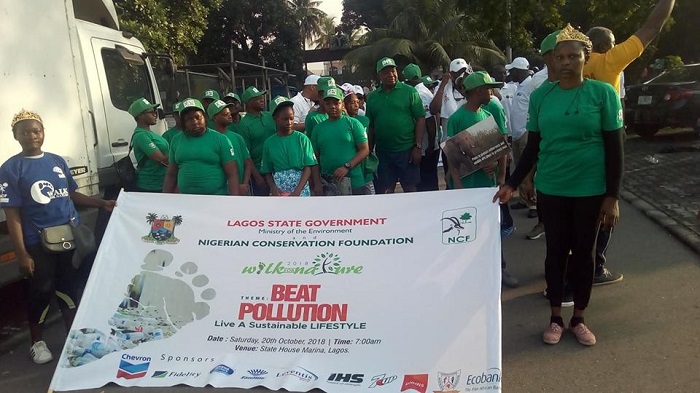
The 2018 Walk for Nature
In his address at the 11th NCF/Lagos State government Walk For Nature on Saturday, October 20, 2018 themed “Beat Pollution: Live a Sustainable Lifestyle”, he urged the authorities to sanction those who destroy the environment, like in the colonial era.
According to him, pollution is part of the challenges of big cities around the world; hence the need to tackle it.
“This year’s theme is another wake-up and follow-up call on the 2018 World Environment Day (WED) commemoration. Part of the challenges of any developing mega city is pollution. Lagos is not spared in this menace. The theme is to sensitise the people on the need to embrace best practices on pollution, especially the way we use plastics, which has become a major challenge on land and even more devastating in our waters (creeks, lagoon and the ocean).
“The theme is also in consonance with the endeavours of Lagos State Government in mitigating the effect of climate change. The rally seeks to encourage people to inculcate the Re-use, Recycle and Refuse (3Rs) concept since pollution aggravates climate change,” he said.
He added that the theme of the rally strategically aligned with the Sustainable Development Goal (SDG) 13: taking urgent action to combat climate change and its impacts.
“Beyond this event, NCF has partnered and collaborated with research institutions, universities, government agencies and corporate organisations in providing solutions for the environmental challenges,” he said.
In his keynote address, Governor Akinwunmi Ambode of Lagos described the annual walk for nature as a wake-up call to Lagosians to rise in defence of the environment and collaborate to address the unconscionable pollution of the environment by focusing on attitudes that despoil the land.
Represented by the Commissioner for the Environment, Babatunde Durosinmi-Etti, the governor enjoined everyone to refrain from activities that could cause pollution and degradation of the environment, such as dumping of waste in public drains, burning and improper disposal of plastics.
“Industries should insure treatment of their waste water before final discharge into public drains,” he added, stressing the need for re-use and recycle.
While giving vote of thanks, chairman, National Executive Council (NEC) of NCF, Chief Ede Dafinone, urged the Lagos government to pass a legislation to minimise the use of plastics.
According to him, remains of plastics would not disappear in 500 years.
“At NCF, we are championing the war against plastics,” he added.
Many who spoke at the event had something to say about recycling.
The Head of Human Resources, Fan Milk, Olumide Adediji, disclosed that the company had signed an agreement with a firm to recycle about 10,000 freezers it had used. He added that Fan Milk, one of NCF’s partners in the Walk for Nature, was working on plastics recycling.
On the other hand, the Corporate Social Responsibility (CSR) manager of IHS Towers, Cima Sholotan, said the estate firm was using clean energy from solar energy to power some of its estates.
The event involved about an hour’s walk along Marina with participants from different demographics.
A director in the Lagos Ministry of the Environment, Nasir Ojo, noted that the number of under-five kids that participated in the 2018 walk rose to about 300 per cent. This, he said, means that the older generation is already “handing over” the environment to the owners.
Rice farmers in Auyo Local Government Area of Jigawa State in Nigeria have called on the state government to take urgent action to check the menace of a rice pest, popularly known as “blast”, destroying rice farms in the area.
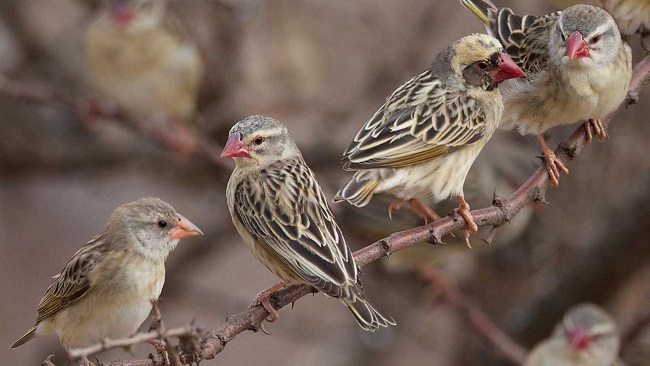
Quelea birds
Chairman of the Rice Farmers Apex Association, Malam Mohammed Garba, made the call when the Country Director, Sasakawa Global 2000 (SG 2000), Prof. Sani Ahmed-Miko, visited the association in Auyo on Friday, October 26, 2018.
He said the pest and Quelea birds coming from Baturiya wetland in Guri had destroyed several rice farms in the area.
He stressed the need for both the state and federal governments to address the problem in view of their devastating effect on rice production.
“We are calling on the government to do something urgently in addressing the problem before the commencement of dry season farming activities.
“This year has been a challenging one to farmers especially rice growers in the area due to the devastation caused by flood, blast and Quelea birds.
“The pest destroys rice seed by making the pod to shrink thereby preventing it from growing fully,” he said.
In his remarks, an official of the SG 2000, Malam Idris Garko, advised the farmers to stop buying seeds from unregistered seed dealers and companies, and to use variety of seeds every year to avoid possible infection by the pest.
“If you find out that the seed is infected with the disease, change the seed next year and destroy the stock to prevent the spread of the pest,” he said.
Also speaking, Prof. Ahmed-Miko of Sasakawa Global 2000 advised the farmers to embrace new farming technologies to boost their agricultural production.