Brazil has withdrawn its offer to host a UN climate change summit in 2019, amid international concern that president-elect Jair Bolsonoro’s policies could speed up the destruction of the Amazon rainforest.
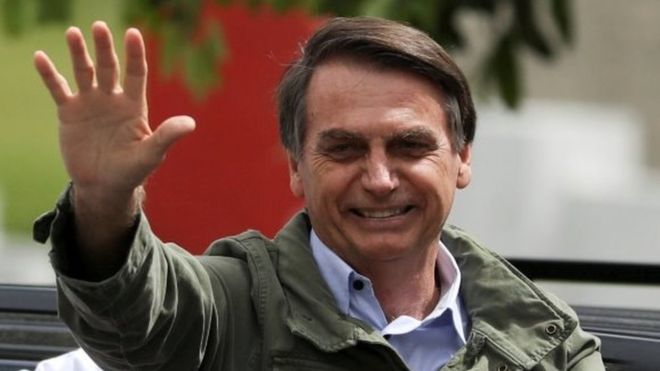
Jair Bolsonaro
The decision was based on budget restrictions and the transition in government, according to a government statement quoted by O Globo newspaper on Wednesday, November 28, 2018.
The decision is seen as a blow to the fight against global warming in the Amazon rain-forest – dubbed “the lungs of the planet’’ – most of which is in Brazil.
Right-winger Bolsonaro, who will be sworn in on Jan. 1, has pledged to allow mining and agribusiness companies to expand their activities in the world’s largest rain-forest.
The withdrawal of Brazil as a host venue is symbolically important, since it was the Rio Earth Summit of 1992 that kicked off multilateral negotiations on climate change in the first place.
Amy Harder, energy and climate change reporter at Axios, believes that Brazil’s retreat is the latest sign of the rise of leaders around the world, who are resistant to globalism and multilateral diplomacy, which is what these climate talks and the 2015 Paris Climate Agreement are all about.
Earlier this year, the African Union during its 30th Assembly of Heads of State and Government held in Addis Ababa, Ethiopia, declared 2018 as the African Anti-Corruption Year. This recognised the need to stifle corruption in its forms of manifestation if the continent must move forward in economic fronts, social development and deliver shared prosperity. To achieve this, African Union is mobilising resources, commitments and partnerships across stakeholders and actors, government and non-governmental organisations, to eliminate corruption as the regions pre-eminent obstacle to economic development and prosperity.
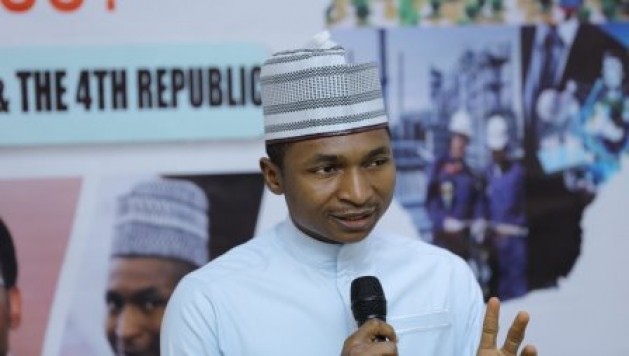
Hamzat Lawal
Pursuant to the above, the Founder & Chief Executive of Connected Development (CODE), Hamzat Lawal, is scheduled to speak at the African Union – African Governance Architecture (AU-AGA) 2018 High-Level Dialogue (HLD) on Democracy, Human Rights and Governance in Africa, holding from November 28 to 30, 2018 in Gaborone, Botswana. In line with the theme: Winning the Fight Against Corruption: A Sustainable Path to Africa’s Transformation, Hamzat will share his experiences and results leading what looks like the largest social accountability movement in Africa, using innovative Follow The Money methodology and work process.
“In many respects, the work we do is challenging and unique in the civic space. But because I am convinced that Africa may not escape poor governance and poverty without a citizens-response to the scourge of corruption, my team at CODE are emboldened and energised. I am proud that our efforts, contributions and commitments to a corrupt-free continent is gaining momentum and recognition and we have since put our theory of change and work process in public domain for adoption by young campaigners/activists across the continent, this meeting is one of such,” he said.
Lawal added: “In the HLD at Gaborone, Botswana, I am expected to provoke debate on the role of citizens, media, open-government and community-based organisations in sustaining anti-corruption efforts in the continent, drawing from Follow The Money initiative. Specifically, I will provide insights into our methodology; its impacts, challenges and prospects for mainstreaming transparency and accountability in government systems as it affects public spending on service delivery in rural grassroots communities. I uphold that actualising the AU Agenda 2063 and the Sustainable Development Goals (SDGs) is a farce without arresting or tackling corruption, frontally.
“Young people must not lose hope in African institutions and public processes. For us, recognising the power of citizens in Africa’s democratic future, citizens must be empowered to stay engaged and active. Founded in 2012, Follow The Money had mobilised and empowered millions of Africans, especially in the grassroots, on holding public/elected officials accountable and answerable. Holding a base in Nigeria, the movement runs dynamic chapters in The Gambia and Kenya (East Africa); implementing life-transforming campaigns across rural communities in the continent. Notable amongst our successful campaigns include #SaveBagega: remediation (environmental clean-up) of the lead poisoned Bagega – a population of about 7,535 where 1,500 children where victims of lead poisoning and who needed urgent medical intervention in Zamfara State, Northern Nigeria. In total, we have tracked public expenditures to the tune of over N50 billion ($164 million) in the last six years.”
Leading a strong anti-corruption civic organisation in the continent and deepening debates for institutional reforms, CODE made presentations at the regional anti-corruption conferences in East Africa represented by Ms Eve Nicole, Follow The Money Kenya Lead; and West Africa by Marr Nyang, who leads Follow The Money in The Gambia.
The Dialogue brings Heads of State and government representatives, civil society groups, the media together. It will be officiated by Dr. Mogkweetsi E.K. Masisi, President of the Republic of Botswana; Dr. Hage Geingob, President of the Republic of Namibia; Thabo Mbeki, former President of the Republic of South Africa; Ellen Johnson Sirleaf, former President of the Republic of Liberia; and Ngozi Okonjo Iweala, former Finance Minister of Nigeria and Chair, African Risk Capacity.
Other dignitaries confirmed to speak include Prime Minister of Lesotho, Motsoahae Thomas Thabane; President Paul Kagame of Rwanda; Mokgweetsi Masisi, President Hage Geingob of Namibia and President Muhammadu Buhari of Nigeria, among other incumbent and former Heads of Government.
It has been a rather long and rough road for the Climate Change Bill in Nigeria as it seems yet to reach Mr President’s desk for assent even after scaling the first, second and third readings at the Senate, following passage by the House of Representative in November 2017.
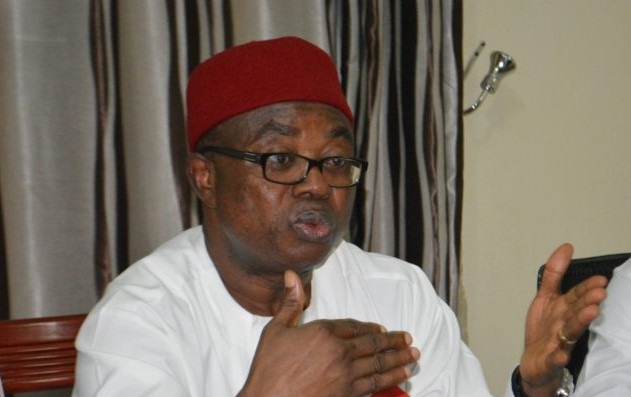
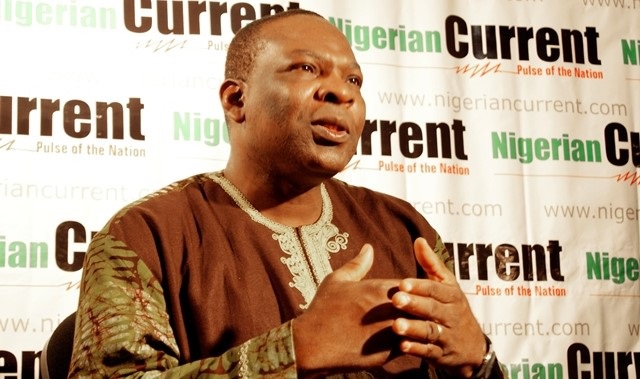
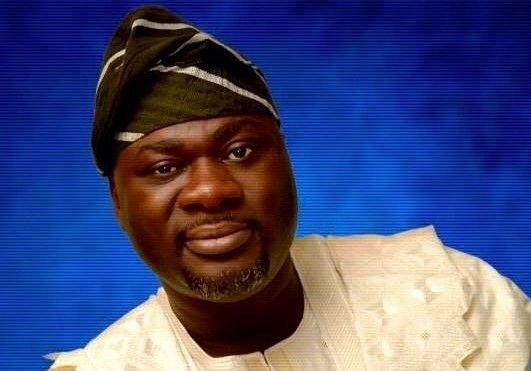
Samuel Onuigbo, Chairman, House Committee on Climate Change
The Climate Change Bill seeks to provide a legal framework for mainstreaming of climate change responses and actions into government policy formulation and implementation. The bill also proposed the establishment of a council to coordinate climate change governance as well as support the adaptation and mitigation of the adverse effects of climate change in the country.
Responding to comments during a panel session at the 11th Annual National Environment Congress by Environmental Rights Action / Friends of the Earth Nigeria (ERA/FoEN) in Port Harcourt, the Clerk/Deputy Director of the Senate Committee on Ecology and Climate Change, Mr. Anthony Azubuike, explained the reason for the prolonged delay in getting the bill to President Muhammadu Buhari for assent.
“As you may know, the bill has passed the first, second and third readings, and was set to be forwarded to the President for assent. However, the legal department discovered some clauses, about five of them, that posed a challenge. Hence, the bill was returned to the two chambers for review. Then, the annual recess by the legislative arm of government further prolonged the processes. Right now, the corrections have been made and the bill is on its way to the President’s desk for assent.”
Commending the sponsor of the bill, Rep. Sam Onuigbo, who is also the Chairman, House Committee on Climate Change, Mr. Azubuike called on interested parties to display a stronger participation in such process in the future. He further stressed that it is never enough to have a bill in the House but concerned parties must continually lobby and advocate until it is assented to.
The theme of the National Environment Congress by the Environmental Rights Action / Friends of the Earth Nigeria (ERA/ FoEN), held from November 27 to 28, 2018, was tagged “Post-Extractivism: Energy Transition for National Development.” It brought key players together to discuss the way forward for energy transition.
The Netherland Ambassador to Nigeria, Mr Robert Petri, has urged the Federal Government to immediately commence the cleanup exercise of Ogoniland before the 2019 general elections.
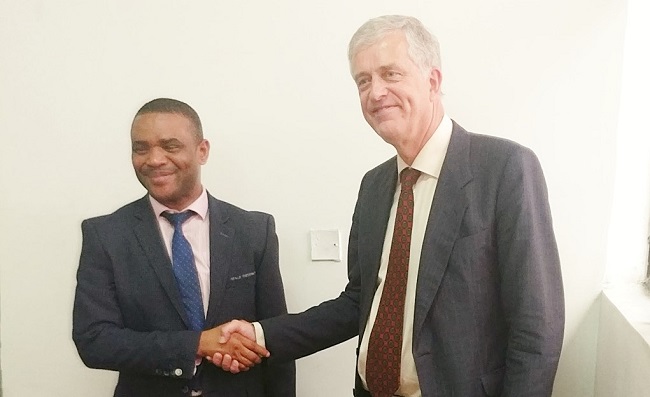
Netherland Ambassador to Nigeria, Mr Robert Petri (right), with Dr Marvin Dekil, Project Coordinator of HYPREP
Petri made the call on Wednesday, November 28, 2018 during a fact-finding mission to the Hydrocarbon Pollution Remediation Project (HYPREP) office in Port Harcourt, Rivers State.
He said immediate action on the cleanup would send a strong signal to the world that the Nigerian government was serious with remediation of oil impacted Ogoni communities.
He said: “Things are really happening in Ogoni cleanup, but they are brightly not visible. Government should ensure the independence of HYPREP.
“It is extremely an important project that we hope will commence proper before the elections starts. The whole world is watching.”
The ambassador said the cleanup exercise was the largest oil remediation project carried out in a single country.
“This is a large project; that is even the largest clean-up in the whole world. Nigeria is making history with this project which will set example worldwide.
“Though HYPREP’s emphasis on community engagement is commendable, but the problem here is that things take a long time to start. HYPREP should keep engaging the people,” he urged.
Responding, Dr Marvin Dekil, Project Coordinator of HYPREP, said the agency was ready to commence the cleanup of oil impacted Ogoni communities.
He said the agency had recently concluded its screening exercise that ended in selection of 21 companies to handle the project.
He said: “The 21 companies have been cleared and are ready to be mobilised to site to commence the clean up. The companies scaled through the entire procurement process.
“Also, HYPREP has completed community; technical preparations and compliance to all procurement acts. HYPREP has not imposed anything on the area of livelihood in the communities.”
The Federal Government had, on April 28 reiterated its commitment to the cleanup project.
Vice-President Yemi Osinbajo had said at a brief ceremony during which the Ogoni Trust Fund escrow agreement was signed at the Presidential Villa, Abuja, that the present administration would ensure the project was transparent.
“The signing of the escrow agreement is one that shows clearly that not only are we committed to ensuring that the cleanup is done, but also that we are committed to ensuring that it is done transparently,” Osinbajo said.
Groups participating in the Environmental Rights Action/Friends of the Earth Nigeria (ERA/FoEN) 11th National Environmental Congress (NEC) in Port Harcourt, Rivers State have advocated a shift from fossil fuels to life after oil built on renewable energy.
Dr. Godwin Uyi Ojo, Executive Director of the Environmental Rights Action/Friends of the Earth Nigeria (ERA/FoEN)
The NEC, which had “Post Extractivism: Energy Democracy for National Development” as its theme, brought together representatives of civil society, community groups, labour unions, government officials, the academia, and the media among others, crirticised the Nigerian government’s seeming slow march towards a post-oil economy and warned that the nation might be left behind if concrete commitments to transit are not made. It held from November 27 to 28, 2018
The keynote address by foremost activist and lecturer at the Lagos State University, Sylvester Odion Akhaine, on the theme of the congress examined Nigeria’s dependence on fossil fuels and the nature of alternatives in the post-extractivism era and provided an actionable roadmap to alternatives in renewable energy sources.
ERA/FoEN Executive Director, Dr. Godwin Uyi Ojo, in his welcome words titled “Energy Democracy for Nigeria is Possible”, explained that fossil fuels are dirty, expensive and kills Nigerians almost on a daily basis.
Ojo explained that the dead are victims of the country’s lack of foresight and fossil fuels dependency.
Excerpts for his speech:
About two months ago, over 50 persons – men, women, children, people like you and me – were incinerated in a pipeline inferno in Aba, Abia State, caused by a leaking pipeline belonging to the Pipelines and Product Marketing Company (PPMC). Since the Jesse disaster where over 1,000 persons were roasted due to pipeline rupture in 1999 to the recent Azuzuama tragedy in 2015 where 11 persons were burnt to ashes beyond recognition from a malfunctioning oil facility, several other gory tales of such incidents have become part of our daily lives. We have been witnesses of the gory pictures that emanated from explosions from the ill-maintained and leaking pipes in many parts of the Niger Delta even leading up to Abule Egba and Ijegun in Lagos and Arepo in Ogun State.
Aside the violence and death, the monumental environmental degradation arising from poor environmental governance by the Nigeria government and the international oil companies are catastrophic with irreversible consequences. For example, the government continues to pay lip service to the clean-up of the Niger Delta and the Ogoni clean-up that have become electioneering campaign gimmicks and deception.
It is exactly because of the need to save our people from these kinds of mishaps and the opportunities that a post-oil economy promises that the ERA/FoEN has been in the vanguard of campaigns for a just energy transition.
Therefore, this NEC has brought people from far and near – local communities, the civil society community, government officials, academicians, lawyers, environmentalists, experts and every single person here to discuss this issue and jointly present a common front and raise a common voice demanding for a just energy revolution.
To address the carbon emissions released into the atmosphere that is leading to global earth temperature rise, global warming, extreme weather conditions and catastrophic events there is the need for transition from dirty energy to renewable energies such as solar, wind, and fuel efficient cookstoves to promote energy access for all in line with the Sustainable Development Goal 7.
Despite the quantum leap in the developed economies, globally, more than 1.6 billion people have no access to electricity and about 2.4 billion depend solely on fuel wood. This is particularly true in Africa and in Nigeria, where rising energy demand is the cause of increasing violent resource conflicts at the sites of extraction. Nigeria is nowhere near meeting its nationally determined commitment to addressing climate change and reducing carbon emissions. About 70 percent of our population depends solely on fuel wood for energy, representing one of the world’s highest deforestation rate at 3.5 percent annually.
While we have been consistent in advocating that Africa and Nigeria join the renewable energy revolution sweeping across the globe, we cannot overlook the fact that a new form of energy colonialism seems to have emerged. Nigeria and less industralised countries stand the risk of energy colonialism if renewable technologies remain the exclusive reserve for industrialised nations. Indeed, Nigeria and the entire African continent have become dumping ground for fake and substandard alternative energy products from the developed world.
At the policy level, our energy policies are still deficient, lack focus and devoid of community perspectives. They have instead, opened opportunities for private investors in energy systems who are more interested in profits than bridging energy deficits. Persistence in fossil fuel dependency is the result of billions of Naira expended for generator and diesel for Ministries, Departments and Agencies (MDAs) at the federal level which is replicated at the state and local levels of governance.
Energy colonialism is killing the Nigeria economy. Access to green technologies is constrained by the problem of affordability and adequacy. Although removing the high tariffs for zero tariffs will help improve renewable energy availability and accessibility, we advocate for energy democracy that is decentralized, people driven and socially controlled such that citizens become energy producers as well as end users from mini-grids, and non-grid systems that are less capital intensive. To promote this, a percentage of the national budget should be dedicated to renewable energy research and development. All public finance, loans and subsidies being channeled to fossil fuel explorations should be halted immediately and the funds invested in renewable energy to promote greater energy access for the over 170 million people in Nigeria.
To reinterate, energy colonialism should not lead to the dumping of petrol and diesel engines and cars from industralised nations to Africa in the name of providing development aid and energy for the poor. This Coalition warn against attempts to make Nigeria a dumping ground for such obsolete cars and machines. We call for a ban on generator sets in all MDAs at the federal, state and local government levels.
Lastly, energy colonialism can be avoided if the Nigeria government adopts a deliberate policy of energy transition from fossil fuels to renewable sources. We call on Nigeria and Africa governments to adopt a deliberate policy for energy democracy and transition from fossil fuels to renewable sources of energy.
Colleagues, friends, there is life after oil. It is to this challenge of energy emancipation and transition that you have been called upon to provide practicable ways to nudge us on the path of safe, clean and sustainable energy that will guarantee a bright future.
Community, power, and leave the oil in the soil is now. Leave the oil in the soil. There is life after oil.
The 24th Session of the Conference of the Parties (COP24) to the United Nations Framework Convention on Climate Change (UNFCCC) is the moment for governments to reckon with the reality of climate change, coming as it does two months after the IPCC report on 1.5C, the Climate Action Network (CAN) has said.
Jens Mattias Clausen of Greenpeace Nordic
The disclosure was made as CAN briefed media executives on Wednesday, November 28, 2018 ahead of COP24, which commences in Katowice, Poland, on December 2.
Last week, nearly 40 world leaders and international representatives called for stronger climate ambition and faster action at the Climate Vulnerable Forum Virtual Summit.
Jens Mattias Clausen of Greenpeace Nordic, a member of CAN, highlighted the urgency for action citing the findings from the latest UNEP Emissions Gap Report and the US National Climate Assessment report which add to the alarm bells from the IPCC report calling for rapid and far-reaching actions.
Clausen said halving emissions by 2030 is achievable but politicians need to listen to their own citizens as the cries for action are getting louder and louder. According to him, non-state actors may not make decisions on a national level but must strive to be as influential as possible in guiding the discussions to a successful conclusion.
“We need to understand that what we can expect on ambition here is not the actual new targets, but the commitment to make some,” he said.
Priorities identified for this COP24 include:
Adoption of a fair and robust Paris rule book that ope rationalises the Paris Agreement,
Commitment to enhance NDCs by 2020 that move the needle to bridging the emissions gap, and
Climate finance that is predictable, sufficient and transparent to deliver $100 billion by 2020
Camilla Born of E3G said the Paris Rulebook would absorb most of the negotiator capacity in Katowice. She said the COP would focus on the international components such as the rulebook, global climate finance, a definitive timeline and support for countries with reduced capacity to adapt to climate change. This may turn out to be a “low profile COP with potentially high impact outcomes,” she noted.
“It is a complicated COP with a huge amount of expectation on governments to do more on climate action. This multilateral space is an important place where the governments are coming good on climate action,” she added.
Fernanda Carvalho of WWF International called for an outcome with raised ambition, which pushes for national leaders to engage in NDC discussions ahead of 2020. She also described the 2019 UNSG Summit as another opportunity for countries to develop their commitments.
“We are on a pathway for global warming of 3 degrees or more, and we need to stay below warming of 1.5C degrees to avoid dangerous global warming for the world, for people, and for nature,” adding:
“We are waiting on a political response to all the evidence that has been presented and all the momentum that has been created.
“There is momentum, there is interest of many actors, there is evidence of the lacking political will and commitment. Besides the package of rules… we want to see recognition of these political commitments. We believe this is a moment where these commitments should be renewed. The form to renew that is a decision on ambition.”
The Federal Executive Council (FEC) presided over by Vice President Yemi Osinbajo on Wednesday, November 28, 2018 approved N9.6 billion for 11 ecological intervention projects across the country.
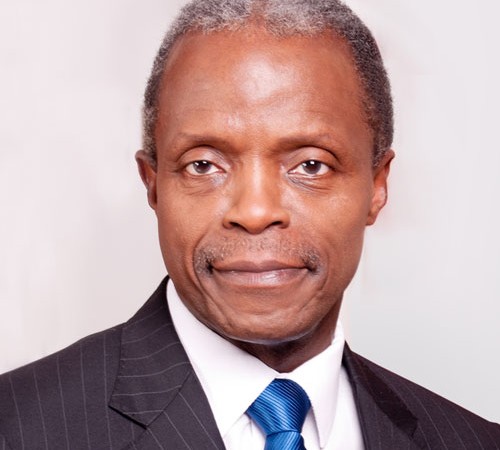
Yemi Osinbajo, Vice President of Nigeria
Mr Femi Adesina, the Special Adviser to the President on Media and Publicity, made this known when he briefed State House correspondents on the outcome of the council’s meeting held at the Council Chamber of the Presidential Villa, Abuja.
He said that the ecological projects are in Lagos, Oyo, Ondo, Cross River, Adamawa, Bauchi, Jigawa, Kaduna and Niger states, as well as Abuja, the Federal Capital Territory (FCT).
“Eleven ecological intervention projects were approved at a total sum of N9, 600,415, 324.
“These projects are spread out as follows; jetty facilities in Lagos, flood and erosion control in Oyo town, erosion control of flooded areas/road improvement in Owo, Ondo state, erosion of flooded areas in Akanka Local Government Area of Cross river State.
Others are road and storm water drainage at the Federal College of Education, Yola, Adamawa, road and bridges at Dutsen Saki village in Bogoro Local Government Area of Bauchi State, flood and erosion control at Kazaure, Jigawa State and intervention at main campus Phase II site of Ahmadu Bello University, Zaria, Kaduna State.
“The projects also include erosion and flood control at Kontagora Local Government Area, Niger State; gully erosion and road improvement at Army Post Service Estate Kurudu, Abuja; and erosion and flood control at Asharawako, Kwali Area Council Phase II Abuja.”
The presidential spokesman further revealed that the council approved the purchase of three incinerators at the cost of N267.5 million for the National Agency for Drugs Administration Control (NAFDAC).
According to him, the environmentally friendly incinerators would help the agency in the destruction of fake drugs.
The Minister of State for Power, Works and Housing, Alhaji Suleiman Hassan, said that N3.4 billion was approved for furnishing of three Federal Secretariat complexes in Anambra, Zamfara and Bayelsa states.
He added that N331.2 million for the rehabilitation of some bridges in the North East zone of the country.
“The council approved two memos. The first one is the furnishing of the federal secretariat complexes in three states of the federation, Akwa in Anambra, Gusau in Zamfara and Yenagoa in Bayelsa at the cost of N3.48 billion.
“It is the duty of the Federal Ministry Power, Works and Housing to provide decent accommodation for federal agencies and other offices in various states of the federation to make their works are made easier and more comfortable for better results.
“So, these three complexes have been completed and ready for commission before the end of the year.
“The council also approved the rehabilitation of some broken down bridges in the North East Region that were destroyed by insurgents at the cost of N813.4 million.
“The first is on the road between Maiduguri, Dikwa and Gamboru. The second is at the famous Limankara, there is a bridge there that links Maiduguri to Dama, Goza, Hong and Yola at the cost of N331.2 million.’’
The minister revealed that the contract was awarded to Sappers Engineering Ltd., a company belonging to the Army Corps of Engineers.
“Why we gave to Sappers Engineering is because of the security concerns, no civil contractor will want to go there because of insecurity,’’ he explained.
President Muhammadu Buhari, in his capacity as Chairman of the Summit of Heads of State and Government of the Lake Chad Basin Commission (LCBC), is to convene a consultation of Heads of State and Government of the LCBC.
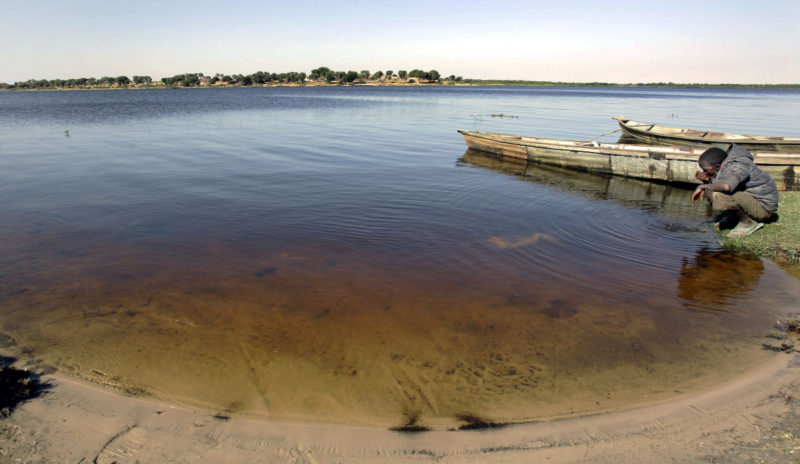
Scientists say the Lake Chad, that borders Nigeria and some other countries, has shrunken by 95 percent over the past 50 years. They have also linked the Boko Haram insurgency to the lake’s situation. Photo credit: AP/Christophe Ena
Mr Femi Adesina, the Special Adviser to the President on Media and Publicity, Mr Femi Adesina, in a statement in Abuja, said the meeting of the Heads of State and Government of the LCBC would take place in N’Djamena, Chad, on Thursday, November 29, 2018.
Also, the President of Benin Republic, a troops-contributing country, has also been invited to attend.
According to the statement, the one-day meeting will review the security situation in the areas affected by Boko Haram insurgency.
He said it would also adopt measures to enhance the capacity of the Multinational Joint Task Force (MNJTF) to meet the challenges of securing the areas.
“The presidents of the LCBC member countries of Chad, Cameroon, Niger, and the Central African Republic have been invited to attend the meeting.
“The President of Benin Republic, a troops-contributing country, has also been invited to attend.
“The MNJTF and the national operations of the affected countries have appreciably degraded the capacity of Boko Haram terrorists, although the insurgents still retain the capacity to attack isolated targets in desperate search for supplies,’’ the statement added.
The UN says millions of people in Africa’s Lake Chad region (northeast Nigeria and parts of Niger, Chad and Cameroon) are facing a profound and protracted crisis driven by extreme poverty, climate change and violent conflict.
The crisis, the world body added, has led to the internal displacement of 2.4 million people, the destruction of livelihoods, human rights abuses, and the disruption of health, education and other basic services.
More than 10 million vulnerable people need life-saving assistance and protection today. Women and children are particularly hard hit.
In February 2017, a conference on the Lake Chad region co-hosted by Germany, Nigeria, Norway, and the United Nations took place in Oslo. Donors pledged $672 million to emergency assistance and support in 2017 and beyond.
The humanitarian response was scaled up significantly: more than six million people were reached with assistance in 2017, and a famine was averted in northeast Nigeria.
The UN says the humanitarian requirements for the region in 2018 total $1.56 billion, and efficient development assistance focusing on building resilience is also needed now.
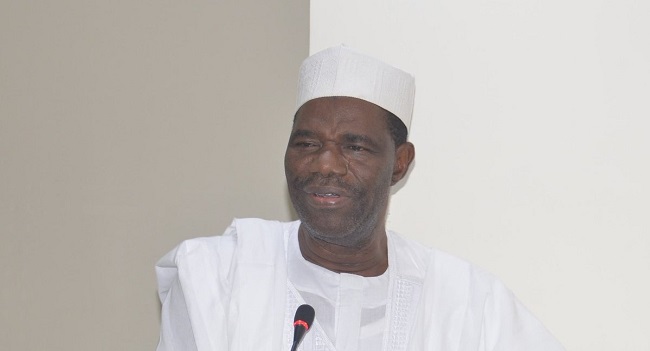
The Federal Government has appointed Dr Bukar Hassan as the new Director-General of the National Agency for Great Green Wall (NAGGW).
Dr Bukar Hassan
Mrs Larai Daze, the Head of Press and Public Relations of the agency, made this known in a statement on Wednesday, November 28, 2018 in Abuja.
Hassan replaced Mr Goni Ahmed, who had been the D-G since the inception of the agency until his recent disengagement after his four-year tenure elapsed.
Hassan, during the takeover ceremony, said he was coming back home, adding that there was very little he might not know about the agency.
He urged the staff to work with him as a team, saying that he had no doubt that “the team he is seeing around are familiar faces’’ except for a few and believed the teamwork would produce good results.
“There is the need to work with the junior staff because most contributions come from the lower cadre,” he said.
The new D-G said that the presidency had requested that the agency worked harder and urged to be briefed on the activities of the agency before the elections.
“As human beings we believe we have the capacity both humanly and financially and therefore more efforts should be applied individually and collectively in order not to fail the people that brought them.”
Hassan said that there was the need to strategise and collaborate with other government programmes and activities to achieve the goal of the NAGGW programme.
He announced that the World Bank had promised to come up with financial support if justifiable, which he described as an encouraging opportunity to work harder for the development of the country.
He assured that he would be there to work as a team with all relevant departments to put the GGW programme in a sound footing to leave a good mark.
Mr Abdulaziz Kolo, who was the acting D-G, welcomed the new director-general, saying his appointment “is a home coming’’ considering his past records.
He wished him a successful tenure and thanked the management and entire NAGGW staff success in their endeavours.
Hassan before his appointment held different positions from Head of Biological Sciences, University of Maiduguri and various positions in the Federal Ministry of Environment.
The positions include the National Project Coordinator of Global Environment Facility (GEF), Assisted Integrated Ecosytem Management (AIEM), Head Project Implementation Unit Great Green Wall and Director, Drought and Desertification Amelioration.
He also played major roles related to the environment such as the first National Focal Point in the process leading to the negotiation and adaption and ratification by Nigeria on the UN Convention to Combat Desertification and Mitigate the effects of drought particularly in Africa.
He was also the Chairperson and African Representative on the Review Committee for the Implementation of the UN Convention to Combat Desertification (UNCCD), Member Governing Board of Nigeria Geological Surveys and Governing Board Member of the Nigeria Nuclear Regulatory Agency.
Hassan rose to become the Permanent Secretary, Federal Ministry of Environment in 2015, and was redeployed to Federal Ministry of Agriculture and Rural Development in 2017 until his retirement in September 2018.
He has a Bachelor of Science in Botany from the University of Maiduguri, a Master in Crop Production from the University of Bath, UK and a PHD in Arid Zone Ecology from the University of Wales.
He also has three post-doctoral certificates from Silsoe College, University of Bedford UK, University of Dresden Germany and Centre for Research in Desertification Control, Valencia Spain.
The Ogun State Government says it has sealed a factory in Ososa, Odogbolu Local Government Area of the state, over environmental infractions.
Ogun State Commissioner for Environment, Bolaji Oyeleye
Commissioner for Environment, Mr Bolaji Oyeleye, made this known during an enforcement exercise on Wednesday, November 28, 2018 in Osasa.
Oyeleye said that the flour processing factory had been discharging its effluent indiscriminately into the environment since it commenced operations.
The commissioner said that the management of the factory had earlier signed an undertaking to begin erection of Effluent Treatment Plant (ETP) to ensure that its waste water was not inimical to the environment.
He said that the state Environmental Sanitation Task Force had on different occasions engaged and sensitised the factory management on the need for an ETP.
Oyeleye said after that the government was left with no other option but to close the factory.
The commissioner said that government had continually advocated eco-friendly management of waste, due to the influx of industries to the state for the wellbeing of its citizens.
He advised industries operating in the state to comply with the regulations and environmental laws to avoid sanction, saying that his ministry would continue the enforcement of environmental law.