“We have to make sure we can deliver a good COP, as 2020 will be a really vital COP, and we absolutely want to be part of that process. So, today I am announcing I have officially written to express the UK government’s interest in formally hosting COP in 2020.”
With these words, Claire Perry, Minister of State at the Department for Business, Energy and Industrial Strategy, formally declared the United Kingdom’s willingness to host the 26th Session of the Conference of the Parties (COP26) to the United Nations Framework on Climate Change (UNFCCC) in two years’ time.
Theresa May, Prime Minister of the United Kingdom
The COP24 ended on Friday, December 14, 2018 in Katowice, Poland, having brought together governments from across the world to discuss how to keep global average temperature rise well below 2.0 degrees Celsius.
The UK has been at COP24 for the last two weeks to reinforce their commitment to reduce greenhouse gas emissions and invest in green jobs.
Thérèse Coffey, Parliamentary under Secretary of State for the Environment, discussed the importance of a circular economy at the Sustainable Innovation Forum. In the response to the growing plastic pollution, she said: “There is no reason in the UK to drink bottled water.”
The climate talks in 2020 will be crucial for countries to show they have met deadlines set at the Paris Agreement. If the UK is successful in their bid, it would strengthen the government’s determination to remain a world leader after Brexit.
The location of COP25 in 2019 is however yet to be announced but Chile and Costa Rica have been included as firm favourites. Brazil has withdrawn from hosting in 2019 as the new President-elect Jair Bolsonaro said on his campaign that he may pull out of the Paris Agreement.
This news follows the Mayor of London, Sadiq Khan, announcing a new 1.5C Compatible Plan to combat climate change.
After five days of intensive discussions, the 3rd session of the Meeting of the Signatories to the Memorandum of Understanding on the Conservation of Migratory Sharks (CMS) ended in Monaco, France on Friday, December 14, 2018.
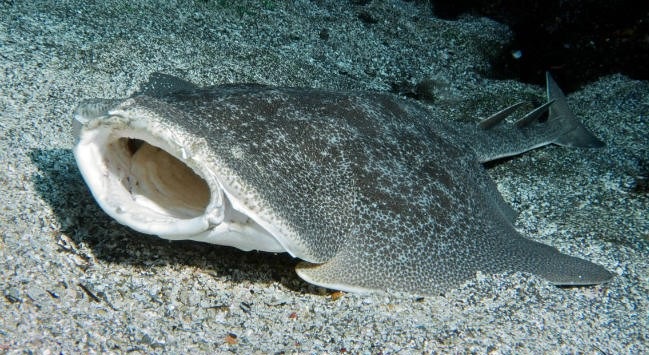
The Angel Shark is assessed as Critically Endangered in the IUCN Red List
Among the main decisions reached was agreement to include a further eight species on the instrument’s Annex meaning that they should benefit for greater international cooperation to enhance their conservation.
Scientists estimate that one quarter of sharks and ray species worldwide are threatened with extinction.
The eight species concerned are:
The Dusky Shark
The Common Guitarfish
The Smooth Hammerhead
The Oceanic Whitetip Shark
The Bottlenose Wedgefish and two look-alike species, the Smoothnose and White-spotted Wedgefish, also known as the Giant Guitarfish
The Angel Shark
The Angel Shark, which was proposed by the host of the meeting, the Principality of Monaco, is assessed as Critically Endangered in the IUCN Red List. Although the species was very common during the 19th and early 20th centuries, the global population has been depleted by target fisheries and, more recently, as a fisheries bycatch. The species’ last remaining stronghold is around the Canary Islands, but it is still recorded very infrequently across much of its former coastal range.
Agreement could not be reached on listing the Blue Shark proposed by Samoa and Sri Lanka and Signatories asked that the proposal be resubmitted at the next Meeting in three years’ time when further assessment of the populations of the species in the Atlantic, Pacific and Indian Oceans will have been undertaken.
Shark numbers have fallen dramatically in recent years, primarily because of overfishing and bycatch, while prey depletion is also affecting their conservation status, with many species now categorised as Critically Endangered, Endangered or Vulnerable on the IUCN Red List.
Representatives of 34 governments plus the European Union attended the meeting along with several leading NGOs dealing with marine conservation and international organisations including the Food and Agriculture Organisation of the United Nations and CITES, the Convention on International Trade in Endangered Species.
Defenders of Wildlife, an organisation with 20 years’ experience dealing with sharks, was accepted as the Memorandum’s twelfth “cooperating partner”.
The meeting took place at the Oceanographic Museum at the invitation of the Government of the Principality of Monaco.
The CMS or the “Bonn Convention” aims to conserve terrestrial, aquatic and avian migratory species throughout their range. It is an intergovernmental treaty, concluded under the aegis of the United Nations Environment Programme, concerned with the conservation of wildlife and habitats on a global scale.
The Memorandum of Understanding (MOU) on the Conservation of Migratory Sharks is the first global instrument for the conservation of migratory species of sharks.
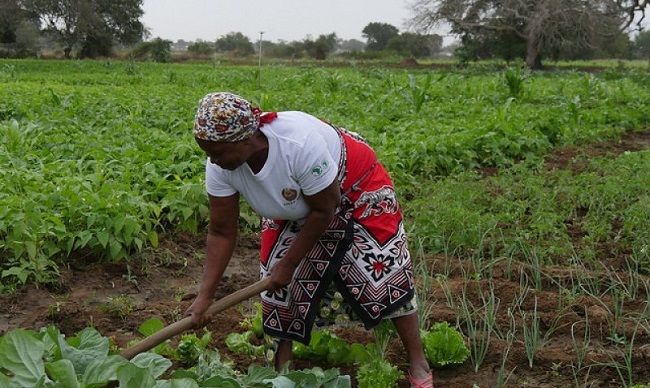
Africa must unlock the power of its women and girls if it is to adapt to climate change, cope with disasters and build its green energy sector.
When women are involved in decision making, agreements on the environment are more likely to be ratified
That is the message from African delegates as the world deliberates on the implementation the Paris Agreement on climate change in Katowice, Poland.
Research shows that when women are involved in decision making, agreements on the environment are more likely to be ratified and projects around natural resources, such as water, are more likely to succeed.
If given access to education and finance, African women can contribute to finding technological solutions and driving the continent’s renewable energy industry too, according to experts.
“When you empower women in the context of climate change you empower a family, a community and a country,” says Dana Elhassan, senior gender expert at the African Development Bank (AfDB), which allocates international funds to development projects.
“You cannot solve a problem with half the team. A lot of the unpaid work that women do, such as collecting firewood and water, and caring for the family, are massively affected by climate change – so we have to make sure adaptation initiatives address their needs, vulnerabilities and potential.”
Women as agents of change
Studies show that when women are part of decision making, ratification of multilateral agreements on the environment are more likely, adds Mafalda Duarte, head of the $8.3 billion Climate Investment Fund, one of the largest climate financing instruments in the world.
There is also strong evidence that women play a vital role in dealing with disasters by mobilising communities – something that will become increasingly important as climate change advances, she says.
“Discourse is quite tilted to considering women as victims of climate change – but we are agents of change and if we are perceived as such this will make a big difference,” says Ms Duarte.
“Our empowerment represents greatly under-utilised opportunities to build our economies and tackle climate change.”
When women are empowered – given access to finance, assets and decision making – there are big impacts across sectors, she adds.
“Renewable energy is traditionally seen as a male sector but if you are deliberate in giving access to women, they become entrepreneurs and help us push forward that agenda,” says Ms Duarte.
Women can drive business and technology solutions
When women are empowered equally to men there is a massive leap forward in economic gains: a recent McKinsey study found that if women were participating economically as much as men, they would be adding 28 trillion dollars to global GDP by 2025.
In Africa, lack of access to finance has resulted in an estimated $42 billion financing gap for women entrepreneurs across business value chains.
Yet unlocking African women’s ingenuity and giving them access to finance could generate technological advancements that help deal with climate change, believes the African Development Bank.
As mobile phone technology has proven, Africa is capable of leapfrogging into an era of digitisation, which minimises risks and cuts costs of doing business.
African women have shown potential to compete in this digital work-space – Mfarm, AppsTech, JuaKali, Nandimobile, Hehe Ltd, Obami, DotNxt, are only a few of the women-led tech startups in Africa listed by Forbes.
“If we women are given the right platforms, we will achieve the change we wish to see in the world,” says Ms Duarte.
Unlocking investment in African women holds incredible return and transformational impact potential. Women form the backbone of African economies, accounting for a majority of small- and medium-sized businesses and dominating the agriculture sector as primary producers and food processors.
COP24 is the 24th Session of the Conference of the Parties to the United Nations Framework Convention on Climate Change (UNFCCC). This year countries are preparing to implement the Paris Agreement, which aims to limit the world’s global warming to no more than 2C.
An Agriculture and seeds company, Agritropic Ltd., says it provides local farmers seeds that are suitable for Nigerian climate and soil.
Hybrid seeds
Mrs Nonye Igbo, spokesperson for the company, made this known in an interview with the News Agency of Nigeria (NAN) in Lagos on Friday, December 14, 2018.
Igbo said: “Getting the right crop or vegetable seed that suits both soil and climate conditions has also been an issue for local farmers, hence the introduction of climate-friendly seeds.
“We sell tropical seeds, suitable for the Nigerian climate. The seeds are packaged in such a way that it fits into the Nigerian climate and suitable for our soil.
“Some local farmers complain of seeds sourced from foreign climes and how they do not sprout or geminate because the seeds are not adaptable to our climate or soil.
“It only points that such seeds were not produced or packaged putting into consideration our tropical weather.
“The seeds we provide for local farmers are ready-to-use and are easily adaptable to the soil and climate in Nigeria, Ghana etc.
“If farmers and even non-farmers apply the seeds the way they are taught, there will be no complaint concerning our seeds.’’
She also highlighted the contributions of the firm in boosting productivity in the seeds sector and the company’s responsibility in training local farmers on proper application of the seeds.
“Mile 12 market in Lagos state is a proof of the impact we have made in the Nigerian seed industry; with the truck-loads of tomatoes coming from the North, East and West.
“Our seeds are naturally-packaged and are not genetically modified. We have both hybrid and open pollinated seeds as well.
“We have various types of seeds both for farmers and non-farmers.
“We organise trainings for local farmers across the country on how to adequately plant both crops and vegetable crops and get the desired yields.
“We have workshops and seminars where we train local farmers on cropping, farming and the fumigation aspect of cultivating healthy crop and vegetables.
“We also provide technical assistance to local farmers, to make farming easier for them. Most local farmers are not conversant with how to plant packaged seeds and the entire process involved,’’ Igbo said.
According to her, it is not just about buying seeds; it is not about making money but to groom farmers on modern best practices in agriculture.
The Food and Agricultural Organisation (FAO) has urged member countries to adopt innovations and encourage collaborative efforts at achieving sustainable agriculture and food security globally.
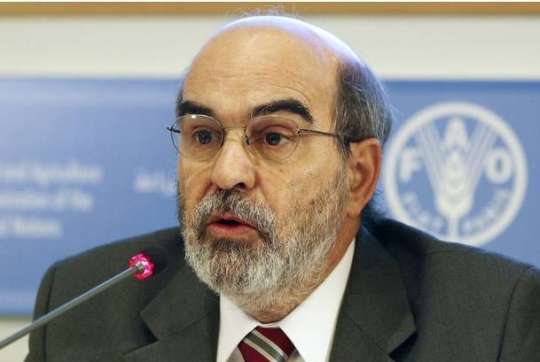
Jose Graziano da Silva, Director General of the FAO
The organisation’s Director-General, Mr José da Silva, made the call in his address on Friday, December 14, 2018 at the end of the council’s week-long meeting held in Rome, Italy.
He said that no country could overcome all the challenges facing agriculture and food production, stressing that it must be “a collective responsibility”.
“Countries cannot achieve the Sustainable Development Goals (SDGs) on the basis of traditional agricultural approaches, we need innovations,’’ he said.
Da Silva expressed confidence that the 2030 SDGs would help to eradicate extreme poverty, hunger and ensure a viable environment if all hands were on deck.
He also urged member states to support the various programmes of FAO with appropriate funding, noting that “countries continue to ask FAO to do more and more with less and less”.
Highlights of the council’s meeting include budgetary blueprints and discussion on proposals by member states or technical committees on agriculture, forestry and fisheries.
The council deliberated on 32 specific items that will require budgetary resources.
It commended FAO’s leading role in sustainable agriculture and food production, describing the deliberation as “the right forum to tackle these matters”.
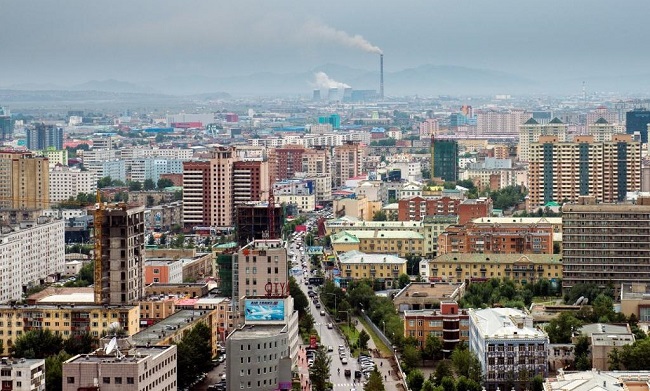
Mongolians are lodging an online petition for the attention of the United Nations regarding the heavy air pollution in Ulan Bator, the country’s capital, having gathered some 36,500 signatures within about 36 hours.
Ulan Bator, Mongolia
The appeal of “Death from Smog in Mongolia #HumanRights’’ was initiated more than 40 hours ago by an Ulan Bator resident who called himself Bat-Enkh.
It was put forward on the petition website – change.org.
Any petition on the website must collect at least 50,000 signatures before it can go forward for consideration.
The air pollution in the capital of landlocked Mongolia is said to be among the world’s heaviest.
The city is home to about half of the country’s population of 3.2 million.
In Ulan Bator, over 800,000 residents burn raw coal and other flammable materials to keep warm and cook meals during the six-month-long winter season, contributing 80 per cent of the local air pollution.
Since the early 2000s, the Mongolian government, international donors and development organisations, including the World Bank and the Asian Development Bank, have spent millions of U.S. dollars combating the air pollution in Ulan Bator.
However, the city has yet to see significant improvements.
Its air pollution on Jan. 30, this year was more than 130 times the safety level set by the World Health Organisation.
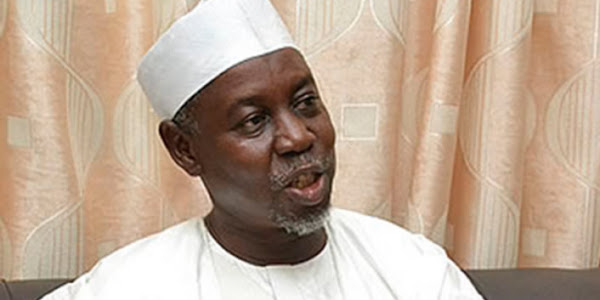
President Muhammadu Buhari has approved the appointment of Alhaji Suleiman Hassan as the Minister of Environment, following the resignation of the Minister of State, Ibrahim Jibril.
Alhaji Suleiman Hassan
Before his appointment, Hassan was the Minister of State, Power, Works and Housing.
Hassan’s appointment was conveyed in a statement by Garba Shehu, the Senior Special Assistant to the President on Media and Publicity in Abuja, on Thursday, December 13, 2018.
Jibril had on Wednesday announced his resignation from the Federal Executive Council (FEC) to enable him to assume his new position as Emir of Nasarawa.
Jibril, who appeared in traditional attire during the FEC meeting presided over by President Muhammadu Buhari at the Presidential Villa in Abuja, thanked the president for according him the opportunity to serve in the cabinet.
The minister said the appointment had afforded him the opportunity to serve the country in the last three years.
“The last three years had been full of opportunities and I must thank the Almighty God for giving us the strength and the courage to serve under your wonderful leadership.
“There is no doubt that I have personally learnt a lot from your sense of fairness to all and your commitment to the entire nation and the desire to fight corruption to a standstill.
“We learnt a lot from these outstanding qualities,’’ the minister said.
He also thanked members of the cabinet for their support and cooperation throughout the period he served.
Jibril was on Dec. 7 appointed Emir of Nasarawa in Nasarawa Local Government Area of Nasarawa State by the state governor, Alhaji Tanko Al-Makura.
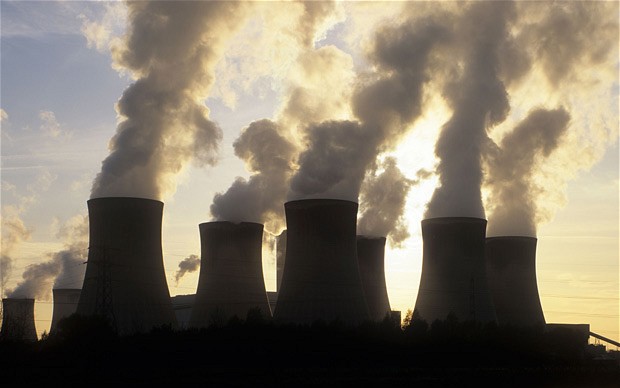
As governments meet in Poland for another round of climate talks, a major milestone was reached on Thursday, December 13, 2018 in the worldwide movement to divest from the fossil fuel companies driving the climate crisis, with the announcement that over 1000 institutions with managed investments worth almost $8 trillion (€7 trillion) have committed to divest.
Fossil fuel pollution from a coal power station
The 1000th institution to divest was the Caisse des dépôts et consignations (CDC), which manages France’s public sector pensions, savings, and investments worth €173 billion ($196 billion). It recently announced that from 2019 it will no longer invest in companies that make more than 10% of their business from coal – this implies that the top 200 companies in the coal-industry are now effectively blacklisted.
The latest commitments propelling the campaign to over 1000 institutions include: AG2R la mondiale ($114 billion), Australian Vision Super Fund ($9 billion) and Brandeis University ($997 million).
Launching a report detailing the history of the “divestment” movement and highlighting the 1000th divestment commitment at the UN Climate Summit in Katowice, May Boeve, Executive Director of 350.org, said: “When this movement started in 2012, we aimed to catalyse a truly global shift in public attitudes to the fossil fuel industry, and people’s willingness to challenge the institutions that financially support it. While diplomats at the UN climate talks are having a hard time making progress, our movement has changed how society perceives the role of fossil fuel corporations and is actively keeping fossil fuels in the ground.”
The report details that since 2012 the number of institutions commiting to fossil fuel divestment has increased rapidly, as has the total number of dollars of those who commited to sell their fossil fuel investments.
Boeve added: “The reach and impact of this global movement is huge — major institutions with almost $8 trillion in assets have commited to divest from the likes of Exxon and Shell. The momentum has been driven by a people-powered grassroots movement – it’s ordinary people pushing their local institutions to take a stand against the fossil fuel industry – the industry most responsible for the current climate crisis.”
Nico Haeringer, an organiser who supports divestment groups globally at 350.org, said: “Getting our public institutions to go fossil free is something that we can all do. Whether it is our university, our municipal government, or our pension fund we can turn off the money tap to polluting industries and we can force them to make better choices like investing in local renewable energy. It’s something that we see happening everywhere, with a momentum all of its own.”
The exponential rate of growth in the number of institutions and total funds divested from fossil fuels companies;
The global breakdown of divestments including numerous commitments on every continent;
The sectoral breakdown of divestment actions, which demonstrates the moral leadership of the faith sector on the issue of divestment;
Politically significant commitments such as those of the sovereign wealth funds of Ireland, Norway and city divestments of Cape Town and New York.
The first fossil fuel divestment commitment made since the movement was launched was made by Unity College (Maine) in the United States in 2012.
On the momentum for divestment since 2013, Nico Haeringe said: “This is a moral movement as well as a financial one. Just five years ago we had 181 divestment commitments and $50 billion shifted away from polluting industries and today we’re over 1,000 and approaching $8 trillion dollars.
“Despite the enormous progress and the spike of divestment commitments, we need hundreds more to move their money out of dangerous fossil fuels. Massive pension funds like New York State, to moral authorities like the Vatican, to iconic institutions like the Nobel Foundation, to premiere universities like Harvard, Yale, Oxford, and Cambridge, and US based insurance giants AIG, and Berkshire Hathaway. The tide is turning and the time to divest is now.”
On the theory of change of the movement, Boeve said: “The fossil fuel industry is one of the most powerful political actors in the history of the world. The tentacles of this industry reach into the offices of the powerful, including at this UN Summit where they’ve been welcomed on the red carpet. The divestment movement gives every person the opportunity to join the dots and make clear that climate change is not ‘just happening’ – it’s being actively fueled by corporations like Exxon and Shell and anyone who funds them.
“This movement started to send a clear message to the fossil fuel industry that we would not sit by while they profited by selling fuels that cause climate breakdown. It’s not just about the bottom-line, it’s also about their reputations in the public square. The scale of this movement shows that selling products that you know cause climate change is not acceptable, and nor is investing in them.”
On trends and opportunities in investment decisions relating to fossil fuels, Nico Haeringer said: “New people powered campaigns are starting almost daily to get local and prominent institutions to divest divest and also fund managers are increasingly making this decision of their own accord as it becomes clear that in 2018 an investment in fossil fuels is not ethical and is also risky financially.
“The next step in our campaigns will be to push this number past 2000 commitments and to actively call on these fund managers to invest in the just transition to 100% renewable energy for all.
“All financial analysis of changes in the sector show there are real limitations to simple shareholder engagement and we we are running out of time to change the course of these polluting behemoths. If extracting climate-change-causing fuels is the core business of a corporation then that’s not likely to change. The divestment strategy is the most forceful and impactful approach we have to signal a global standard that we cannot invest in or build any new fossil fuel projects.”
Speaking on a local divestment campaign Miriam Frank, Community Organiser of the Divestment campaign at Green Course, said: “Divesting the Hebrew University’s investments from fossil fuels contributes to weakening the legitimacy of the fossil fuel industry, by calling them out for the harm they cause to our planet and the exploitation of people. Israel is not doing enough in the fight against the Climate Crisis, even though recent studies show that the Middle East is a high-risk area and will be severely affected by the costs of climate change, that’s why in Green Course we are taking matters into our own hands.”
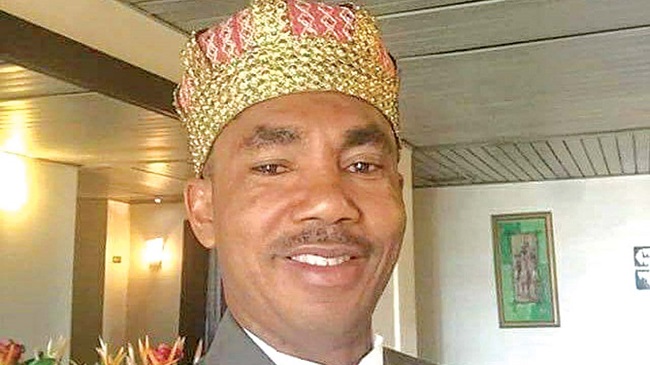
The Paramount Ruler in Khana Local Government Area in Rivers State, King Baridam Suanu, has urged the Federal Government to make visible progress in implementing the Ogoni clean-up project.
King Baridam Suanu
Suanu made the call in an interview with the News Agency of Nigeria (NAN) on Thursday, December 13, 2018 in Port Harcourt, the state capital.
The paramount ruler, however, commended the present administration for having the political will to launch the Ogoni clean-up recently.
According to him, this has unveiled continued government commitment to the project since the launch.
He, therefore, urged the Federal Government to do the needful by contracting the project as well as monitoring its funding and disbursements to achieve success in the exercise.
He said that, so far, the amount of money released to the Hydrocarbon Pollution Remediation Project (HYPREP) board and the ingenuity of companies shortlisted for the exercise showed some insincerity in its implementation.
“I heard that monies have been released to the HYPREP board, we were also told that 20 companies have already been shortlisted for the clean-up and as I speak these companies are yet to be seen on site.
“Though, I have my reservation about some of the companies shortlisted because I don’t think most of them even applied officially for the contract.
“Basically, I think there is a form of political situation going on at the seat of power.
“People just award contracts, my fear is that most of these companies that have been awarded the clean-up contracts may end up subletting them and that is not going to be very good for the exercise.
“For me, I think that the Federal Government is not yet keen at addressing Ogoni clean-up, whenever they are ready to achieve success in that regard, we will know,’’ he said.
Suanu said that, apart from an indigenous company known as Geo-Services Company among the shortlisted contractors, others had remained secretive in their operations.
“For now, I’ve not actually seen any of the companies being mobilised on site, but I know from the report available to me, there may be one indigenous company, Geo-Services among them.
“Others are unpopular companies that my instinct tells me may not have the technical knowhow to deliver on the clean-up project.
“Apart from a company like Geo-Services whose directorate and operations are known in this region others are new to me,” he said.
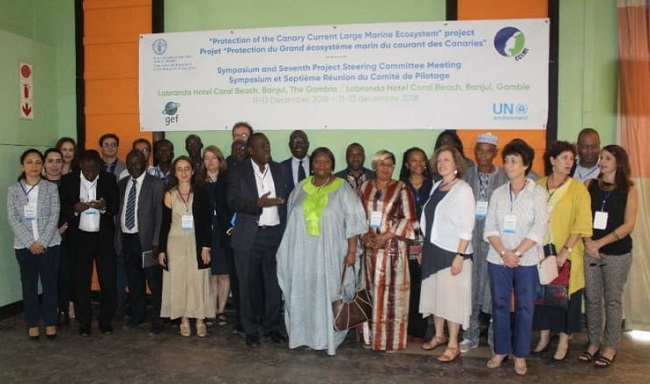
Resident Representative of the Food and Agriculture Organisation (FAO) in the Gambia, Madam Perpetua Katepa-Kalala, has revealed that the objective of the Canary Current Large Marine Ecosystem (CCLME) project is designed to help countries to bring together knowledge and capacity-building in order to establish adequate mechanisms of good governance.
Participants at the Seventh Steering Committee Meeting of the project on the Protection of the Canary Current Large Marine Ecosystem, in Banjul, The Gambia
This, according to her, is aimed towards managing and reversing the trend of degradation of this ecosystem caused by overfishing, habitat change and changes in the quality of the water, by adopting a management based on the ecosystem approach.
She spoke at the official opening ceremony of the Seventh Steering Committee Meeting of the project on the “Protection of the Canary Current Large Marine Ecosystem” (CCLME) held in Banjul.
“The current phase of the CCLME project was initiated in 2010 and is jointly funded by the Global Environment Fund (GEF), countries of the region and partners. It is being implemented by FAO and the United Nations Environment Programme (UNEP) with two components: Fisheries and Environment. This project will benefit seven countries namely Cape Verde, The Gambia, Guinea, Guinea Bissau, Mauritania, Morocco and Senegal,” she pointed out.
Katepa-Kalala disclosed that it was at the CCLME first project steering committee meeting held in Dakar, Senegal in 2010 that agreement was made on the establishment of eight technical working groups to assist the process of development of a Transboundary Diagnosis Analysis (TDA) and the elaboration of a Strategic Action Plan (SAP) for the CCLME. These tasks, she noted, were achieved with success while the Strategic Action Plan (SAP) was signed by 12 Ministers of Environment and Fisheries of the seven countries.
Madam Katepa-Kalala further disclosed that CCLME demonstration projects have also made significant progress to respond to the issues addressed in their frameworks, while diverse actions could be replicated in the frame of the implementation of the Strategic Action Plan.
“This Seventh Steering Committee meeting will allow you to review the achievements of the project and examine the status of the main products of the project, while it also serves as an opportunity to analyse plans for the coming year,” according to her.
Speaking on behalf of the Minister of Environment, Climate Change and Natural Resources, Senior adviser to the Minister Dr. Malanding Jaiteh disclosed that the complexity of the ecosystem and the diversity of the interventions that it undergoes explain the relevance of the participatory approach taken by the project. It promotes across national boundaries, the agreement at the regional level that will enable countries to adopt a coordinated approach to deal with cross-border problems in various countries sharing this marine and coastal environment,” he stated.
This collaborative approach is probably the best way to improve the health of this ecosystem, he pointed out, adding that the participation of the Gambia in the project reflects the interest of the country in the management of its marine and coastal environment as the engine of environment development and with the conviction that it is only through sharing of expertise that the country can meet the challenges facing the country in all areas, including that of fishing.
Dr. Bamba Banja, Permanent Secretary of the Ministry of Fisheries, Water resources and National Assembly Matters, noted that the CCLME is one of the main global systems of transboundary currents with upwelling, and it also ranks third in the world in terms of primary productivity, after the large marine ecosystems (LMEs) of Humboldt and Benguela, and it provides the highest fish production of any African LME with an annual production between two and three million tons.
Dr. Banja revealed that it also provides ecosystem goods and services including habitats for fishes and other coastal species, freshwater coastal and estuarine rivers, mangrove forests, maritime and coastal areas for agriculture, aquaculture, urban tourism and transportation. The CCLME is a vital food and economic resource, not only for the coastal populations bordering the Large Marine Ecosystem, but also for much of West Africa, and beyond, he concluded.