Home Blog Page 1715

Agony of plantation workers in war-torn Anglophone Cameroon

0

Cameroon’s plantations workers have become targets as the country wages a war on armed separatists in the English-speaking regions of Northwest and Southwest. Investigative journalist, Arison Tamfu, reports
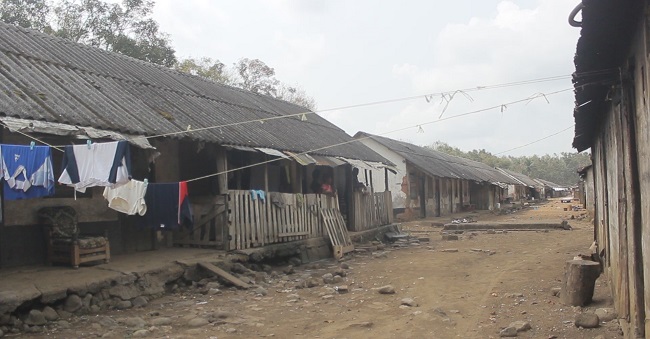
Deserted plantation camp

It was a luminous afternoon in January, outside a thatched hut. Mako Mokosso, 42, sat cross-legged on a bamboo-made chair explaining how his four fingers were chopped off on the banana plantation in Tiko, a town in Southwest Region of Cameroon.

“They took us to the banana plantation and started cutting off the fingers of three women beside me. The women wailed but no one could hear because we were taken far away from human settlement,” Mokosso said and took a deep breath.

“When it was my turn, they ordered me to put my fingers on a stone. I did. The first guy cut off two of my fingers, but it was not enough. The second guy cut the other two fingers. I was left with only my thumb. The man beside me was shot in this side of the body and his two fingers were chopped off,” he recalled.

“I can still feel the pains right in my heart,” said Mokosso, sobbing.

The tragedy happened in November 2018.

The assailants proceeded to the plantation camp where Princewell Tendong, 36, and other workers lived.

“They surrendered us with a gun and pulled my wife and I and other workers out of our rooms and brought us to the centre of the plantation camp and started flogging us with machetes. They cut off my thumb on the right hand. The fingers and hands of six other workers were cut off that day,” said Tendong, losing balance and falling on his hospital bed where he is receiving treatment.

The painful experiences of Mokosso and Tendong have become routine in the Southwest, one of Cameroon’s two English-speaking regions where separatists are fighting to create an independent nation.
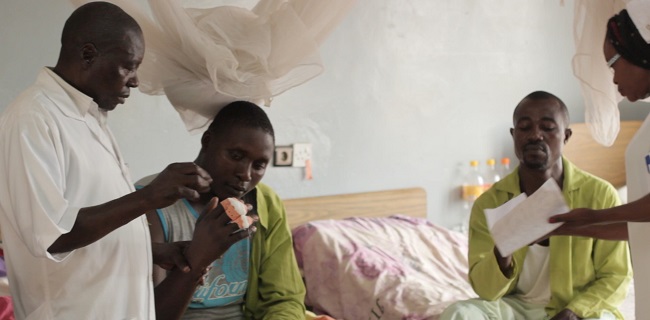
Some victims in the hopsital
Some victims in the hospital

Working on the plantation is risky. Officials say gunmen regularly hide on its lands and target its workers. Soldiers are stationed nearby, but the plantation is large. By the time they’re able to respond, employees have been attacked. For the people daring enough to work on the plantations, it’s often a life of physical and mental torture.

According to hospital authorities where the victims are treated, the atrocities have been increasing in frequency and magnitude.

“We received in the hospital about 86 patients but definitely the number of those injured will be more than this because those who come to the hospital are those that are very serious that we eventually have to admit. These injuries have ranged from people having amputations up to four digits on one hand. Amputation of thumbs especially on the right hands. Multiple lacerations on their bodies from hairs to trunk and the lower limbs,” said Dr. Samuel Fon Tita, Chief Medical Officer of CDC Hospital.

Separatists have said on social media they want to cripple the activities of the plantations and cut off its revenue and have asked workers to stop work or be killed.

Tendong said their crime was that they have been working on the plantation in defiance of the no-work-on-the-plantation order issued by the separatists.

“They were angry with us for going to work without salary for six months. They said we are working and making money for the company and government is using the money to buy cartridges that they use to kill them. They said the plantations now belongs to the Anglophone Cameroonians because they are on their land,” said Tendong.
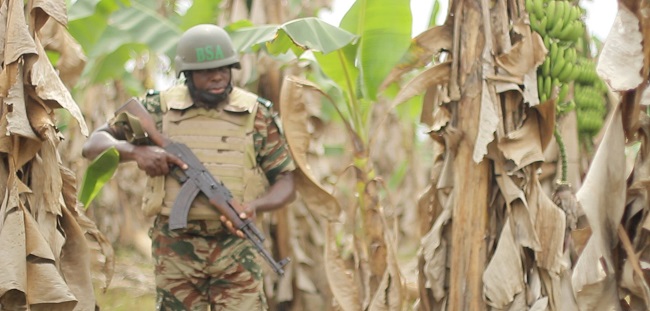
Soldier guarding the plantation

The banana, rubber and palm oil plantations run by the state through the Cameroon Development Corporation (CDC) are now battle grounds between separatists and government forces.

“The plantations have been abandoned because of insecurity reasons for many, many months. At least four soldiers have been killed in battles on the plantations. The situation of the fields is deplorable,” said Frankline Njie, CDC General Manager.

The workers say they now live in fear, worried the attackers will come again. Many have deserted the plantation camps except victims of assault.

Families of victims are barely surviving.

“Life has been difficult from the day my husband’s finger was cut off. I don’t even have transport to visit him in the hospital.  These my children have not eaten since morning,” said Quinta Njuh, wife of Tendong.

“We are suffering. This my child has not gone to school because there are no school fees, no books. The father has no fingers and cannot afford those things. It is tough on us,” said Lilian Manyor, wife of Mokosso.

The plantation is the second largest employer of the country, but more than 10,000 people are no longer working. Cameroon needs at least $51 million to rehabilitate the plantation but it is not the money that is the main concern.

“The biggest constraint is security. Nobody can take the required care without having the assurance that nobody is standing behind him or her with a machete, nobody can do that,” said Njie.

“The task of one taper is one hectare. One hectare is a wide area. That means that, that taper is alone inside about 500 trees. That taper must have some degree of assurance that somebody is not standing beside him or her with a machete or with a gun. That is the problem that we face,” he added.

Minority English-speaking Cameroonians picked up arms in 2017 after government forces killed dozens and arrested several Anglophones who were protesting against marginalisation in the largely French-speaking country. United Nations estimate that close to 500,000 people have been displaced internally by the conflict.

President Paul Biya, who has been in power for 36 years, rejected calls by the United Nations and European Union to resolve the conflict through dialogue with the separatists and warned if they don’t give up their weapons, they’ll be killed.

Many victims of the conflict like Mokosso and Tendong now fear the war and atrocities will only escalate. “As far as I’m concerned, they should hold dialogue. I’m just a labourer.  I don’t know how it started and how it will end. They should solve the problem,” said Tendong.
NCF, ECOWAS, Birdlife collaborate to save sub-region’s environment

0

The Nigerian Conservation Foundation (NCF) in collaboration with the Economic Community of West African States (ECOWAS) and Birdlife International will hold a workshop on saving the environment.

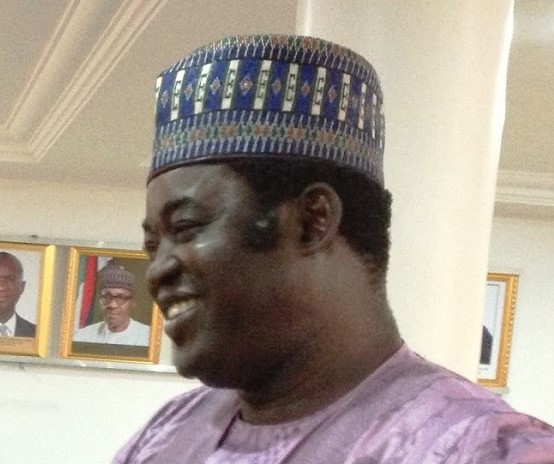
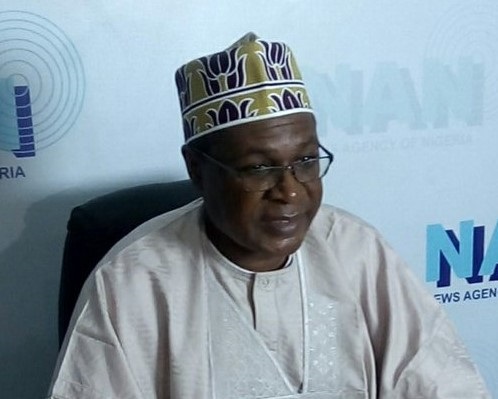
Muhtari Aminu-Kano
Director-General, Nigerian Conservation Foundation (NCF), Dr Muhtari Aminu-Kano

The two-day workshop billed for Abuja from Feb. 6 to Feb. 7, 2019 is for non-governmental organisations (NGOs) from across the West African sub-region.

The theme of the workshop is “Conservation-Collaboration Beyond National Boundaries in the sub-region”.

NCF’s Director-General, Dr Muhtari Aminu-Kano, said in a statement on Friday, February 1 that the West African sub-region was “endowed with rich biodiversity populated by numerous species of flora and fauna”.

He added: “Unfortunately, this unique range of biodiversity is now among the world’s most threatened, due to illegal poaching and harvesting of parts or whole species, habitat degradation, poorly planned infrastructural, agricultural and urban settlement development.

“A valuable mitigating factor to West African disappearing biodiversity is the lack of a platform for cross-border information exchange to develop common strategies and policies for biodiversity conservation.

“This has been identified as a major setback.

“It is expected that this maiden workshop will provide a stronger platform for regional cooperation among civil society organisations (CSOs) and ensure that humans will live ‘in harmony with nature.”

He said that participating NGOs across the sub-region would include:  Naturama – Burkina Faso; SOS Forests – Cote d’Ivoire; Ghana’s Wildlife Society (GWS); Society for the Conservation of Nature in Liberia (SCNL); Conservation Society of Sierra Leone (CSSL) and Nature-Communautés-Développement (NCD), Senegal.

“International and regional organisations that will be attending the workshop are: the World Bank, African Development Bank, UNESCO, USAID, MacArthur Foundation, Heinrich Boll Stiftung and A.P. Leventis Ornithological Research Institute (APLORI),” Aminu-Kano said.

By Grace Alegba

EU agrees fresh rules for energy efficiency, household appliances’ longevity

0

EU Member States and the European Commission have agreed on comprehensive new regulations under the EU Ecodesign Directive, which aims to make new products more energy efficient.

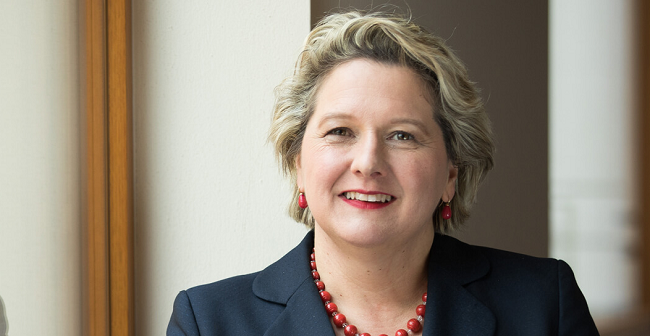
Svenja Schulze
German Environment Minister, Svenja Schulze

For 10 product groups, including dishwashers, washing machines, refrigerators and halogen lamps, stricter energy efficiency requirements will apply in the future. In addition, requirements for reparability and replacement parts are being defined for the first time. The German Federal Ministry for the Environment was particularly committed to this, it was gathered.

Environment Minister, Svenja Schulze, said: “The new rules are concrete measures against the disposable society. They improve the ability to repair and recycle products and encourage manufacturers to make products more durable. In the future, consumers will be better able to distinguish efficient appliances from energy guzzlers. This is not only good for the environment, but for all consumers and also for the German industry, which is a pioneer in this field.”

In household appliances such as dishwashers, washing machines and refrigerators, the requirements for reparability, as in TV sets, stated that spare parts availability must be made obligatory. This is expected to be beneficial to consumers, repairers and recyclers. Manufacturers and importers must largely comply with the new rules in the European market from March 2021 onwards.

In addition, there will be increased demands on the energy efficiency of these product groups in the future. A lot of energy can be saved in the lighting, it was gathered. In Germany, the new requirements will lead to halogen lamps being gradually replaced by much more efficient LED lamps. Further savings are expected from new regulations for motors, transformers, welding equipment, external power supplies and refrigerators in supermarkets. These partially come into force before 2021.

Reviving dying land is doable by 2030, says UN review

0

Reviving damaged lands and the livelihoods of people affected by desertification, land degradation and drought can be possible by 2030, according to participants who attended the intergovernmental committee that reviews the implementation of the United Nations Convention to Combat Desertification (UNCCD).

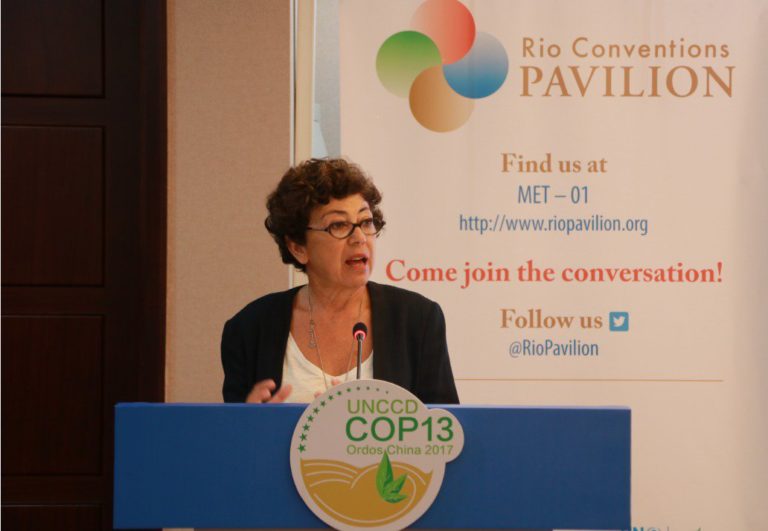
UNCCD COP13 - Monique Barbut
Monique Barbut, Executive Secretary, UNCCD. Her term as head of the Convention ends February 2019

Participants at the 17th Committee to Review the Implementation of the Convention (CRIC17), which ended on Thursday, January 31, 2019 in Georgetown, Guyana, stated that the speed at which countries are implementing the Sustainable Development Goal target of land degradation neutrality puts it within reach, and stated two other reasons. The process of setting the target at the country level has drawn in other land-related sectors at the country-level and triggering positive change. In addition, countries are spending more money on activities to contain land degradation and desertification and to manage drought effectively.

In the four years since countries reached the agreement to achieve land degradation neutrality (LDN) by 2030, 120 of the 169 countries affected by desertification, land degradation or drought have started identifying where to reduce the risk of degradation and where to recover degrading land. The process of setting the 2030 country targets for LDN has broadened action to other land-related sectors.

As a result, the Committee was able to review the first-of-its-kind global assessment of land degradation by governments, which is based on quantitative earth observation data collected and analyzed in at least 127 countries. The assessment’s uniqueness lies in that countries are working to measure and monitor three essential indicators of land degradation in the same way over the same period, so that the status of LDN can be determined for the globe.

Based on the assessment, the Committee laid out a range of actions that address issues such as land rights, drought and gender equality, for governments to consider and agree on when they meet in October of this year in New Delhi, India, during the 14th Session of the Conference of the Parties (COP14).

“We have seen a sea-change and huge progress” since the Convention was negotiated in 1994, said Monique Barbut, the UNCCD Executive Secretary, during the closing of the meeting.

“With a tiny budget we’re getting things done. We have the LDN fund up and running. We have LDN projects taking shape in more than hundred countries.  A project preparation facility with the other Rio conventions is in the pipeline. Drought plans are being developed in nearly 50 countries. Land degradation and drought are recognised in the Global Compact on migration as key areas of concern,” Barbut said.

Countries said “LDN is a visionary target” and expressed their satisfaction with this first collaborative analysis and assessment of land degradation. Many countries praised the achievements in data gathering and stressed the added value of the provided tools, which facilitated the use of national data to derive the indicators of land degradation using internationally standardised methodologies. However, many also called for the improvement of the tools, training in their application and support to generate more detailed national data.

Barbut, whose term as head of the Convention ends in February, admitted she “was very suspicious and very tough about UNCCD and what it could achieve” in the very early days when she was part of the team that negotiated the three Rio Conventions on climate change, biodiversity and desertification.

“But the potential of this convention has only just started to be realised,” she said, and urged countries to use their creativity and imagination to help amplify UNCCD and help it reach its full potential and stressed that “it is not an impossible ambition.”

The Committee thanked the outgoing Executive Secretary for her contribution to raising the visibility of the Convention at a global level.

Japan battles influenza epidemic, Cold snap hits Britain

0

Japan’s Ministry of Health, Labour and Welfare said on Friday, February 1, 2019 that the nation is contending with a flu epidemic with a record-high number of patients being diagnosed.

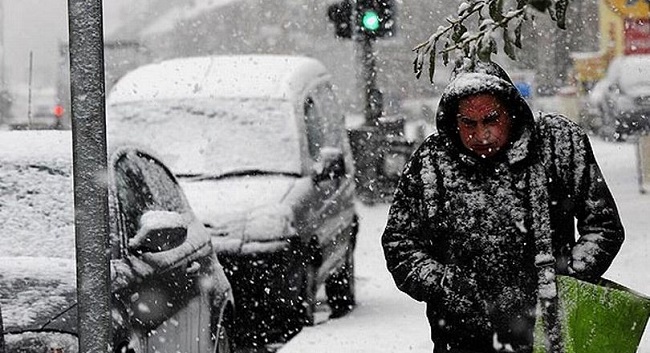
UK snow
Heavy snowfalls in Britain as blizzards make walking and driving treacherous. Photo credit: Mirror

According to the ministry, an average of 57.09 patients were diagnosed with influenza at each medical facility conducting tests for the virus, with the figures gathered for the seven days through Sunday being the highest number since data gathering on the virus began in 1999.

The figure compares with a per-institution peak logged last winter of 54.33, the ministry said, adding that around 2.23 million people have been diagnosed with influenza in the recording period, an increase of around 100,000 cases from Jan. 25.

The ministry said that 3,205 patients have been hospitalised due to influenza of which 628 are in a severe condition, with the numbers comparing to peaks last winter of 2,050 patients being hospitalised of which 379 cases were severe.

A total of 7.64 million people is estimated to have been affected by the virus across the country.

In a related development, snow and ice disrupted travel by road, rail and air in many parts of Britain on Friday after overnight temperatures plunged to a near-seven-year low of minus 15.4 degrees Celsius in Northern Scotland.

Scotland and south-western England were among the worst-hit areas, while the National Met Office issued a rare amber weather warning the second-highest level for London and nearby areas.

Heavy snow stranded scores of motorists overnight at the famous Jamaica Inn on Bodmin Moor in Cornwall, southwestern England.

“Around 140 people stayed with us last night all 36 rooms, 15 mattresses in the restaurant, five in the residents’ lounge, then we gave out every blanket and pillow we had!’’ the pub tweeted.

“Everyone got on well and there was a strong sense of community,’’ it said, highlighting “strangers playing board games with each other in front of the fire, joking about the situation.’’

Nearby Bristol Airport was closed on Friday, many rail and bus services were disrupted nationwide, but major airports in London were operating normally.

Bristol Airport said it expected disruption of flights to continue into the afternoon as more snow fell.

Paul Gundersen, Chief Meteorologist at the Met Office, said the heavy snow was caused by “moist air from a weather system bringing storms to France clashing with the cold air sitting over the UK’’.

Gundersen said more snow and ice were likely to hit southern and central England into the weekend.

Kenya launches plastic bottle recycling initiative in schools

0

Kenya’s Ministry of Environment and Forestry in partnership with Kenya Association of Manufacturers (KAM) on Friday, February 1, 2019 launched an initiative to engage public schools in safe disposal and recycling of plastic bottles.

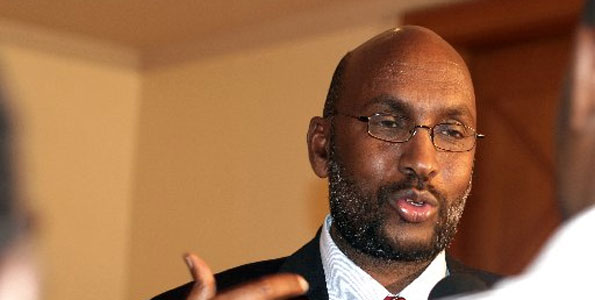
Mohamed Elmi
Mohamed Elmi

Chief Administrative Secretary of the Ministry of Environment and Forestry, Mohamed Elmi, said this at the launching of the programme.

Senior officials said the school-based campaign to promote sustainable management of plastic bottles would create additional green jobs in the country.

“The new project to eradicate pollution linked to haphazard disposal of plastic bottles in our environment by involving school children will boost the overall green agenda in the country,” said Elmi.

He said the government had been exploring innovative measures to boost circular economy by engaging the youth in recycling plastic bottles widely used by the food and beverage industry.

“The ministry has signed a cooperative framework with KAM to enhance collection and safe disposal of plastic bottles,” Elmi said.

He added that the government had created a conducive policy framework to boost disposal, collection and recycling of plastic waste linked with grave threat to the environment and human health.

“It is important to empower our children with the knowledge and tools to enable them become environmental champions.

“Our goal is to ensure the next generation make informed decisions in natural resource use and waste management,” said Elmi.

Muchai Kunyiha, Vice Chairman of KAM, said a strategic engagement with learning institutions was expected to revitalise action on plastic waste.

“We are keen to tackle the plastic pollution menace as a team and are convinced that school children can be effective champions for safe disposal and recycling of non-biodegradable waste,” said Kunyiha.

He noted that Kenya had joined the ranks of African countries that had come up with innovative measures to manage plastic waste.

“By creating a strong ecosystem to support collection and recycling of plastic waste, we expect to stimulate economic growth and unleash new jobs for the youth,” said Muchai.

Surveyor-General to support UNDP-GEF identify renewable energy sites

0

The Office of the Surveyor-General of the Federation (OSGOF) said it will provide technical support to the United Nations Development Programme (UNDP) and the Global Environment Facility (GEF) in developing a Geospatial Information System (GIS)-based tool in Nigeria.

Ebisintei Awudu
Surveyor-General of the Federation, Mr Ebisintei Awudu

The Surveyor-General of the Federation, Mr Ebisintei Awudu, disclosed this in a statement issued by Mrs Grace Okeke, Assistant Director, Press, OSGOF, on Friday, February 1, 2029 in Abuja.

According to the statement, Awudu was represented by Mr Samuel Taiwo, the Director, International Boundary, at a meeting with the consultants from UNDP.

He said that the GIS-based tool would provide private developers with geospatial information concerning favorable sites for developing Solar PV, Wind and biomass Energy Projects in Nigeria.

He said that the office was ready to provide all the necessary information needed for the project.

According to him, the mapping department will provide data on the total information per state, administrative units, land use maps, territorial planning instruments, such as urban areas, industrial, military and tourist areas among others.

Awudu stated that his office would sign a Memorandum of Understanding (MoU) with the UNDP-GEF office on the project noting that the data from the mapping department could assist experts when needed.

“This MoU will provide a comprehensive framework on the commitment and involvement of this office in the project, and equally assist UNDP-GEF by providing available information needed for the project,” he said.

The UNDP consultant, Mr Carlos Gueitao, said the essence of the meeting was to seek OSGOF’s support in identifying geospatial information on favourable sites for developing solar projects in Nigeria.

He called on the office to provide necessary information on military sites, tourist areas, industrial and desert areas, to enable the agency to have a smooth discharge of its projects in Nigeria.

By Uche Bibilari

Ibrahim Thiaw emerges new head of UNCCD

0

United Nations Secretary-General, António Guterres, following consultations with the Bureau of the Conference of the Parties to the United Nations Convention to Combat Desertification (UNCCD), on Thursday, January 31, 2019 announced the appointment of Ibrahim Thiaw of Mauritania as the next Executive Secretary of the UNCCD.

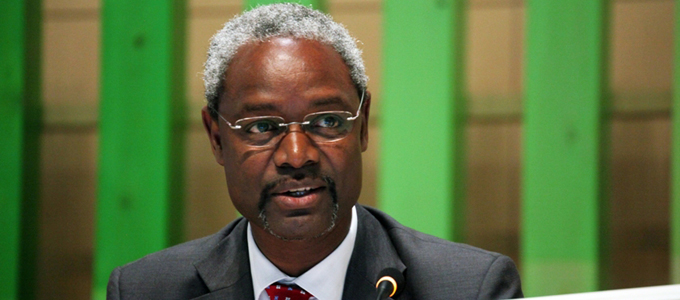
Ibrahim Thiaw
Ibrahim Thiaw

He will succeed Monique Barbut of France, to whom the Secretary-General is grateful for her outstanding commitment and dedicated service to the organisation.

Mr. Thiaw brings to the position almost 40 years of experience in sustainable development, environmental governance and natural resource management. He is currently Special Adviser to the Secretary-General for the Sahel. From 2013 to 2018, he was Deputy Executive Director of the United Nations Environment Programme (UNEP), where he played a key role in shaping the organisation’s strategic vision, mid-term strategy and programme of work, and strengthened collaborations with Governments and other environmental governing bodies, including the United Nations Environmental Assembly.

Joining the United Nations in 2007, Mr. Thiaw was the Director of UNEP’s Division for Environmental Policy Implementation. Before joining the organisation, he was the Regional Director for West Africa, and later Acting Director General, of the International Union for Conservation of Nature (IUCN).

Mr. Thiaw started his career in Mauritania, his home country, where he served in the Ministry of Rural Development for 10 years.  He holds an advanced degree in forestry and forest product techniques.

In a reaction, Thiaw said: “I am truly honoured to be appointed by the UN Secretary-General as Executive Secretary of the UN Convention to Combat Desertification. Looking forward to working closely with all Parties, staff and partners to the Convention to protect people and ecosystems.”

Kenya to partner private landowners on affordable housing

0

Kenya will partner private landowners to implement a development blueprint on affordable housing, Charles Mwaura, Principal Secretary of the State Department for Housing and Urban Development, said on Friday, February 1, 2019.

Charles Mwaura
Charles Mwaura

Mwaura said that individuals, who own huge tracts of land, have been invited to become partners in the implementation of the mass housing programme.

“We are interested in getting private landowners into the affordable housing programme provided they will comply with the stipulated guidelines,” Mwaura said.

Mwaura added that a legislative framework had been in place to facilitate private investments in low-cost shelter.

Kenya aims to develop 500,000 housing units annually as part of the Big Four Agenda outlined by President Uhuru Kenyatta to transform the country.

Government statistics indicated that Kenya has an annual housing deficit of 200,000 units thanks to bottlenecks linked to high cost of land, archaic regulations and volatility in the real estate sector.

Mwaura said that availability of land is key to bridging housing deficit in the rapidly growing urban centres.

“Private landowners will help us develop projects that would be added to the affordable housing programme pipeline. The government will facilitate strategic partners to deliver low-cost shelter to citizens,” Mwaura said.

The state will invest in supportive infrastructure such as access roads, clean water, sewerage and power to pave way for construction of affordable shelter in major cities and towns, he said

Private landowners will be lumped together with financiers and contractors, who have already been roped in to help implement the affordable housing programme, the official said.

“Currently, we are receiving applications from partners with technical and financial capabilities to develop housing units for the low-to middle-income groups,” Mwaura said.

The affordable housing programme is expected to promote social equity, stimulate economic growth and create an estimated 350,000 direct and indirect jobs by 2022, he said.

Germany, Sierra Leone plan to treat plastic wastes in ships

0

Institute of Marine Biology and Oceanography, Fourah Bay College, University of Sierra Leone are in partnership with Technolog Services Gmbh, Nehlsen Saubere Leistung and Bremen University of Applied Sciences (all in Germany) in the areas of plastic waste recycling.

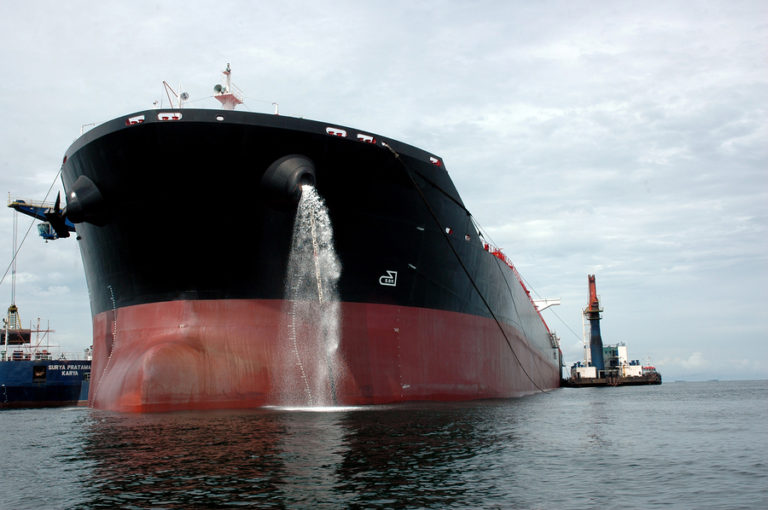
Ship
The plastic waste treatment facility is inbuilt in a vessel that will treat wastes in Sierra Leone and other nations on the West African coast

Dr. Mbaimba Lamina Baryoh, the Sierra Leone Ambassador to Germany, was invited as special guest and took the opportunity to explain the wastes disposal difficulty facing the capital Freetown and agreed with the plans presented by the trio in resolving the problem.

IMBO had earlier in 2009 partnered with Bremen University in the development of a curriculum for training at postgraduate level up to a master’s degree in solid wastes and Resources Management through the CODWAP project, which was funded by the European Union.

Current partnership project is concentrating on the development of technologies for a vessel-based treatment of plastic wastes in Sierra Leone and other West African countries. The project concept was developed based on the realisation that although many plastics are produced as wastes in Sierra Leone and other West African countries, none of the countries are producing enough quantities of plastics to ensure 24/7 and 365 days a year operation of a land-based plastic wastes treatment facility.

The idea was then borne that a vessel-based technology can be developed, such that the vessel can visit Sierra Leone, buy and process all the plastic wastes available, and the vessel can then move to the next country until all the waste plastics in the countries of the west coast have all been bought and processed.

Two delegates from the University of Sierra Leone, Dr. Salieu Kabba Sankoh (IMBO, FBC, USL) and his Research Assistant Mohamed John Gbla, recently participated in a workshop in Hamburg, Germany whereby the result of their research was presented to the Education Ministry of the Federal Republic of Germany, which is funding the project, and private sector stakeholders who would potentially invest on the technology.

The workshop ended with the assurance that a German team would visit Sierra Leone again together with the Ambassador of Sierra Leone to Germany sometime in 2019 to further investigate the potentials of processing plastics with the ship-based technology and to get the political buy-in of the government of Sierra Leone.