

Oil from the International Energy Agency (IEA) emergency reserves will soon start flowing to global markets following the announcement on March 11, 2026, that IEA Member countries will make 400 million barrels of oil available to the market in response to the disruptions resulting from the Middle East conflict.
Individual implementation plans have been submitted to the IEA by Member countries. These plans indicate that stocks will be made available by IEA Member countries in Asia Oceania immediately while stocks from IEA Member countries in the Americas and Europe will be made available starting from the end of March.
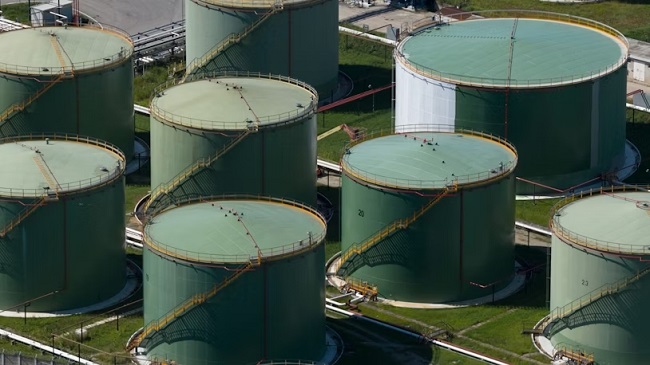
This is the sixth time that IEA Member Countries have taken emergency collective action to support oil markets in the history of the IEA, which was created in 1974. Previous collective actions were taken in 1991, 2005, 2011, and twice in 2022.
The war in the Middle East is creating the largest supply disruption in the history of the global oil market. This emergency collective action, by far the largest ever, provides a significant and welcome buffer.
But the most important factor in ensuring a return to stable flows is the resumption of regular transit of shipping through the Strait of Hormuz. Adequate insurance mechanisms and physical protection for shipping are key to the resumption of flows.
According to the IEA Oil Market Report (OMR), with crude and oil product flows through the Strait of Hormuz plunging from around 20 mb/d before the war to a trickle currently, limited capacity available to bypass the crucial waterway, and storage filling up, Gulf countries have cut total oil production by at least 10 mb/d. In the absence of a rapid resumption of shipping flows, supply losses are set to increase.
It added: “Widespread flight cancellations in the Middle East and large-scale disruptions to LPG supplies are expected to curb global oil demand by around 1 mb/d during March and April compared to previous estimates. Higher oil prices and a more precarious outlook for the global economy pose further risks to the forecast. Global oil consumption is now set to increase by 640 kb/d y-o-y in 2026 – down 210 kb/d from last month.
“Oil prices have gyrated wildly since the United States and Israel launched joint air strikes on Iran on February 28. Disruptions to Middle Eastern supplies due to attacks on the region’s oil infrastructure and the cessation of tanker traffic through the Strait of Hormuz sent Brent futures soaring, trading within a whisker of $120/bbl. Prices subsequently eased with Brent around $92/bbl at the time of writing – up $20/bbl for the month.”
Reacting to the current global crisis, Director of Power Shift Africa, Mohamed Adow, said: “The current oil turmoil is a brutal reminder that dependence on fossil fuels leaves countries exposed to crises they cannot control. Nations that invest in renewable energy are far more resilient because the sun and wind cannot be blockaded, stockpiled or weaponised. The lesson for governments everywhere is clear, accelerating the transition to clean energy is not just about climate – it’s about energy security and economic stability.
“The disruption to oil markets shows exactly why Africa must not be locked into fossil fuel dependence. Europe got itself hooked on fossil fuels in the last century and is now going through the process of weaning itself off reliance on oil and gas.
“Africa doesn’t need to fall into the same trap and can use this moment to take a better path, one where we avoid locking in dirty energy infrastructure. It is renewable energy that offers a route to real energy sovereignty.”