Home Blog Page 2200

Indigenous people win centuries-old land battle in Colombia

0

The Colombian Constitutional Court has ruled in favour of an indigenous peoples’ centuries-old fight for their territory, granting the petition for the protection of constitutional rights requested by the Embera Chamí people of the Indigenous Resguardo Cañamomo Lomaprieta, in western Colombia.
Resguardo-Cañamomo-Lomaprieta
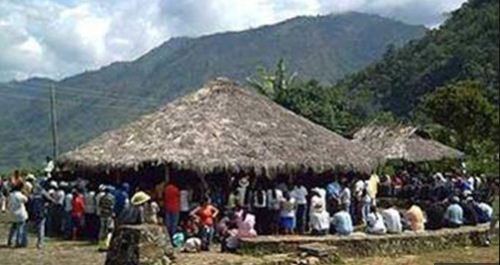
People of the Indigenous Resguardo Cañamomo Lomaprieta, in western Colombia

The Resguardo’s claim was accepted by the Colombian Constitutional Court, the final court of appeal for constitutional matters in Colombia. The court ordered that the Resguardo’s lands must be delimited and titled within one year, during which time all further permits or formalisation of mining activities must be suspended. Any subsequent mining activities proposed on the delimited territories may only proceed on the basis of the effective participation of the Resguardo.

The court also ordered that the map produced by the Resguardo of their land be registered provisionally until it is officially demarcated. This ruling is also relevant for other indigenous and Afro-Colombian communities whose lands are awaiting delimitation.

In what appears to be a legal first internationally, the court also gave explicit protection to ancestral mining activities carried out by some of the 32 communities within the Resguardo, stating that, although not currently recognised under State laws, this mining conformed to Resguardo laws and could therefore not be considered illegal. Importantly, the court also recognised that the State had an obligation “not to criminalise this type of ancestral activity”.

Responding to the court judgment, Héctor Jaime Vinasco, ex-Governor of the Resguardo, and the principal coordinator of mining issues for the Cabildo, said: “This is an historic judgment for the indigenous Resguardo of Cañamomo Lomaprieta. For centuries, the different leaders of the Resguardo have been defending our collective land rights and seeking to resolve the problem of land titling with the authorities; this judgment orders that the delimitation and titling of the Resguardo is resolved without further delay.

“This judgment is a great opportunity to resolve issues caused by the lack of land titling, including exercising authority over our lands, applying our laws, thinking about economic development, and opposing projects that affect our survival as indigenous people. It supports the rightful claims of the Resguardo and suspends the existing deals that are going on behind the communities’ backs through mining titles, concessions, processes of legislation and licences and makes clear that no mining activity can be carried out in the territory without our consent.”

These requests are in keeping with international human rights instruments that recognise indigenous autonomy and self-government over ancestral territories, and the resources integral to these.

“This is a landmark decision for indigenous peoples in Colombia and globally,” said Viviane Weitzner of Forest Peoples Programme. “It recognises the legitimacy of indigenous self-regulation of subsoil resources within their territories, lifting the label of criminalisation of a spiritually, culturally and economically important activity that has been conducted without the use of harmful substances for centuries. The court is calling on the State to do more to protect indigenous territorial rights, by applying international standards around demarcation and titling and ensuring future decision-making includes the Cabildo’s free, prior and informed consent (FPIC). We remain concerned however that this decision may increase the risks to Resguardo leaders, some of whom have already suffered a number of recent credible death threats. It is important that the Colombian government ensure that members of the Resguardo are protected in light of this decision, and we urge the State to do everything in its power to ensure the safety of land and human rights defenders involved in this case.”

This historic court win is a critically important first step. But now rigorous implementation of the Court orders must take place for it to achieve its potential in upholding indigenous rights. Héctor Jaime Vinasco added: “We call on our allies and supporters to join the next moment of our journey, the implementation of the Court’s orders, which we know will be the hardest part.”

Figures from 2015 showed:

  • Some 29.8% of the national territory of Colombia is occupied by 768 indigenous reserves, with 30,590,599 titled hectares and 1,192,628 hectares still required.
  • Some 343,303 hectares issued in mining concessions overlap with Resguardo lands.

In 2015, the Resguardo submitted a “tutela” (writ of constitutional protection) to the Administrative Court of Caldas claiming, among other things, violation of the Resguardo members’ fundamental collective rights to their territories and natural resources, to self-determination and self-governance within their territories, as well as to effective participation (including free, prior and informed consent) in relation to activities proposed within their territories. This writ was rejected at first instance and on appeal, but the Constitutional Court has overturned these decisions.

For decades the Resguardo, which was established in colonial times, has been seeking official delimitation of its territories through various administrative authorities in Colombia. In the absence of such delimitation, which was never completed, the National Mining Agency continued to grant permits and licences for gold mining without consulting with or seeking the consent of the Cabildo, the traditional authorities of the Resguardo, on the basis that the Resguardo’s territories were not registered in the official land titles register.

Gold mining is an ancestral activity of the Embera Chamí people, who have self-regulated this activity even prior to the formation of the Colombian State. The State’s permits both undermine the Resguardo regulations related to mining in their lands, and threaten the livelihoods of those who continue to carry out ancestral mining activities.

The Resguardo Cañamomo Lomaprieta comprises 32 communities (including one Afro-descendant community, some members of which are seeking separate status) and 24,068 inhabitants, according to a 2014 census. The lands currently claimed by the Resguardo total 4,836 hectares. The current territory claimed is significantly less than the original lands granted to the Resguardo in colonial times (which is in turn significantly less than the traditional territories of the Embera Chamí people).

The Embera Chamí people are an indigenous people from Western Colombia, whose traditional lands extended through the current departments of Antioquia, Caldas, Chocó, Risaralda and Valle de Cauca. Different groups within the Embera Chamí people continue to live across these departments (that is, the people is not solely located within the Resguardo Cañamomo Lomaprieta).
World Desertification Day: Campaign to invest in degraded lands underway

0

“Our land. Our home. Our Future,” is the rallying call for this year’s celebration of the World Day to Combat Desertification on 17 June 2017. The slogan draws global attention to the central role productive land can play in turning the growing tide of migrants abandoning unproductive land into communities and nations that are stable, secure and sustainable, into the future.

Monique Barbut
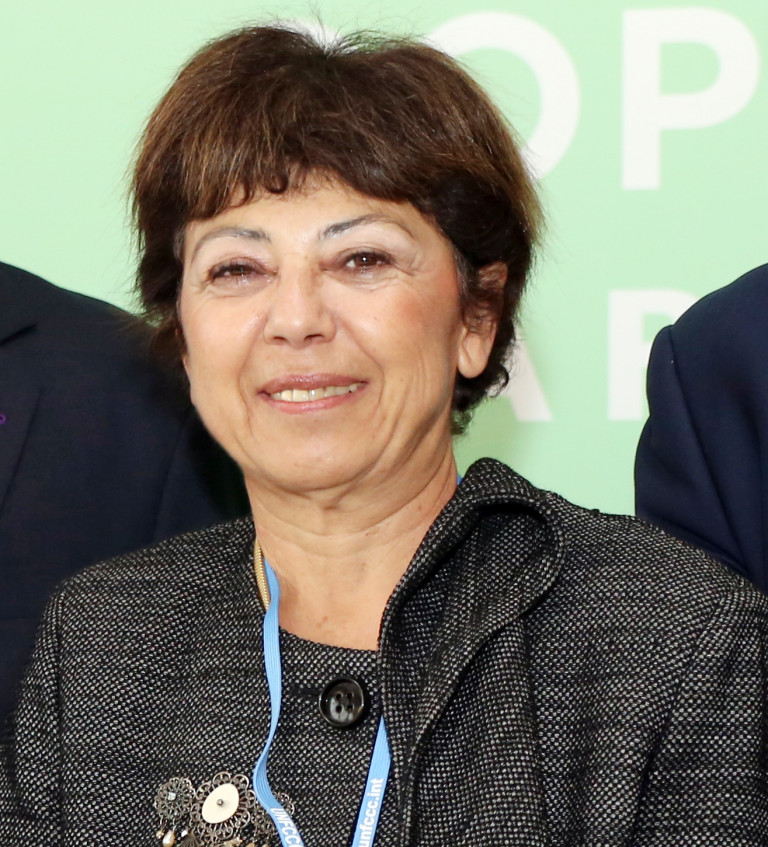
Monique Barbut, Executive Secretary of the United Nations Convention to Combat Desertification (UNCCD). Photo credit: www.iisd.ca

The United Nations Convention to Combat Desertification (UNCCD) has also released the campaign logo for use by any group, organisation, government or entity that will organise a celebratory event for the Day.

“Migration is high on the political agenda all over the world as some rural communities feel left behind and others flee their lands. The problem signals a growing sense of hopelessness due to the lack of choice or loss of livelihoods. And yet productive land is a timeless tool for creating wealth. This year, let us engage in a campaign to re-invest in rural lands and unleash their massive job-creating potential, from Burkina Faso, Chile and China, to Italy, Mexico, Ukraine and St. Lucia,” says Ms. Monique Barbut, the United Nations top advisor on combatting desertification and drought.

“The possibility for success today is greater than ever before. More than 100 of the 169 countries affected by desertification or drought are setting national targets to curb run-away land degradation by the year 2030. Investing in the land will create local jobs and give households and communities a fighting chance to live, which will, in turn, strengthen national security and our future prospects for sustainability,” Ms. Barbut added.

Ms. Barbut also announced that Burkina Faso, in West Africa, will host the global observance of the World Day to showcase the political commitment and proactive steps the region is taking to tackle the migration and land degradation challenges.

“Since the early 1980s, we have been rehabilitating degraded land by building on our traditional techniques such as the Zaï or adopting new techniques that work, such as farmer managed natural regeneration. We intend to be land degradation neutral by 2030. We are hosting the global observance on 17 June because we want to show the world, what we have achieved and is possible in order to inspire everyone into action,” said Mr. Batio Bassiere, Minister of Environment, Green Economy and Climate Change of Burkina Faso.

Burkina Faso hosted the 2005 Heads of State Summit for the Sahel-Saharan countries where 11 countries reached an agreement to restored degraded land on an 8000 kilometre stretch of land cutting across the Sahel. The initiative is now popularly known as the Great Green Wall for the Sahara and Sahel.

The United Nations designated 17 June as the World Day to Combat Desertification to raise public awareness about the challenges of desertification, land degradation and drought and to promote the implementation of the United Nations Convention to Combat Desertification in those countries experiencing serious drought and/or desertification, particularly in Africa.

Dublin meeting prepares ground for new IPCC report

0

The Intergovernmental Panel on Climate Change (IPCC) has put in motion modalities for the actualisation of a Special Report on climate change, desertification, land degradation, sustainable land management, food security, and greenhouse gas fluxes in terrestrial ecosystems. Towards this, a scoping meeting will hold in Dublin, Republic of Ireland, on 13-16 February 2017. The meeting will bring together around 100 experts from about 50 countries.

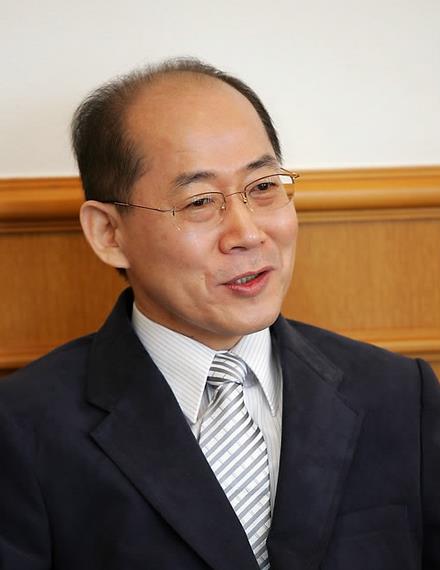
Hoesung Lee
Hoesung Lee, IPCC chair. Photo credit: reneweconomy.com.au

A media briefing scheduled for the morning of Monday 13 February precedes the opening ceremony session of the meeting at which Laura Burke, Director-General of the Environmental Protection Agency, and Hoesung Lee, Chair of the IPCC, will present a welcome address. Bill Callanan, Chief Inspector of the Department of Communications, Climate Action & Environment, will also speak at the opening session. This Plenary Session is also open to the media as observers, according to the IPCC.

Representatives from the IPCC taking part in the Media Briefing will include IPCC Vice-Chair Youba Sokona, who is the Chair of the Scientific Steering Committee of the Scoping Meeting and Andy Reisinger, Vice-Chair of IPCC Working Group III and Vice-Chair of the Scientific Steering Committee, and other members of the IPCC Bureau.

Sokona, Reisinger are expected to provide information about the IPCC, the Special Report and the purpose and expected outcomes of the scoping meeting.

“The way we manage land is one of the critical influences on the climate system. We need a holistic view so that responses to climate change can enhance other goals such as eradicating poverty and enhancing food security,” said IPCC Chair, Lee. “Adaptation and the mitigation of climate change go hand-in-hand when we manage land sustainably, for example by restoring degraded land or improving agricultural practices. This report provides a unique opportunity to help policymakers develop integrated responses to these challenges.”

The IPCC decided to produce the Special Report in April 2016. It is due to be completed in

September 2019. The meeting in Dublin will draft the outline and indicative coverage of the contents of the report, for consideration by the IPCC when it next meets in March.

The IPCC is the UN body for assessing the science related to climate change. It was established by the United Nations Environment Programme (UNEP) and the World Meteorological Organisation (WMO) in 1988 to provide policymakers with regular scientific assessments concerning climate change, its implications and potential future risks, as well as to put forward adaptation and mitigation strategies. It has 195 member states.

New agency, trust fund emerge as Lagos harmonises environmental laws

1

The establishment of a new agency and a trust fund appears to be the fulcrum of what looks like a new, rubost environmental legislation being promoted by the Lagos State Government.

Lagos-State-House-of-Assembly
The Lagos State House of Assembly in session

Hitherto, the state operated separate regulations on areas such as water, sanitation, waste water, medical waste, among others, but the new “Environmental Law of Lagos State”, if it eventually sees the light of the day, will provide an umbrella that encapsulates all existing rules, edicts and guidelines.

Lawmakers are on Thursday, February 9, 2017 convening a Public Hearing on the environment bill at the State House of Assembly in Alausa, Ikeja.

However, the proposed law, which aims “to provide for the Management, Protection and Sustainable Development of the Environment in Lagos State”, has established the Public Utilities Monitoring and Assurance Unit (PUMAU), making it the nineth agency under the supervision of the Ministry of the Environment.

Others include the Lagos State Environmental Protection Agency (LASEPA), Lagos Water Corporation (LWC), Lagos Waste Management Authority (LAWMA), Lagos State Signage and Advertisement Agency (LASAA), Lagos State Parks and Garden Agency (LASPARK), Lagos State Wastewater Management Office (LSWMO), Lagos State Environmental Sanitation Enforcement Agency (LSESEA) and Lagos State Water Regulatory Commission (LSWRC).

Besides coordinating the modalities of billing, revenue assurance, and enforcement of tariff, PUMAU, when operational, will take charge of the issuance of bills, collection of tariffs and disbursement of the funds to private operators.

The Unit will also consistently monitor and evaluate the billing and collection of tariffs in order to promote accountability and transparency.

While ensure that the method of billing and collection of tariffs are in line with international best practices, PUMAU is likewise expexted to provide support and training to personnel including private operators in the billing and collection of tariffs.

The Harmonised Environmental Law also establishes the Lagos State Environmental Trust Fund (or Trust Fund), which will be the depository of all monies received under the Law. These monies, it was gathered, will be managed by an independent trustee or a number of independent trustees.

The Law goes ahead to create the Lagos State Environmental Trust Fund Board of Trustees, a body corporate with perpetual succession and a common seal. The Trust Fund Board may sue and be sued in its corporate name; and may acquire, hold, manage and dispose of property for the purpose of discharging its functions under the Law.

The objectives of the Trust Fund are listed to include:

  • To promote the development and improvement of the state’s environmental performance and sustainability;
  • To create a system that can attract funds from persons, organisations and authorities in tackling environmental issues;
  • To provide assistance for action-oriented projects with tangible, measurable results, aimed at protecting, preserving and enhancing the state’s natural environment;
  • To promote community based recycling, waste re-use, and waste prevention projects;
  • To encourage the provision, maintenance, and improvement of public parks or other public amenity;
  • To fund the conservation or promotion of biological diversity through the provision, conservation, restoration or enhancement of a natural habitat or the maintenance or recovery of a species in its natural habitat;
  • To promote the innovative use of amenities to enhance, maintain or introduce real community led social, economic or environmental improvements;
  • To fund and promote the creation of job opportunities for the youth in waste management, and waste recycling;
  • To subsidise the waste collection and disposal cost of indigent households under this law;
  • To ensure that the environmental needs of all hitherto underserved areas of Lagos State are catered for;
  • To re-train local itinerant waste collectors on environmentally sustainable ways of collecting, reusing and recycling waste;
  • To promote research in both the public and the private sectors into environmental problems of any kind;
  • To promote environmental education and, in particular, to encourage the development of educational programmes in both the public and the private sectors that will increase public awareness of environmental issues of any kind;
  • To fund the acquisition of land for national parks and other categories of dedicated and reserved land for the national parks estate;
  • To fund the declaration of areas for marine parks and for related purposes;
  • To promote waste avoidance, resource recovery and waste management (including funding enforcement and regulation and local government programmes);
  • To fund environmental community groups on campaigns relating to waste reduction, management, reuse and recycle; and,
  • To fund the purchase of water entitlements for the purposes of increasing environmental flows for the state’s rivers and restoring or rehabilitating major wetlands.

Paris Agreement: ADB plans 2030 climate strategic framework

0

In response to climate action commitments made under the COP 21 Paris Agreement by member countries, the Asian Development Bank (ADB) is developing a Climate Change Strategic Framework, which will spell out the organisation’s future direction regarding climate change from 2017 to 2030.

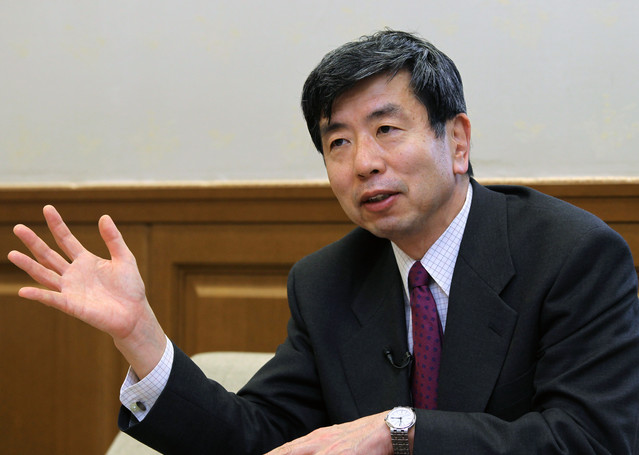
Takehiko-Nakao
ADB President, Takehiko Nakao

Additionally, the strategic framework will feed into its new corporate strategy toward 2030, which is currently under development. It will also outline how ADB will deliver on its $6 billion goal by 2020 and the anticipated growth in DMC demand for ADB support for climate action to 2030.

This is coming even as the ADB approved $3.7 billion in climate finance investments in 2016, according to recently released figures – marking a 42% boost from the $2.6 billion reached in 2015.

Estimates show that, in 2016, climate finance from ADB’s internal sources reached a record $2.65 billion for climate mitigation and $1.08 billion for climate adaptation.

“ADB is responding to the Paris Agreement by boosting its support to climate action in developing member countries in line with their Nationally Determined Contributions and the Sustainable Development Goals,” said ADB President Takehiko Nakao. “ADB remains committed to scaling up its climate financing to $6 billion by 2020, of which $4 billion will target mitigation and $2 billion adaptation.”

It is expected that ADB’s spending on climate change will increase to around 30% of its overall financing by 2020.

In addition to its own financing, ADB mobilised $701 million from external sources, with $595 million invested in mitigation and $106 million in adaptation. Including financing form external sources, ADB delivered over $4.4 billion in climate finance in 2016.

Among the adaptation projects backed by ADB is a $500 million loan to the Bihar New Ganga Bridge Project in India, which will construct a new road bridge across the Ganges River and an integrated road network in the state of Bihar. A bank-to-bank bridge design was recommended over the alternative of building two smaller bridges and a connecting expressway, which was deemed to be more vulnerable to flooding. $200 million of the project cost is considered as addressing climate adaptation.

Among the mitigation projects, a $47 million loan to the Distributed Commercial Solar Power Project in Thailand will help deploy a total of 100 megawatts of solar photovoltaic systems on commercial and industrial infrastructure at no up-front cost to the host companies.

ADB will continue to work with public and private sector partners to mobilise additional financing for climate projects. In December 2016, the Green Climate Fund announced its support to ADB’s proposed Pacific Islands Renewable Energy Investment Programme. This includes a $12 million grant to help the Cook Islands install energy storage systems and support private sector investment in renewable energy, as well as a $5 million grant to assist seven Pacific island countries to transition to renewable energy sources.

ADB, based in Manila, is dedicated to reducing poverty in Asia and the Pacific through inclusive economic growth, environmentally sustainable growth, and regional integration. Established in 1966, ADB is celebrating 50 years of development partnership in the region. It is owned by 67 members – 48 from the region.

Nations urged to devise local strategies for effective natural resource governance

0

African countries implementing the Extractive Industries Transparency Initiative (EITI) have been called upon to devise home-grown strategies to tackle transparency and accountability issues bearing in mind the unique and peculiar nature of the region.

Kayode-Fayemi
Minister of Mines and Steel Development, Dr. Kayode Fayemi, wants home-grown strategies devised to tackle transparency and accountability

Minister of Mines and Steel Development, Dr. Kayode Fayemi, made the call when he received a delegation from the Malawi Extractive Industries Transparency Initiative (MWEITI) that came to understudy Nigeria’s implementation of the EITI.

The Malawian delegation visited the Minister in his capacity as the Chairman of the NEITI National Stakeholders’ Working Group, which is NEITI’s board.

Dr. Fayemi advised African countries to bring their traditional notions of accountability and values to interrogate existing institutional mechanisms and frameworks while entrenching the values that will stand the test of time and ultimately influence global initiatives like the EITI and make the initiative attractive for their citizens.

“One value we can add is to make the EITI relevant to our people and the government,” Dr. Fayemi stated. “We joined the initiative voluntarily. We need to have our own clarity of thoughts as to what we will like to see. Annual audits are fine by themselves, but we need to make the issue of transparency tangible for those who are ultimately the victims of lack of transparency especially in the extractive industries. How does what we do in NEITI for instance sit with the African mining vision that African Union Ministers have agreed for the extractive sector in Africa.”

He advised African countries implementing the EITI to use the initiative to help their respective governments by proposing alternatives and options that support reforms in their extractive industries. “Africa needs to deepen the engagements, institutionalise and internalise the EITI,” he added.

Executive Secretary of NEITI, Waziri Adio, advised the team on the need for Malawi to put in place a legal and regulatory framework in order to sustain and safeguard the implementation of the EITI and ensure that Malawians derive maximum benefit from their God-given wealth.

“Though Nigeria is a pioneer member of the EITI, there are things we want to do differently and so we see your visit also as a learning process for us,” Adio added. “The advocacy strategies that we have adopted make our engagement with stakeholders unique and have seen even those who do not want to partner with us, reach out to us of their own volition. The Legislature have also benefited from our reports. You need to work with all stakeholders taking into account their various sensitivities.”

At the Revenue Mobilisation Allocation and Fiscal Commission (RMFAC), the delegation was received by the Acting Chairman of the Commission, Alhaji Shettima Abba Gana, who commended the delegation for identifying Nigeria’s implementation of the global Initiative as worthy of emulation.

He noted the positive role that NEITI is playing in the on-going reform agenda of the government and advised the Malawian delegation to carefully take note of the unique strategies and policies that the agency has adopted towards achieving its objectives.

The Delegation also visited the Minister of State for Budget and National planning, Zainab Ahmed, who was the immediate past executive secretary of NEITI and a member of the Board of the global EITI representing Africa, the Mining cadastral office and the Economic and Financial Crimes Commission (EFCC) where they held series of meetings with the officials.

Leader of the Malawian Delegation to Nigeria and Chairman of the MSG, Crispin Kulemeka, said they were in Nigeria to learn how the country recorded its successes and milestones in implementing the EITI.

Mr. Kulemeka said Nigeria is rated highly at the global EITI, adding that the lessons they are taking away will help strengthen Malawi’s EITI implementation and preparation towards releasing its first report which is due in April, 2017.

“We are fascinated at how NEITI has been able to focus people’s attention on issues and engage them on all sides of the spectrum. You made EITI relevant to the people, politicians, civil society, etc. We need to create a network of civil society between NEITI and MWEITI to enable us strengthen our processes,” Mr. Kulemeka added.

National Coordinator of MWEITI, George Harawa, commended NEITI’s relationship with all the stakeholders they interacted with.

According to Mr. Harawa, “NEITI is not a stand-alone entity. There is evidence of team work and command of knowledge.”

The team visited mining sites in Nigeria and met with members of the civil society, the media and miners association.

Malawi joined the global Extractive Industries Transparency Initiative in 2015 and is working towards getting a compliant status while Nigeria has been a founding member of the EITI since 2003, and has published seven cycles of oil & gas audits, five cycles of solid minerals audits and conducted one audit on Fiscal Allocation and Statutory Disbursements. Nigeria gained compliant status in 2011 and was adjudged the best implementing country in 2013.

‘Trump will not build Dakota Access Pipeline without a fight’

0

The battle line appears drawn between U.S. President Donald Trump and environmental campaigners over the construction of an underground oil pipeline in the country, which Trump seems to be in support of, but opposed by some activists and Native Americans.

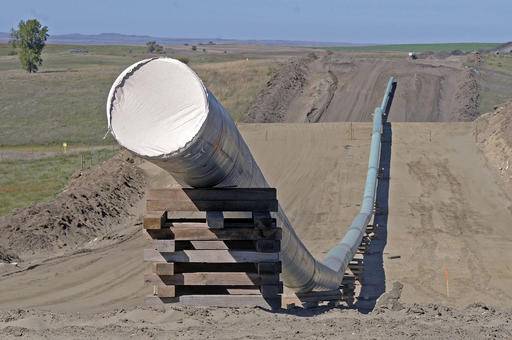
Dakota-Access-Pipeline
A section of the Dakota Access Pipeline under construction near the town of St. Anthony in Morton County, North Dakota

The U.S. Army Corps of Engineers notified Congress on Tuesday, February 7, 2017, that it would allow the multi-billion-dollar Dakota Access pipeline to cross under a Missouri River reservoir in North Dakota, completing the four-state project to move North Dakota oil to Illinois. The Army intends to allow the crossing under Lake Oahe as early as Wednesday, February 8. The crossing is the final big chunk of work on the pipeline.

Indeed, within the next 24 hours, the U.S. Army Corps of Engineers is expected to grant the final easement for the Dakota Access Pipeline that would allow construction to proceed under the Missouri River in North Dakota, where the route of the pipeline begins in the Bakken shale oil fields.

The decision is coming after the Obama administration ordered the Army Corps to withhold the final easement last year, calling for a full environmental review of the project. But, shortly after taking office, Trump urged the Army Corps to scrap the environmental review process and approve the final permit, a development that has drawn the ire of the activists.

May Boeve, 350.org Executive Director, said: “Trump thinks he’s getting what he wants, but the people who’ve been emboldened by the worldwide fight against the Dakota Access pipeline won’t quietly back away. Indigenous leaders, landowners, and climate activists are ready challenge this decision in the courts and in the streets – as we have each time the fossil fuel industry steamrolls over human rights for their own profits. While the industry’s grip on our government tightens, so does our resolve to keep oil, coal, and gas in the ground and build the clean energy economy we need from the ground up.”

Tom Goldtooth, Executive Director of the Indigenous Environmental Network, disclosed: “Donald Trump will not build his Dakota Access Pipeline without a fight. The granting of an easement, without any environmental review or tribal consultation, is not the end of this fight – it is the new beginning. Expect mass resistance far beyond what Trump has seen so far.

“The granting of this easement goes against protocol, it goes against legal process, it disregards more than 100,000 comments already submitted as part of the not-yet-completed environmental review process – all for the sake of Donald Trump’s billionaire big oil cronies. And, it goes against the treaty rights of the entire Seven Councils Fires of the Sioux Nations.

“Donald Trump has not met with a single Native Nation since taking office. Our tribal nations and Indigenous grassroots peoples on the frontlines have had no input on this process. We support the Standing Rock Sioux tribe, and stand with them at this troubling time.”

Protesters have severally highlighted the potential for spills that could taint drinking water, an issue at the core of the Dakota Access pipeline protest. But the promoters insist that the pipeline is the safest and most environmentally sensitive way to transport crude oil from domestic wells to American consumers.

The pipeline has indeed been controversial regarding its necessity, and potential impact on the environment. A number of Native Americans in Iowa and the Dakotas have opposed the pipeline, including the Meskwaki and several Sioux tribal nations. In August 2016, ReZpect Our Water, a group organised on the Standing Rock Indian Reservation, brought a petition to the U.S. Army Corps of Engineers (USACE) in Washington, D.C. and the tribe sued for an injunction. A protest at the pipeline site in North Dakota near the Standing Rock Indian Reservation drew international attention. Thousands of people have been protesting the pipeline construction, with confrontations between some groups of protesters and law enforcement, along with disputes over the facts.

The USACE approved the easement through Lake Oahe on February 7, 2017, allowing for the pipeline to be completed.

The $3.78 billion project was announced to the public on June 25, 2014 and informational hearings for landowners took place between August 2014 and January 2015.

Radio Report: Protesters kick against economic hardship

0
Protesters, against the economic hardship in the country, on Monday marched on Funsho Williams Avenue in Lagos.

The peaceful protest, in respect of which one of the organisers and popular singer, Tuface Idibia, earlier announced had been shelved, took off from the National Stadium, Surulere.
 
Correspondent Innocent Onoh, who covered the protest, now reports.

How sustainable tourism can make world cleaner, greener

0

Whether it is a chic, zero-emission hotel in Milan where toiletries are 99 per cent biodegradable, or Gaansbai in South Africa, where conservation of native flora and fauna is a community-wide priority, sustainable tourism is growing fast across the globe.

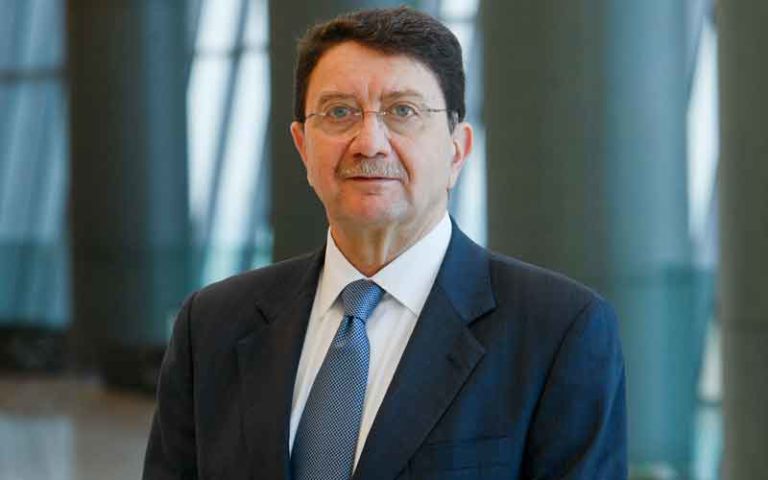
Taleb-Rifai
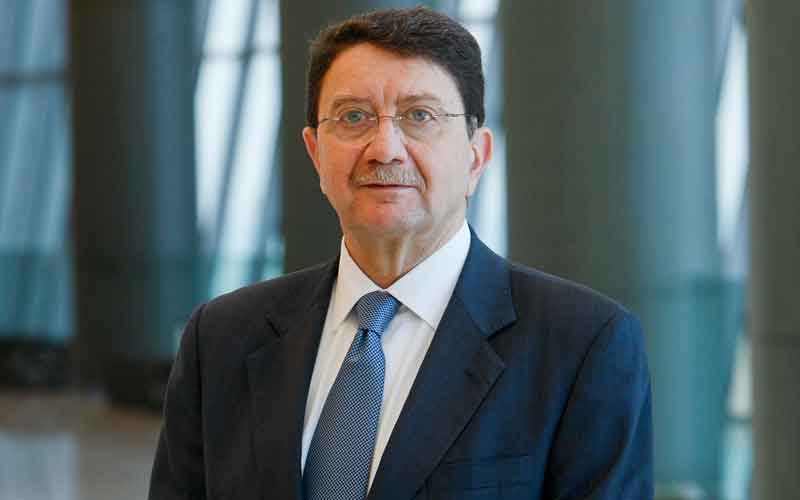
Taleb Rifai, Director-General, World Tourism Organisation

It is a tribute to the myriad entrepreneurs, companies, creative individuals and communities that the United Nations is marking 2017 as the International Year of Sustainable Tourism for Development.

This means that, throughout 2017, activities and initiatives across the spectrum of those involved in tourism will celebrate its transformational power on our global efforts to create a world that is cleaner and greener, more equal and more inclusive.

It is a celebration for each and every one of us: those who work and have interest in the sector and its sustainability, and also those consumers who travel to discover, to experience, and to give something back in return.

Research shows that a rising number of travellers want to tread lightly. The modern tourist wants to give back to the countries and communities they visit and reduce their impact on the environment. The campaign “Travel.Enjoy.Respect” that is linked to the International Year aims at precisely underlining the role of the traveller in amplifying the potential of tourism while avoiding damage on the environment, traditions, culture, heritage and local communities.

But what are the options for the would-be green traveller? How much of an impact can one person have?

The answer is a lot.

This is because global tourism is really big business. According to the World Tourism Organisation (UNWTO), tourist spending swelled from only $2 billion in 1950 to $1.2 trillion in 2015. The number of international tourists has grown by orders of magnitude as well, from 25 million travelled in 1950 to 1.2 billion in 2015.

Domestic tourism is even bigger. It is estimated that between five and six billion people take holidays at home. In one way or another we are almost all tourists.

This is good news. Countless jobs have been created in the process, many for the poor.

It also means the potential in tourism going green is massive. But sustainable tourism still only represents a small fraction of the global industry.

Tourism generates an estimated five per cent of global greenhouse gas emissions. According to UN Environment, that proportion is higher –12.5 per cent–if factors such as energy use at hotels and transporting food and toiletries are included.

Other sobering figures include water use. A tourist in Europe will consume more water on holiday than at home. Those staying at luxury hotels use nearly three times as much as a result of the water used for swimming pools and golf courses.

Then there is waste generation at resorts or from cruise ships; overfishing on coral reefs to feed visitors; loss of animal and plant species linked with the construction and operation of resorts; and impacts on the culture of local people.

Industry growth shows no sign of slowing. By 2020 it is estimated that the number of global tourists will reach 1.6 billion. To reach the targets set by the Paris Agreement on climate change and the Sustainable Development Goals, we need a sea change in tourism.

This year, you, the consumer, can make a difference.

Whether you’re fleeing winter for a tropical beach or uncovering secrets in your own backyard, you can reduce your impact.

Getting started can be tricky. There can be hundreds of different sustainable tourism standards to choose from. The Global Sustainable Tourism Council has a reliable guide, and maintains recent sustainability criteria for hotels, destinations and tour operators.

Next, buy the guidebooks that give you the information you need on green options in the country, city, community and hotel you plan to visit. If guidebooks are encouraged to list more environmentally friendly options, you benefit from choice and green destinations benefit from exposure.

Then, find out more about where you choose to go. Ask questions of tour operators and destinations about how they manage water and waste. Do they source fruit, vegetables and meat locally and have clear and positive local employment policies? Are they drawing electricity from renewables? Decide where you spend your money based on these factors.

Flying to and from destinations is more problematic. While aircraft are becoming more efficient, air travel is still one of the most damaging modes of transportation to the climate per kilometre travelled.

Buying carbon offsets, which many airlines offer during the ticket purchase process, is the best way to reduce your impact if you have to fly. The UN Climate Convention’s Climate Neutral Now provides advice and helps ensure that offsetting generates real and positive benefits.

At your destination, you can support local artisans and manufacturers instead of buying mass-produced souvenirs. You can eat local. When you visit natural sights, you can ensure you leave no trace.

The International Year of Sustainable Tourism for Development asks you to consider the impact of your travel on sustainable economies, societies, environments and cultures, along with peace.

“Travel.Enjoy.Respect Campaign” outlines how you can carry out some of these actions while inviting you to share your own inspiring sustainable travel tales.

Such stories allow you to gain a personal insight into how real lives of people and communities around the globe have been shaped by sustainable tourism.

They are reminders that tourism is a power for good. It breaks down walls, brings cultures closer together and reminds us that we all share one incredible, beautiful planet.

You can use your holiday to make more than memories. With sustainable choices, you can help make our world cleaner and greener. And you can be a global ambassador for respect – respect for our planet, our culture and the communities that welcome us with open hearts.

By Taleb Rifai (Director-General, World Tourism Organisation), Erik Solheim (Executive Director, UN Environment Programme) and Patricia Espinosa (Executive Secretary, UN Framework Convention on Climate Change)

As UNESCO-IHE brings water journalists, researchers together

0

For over 20 years, Ishraga Abbas has practiced professional journalism in Sudan – one of the most water-stressed countries on the earth, where she has had an ambiguous relationship with water researchers.

UNESCO-IHE
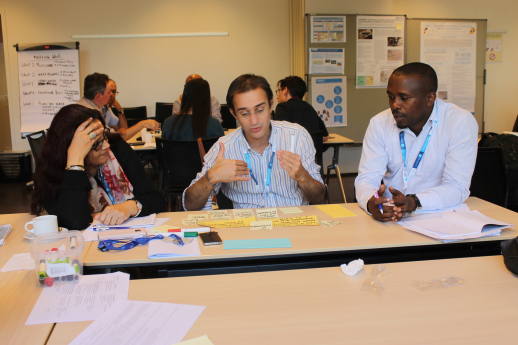
Dr. Emanuele Fantini, the Project Manager, Open Water Diplomacy Lab (middle), is flanked by officials from project partner organisations

She actually does not remember teaming up with any water researcher to work on a water story based on the researcher’s findings. In the answer to the obvious question – why hasn’t she been collaborating with water researchers? She says: “Some researchers shy away from journalists. They prefer communicating their findings to their fellow researchers only.”

This ambiguous relationship can perhaps even trace its roots back to journalists. Some journalists misrepresent the researchers’ facts; lack exposure to water issues or simply are not interested in covering the multifaceted water issues.

This subsequently manifests itself, as neglected coverage of water stories. But, a new project – Open Water Diplomacy Lab – has kicked off targeting bringing journalists, water scientists and researchers together.

Among others, Open Water Diplomacy Lab addresses the needs and demands of water journalists in terms of facilitated access to potential sources of information – getting scientific research on water communicated in an accessible and ready to use, meeting and working with water researchers and water diplomats – and opportunities to support and promote media coverage on water issues. The project focuses on the Nile basin and it is funded by the Dutch Ministry of Foreign Affairs “Global Partnership for water and development”.

“First, we are going to study how Nile issues are communicated in both mainstream and social media in Ethiopia, Sudan and Egypt. Building on the research findings we will develop join training activities for journalists and scientists coming from the Nile countries. Finally, they will be pulled together to work at original projects to promoted shared narratives about the Nile, overcoming the mainstream national interest perspective,” explains Emanuele Fantini, Senior Researcher at UNESCO-IHE and project coordinator.

He was speaking at the kick-off workshop that had “Mapping Nile controversies: Media, science and water diplomacy” as its theme. It held in Addis Ababa, Ethiopia in January 2017.

Now, journalists like Ishgara – who actually attended this workshop – say this project will boost the quality of water journalism in the Nile basin.

Likewise, Dagim Terefe, an Ethiopian journalist and documentary maker, states that Open Water Diplomacy Lab project will help to give birth to a generation of journalists that specifically concentrate on investigating River Nile issues.

Such journalists, as Dagim notes: “Will no longer write the story of the sharing of Nile waters with a nationalistic thinking as it is now but an informed broader context that caters for other countries where the Nile meanders.”

True. This is a responsibility journalists in the Nile basin cannot simply walk away from. It makes sense to believe that journalists have a crucial role to play in ending the Nile wars between countries that share this longest river on the planet.

Actually, Wondwosen Seide, a doctoral student at Lund University in Sweden, who has been researching on the River Nile issues for the last 10 years, believes that Nile wars are: “Mainly in the media landscape than on ground.”
According to Wondwosen, this project is: “Very crucial in bridging controversies and contradicting reporting among the riparian states.”

It is no surprise that this project will lead to a more responsive relationship between journalists and water researchers. And as Prof. Dr. Yacob Arsano of Addis Ababa University in Ethiopia argues, this project will bring journalists and researchers together to identify the real issues in the Nile discourse.

Against such a background, Open Water Diplomacy Lab will truly breed journalists that can help researchers and agencies working on the Nile to disseminate the story of the Nile.

Having story of the Nile in the media, as Dr. Wubalem Fekade, the head of the Social Development and Communication Unit at the Eastern Nile Technical Regional Office (ENTRO) of the Nile Basin Initiative (NBI) based in Addis Ababa contends, would: “Help decision and policy makers in the Nile basin to make very enlightened and bold decisions that contribute to sustainable management of the river.”

It is easy to understand that water is a strategic resource for livelihoods. This is the reason why Atta el-Battahani, a Professor of Political Science at the University of Khartoum, contends that: “It is important that we know about it so that we can manage it very well for the benefit of the people.”

By Fredrick Mugira