Apparently keeping with its mandate and vision of ensuring environmental protection, natural resources conservation and sustainable development, the Department of Climate Change in the Federal Ministry of Environment, in collaboration with the World Bank, will hold a series of workshops for legislators; state government officials; ministries, departments and agencies (MDAs); and private sector players next week on climate change resilience.
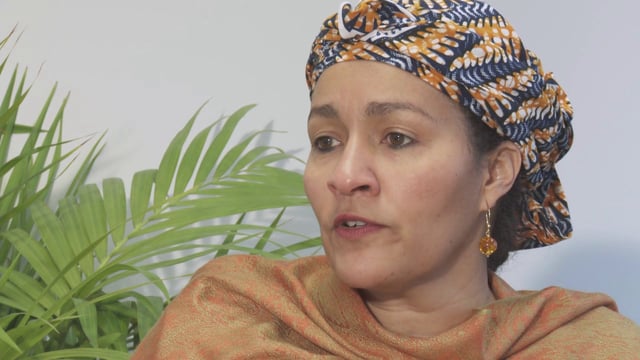
Nigeria’s Environment Minister, Mrs Amina Mohammed. Nigeria is collaborating with the World Bank to hold a series of workshops on climate change resilience. Photo credit: i.vimeocdn.com
Themed “Accelerating Climate-Resilient and Low-Carbon Development,” the forums are scheduled to hold in Abeokuta (Ogun State), Kaduna (Kaduna State) and Abuja (FCT) between February 13 – 17 2017, and centre on knowledge delivery, experience sharing and call to action.
It was gathered that the workshops will enable knowledge dissemination and stakeholders’ role in implementing sectoral and multi-sectoral climate actions towards accelerating climate-resilient and low-carbon development across the country.
Minister of Environment, Amina Mohammed, who is expected to declare the workshops open, says that the Federal Government remains committed to empowering people, taking climate action and protecting the environment.
According to her, the Federal Government’s commitment to taking climate action remains top of the administration’s agenda as demonstrated in the signing of the Paris Climate Change Agreement and participation at the UN Climate Change Conference in Marrakesh, Morocco last year.
“This commitment is also reflected in the sector-wide implementation of the Nationally Determined Contributions (NDC) using a participatory approach to accelerate resilience and achieve the Sustainable Development Goals (SDGs),” she stated.
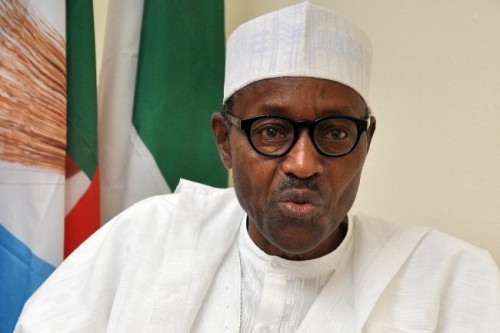
Director General, National Biosafety Management Agency (NBMA), Dr. Rufus Ebegba, has said that the responsibility of the Agency is to safeguard the health of Nigerians in the practice of modern biotechnology and the use of genetically modified organisms.
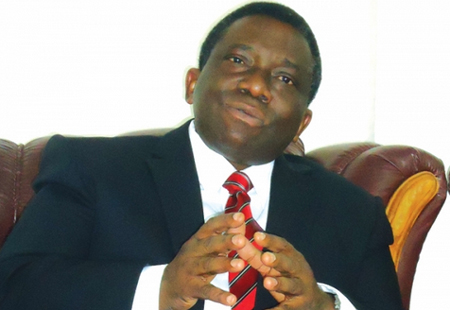
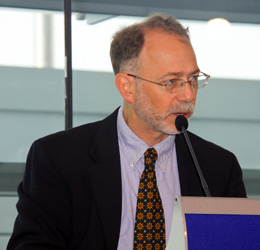
Dr Rufus Ebegba, Director-General and CEO of the the National Biosafety Management Agency (NBMA). Photo credit: climatereporters.com
Dr. Ebegba made the submission in Abuja on Tuesday, February 7, 2017 at a colloquium organised by the Catholic Secretariat in conjunction with the Open Forum of Agricultural Biotechnology (OFAB).
He said, “The responsibility of NBMA is not to stop genetically modified organisms (GMOs) in Nigeria but to ensure it is safe and it does not pose any adverse effect to humans and the environment in accordance with the National Biosafety Management Act 2015.”
According to him, the world is being driven by science and technology and Nigeria cannot shy away from the deployment of safe science and technology to solve problems affecting the nation. He pointed out Nigeria as a country has taken the necessary legal precautionary measures to ensure that the health of the citizens and environment is not jeopardised by the introduction of GMOs.
His words: “The Federal Government has taken necessary measures after due legislative processes to establish the NBMA. The Agency is manned by competent and qualified scientists who are rated as some of the best when compared to their counter parts across the continent; we therefore have the requisite knowledge and experience to effectively regulate the technology in the country.
“The Agency has established a modern GMO Detection and Analysis laboratory as part of efforts to ensure safety in the country.”
He enjoined Nigeria-based scientists, federal-based organisations and the general public to continue to trust on government to protect and safeguard their health.
The proposed 2017 Federal Ministry of Health budget of 4.17 percent has been said to be a poor improvement from the 2016 budget , which was 4.13 percent.
Correspondent Ruth king brings details in this report and the the endless complaints about the poor funding of the health sector.
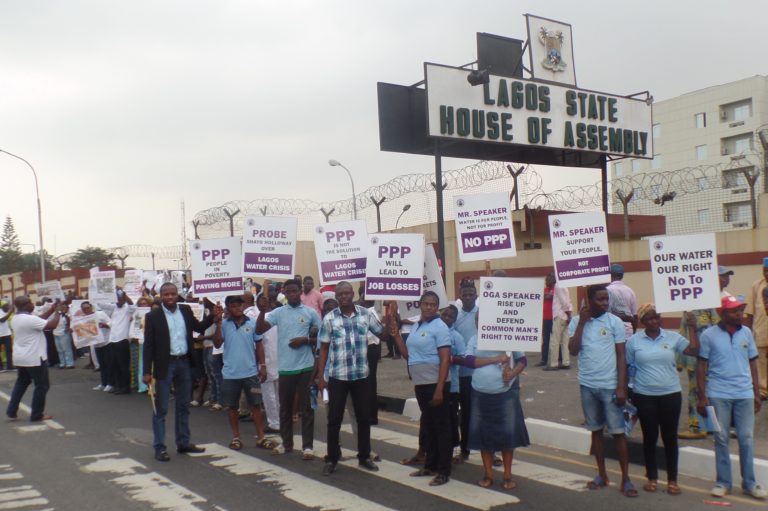
The Environmental Rights Action/Friends of the Earth Nigeria (ERA/FoEN) has described the proposed Bill to Provide for the Management, Protection and Sustainable Development of the Environment in Lagos State as a document laden with ambiguities to mask its privatisation plans in the water sector.
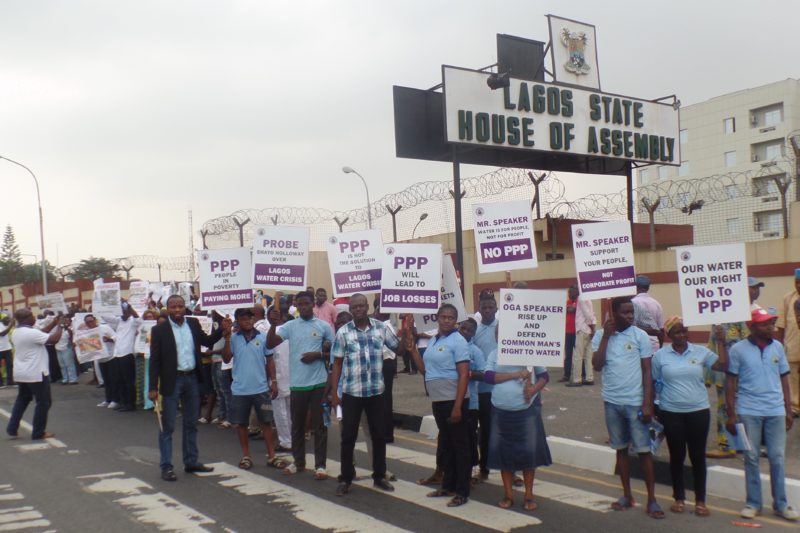
Officials of ERA/FoEN leading protesters at the Lagos State House of Assembly premises in Alausa, Ikeja, venue of the Public Hearing on the proposed Lagos Environment Law
At a Public Hearing organised by the Lagos House Committee for Environment at the House of Assembly Complex in Alausa, Ikeja on Thursday, February 9 2017, ERA/FoEN faulted sections of the proposal which it viewed as attempts to sneak public private partnership (PPP) into the water sector. The sections include: Allocation of Fund and Guarantees, Sinking of Borehole Hydraulic and other Structures, Maintenance of Water Bodies, Functions of the Office and Powers to Make Regulations.
Deputy Executive Director of ERA/FoEN, Akinbode Oluwafemi, said: “We are shell-shocked at the the proposed law as it is fraught with deliberate loopholes that will open the door for the corporate take-over of Lagos water, the sanitation sector and, ultimately, the state.”
Oluwafemi explained that, under Allocation of the Fund and Guarantees that provides that the state government will secure payment in respect of contracted services and concessions for long term infrastructure investments with an Irrevocable Service Payment Order as the first line charge on the Internally Generated Revenue is scandalous. Literally, the Lagos government is saying it must pay these corporate entities before spending on roads, schools, hospitals, water, etc.
“This is absurd,” he remarked, added that the provision also stated that, “In the event that the State’s IGR is insufficient or unavailable to discharge its obligations, it will apply monies due to it from the monthly allocations from the federal account to secure its payment obligation to the contractors and concessionaires”.
The ERA/FoEN memorandum also carpets the clause that states that members of The Trust Fund Board to be set up will have six members, two of which will be from the Ministry of Environment, and the Commissioner for Environment being its chair. It noted that the Commissioner will have too many powers under the law as he will also be tasked with making regulations.
In the provision that criminalises Sinking of Borehole Hydraulic and other Structures and recommends prison terms and fines for defaulters, the group was of the view that Lagos residents currently using these means to access water are only victims of a system that failed to provide them a basic human right.
“What logic justifies banning people from using streams or helping their neighbours who cannot access safe water due to inadequate investment from the state government for decades? Yet, this obnoxious provision is in the law.”
The ERA/ FoEN boss explained that if it goes unchallenged, these measures would further burden Lagos citizens at a time that the government has no clear and articulated plan to fix the public water system, adding: “Our fear is that this pressure on Lagos citizens could be the guise to introduce the PPP in the water sector which Lagosians have roundly condemned.
In addition to the memorandum submitted, ERA/FoEN also provided them with copies of the document – “Lagos Water Crisis: Alternative Roadmap for the Water Sector” which it launched last October as solution to the water crisis in Lagos.
Gone were the days when owners of radio sets had to tune in futility in search of stations to listen to.
These days, just by tuning the radio, one has so many options to choose from due to the increasing numbers of radio stations in the country
Against the backdrop of this year’s World Radio Day, correspondent Innocent Onoh examines the upsurge of radio stations in the country and its impact on good governance.
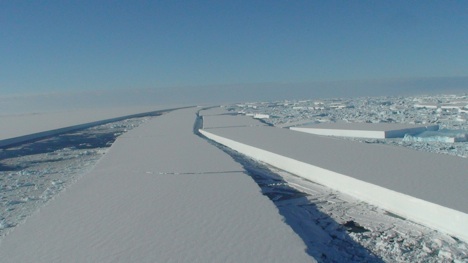
A rapidly advancing crack in Antarctica’s fourth-largest ice shelf has scientists concerned that it is getting close to a full break. The rift has accelerated this year in an area already vulnerable to warming temperatures. Since December, the crack has grown by the length of about five football fields each day.
The crack in Larsen C now reaches over 100 miles in length, and some parts of it are as wide as two miles
The crack in Larsen C now reaches over 100 miles in length, and some parts of it are as wide as two miles. The tip of the rift is currently only about 20 miles from reaching the other end of the ice shelf. Larsen C is the fourth largest ice shelf in Antarctica, with an area of about 50,000 km2 (19,000 sq mi).
Once the crack reaches all the way across the ice shelf, the break will create one of the largest icebergs ever recorded, according to Project Midas, a research team that has been monitoring the rift since 2014. Because of the amount of stress the crack is placing on the remaining 20 miles of the shelf, the team expects the break soon.
“The iceberg is likely to break free within the next few months,” said Adrian J. Luckman of Swansea University in Wales, who is a lead researcher for Project Midas. “The rift tip has moved from one region of likely softer ice to another, which explains its step-wise progress.”
Ice shelves, which form through runoff from glaciers, float in water and provide structural support to the glaciers that rest on land. When an ice shelf collapses, the glaciers behind it can accelerate toward the ocean. Higher temperatures in the region are also helping to further the ice shelf’s retreat.
If the ice shelf breaks at the crack, Larsen C will be at its smallest size ever recorded.
That would also leave the ice front much closer to the ice shelf’s compressive arch, a line that scientists say is critical for structural support. If the front retreats past that line, scientists say, the northernmost part of the shelf could collapse within months. It could also significantly change the landscape of the Antarctic peninsula.
“At that point in time, the glaciers will react,” said Eric J. Rignot, a glaciologist, professor at University of California Irvine and a senior scientist at the NASA Jet Propulsion Laboratory. “If the ice shelf breaks apart, it will remove a buttressing force on the glaciers that flow into it. The glaciers will feel less resistance to flow, effectively removing a cork in front of them.”
The crack reaches all the way to the bottom of the ice shelf. The crack in Larsen C is a third of a mile deep, down to the floor of the ice shelf.
Scientists fear that two crucial anchor points will be lost as the shelf retreats. According to Dr. Rignot, the stability of the whole ice shelf is threatened.
“You have these two anchors on the side of Larsen C that play a critical role in holding the ice shelf where it is,” he said. “If the shelf is getting thinner, it will be more breakable and it will lose contact with the ice rises.”
Ice rises are islands that are overriden by the ice shelf, allowing them to shoulder more support of the shelf. Scientists have yet to determine the extent of thinning around the Bawden and Gipps ice rises, though Dr. Rignot noted that the Bawden ice rise was a much more vulnerable anchor.
“We’re not even sure how it’s hanging on there,” he said. “But if you take away Bawden, the whole shelf will feel it.”
The collapse of the Larsen C ice shelf may not sharply affect global sea level rise, but the collapse of other vulnerable ice shelves will, say scientists.
The Larsen A and B ice shelves disintegrated in 1995 and 2002, though both were drastically smaller than Larsen C. Neither contributed significantly to global sea level rise, however, because they were already floating above water, and the glaciers behind them did not contain a substantial volume of ice.
According to Dr. Rignot, the collapse of Larsen C would add only a tiny amount of water to the global sea level. Of greater concern to scientists is how the collapse of ice shelves can affect the glaciers that flow behind them, because the melting of those glaciers can cause much higher levels of ocean rise. Scientists see the impending Larsen C collapse as a warning that much larger amounts of ice in West Antarctica could be vulnerable.
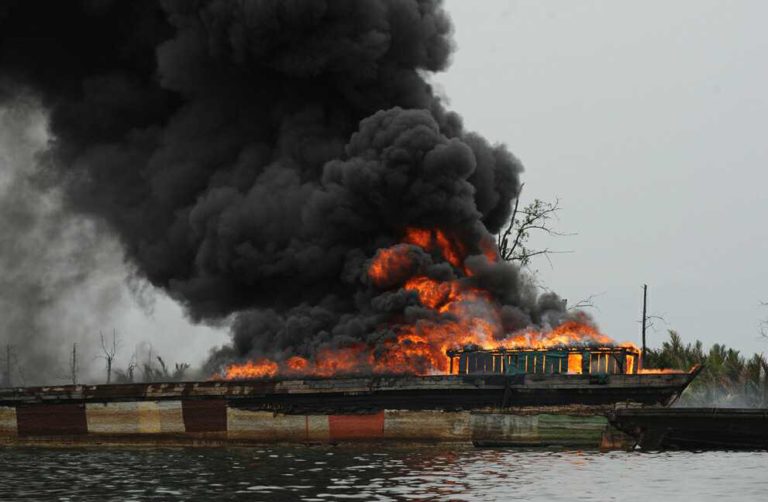
The air in parts of Port Harcourt, the Rivers State capital city, has been darkened by soot over the past few months, raising a cloud of concerns about the attendant health impacts. Citizens in parts of Port Harcourt are getting worried about the air they breathe. To put it another way, many citizens are afraid to breathe. And that can be deadly.
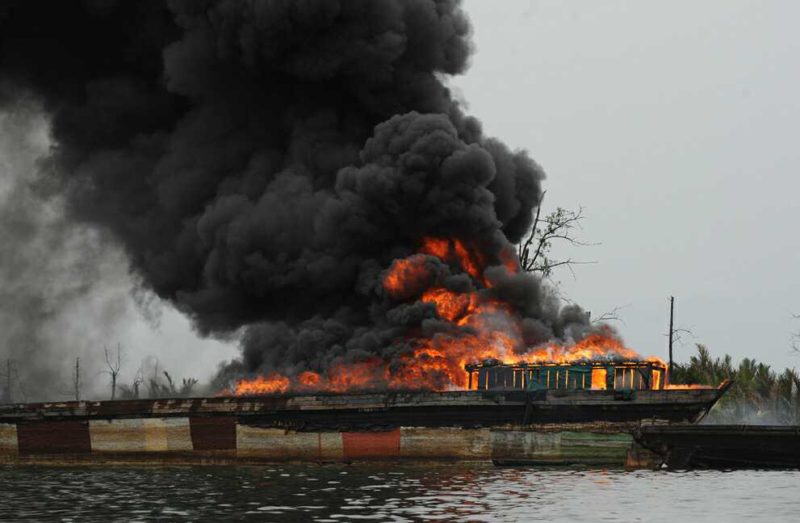
Air and atmosphere pollution with smoke and fire in Rivers State
Soot is a general term that covers pollutants derived from incomplete or inefficient burning of fossil fuels or biomass (plants or plant-based materials used as source of energy). The major sources of soot include fuels like diesel used in transport and in electricity generators. For the Niger Delta, the sources include the aforementioned and include others such as: gas flares, illegal refineries, the burning of illegal refineries and crude oil, burning of oil spills by incompetent contractors and the burning of sundry wastes. Bush burning can also be a source of soot in our environment.
The burning of illegal or bush refineries, by the Join Military Task Force (JTF), the incendiary acts that have been raised as banners of victory over oil theft, is one source that must be halted immediately. The bush refineries are basic and flimsy contraptions that can easily be dismantled and safely disposed of. The same goes for wooden barges arrested with stolen crude. Dropping grenades on those toxic wares and sending smoke signals above the creeks may be seen as acts of bravado, but they have serious health impacts on the environment and citizens in the area.
The JTF, working with the Nigerian National Petroleum Corporation (NNPC) and the oil majors, should set up recovery centres where recovered stolen crude are logged, stored and safely disposed of by the original owners or as agreed. The disposal methods could include sending such crude to the refineries or by exporting them if the quality is not compromised by the process of rough handling.
A variety of soot is one called black carbon. We have also heard of black snow arising from carbon particulates that accumulated in the Himalayas, for instance, and is said to aid the rapid melting of snow by reason of the heat they trap. Dramatic carbon pollution in the winter of 1952 led to the death of about 4,000 persons within five days.
The current situation of soot blanketing the skyline of parts of Port Harcourt is deeply troubling and requires urgent actions from relevant government agencies as well as research institutes. In particular, the National Environmental Standards and Regulations Enforcement Agency (NESREA), Nigerian National Oil Spill Detection and Response Agency (NOSDRA), Directorate of Petroleum Resources (DPR) and, in general, the Federal and State Ministries of Environment and those of Health should step up to tackle the emergency situation.
When reports of gathering soot came up a couple of months ago, sources at NESREA confirmed that the soot originated from hydrocarbon or oil-sector related sources. That conclusion rules out bush burning as a possible source. For those that have noticed the thick black smoke belching continuously from the Port Harcourt refineries, those sources are very strong suspects. And then, the bush refineries and the bombing of those rickety refineries by the JTF remain strong contenders. These should all be investigated. The scenario has raised the urgent need for air quality measurement and control in Nigeria. Within accurate measurement of levels of exposure, causal links may not solid and culprits may wriggle out and avoid accountability and responsibility.
It is the duty of our regulatory agencies to pin-point the source of this menace, enforce a cessation of the obnoxious acts and penalise the culprits. We know that the conflicting boundary lines governing the duties of these agencies may complicate the processes for addressing this issue, but joint meetings should overcome territorial defences in the face of the risks our people are exposed to.
This is a serious situation and government cannot afford to remain silent on it. The health impacts of soot and black carbon are well documented and are known to include effects on our respiratory system and bloodstreams. They can trigger cardiovascular diseases such as asthma, chronic cough, sinusitis, bronchitis and colds. The fine particles can also have carcinogenic effects. They can also negatively affect the development of the lungs in children. Life expectancy in the Niger Delta is already precariously low; the effect of soot and black carbon will push those low figures through the bottom.
We should also mention here that Ekpan community at Warri, Delta State, has been suffering extensive pollutions from black carbon emanating from the petrochemical plant located there. The community is more or less heavily coated with soot continually and residents often have to keep their windows shut in futile to keep out the deadly stuff. When the community petitioned the National Assembly over the situation, an order was issued that the plant should be shut down until it was adequately serviced and fitted with devices that would halt the noxious emissions. It does not appear that the order was adhered to as the community is still reeling under the weight of black carbon whenever the machines come alive.
Residents of Port Harcourt, Ekpan and the Niger Delta as a whole deserve a breath of air that is fresh and devoid of soot and black carbon.
By Nnimmo Bassey (Director, Health of Mother Earth Foundation – HOMEF)
Sixty-three percent of disputes related to private sector land and natural resource investments in Africa began when communities were forced to leave their lands, according to new research released in Dakar, Senagal on Thursday, February 9, 2017 by TMP Systems and the Rights and Resources Initiative (RRI).
RRI Coordinator, Andy White. He says that Africa is mistaken for a continent of empty, freely, available land open for development
“African governments are competing for investment to spur economic development and improve living standards,” said TMP Systems CEO, Lou Munden. “But most countries need to radically improve the governance of tenure rights to create an attractive and stable investment environment. Companies and investors – who increasingly understand that unclear tenure rights create financial and reputational risks – need to do more to identify and respond to these implicit challenges in emerging market investments.”
The research also found that areas targeted for development in Africa are more heavily populated than similar developments elsewhere in the world. The population density within a 50-kilometre radius of disputed projects in Africa was more than twice the global average: 816,547 people compared with 319,426 globally. For West Africa, the average was over one million people.
“The mistaken belief that Africa is a continent of empty, freely available land open for development has done so much harm,” said RRI Coordinator, Andy White. “No land is unclaimed, and uprooting communities without their consent from their lands and traditional livelihoods creates conflicts and social unrest. Recognising and securing local peoples’ property rights instead provide security for governments, investors and companies – a critical need, given all the political uncertainty in the world today.”
According to the research, the typical tenure-related dispute in Africa occurs:
An average of 61 kilometres from national borders, far from the seat of centralised government;
In an area with endemic poverty, low access to government services and poor nutrition;
In an area that is less developed with little prior change in how the land was used; and
In an area with a history of social conflict.
“The fact that disputes were just 61 kilometres from national borders on average was surprising and, in our view, very revealing,” added Munden. “It suggests that tenure dispute is much more likely in areas with low legal accountability and economic development. The point is that investors can be exposed to serious risk in these areas because local people will ensure their interests are heard.”
The suite of reports explores investment-based conflicts in East, West and Southern Africa, and compares them to similar conflicts around the world. They were released at a panel event in Dakar alongside RRI’s Annual Review of the global state of land and resource rights, which found that development finance institutions have emerged as potential leaders in the land rights arena given their significant leverage over investments in the developing world.
While a number of high profile corporations have also pledged to both prevent deforestation and respect human rights, implementation of these commitments is slow at best, given complex supply chains and local suppliers whose reputations are less exposed. Despite the growing number of economic actors that accept the market rationale for respecting community land tenure, rights violations are still commonplace.
“Corporations can prevent conflicts that are costly to investors and devastating for local peoples by working with local communities to secure their property rights,” said RRI Coordinator, Andy White. “But not everyone at the table embraces this approach or applies it effectively.”
Palm Oil and West Africa
In West Africa, plantation agriculture – especially palm oil projects – drive a majority of disputes. Community displacement was the primary driver of 70 percent of the tenure disputes examined, while issues related to compensation were the primary driver for 30 percent. Sixty percent of the tenure disputes resulted in work stoppages, which impact companies’ and investors’ profits, and 30 percent resulted in violence.
Munden noted that the Fanaye biofuel plantation project on Senegal’s northwest border was implemented without the consent of local communities. In one case, violent protests in Fanaye Dieri led to the death of two community members and compelled the government to revoke the concession and move it 30 kilometres to the east, to the Ndiael Nature Reserve. But the new location cut off local cattle farmers from their grazing lands, triggering additional conflict. After six years, the concession currently uses only 1,500 hectares out of the 20,000 allocated by the government.
“Because of our soil, many investors are interested in coming to our country,” said Alioune Guèye, President of the Federation of Peasant Landowners, in Senegal. “But some of our most impoverished communities also live on that soil and rely on it for their survival. Too often, companies feel they can cut a deal with the government, raze the land, and create vast plantations while the locals are simply pushed out of the way. Without their land, these communities will have nothing. Their rights must be respected.”
Infrastructure and East Africa
Infrastructure and public utilities are driving a majority of the disputes in East Africa, and communities have made use of stronger legal frameworks to bring lawsuits against companies that violate their rights. Community displacement was the primary driver of 36 percent of the tenure disputes examined, while compensation was the primary driver for 27 percent. Seventy-three percent of the tenure disputes resulted in work stoppages, yet only 27 percent resulted in violence.
While wind power has been embraced by many in Kenya as a clean source of energy for its growing economy, conflict over land and resource rights has delayed or derailed a number of wind power generation projects. Three projects are at the heart of this storm of disputes:
A wind farm in Kinangop was cancelled after a protracted legal battle and a massive protest that destroyed a wind mast. The developers are now suing the Kenyan government, seeking compensation for their losses.
A flagship project at Lake Turkana has been delayed for a decade due to an ongoing legal challenge from nomadic pastoral communities. Four communities are seeking redress because their lands were taken without consent.
In Kajiado County, landowners are mounting legal opposition to the Kipeto project whose buffer zone – half a kilometre wide – included much of their lands.
“The lack of detailed consultation and informed consent contribute to conflicts that increase the cost of doing business in Kenya, and investors are starting to look to other countries for new projects,” Mali Ole Kaunga, director of Indigenous Movement for Peace Advancement and Conflict Transformation (IMPACT), noted. “Disputes that end in violence even one-quarter of the time are still too violent for everyone involved – the communities, investors, companies and governments.”
Sugar and Southern Africa
In Southern Africa, sugar plantations and mining developments are driving a majority of the disputes and, without strong legal frameworks for communities to assert their rights, significant violence has resulted. Community displacement was the primary driver of 82 percent of the tenure disputes examined. Issues relating to compensation were never the primary driver, showing that companies could not buy their way out of disputes. Seventy-three percent of the tenure disputes resulted in work stoppages, and 73 percent triggered violence – the highest rate of violence in the world.
While a number of major buyers and producers who dominate supply chains in the sugar sector have made commitments on land tenure, efforts to clean up their supply chains have been plagued by issues of transparency and lack of local engagement.
In Madagascar, a sugar plantation that had operated without conflict since 1984 became the site of local resistance in 2005 after the project owners, Complant and Sucoma, attempted to reroute an irrigation system, which would have flooded lands belonging to local communities. Over the next several years, through 2014, strikes, riots and work stoppages ensued – indicating that even seemingly successful projects can become mired in conflict and work stoppages if local tenure rights are not respected throughout project implementation.
National Land Commissions as Tenure Rights Champion
Representatives from four national land commissions – Ghana, Kenya, Liberia and Senegal – attended the Dakar event to report on the status of land rights and ongoing tenure reforms in their countries and respond to the report’s findings. These commissions have played a helpful role in channeling efforts for governments exploring comprehensive reform. One such example is in Senegal, where they established an inclusive process for the drafting of the land policy that is now being reviewed by the president’s office.
“Economic developments that fail to benefit local communities have little to zero value because of the conflicts they generate,” said Solange Bandiaky-Badji, RRI’s programme director for Africa. “The land commissions have a great opportunity to create legal frameworks that prevent the root causes of these inequities. Treating local communities as equal partners and respecting their rights is the first step towards creating true economic development.”
The RRI is a global coalition consisting of 15 Partners, six Affiliated Networks, 14 International Fellows, and over 150 collaborating international, regional, and community organisations dedicated to advancing the forest land and resource rights of Indigenous Peoples and local communities. RRI leverages the capacity and expertise of coalition members to promote secure local land and resource rights and catalyse progressive policy and market reforms.