Home Blog Page 1980

Role of biotechnology in ensuring food security, sustainable agriculture

0

By most accounts, low agricultural production is one of the prevailing factors behind the high incidence of poverty and food insecurity across the world.

Professor Lucy Ogbadu
Professor Lucy Ogbadu, Director General, National Biotechnology Development Agency (NABDA). Photo credit: economic confidential.com

However, concerned observers note that most poor and food insecure people in the world live in developing countries and rural areas.

They say that one of the most important challenges facing the developing world nowadays is how to meet the current food needs of a growing population without undermining the ability of future generations to survive.

Therefore, issues relating to food security and sustainable agriculture have been on the front burner in the national discourse at all levels of government, as innovative plans are always made for a changing global climate and the increasing global population.

Some experts, nonetheless, insist that crop production through biotechnology applications should be encouraged to meet the increasing dietary needs of the world.

One of the experts, Mrs Edel-Quinn Agbaegbu, the Secretary of National Biotechnology and Biosafety Consortium (NBBC), called on Nigerians to embrace the use of agricultural biotechnology to transform agriculture and enhance the country’s food security.

Agbaegbu told News Agency of Nigeria (NAN) that application of modern biotechnology in agriculture was central to efforts to attain food security in the country.

She said that Nigeria, with a population of over 180 million, needed more food to feed its citizens, while the potential of biotechnology, as a tool for facilitating the achievement of food security, had yet to be fully exploited.

“Food, like shelter and clothing, is very important as one of the three most essential ingredients of life.

“The UN Food and Agriculture Organisation (FAO) recently stated that global production of food ought to double by 2050 in order to meet the demands of a growing global population,’’ she said.

According to her, Nigeria is one of the countries of the world where the percentage of the population suffering from malnutrition, hunger and starvation is still high.

Agbaegbu, therefore, said that science, modern agriculture and crop cultivation through biotechnology were required to deal with the rising challenges of food security.

She said that advances in science had resulted in accelerated development, including the application of biotechnology in agriculture, to improve overall livelihood, productivity and food security.

“The promises of biotech crops can only be unlocked if farmers are able to buy and plant these crops, following a scientific approach to regulatory reviews and approvals.

“Advances are also being realised in many African countries. In 2016, South Africa and Sudan increased the planting of biotech maize, soybean and cotton to 2.66 million hectares from 2.29 million hectares in 2015.

“In 2016, Brazil increased biotech production of maize, soybean, cotton and canola by a remarkable 11 per cent, maintaining its ranking as the second largest producer of biotech crops after the U.S.

“Brazil’s biotech soybeans account for 32.7 million hectares, out of the 91.4 million hectares grown worldwide.

“Also in 2016, 26 countries, including 19 developing and seven industrial countries, grew biotech crops,’’ she said.

Agbaegbu, however, conceded that there were certain challenges facing Africa and Nigeria, in particular, adding that the challenges included the degradation of land and water resources.

“There are myriads of other critical challenges that also affect the continent, especially Nigeria, where key crops, which are cultivated for consumption and commerce, are still facing attack of diseases.

“For instance, Cassava Mosaic Disease (CMD) and Cassava Brown Streak (CBSD) are still the most challenging constraints to cassava production in Sub-Saharan Africa,’’ she said.

Agbaegbu said that biotechnology, which was also genetic modification, would address the challenges relating to plant pest and diseases as well as the vagaries of weather, among other challenges facing crop growing.

She said that the new generation of biotech crops, developed via the increasing use of stacked traits, did not only address the farmers’ concerns but also addressed consumers’ preference and nutritional needs.

“The use of improved varieties is expected to contribute to improved health, environment and income, while drastically reducing the need for frequent spraying with insecticides.

“Today’s global development and sustainability are based on science.

“Fortunately, GM crops so far produced and globally commercialised are for herbicide-tolerance, insect, disease and drought-resistance, including bio-fortification.

“There is no doubt that advancement in any technology also goes with some potential adverse impacts and modern biotechnology is not an exception in this regard,’’ she said.

Agbaegbu stressed that scientific, technological and innovative advancements were crucial for the industrialisation and socio-economic development of Nigeria and Africa in general.

She said that biotechnology would boost crop yield via the introduction of high-yield varieties that were resistant to biotic and biotic stresses.

“In addition, biotechnology would reduce pest-associated losses and increase the nutritional value of foods, which are very important factors in rural areas or developing countries,’’ she said.

Prof. Benjamin Ubi, the President of Biotechnology Society of Nigeria (BSN), said that biotechnology research and development had already produced significant products.

He added that the products would play a pivotal role in plans to encourage and boost food production, considering their safety and environmental quality.

Ubi noted that the safety and potential impact of Genetically Modified Organisms (GMOs) on human health had been a subject of serious concern and public scrutiny.

He, nonetheless, said that the future of biotech crops looked encouraging, as the global production of biotech crops continued to increase.

All the same, Ubi emphasised that the adoption of biotechnology would facilitate sustainable agricultural production in the country.

His words: “The adoption of biotechnology applications is the panacea to the current food challenges facing the country.

“Biotechnology, including genetic engineering and production of GMOs, provides powerful tools for the sustainable development of agriculture, fishery and forestry, as well as meeting the food needs of the population.

“GMOs currently account for about 16 per cent of the world’s crops, particularly crops like soybean, maize, cotton and canola, and there are indications that the growing trend will continue.

“So, we must eat what we grow and grow what we eat. This means we ought to produce more and agricultural biotechnology is a tool for achieving this.’’

Ubi guaranteed the safety of biotechnology in agricultural production, saying that global certification bodies had confirmed the safety of GMOs.

“All the same, informed criticism is good for checks and balances but it should not be allowed to be a cog the wheel of progress,’’ he added.

Sharing similar sentiments, Dr Abdulrazak Ibrahim, a university lecturer, emphasised that the use of modern biotechnology enhanced sustainable agricultural development, while boosting food production and alleviating poverty.

Ibrahim, who is of the Department of Biochemistry, Ahmadu Bello University, Zaria, said that modern biotechnology was one of the best means of achieving sustainable national development and tackling the challenges of food insecurity.

“Modern biotechnology is becoming increasingly important in addressing emerging challenges with regard to food security and renewable energy demand.

“Agriculture is everyone’s business and our nation’s independence depends on its development, as it will enable us to escape from the scourge of food insecurity which undermines our sovereignty and fosters sedition.

“Agriculture is a driver of growth, whose leverage is now acknowledged by economists and politicians, and it is the sector that is offering the greatest potential for the reduction of poverty and inequality.

“It also provides sources of productivity from which the most disadvantaged people working in the agricultural sector should benefit,’’ he added.

Ibrahim noted that GMOs, which were a product of modern biotechnology, so far had no negative impact on humans, animals and the environment.

“The coming of modern biotechnology and GMOs will facilitate our efforts to make Nigeria a nation that is self-sufficient in food production.

“We should promote the use of available modern farming methods and technologies that would solve the problems of poor agricultural productivity, health and nutrition.

“So, we should not run away from the benefits of the application of modern biotechnology and the use of genetically modified foods and feeds,’’ he added.

All in all, the general consensus of opinion is that Nigeria should make pragmatic efforts to develop its biotechnology sector and exploit the potential of the sector to develop its agricultural sector and boost its food security.

By Ebere Agozie, News Agency of Nigeria (NAN)
Disappearing oxygen in ocean threatens marine life

0

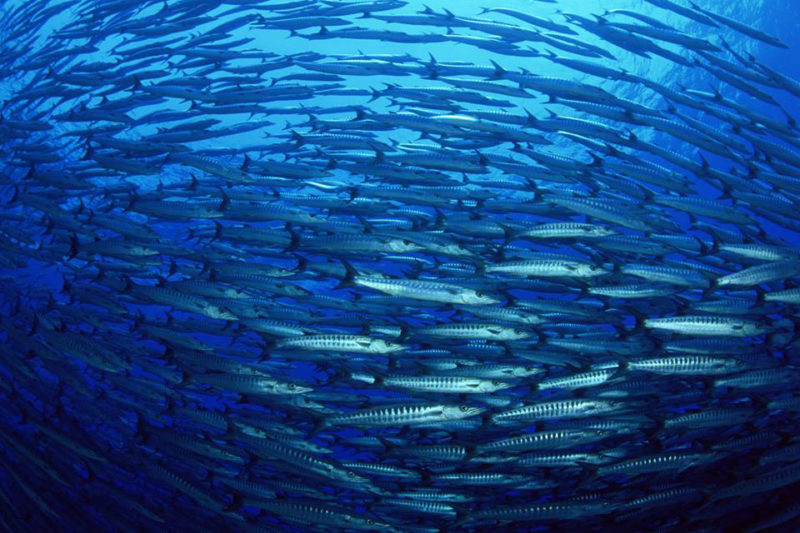
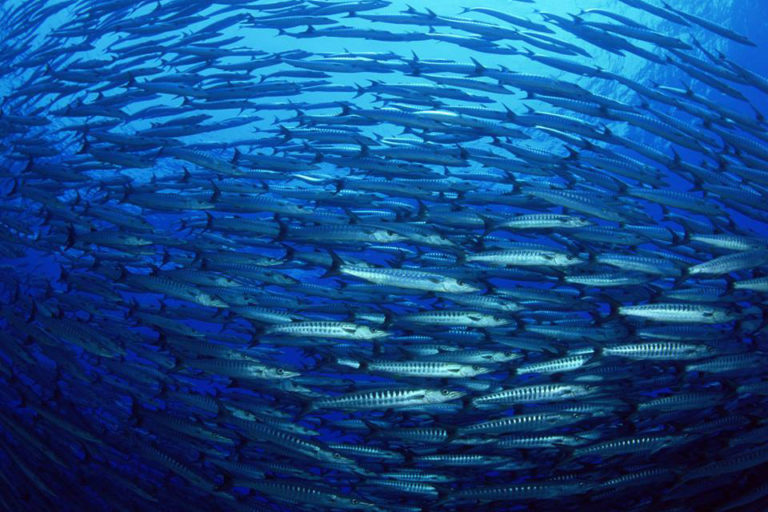
A new paper published in Science magazine shows that oxygen concentrations in ocean water are declining, not least as a result of climate change. This is in turn posing a serious threat to marine life and people dependent on the ocean.

Oceans
Oxygen concentrations in ocean water are said to be declining. Photo credit: FAO 

The study, compiled by a network of scientists initiated by the UN, also highlights the importance of reining in both climate change and nutrient pollution to halt the expansion of low-oxygen zones spreading around the globe.

“Oxygen in fundamental to life in the oceans,” said Denise Breitburg, lead author and marine ecologist with the Smithsonian Environmental Research Centre. “The decline in ocean oxygen ranks among the most serious effects of human activities on the Earth’s environment.”

The study notes that the oxygen content of the open ocean and coastal waters has been declining for at least the past 50 years, largely because of human activities that increased global temperatures and nutrients discharged to coastal waters.

For example, the amount of water in the open ocean with zero oxygen has increased more than fourfold in the past 50 years whilst in coastal water bodies, including estuaries and seas, low-oxygen sites have gone up over 10-fold since 1950. With rising temperatures, oxygen content in the ocean is projected to decline further, which would threaten biodiversity and result in stunted growth, diseases, suffocation and the death of many animals.

The study – conducted by a team of scientists from the Global Ocean Oxygen Network, a new working group created by the UNESCO’s Intergovernmental Oceanographic Commission – puts the spotlight on the biggest dangers to the ocean and coastal communities, and what it will take to keep Earth’s waters healthy and productive.


Need to Tackle Multiple Causes of Disappearing Oxygen in the World’s Oceans

Climate change is a clear culprit. Due to rising temperatures, warming surface waters make it harder for oxygen to reach the ocean interior. As the ocean gets warmer, the amount of oxygen decreases. In coastal waters, excess nutrient pollution from land creates algal blooms, which drain oxygen as they die and decompose.  But there are other causes which need to be addressed in tandem with reducing greenhouse gas emissions.

To keep low oxygen in check, the scientists said the world needs to take on the issue from three angles:

  • Address the causes: nutrient pollution and climate change. While neither issue is simple or easy, the steps needed to tackle the problem can benefit people as well as the environment. Better septic systems and sanitation can protect human health and keep pollution out of the water. Cutting fossil fuel emissions not only cuts greenhouse gases and fights climate change, but also slashes dangerous air pollutants like mercury.
  • Protect vulnerable marine life. With some low oxygen unavoidable, it is crucial to protect at-risk fisheries from further stress. According to the GO2NE team, this could mean creating marine protected areas or no-catch zones in areas animals use to escape low oxygen, or switching to fish that are not as threatened by falling oxygen levels.
  • Improve low-oxygen tracking worldwide. Scientists have a decent grasp of how much oxygen the ocean could lose in the future, but they do not know exactly where those low-oxygen zones will be. Enhanced monitoring, especially in developing countries, and numerical models will help pinpoint which places are most at risk and determine the most effective solutions.


What the UN is Doing to Tackle the Problem

The UN Sustainable Development Goal 14 aims to “conserve and sustainably use the oceans, seas and marine resources for sustainable development.”

Through a wide range of initiatives, the United Nations is leading global efforts to step up cooperation for safeguarding the world’s oceans. Last month, the UN General Assembly recently adopted a resolution to convene negotiations for an international treaty to protect the marine environments of the high seas.

During the United Nations Environment Assembly in Nairobi, Kenya, in December 2017, UN delegates passed a resolution aimed at tackling threats emerging from ocean pollution and preventing plastic waste from entering the ocean. Among other measures, the agreement also envisions the formation of an international task force that will advise countries on ways to combat marine pollution.

The Fijian COP23 Presidency also launched an ocean initiative “The Ocean Pathway” to improve ocean health and protect critical ocean ecosystems threatened by climate change at the annual UN Climate Change Conference in Bonn, Germany, in November last year.

And the UN hosted the high level Ocean Conference last year in order to mobilise efforts to reverse the decline in the health of our ocean for people, planet, and prosperity.

Government asked to emulate other African nations on shisha ban

0

The Environmental Rights Action/Friends of the Earth Nigeria (ERA/FoEN) has urged the Nigerian government to take a cue from nations that have banned the importation and smoking of water-pipe tobacco otherwise known as shisha, due to its addictiveness and deadly effect on the health of users.

shisha
A shisha

ERA/FoEN made the demand following the announced ban on the product by a host of countries across Africa, with Kenya being the latest after Tanzania and Rwanda.

Tanzania banned the product on the product in July 2016, while Rwanda started enforcing a ban with effect from December 15, 2017. Other countries across the globe that have equally banned shisha and shisha bars are Pakistan, Jordan, Singapore, and Saudi Arabia.

A recent study by University of Nairobi found shisha had traces of opiates, and concluded that smoking the product has effects similar to smoking tobacco. Pipe-sharing among users could also lead to the spread of infectious diseases such as tuberculosis and hepatitis.

In a statement issued in Lagos on Thursday, January 11, 2017 and made available to EnviroNews, ERA/FoEN described the reported ban on shisha across the globe and particularly in Kenya and other African countries as a welcome development, noting that Nigeria should not wait for shisha bars to become recruitment centers for the under-aged before adopting a similar approach.

Akinbode Oluwafemi, ERA/FoEN Deputy Executive Director, said: “We commend our sister African countries that have taken this bold and life-saving step in banning this toxic product. The Nigerian government must act in like manner to save Nigerian youths who believe that shisha is less harmful and hype.”

Oluwafemi explained that studies show that shisha patrons who smoke just one single session of shisha are in reality consuming the content of about 100 or more cigarettes, even as he lamented that while patrons of the product are portrayed as hype, they stand increased risk of heart diseases, cancer, lung disease and many other deadly ailments. Pregnant users also develop problems.

The ERA/FoEN boss said that the content of shisha, like cigarettes, includes nicotine, tar, carbon monoxide, arsenic, lead and other poisonous and cancer-causing chemicals and some contain heroin and cocaine.

He explained that the side effects of smoking shisha may not be immediately noticeable just like cigarettes, but with time, the toxic vapors slowly damage vital organs of the body of the smoker.

Going further, he alerted that Abuja, Port Harcourt and other cities across the country now have thriving shisha bars patronised by the elite, celebrities and supposed role models who not only smoke the product, but also circulate pictures and videos of their shisha orgies on social media, feeling cool and hype.

“The tobacco industry will stop at nothing in their quest for more lungs to consume their products. The federal government must act proactively by banning shisha and closing the shisha bars if we do not want our kids to become prime targets to be recruited into smoking. There should be no more delay on this,” Oluwafemi insisted.

Government told to fast track clean-up of Ogoniland spill

0

An ecologist, Mr Dennis Ugwuja, has appealed to the Federal Government to fast-track the clean-up of oil spill in Ogoniland, Rivers State.

OIL SPILL AT IBUU CREEK OKWUZI
Ibuu Creek polluted by an oil spill, in Okwuzi Community in Rivers State. Photo credit: Dandy Mgbenwa

Ugwuja, who is the Executive Director of Climate Change Mitigation and Adaptation Initiative (CCMAI), an NGO, made the appeal on Wednesday, January 10, 2018 in an interview with the News Agency of Nigeria (NAN) in Abuja.

According to him, the Federal Government should accelerate the implementation of the Report on Environmental Assessment of Ogoniland.

The ecologist said that the Report, which was inaugurated in 2011 by the United Nations Environmental Programme (UNEP), was also handed over to the Federal Government for implementation.

The ecologist recalled that the report recommended, among other things, that the Federal Government should commence immediate clean-up of oil spill in Ogoniland.

“Having carefully studied the oil spill and clean-up projects of Gulf of Mexico and the Exxon Valdez Oil spill, it didn’t take ages to clean up the whole thousands of miles that were affected.

“Ogoni communities have never enjoyed the natural resources deposited in their land as a result of impacts of oil activities on their land, especially the oil spill on their economic land,” he said.

According to him, it is high time for the Federal Government to address the clean-up of Ogoni oil spill project it inaugurated in 2017.

Ugwuja said that his organisation was yet to see the hand work of the Hydrocarbon Pollution Remediation Project (HYPREP) saddled with the responsibility of facilitating the implementation of the clean-up in Ogoni land.

“It is only in the third world country like Nigeria that serious issues affecting the lives of oil producers and their economic farm land are politicised.

“Government should make undiluted effort to ensure speedy clean-up of Ogoniland. The Ogoni people can no longer be deceived by mere promises,’’ he said.

He called on well meaningful environmentalists to form synergy and remain steadfast in the fight against oil pollution in the Niger Delta.

By Deji Abdulwahab

Belize passes bill that places moratorium on offshore oil activity

0

Belize has made history by unanimously passing the “Petroleum Operations (Offshore Zone Moratorium) Bill, 2017” which will place an indefinite moratorium on offshore oil in Belize’s marine territory. The decision has been welcomed by Oceana, WWF, and other members of the Belize Coalition to Save Our Natural Heritage as a landmark step forward to protect the Belize Barrier Reef and strengthen marine conservation worldwide.

Off-shore oil drilling

This action is historic given Belize’s economic dependence on its natural resources and will safeguard invaluable marine environments including the second longest barrier reef in the world, which runs along Belize’s coast. Just as importantly, this law recognizes and respects the collective leadership and persistent involvement of tens of thousands of Belizeans for more than seven years on the issue of offshore oil.

Oceana has been an unwavering supporter of this call of the Belizean people since it began in the aftermath of the BP oil spill in the Gulf of Mexico in April 2010 and within the reality that Belize’s entire offshore area had already been sold as oil concession licenses. Following today’s proceedings, Oceana’s Vice President for Belize Janelle Chanona said, “This is truly ‘The People’s Law’. Belizeans have remained steadfast in their opposition to offshore oil since they became aware that marine assets were at risk of irreversible damage from the offshore oil industry.”

This news brings hope that the Belize Barrier Reef, a UNESCO World Heritage Site, will no longer be considered a “Site in Danger” as oil was identified as direct threat to the site’s integrity. “We urge Belize’s government to follow today’s historic announcement with the additional actions needed to ensure the site is removed from UNESCO’s in danger list,” said Nadia Bood from WWF.

Believed to be the largest international advocacy organisation dedicated solely to ocean conservation, Oceana is rebuilding abundant and biodiverse oceans by winning science-based policies in countries that control one third of the world’s wild fish catch.

Don calls for policies to guarantee affordable housing

0

Prof. Timothy Nubi of the University of Lagos, Akoka on Wednesday, January 10, 2018 urged the Federal Government to evolve polices that would guarantee affordable housing in the country.

Timothy Nubi
Prof. Timothy Nubi

Nubi, who is the Dean, Faculty of Environmental Sciences, gave this advice while speaking with the News Agency of Nigeria (NAN) in Lagos.

He said that the government could formulate a policy, mandating that at least 300 to 600 housing units be constructed in each state annually.

“This kind of policy will go a long way to reposition the housing issues, particularly when it is accompanied with other societal development projects,” he said.

He said that successive policies of the government on housing had failed to consider the numerous challenges facing the sector.

“Instead of promulgating policies to address these challenges, successive governments’ attempts focused on building houses that are not affordable for the targeted low income group,” he said.

Nubi listed insufficient capital base, non availability of secondary mortgage markets and the lack of credit facilities as some of the challenges which needed government’s attention.

He stressed the need for the government to intervene and complete mortgage sector reforms, saying it could be a major step to encourage construction and increase availability of houses.

Nubi bemoaned the inability of the National Housing Trust Fund scheme (NHTF) to bridge the housing gap and rise to the challenge of providing funds for workers to build houses.

According to him, the scheme is having loopholes that make it ineffective in its efforts to solve the housing needs of workers.

He suggested restructuring of the scheme and the Federal Mortgage Bank of Nigeria (FMBN), saying that an effective housing sector could not be possible without a functional and sustainable mortgage system.

By Lilian Chukwu

Higher rainfall from climate change will force changes, says study

0

Many regions in the world need considerably better flood prevention measures, according to a report from a team of researchers at Potsdam Institute for Climate Impact Research (PIK) published on Wednesday, January 10, 2018 in the journal, Science Advances.

Lekki flood
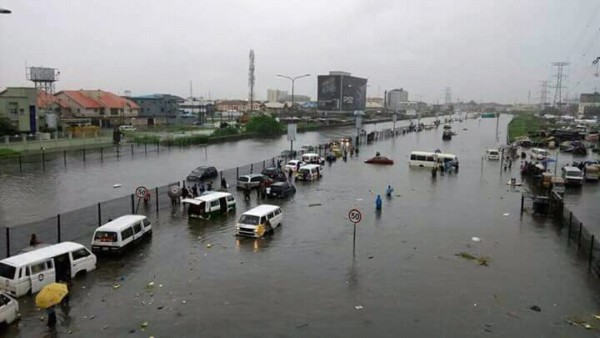
Flooded highway in Lekki, Lagos: High rainfall leads to flooding

Without improvements to dykes, improved construction standards and the displacement of human settlements, the number of people affected by flooding will rise considerably by the 2040s, the team led by Sven Willner at the institute based near Berlin predicted.

In Germany alone, the number of people affected by flooding could go up seven-fold.

“We were surprised that the need for adaptation was so great, even in highly developed countries with good infrastructure,” co-author, Anders Levermann, who heads adaptation research at PIK, wrote.

He highlighted a great need for adaptation in the U.S., parts of India and Africa and in Indonesia.

The report, which was compiled with the aid of computer simulations of rivers all over the world, said changing rainfall patterns resulting from global warming were behind the increased risk.

Cholera: Passport offices closed as Namibia bans food imports from Zambia

0

The Namibian government on Thursday, January 11, 2018 provisionally banned the import of all perishable food, fish, fruits, unprocessed food and water from neighbouring Zambia, which has been hit by a cholera outbreak.

Lusaka slum
A slum neighbourhood in Kanyama, Lusaka, Zambia

So far, no fewer than 60 people have died.

The ban came into effect on Monday and will stay until the situation in Zambia returns to normal, an official from the Ministry of Health and Social Services, who did not want to be named, told Reuters.

This is even as Zambia closed its main passport offices in the capital, a hub which is always thronged with people, as part of measures to curb the spread of cholera which is sweeping the country, the government said.

Street vending and public gatherings have also been banned in Lusaka to counter the disease, which has killed 67 people since September, 62 of them in the capital alone.

Home Affairs minister Stephen Kampyongo said the Passports and Citizenship Office in Lusaka would remain closed until further notice.

“In the meantime officers will only attend to travel emergencies. This is to allow for measures to be put in place to avoid the spread of cholera,” Kampyongo said.

Zambia is one of Namibia’s top four trading partners and its exports to Namibia totalled around $322 million in 2016, the latest available data.

Zambian media reported on Monday that cases of cholera continued to rise and the number nationwide stood at about 2,600, with 66 fatalities.

The Zambian government has banned all public gatherings in a bid to contain the spread of the deadly disease.

The Zambian High Commissioner and trade attaché to Namibia were not available for comment when contacted by Reuters

On Sunday, Zambia declared a curfew in a poor Lusaka township badly affected by a cholera outbreak to avoid crowding and street vending at night.

The curfew in Kanyama, a densely populated slum of iron-roofed shacks and dirt tracks runs from between 6 p.m. to 6 a.m.

Zambia on Wednesday started vaccinations against cholera targeting two million people as the total number of those who have fallen sick since the disease broke out peaked at 2,905.

The cholera outbreak was initially ascribed to contaminated water from shallow wells, but investigations suggest that contaminated food may also be to blame.

President Edgar Lungu on Dec. 30 directed the military to help to fight the spread of the waterborne disease.

Cholera causes acute diarrhoea.

It can be treated with oral hydration solutions and antibiotics but spreads rapidly and can kill within hours if not treated.

IFAD-CASP visits Borno, Yobe to sensitise farmers to modern farming techniques

0

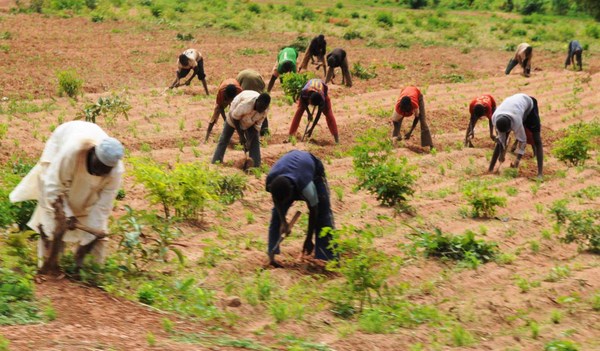
Officials of Climate Adaptation and Agribusiness Support Programme (CASP), an IFAD programme, have visited Borno and Yobe states to sensitise farmers to the application of modern farming techniques to boost agricultural production.

PIC. 15. FARMERS WEEDING AT DASS IN BAUCHI ON WEDNESDAY (11/7/12).
Farming

Mr Abdullahi Surajo, the Communication Officer of International Food and Agriculture Development (IFAD)-CASP, made this known via a statement in Abuja on Wednesday, January 10, 2018.

Surajo said that the National Coordinator of IFAD-CASP, Alhaji Lawal Idah, led the officials on the sensitisation mission to the two states.

He said that the team leader visited Damaturu to sensitise farmers to modern crop production techniques which would also boost their economic well-being.

He said that Idah called on the farmers to consider the impacts of CASP in efforts to develop agriculture in rural areas.

He said that the team leader said that this would promote the economic standing of smallholder farmers with low income who were particularly vulnerable to the challenges of climate change.

“I maintained that the IFAD-CASP collaboration with Nigerian Meteorological Agency (NIMET) is a step in the right direction, as farmers and other stakeholders in crop production will be supplied with meaningful information.

“The information will help them to determine the type of seeds to plant, in relation to the rainfall predictions, at every farming season.

“As such, this measure will surely eliminate all forms of unfortunate results, which could emanate from poor or non-availability of enough rainfall, to expect a bumper harvest at the end of the day,’’ Surajo quoted Idah as saying.

Besides, Surajo said that Mr Charles Olu of NIMET Office, Abuja, spoke on seasonal rainfall predictions that would be experienced in places like Southern Borno and Yobe.

“It will cover local government areas like Fika, Gulani, Potiskum and Fune in Yobe State; while in Borno State, Biu, Chibok, Askira/Uba and Gwoza, among others, are the expected areas which the predictions would affect,’’ Olu was quoted as saying.

NAN reports that the development objectives of IFAD-CASP include increased incomes, enhanced food security and reduced vulnerability for smallholder farmers, particularly women and youths, in the participating states.

Borno, Jigawa, Katsina, Kebbi, Sokoto, Yobe and Zamfara states are currently participating in the six-year programme, which started in 2015.

By Kudirat Ogunyemi

Macedonia ratifies Paris Agreement

0

The Republic of Macedonia on Tuesday, January 9, 2018 deposited its instruments of ratification of the Paris Agreement on Climate Change, making the former Yugoslav Republic the 173rd Party to the global treaty.

Gjorge Ivanov
Gjorge Ivanov, President of the Former Yugoslav Republic of Macedonia

According to the United Nations Framework Convention on Climate Change (UNFCCC), Macedonia’s ratification will come into force on February 8, 2018.

Previously, Montenegro (172nd), DR Congo (171st), Syria (170th), Nicaragua (169th), Switzerland (168th), the Czech Republic (167th), Dominican Republic (166th) and Cape Verde (165th) had deposited their instruments of ratification of the Paris Agreement on Climate Change.

Before this, Liechtenstein (164th), Ecuador (163rd), Myanmar (162nd) and Bhutan (161st), had also ratified the treaty.

The Paris Agreement was adopted on December 12, 2015 at the 21st session of the Conference of the Parties (COP21) to the United Nations Framework Convention on Climate Change (UNFCCC) held in Paris, France from November 30 to December 13, 2015.

On December 12, 2017 governments and representatives from all over the world gathered in Paris at the instance of French President, Emmanuel Macron, to celebrate the two-year anniversary of the Paris Agreement at the One Planet Summit. The Summit presented an opportunity to reaffirm global climate commitments to combat climate change and to emphasise the transition from negotiation to implementation of the Paris Agreement.

The Paris Agreement entered into force on November 4, 2016, 30 days after the date on which at least 55 Parties to the Convention accounting in total for at least an estimated 55% of the total global greenhouse gas (GHG) emissions have deposited their instruments of ratification, acceptance, approval or accession with the Depositary.

The Paris Agreement builds upon the Convention (UNFCCC) and – for the first time – brings all nations into a common cause to undertake ambitious efforts to combat climate change and adapt to its effects, with enhanced support to assist developing countries to do so. As such, it charts a new course in the global climate effort.

The Paris Agreement’s central aim is to strengthen the global response to the threat of climate change by keeping a global temperature rise this century well below 2 degrees Celsius above pre-industrial levels and to pursue efforts to limit the temperature increase even further to 1.5 degrees Celsius.

Additionally, the agreement aims to strengthen the ability of countries to deal with the impacts of climate change. To reach these ambitious goals, appropriate financial flows, a new technology framework and an enhanced capacity building framework will be put in place, thus supporting action by developing countries and the most vulnerable countries, in line with their own national objectives. The Agreement also provides for enhanced transparency of action and support through a more robust transparency framework.