A researcher, Mr Gbenga Aina, has appealed to the Federal Government and Lagos State Government to support researches and inventions in waste conversion processes.
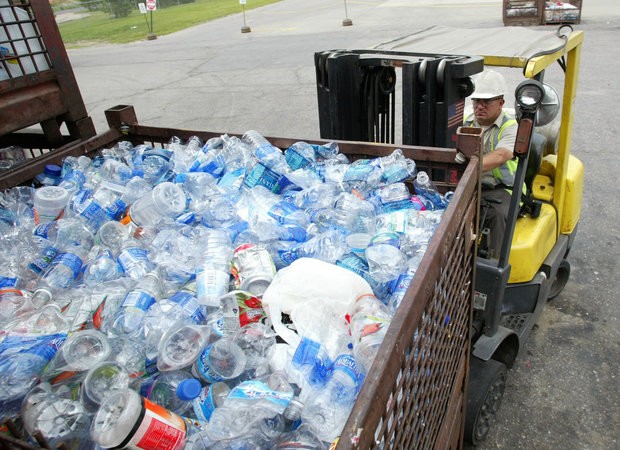
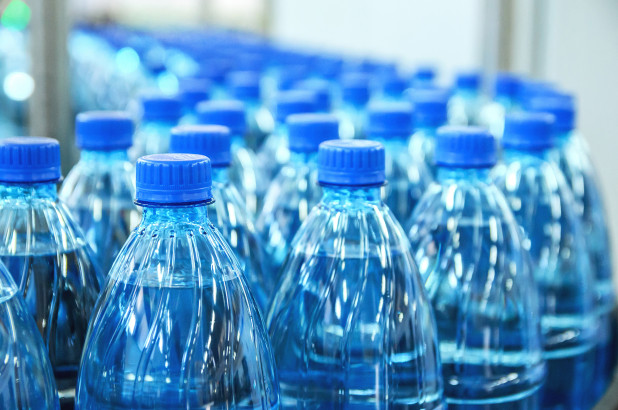
Disposal of waste plastic bottles. The researcher said that he has developed a process and machine which converts plastic bottles and water sachets into polycrete asphalt. Photo credit: Al Goldis / Associated Press
Aina, who is also a geologist, made the call in an interview with News Agency of Nigeria (NAN) in Lagos on Monday, March 26, 2018.
He said that he had developed a process and machine which converted plastic bottles and water sachets into polycrete asphalt that could be used for road construction and rehabilitation.
Aina said: “I have come up with a process which led to the invention of a machine.
“The process and machine turn waste plastic bottles and sachets into polycrete asphalt, which can be used as interlocks for roads or in form of asphalt for constructions and buildings.
“The idea is aimed at saving the environment from the huge waste generated from plastic bottles and bags, which pollute and degrade the environment as well as the entire ecosystem,’’ he said.
Aina said that work on the invention began in 2010 after a programme which he attended in India.
“I was sent to the programme as a representative from the Lagos State University (LASU); I got into this research because of the passion which I have for solving problems.
“My Indian friends and colleagues wanted to carry out a demonstration on the use of processed waste for road constructions; I picked up interest in it and I followed through with them.
“When I came back to Nigeria in 2010, I started working on how to replicate the invention; that was what gave birth to the production of polycrete asphalt.
“Polycrete asphalt is created from plastic waste, PET bottles, sachet nylon, polythene bags and silt packed from blocked drainage channels.
“This invention led me to building a locally made waste treatment plant and asphalt marine that converts all the waste into finished products, either as interlock or polycrete asphalt,’’ he said.
Aina said that he had carried out pilot studies with the finished products to repair some roads in Lagos State.
He, however, lamented that efforts to get the support of federal and state ministries, departments and agencies (MDAs) to support the invention had yet to yield any meaningful outcome.
“For instance, Lagos generates 35,000 metric tons of waste daily; we can convert this waste to repair about 22 kilometres of roads every day.
“The uniqueness of this invention is that it is 20 per cent cheaper, when compared to the conventional road surfacing technique, and it can last up to 35 years on the road.
“We have done test runs in Lagos and Ogun states as well as in some private jobs.
“If the government truly desires to have cleaner environment and durable road surfaces, the use of polycrete asphalt is the best and cheapest alternative.
“I appeal to the governments of Lagos and Ogun as well as the Federal Ministry of Power, Works and Housing to promote this invention which can save our environment and roads from degradation,’’ he added.
Worsening land degradation caused by human activities is undermining the well-being of two fifths of humanity, driving species extinctions and intensifying climate change. It is also a major contributor to mass human migration and increased conflict, according to the world’s first comprehensive evidence-based assessment of land degradation and restoration.
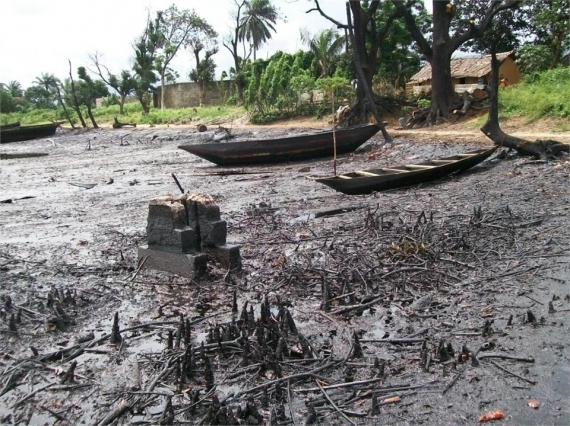
Land degradation from oil spill in Ogoniland, Nigeria
The dangers of land degradation, which cost the equivalent of about 10% of the world’s annual gross product in 2010 through the loss of biodiversity and ecosystem services, are detailed for policymakers, together with a catalogue of corrective options, in the three-year assessment report by more than 100 leading experts from 45 countries, launched on Monday, March 26, 2018.
Produced by the Intergovernmental Science-Policy Platform on Biodiversity and Ecosystem Services (IPBES), the report was approved at the 6th session of the IPBES Plenary in Medellín, Colombia. IPBES has 129 State Members.
Providing evidence for policymakers to make better-informed decisions, the report draws on more than 3,000 scientific, government, indigenous and local knowledge sources. Extensively peer-reviewed, it was improved by more than 7,300 comments, received from over 200 external reviewers.
Serious Danger to Human Well-being
Rapid expansion and unsustainable management of croplands and grazing lands is the most extensive global direct driver of land degradation, causing significant loss of biodiversity and ecosystem services – food security, water purification, the provision of energy and other contributions of nature essential to people. This has reached “critical” levels in many parts of the world, the report says.
“With negative impacts on the well-being of at least 3.2 billion people, the degradation of the Earth’s land surface through human activities is pushing the planet towards a sixth mass species extinction,” said Prof. Robert Scholes (South Africa), co-chair of the assessment with Dr. Luca Montanarella (Italy). “Avoiding, reducing and reversing this problem, and restoring degraded land, is an urgent priority to protect the biodiversity and ecosystem services vital to all life on Earth and to ensure human well-being.”
“Wetlands have been particularly hard hit,” said Dr. Montanarella. “We have seen losses of 87% in wetland areas since the start of the modern era – with 54% lost since 1900.”
According to the authors, land degradation manifests in many ways: land abandonment, declining populations of wild species, loss of soil and soil health, rangelands and fresh water, as well as deforestation.
Underlying drivers of land degradation, says the report, are the high-consumption lifestyles in the most developed economies, combined with rising consumption in developing and emerging economies. High and rising per capita consumption, amplified by continued population growth in many parts of the world, can drive unsustainable levels of agricultural expansion, natural resource and mineral extraction, and urbanisation – typically leading to greater levels of land degradation.
By 2014, more than 1.5 billion hectares of natural ecosystems had been converted to croplands. Less than 25% of the Earth’s land surface has escaped substantial impacts of human activity – and by 2050, the IPBES experts estimate this will have fallen to less than 10%.
Crop and grazing lands now cover more than one third of the Earth´s land surface, with recent clearance of native habitats, including forests, grasslands and wetlands, being concentrated in some of the most species-rich ecosystems on the planet.
The report says increasing demand for food and biofuels will likely lead to continued increase in nutrient and chemical inputs and a shift towards industrialised livestock production systems, with pesticide and fertiliser use expected to double by 2050.
Avoidance of further agricultural expansion into native habitats can be achieved through yield increases on the existing farmlands, shifts towards less land degrading diets, such as those with more plant-based foods and less animal protein from unsustainable sources, and reductions in food loss and waste.
Strong Links to Climate Change
“Through this report, the global community of experts has delivered a frank and urgent warning, with clear options to address dire environmental damage,” said Sir Robert Watson, Chair of IPBES.
“Land degradation, biodiversity loss and climate change are three different faces of the same central challenge: the increasingly dangerous impact of our choices on the health of our natural environment. We cannot afford to tackle any one of these three threats in isolation – they each deserve the highest policy priority and must be addressed together.”
The IPBES report finds that land degradation is a major contributor to climate change, with deforestation alone contributing about 10% of all human-induced greenhouse gas emissions. Another major driver of the changing climate has been the release of carbon previously stored in the soil, with land degradation between 2000 and 2009 responsible for annual global emissions of up to 4.4 billion tonnes of CO2.
Given the importance of soil’s carbon absorption and storage functions, the avoidance, reduction and reversal of land degradation could provide more than a third of the most cost-effective greenhouse gas mitigation activities needed by 2030 to keep global warming under the 2°C threshold targeted in the Paris Agreement on climate change, increase food and water security, and contribute to the avoidance of conflict and migration.
Projections to 2050
“In just over three decades from now, an estimated four billion people will live in drylands,” said Prof. Scholes. “By then it is likely that land degradation, together with the closely related problems of climate change, will have forced 50-700 million people to migrate. Decreasing land productivity also makes societies more vulnerable to social instability – particularly in dryland areas, where years with extremely low rainfall have been associated with an increase of up to 45% in violent conflict.”
Dr. Montanarella added: “By 2050, the combination of land degradation and climate change is predicted to reduce global crop yields by an average of 10%, and by up to 50% in some regions. In the future, most degradation will occur in Central and South America, sub-Saharan Africa and Asia – the areas with the most land still remaining that is suitable for agriculture.”
The report also underlines the challenges that land degradation poses, and the importance of restoration, for key international development objectives, including the United Nations Sustainable Development Goals and the Aichi Biodiversity Targets. “The greatest value of the assessment is the evidence that it provides to decision makers in Government, business, academia and even at the level of local communities,” said Dr. Anne Larigauderie, Executive Secretary of IPBES. “With better information, backed by the consensus of the world’s leading experts, we can all make better choices for more effective action.”
Options for Land Restoration
The report notes that successful examples of land restoration are found in every ecosystem, and that many well-tested practices and techniques, both traditional and modern, can avoid or reverse degradation.
In croplands, for instance, some of these include reducing soil loss and improving soil health, the use of salt tolerant crops, conservation agriculture and integrated crop, livestock and forestry systems.
In rangelands with traditional grazing, maintenance of appropriate fire regimes, and the reinstatement or development of local livestock management practices and institutions have proven effective.
Successful responses in wetlands have included control over pollution sources, managing the wetlands as part of the landscape, and reflooding wetlands damaged by draining.
In urban areas, urban spatial planning, replanting with native species, the development of ‘green infrastructure’ such as parks and riverways, remediation of contaminated and sealed soils (e.g. under asphalt), wastewater treatment and river channel restoration are identified as key options for action.
Opportunities to accelerate action identified in the report include:
Improving monitoring, verification systems and baseline data;
Coordinating policy between different ministries to simultaneously encourage more sustainable production and consumption practices of land-based commodities;
Eliminating “perverse incentives” that promote land degradation and promoting positive incentives that reward sustainable land management; and
Integrating the agricultural, forestry, energy, water, infrastructure and service agendas.
Making the point that existing multilateral environmental agreements provide a good platform for action to avoid, reduce and reverse land degradation and promote restoration, the authors observe, however, that greater commitment and more effective cooperation is needed at the national and local levels to achieve the goals of zero net land degradation, no loss of biodiversity and improved human well-being.
Knowledge Gaps
Among the areas identified by the report as opportunities for further research are:
The consequences of land degradation on freshwater and coastal ecosystems, physical and mental health and spiritual well-being, and infectious disease prevalence and transmission;
The potential for land degradation to exacerbate climate change, and land restoration to help both mitigation and adaptation;
The linkages between land degradation and restoration and social, economic and political processes in far-off places; and
Interactions among land degradation, poverty, climate change, and the risk of conflict and of involuntary migration.
Environmental and Economic Sense
The report found that higher employment and other benefits of land restoration often exceed by far the costs involved. On average, the benefits of restoration are 10 times higher than the costs (estimated across nine different biomes), and, for regions like Asia and Africa, the cost of inaction in the face of land degradation is at least three times higher than the cost of action.
“Fully deploying the toolbox of proven ways to stop and reverse land degradation is not only vital to ensure food security, reduce climate change and protect biodiversity,” said Dr. Montanarella, “It’s also economically prudent and increasingly urgent.”
Echoing this message, Sir Robert Watson, said: “Of the many valuable messages in the report, this ranks among the most important: implementing the right actions to combat land degradation can transform the lives of millions of people across the planet, but this will become more difficult and more costly the longer we take to act.”
About every five years, the usually powdery white snow turns orange in parts of Eastern Europe.
Orange snow
That happened again over the weekend, stunning skiers and snowboarders in Russia, Romania, Bulgaria, and other places in the region, with photos of the oddity appearing on social media.
“We’re skiing on Mars today,” exclaimed one social media user as he skied down the slopes.
According to The Independent, the phenomenon is understood to be the result of Sahara Desert sand and dust being carried into the atmosphere, where it mixes with snow and rain, and is then dumped over areas in Eastern Europe.
“There has been a lot of lifted sand or dust originating from North Africa and the Sahara, from sand storms which have formed in the desert,” UK Met Office meteorologist Steven Keates told the newspaper.
“As the sand gets lifted to the upper levels of the atmosphere, it gets distributed elsewhere.”
NASA satellite imagery shows plumes of dust from the Sahara moving across the Mediterranean, north toward the east of Europe. The Athens Observatory said in a Facebook post it was one of the biggest transfers of dust from the desert to Greece.
The African dust covered the entire country and concentrations were the highest in the last 10 years, according to the observatory’s meteorological service.
Earlier this year, a rare winter storm peppered the usually arid Sahara Desert with snow.
The Chairman, Cassava Growers Association, Cross River State chapter, Mr Austine Oqua, says registration of interested farmers for this year’s CBN Cassava Anchor Borrowers’ programme in the state had begun.
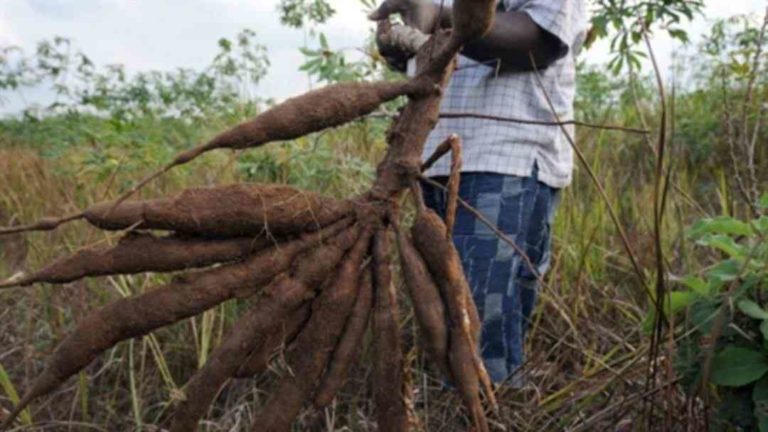
Cassava farming
Oqua, who disclosed this in an interview with the News Agency of Nigeria (NAN) in Calabar on Sunday, March 25, 2018 said 5,000 farmers were being targeted.
He said that 5000 hectares of land had been mapped out in the state for the Central Bank of Nigeria-sponsored cassava anchor borrowers’ programme.
“Cross River is among the participating states in the new CBN cassava anchor borrowers’ programme beginning in April.
“Cassava is one of the areas that the state has a comparative advantage and already, we have registered over 2000 farmers while we need 5000 farmers.
“We have been sensitising our farmers on the need to take advantage of the programme to increase their cassava production,” he said.
Oqua, who is also the Special Assistant to the Governor on Religious Matters, said that the proposed 5,000 hectares of land would be provided across the 18 local government areas of the state.
He added that every duly registered farmer would be provided with the necessary inputs and fund for the project.
He stressed the need for more women to be encouraged to participate in farming in the state, adding that they were more involved in farm work than the men.
The National Conscience Party (NCP) on Sunday, March 25, 2018 said that it would soon sue Lagos State Government for imposing a new Land Use Charge (LUC).
National Secretary of the NCP, Ayodele Akele
The National Secretary of the party, Mr Ayodele Akele, gave the hint at NCP’s Political Education and Membership Integration Programme in Lagos.
Akele said that NCP had established that the new charge was illegal and would go to court to stop its implementation.
The scribe said that the LUC was unaffordable and unacceptable even with the recent reduction by the state government following public outcry.
“We have already discussed with our lawyers to take the government to court very soon over the Land Use Charge.
“We are taking the action because we have been able to establish, from the face value, that the charge is unconstitutional.
“Based on that, we are challenging this new charge in court, apart from the political steps we have been taking to challenge it.
“The fact is that the new charge, even with the review, is unaffordable to most residents; it is outrageous and will inflict hardship on residents,’’ he said.
Akele said that the charge was not well thought out and would lead to sufferings.
The secretary advised the government to look for other means of raising funds, especially by reducing the cost of governance.
He said that it was improper to increase the charge when a new minimum wage had not been approved, adding that the state had introduced several other forms of taxes.
Akele said that the state residents had already been over-axed, and that only cancellation, not review, of the LUC would be acceptable.
He charged members of the party to be active in safeguarding the rights of the citizens, adding that they should ensure that the party would perform well.
The state Chairman of the party, Mr Fatai Ibu-Owo, said that the programme was organised to mobilise NCP members and give them the necessary political education ahead of the 2019 General Elections.
Ibu-Owo said that the ultimate goal of NCP was to take over government in Lagos State.
” Our next line of action is to take over the government of the state from Ambode.
“The state executive of NCP has put structures in every local government area so that the party can be very strong,’’ he said.
A presidential aspirant on the platform of the party, Mr Ebaye Ntan, said that all NCP members should play necessary roles to ensure the party’s success in 2019.
He urged the members to participate actively in the political process and embark on aggressive membership drive.
An NCP governorship aspirant, Mr Funsho Awe, urged the party members to have unity of purpose to ensure NCP’s success in the general elections.
Misdiagnosis of tuberculosis (TB) cases remains one of the major challenges in the treatment of the disease, says Mr Chidobu Anayo, Chemical Pathologist, El-Lab Medical Diagnostics and Research Centre, Lagos.
Minister of Health, Professor Isaac Adewole
According to him, lack of trained personnel, limitation in diagnostics tools and lack of follow-up are issues that need to be addressed in managing the disease.
While speaking on World TB Day 2018, Anayo told the News Agency of Nigeria (NAN) in an interview on Saturday, March 24 in Lagos that government should take the TB programmes to the grassroots.
“Many people don’t like going to government hospitals because of the rigorous process but government partners with the private sector.
“Give them all they need to make diagnosis, go there overtime to get data that can be used for follow-up.
“It will also help to get an actual figure of how many people in Nigeria have TB.
“They need to go to find out from private sector, how many TB tests have you done, how many diagnosis have you gotten, how can we contact them?
“That’s why all the research here are based on WHO statistics, which may not be exactly the situation,” he said.
World TB Day is marked globally on March 24 annually. The theme for 2018 is “Wanted: Leaders for a TB-free World”.
World TB Day gives an opportunity to draw attention to the disease, while mobilising political and social commitment to end TB.
NAN also reports that this year’s World TB Day is focused at ending TB by building commitment at all levels of leadership to help tackle the disease.
All levels of government, community leaders, civil society advocates, NGOs, doctors, nurses and health workers are expected to put in efforts to end TB in their communities.
According to a fact file on TB, published in January 2018 by World Health Organisation (WHO); in 2016, about 10 million people fell ill with the disease while almost two million died from it.
The WHO said that over 95 per cent of TB deaths occur in low and middle-income countries.
“Eighty seven per cent of new TB cases occurred in the 30 high TB burden countries.
“Seven countries account for 64 per cent of the total, with India leading the count, followed by Indonesia, China, Philippines, Pakistan, Nigeria and South Africa,” it said.
Also, Mr Onyeka Ezeizunwanne, a Laboratory Scientist at the laboratory, said that the major symptom of TB is cough, often mixed with blood that had lasted over two weeks.
“Loss of weight, night sweats, fatigue, fever, chills and loss of appetite, are the basic symptoms of TB,” he said.
The expert explained that it is an airborne disease that can be spread through the air when a person who has the disease sneezes, coughs, spits, talks or laughs.
Ezeizunwanne said that people living with HIV or certain kinds of cancers, diabetics, pregnant women and people suffering with malnutrition were at risk of contracting the disease, because their immunity was compromised.
The laboratory scientist also explained that TB may not be easily detected through screening tests like Mantoux and TB Serology or chest xray- which is mostly used for children.
He recommended Gold Standard tests like TB Microscopy, Genexpert and TB Quantiferon.
Anayo said: “Reduce exposure to the disease, avoid staying in closed places, stay in airy places because the density of bacilli is reduced.”
The world has a water problem. More than 2.1 billion people drink contaminated water. More than half the global population – about 4.5 billion people – lack access to proper sanitation services. More than a third of the global population is affected by water scarcity, and 80% of wastewater is discharged untreated, adding to already problematic levels of water pollution.
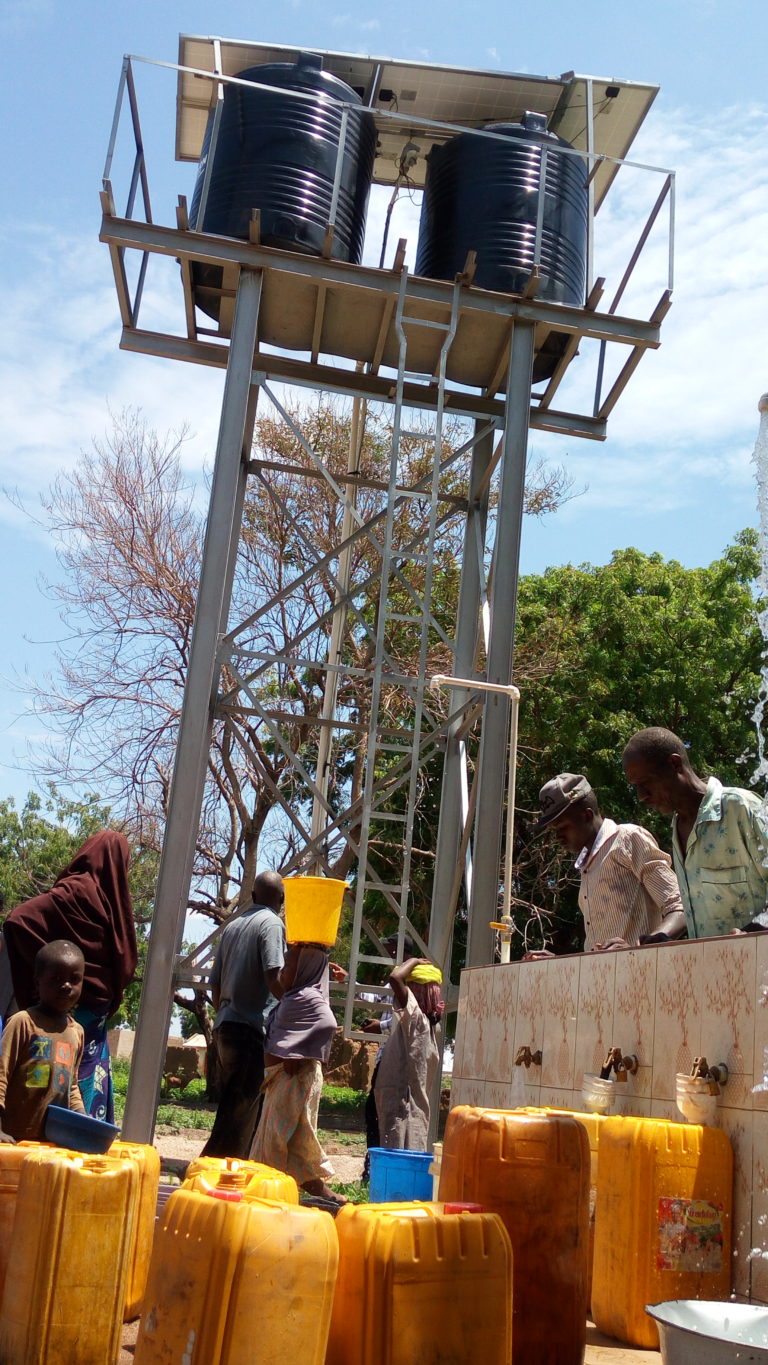
The UNDP Nigeria has utilised solar energy to provide water to some needy off-grid communities, and bringing succor to them. The photo shows a solar-powered water supply facility in Gaya Silkami, Adamawa State
These statistics make for uncomfortable reading but energy can be part of the solution.
The linkages between water and energy are increasingly recognised across businesses, governments and the public – and have been a major area of analysis in the World Energy Outlook (WEO). Thinking about water and energy in an integrated way is essential if the world is to reach the United Nations’ Sustainable Development Goals (SDGs) on water: to ensure the availability and sustainable management of water and sanitation for all.
The connection works in both directions. The energy sector accounts for roughly 10% of total water withdrawals and 3% of total water consumption worldwide. Water is essential to almost all aspects of energy supply, from electricity generation to oil supply and biofuels cultivation. Energy is also required for water treatment and to move water to where it is needed; in a first-of-a-kind global assessment, the WEO found that, on aggregate, the energy consumption in the water sector globally is roughly equal to that of Australia today, mostly in the form of electricity but also diesel used for irrigation pumps and gas in desalination plants.
With both water and energy needs set to increase, the inter-dependencies between energy and water will intensify. Our analysis finds that the amount of water consumed in the energy sector (i.e. withdrawn but not returned to a source) could rise by almost 60% to 2040. The amount of energy used in the water sector is projected to more than double over the same period.
This challenge will be especially acute in developing countries. This is where energy demand is rising fastest, with developing countries in Asia accounting for two-thirds of the growth in projected consumption. This is also where water demand is likely to grow rapidly for agriculture as well as supply to industry, power generation and households, including those getting access to reliable clean water and sanitation for the first time. This growth will lead to higher levels of wastewater that must be collected and treated, and will require that water supply is available when and where it is needed. As such, how the water-energy nexus is managed is critical, as it has significant implications for economic and social development and the achievement of the UN SDGs, especially SDG 6 on water.
Technology is opening up new ways to manage the potential strains on both the energy and water sides, with creative solutions that leapfrog those used in the past. For example, building new wastewater capacity that capitalises on energy efficiency and energy recovery opportunities being pioneered by utilities in the European Union and the United States could help temper the associated rise in energy demand from providing sanitation for all and reducing the amount of untreated wastewater (SDG Target 6.2 and 6.3). In some cases, achieving these targets could even produce energy: WEO analysis found that utilising the energy embedded in wastewater alone can meet more than half of the electricity required at a wastewater treatment plant.
Smart project designs and technology solutions can also help to reduce the water needs of the energy sector (thereby helping to achieve SDG Target 6.4). The availability of water is an increasingly important measure for assessing the physical, economic and environmental viability of energy projects, and the energy sector is turning to alternative water sources and water recycling to help reduce freshwater constraints. There is also significant scope to lower water use by improving the efficiency of the power plant fleet and deploying more advanced cooling systems for thermal generation.
Moreover the achievement of other energy-related SDGs, including taking urgent action on climate change (SDG 13) and providing energy for all (SDG 7), will depend on understanding the integrated nature of water and energy.
Moving to a low-carbon energy future does not necessarily reduce water requirements. The more a decarbonisation pathway relies on biofuels production, the deployment of concentrating solar power, carbon capture or nuclear power, the more water it consumes. If not properly managed, this means that a lower carbon pathway could exacerbate water stress or be limited by it.
Many who lack access to energy also lack clean water, opening up an opportunity to provide vital services to those most in need, provided these connections are properly managed. Pairing renewable decentralised energy systems (off-grid systems and mini-grids) with filtration technologies can provide both accesses to electricity and safe drinking water (Target 6.1). Similarly, linking a toilet with an anaerobic digester can produce biogas for cooking and lighting. Replacing diesel powered generators with renewables, such as solar PV, to power water pumps can help lower energy costs. However, if not properly managed, this could lead to the inefficient use of water, as was the case in the agricultural sector in India.
As such, the IEA’s new Sustainable Development Scenario, which presents an integrated approach to achieving the main energy-related SDG targets on climate change, air quality and access to modern energy, will add a water dimension to this analysis this year. The aim is to assess what the implications of ensuring clean water and sanitation for all are for the energy sector, and what policymakers need to do to hit multiple goals with an integrated and coherent policy approach.
By Molly A. Walton (Energy Analyst, World Economic Outlook)
Global energy demand rose by 2.1% in 2017, more than twice the previous year’s rate, boosted by strong global economic growth, with oil, gas and coal meeting most of the increase in demand for energy, and renewables seeing impressive gains.
IEA Executive Director, Fatih Birol
Over 70% of global energy demand growth was met by oil, natural gas and coal, while renewables accounted for almost all of the rest. Improvements in energy efficiency slowed down last year. As a result of these trends, global energy-related carbon dioxide emissions increased by 1.4% in 2017, after three years of remaining flat.
But carbon emissions, which reached a historical high of 32.5 gigatonnes in 2017, did not rise everywhere. While most major economies saw a rise, others – the United States, the United Kingdom, Mexico and Japan – experienced declines. The biggest drop in emissions came from the United States, driven by higher renewables deployment.
These findings are part of the International Energy Agency’s newest resource – the Global Energy and CO2 Status Report, 2017 – released online on Thursday, March 22, 2018, which provides an up-to-date snapshot of recent trends and developments across all fuels.
“The robust global economy pushed up energy demand last year, which was mostly met by fossil fuels, while renewables made impressive strides,” said Dr Fatih Birol, the IEA’s Executive Director. “The significant growth in global energy-related carbon dioxide emissions in 2017 tells us that current efforts to combat climate change are far from sufficient. For example, there has been a dramatic slowdown in the rate of improvement in global energy efficiency as policy makers have put less focus in this area.”
Other key findings of the report for 2017 include:
Oil demand grew by 1.6%, more than twice the average annual rate seen over the past decade, driven by the transport sector (in particular a growing share of SUVs and trucks in major economies) as well as rising petrochemical demand.
Natural gas consumption grew 3%, the most of all fossil fuels, with China alone accounting for nearly a third of this growth, and the buildings and industry sectors contributing to 80% of the increase in global demand.
Coal demand rose about 1%, reversing declines over the previous two years, driven by an increase in coal-fired electricity generation mostly in Asia.
Renewables had the highest growth rate of any fuel, meeting a quarter of world energy demand growth, as renewables-based electricity generation rose 6.3%, driven by expansion of wind, solar and hydropower.
Electricity generation increased by 3.1%, significantly faster than overall energy demand, and India and China together accounting for 70% of the global increase.
Energy efficiency improvements slowed significantly, with global energy intensity improving by only 1.7% in 2017 compared with 2.3% on average over the last three years, caused by an apparent slowdown in efficiency policy coverage and stringency and lower energy prices.
Fossil fuels accounted for 81% of total energy demand in 2017, a level that has remained stable for more than three decades.
As people and organisations worldwide, including all UN member states, observed the World Water Day on Thursday, March 22, 2018, a campaign was launched towards putting a stop to plastic pollution, courtesy of the Earth Day Network (EDN), a not-for-profit organisation.
Scientists say plastic particles in bottled water is a silent killer
World Water Day is an annual observance day on March 22 to highlight the importance of freshwater. It is also used to advocate for the sustainable management of freshwater resources.
According to the EDN, invincible plastic particles abound in drinking water and, with the “End Plastic Pollution” campaign, it hopes that the trend would soon be a thing of the past.
Exploring how microplastic pollution gets into the drinking water supply, the group notes that microplastics (extremely small pieces of plastic) are present in almost all water systems in the world – streams, rivers, lakes, and oceans.
It notes that 83% of the samples of tap water tested from major metropolitan areas around the world were contaminated with plastic fibers. In another study, EDN adds, 93% of water samples from major bottled water suppliers from around the world showed signs of microplastic contamination, including polypropylene, nylon, and polyethylene terephthalate (PET).
The EDN stresses: “The ways microplastics enter our water supply are surprising. Microplastics emanate from clothing, cosmetics, car tires, and paint chips, among other sources. They’re also created from all plastic items as they erode into smaller and smaller pieces.
“You might think that water purification systems run by cities and companies remove these microplastics, but you would be wrong. Plastic fibres are so tiny that they seem to be able to pass through the filtering systems used to purify the water from streams or rivers that goes into our homes and water bottles. They are also small enough to be easily transported by the wind.
“Since we seem to be drinking water contaminated with microplastics, what impact does this have on our health? We know that plastics contain chemicals added during the manufacturing process and that plastics absorb other toxins from the water. We know that those chemicals, when consumed by humans, have been associated with some health issues.
“You’ll be surprised to learn the ways plastic in drinking water can potentially harm the people who drink it!”
The group urges individuals,organisations and educators to learn more about the issue and organise friends, family, and community to put an end to plastic pollution.
The Government of Dominican Republic on Tuesday, March 20, 2018 deposited its instrument of ratification. The Caribbean nation thus becomes the 90th Party to the Minamata Convention.
Danilo Medina, President of the Dominican Republic
Belgium had several weeks before that on Monday, February 26 deposited its instrument of ratification, thereby becoming the 89th Party to the mercury treaty.
Nigeria had done likewise on Thursday, February 1 as the 88th Party; same for Cuba which on Tuesday, January 30 deposited its instrument of accession to become the 87th Party to the global pact that aims to control the negative impact of mercury.
Similarly, Lithuania deposited its instrument of ratification on Monday, January 15, 2018 to become the 86th Party to the Convention.
The Minamata Convention on Mercury (“Minamata Convention”) is an international environmental convention for global community to sswork collaboratively against mercury pollution. It aims at achieving environmentally sound mercury management throughout its life cycle. The Convention was adopted at the diplomatic conferences held in Minamata City and Kumamoto City in October 2013.
The 1st Conference of the Parties to the Minamata Convention (COP1), which gathered governments, intergovernmental and non-governmental organisations from around the world, held in Geneva, Switzerland from September 24 to 29, 2017.
The mercury accord entered into force on Thursday, May 18, 2017 after having garnered the required 50 ratifications.
Meanwhile, the Special Programme on Institutional Strengthening opened for applications on Friday, March 23. It will be open for four months.
The Special Programme aims to assist developing countries taking into account special needs of least developed countries and small island developing States, and countries with economies in transition to develop projects to support institutional strengthening at the national level for implementation of the Basel, Rotterdam, and Stockholm Conventions, the Minamata Convention, and the Strategic Approach to International Chemicals Management (SAICM).