Exhibitors at the just-concluded Science and Technology Expo in Abuja have called for more synergy among research institutions, agencies and innovators to develop the inventions exhibited at the expo.
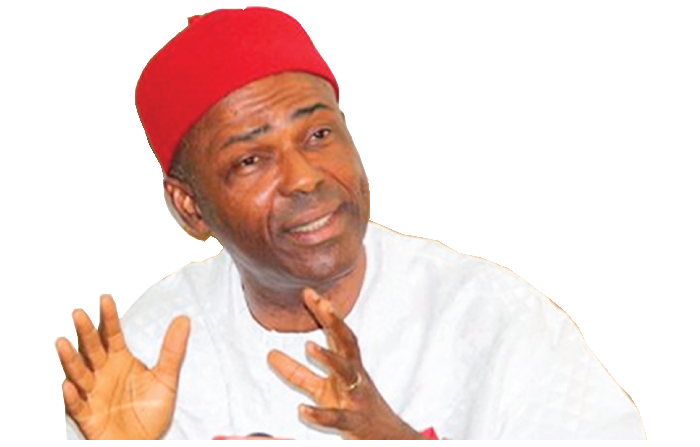
Dr. Ogbonnaya Onu, Minister of Science and Technology
Some of the exhibitors, who spoke with the News Agency of Nigeria (NAN) commended the efforts of the government in organising the expo, saying such synergy would ensure the development of the science sector.
They also called for proper funding of researches to encourage the production of locally made goods for commercialisation to generate revenue for the country and engage more entrepreneurs.
Dr Bonaventure Okere, the acting Director, Centre for Basic Space Science, Nsukka said “one institution might not have all it takes to develop equipment and this may require the help of another organisation.’’
“The expo is to expose inventions of people but the issue is how do we harness what we have discovered and do a follow up on them.
“We have to collaborate, we have to patent because somebody might be building equipment and needs a component from another institution or agency.
“The expo has exposed the level of our competence in science and technology, the next level is to follow up so that at the end we will achieve our aim,” he said.
Mr Tarsesugh Solomon, an exhibitor from Benue State University, Makurdi said the institution participated in the expo at the state level and was selected to exhibit at the national level.
Solomon, who came to showcase a “Freeze Dryer”’, a machine that uses low temperature for drying of vegetables invented by the university, said that the institution had created awareness on the equipment through the expo.
Solomon expressed hope that people who saw the equipment on display would request to purchase them on a larger scale.
He called on government to fund research institutions and create avenues for inventors to assess grants and funds.
“The government should find a balance between researchers and the industries because it will enable the research institutes narrow down their research toward solving local problems.”
Mr Chike Okoye, an exhibitor of artistic designs urged the government to sensitise exhibitors on the benefits of showcasing their wares in subsequent expos.
“Most people who come for the expo do not really know what they stand to benefit from exhibiting their items. The government should orientate the people on benefits of such fairs to their inventions.
“Apart from that, the government should assist local inventors to promote their ideas to international level.
“It is not enough for us to be here every year showcasing the same things,” Okoye said.
Mrs Angela Anyim, an exhibitor of herbal drugs said the expo, had exposed her to ideas on how to improve her business.
Anyim stressed the need for to follow up on small and medium businesses at the expo to ensure their growth.
The theme of the expo is “Fast Tracking Sustainable Development of Nigeria through Science and Technology”.
The expo is aimed at commercialising research development results, products and services of research institutes and tertiary institutions.
It also aimed at showcasing products of inventors, innovators and the manufacturing sectors including their achievements, breakthroughs in science, technology and innovations.
Sanctions to defaulters under the reviewed Land Use Charge (LUC) Law of Lagos are too severe and not in tandem with democratic ideals.
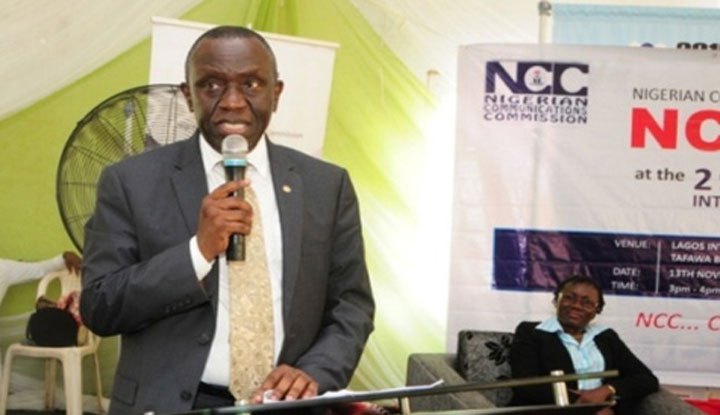
Babatunde Ruwase, the President of Lagos Chamber of Commerce and Industry (LCCI)
Mr Babatunde Ruwase, the President of Lagos Chamber of Commerce and Industry (LCCI), made the observation in Lagos on Friday, March 9, 2018 during a stakeholders’ forum on Lagos Land Use Charge Law, 2018.
He said that while the chamber would not encourage or support any form of infractions of the law, the sanctions must be proportional and fair.
The News Agency of Nigeria (NAN) reports that the Land Use Charge Law stipulates a 25 per cent increase in charge if payment was not made between 45 and 75 days.
It also prescribed a 50 per cent increase after 105 days and a 100 per cent increase if payment cannot be made between 75 to 105 days.
The law further prescribed that a property shall be liable to enforcement if payment is not made after 135 days of notice.
“There would be instances where the citizens are willing to pay, but just do not have the capacity to pay, given the state of the economy.
“The Nigerian economy is only just gradually recovering from recession. Many companies are yet to return to profitability.
“Industrial capacity utilisation has declined, purchasing power is still very weak, occupancy rate in many commercial and residential properties are still very low.
“All of these have adversely impacted the returns on investment in property market and points to the fact that current market value of property may not necessarily reflect the rental income for the property,” Ruwase said.
He said that only 300,000 property were paying the charge, while 700,000 property were identified for tax payment.
According to him, emphasis should be on getting more property into the tax net, rather than imposing additional burden on those currently on the database.
He urged government to explore the platform presented by VAIDS to capture more property owners into the net.
Ruwase suggested that implementation of the law be suspended, while the grey areas should be sorted out in the interest of fairness, equity and natural justice.
According to him, there is no evidence to show that adequate dissemination of information to critical stakeholders were followed and conditions stipulated for law review occurred before implementation of the law.
He said that stakeholders were concerned that assessed value used for computation of the law was high and difficult to justify.
According to him, the business community appreciates government’s efforts in investing in infrastructure and security and businesses are willing and ready to pay their tax.
He appealed to the government to create a tax environment that would be fair, equitable, inclusive, transparent and investment friendly.
Mr Akinyemi Ashade, Lagos State Commissioner for Finance, said that the law aimed at entrenching a regime of self assessment that would allow property owners to make their own calculation and know their rate with the help of professional valuers.
Ashade said that various reliefs had been made available to payers, including a general 40 per cent relief for all property liable to LUC payment.
According to him, property of N10 million and below constitute 75 per cent of property owners in the state and are expected to pay N5,000 per annum as land use charge.
Ashade said that the new Law also established an Assessment Appeal Tribunal which authorised the adoption of Alternative Dispute Resolution in resolving disputes concerning LUC demand notice provided the appeal was lodged within 30 days after the receipt of the notice.
FishNet Alliance was birthed in Lome, Togo on Thursday, March 1, 2018. It was made possible by the local fishers and with the facilitation of Association Jeune Chretien en Action pour le Developpement (JCAD). The epochal event took place at Centre d’Education Spirituelle pour l’Apostolat des Laics (CESAL). Togo now joins Nigeria, Cameroon, Nigeria and South Africa as countries where FishNet Alliance has members.
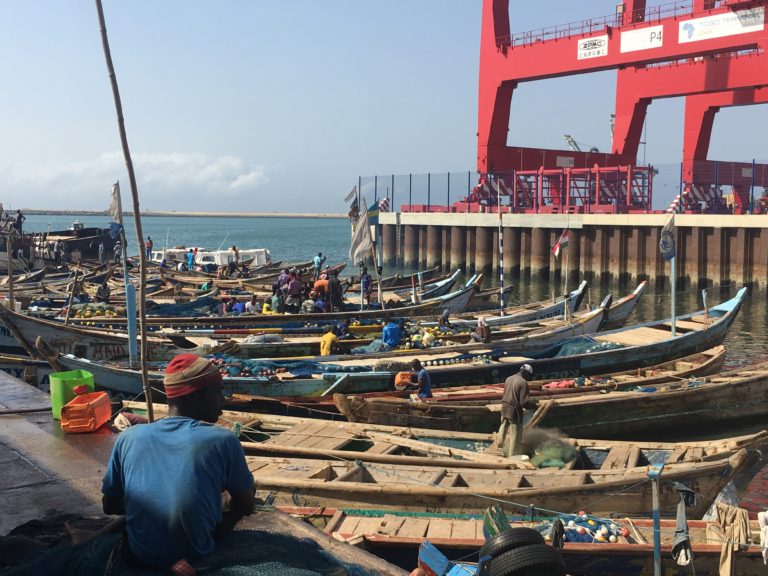
Fishermen and their boats in Lome, Togo. Photo credit: Nnimmo Bassey
At the event, Ahianyo Kokou Guy, the chairman of the Board of JCAD, stated that the gathering was called to mobilise fishers who have been impacted by oil exploration/extraction as well as from impacts of climate change. It was also to develop resilience strategies to climate change to help protect their livelihoods. He was optimistic that the sharing of oil impact experiences from Ghana and Nigeria would set the stage for the inauguration of the FishNet Alliance in Togo.
Steady Growth of the Fishing Sector in Togo
First presentation was on “Fisheries and the Impacts of Climate Change” by the leader of the fishers group, Mr Dermane Adam. He stated that fishing in Togo is mostly artisanal and that there are a total of 22,000 fishers – 12,000 of which are women while 10,000 are men. Their current fishing harbour at Ablogame, Lome, is giving way to an expanding container port while a new one is being constructed by the government with support from the Japanese government.
The sector was mostly dominated by fishermen and women from Ghana and other countries until the 1980s when then president Eyadema decided to promote the sector in order to have more Togolese in the trade. Fishers in Togo became better organised from the 1990s, this made the government pay more attention to the sector.
“I come from Northern Togo, and many wonder how I became a fisherman here. I became a professional fisherman in the 1980s when then president showed interest in developing the sector and getting more Togolese involved, ” said Adam.
Today they have fishing schools and the sector is gradually getting more mechanised with the introduction of newer fishing techniques.
Challenges
Fishers have to go further offshore to increase the chance of making a good catch. This would require the acquisition of bigger boats which are purchased in Ghana at the cost of $1,400 each.
“After buying the boat you have to buy the outboard engines imported from Japan and sometimes from China. One engine costs over $4,000,” Adam added. “Besides the purchase of the boat and an engine, one still needs to buy the nets at about same price as the engine. It is an expensive business and the possibility of getting financial support from the banks is very slim,” he said.
Adam is worried that petroleum exploration and extraction activities in Togolese waters will harm the marine ecosystems and compound the challenges facing the fishers. He noted that fish are migrating away from noisy coastlines and from pollution from oil spills and waste oils.
Adam was hopeful that, with the formation of the FishNet Alliance, the fishers would have information about activities in other countries and also have a wider space for sharing experiences.
Oil and Gas eroding the identity of the Fisheries Sector
Noble Wadzah of Oilwatch Ghana spoke on the subject: “The Fisheries Sector: A Lost identity in the Scheme of Oil and Gas”. His presentation covered the key features of Revenue Management Act of Ghana, highlighting the big failures and gaps in its formulation and with regards to the fisheries sector. He also focused on how fisheries sector is perceived in official circles in Ghana.
Oil business picked up with the discovery of the resource in Ghana in 2008. Politicians and bureaucrats were very happy. The citizens got drawn into the euphoria – all believing that a lot of funds would come into the system and citizens would enter an era of prosperity.
Ghana started with thinking about how to manage oil revenue before thinking of any Oil and Gas Policy and then harmonising the Exploration and Production Law. Wadzah saw this as a fatal flaw in the approach to the oil and gas business. He then detailed the tripod on which the Act stands as follows: 1. Support national budget, 2. Assign funds for future generations, and 3. Stabilise economy when there are shocks.
His brisk presentation went on to list the following:
10% (2.5 million) of the Ghanaian population engage in fisheries. Double that number for others that depend on those directly involved in fishing.
Oil contributes $1.2 million annually to the Ghanaian economy.
Interestingly, it is the same amount that fisheries brought to the economy that was the expected revenue to be broumht in by oil at that time.
Environmental Impact Assessments (EIAs) prepared by oil companies claimed that fisheries would not be impacted by oil activities.
In order to fast track oil exploitation, government ignored the requirements in existing laws that required fisheries impact assessment before any extractive activities are permitted in the seas.
A commission to manage the oil did not include any representatives from the fisheries sector.
Fishers are now resisting oil activities in their waters due to unmet expectations and these have led to conflicts and arrests of some locals.
Government is now beginning to think about how to build harmony between oil exploitation and fisheries through a Sea Safe Framework.
Wadzah rounded up his presentation by highlighting that, within 10 years of oil extraction, no benefits have trickled down to the local fishers and it has become clear that rather than expecting gains they are in for more loses.
He recommended that, as a way forward, oil and gas business must not dominate or destroy fisheries business. He noted that fisheries are renewable whereas oil is not and that whereas fisheries support citizen’s economy, oil does not. He also stated that the FishNet Alliance demands that investments must shift away fossil energy and into renewables. The Alliance also believes that fisheries holds the key to economic progress and nutrition for Africa.
Fish Not Oil
Nnimmo Bassey brought a report from Nigeria and this elicited interest from participants who wanted to know what the clean-up situation was in the Niger Delta after six decades of oil and gas extraction. What is the fate of the 6.5 million fishers in Nigeria? Participants learned that the clean-up process of the Niger Delta is commencing with Ogoni territory and that, according to a report prepared by the United Nations Environment Programme (UNEP), it would take a generation (30 years) to complete the clean-up and restoration of that environment.
The general situation of oil and gas exploration in inland water bodies as well as along the entire continental coastline was examined with the potential for political conflicts between nations – due to the resources being found along national boundaries- as well as the impending oil spills and other polluting activities. Pollution of ground water was highlighted as problematic in South Sudan and Nigeria.
The damage to fisheries was emphasised and the fact that fishers have already started campaigns against extractive activities in Nigeria, Ghana, Cameroon and South Africa was underscored. Of interest was the fact that some countries have already legislated against extraction of petroleum resources in their waters. Examples were given of Costa Rica and Belize. It also mentioned that El Salvador has banned mining in order to protect nature’s gifts in that nation.
FishNet Alliance expands
At the end of deliberations, the FishNet Alliance Togo was formally inaugurated by Nnimmo Bassey, who stressed that the Alliance was a platform for solidarity, connecting of struggles and support for livelihoods.
Mr Adam declared that “united we are strong”. He also added that the Alliance would embolden the fishers in Togo to take strong positions, make strong demands for the protection of marine ecosystems. He added, “We are ready to share information and to participate in activities of the network.”
In the spirit of the 2018 International Women’s Day, Unique Women in Agriculture Initiative Cluster (UWIACI), has pressed for progress in women and agricultural issues in Nigeria.
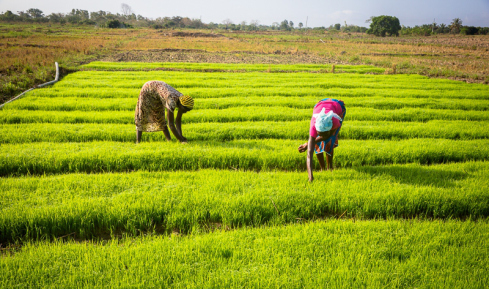
Women engaged in dry season rice farming through irrigation
Bridget Okonofua, president, Unique Women in Agriculture Initiative (UWAI) and the brain behind UWIACI, said one key area Nigerians need to press for progress is in agriculture as it concerns women.
UWIACI is a women-owned non-profit organisation established to respond to leadership, production, value chain, opportunities and capacity development challenges confronting women in the agriculture sector.
All over the world, March 8 is a date that unites millions of women celebrating one another’s achievement and calling for greater equality in every area of life.
According to her, the push for gender equality has gained steam in recent months, following a series of revelations about abuse and gender inequality in several sectors of the society.
The Federal Ministry of Agriculture and Rural Development says women account for 75 per cent of the farming population in Nigeria, working as farm managers and suppliers of labour.
For Okonofua, though women constitute a large portion of the farming population, their possibilities in agriculture are hindered by formal and traditional rules.
She said: “They have low access to funding, land – women produce 80 per cent of crops but own about one per cent of land, technological advancement and market opportunities. They are usually classified as high risk projects when applying for loan facilities; they are therefore rarely connected with agricultural export crops, transportation and large-scale or commercial farm production, but are usually involved in small-scale farming and processing jobs.
“From a growth as well as equity perspective, such gender inequalities are problematic as they lower well-being and are forms of injustice in most conceptions of equity and justice.”
Okonofua has formed a cluster, in which women come together to invest, get trained and take up seemingly difficult tasks with a collaborative effort.
Less than a year in existence, membership of the group has skyrocketed to over 200.
“We have collaborated to embark on piggery, watermelon and cassava cultivation projects, sponsored farmlands for farming and trained over 50 women in agricultural waste management and hydroponics.
“The theme for this year’s International Women’s Day, “Press for Progress”, is a call to seek advancement in every area where this inequality is prevalent. We are committed to doing our part in the area of women and agriculture,” she added.
International Women’s Day, usually celebrated on March 8, is a day set aside to celebrate the social, economic, cultural and political achievements of women all over the world. The theme for 2018 International Women’s Day is “#Press for Progress” – a push for gender equality worldwide. The Nigerian Alliance for Clean Cookstoves has joined the rest of the world to press for progress in gender equality especially when it comes to the unpaid work and task associated with cooking.
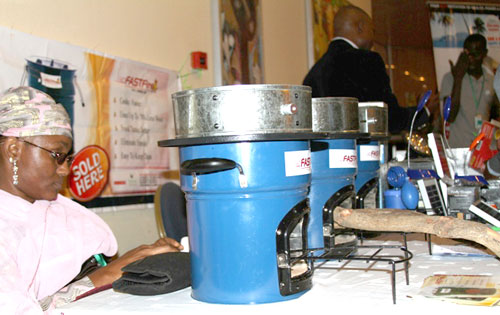
Clean cookstoves
Nigeria, says the group, suffers a “silent” energy crisis – poor access to clean cooking energy. Over 20 million households and about 120 million Nigerians depend on wood primarily as a source of fuel for cooking, it adds.
“It is recognised that women disproportionately make up this number. This is despite the abundance of modern cooking energy sources including natural gas. The World Health Organisation (WHO) estimates that cooking in an open fire releases harmful toxic (especially particulate matter and carbon monoxide), which causes about 95,000 deaths annually in Nigeria. After malaria and HIV/AIDS, this is Nigeria’s third highest killer of mostly women and children. Cooking in an open fire in your kitchen is also likened to burning 400 cigarettes an hour.
“Cooking inefficiently using the traditional method (open fire), causes pneumonia in children, low birth weight babies, still birth, and lung diseases. Moreover, it is expensive, burning up to 90% more wood than is necessary and costing poor families money that could be put to better use on education, health and nutrition.”
According to the alliance, the use of efficient and clean cookstoves saves lives, improves livelihood, empowers community and combats climate change. Enhancing access to clean cookstoves is linked with progress on the implementation of many of the Sustainable Development Goals (SDG). The Nigerian Alliance for Clean Cookstoves, adds the organization, promotes the transition from the use of traditional three-stone stoves/open fire to higher levels of efficiency and cleaner cookstoves such as LPG, ethanol, electric, solar and efficient biomass stoves.
“The Nigerian Alliance recognises that when given the chance, women and girls, including those displaced by insurgency can do so much more with their time. A clean cookstove means new opportunities for women, within their families, their communities and the society at large. Inadequate access to clean cooking energy needs to be taken as a development priority and be tackled today.
“As we celebrate the International Women’s Day, NACC recommits and reaffirms support to all women who are striving to overcome energy poverty, especially women-led community groups and organisations, and women investors to speed progress in ending energy poverty – and bring clean cooking solutions to everyone. Let us press for progress towards clean and safe cooking practices to prevent death and diseases for women and children, and accelerate the fight against cooking energy poverty.”
Director-General of the World Health Organisation (WHO), Dr Tedros Adhanom Ghebreyesus, in a message to commemorate the 2018 International Women’s Day, says that gender equality must be at the core of ‘Health for All’ agenda
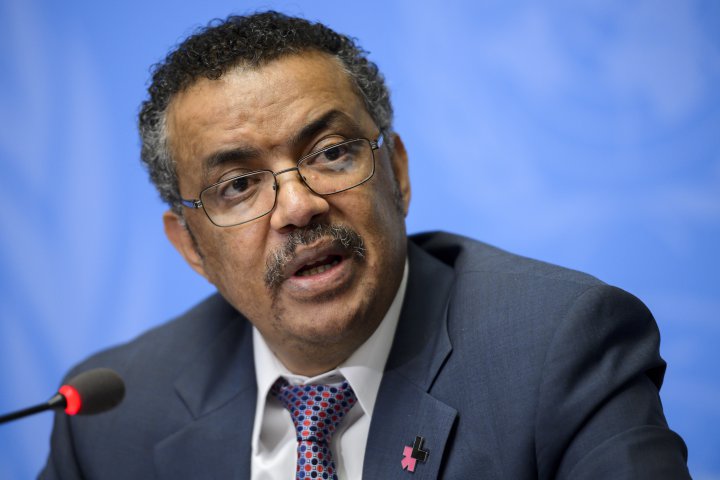
Dr Tedros Adhanom Ghebreyesus, Director General of the World Health Organisation (WHO). Photo credit: FABRICE COFFRINI/AFP/Getty Images
On this International Women’s Day, we imagine a world where every woman and girl has access to quality and affordable health care, a world in which women and girls can freely exercise their sexual and reproductive health rights, and one where all women and girls are treated and respected as equals.
The theme for this year’s International Women’s Day is the “Time is Now: Rural and urban activists transforming women’s lives”; and today is a good day for each and every one of us to speak-up for gender equality and women’s rights.
At the World Health Organisation, we’re speaking up for women and girls’ right to health. When women and girls are able to stay in school longer, plan or prevent pregnancies and access health services without discrimination, they can improve their economic opportunities, and ultimately transform their futures.
But, we also must do more than speak. We must act.
Nothing will help women and girls more than ensuring that everyone, everywhere, can benefit from quality health services when and where they need them, without fear of falling into poverty when using them.
Today, at least half of the world’s people are lack access to essential health services – such as antenatal care throughout pregnancy, or immunisations to prevent maternal and neonatal tetanus or HPV – because they are not available or are financially out of reach. A disproportionate number of these people are women and girls.
Almost 100 million people are also being pushed into extreme poverty – living on less than $1.90 per day – because they have to pay for health services out of their own pockets. This is unacceptable. A woman should not have to choose whether to send her child to school, purchase food or pay for a health visit.
Universal health coverage – WHO’s top priority – means that health packages designed for women and adolescent girls should include services to promote health and prevent and treat disease. Excluding access to contraception from health plans, therefore limiting women’s and adolescent girls’ ability to plan or prevent pregnancies, is not health for all. It’s discrimination and it fuels further gender inequality.
Fundamental to achieving universal health coverage is equity. All women and girls – rich or poor, urban or rural, educated or illiterate – must be able to access the health services equally. But, in low- and middle-income countries, the proportion of births attended by skilled health personnel differs by up to 80 percentage points between the richest and poorest women. The presence of skilled health personnel during childbirth is a key to preventing maternal and newborn deaths.
These skilled birth attendants and the largely female health workforce must also be allowed to participate in leadership and decision-making, access formal employment, make a fair wage, and work in a place free from physical and sexual violence.
I am working to make sure we also walk the talk when it comes to women in the health workforce. Today, more than 60% of our senior positions are held by women, and we’re working to ensure our regional and country offices follow suit. We can’t be effective at promoting universal health coverage if we don’t have all voices at the table – and today I’m excited to see the female faces from all over the world sharing their ideas for change.
We know that, when universal health coverage is achieved, poverty will be reduced, jobs will be created, economies will grow, and communities will be protected against disease outbreaks. But we also know women’s economic opportunities will advance, and their children’s health and development will follow in step.
The Environmental Rights Action/Friends of the Earth Nigeria (ERA/FoEN) has called on the Federal Government to immediately commence enforcement of the ban on sale of cigarettes in single sticks following a new Africa-wide report which shows that sale in single sticks is a tactic by tobacco corporations to reach kids because of their ready availability and cheapness.
According to scientists, tobacco smoking is dangerous to health
The report, titled: “Sale of Single Sticks of Cigarettes in Africa”, released in Cape Town, South Africa on Wednesday, March 7, 2018 by the Africa Tobacco Control Alliance (ATCA), identified the British American Tobacco (BAT), Philip Morris International (PMI), and Imperial Brands as the main perpetrators of the practice in 10 African countries surveyed.
The 10 surveyed countries are Nigeria, Togo, Uganda, Niger, Kenya, Ghana, Cote d’Ivoire, Chad, Cameroun, and Burkina Faso.
According to the ATCA, the data for the new report was collected around locations where young people meet such as malls, shopping centres, movie theatres, and game shops in the capital cities of the countries under study.
Three questionnaires were used for three different target groups to provide different perspectives on single stick availability in the respective countries.
At the public presentation of the report in Cape Town, Deowan Mohee, the Executive Secretary of ATCA, said although many African countries have legislation banning the sale of cigarettes in single sticks, tobacco companies have continued to “openly flout” the laws.
In a statement issued in Lagos, ERA/FoEN said that the mention of Nigeria in the list of countries deliberately targeted by the tobacco corporations has further reaffirmed how desperate the tobacco industry “wants to grab the lungs of kids” in Nigeria and across the continent.
ERA/FoEN Deputy Executive Director, Akinbode Oluwafemi, said: “Report after report has shown that the tobacco industry is deliberately targeting kids as replacement smokers. The depth of the single sticks survey shows this wicked practice is Africa-wide and urgently requires swift and deliberate actions across the continent to save our kids and the next generation.”
Oluwafemi noted that the report confirmed findings in the “Big Tobacco Tiny Targets Nigeria Report” which ERA/FoEN and the Nigerian Tobacco Control Research Group presented to the public in 2017 after a survey in five states – Nassarawa, Lagos, Oyo, Kaduna and Enugu.
The ERA/FoEN boss said, “The Nigerian government needs no further proof to justify further delay in commencement of the enforcement of the NTC Act. Single stick sale is a proven ploy that gives our kids unfettered access to the lethal products marketed by BAT, PMI and other tobacco entities. Only an immediate ban will save our kids from an imminent epidemic.
“Tobacco consumption is a major public health concern and a serious threat to development in Africa. Since tobacco companies worry more about illicit profits by getting as many people as possible to smoke, it is the duty of our government to safeguard our lives. Banning single sticks is one of the ways of doing this.”
In Nigeria, almost a third of hospitals and clinics in the country do not have access to clean water; the same percentage do not have safe toilets and one-in-six do not have anywhere to wash hands with soap. This puts some of the most vulnerable members of society – mothers and their newborns – at unacceptable risk of infection and death.
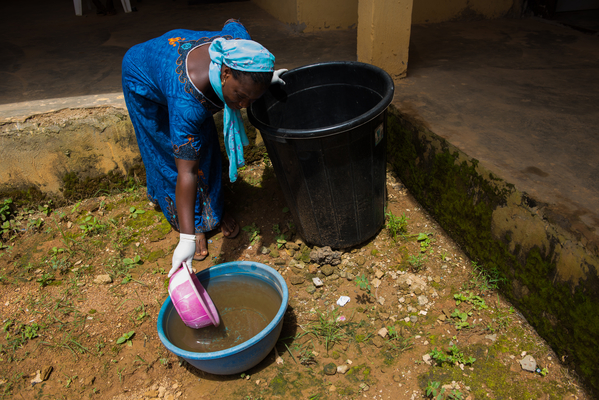
Gloria Samuel, 37, a cleaner at Bwari town Primary Health Centre, showing the rain water collected that is used to clean the toilets because there is no water supply to the centre. They also buy clean water to use for cleaning more sensitive sanitation and for patients who need clean water to wash. Upkuduru ward Bwari LGA, Abuja, Nigeria
As the world commemorates International Women’s Day, WaterAid Nigeria calls on all stakeholders in the health sector to accelerate progress towards ensuring improved access to water, sanitation and hygiene in health care facilities. The assumption that water, sanitation and hygiene (WASH) is beyond the remit of the health sector is a costly perception which hinders progress in reducing maternal and child deaths.
It has been shown that a baby’s chances of dying in the first month of life is cut by half if a mother and her birth attendant both wash their hands before handling the baby. Tragically for one in five babies who die in their first month in the developing world, just being washed in clean water and cared for in a clean environment by people who had washed their hands could have prevented their untimely deaths. The ability to keep a hospital or clinic clean is such a fundamental basic requirement of health care that we must question whether a facility without clean running water or basic sanitation can adequately serve its patients.
Women and girls, who make up more than half the world’s population, are often more deeply impacted than men and boys by a lack of access to water, sanitation and hygiene.
The theme for this year’s International Women’s Day, #PressforProgress, calls on people to keep motivated in the now strong global momentum of advocacy, activism and support striving for gender equality. We need to push for the consideration and inclusion of women in all spheres of society and development.
Dr ChiChi Aniagolu-Okoye, Country Director of WaterAid Nigeria, said: “Dirty water, poor sanitation and poor hygiene including lack of handwashing facilities with soap is primarily a women’s issue, impacting the health and well-being of women and girls more than men. It is causing a crisis of massive proportion in health that simply cannot continue and which needs addressing at the highest levels. Clean, plentiful water, good sanitation and good hygiene including handwashing with soap are absolutely essential to effective health care.
“At WaterAid, our work is all about transforming lives by improving access to water, sanitation and hygiene and women and girls bear the brunt of the burden caused by a lack of access to these basic and life-saving services.
“The world’s leaders promised to eradicate extreme poverty and leave no one behind in the Global Goals on Sustainable Development. We must keep pressing for progress for women. That means ensuring, amongst other things, that women have access to adequate facilities in health care centres. Ensuring we make progress for women and girls in this area will ultimately lead to healthier women and families, who have a better chance of working their way out of extreme poverty.”
A lack of access to water, sanitation and hygiene also has implications beyond health. The lack of these essential services creates a massive crisis for developing countries like Nigeria – undermining not just health systems but education, economic development, and progress on gender equality. All sustainable development is made impossible without clean water and access to sanitation and hygiene facilities.
On the International Women’s Day 2018, WaterAid Nigeria is calling for:
The Nigerian Government to ensure that healthcare facilities and birthing centres have safe toilets, clean running water and functional handwashing facilities, to reduce maternal, newborn and child deaths
Water, sanitation and hygiene to be positioned as a crucial contributor to health and for policy makers and health sector stakeholders to become aware of the link and crucial role that sanitation plays in improving child survival rates and health outcomes
The inclusion of water, sanitation and hygiene into health plans, policies and programming
Our leaders to fund, implement and account for progress towards the Sustainable Development Goals and particularly Goal 6 – to ensure water, sanitation and hygiene for all
An improvement in access to water and sanitation with political prioritisation and long-term increases in financing for water, sanitation and hygiene, by Government at all levels.
The International Women’s Day 2018 was celebrated on Thursday, March 8, 2018 with the theme: “Time is Now: Rural and urban activists transforming women’s lives”. It is regarded as an important opportunity to look at women’s and girls’ rights in the context of climate change, as well as equality and justice with an intention to turn momentum on climate into action.
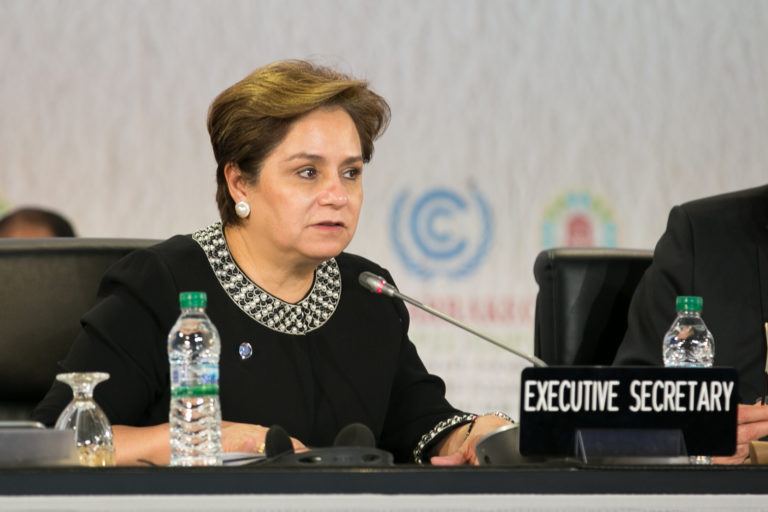
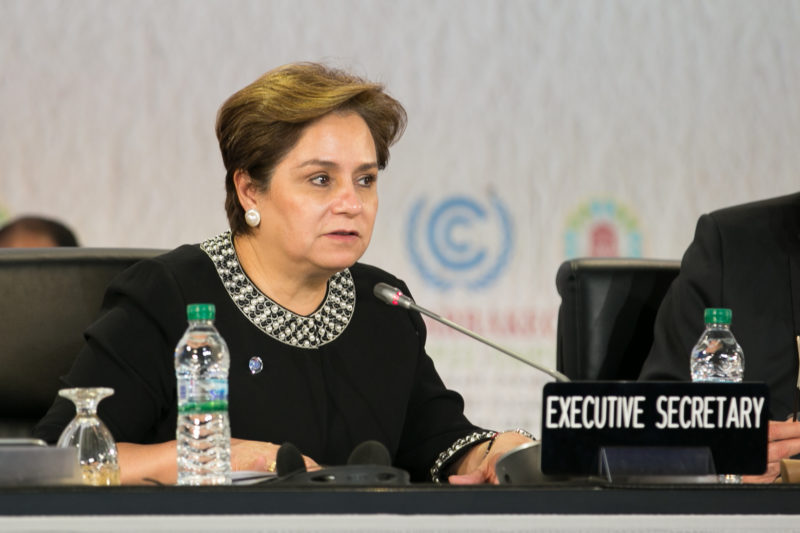
Patricia Espinosa, executive secretary of the UNFCCC
Women are said to be powerful agents of change, so integrating their voices into the climate decision making processes is critical to build a low carbon and more climate resilient societies. Including women and men equally in UN climate processes and policy is also imperative at all levels of climate action.
The Paris Climate Change Agreement acknowledges this, saying: “…climate change is a common concern of humankind, Parties should, when taking action to address climate change, respect, promote and consider their respective obligations on human rights, as well as gender equality, empowerment of women and intergenerational equity”.
Governments made important steps towards a “gender-responsive” approach at UN Climate Change Conference COP 23 in Bonn, Germany, in 2017. In Bonn, they adopted the first ever “Gender Action Plan”.
The plan aims to increase the participation of women in all UN Climate Change processes, further strengthening their contribution in all activities to build resilience to climate change, curb greenhouse gas emissions and implement climate-related decisions taken under the UN umbrella.
Women and girls face higher risks and are more vulnerable to the burdens from the impacts of climate change than men. This is particularly true for poor people. Women’s social status in most societies means that they are the predominantly responsible for food production, water supply and energy supply for heating and cooking. As the impacts of climate change increase, these tasks will become more difficult and time-consuming.
The implementation of the gender-responsive climate policy at regional, national and local levels will allow for women to bring their wealth of knowledge to the table, enhancing the ability of societies to deal with the changing climate.
Women’s involvement in climate action is also important in achieving the UN Sustainable Development Goals, which notes: “Gender equality is not only a fundamental human right, but a necessary foundation for a peaceful, prosperous and sustainable world. Providing women and girls with equal access to education, health care, decent work, and representation in political and economic decision-making processes will fuel sustainable economies and benefit societies and humanity at large.”
The head of UN Climate Change, Patricia Espinosa, calls for raised gender and climate ambition: “If we are to make the changes needed, we must have unprecedented cooperation, coordination and confidence. And women must be at the forefront. It’s not opinion. It’s not aspiration. It’s a fact.”
Nigeria’s Lassa fever outbreak has reached record highs with 317 laboratory confirmed cases, according to figures released recently by the Nigeria Centre for Disease Control (NCDC).
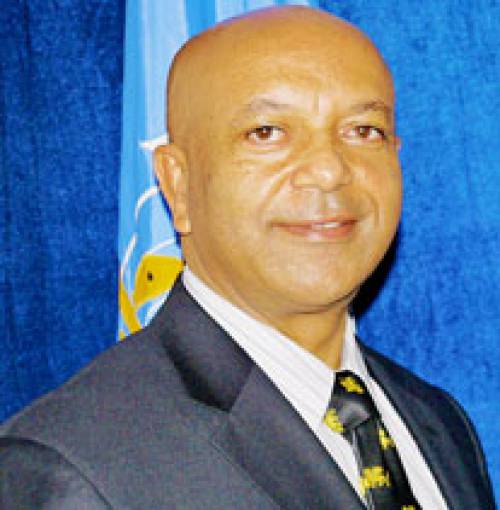
Dr. Wondimagegnehu Alemu, the WHO Country Representative to Nigeria
Although endemic to the West African nation, Lassa fever has never reached this case count in Nigeria before, according to the World Health Organisation (WHO). The number of confirmed cases during the past two months exceeds the total number of confirmed cases reported in 2017.
The outbreak has affected 18 states since the first case was detected on January 1, 2018, resulting in 72 deaths caused by the acute viral haemorrhagic fever. A total of 2,845 people who have come into contact with patients have been identified and are being monitored.
The WHO disclosed that it is supporting the NCDC-led response with a focus on strengthening coordination (including through the Global Outbreak Alert and Response Network), surveillance, contact tracing, laboratory testing, clinical management of patients, and community engagement. State health authorities are said to be mobilising doctors and nurses to work in Lassa fever treatment centres.
“The ability to rapidly detect cases of infection in the community and refer them early for treatment improves patients’ chances of survival and is critical to this response,” said Dr Wondimagegnehu Alemu, WHO Representative to Nigeria.
Health facilities are particularly overstretched in the southern states of Edo, Ondo and Ebonyi. WHO is likewise working with health authorities, national reference hospitals and the Alliance for International Medical Action (ALIMA) to rapidly expand treatment centres and better equip them to provide patient care while reducing the risks to staff. Among those infected are 14 health workers, four of whom have died.
“Given the large number of states affected, many people will seek treatment in health facilities that are not appropriately prepared to care for Lassa fever patients and the risk of infection to healthcare workers is likely to increase,” said Dr Alemu.
Health workers are being trained in infection, prevention and control measures, such as the importance of wearing personal protective equipment (PPE) and isolating patients during treatment. WHO has provided an initial supply of PPE, other related materials and is assessing additional needs with a view to addressing them.
WHO is also supporting national response efforts in neighbouring Benin, where more than 20 suspected cases have been reported.
Additionally, the UN health body is supporting coordination for Nigeria’s response to Lassa fever with national and state health actors, and stakeholders and with partners in the Global Outbreak Alert and Response Network (GOARN), including the United States Centres for Disease Control and Prevention, the Bernhard Nocht Institute for Tropical Medicine, Afenet, the Alliance for international Medical Action, the Nigeria Red Cross Society, UNICEF, the University of Maryland, the Public Health Agency of Canada, the Irrua Specialist Teaching Hospital, the Federal Medical Centre Owo, and the Federal Teaching Hospital Abakiliki.