Home Blog Page 1936

Court rejects Trump’s attempt to evade constitutional climate trial

0

Chief Judge Sidney R. Thomas, writing for a unanimous three-judge panel of the Ninth Circuit Court of Appeals on Wednesday, March 7, 2018 rejected the Trump administration’s “drastic and extraordinary” petition for writ of mandamus in the landmark climate lawsuit, Juliana v. United States, brought by 21 youth supported by Our Children’s Trust.

donald
Donald Trump, US president

The Court ruled that the Juliana case can proceed toward trial in the U.S. District Court for the District of Oregon and that the Trump administration had not satisfied the factors necessary for an extraordinary writ of mandamus.

The three-judge panel consisted of Chief Judge Sidney Thomas, and Circuit Judges Marsha Berzon and Michelle Friedland. Judge Friedland replaced Alex Kozinski on the panel after he resigned on December 18, 2017, one week after oral argument was held on the petition.

Julia Olson​, executive director and chief legal counsel of Our Children’s Trust​ and co-counsel for youth plaintiffs, said: “The Ninth Circuit just gave us the green light for trial. We will ask the District Court for a trial date in 2018 where we will put the federal government’s dangerous energy system and climate policies on trial for infringing the constitutional rights of young people.”

The Trump administration’s mandamus petition sought early review of U.S. District Court Judge Ann Aiken’s 2016 denial of motions to dismiss the youth’s lawsuit, which seeks a constitutionally compliant national energy system and science-based climate recovery action by the federal government. Rejecting the government’s position in their petition, the Ninth Circuit ruled that the federal government had not established that it was harmed by any discovery order and had not met the factors for issuing an extraordinary writ.

The Court concluded: “There is enduring value in the orderly administration of litigation by the trial courts, free of needless appellate interference. In turn, appellate review is aided by a developed record and full consideration of issues by the trial courts. If appellate review could be invoked whenever a district court denied a motion to dismiss, we would be quickly overwhelmed with such requests, and the resolution of cases would be unnecessarily delayed.”

Like any other defendant who loses their motion to dismiss, the U.S. defendants must participate in discovery and defend themselves at trial, even though it will take time and resources to do so. That is the structure of our legal system.

Victoria Barrett​, 18-year-old plaintiff from White Plains, New York, said: “Today, the Ninth Circuit sided with progress. I’m grateful that my fellow plaintiffs and I can have our voices heard, and that climate science can have its day in court. The Trump administration tried to avoid trial, but they can’t ignore us. Our future is our choice and I believe the courts will stand with our constitutional rights.”

Kiran Oommen​, 21-year-old plaintiff from Seattle, Washington, said: “The question of the last few years has not been ‘do we have a case’ but rather ‘how far will the federal government go to prevent justice.’ We have seen that they are willing to go to many lengths to cover up their crimes and maintain the status quo, but not even the Trump administration can go far enough to escape the inevitable tide of social progress. The Ninth Circuit’s decision affirms that we are on the side of justice, and for justice we are moving forward. We’ll see you in court.”

Tia Hatton​, 20-year-old plaintiff from Bend, Oregon, said: “The Ninth Circuit has denied the U.S. government’s inappropriate writ of mandamus, yet another step that the our federal government took to delay a revealing trial. This favorable decision allows us 21 youth to share expert testimonies of climate dangers in the face of existing fossil fuel energy policies. My greatest hope in addressing climate change lays in a successful trial, where the only acceptable outcome is a court-ordered science-based climate recovery plan.”

Sahara Valentine​, 13-year-old plaintiff from Eugene, Oregon, said: “To our supporters: be ready for the new trial date and plan on being with us at the court house here, in Eugene, where our voices will be heard.”

Philip L. Gregory ​of Gregory Law Group, co-lead counsel for the youth plaintiffs, commented: “The Ninth Circuit clearly recognised the importance of a complete record at trial particularly as to the climate science. We will promptly ask the District Court for a trial date in 2018 so that the urgency of the climate crisis can be addressed through appropriate remedies.”

Juliana v. United States is not about the government’s failure to act on climate. Instead, the 21 young plaintiffs assert that the U.S. government, through its affirmative actions in creating a national energy system that cause climate change, has violated their constitutional rights to life, liberty, and property, and has failed to protect essential public trust resources. The case is one of many related legal actions brought by youth in several states and countries, all supported by Our Children’s Trust, and all seeking science-based action by governments to stabilise the climate system.

Our Children’s Trust​ is a nonprofit organisation, leading a coordinated global human rights and environmental justice campaign to implement enforceable science-based Climate Recovery Plans that will return atmospheric carbon dioxide concentrations to below 350 ppm by the year 2100.

Earth Guardians​ is a Colorado-based nonprofit organisation with youth chapters on five continents, and multiple groups in the United States with thousands of members working together to protect the Earth, the water, the air, and the atmosphere, creating healthy sustainable communities globally.


International Women’s Day: AfDB to empower African women with $300m

0

The African Development Bank (AfDB) says it will offer $300 million to financial intermediaries to support the Affirmative Finance Action for Women in Africa (AFAWA).

WANEP
A group of women during a food campaign

Mr Ebrima Faal, the Senior Director, Nigeria Country Department, AfDB, said this at the 2018 International Women’s Day (IWD) commemorative event organised by the bank on Wednesday, March 7, 2018 in Abuja.

Faal was represented by Mr Late Lawson-Zankli, the Manager of Operations in the bank.

He said the theme of this year’s event was “Time is now: Rural and Urban Activists Transforming Women`s lives.”

According to him, the objective of AFAWA is to unleash women’s economic potential by enabling more businesses operated by women access available and affordable finance.

“We want to achieve this by mobilising about 300 million dollars to financial intermediaries through a partnership driven approach, by measuring impact and by supporting financial system in Africa,” Faal said.

He said AFAWA had four components which are: AFAWA women financing facility, technical assistance programme, enabling environment and AFAWA women lab.

Faal explained that the financing facility would catalyse debt financial resource to targeted women-owned Small and Medium Enterprises (SMEs), and larger formal MSMEs, while AFAWA technical assistance programme would provide assistance to women financing ecosystem.

Faal added that AFAWA enabling environment would be complemented by technical assistance and grants channeled to AfDB member countries in alignment with budget support operations to influence policy making, and gender mainstreaming among others.

He noted that AFAWA women lab would create a knowledge centre, documenting the first hand challenges, constraints and dynamics facing women in accessing finance.

According to him, the pursuit of gender equality is, therefore, integral to the vision of the bank.

He said addressing gender inequalities and reducing gender disparities would improve economic efficiencies and growth.

“The bank ensures priority is given to women in all its operations. All projects have clear indicators on gender with which progress on gender mainstreaming are monitored and evaluated,” Faal said.

The National Programme Officer, United Nations Women, Mrs Patience Ekeoba, said women needed to be celebrated by institutions, family and the Federal Government due to their contribution to economic growth and development.

In her remarks, the President, Change Mangers International Network, Mrs Felicia Onibon, called for more attention to the needs and development of women in rural communities.

Onibon said it was important for leaders at all levels, regional, national, state and local government to objectively look at women’s issues to improve their livelihood, particularly in rural areas.

By Suzzy Tolofari

AfDB obtains $52.5m GCF facility for Zambia renewable energy schemes

0

At its 19th Board Meeting in Songdo, South Korea, the Board of the Green Climate Fund (GCF) has approved the first funding proposal of the African Development Bank (AfDB) for Zambia’s Renewable Energy Financing Framework. The GCF will provide a $50 million loan and a $2.5 million grant

Akinwumi Adesina
Akinwumi Adesina, President of the African Development Bank. Photo credit: res.cloudinary.com

The Framework aims to finance 100 MW of renewable energy projects under the Renewable Energy Feed-in-Tariff (REFiT) policy of Zambia. The primarily solar projects will help diversify Zambia’s energy production which is heavily reliant on Hydro-electricity. Facing a serious electricity supply deficit due to recent droughts, the Government of the Republic of Zambia launched the REFiT policy in 2017 to crowd-in private investments for small-scale renewable projects up to 20MW.

This is the first programme that will be co-financed by the GCF and the AfDB following the signing of the Accreditation Master Agreement on November 8, 2017 between the two institutions, making the bank a credited implementer of GCF-approved projects.

“This is a significant first fruit of our joint commitment for development and growth in Africa that aligns with the Paris Agreement. We look forward to partnering further with the Green Climate Fund to help increase Africa’s share of climate finance” said Akinwumi Adesina, President of the AfDB.

The AfDB has placed climate change mitigation and adaptation, as well as powering Africa at the top of its agenda. The bank’s second Climate Action Plan commits to 40% of bank approvals to classified as climate finance annually by 2020 and its New Deal in Energy for Africa, which aims to provide universal access to energy by 2025.

“This innovative project represents an important and fitting milestone in our partnership with GCF. Not only do the projects pave the way for providing clean, sustainable energy to around 300,000 people, through diversifying Zambia’s energy mix.  It will also make the country more resilient to the effects of climate change,” said Amadou Hott, Vice President for Power, Energy, Climate and Green Growth at the AfDB.

Set up in 2010 by 194 countries who are parties to the United Nations Framework Convention on Climate Change (UNFCCC), GCF is a global fund created to support the efforts of developing countries to respond to the challenge of climate change.

Lawyers give Lagos ultimatum to reverse new land charges

0

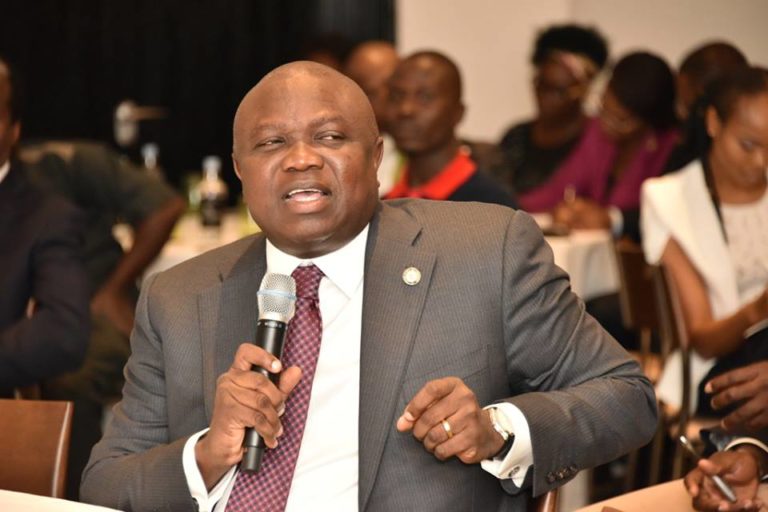
Lawyers, on the platform of the Ikeja Branch of the Nigerian Bar Association (NBA), have fixed Tuesday, March 13, 2018 as protest date against what they term “excessive and arbitrary tax regime” in Lagos State, if after seven days Governor Akinwunmi Ambode failed to reverse new charges under the Land Use Charge Law 2018.

Akinwunmi Ambode
Governor Akinwunmi Ambode of Lagos State

Speaking on the planned protest during a press briefing on Wednesday, March 7, the Chairman of the Branch, Mr. Adesina Ogunlana, said the protest march would start from the Branch Secretariat in Ikeja all the way to the Lagos State Secretariat in Alausa. The protest, he added, is tagged: “Hell Tax Must Go”.

Ogunlana said the Branch was set to begin the first phase of critical and constructive response to the “decidedly insensitive, provocative arbitrary and parochial tax agenda programme and meltudily” against the Ambode administration.

His words: “Few weeks ago, Lagosians woke up to learn about the hyper-inflated rate of the so called ‘Land Use Charge’ which the Governor of Lagos has escalated upwards by 400 percent.

“Recently, one of our colleagues who regularly pays the sum of under N140,000 as LUC for office building received a notice of the LUC demand, he is now to pay the amount of N2 million.

“If these tax rates are allowed, Lagos State would be turned into a ‘Toxic Environment and a living hell’ for Lagosians.”

Ogunlana said that the increase in property tax of the LUC would have an adverse effect on all other services and function in Lagos as owners of properties and services will automatically transfer other financial burdens to their customers who will have to bear the burden or crumble.

He opined that it is absurd that the governor is seeking dialogue after its government had “deliberately and selfishly” created the situation in the first instance.

“My view is that the government of Lagos State has lost sync with the difficult and harsh realities of life of the people of Lagos and has taken their support and goodwill for his government for granted.”

Ogunlana demands for a scrapping of the new tax regime.

“Life will become not only too expensive but volatile and dangerous.

“The government cannot hide under ‘Developing Lagos into a Mega Smart City2 to kill Lagosians with pharaoic taxes,” he said.

Lagos flays ‘outrageous’ land use charges in circulation, extends period for discounted payment

0

The Lagos State Government on Wednesday, March 7, 2018 clarified the figures circulating in the media on the rates for the newly reviewed Land Use Charge Law of 2018, saying many of the numbers were based on several years of arrears on the levy not paid by affected property owners.

Land charge
L-R: Special Adviser to the Governor on Taxation and Revenue, Mr. Fola Lasisi; Commissioner for Finance, Mr. Akinyemi Ashade; his counterpart for Information & Strategy, Mr. Kehinde Bamigbetan and Special Adviser to the Governor on Information & Strategy, Mr. Idowu Ajanaku, during a press conference on Land Use Charge at the Bagauda Kaltho Press Centre, Alausa, Ikeja, on Wednesday, March 7, 2018

Speaking at a news briefing held at the Bagauda Kaltho Press Centre in Alausa, Ikeja, the State’s Commissioner for Information and Strategy, Mr Kehinde Bamigbetan, said there were so many misconceptions and misinformation about the new law, adding that the law was a progressive enactment duly made by the House of Assembly and handed over to the Executive for implementation in the overall interest of the people.

He specifically dismissed the figures being bandied about on the social media, describing them as humongous, and saying many of the calculations were based on arrears of many years of non-payment.

“The fact is that this law took a long process to be made. It started as a bill and went through the first reading, second reading, public hearing to which all stakeholders were brought together to debate it and some of the relieves we have seen were part of the debate expressed by the stakeholders about the need to protect the vulnerable segment of the society. Having made the law, the Lagos State House of Assembly has handed it over to the executive to implement.

“The second important part is that a lot of relieves have been built into the law but many people are confusing arrears with the actual figure. If you see those figures, ask whether it is for one year or arrears of several years of non-payment. The humongous figures that are being bandied around particularly in the social media relate to the arrears of many years of non-payment which are computed together,” Bamigbetan said.

Also speaking, Commissioner for Finance, Mr Akinyemi Ashade, said the government has extended the period for tax payers to enjoy the 15 per cent discount in the reviewed Land Use Charge Law to April 14, 2018 in order to enable the implementation and enforcement of the new law, as well as allow many property owners to benefit from the discount.

Ashade, who took time to clarify reactions in some section of the public on the new law, said that, under the old law, which had not been reviewed for over 15 years since 2001, the Land Use Charge rate was totally inaccurate and retrogressive and was depriving the state of keeping track of all economic activities that relate to land in Lagos State.

He said the rates, which were reviewed by the Lagos State House of Assembly and signed into law by the State Governor, Mr. Akinwunmi Ambode, on February 8, 2018, is a merger of all property and land-based rates and charges in the state.

Ashade said: “There was an urgent need for the repeal, as the old law had not been reviewed for over 15 years since 2001. Under the old law, the LUC rate was totally inaccurate and retrogressive which deprived the state of keeping track of all economic activities that relate to land in Lagos State.

“The new law is a consolidation of Ground Rent, Tenement Rate, and Neighbourhood Improvement Levy. This charge is payable annually in respect of all real estate properties in the State, which means owners and occupiers holding a lease to a property for 10 years or more are now liable to pay the annual LUC invoice charged.

“Thus, the Tenement Rates Law, the Land Based Rates Law, the Neighbourhood Improvement Charge and all other similar Property Rates or Charges, Laws or amendments to any such property Laws shall cease to apply to any property in Lagos State as from 2018. Nonetheless, all pending invoices, orders, rules, regulations, etc. under the 2001 repealed Law shall continue to be in effect until such obligations are discharged.”

Explaining the calculation of amount payable, the Commissioner said that property owners can determine the amount by multiplying the Market Value of their property by the Applicable Relief Rate of 40 per cent and Annual Charge rate.

“Upon receiving a notice or not, the new law has made it possible for owners to calculate their charge, and enable prompt payment, which allows them to benefit from a 15% discount for early payment, applicable to payments made within 15 days of receipt of Demand Notice,” he said.

Responding to fears of tenants that the new law might force landlords to increase rent, Ashade said aside the fact that the Lagos State Tenancy Law 2011 was still in force, the incidence of payment for Land Use Charge under the new law is on the landlord and not the tenant.

He said the minimum rate was only increased from N1,200 it was in 2001 to N5,000, while there is provision for self-assessment and Assessment Appeal Tribunal under the new law.

On vacant properties, Ashade said such would be treated based on owner-occupier and not as a commercial property, explaining that the target of government is to make commercial property owners to pay a little bit more.

Lagos, waste managers given two weeks to settle out of court

0

An Igbosere High Court in Lagos on Wednesday, March 7, 2018 gave a two-week ultimatum to the Lagos State Government and the incorporated trustees, Association of Waste Managers of Nigeria, otherwise known as Private Sector Participation (PSP) operators, to settle out of court.

Lagos waste
Thomas Forgacs, Chief Operations Officer, Visionscape Sanitation Solutions; Abiodun Bamgboye, Permanent Secretary, Ministry of Environment; Babatunde Durosinmi-Etti, Lagos State Commissioner for Environment; Babatunde Hunpe, Special Adviser to the Lagos State Governor on Environment; John Irvine, Chief Executive Officer, Visionscape Sanitation Solutions; Bamidele Garko, Chief Executive Officer, Bamitony and Company, Ikoyi; and Lanre Wilton-Wawdell, Chief Executive Officer, Cleanway Limited at the Waste Collections Operators Participation meeting at the Ministry of Environment office, Alausa, Ikeja, Lagos

The News Agency of Nigeria (NAN) reports that the PSP operators filed the suit, seeking to stop the Lagos State Government from relieving them of their job of managing domestic waste in the state.

They claimed that the state government had planned to take their job and give it to a foreign company – Visionscape Sanitation Solutions Ltd.

Joined in the suit as respondents are the Commissioner for Environment and the Attorney-General/Commissioner for Justice.

Others are Visionscape Group, Visionscape Sanitation Solutions Ltd and ABC Sanitation Solutions Ltd.

At the resumed hearing of the case on Wednesday, Counsel to the PSP operators, Mr Ebun-Olu Adegboruwa, said the parties had been meeting to settle the case, but there were still issues that needed to be resolved.

Adegboruwa said the PSP operators were interested in keeping the state clean, but on certain conditions and terms that were acceptable to its members and the state government.

He said the operators did not want a situation where foreigners would displace them and render them jobless; but at the same time, they would ensure that Lagos was kept clean.

According to him, the parties have opportunities to exchange terms of settlement but the major issue is that of domestic waste.

“The waste of people in the residential areas, because of the volume and the number of the members, is critical to our settlement.

“We have been in discussion with the Attorney-General. We believe that some Fifth Columists are responsible for the delay of this settlement.

“We believe that government will be sincere in addressing the fundamental issues that relate to domestic waste.

“We appeal to our members, especially the PSP, to continue to keep the work of cleaning Lagos, picking waste and disposing them and not allow any sabotage in the Cleaner Lagos Initiative,” he said.

Adegboruwa said  if government had given the PSP operators the same support accorded Visionscape in form of soft loans and trucks, waste would not be seen in Lagos State.

“We felt frustrated that we have been doing the job meritoriously for years and, now, a foreigner has come, with the intention that we are not capable.”

Responding, Justice Taofiquat Oyekan-Abdullahi said substantive progress had been made, but there was need to get every party on the same page for a resolution.

To that extent, Oyekan-Abdullahi gave directive on schedules of meetings to be held between the PSP operators and the Lagos State Government, Visionscape and ABC Solutions.

She directed the parties to meet on March 10, March 14, and March 16 to resolve all pending issues.

The judge said the parties should fill all terms reached on March 20, while the court would adopt the resolution on March 22.

By Florence Onuegbu

Group seeks more enlightenment to address e-waste crisis

0

The E-Waste Relief Foundation, a non-governmental organisation (NGO),  has canvassed for greater advocacy on the dangers  posed by electronic waste to the environment .

E-waste
E-waste

President of the Foundation, Mr Ifeanyi Ochonogor, who made the call at the inaugural meeting of the organisation‘s Board of Trustees (BoT)  on Wednesday, March 7, 2018 in Lagos, warned that the threat of e-waste to the environment must be tackled urgently.

Ochonogor said that the foundation was conceived with the objective of ensuring safe disposal of electronic waste in Nigeria and the West Africa sub-region.

“Nigeria alone generates about 1.1 million tonnes of e-waste annually.

“ Therefore, it is only through sensitising the people and training the informal handlers of e-waste on standards of operation  that Nigeria can successfully tackle the issue.

“There is a great need for a foundation driven by passion to aid in solving the e-waste problems within the country and beyond.

“We are charged with the task of educating people on the dangers of improper e-waste management as well as enlightening them on the right solutions that are available to stop the crisis at hand.

“It is in making people understand the threat we face that they saw reasons to join  us in the process of putting an end to the e-waste challenges that beset us,” Ochonogor said.

Ochonogor  said that a recent report published by the United Nations  forecasts that global electronic waste would  likely  increase to 50 million metric tonnes in 2018.

By Moses Omorogieva

Youth to play active role in 2018 Bonn climate talks

0

Ahead of and during the upcoming UN Climate Change Conference in Bonn, Germany, in May 2018, youth from all over the world will be able to raise their voices and play an active role in helping to raise ambition to tackle climate change.

coyparticipants2
Participants of the Conference of Youth COY 11 in Paris. COY 12 focused on the role of education and capacity building in empowering young people to take action on climate change and to bring about positive change in society

Youth from all over the world are invited to participate in the Action for Climate Empowerment Youth Forum, taking place on April 29, in Bonn, Germany. Youth from developing countries that are seeking funding for participation have been enjoined by the UN to apply for a scholarship now.

The aim of the Forum, say the organisers, is to effectively engage young people in negotiations on Action for Climate Empowerment (ACE), which focuses on education, training, public awareness, public participation, public access to information and international cooperation. Additionally, the outputs of the event will be presented during a special ACE Workshop which will coincide with the negotiations at the Bonn Climate Change Conference, holding from April 30 to May 10, 2018).

Out of the hundreds of expected participants for the Forum, about 40 young people from the countries of the Global South will receive ACE Youth Forum Scholarships, which include complete funding and support for participation in the event. Applications for the scholarships can be submitted by March 12 by via the official website.

“In every corner of the globe, governments, cities, the private sector and civil society are framing that future around three crucial questions – Where are we? Where do we want to go? And How Will We get There?” says Patricia Espinosa, Executive Secretary of UN Climate Change (UNFCCC).

“The Youth Forum, the brainchild of the COP23 Fijian Presidency, is youth’s opportunity to provide their unique vision for answering these questions. In doing so, they can help be architects of the next phase of the Paris Agreement as nations look to get further and faster on track to a climate safe century,” she added.

Youth is already leading concrete action on how to tackle climate change. Two young climate activists from India and Morocco, for example, were selected last year as the winners of the 3rd edition of the Global Youth Video Competition.

Adarsh Prathap, from India, was the winner for the category “Oceans and climate change”, with the video “Let mangroves recover”, which underlines the importance of mangroves and shows how their conservation can save thousands of lives.

Younes Lamsaoui, from Morocco, won the category “Climate friendly and resilient cities”, with the production “Turning green”. The video highlights how Marrakech, or the “red city”, is responding to the challenges of climate change and how she is contributing to this transition.

Participants of the ACE Youth Forum will also have the opportunity to share stories of their climate action experiences, exchange best practices and lessons learned relating to the components of ACE, in addition to developing creative and effective ACE-related climate actions.

The ACE Youth Forum is an initiative of the Presidency of the 23rd UN Climate Change Conference (COP23) and YOUNGO (the official youth constituency to UN Climate Change), in partnership with the Government of Canada, United Nations Development Programme (UNDP) and UN Climate Change.

Paris Agreement: Climate Scorecard launches Global Spotlight Project

0

Climate Scorecard on Wednesday, March 7, 2018 launched the Global Spotlight Project aimed at helping the Paris Agreement achieve its important goals.

paris_agreement_adopted
Jubilation greeted the adoption of the Paris Agreement in December 2015 in Paris, France. Photo credit: unfccc.int

According to Climate Scorecard Co- Founders, Ron Israel or Lois Barber, the campaign is launched against the background of recent scientific studies that suggest that existing country pledges to the Paris Agreement are insufficient to prevent the planet from exceeding the 2 degree Celsius global warming tipping point.

They pointed out that the Global Spotlight Project supports citizen and organisational-based efforts to advocate that countries fully comply with and strengthen their Paris Agreement pledges.

“The campaign provides citizens around the world with monthly News Briefs and Action Alert messages about what countries are or are not doing to further their commitment to the Paris Agreement. The Global Spotlight Project seeks to form a global alliance of civil society, business, and policy research organisations, working together to persuade leading greenhouse gas emitting countries to strengthen their Paris Agreement pledges,” Israel and Barber noted.

In conjunction with the Global Spotlight Project, a new Climate Scorecard website is now live. The site is designed to engage citizens around the world in advocating for countries to increase their compliance with Paris Agreement goals and objectives.

“If we want to prevent climate change from causing irreparable damage to our planet, all countries must fully implement and strengthen their nationally determined contributions pledges to the Paris Agreement,” said Israel and Barber.

The Paris Agreement’s aim is to strengthen the global response to the threat of climate change by keeping a global temperature rise this century well below 2 degrees Celsius above pre-industrial levels and to pursue efforts to limit the temperature increase even further to 1.5 degrees Celsius.

The Paris Agreement entered into force on November 4, 2016.

Pressure mounts on Lagos to reverse new land use charges

0

Pressure appears to be mounting on the Lagos State Government over its newly introduced Land Use Charge Law, in respect of which charges therein are said to be on the high side and are being contested by certain quarters.

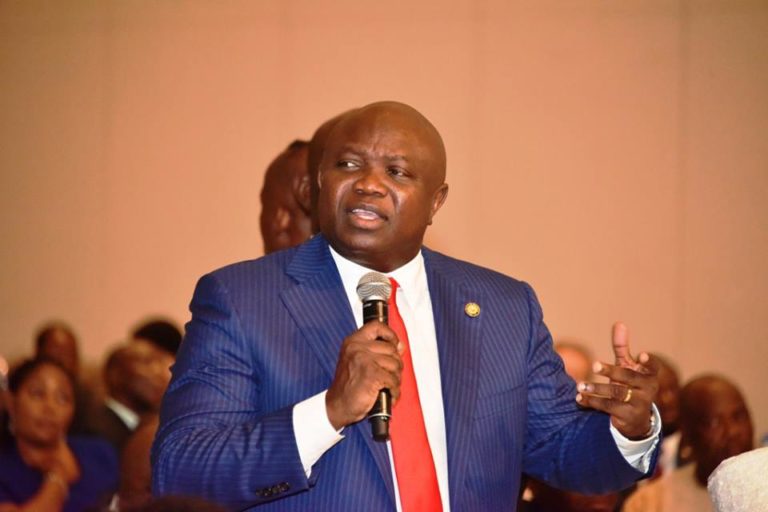
Akinwunmi Ambode
Governor Akinwunmi Ambode of Lagos State

State governor, Akinwunmi Ambode, has been defending the charges, saying however that government is ready to dialogue on the matter.

On Tuesday, March 6, 2018, the Manufacturers Association of Nigeria (MAN) appealed to the Lagos government to reverse its current increment of land use charges to ensure the survival of the manufacturing sector.

Dr Frank Jacobs, MAN President, made the plea in an interview with the News Agency of Nigeria (NAN) in Lagos.

Jacobs said that the sudden rise in the land use charges in the state could lead to the collapse of the already burdened manufacturing sector.

The Lagos State Government had recently repealed its 2001 Land Use Charge Law and replaced it with a new Land Use Charge Law, 2018 to increase its internally generated revenue and continue to expand its tax base.

The state government had explained that the recent increase in the land use charge would provide more resources to the state to provide social services and infrastructure to the benefit of the general public.

It also extended the period for the payment of all annual Land Use Charge (LUC) Demand Notices for 2018, to Saturday, April 14, 2018.

This, it said, is to enable property owners and affected occupiers to take the option of enjoying the discounts available for the prompt and early payment of LUC invoices.

However, controversy had trailed the review of the land use charge as the Organised Private Sector (OPS) rejected the newly passed LUC Law, vowing to fight the law with every legal means at its disposal.

Jacobs said that the state government ought to have consulted widely before considering the implementation of the new charges law.

“The stakeholders in the manufacturing sector were not carried along adequately before the execution of the policy as the sector is already contending with a lot of challenges.

“One of the challenges of this policy is that, if allowed to stand, other states in the country will soon begin their own increment of the land use charges,’’ he said.

The MAN president said that the increase, if not reversed, would also make the cost of finished commodity to be too exorbitant for Lagosians to afford.

“The new charges can make our locally produced commodities to be too expensive compare to imported products.

“The new charge negates the Federal Government’s initiatives for the spread of locally manufacturing companies in the country,’’ he said.

But Governor Ambode has offered reasons for the reviewed charges, saying that Lagosians need to make sacrifices in the light of the level and cost of infrastructure being provided by government.

His words: “So, somebody comes and say we have increased by 400%. The question is the 400% of what? You were paying N10,000 before, now we say you should pay N50,000 and you are calculating and turning statistics upside down by saying it is 400%.”

He explained that while the revised Land Use Charge Law requires owner-occupiers to pay “just” 0.076 per cent, pensioners, churches, mosques, non-governmental organisations and government institutions are exempted from payment.

Ambode added: “The law was made in 2001. It provides that, every five years, we should review it and also find a way to increase. Fifteen years after in 2017, the law has never been reviewed. Now, the question is this: those who are having commercial properties, the rental income they were getting in 2002 as against the rental income they are getting in 2017, is it the same? The level of infrastructure that existed in 2002 as against what has happened in the last 15 years, are they the same? Did it not come at a cost?

“So, why is the market value of the property that you built with N1 million, 15 years after, you are selling at N20 million? Why do you think somebody who is a buyer will pay N20 million for it? Is it not because of the facilities around the property? So, we have to sacrifice; that is how it works everywhere.”