Experts from around the world are gathering on Wednesday, March 14, 2018 at the UN in Bonn, Germany to discuss how to drive forward climate action by accelerating support for entrepreneurs who develop innovative new climate technologies.
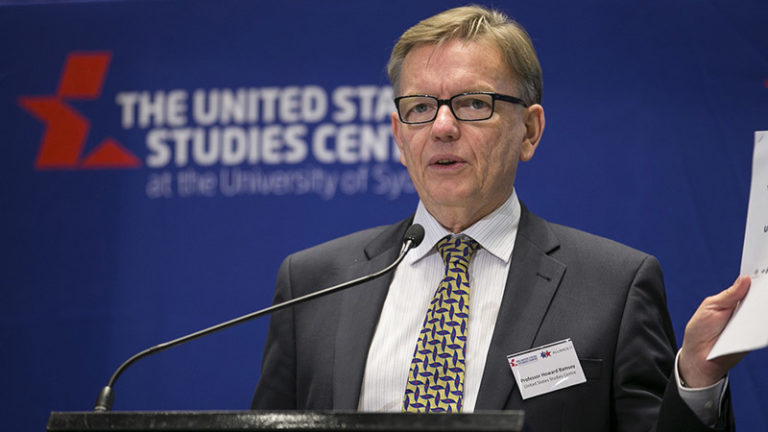
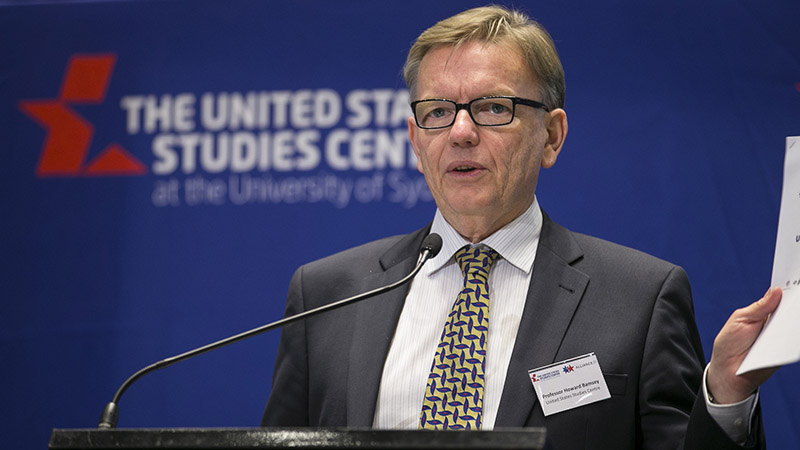
Executive Director, Green Climate Fund (GCF), Howard Bamsey
Such technologies range from systems to grow plants without soil to the provision of sustainable energy in rural areas and are part of the global efforts to achieve the goals of the Paris Climate Change Agreement, which is to limit the global average temperature to as close as possible to 1.5 degrees Celsius.
Organised by the Technology Executive Committee (TEC), the Green Climate Fund (GCF) and the Climate Technology Centre and Network (CTCN), the interactive meeting will explore how to strengthen climate technology incubators and accelerators notably in developing countries.
Incubators and Accelerators Can Be Bridge to Survival for Companies
Incubators and accelerators are “innovation labs” that support startups and entrepreneurs in different development stages of technology products or concepts. They are more than just co-working spaces to test ideas, as they have experts and mentors helping fellows develop their projects to a greater maturity by providing them with training, guidance and networking.
They also guide fellows with partnerships, business models and fundraising. Incubators can be important bridges between small innovative projects and their survival and success, and thus play an important role in supporting new low-carbon and climate-resilient technologies.
International Experts from Key Climate Action Institutions Will Gather in Bonn
A number of experts with experience on the ground will be present to share their views, including representatives and entrepreneurs from Chile, Ghana, India, Thailand, the World Bank Group, and the EU’s Climate-KIC. Their views will help to inform the Green Climate Fund as it develops a request for proposals on climate technology incubators and accelerators for consideration by the GCF Board.
The TEC and the CTCN are technology experts, helping to inform the GCF on key technology issues as the GCF explores how to support countries with financing to address these issues. The joint organisation by these bodies is said to highlight a new level of collaboration and linkage between the Technology Mechanism and the Financial Mechanism.
The National Space Research and Development Agency (NASRDA) has stressed the need for policy and planning on air quality to safeguard citizens from harmful effects of air pollutants.
Prof. Babatunde Rabiu, the Director, Centre for Atmospheric Research
Prof. Babatunde Rabiu, the Director, Centre for Atmospheric Research (CAR) in Anyigba, Kogi State, one of the centres under NASRDA, told the News Agency of Nigeria (NAN) in Abuja on Saturday, March 10, 2018.
Rabiu said the country lacked reference information for appropriate air quality policy and planning.
He said that it was therefore imperative to create awareness on air quality intake by citizens for effective healthcare.
He said that, in Nigeria, explosive population growth and its attendant rural-to-urban migration, industrial expansions had led to excessive emission of wide range of air pollutants into the atmospheric environment.
“The rise in population in the West African sub-region has contributed to increase of anthropogenic emissions of air pollutants and has made the air unsafe,’’ he said.
Anthropogenic emissions are the main sources of greenhouse gases resulting from human activities which include burning of fossil fuel and deforestation leading to higher carbon dioxide concentrations in the air.
Rabiu decried that the massive economic, population growth and urbanisation were expected to lead to a tripling of anthropogenic emissions in southern part of West Africa between 2000 and 2030.
He said that the emissions impact on human health, ecosystems, food security and the entire climate within the region was increasing at a very dangerous proportion.
The director said that some of the emissions into the atmospheric environment include Particulate Matters (PMs) from vehicle exhausts, Sulphur Dioxide (SO2), Nitroxide (NOx) and Carbon Monoxide (CO).
“NOx and SO2 are known to increase susceptibility to respiratory infections among children and elderly and also increase airway responsiveness in asthmatic individuals.
“CO is known to cause tissue hypoxia thereby reducing the blood capacity to transfer oxygen. (Hypoxia is the deficiency in the amount of oxygen reaching the tissues).
“In the long run, continuous exposures to these air pollutant concentrations lead to respiratory and cardiovascular morbidity, and eventually, increased mortality rate.”
Rabiu said the centre was therefore preparing to hold air quality workshop on sustainable research capacity to sensitise the populace on its importance to human development.
He said that because of the lack of appropriate air quality policy and planning, it was necessary to engage in sensitisation through the workshop.
“The first National Air Quality Workshop aims at analysing the present air quality scenario in Nigeria by bringing together researchers and policymakers from all professional cadres working on different aspects of Air Quality issues.
“Gathering expertise from a wide spectrum of interest, CAR hopes to chart a sustainable National Air Quality Observation Network.
“The centre is doing this by ensuring sustainable research capacity in the field of air quality monitoring and health impact assessment, providing capacity building for personnel in the field of air quality management.
“It will also develop an effective information flow between empirical results and the general populace,” he said.
The workshop is expected to hold from March 13 to March 16 with the theme as “Air Quality Research and Sustainable Development: The Nexus, Prospects and Challenges”.
The workshop will address sub-themes which include Atmospheric Aerosol Monitoring and Chemical Characterisation, and Air Pollution: Observational Techniques, Modeling and National Air Quality Index.
Other sub-themes are Nuclear Analytical and Wet Chemistry Techniques in air Quality Studies and Air quality: Legislation and Advocacy, among other topics.
“Government is toying with people’s lives and survival of businesses. Things are pretty hard, and perhaps because you are on the other side, you do not know.
“Businesses are barely surviving. The income of Nigerians in the past five years, salaries and rental income alike, has been bastardised by inflation rate.
“We learnt that since the law was passed, many property owners had developed hypertension because the assessed value of property has also been reviewed upwardly by over 500 per cent.”
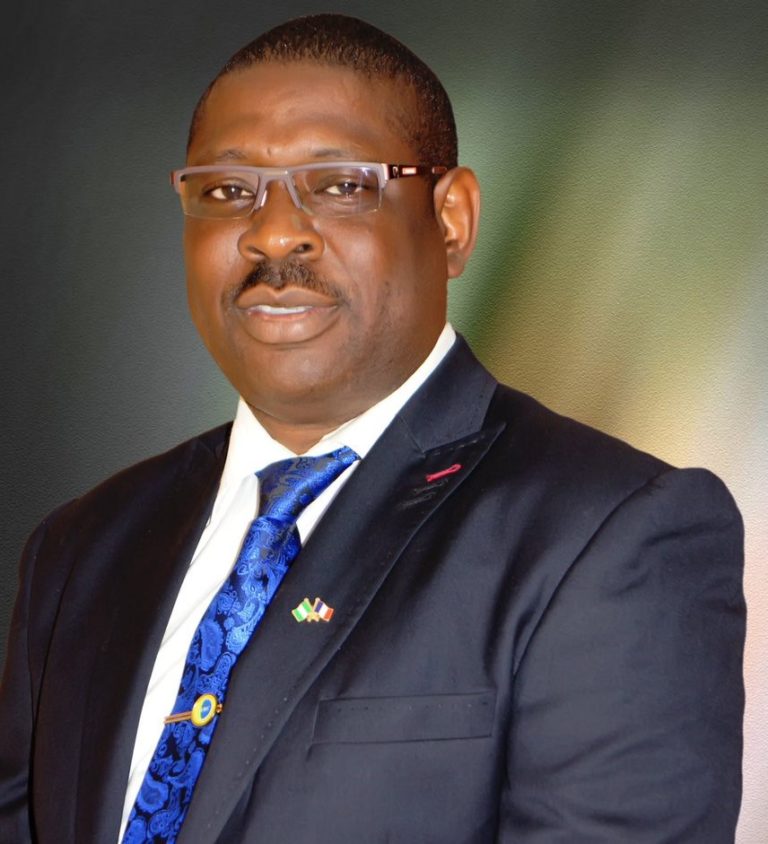
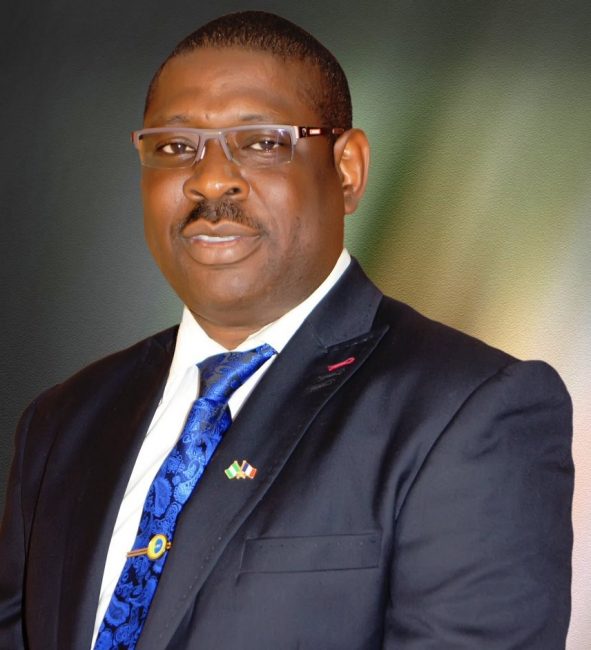
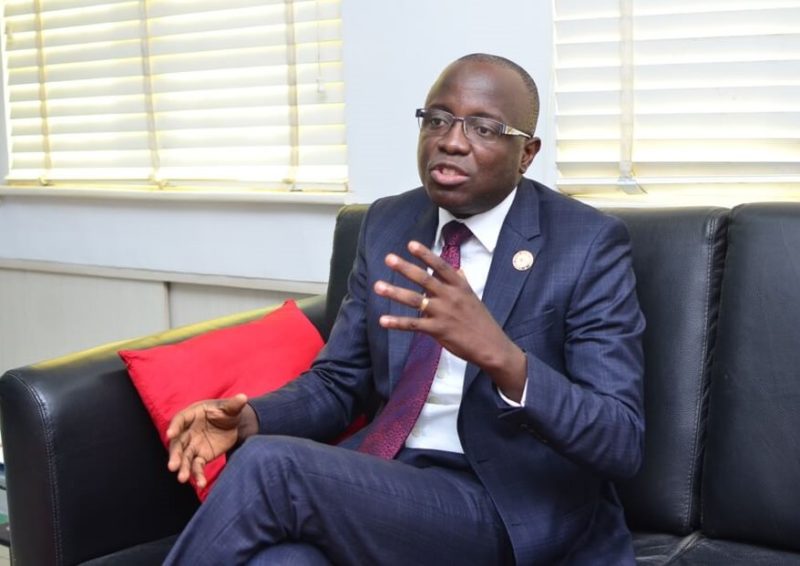
Akinyemi Ashade, Lagos State Commissioner for Finance
Those were the vivid words of Timothy Olawale, a representative of the Organised Private Sector (OPS), on Friday, March 9, 2018 in reference to the reveiwed Lagos land use charges.
He spoke at a stakeholders forum on the Land Use Charge Law organised by Lagos Chamber of Commerce and Industry (LCCI), saying the controversial legislation failed to meet basic legislative procedure before it was ratified by the Lagos House of Assembly because the lawmakers ignored public outcry against it.
According to him, members of the OPS were given less than five minutes to express their concerns during the public hearing on the review of the law.
His words: “The heaŕing was like a premeditated arrangement; the lawmakers failed to take into account public outcry against the review given the effect it would have on property owners, going by depreciation and devaluation of naira.
“We wrote a letter as a follow up to the public hearing stating our position, still it was ignored,” he said.
The OPS said that the citizens should not be held liable for government’s negligence to review the law every five years as stated in the provision of the law.
The OPS said that, government’s failure to review the law in the past 15 years notwithstanding, any increase above 100 per cent was unacceptable.
The OPS comprises the Manufacturers Association of Nigeria (MAN), Nigeria Employers’ Consultative Association (NECA), and Nigerian Association of Chambers of Commerce, Industry, Mines and Agriculture (NACCIMA).
Others are: National Association of Small and Medium Scale Enterprises (NASME) and National Association of Small Scale Industries (NASSI).
The Lagos State Government recently repealed its 2001 Land Use Charge Law, and replaced it with a new Land Use Charge Law, 2018.
The State House of Assembly had passed the bill on Jan. 29, while the Governor signed it into law on Feb. 8.
Also commenting, Dr Dotun Bamigbola, Vice President, Nigerian Institution of Estate Surveyors and Valuers (NIESV), recommended upward review of Relief Rate to accommodate provision for maintenance cost and other outgoing.
He noted that most owners could only pay from property income, and proposed that charge rate should take cognisance of rental trend which in most locations was stagnant or going southward.
Earlier, Mr Akinyemi Ashade, Lagos State Commissioner for Finance, said that the law would entrench a regime of self assessment that allows property owners to make their own calculation and know their rate with the help of professional valuers.
Ashade said that various reliefs had been made available to payers, including a general 40 percent relief for all property liable to LUC payment.
The News Agency of Nigeria (NAN) reports that the stakeholders erupted in uproar of displeasure several times during the commissioner’s presentation while some stormed out of the conference hall.
The LCCI spokesperson, Segun Alabi, on several occasions entreated the stakeholders to maintain decorum while the forum lasted.
Scientists on Friday, March 9, 2018 called on African governments to develop laws to safeguard the development and management of green growth in the continent.
Nicholas Ozor, Executive Director of African Technology Policy Studies Network (ATPS)
Nicholas Ozor, Executive Director of African Technology Policy Studies Network (ATPS), noted that green growth had a potential impact toward the improvement of economies of most African countries.
“This potential is unlikely to be tapped in the absence of laws that are capable of protecting the new sub sector,” Ozor said during a workshop on Governing Inclusive Green Economy in Africa.
Ozor observed that green growth had significant potential for delivering inclusive economic development in the continent hence the need to put in place policies and strategies to harness the potentiality.
“The laws will help guard and also create awareness on the dynamics of this potentially paradigm-shifting phenomenon that is helping reduce the effects of climate change globally,” he added.
Ozor called on the governments to create an interdisciplinary approach to identify and help create awareness in creating sustainable growth.
Scientists said many African countries have started to embrace the concept of green growth, prompted by a combination of factors, including national circumstances and the encouragement of international development partners.
According to scientists, countries such as Rwanda, Ethiopia, Kenya and South Africa have sketched ambitious plans to jump to green, sustainable economies.
Chukwumerije Okereke, professor of environment and development at the University of Reading in Britain, said green growth would help not only globally but all developing countries in Africa by enhancing livelihood of the people.
“There is need to form partnerships to come up with innovative research agenda for the continent,” he added.
Okereke said that governments must start developing policies, generate academic literature and engage the private sector.
“Governments must begin to tap funds from development partners and international bodies to fund green growth activities in the continent in an organised manner,” he said.
The Federal Ministry of Environment on Friday, March 9, 2018 in Abuja inaugurated boards of parastatals and agencies under it as part of initiatives to enhance performance.
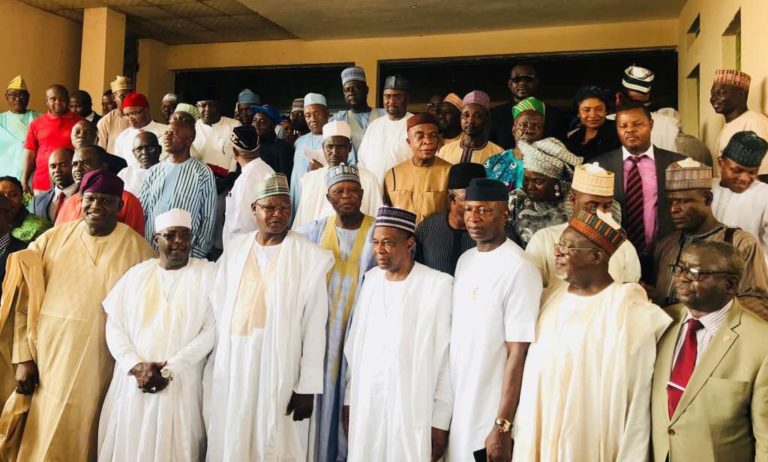
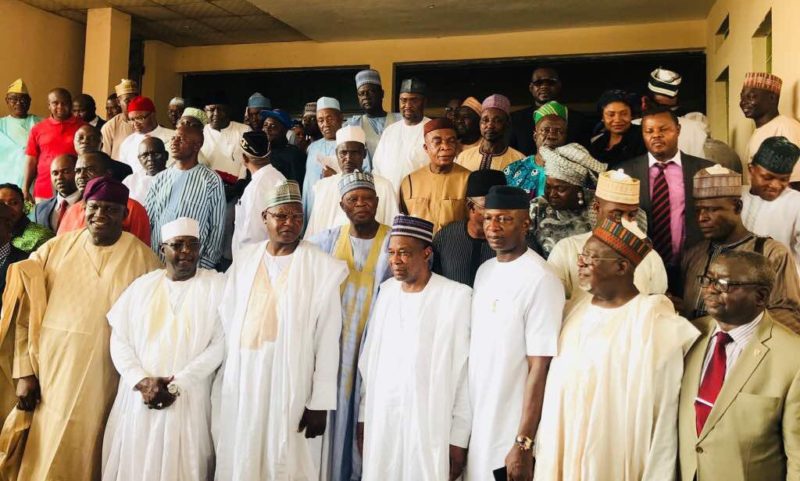
Alhaji Ibrahim Jibril, the Minister of State for Environment (third from left), in a group photo with members of the newly inaugurated boards of parastatals and agencies
Inaugurating the boards, Alhaji Ibrahim Jibril, the Minister of State for Environment, called for close working relationship to ensure guidance on application of Public Service Rules and Regulations.
Jibril said the ministry would ensure that plans and programmes of the agencies aligned with the objectives of government to deliver dividends of democracy to Nigerians.
The minister said the governing boards’ main responsibility was to give policy direction to the management of institutions.
He added: “Board appointments are part time, as a result, the management of your agencies should be allowed to perform the day-to-day running of institutions without hindrance.”
He said allowances and entitlements of board members would be guided by extant circulars.
The minister reminded both the board members and management of the agencies of the present administration’s zero tolerance for corruption.
“Government frowns at any form of corruption and would not hesitate to punish corrupt practices perpetrated by any board member or management team of these agencies,’’ he said.
Nakande Dasuki, the Board Chairman, National Biosafety Management Agency (NBMA), on behalf of the board members, promised to add value to agencies they were appointed to work with.
He said: “We assure you to do the needful and strictly adhere to management policies to achieve the mandate of the agencies.”
Experts have established a global blueprint to better understand climate change, its impacts on cities, and the critical role local authorities play in solving this challenge.
Traffic congestion in Lagos. Cities are said to be responsible for some 75% of global CO2 emissions, with transport and buildings being among the largest contributors
Cities are responsible for some 75% of global CO2 emissions, with transport and buildings being among the largest contributors.
“The impacts of climate change are already being felt in our urban areas, and the next few years are critical for determining how effectively we will rise to the challenge of protecting our cities. However, we can’t undertake this work blindly. At this conference we have been able to coalesce around the most important areas of inquiry so we can use precious time and resources in the most efficient and targeted way possible. And this research won’t just help save our cities – it will 1 also improve them for generations to come,” said Seth Schultz, Director of Science and Innovation, C40 Climate Leadership Group, and one of the co-chairs of the conference’s Scientific Steering Committee.
A primary focus of the conference was on the Paris Agreement, the UN’s Sustainable Development goals, the New Urban Agenda, and the Sendai Framework for Disaster Risk Reduction, all of which require cities to implement new sustainable development plans to adapt and respond to climate change.
The range of knowledge gained from the sessions will help chart a course for current and future sources of emissions, urban climate impacts, and pathways for cities to pursue emissions reduction and resilience strategies.
UN Climate Change is also promoting more climate ambition on the part of cities and increased investment in investing in livable, low-carbon, resilient urban development.
The recently launched “Cities and Regions Talanoa Dialogue” provides opportunities to advance governance on climate action, specifically in urban areas. The scheme aims to ensure coordinated action across all levels of government, and will be facilitated by ICLEI -Local Governments for Sustainability with Global Covenant of Mayors for Climate & Energy and UN-Habitat as special partners.
This is part of the wider Talanoa Dialogue launched by the Presidency of the UN Climate Change Conference COP23 in Bonn last year, an important international conversation in which countries will check progress and seek to increase global ambition to meet the goals of the Paris Climate Change Agreement.
The conference was co-sponsored by the Intergovernmental Panel on Climate Change (IPCC) , with nine partners – C40 Cities , Cities Alliance, Future Earth, ICLEI, the Sustainable Development Solutions Network (SDSN), United Cities and Local Governments (UCLG), the United Nations Environment Programme (UN Environment), UN-Habitat, and the World Climate Research Programme (WCRP).
“Years from now we will look back at this conference time in Edmonton and celebrate how the collaboration between the scientific community, policymakers and practitioners helped initiate positive change at the local level. I’m so proud that Edmonton was able to play host to some of the brightest minds on our globe and I’m committed to furthering the efforts that came out of this conference,” said Don Iveson, Mayor of Edmonton.
The CitiesIPCC conference helped forge stronger partnerships among the 750 leaders, innovators, and influencers who registered, and cultivated a collaborative environment among academics, policymakers and practitioners to share new findings, initiatives and programmes. Over 6,000 others from more than 30 countries followed the conference online.
“Business-as-usual will not save the world. This conference disrupted the traditional story of the world’s cities to show how science can partner with policy and practice to transform the world’s cities into climate-smart, equitable and sustainable homes for all,” said Debra Roberts, Co-Chair of IPCC Working Group II, and a member of the conference’s Scientific Steering Committee.
“With the contributions of cities and the risks to cities in the context of climate change loud and clear, solution-oriented knowledge is a must. This conference was a milestone on the way to a collective effort by the science, policy and practice communities to co-create and co-design a global research agenda for the future and for forging partnerships among them,” said Shobhakar Dhakal of the Asian Institute of Technology and one of the co-chairs of the conference’s Scientific Steering Committee.
“This conference is not just a milestone for how the research community thinks about co-designing its priorities with diverse voices from across society. It has also issued a call to strengthen the social sciences so that we can better understand complex questions like the role of informal settlements in addressing climate change. We can only create real transformative changes in cities through research focusing on issues of equity, power distribution, integration of values, and human behaviour,” said Anne-Hélène Prieur-Richard, Global Hub Director, Montreal, of Future Earth and one of the members of the conference’s Organising Committee.
Isu Nnennaya Rosemary is a professor of Microbiology and lecturer with the University of Abuja. The science enthusiast, in this interview with, Etta Michael Bisong during a recent visit to the Science Café in Abuja ,asserts that Nigeria will continue to pick crumbs from the table of superpowers if deliberate efforts are not put together to key into the biotechnology revolution Excerpts:.
Prof Nnennaya Rosemary Isu
Perception of the Science Café Nigeria
Science Café sounds nice and to my understanding in this country it’s about the very first of its kind. It is actually very good to bring people out of the stress of cooperate entities and environment to where they will freely talk about the way they feel. I think it’s a good innovation.
Bridging the knowledge divide
You have just asked a multi-faceted question and it’s good to start from somewhere especially biotechnology which I am passionate about.
I am sure you know that biotechnology has encountered quite a few hitches here and there particularly on misinformation and misunderstanding.
Many people around us don’t understand what it means. And those who think they do understand go a long way to misinform others.
So, this Science Café is an opportunity for everybody to come together and share ideas. I am sure that those who don’t have enough information about the practices of biotechnology would get to understand and appreciate it from the basics and that would make a lot of difference.
Biotechnology and agricultural practices
This is a question that comes up now and then and it’s almost like we have not been talking to the right people because biotechnology has the capacity to overhaul agriculture for the better.
There was the Green Revolution some time ago and it was centred on crops that were specifically created to give better yields in shorter times and better nutrients. But those improvements were premised on the application of all sorts of chemicals including fertilisers, insecticides, and herbicides to encourage these crops to grow as expected.
Most of our farmers then in the Third World, not just Nigeria, didn’t have the capacity to practice these things as was required. They, therefore, didn’t benefit from the then Green Revolution with the attendant famine, hunger, poverty and all that accompany them are still plaguing the Third World.
Biotechnology is now offering another new green revolution that is based on crops that wouldn’t only provide higher yield and resist diseases, but would also provide better improvement in nutrient quantities.
This is what we want to sell and it is not rocket science. It is an easy application of natural processes that scientists have studied and are able to apply. That is what biotechnology does.
There are four processes that biotechnology incorporates or utilises: mutation, transformation, transduction, and conjugation. These mechanisms are means of genetic modification in nature and whether we like it or not these things are going on now everywhere.
All scientists do is to study how nature modifies itself and creates biodiversity. Biodiversity is a natural and dynamic process hinged on the movement of genes from one source to another. Scientists meticulously appreciate these processes and apply them to derive what is called genetically modified organisms (GMOs). These natural processes will provide precise and predictable results when deliberately applied towards solving specific problems. This is science and it doesn’t tell lies. You will know if it’s succeeding or not.
The caveat there is that we must do it by best practices, which is where we continue to call on the Federal Government to adequately empower the National Biosafety Management Agency (NBMA) to police the practices of biotechnology in Nigeria, especially genetic engineering, so that they are done in the right way.
Furthermore, it is very important that only permitted foreign genetically modified organisms (GMOs including crops) are allowed to get into the country when they are needed.
We just need to follow it up and police it well. The benefits would be obvious and everybody would be a witness.
Communication
What you are doing is one of the very crucial contributions the media can make to encourage the development of Biotechnology in Nigeria. The Science Café on its own is a practical idea of media being part of what is going on with a view to unraveling the truth.
The media create the opportunity for both those that think it’s bad and those that think it’s good to come together and discuss on one platform as well as exchange views. Maybe somebody somewhere has not quite understood something, but when two good heads meet; it’s obvious that you are going to have a synthesis that would be beneficial to both of them.
Therefore, I would encourage the media to go on with what they are doing and to please give everybody audience and avoid preferential treatment of always covering one aspect or preferring one group over and above the other.
I know that there could be some pecuniary conditions here and there, but we should also bear in mind that the media stand as the eye of the public. They constitute the eye and mouth of the populace. It’s what the media say they have seen that the public hear, otherwise it will remain clandestine and nobody knows about it.
So much depends on the media. I will continue to plead with them to have an open mind and report things objectively. Everybody should be given equal opportunity to appreciate what is going on and, if things are reported objectively, the country would be better for it.
Solution
There is no magician anywhere in the science world. We are human beings and everything will be done according to human practices. What we are doing already in the country is not bad, except that I just think we should increase the tempo and encourage scientists to research more.
I am sure you are aware that very soon we will have our own indigenously modified cowpea developed by a Nigerian to resist maruca pest. That is the kind of thing that we are talking about. We need a lot more; and it takes a lot of encouragement in teams of research and even the media to be up and doing. A media practitioner for example cannot move around and get the job done when he or she is not encouraged.
We also need to be careful in addition to encouraging the scientists and media because we have Jesus and Judas in everything that we do. They all exist side by side. Once you are encouraging the Jesus, you should also be looking out for the Judas because we have them.
What we should all appreciate is that genetic engineering and other biotechnological practices have so much potential and are such compact practices that one can carry them out and achieve so much within a small room. You can genetically modify an organism and carry it in your pocket just in one room if you have everything that is required.
We have to encourage scientists to do their work legally and transparently so that we don’t encourage “rogue scientists” who can do it clandestinely. These things can be done and would happen whether we like it or not if appropriate precautions are not taken.
Nigeria needs to sit up as a country if you imagine what is going on in the nuclear world. We were not part of it because we didn’t have the money, manpower or anything during the scrabble for nuclear power. We will continue to pick from the crumbs of the tables of the powers that be.
There is another scramble now where people are gathering their gene banks under the biotechnology era and we are still nowhere again despite that the greatest resources that biotechnology requires reside in the forests and deserts of the Third World. Outsiders come here to take these things and own them.
There are so many things that we are not doing. We have no gene bank or germplasm pool for instance. But we as scientists are ever ready and things will happen once we are called upon. We must encourage farmers by taking the risk to develop these things and own them.
The necessary institutions need to ensure that we have our genetic resources intact so that we can know what we have in terms of genetic resources and have a firm grip on them. We only need to finger print most of the things that we have around us so that whoever is using them anywhere would know and be very clear that he or she is using a genetic resource from Nigeria.
But presently, most of them are yet to be identified and are lying unknown and whoever needs any of them anywhere goes for it. You don’t need to carry a Ghana Must Go bag when taking a genetic resource because it can be put right into your pocket. These genes can move and what was yours yesterday would become someone else’s tomorrow.
That we don’t have a firm grip on our genetic resources alone is alarming. I am talking about genetic resources in teams of micro-organisms, plant and animals; we don’t have them for this country at least.
Do we have a gene bank for all of them? Do we know what we have? No. So, going forward in Nigeria, these are the things that I would like addressed in addition to more encouragement of biotechnology as we strive to enhance the standard of living of the millions of Nigerians who stand to benefit from all the anticipated successes.
The World Health Organisation (WHO) has launched new guidance on the role tobacco product regulation can play to reduce tobacco demand, save lives and raise revenues for health services to treat tobacco-related disease, in the context of comprehensive tobacco control.
According to scientists, tobacco smoking is dangerous to health
A new guide, “Tobacco product regulation: Building laboratory testing capacity”, and a collection of country approaches to regulation of menthol, presented in the publication titled “Case studies for regulatory approaches to tobacco products – Menthol in tobacco products” have been launched at the 2018 World Conference on Tobacco or Health in Cape Town, South Africa.
Many countries have developed advanced policies to reduce the demand for tobacco, which reportedly kills over seven million people annually, but governments can do much more to implement regulations to control tobacco use, especially by exploiting tobacco product regulation.
Dr Douglas Bettcher, WHO’s Director of the Department for the Prevention and Control of Noncommunicable diseases (NCDs), said “The WHO Framework Convention on Tobacco Control (WHO FCTC), a global treaty established under the auspices of the WHO to combat the tobacco epidemic, has played a critical role in tobacco control. The launch of these important publications will further aid the implementation of Articles 9 and 10 of the WHO FCTC, contributing to building tobacco product regulation capacity in WHO Member States”.
He further said: “Tobacco product regulation is an under-utilised tool which has a critical role to play in reducing tobacco use. The tobacco industry has enjoyed years of little or no regulation, mainly due to the complexity of tobacco product regulation and lack of appropriate guidance in this area. These new tools provide a useful resource to countries to either introduce or improve existing tobacco product regulation provisions and end the tobacco industry ‘reign’.”
“Only a handful of countries currently regulate the contents, design features and emissions of tobacco products,” says Dr Bettcher. “This means that tobacco products are one of the few openly available consumer products that are virtually unregulated in terms of contents, design features and emissions.”
Most countries hesitate to implement policies, due in part to the highly technical nature of such policy interventions and the difficulties in translating science into regulation, explains Dr Vinayak Prasad, who leads WHO’s Tobacco Free Initiative.
“Failure to regulate represents a missed opportunity as tobacco product regulation, in the context of comprehensive control, is a valuable tool that complements other tried and tested tobacco control interventions, such as raising taxes, and ensuring smoke-free environments,” adds Dr Prasad.
“Tobacco product regulation: Building laboratory testing capacity” provides practical, stepwise approaches to implementing tobacco testing. Such guidance is relevant to a wide range of countries in various settings, including those with inadequate resources to establish a testing facility. This laboratory guide is a useful resource for countries, and provides regulators and policymakers with comprehensible information on how to test tobacco products, what products to test, and how to use testing data in a meaningful way to support regulation.
Further, it provides a step-by-step guide to developing a testing laboratory, using an existing internal laboratory, contracting an external laboratory, and making use of the available support mechanisms both within WHO and externally. This calls for country prioritization and commitment of resources to tobacco product regulation, as the guide equips regulators with the necessary tools to strengthen tobacco regulation capacity, especially in relation to Article 9 of the WHO FCTC.
The publication “Case studies for regulatory approaches to tobacco products – Menthol in tobacco products” complements the 2016 advisory note on menthol published by the WHO Study Group on Tobacco Product Regulation, which set out the available evidence on prevalence and health effects of menthol in tobacco products, as well as evidence-based conclusions and recommendations for policy-makers and regulators on menthol in its various forms.
The case studies provide practical guidance and policy options to countries about effective regulatory strategies in tobacco product regulation. This includes lessons learned and challenges encountered in developing and implementing menthol related regulation. To date, regulators have adopted multiple approaches to restricting the use of menthol. These include a ban in some product categories, a total ban on the use of all flavours and a ban on all products with a perceived menthol flavour. This publication also provides useful information on the merits and drawbacks of various regulatory approaches.
The Federal Government has commended the Nigerian National Petroleum Corporation (NNPC) for venturing into the development of renewable energy across the country.
Renewable energy: Solar panels
The Minister of Science and Technology, Dr Ogbonnaya Onu, gave the commendation on Thursday, March 8, 2018 during his visit to NNPC’s pavilion at the ongoing Technology and Innovation Expo 2018 at the Eagles’ Square in Abuja.
Onu said the corporation’s foray into renewable energy would help the country maintain energy security, boost national economy and position her for the fuel export market.
“It is important that we spend a lot of our energy to prepare for the future and the future is in renewable energy.
“I feel happy that this is going on. We are collaborating with NNPC in that respect to make it a reality,” Onu said.
He disclosed that the Ministry was interfacing with the corporation to convert flared gas into methanol.
The minister also said that methanol and ethanol production in the country would go a long way in stabilising energy supply in the country.
“As a result of the abundance of natural gas in Nigeria, we should be able to convert all the flared gas into methanol which will make it more useful in energy, power and petrochemical industries.
“We need to build a strong chemical industry in Nigeria to enable us industrialise in a manner that will make us truly a great nation.”
The 2018 Science and Technology expo with the theme: Fast tracking Sustainable Development of Nigeria through Science and Technology, which started on March 5, ends on Friday, March 9.
Chinese scientists have found a gene that can help grow bigger grains of corn to raise yields, a study revealed on Friday, March 8, 2018.
A corn field
According to the research by Henan Agricultural University and Chinese Academy of Agricultural Sciences, the gene, named urb2, is crucial in the growth of grains.
Unhealthy ribosome biogenesis protein 2 homolog (urb2) provides a unified query environment for genes defined by sequence.
“The result of the research can help increase corn yields and lay a foundation for related studies in breeding,’’ Tang Jihua, head of the research team, said.
The research results were published in the journal New Phytologist.