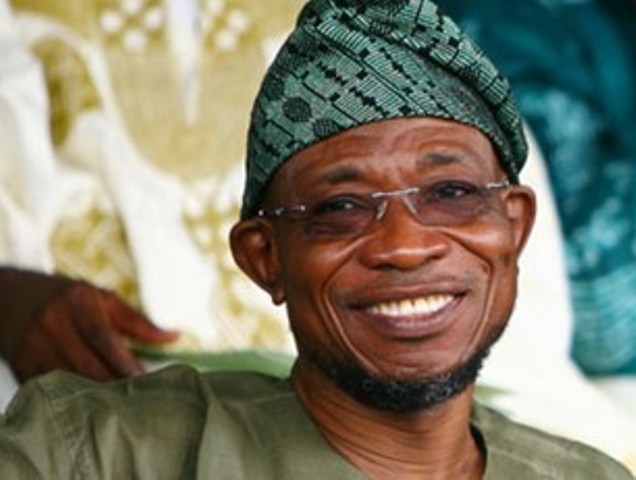
Gov. Rauf Aregbesola of Osun State on Monday, April 16, 2018 said the state government had planted three million trees in parts of the state to mitigate the effects of climate change.
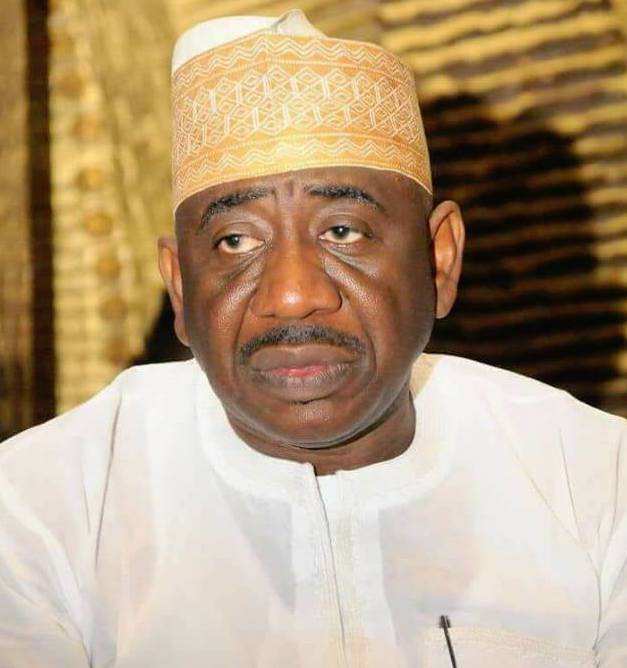
Gov. Rauf Aregbesola of Osun State, Nigeria. Photo credit: thesheet.ng
Sola Fasure, Media Aide to the governor, in a statement, said Aregbesola disclosed this at a meeting with members of the African Forest Forum in Osogbo, the state capital.
The governor said the state government was targeting to plant five million tree across the state.
“We have planted more than three million trees across the state. Although we plan to plant five million, more than three million trees have been planted and we are not in any way deterred from achieving the feat.”
The governor called for overhauling of forest management to save Nigeria and Africa from imminent climate change.
He said the continued existence of the black race on the African continent depend on protecting and maintaining the natural rain forest.
The governor said Africa, as a continent, did not deserve to suffer the bad effect of climate change if its forests were properly preserved.
He attributed the carefree attitude of past leaders to the development of forestry and efficient management as cause of the challenges posed by climate change in Nigeria.
Aregbesola, who expressed displeasure over the way and manner the natural rain forests were being manged in Africa, urged African leaders to rise to the challenge and developed a modality to strengthen forest management.
The Executive Secretary of the Forum, Godwin Kanero, said in his remarks that the forum had recorded successes in its public enlightenment programmes organised across the participating countries.
Kanero said the forum was established 10 years ago to find a solution to the environmental challenges occasioned by deforestation.
“We are concerned about climate change because we have been informed on the need for humanity to preserve natural environment to curtail its menace,” Kanero said.
The Federal Ministry of Water Resources has called on state governments to remove all barriers preventing the River Basins from having rights to land ownership.
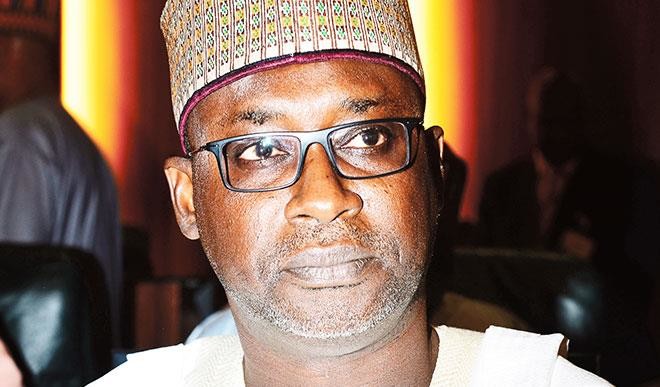
Suleiman Adamu, Minister of Water Resources
The Director, River Basin Operations and Inspectorate, Mr John Ochigbo, told the News Agency of Nigeria (NAN) in Abuja that doing this would promote the realisation of the food security target of the country through investment in agriculture.
According to him, the government alone cannot meet the country’s agriculture needs, citing challenges of insufficient funds, saying Nigerians need to take ownership of these programmes.
He said there was the need for states governments to remove all encumbrances on land ownership and acquisition, saying this was one of the challenges facing the river basins in the country.
“One of the encumbrances we have is around land acquisition, and this is the area that we need the cooperation of the state governments to facilitate the issuance of titles to river basins for them to be able to acquire necessary lands to develop and hand over to farmers.
“We call on the states governments to assist us in facilitating the release and acquisition of lands for farming in their various states.
“I want to use this opportunity to invite investors who are interested in this sector to come and join us in this effort, the government does not have sufficient funds to do it all alone, so we need the funds of the private sector to come into this business.’’
He noted that the minister of water resources had in the last one month appealed to the Economic Council and the governors to assist the ministry and the Federal Government to remove all encumbrances around land acquisition.
According to him, doing so will make it possible for the goals and targets of the river basins to be attainable, so we can launch fully into this programme.
Ochigbo said the ministry was working to reverse the ugly trend which saw abandonment and years of incomplete projects in the basins.
This he noted would be done through the formulation of a Blueprint and Action plan to repositioning the River Basins in the country, hence the promotion of agriculture.
According to him, part of the programme is the inauguration of the Graduate and Youth Empowerment Programme which has benefited no fewer than 500 unemployed youths.
He said the ministry was optimistic that with continued support and commitment, the Programme would go a long way in promoting food security and job creation.
The director said the department had been equipped with technical staff, approval and appointment of boards of River Basin development Authorities to ensure commitment to change the narratives of revitalising the basins for self-sufficiency.
He said the minister was already working to ensure procurement of new earth moving equipment to see that they meet the food security need of the nation, saying the obsolete ones were being disposed.
The director said implementation of the National Irrigation Policy had led to the development of more hectares of land for irrigation farming, adding that responses have already been received from commercial farmers.
“We have received several applications from farmers that are asking for land to engage the commercial farming.’’
He expressed optimism that in few years to come, Nigerians would begin to see the investment of the present administration in the river basins.
NAN reports that the Department of River Basin Operations is in charge of coordinating activities of the 12 River Basin Development Authorities.
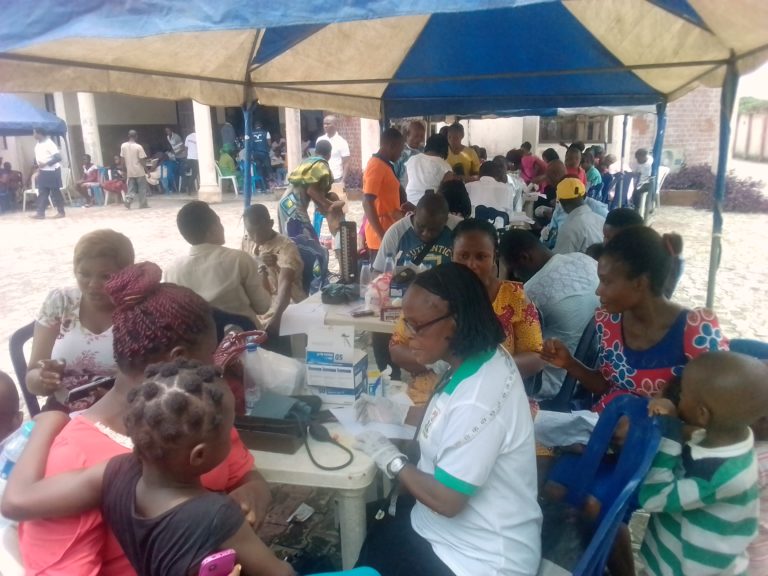
The Hydrocarbon Pollution Remediation Project (HYPREP) is targeting no fewer than 1,200 indigent Ogonis in its free medical outreach in Khana Local Government Area of Rivers State.
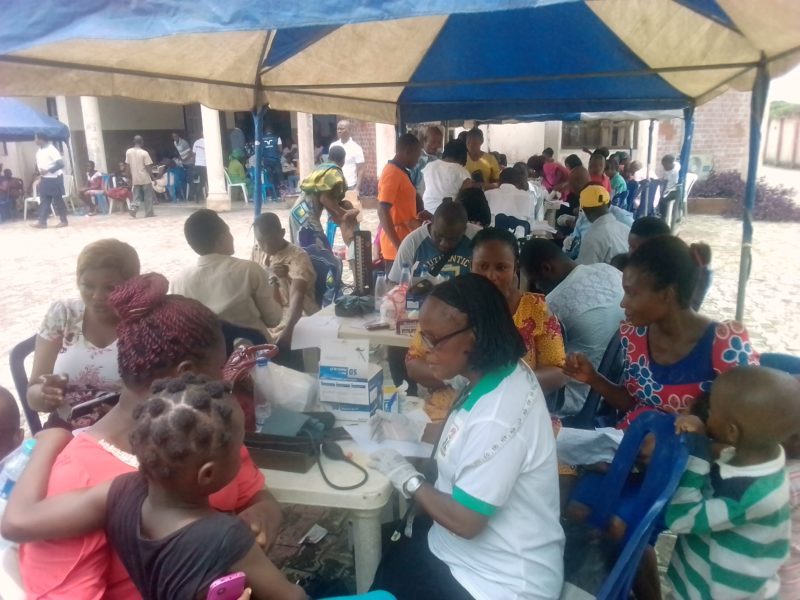
The HYPREP medical outreach in Khana Local Government Area of Rivers State
The Project Coordinator of HYPREP, Dr Marvin Dekil, said this while flagging-off the second phase of the exercise on Monday, April 16, 2018 in Taabaa community.
He said the exercise was to prevent, detect and treat victims of hydrocarbon pollution in Ogoniland in line with the recommendations of the United Nations Environment Programme (UNEP) Report.
“The health outreach is the first step toward the implementation of the initial stage of the Health Impact Study as recommended in the UNEP Report on Ogoniland.
“The exercise will be carried out in the four local government areas that make up Ogoniland for a period of eight days.
“Over 6,000 patients with different ailments were treated and surgeries performed in the first phase of the outreach in 2017.
“In this second phase, we will carry out general consultations, dental and eye treatment and surgical operations among other medical services.
“This is a continuation of what we started in 2017; to provide medical services to the communities as well as gather more data for our health impact study,” he said.
Dekil said that President Muhammadu Buhari approved the second phase of the medical outreach and directed kick-off of the remediation process in the next couple of months.
He said the project would soon provide potable drinking water to communities affected by years of environmental degradation in the areas.
According to him, the water supply system and services that will be provided will meet World Health Organisation’s standards.
“Also, we will in the coming weeks launch HYPREP’s Livelihood Intervention Programme that seeks to expose indigent Ogoni women and youths to skills for wealth creation,” he said.
Mr Lergborsi Pyagbara, the President of the Movement for the Survival of Ogoni People (MOSOP), urged the people to exercise patience in the clean-up project.
He said the clean-up exercise might not be successful without the restoration of the means of livelihood of the people and remediation of the immediate health challenges they are facing.
“The medical outreach programme is a welcome development and it is something that we feel should continue across the length of the clean-up exercise,” he said.
Pyagbara blamed the delay in the clean-up to bureaucratic bottlenecks in the Federal Ministry of Environment and demanded for an independent and autonomous HYPREP.
The Plateau State Government on Monday, April 16, 2018 directed the 14 private waste management outfits, which it had engaged, to clear all the waste heaps within Jos and Bukuru before midnight.
Abdullahi Abbas, Plateau State Commissioner for Environment
The Commissioner for Environment, Mr Abdullahi Abbas, gave the directive in Jos, the state capital.
He said that the mounting heaps of waste in Jos and Bukuru had become an embarrassment to the state government.
A correspondent of News Agency of Nigeria (NAN), who went round the metropolis, observed that the Terminus Market at Ahmadu Bello Way in Jos and the Kugiya Market in Bukuru were littered with heaps of refuse.
Mr Ahmed Bello, a shop owner at Ahmadu Bello Way, said that the rains had made the garbage heaps to become an eyesore, adding that the stench from the waste dumps had forced many people to desert the area.
Efforts by NAN to get the private operators to comment on the matter proved abortive.
NAN recalls that the Plateau State Government in January engaged the private waste operators to undertake the evacuation of waste in Jos and adjoining neighbourhoods.
The West African Coastal Areas (WACA) Resilience Investment Project, funded in part by the Global Environment Facility (GEF), has been approved by the World Bank Group Board. The regional project will help build the resilience of coastal communities in Benin, Cote d’Ivoire, Mauritania, Sao Tome and Principe, Senegal and Togo through a $210 million financing package.
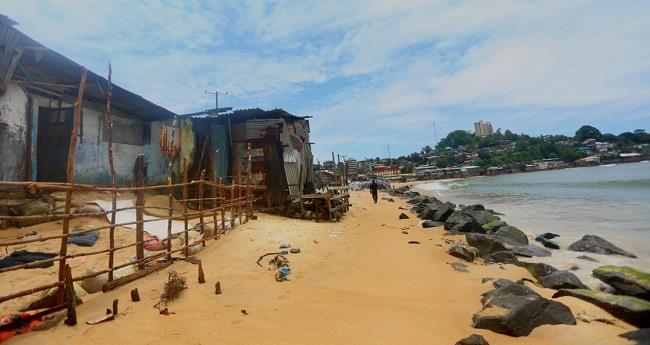
Battling coastal erosion in Liberia
Led by West African governments, the WACA project will protect against coastal erosion through a range of activities, including fixing dunes, restoring wetlands and mangroves, replenishing beaches, and building seawalls and dikes. It will reduce flooding by rehabilitating lagoons and drainage systems, and by improving watershed management. It will also support pollution control through better treatment of marine litter, oil spills and industrial and municipal waste.
“The WACA Resilience Investment Project is a collective response to the urgent need to address coastal degradation in a regional, integrated manner. It is an opportunity to strengthen the resilience of West Africa’s communities and transform their livelihoods,” said Makhtar Diop, World Bank’s Vice President for the Africa Region.
About 42% of West Africa’s GDP is generated in coastal areas, where almost one-third of the population resides and communities are particularly vulnerable to the effects of severe coastal erosion and frequent flooding.
To sustain investments and attract more investors, the project will provide technical assistance for regionally integrated spatial planning, prepare a yearly report on the state of West Africa’s coasts, and support the revision and enforcement of laws and protocols contributing to healthy and productive coasts.
The project will boost regional cooperation to address coastal erosion by working with four regional institutions – the West African Economic and Monetary Union (WAEMU), The Abidjan Convention, The Dakar-based Center for Ecological Monitoring (CSE), and the International Union for Conservation of Nature (IUCN).
The financial package includes a credit of $120 million and a grant of $70 million from the International Development Association and a grant of $20.25 million from the GEF. The Nordic Development Fund will provide an additional EUR13.1 million to improve resilience in the coastal regions, and the French Facility for the Global Environment will fund light infrastructure, land-use planning, and nature-based solutions against coastal erosion worth EUR1.3 million.
More partners are expected to join the effort through a new Platform that will boost the transfer of knowledge, mobilise additional finance and foster political dialogue among countries, and to protect the West African coast.
Through the International Waters (IW) focal area, the GEF helps countries jointly manage their transboundary surface water basins, groundwater basins, and coastal and marine systems. IW investments facilitate integrated cross-sectoral approaches that engage the private sector, non-governmental organisations and multilateral institutions.
Executive Director of the United Nations Human Settlements Programme (UN-Habitat), Maimuna Sharif, has stressed the importance of city-level action to address climate change.
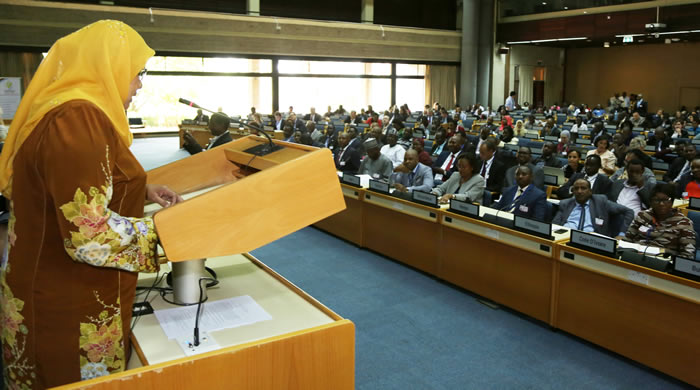
Executive Director of the United Nations Human Settlements Programme (UN-Habitat), Maimuna Sharif, addressing Ministers during the High Level Ministerial Opening of the Africa Carbon Forum during the Africa Climate Week in Nairobi, Kenya
She made the submission in an address to Ministers during the High Level Ministerial Opening of the Africa Carbon Forum during the Africa Climate Week held recently in Nairobi, Kenya.
Sharif in her presentation focused on the key role of local governments to help national governments to better achieve their climate targets. In her plea, she reminded the audience that cities are engines of growth, cities being “for the people and people for the city”.
She stressed the importance of city-level action to address climate change, and provided examples of mature technologies and approaches such as Bus Rapid Transit and waste-to-energy plants that can take place at the city level.
She also emphasised the need for multi-level governance to achieve targets. “Widening the range of actions that can be taken, and fully involving local governments as actors, will make it possible to achieve (climate) targets in a more cost-effective manner,” she said.
The UN-Habitat boss also stressed the fact that “not only cities are needed but also the civil society, the private sector and other stakeholders to jointly explore with national officials such possible collaborations and strengthened frameworks”. Multi-level governance, she adds, is fundamental to achieve targets, taking also into account the urban and territorial dimension of carbon emissions.
Considering the role of cities in meeting national targets, she also called for new market-based mechanisms to help African countries meet their current targets, and set more ambitious targets, to reduce emissions. In particular, “there is a need to establish new, or scale up existing, city- and sub-national level carbon pricing schemes,” said Sharif. In that regard, she also emphasised the importance for “Member-States to consider how to empower and fully engage local governments to help implement their Nationally Determined Contributions”’.
The Executive Director ended her address with a commitment of UN-Habitat to support African countries to integrate human settlements into their National Adaptation Plans, and mainstream climate change into their National and City Urban Policies. She also committed to support countries to apply to the Adaptation Fund for resources to help human settlements become more resilient to the effects of climate change, and national-level Talanoa Dialogues to deepen the discussion at the Africa Talanoa Dialogue.
As part of her plea for including cities in climate change strategies for the Continent, Sharif concluded on a positive note by saying: “We would like to see Africa greener, cleaner, healthier, safer and so happier.”
The event, held at the UN Headquarters in Nairobi, was opened by Keriako Tobiko, Cabinet Secretary, Environment and Forestry of the Government of Kenya. Eminent speakers included Patricia Espinosa, UNFCC Executive Secretary; Tomasz Chruszczow, High Level Champion for COP 24 in Poland; and Ligia Noronha, Director of the Division of Technology, Industry and Economics, UN Environment.
The Climate Week and the Africa Carbon Forum are key moments to sensitise Africa towards the implementation of the 2015 Paris Agreement and to address climate issues in the regional context. The Africa Carbon Forum is also meant to explore market-based mechanisms to help countries meet their current targets to reduce emissions.
In their addresses at the forum, key speakers discussed the need for a new and robust mechanism to help African countries meet their ambitious targets for the continent. They also emphasised the unique capacity of Africa to achieve and innovate.
“Africa has the spirit, the innovation and the power to achieve,” said Espinosa, adding that Africa is in a “unique situation for building a resilient and sustainable society”. She called on Africa “to take the lead in climate change action, working on the ground through integrated policies, aligned to commitments to Paris agreement and SDGs”.
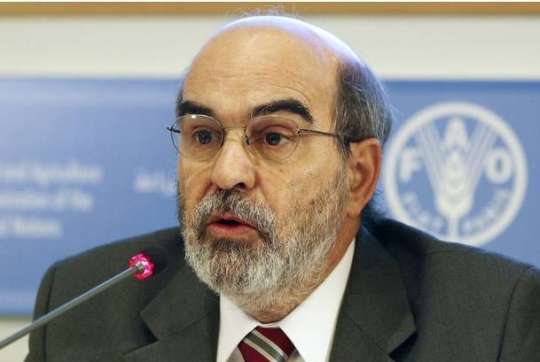
The Food and Agriculture Organisation (FAO) has approved solar powered irrigation system as new way to develop agriculture.
Jose Graziano da Silva, Director General of the FAO
The organisation made the disclosure in its news report made available on Sunday, April 15, 2018 in Abuja. It stated that the system was affordable and climate-friendly for both small-scale and large-scale farmers in developing countries.
FAO, however, warned on how to make the most of innovation and guard against water waste that the system needed to be adequately managed and regulated to avoid the risk of unsustainable water use.
It noted that the innovation had become imperative because the sharp and ongoing drops in price of photovoltaic panels gave new impetus to renewable energy source as a way to enhance irrigation capacity.
The report quoted Helena Semedo, the FAO Deputy Director-General, as saying: “A further price reduction could power a revolution in places such as sub-Saharan Africa, where only three per cent of cultivated area was irrigated, seven times less than global average.”
She added that the rapid expansion of more affordable solar-powered irrigation offered viable solutions that span the water-energy-food nexus, providing great opportunity for small-holders to improve their livelihoods, economic prosperity and food security.
She stated that “about 20 per cent of cultivated land across the globe is irrigated, contributing to about 40 per cent of total food output.
“Irrigation boosts agricultural productivity in various ways, as well as allows more and varied crops per year.
“Sub-Saharan Africa and Latin America have relatively low deployment of irrigation on croplands, indicating sizeable potential gains there.”
Eduardo Mansur, the Director of FAO’s Land and Water Division, also said that apart from solar energy offering cheaper services, it increased the urgency of making sure that appropriate water management and governance systems were in place.
He urged leaders in sub-Saharan Africa to think strategically about how the technology could be used to encourage sustainable use of groundwater resources to avoid risks such as wasteful water-use and over-abstraction of groundwater.
Mansur said solar powered irrigation systems indicated the potential to reduce greenhouse gas (GHG) emissions per unit of energy used for water pumping by more than 95 per cent compared to alternatives fuelled by diesel or fossil-fuel driven electricity grids.
The director urged governments to review their incentive schemes to favour “Green subsidies” over fossil fuels.
Mansur said solar irrigation pumps could also cause unsustainable groundwater extraction, as farmers expand planted areas or switch to more water-intensive crops.
He said that irrigation policy decisions should be taken after proper water accounting over larger territorial areas, as rainfall, surface water, groundwater, soil moisture and evaporation processes linked to different land uses are all part of the same hydrological cycle.
The FAO report stated that a survey of technical experts from 25 countries suggested that in three-fourths of nations’ government programmes and policies to promote small-scale irrigation, fewer than half had specific regulations limiting groundwater abstraction for such purposes.
It revealed that solar panels produced energy even at times when no irrigation was needed, opening up significant opportunities to run rice huskers, mills, water purifiers and cold storage units, all contributing to rural development and incomes.
It noted that in some cases, solar power could become “remunerative crop” if farmers were encouraged to reduce over-pumping water by opting to pool and sell their surplus energy to electricity grid.
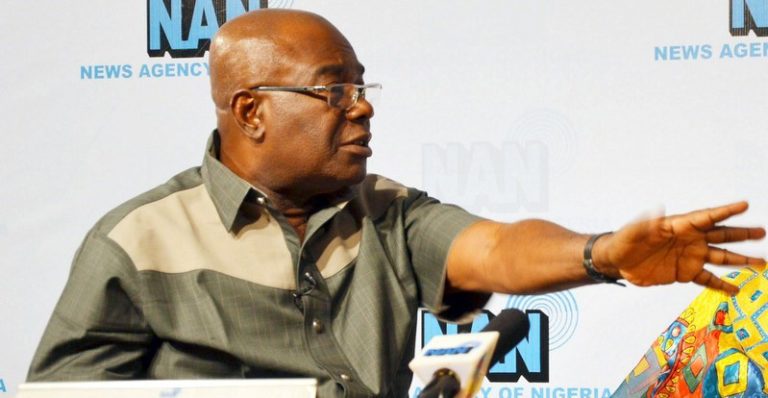
Since the National Population Commission (NPC) revealed that the population of Nigeria has official reached 198 million, experts have lent their voices to its benefits to the economy.
Chairman of NPC, Eze Duruiheoma
For instance, participants at the Vanguard Economic Discourse held in Lagos gave a word of caution over the spiralling head-count, saying that an uncontrolled population growth could derail Nigeria’s economic development.
Themed “Economy in Recession: Pitfalls, Trajectories and Resetting”, the event was chaired by Mr Bukar Kyari, Chairman, Nigeria Economic Summit Group (NESG), while the panellists included Mr Olabode Augusto, Chief Executive Officer of Augusto and Co, and Mrs Patience Oniha, Director-General, Debt Management Office (DMO).
Other panelists are Mr Muda Yusuf, Director-General, Lagos Chamber of Commerce and Industry( LCCI); Mr Issa Aremu, Vice President Global Union, African Region; Mr Opeyemi Agbaje, Chief Executive Officer, RTC Advisory Services; and Mr Tony Okpanachi, Managing Director, Development Bank of Nigeria (DBN).
Agusto advised that population issues be included in the nation’s political agenda, saying: “We need to enact policies that will help us manage our population better.”
“According to the population pyramid, by 2070 Nigeria will be 552 million.
“It means that demand for primary school is going to be much bigger, the number of teachers we’ll need will be more; vaccines to inoculate will be more.
“We need to send them to secondary school, keep them healthy; and after they leave school we would have to find work for them otherwise they will become what we call (in finance) non-earning assets.
“So, at the end of the day we measure the wealth of a nation by the number of yams we have produced divided by the number of people who are going to eat it – yam per head,” he said.
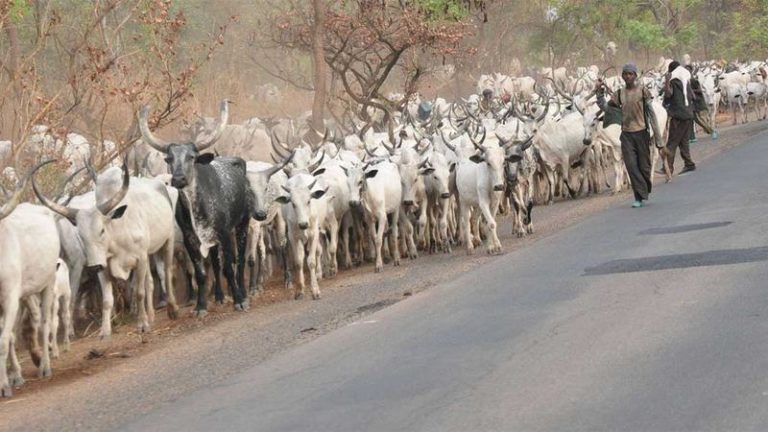
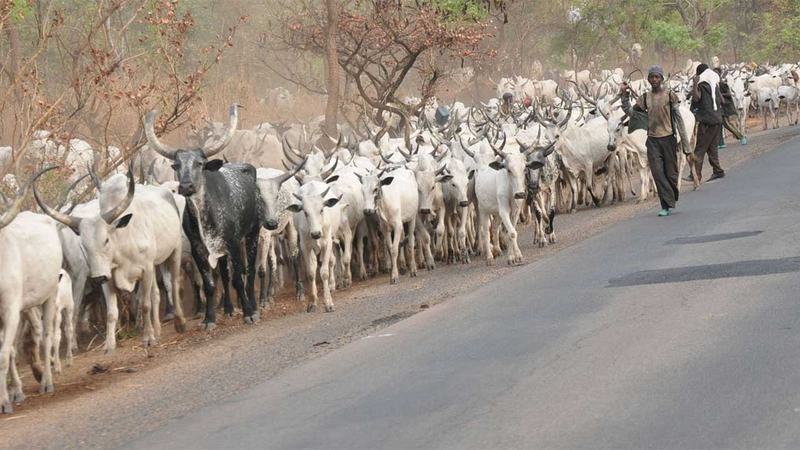
A don, Dr Luqman AbdurRaheem, has said that the creation of artificial streams can help address the perennial clashes between herdsmen and farmers in the country.
Herdsmen
AbdurRaheem, an Assistant Professor of Entrepreneurship and Corporate Social Responsibility at the American University of Nigeria, Yola, Adamawa State, made this known in an interview with the News Agency of Nigeria (NAN) on Sunday, April 15, 2018 in Lagos.
He said the artificial stream could be created by channelling water from the south to the northern parts of the country to enable herdsmen tend to their cattle.
“The only thing they (herdsmen) require is to take water to these lands.
“If we can pipe petrol to the North, why can’t we pipe water there to create an artificial stream?
“When you have the artificial stream, this desert will be turned to grazing land and colonies and ranches can be set up.
“With the land I saw in Jigawa, Gombe, Adamawa, Kano, Katsina and other locations, we (Nigeria) can feed the whole of Africa and Europe with cattle, cheese and milk.
“But everybody is busy concentrating on oil from the Niger Delta.’’
The lecturer also said all states in Nigeria had their different potentials that if properly tapped, would take the country out of economic doldrums.
“Every nation should go back to base and look at its resources.
“North can feed us with cow, milk and cheese and we will make money more than oil; go and do your research.
“The money from cow, cheese and milk is more than oil, but because we are lazy, you smile to Abuja; you get billions of Naira; you smile back to your state and spend it.
“Another month, you come back; so people are not being productive.
“Let us save the Fulani man; give him land, give him water, give him a ranch, give him colony; he is going to make money.’’
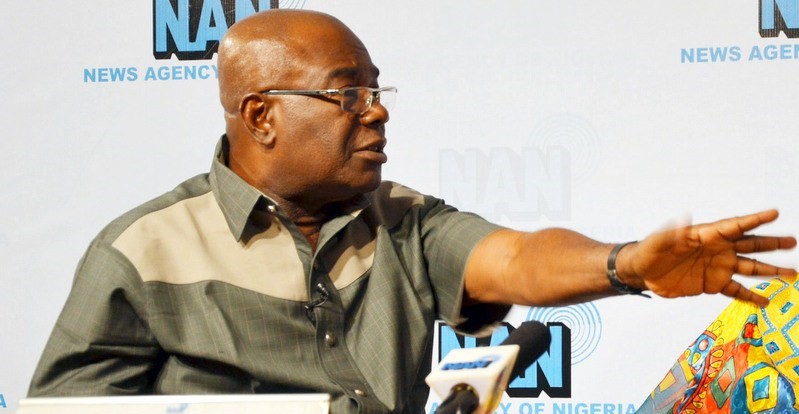
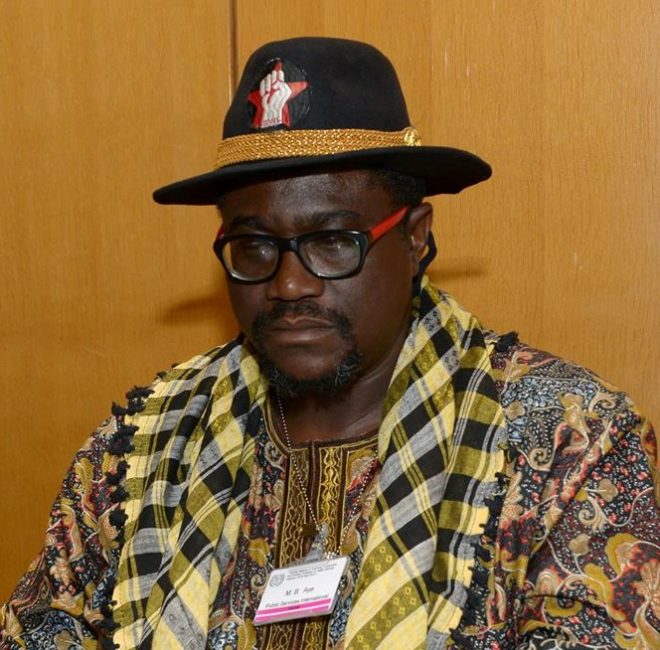
Environmental Rights Action/Friends of the Earth Nigeria (ERA/FoEN), in collaboration with Public Services International (PSI) and The Amalgamated Union of Public Corporations, Civil Service Technical and Recreational Services Employees (AUPCTRE) as well as other labour and civil society groups gathered in Lagos from April 3 to 4, 2018 to campaign against all forms of privatisation by government. On the sidelines of the workshop, Baba Aye, a health and social sector officer of PSI, was cornered to know why he was so passionate about the campaign. Excerpts:
Baba Aye
You are one of the frontline campaigners against water privatisation in Lagos. Why are you against privatisation?
Generally, privatisation is about selling off public goods to private interests. And private interests are concerned basically not only about breaking even, but about making profit. Public goods are supposed to deliver quality services to the public as a whole. Public goods serve to promote social justice because they provide universal access, which is not the case with privatisation. And the argument of privatisation, time and again, has been shown to be false. A good example is the privatisation of the power sector – electricity. The impression was that once you privatise, unbundle NEPA and all that, you are going to have an el dorado. But what has changed?
What we need is more democratic approach to the management of public services. Corruption thrives in the absence of transparency, in the absence of mobilisation of the community in the governance processes. This is what we need.
When you also look further, PPP, for example, is just one of the numerous togas, incarnations of privatisation, which is even worse, because it is about subsidising private interests, private profits with government funds. Good example is some of the PPP arrangements entered into by the Lagos State government with Visionscape, which tied the hands of the government after standing as surety for such humungous amount. It has hardly ever worked, globally and even in Nigeria. Where it has worked at all has been very infinitesimal.
While I am a global officer of the PSI, I worked with the Nigerian Ministry of Defence for 20 years. And I remember I studied during the Obasanjo (civilian) regime companies that were privatised under the Bureau of Public Enterprises (BPE). Out of those companies, it is only 13 per cent that were doing either as well or slightly better than they were before they were privatised.
Many of the proponents of privatisation point at the telecom sector in Nigeria, which privatisation is successful to a large extent.
I am very happy you have raised this. The issue of the telecom sector is a myth. They cite it due to inadequate knowledge. It was about the time, not about privatisation. What do I mean? Google it; it was in the early 90s when GSM (Global System for Mobilecommunication) became the new thing around the world, even in developed countries. It is not as if there was a public NITEL (Nigerian Telecommunications Limited) which could not handle the new telecommunication; it happened globally at a time and they moved in. It was not privatisation per se. It is fraudulent when they make reference to that. It was a new thing, not that they turned an old thing from public to private.
The workshop kicks against privatisation broadly; does is mean you don’t see anything good in privatisation?
That question is like saying: is there nothing good in going to the toilet? What you are talking about is not just going to toilet; you are talking about the diarrhoea killing that person. Whatever merit in privatisation is infinitesimal compared to the demerits. Economically, the government loses money and the people pay more. Politically, control is lost. Democratic accountability, which the citizens can hold government to, is gone because they can’t hold private entrepreneurs accountable. Socially, universal access is undermined and social justice is sacrificed. So, there is no justification for privatisation.
Privatisation was a scheme, an approach developed from the 1980s, which was aimed at getting the rich richer. And part of the myth in the package is that when the rich are richer, it would trickle down. But all over the world, it has not trickled down. Rather, the rich has continued to get richer, and the poor poorer.
If your peaceful campaign against PPP fails, what options are open or would you go to sleep?
No. Even if the government wins the battle, it cannot win this war. History is on our side. There are over 850 examples of what is called “remunicipalisation”. This means those public services like water and electricity that the public sector, the government, had been running that were privatised. But when it becomes so obvious, they were taken back from those who they were sold to.
If they go ahead with the policy, despite the hue and cry, we will keep fighting to take it back. So, to answer your question, if we do not defeat them immediately, we continue until the people in Lagos, the Lagosians, win water as a fundamental human right that it is.
Aside power, heath, water and education that had been discussed at the workshop, what other sectors are under the threat of privatisation?
Globally, anywhere there is money, the rich few, the one per cent, would want to touch and take from that money. So, they look at all sectors and coin all kinds of mechanisms for privatisation. With roads and ports, they describe it as concessioning, with energy, they describe it as unbundling, with other utilities like water, they describe it as PPP, and so on. But all these are different faces of privatisation in different sectors, depending on huge they see the capital outlay of the state entity, and ideologically how they can frame it to seem that they are not necessarily doing what they are doing, that they are supposed to be helping. Meanwhile, the person they are helping are themselves, not the masses.
Apart from fora like this, rallies once in a while and the community parliament, what other channels are you using to sensitise and involve the grassroots in this campaign?
Posters and pamphlets had been issued, and these are well circulated within the communities. The traditional mass media and social media are used. So, the message has gone out is going very far. The community parliament is very important because it is not just about the water coalition fighting for itself; what the coalition is doing is enlightening and organising Lagosians to fight against this impunity, this rape on their fundamental human right of water.