Governor Aminu Tambuwal of Sokoto State on Saturday, January 20, 2018 announced the purchase of N104 million worth of locally made fertiliser for distribution to farmers across the 23 Local Government Areas of the state.
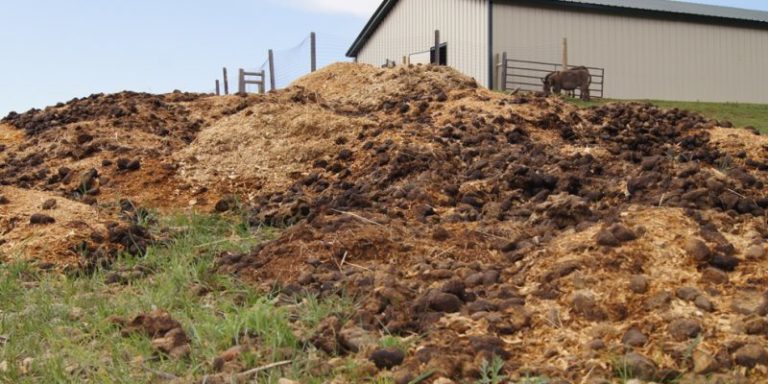
Organic fertiliser
Tambuwal said this when he launched the sales of organic fertiliser produced by a local firm, Sokoto-IML Company Ltd., in Sokoto, the state capital.
The News Agency of Nigeria (NAN) reports that the company was established in 2017, as a joint-venture entity between the Sokoto State Government and IML Industries Ltd.
Speaking at the ceremony, Tambuwal said that the event was a clear testimony of his administration’s ongoing efforts to enhance the economic well-being of the people.
He noted that apart from the fertiliser company, other policies had been implemented in order to put the state’s economy in the right direction.
“The micro and macro-economic policies of both the Federal and Sokoto State Governments had started to yield positive results.
“As we can see, positive results have been churned out from sectors like agriculture, manufacturing, entrepreneurship development and other areas in the social investments chain.
“It is worthy to note that governments at all levels are making progress in empowering the people to become self reliant with a view to addressing socio-economic challenges bedeviling the country,” he said.
The governor said Sokoto was one of the few states in Nigeria endowed with lots of unexploited natural resources.
He added that significant progress had been made in the last two years in harnessing such resources for the benefit of the people.
Tambuwal said government’s strategic investment plan had been worked out and was being implemented through a Special Purpose Vehicle (SPV) under the management of Sokoto Investment Company.
Alhaji Bilya Sanda, the Managing Director of the company, said that when the company commences full operation, it would produce 20,000 bags of organic fertiliser daily.
Governor Akinwunmi Ambode of Lagos State on Saturday, January 20, 2018 assured residents that waste deposited on major highways and streets around the state would no longer be visible in a couple of weeks.
Governor Akinwunmi Ambode of Lagos State
Ambode spoke at the Lagos House, Ikeja after inaugurating the new board of the Lagos State Environmental Sanitation Corps (LAGESC).
The governor, represented by his Special Adviser on Education, Mr Obafela Bank-Olemoh, said the new waste management policy of government encapsulated in the Cleaner Lagos Initiative (CLI) was designed to holistically address the challenges in the sector.
He said that all hands were already on deck to confront the initial hitches with the transition period.
“Let me assure the people that in the coming weeks, there will be improvement.
“We are already witnessing a high-level of improvement; we promise that throughout this week and throughout next week, people will see a marked improvement in our state as more equipment come into the country and we are able to deploy the equipment accordingly,” he said.
The governor said enough officials of LAGESC, transformed from the former Kick Against Indiscipline (KAI), had been employed to police all nooks and crannies of the state to curb indiscriminate dumping of waste.
According to him, the officials will also check other acts inimical to clean, hygienic and sustainable environment.
“We are all living witnesses to the restructuring we are trying to do in the environmental sector.
“That restructuring culminated in the introduction of CLI, which is focused at ensuring that the way we clean Lagos is comparable to what is being done in first class cities in the world.
“As a result, we are changing the way the environment in Lagos is being managed, and to help us to achieve that, this Sanitation Corps is important.
“More importantly now is to speak to the fact that yes, we are having some challenges in the area of waste management in Lagos today.
“We all live in Lagos, but I want to reaffirm that we are doing everything to ensure that this becomes a thing of the past.
“Beyond the fact that we are clearing waste, the CLI is also ensuring that we have landfill sites; not dumping sites but landfill sites, where the waste generated in Lagos can be recycled and re-engineered and also resold so that we can create wealth and a new business for Lagosians to tap into.”
Ambode said that another key aspect of the initiative is that it would create jobs.
“As we speak to you, we have employed over 8,500 new street sweepers that are being deployed across the state, and the target is 27,500.
“So, every part of Lagos will have street sweepers that are unique to them and live in their neighborhood.
“Once again, I want to reassure the people that we are on top of the issues here; we promise that you will see a marked improvement and we are totally committed to that.
“God helping us, we will deliver one of the cleanest cities in the world,” the governor said.
Ambode, however, said the support of residents was key to the success of the new initiative.
He urged the people to team up with his administration to achieve the overall objective to deliver a clean, hygienic and sustainable environment.
Since the coming together of countries to chart a path for global climate in 2015, the topic of climate change has gained much relevance and the spotlight in national discussions. Nigeria, who happens to be a signatory to this contract, did not pay the due attention to implementing the resolutions met at the conference until climate change came knocking at the borders of the country.
President Buhari of Nigeria signs the global treaty. President Buhari with R-L: Mr. Stephen Mathias, Assistant Secretary-General for Legal Affairs, United Nations; Mr. Santiago Villalpando, Chief of the Treaty Section, OLA, United Nations; Minister of Foreign Affairs, Geoffrey Onyeama; and Minister of Environment, Amina Mohammed as he signs Paris Agreement on Climate Change at the sidelines of the UN General Assembly in New York September 22, 2016.
The incidents of recurrent flooding, typhoons and evident temperature increase are fast becoming a norm in the country. This has pushed the government and policy makers to pay the necessary attention to climate action in the past months. This saw Nigeria being represented by a train of delegates headed by the Minister of State for the Environment, Ibrahim Usman Jibril, in COP23 that was held in Bonn, Germany last year November. The president alongside key players in the country politics were also participants at the One Planet Summit hosted in Paris, France a month after. These activities of the government has put “climate stories” in the league of mainstream issues in the country but the implementation of the Paris Agreement of 2015 still remains an uncompleted task leaving the citizens at the mercy of climate change.
A perfect case study of this theme is Benin City. Benin City, the capital of Edo State, is an ancient town globally known for its dexterity in bronze casting and home to the most revered royalty in Africa – Oba of Benin. It is the fourth largest city in Nigeria with its population equaling that of Luxembourg, Cape Verde and Seychelles put together. The prevalence of flooding in this elephantine city can be easily attributed to its high greenhouse gas emission and carbon usage.
Benin City plays host to the International Centre for Bronze Casting that attracts millions of tourists across the world. This monument unfortunately contributes a large quota to the high carbon emission in the Niger Delta region. Artisans make use of coal at high temperatures to mold and cast sculptures.
Chris, a sculptor in Igun, clearly spells out the tedious process involved in bronze sculpturing. He explains that coal is used to generate heat for melting the wax used in carving the bronze to desirable shapes and structures. He even jokes that there is no fair person in Igun because the heat generated does a lot of damage to the skin of the artisans. He further states that the governor of the state promised to provide ultra-modern facilities that would aid cheap, clean and timely bronze artefact production but they insisted on sticking to the archaic method, claiming it was passed to them by their forefathers and must be transmitted to their children without adulteration from the westerners.
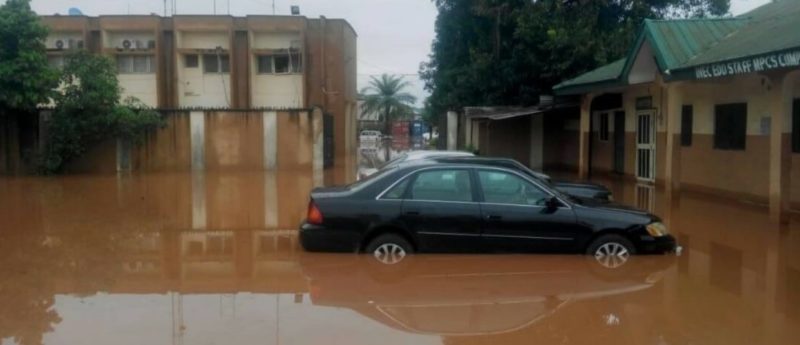
This high level of carbon emission has left Benin City stranded with endless flooding when it rains which has led to an inevitable loss of lives and properties, devastating health effects, traffic congestion, relocation of industries and manpower, cut-off in power supply and low internally-generated revenue (IGR). In recent times, Benin residents have had unforgettable experiences that would not be quick to erase from their memory such as the massive flooding that occurred on Saturday, October 7, 2017, sacking thousands from their homes and causing millions of naira in damages to properties.
Amongst the worst affected places was the Edo State headquarters of the Independent National Electoral Commission in Benin City. A section of the building’s perimeter fencing collapsed after two hours of heavy downpour, pushing in muddy waters inundated vehicles, files, computers and card reading machines. Another incident was when the landlords of Anigboro Street and its environs in Egor Local Government Area of Benin City sent a Save Our Soul (SOS) to the state governor, Mr. Godwin Obaseki, in August 2017 appealing to him to come to their aid before their houses and property were swept away by flood in the area. In the message by Elder Roland Irorere, Chief Frank Atoe, Mr Iro Omorodion, Mr Gibson Sylvester and Mr Peter Omorogbe for others, the residents said that their cry to the previous administration of Adams Oshiomhole about the ravaging flood was unheeded.
A flooded area in Benin City
“Your Excellency, the flood has reached an alarming rate and if nothing is done urgently about it, the whole houses in the area and property might be washed away during this rainy season. Many landlords and landladies in the area have already fled their homes as a result of the flood and their abandoned houses have become hiding places for criminal elements,” they wrote.
The residents of Uhunmwode community in Benin City are another set of people with a first-hand experience of climate variability especially with regard to food crop production which is a common sight in the area. Farmers are beginning to notice the impacts of climate variability on their food crop production. They found out that climate variability/change has caused poor crop yields, reduced soil fertility, increased flood, poverty and food shortage.
Food crop agriculture in Uhunmwode LGA does not only provide food for the inhabitants of the area, but also for nearby local government areas and cities. However, the recent changes in patterns of climate/weather elements are a huge challenge to food crop production in the area. For the crop farmers in the community, climate has greatly varied over recent years with rainfall decreasing and air temperature increasing. This combination is not in any way healthy for crop production, especially for farmers who are dependent on rain for their farming, as in the Uhunmwode community. Also, onset of rain in the area, according to the farmers, has shifted. This also in no small measure will adversely affect food crop production, as adjustment may be difficult, especially where what will happen the next farming season is not known.
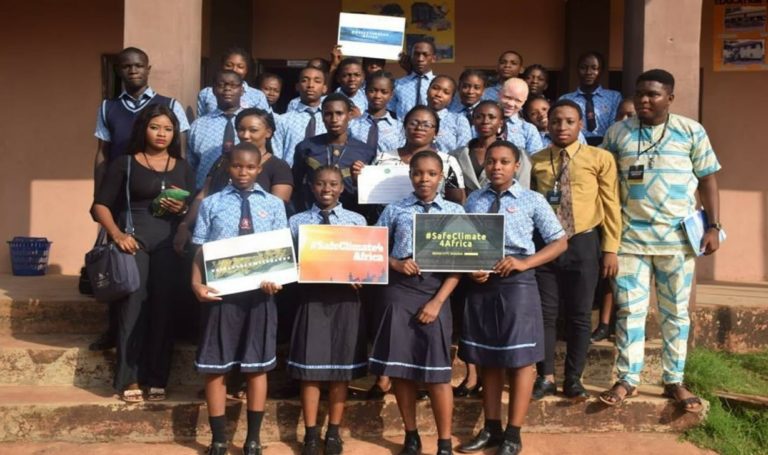
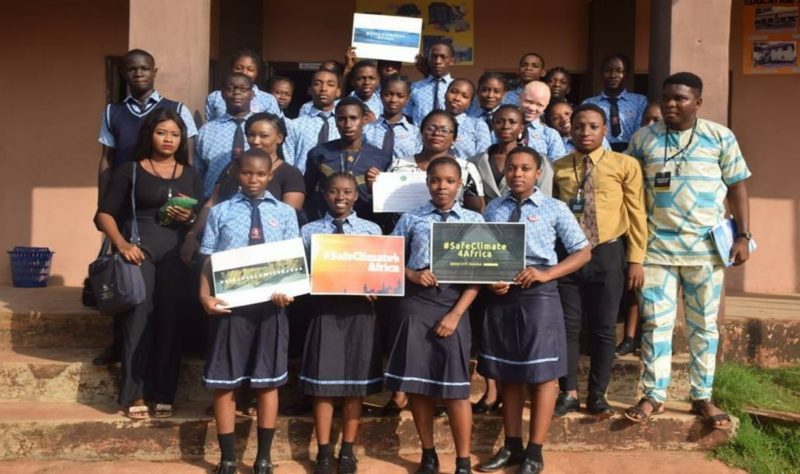
These incidents have seen the birth of organisations that are geared towards sustainable development and climate justice in the city. A vivid example is the Borokinni Joshua Initiative, a non-profit that centres on climate action. The group flagged a campaign in Benin City tagged #SafeClimate4Africa in collaboration with the Nigeria Society of Victoria (NSV). The campaign featured awareness-raising, school tours and round table discussions. The team of five visited Patricia Private School (Ikpoba Hill) and Torch Bearers Academy (Ikhueniro), in November 2017 to sensitise and intimate the staffs and students of these institutions on climate change which spread across various topics such as carbon pricing, mitigation and adaptation of cities, greenhouse gases, and deforestation, among others. They aired their views on radio stations and online sites, stressing the role of Benin residents in ensuring a safe climate for all. Their focus lies strongly on improving education, awareness-raising and human and institutional capacity on climate change mitigation, adaptation, impact reduction and early warning.
According to the Team Lead, the objective was to spring thought-provoking discussions cum solutions on the responsiveness of the government to climate action and the need for a responsible citizenry as regards the subject as well.
The Borokinni Joshua Initiative’s #SafeClimate4Africa campaign
The state government is also determined to find a lasting solution to this menace. In 2013, N500 million was set aside to fund a rescue project. However, due to the fact that the amount was grossly inadequate for the project, it began the search for a viable partner counterpart with the ability to provide counterpart funding. It approached the federal government with an appeal to have the project bankrolled with counterpart funding from the Ecological Fund but it was turned down.
The then state governor, Comrade Adams Aliyu Oshiomhole, made this point while receiving officials of the bank. According to him, “We have also talked with the federal government to draw from the Ecological Fund to deal with it. Again that has not been successful; our final hope now is the bank. We are hoping that you will help us out and have it fixed.”
Next, the state went in the direction of the World Bank, the global financial institution not known for giving consideration to frivolous administrations. Thankfully, the bank received the request with open arms and, as a mark of its readiness to do the needful, sent its assessment team to Benin City with a view to ascertaining the required level of assistance.
Benin City, as a hub of commerce, tourism and culture, is in the same way a hub of climate change hazards. There is an urgent need to strengthen resilience and adaptive capacity to climate-related hazards and integrate climate change measures into policies, strategies and planning of the state. Embracing renewable and clean sources of energy over coal and firewood for bronze casting and other major activities lies the backbone for procuring a Benin City void of climate-related disasters in the nearest future.
By Joshua Borokinni (Climate activist and final year student of the University of Benin, Benin City, Edo State)
The Environmental Rights Action/Friends of the Earth Nigeria (ERA/FoEN) has asked the Lagos State Government to terminate any agreement it may have entered into with Visionscape in the water sector as its performance in waste management has shown that it will also throw the water sector into crisis.
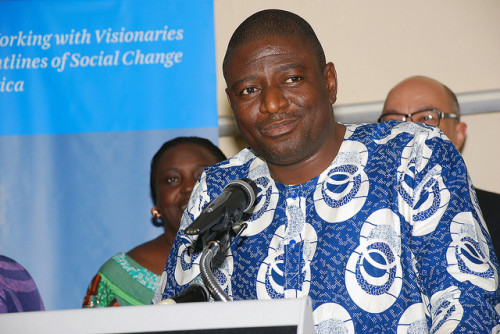
Akinbode Oluwafemi, Deputy Executive Director, Environmental Rights Action/Friends of the Earth Nigeria (ERA/FoEN)
The environmental justice group made the call in a statement made available to EnviroNews on Sunday, January 21, 2018 following general outcry that has greeted the poor operations of Visionscape which the Lagos State Government contracted to implement its Cleaner Lagos Initiative (CLI). The Lagos government paved the way for the company to take-over waste management under a PPP arrangement after it introduced a bill that merged all waste management agencies in the state into one. The law was passed by the state House of Assembly in April 2017 and the company took over refuse management operations from local operators on September 1, 2017.
Four months into its operations, the streets of Lagos are replete with uncollected waste littering major roads and front of residences in inner streets. Most residents have been on an endless wait for their refuse to be evacuated, to no avail. The situation has equally sparked fears of a major epidemic if nothing is done soonest.
The Lagos State Government had also announced last year that it has entered into a Public Private Partnership (PPPs) agreement with Visionscape for the management of Adiyan II water project.
In the statement issued in Lagos, ERA/FoEN said that the poor outing of Visionscape does not come as a surprise to civil society and grassroots groups who have not relented in their call for the state government to quit its “PPP misadventure”, which also targets the water sector.
ERA/FoEN Deputy Executive Director, Akinbode Oluwafemi, said: “The embarrassing showing of Visionscape despite the publicity blitz about its waste management prowess is a reflection of how PPPs fail to deliver. It is disheartening that the state government has picked the same company along with its consortium partner, Metito, to manage Lagos water.”
Oluwafemi pointed out that the speed with which the Lagos House of Assembly signed the bill that opened the door for Visionscape to become a major operator in the waste management sector in Lagos is in itself an anomaly.
“At the time Lagosians were alarmed that the state government put forward a PPP in the waste management sector as the solution to some observed inefficiencies by the local operators. Now it is clear that the PPP thing is a myth just like we had all along warned,” the ERA/FoEN stated, adding:
“Visionscape’s operations has been so embarrassing that, at a point, the Lagos governor, Akinwunmi Ambode, forced newly-elected local council chairmen to take clearing of waste within their communities as a major duty.”
Oluwafemi stressed that, beyond the existing chaos, the models upon which PPP is based has failed to uphold the human right to water and locked governments into long-term contracts, even as he cautioned that the firms shortlisted under the Adiyan II project, because of their track-records, will also bring the chaos into the Lagos water sector.
The shortlisted firms are AG Gold Trust Nigeria Limited, Vision Scape Water Solutions Limited/Metito, Veolia/Shoreline Group and Abegoa and Naston & Partners.
“Just like we provided details of the violations by the other firms handpicked by the state government, considering Visionscape’s demonstration of unbridled incapacity in management of solid waste in Lagos, the prospects of a Metito-Visionscape consortium to manage Adiyan II are very bleak. Lagos residents will not relent in the use of all legitimate means to demand for the human right to water to be fully upheld as an obligation of the government, representing the people,” he insisted.
An international study has found extensive lead contamination around lead battery recycling plants in Nigeria and six other African countries. The contamination levels in soil ranged up to 14% lead with average concentrations of 2% lead.
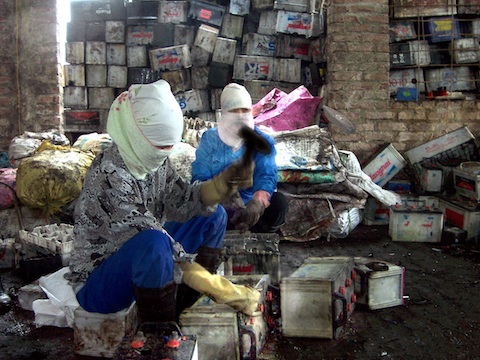
Disassembling used lead batteries in Vietnam
Lead battery recycling is a growing hazardous industry throughout Africa. In addition to vehicle applications, lead batteries are used to store solar and wind power, and are in demand for backup power for computers, cell phone towers, and home use. Lead pollution at these sites poses significant health risks to the public.
Titled: “Soil Contamination from Lead Battery Manufacturing and Recycling in Seven African Countries”, the study is published in the journal Environmental Research. It tested areas surrounding 16 authorised industrial facilities in Cameroon, Ghana, Kenya, Mozambique, Nigeria, Tanzania, and Tunisia.
In Nigeria, the Lagos-based Sustainable Research and Action for Environmental Development (SRADev) Nigeria collected and analysed a total of 21 soil samples from lead battery recycling factory sites in Lagos and Ogun states. Samples were reportedly tested in EMSL Analytical Inc, USA. Lead levels around lead battery recycling plants in Nigeria ranged up to 29,000parts per million (ppm) outside the facilities tested and 140,000ppm inside the facility tested. Fifteen (71%) of the samples were greater than 400 ppm or the United States Environmental Protection Agency (USEPA) limit for soil. Levels below 80 ppm are considered safe for children.
“There are no industry specific regulations controlling the release of lead from these recycling plants or to protect workers and children in surrounding communities,” said Leslie Adogame, Executive Director of SRADev Nigeria.
Few countries in Africa have adequate regulations governing the operations and emissions from lead battery recycling. Adogame added: “Lead battery manufacturing and recycling are extremely hazardous industries and companies should be required to publicly disclose their air emissions on an annual basis.”
Victor Fabunmi, Programme Officer of SRADev Nigeria noted: “One of the facilities tested in Ota (Ogun State) is located within approximately 20 metres of a residential district with about 200 inhabitants. At another facility in Ogijo (Ogun State), waste water run-off from the factory is used to irrigate surrounding farmlands.”
Perry Gottesfeld, Executive Director of Occupational Knowledge International, USA and the lead author of the study, said: “There is an immediate need to limit lead emissions from this industry and to test children’s exposure levels in nearby communities.” He added that many countries including Nigeria need to develop laboratory capacity to routinely test blood lead levels.
The authors of the study called on governments to ensure that plant operators set aside funds for facility closures to ensure that lead soil contamination is not left behind. One such site around a shuttered lead battery recycling plant in Mombasa, Kenya that has never been remediated is responsible for poisoning hundreds of nearby residents since the plant was closed in 2009, stated the authors.
The United Nations Environment Assembly (UNEA) adopted a resolution during its meeting in 2017 calling on governments to do more to control hazardous lead emissions from lead battery recycling.
Lead is easily melted down for reuse and therefore lead batteries are rarely discarded as waste. Recycling lead by melting down used batteries (also known as secondary smelting) is a profitable business throughout the world. Unfortunately, recycling lead from used batteries is known to result in high lead exposures that can cause severe health effects and contaminate the environment unless adequate equipment is used and procedures to minimize emissions are followed.
In many developing countries individuals working on the side of the road or in “backyard smelters” carry out lead battery recycling. Because of the primitive nature of these operations and their enormous number (estimated to be in the tens of thousands) the control of lead poisoning from the contamination of homes and the environment is a major challenge. In 2008 at least 18 children died and many more were poisoned from lead in Dakar, Senegal after exposure to contaminated dust and soil from the recycling of used lead batteries.
Large-scale recycling facilities are also known to be significant sources of lead exposure in many parts of the world. There are dozens of examples of informal and even large lead battery recycling plants that have been the source of lead poisoning among workers and local residents.
Governor Aminu Waziri Tambuwal of Sokoto State on Friday, January 19, 2018 inaugurated a 80kwp solar mini grid electricity project that will supply power to over 4,000 inhabitants of Kurdula community in Gudu Local Government Area (LGA) of the state.
Governor Aminu Tambuwal of Sokoto State
The project is one of six such projects currently supported by the Nigerian Energy Support Programme (NESP). Altogether, the projects will provide electricity to more than 100,000 people across five states (Ogun, Niger, Plateau, Sokoto and Cross River states).
Speaking at the inauguration, Gov. Tambulwal said that solar mini grid presented Nigeria with the greatest opportunities of enhancing access to electricity especially for those in rural areas without links to the national grid.
“Mini grid powered by renewable sources is the best option for us to expand electricity access in the rural areas where the national grid is not available,” he added.
Mr Ketil Karlsen, the European Union Ambassador to Nigeria, at the inauguration noted that over 1.5 billion people globally lacked access to electricity and a great percentage of the number live in Nigeria.
Karlsen said that many Nigerians lacked access to cheap, affordable and steady electricity but acknowledged that current efforts by the federal government through the introduction of solar mini grid would cushion the effect and expand access to electricity for underserved Nigerians.
Minister of State for Power, Works & Housing, Suleiman Hassan Zarma, commended the European Union and the German Government for the project.
Zarma said that government was ready to work with partners to ensure that energy solutions such as the mini-grid approach can be replicated and scaled up.
NESP is a €24.5 million technical assistance programme, launched to promote investments in renewable energy, energy efficiency and rural electrification.
The programme is expected to benefit about 100,000 rural inhabitants in several states across Nigeria before its expiration in 2020.
NESP is co-funded by the European Union and the German Government (via the Federal Ministry for Economic Cooperation and Development, BMZ) and is jointly implemented by the Federal Ministry of Power, Works and Housing and the Deutsche Gesellschaft für Internationale Zusammenarbeit (GIZ).
Life expectancy is a statistical measure of the average time an organism is expected to live, based on the year of birth, current age and other demographic factors. Over the years, studies have shown many factors affect life expectancy. They include hygiene, diets, location, standard of living, among others; these contribute to increasing or decreasing life expectancy. Despite technological advancement, medical inventions and developmental strides that have revolutionised the healthcare sector in most western nations, in Africa declining life expectancy is a major issue. For instance, even with huge natural and human resources life expectancy in Nigeria is still poor and only comparable to many poor nations on the continent.
According to scientists, tobacco smoking is dangerous to health
Tobacco is one of the factors that militate against the attainment of good health in most countries with declining life expectancy. Tobacco in its several forms of consumption is known to cause cancer, rupturing of the lungs (emphysema), fragile bone (osteoporosis), heart disease, stomach ulcers, cervical cancer, miscarriage, arteries and veins disease (Buerger’s disease) among others. Each of these fatal health conditions are capable of causing death and cutting short the life expectancy of a group of people if tobacco control measures are not properly put in place.
Cigarette smoking is an established cause of premature death; Life expectancy for smokers is at least 10 years shorter than for non-smokers. It has been found out that quitting smoking before the age of 40 significantly reduces the risk of dying from smoking-related disease. Tobacco smoke exhaled by smokers is not safe either, exposure to secondhand smoke (smoke exhaled by a smoker) causes an estimated 41,000 deaths each year among adults in the United States, let alone health risks and diseases associated with secondhand smoke often known as environmental tobacco smoke (ETS).
The United States Centre for Disease Control reported that smoking causes nearly one in five deaths; it is also reported that smoking causes more death each year than HIV, Illegal drug use, alcohol use, motor vehicle injuries and firearm-related incidents all combined in the United States. In Nigeria, a little less than 40% of adults are exposed to Second-hand smoke when visiting cafes/coffee shops and tea houses, and 8 in 10 adults are exposed when visiting bars/nightclubs. Motor Parks in towns and cities still prove to be the most vulnerable place for second-hand smoke.
According to the Global Adult Tobacco Survey (GATS) 2012, 5.6% Nigerian adults aged 15 years or older were current users of tobacco products about 10% of men and 1.1% of women. Interestingly, Life expectancy among women is slightly higher than that of men in Nigeria. The health of the younger generation will also take a hit if tobacco industry deliberate attempt to woo underage smokers is not counteracted with firm policy. The Big Tobacco Tiny Targets Nigeria Report released October 2017 reveals that 83.3% of stores and kiosks within 100 meters of schools had tobacco products on the counter. Thereby tobacco products are conspicuously displayed alongside candies and cookies for school children. The report also highlighted the familiar use of Tobacco Industry branded kiosks and push carts within 100m radius of school areas. The colour influence on the way tobacco are recognised and identified is known to promote appeal and impulsiveness in buyers especially children. These are subtle ways in which tobacco industries target buyers particularly the younger generations.
Countries the world over are taking the bull by the horn by controlling tobacco advertising, promotion and sponsorship, tobacco sales, tobacco packaging and tobacco use. Some countries in Africa have also banned shisha, one of the most lethal innovations of tobacco corporations. Kenya recently joined Rwanda and Tanzania in Shisha ban. Such responsiveness is one that Nigeria is yet to appreciate or else, going by the growing number of shisha bars in the major cities, this would seem a looming disaster to public health and in turn life expectancy in Nigeria in addition to secondhand smoke that tend to put even non-smokers and children’s health at risk.
By Olu’Seun Esan (National Tobacco Control Alliance, Nigeria)
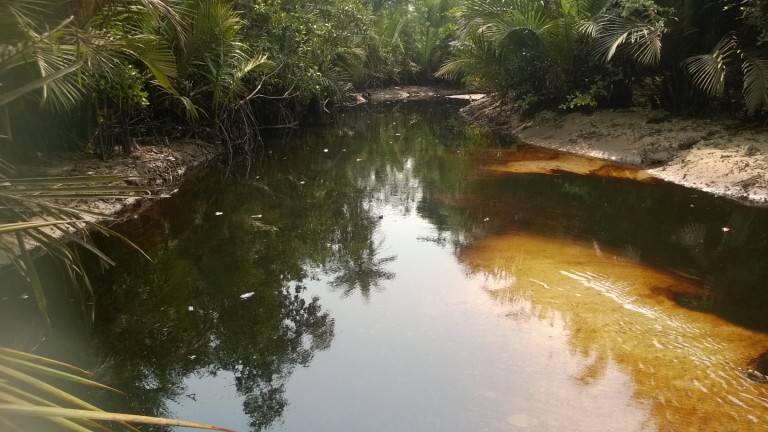
The Managing Director of Niger Delta River Basin Development Authority (NDRBDA), Mr Tonye David-West, on Friday, January 19, 2018 said youth unemployment and environmental pollution were some of the challenges hindering the region’s economic development.
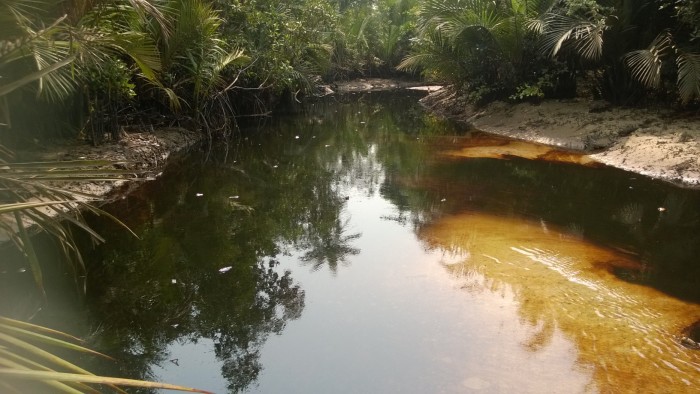
A polluted river in the Niger Delta region
David-West, during a courtesy call on the Managing Director of the News Agency of Nigeria (NAN) in Abuja, said the challenges needed to be promptly surmounted.
“Pollution which is inherent in water, ecosystem and all other areas is a big issue which should be tackled immediately,’’ he said.
The Development Authority managing director however said the proposed Niger Delta Agriculture Endowment Fund, when operational, would help in addressing the myriad of problems facing the region.
“The basin authority is setting up a technical committee to spearhead the realisation of the project. There is the need for all stakeholders to address the problem of the Niger Delta.
David-West said the invasion of black sooth, which was polluting the environment in Port Harcourt, has become an emergency.
“If you live in Port Harcourt, you cannot walk barefooted, the black sooth is everywhere. That is why we must begin to seek ways to cleanse our environment,’’ he said.
Alhaji Yahaya Ndu, a consultant on the David-West entourage, added that the project would help in promoting agriculture, aquaculture, tourism and youth empowerment.
“All hands must be on deck to make it a reality,’’ he said.
Ndu said development partners and corporate organisations could use such projects as a corporate social responsibility towards overall development.
“We on our part have studied the terrain and we have confidence that given the right atmosphere and partnership, we can generate solid funding for the youths to contribute to national development.’’
He added that partnering with NAN was an opportunity to carry out the message of the Niger Delta to a larger audience.
The NAN MD, Mr Bayo Onanuga, while responding, said agriculture was the mainstay for Nigeria’s development and it could be a great revenue earner for socio-economic development.
“The role of young persons in restoring peace to the region, when properly engaged in agriculture and its value chain, is very important.’’
Onanuga expressed the agency’s commitment to support laudable projects towards overall national development.
The Lagos State Government and the environmental utility group contracted to implement the Cleaner Lagos Initiative (CLI), Visionscape Sanitation Solutions, have intensified evacuation of waste in black spots and illegal dump sites across the metropolis.
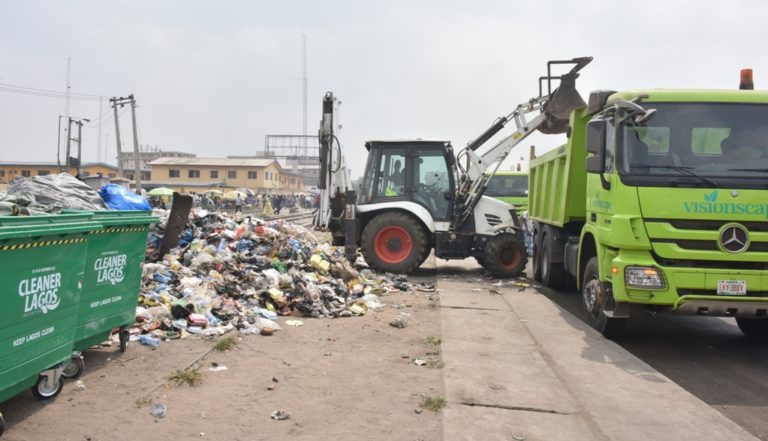
Officials of the Cleaner Lagos initiative (CLI) evacuating illegal dumpsites across the state on Friday, January 19, 2018
The authorities disclosed in a statement made available to EnviroNews on Friday, January 19, 2018 that evacuation of filth had been carried out and still ongoing in major areas including Falomo Bridge, Obalende, Ikoyi, Mushin, Ikeja, Ipaja, Agege, Oshodi, among others.
The clean-up exercise, which is said to be simultaneously going on across the state, is in line with “Operation Deep Clean,” a stop-gap measure designed to keep the city clean pending the full transition to the new waste management policy of the state government encapsulated in the CLI.
The CLI, it was gathered, was established to address, enforce and regulate the challenges in the solid waste management systems within the state in line with global best practices.
Speaking after observing the evacuation of heaps of refuse in Ikeja Along Bus Stop on the Lagos-Abeokuta Expressway, a resident of the area, Mr Babatunde Bamidele, commended government and Visionscape for the exercise, saying it was obvious that a good job was being done.
He said: “What they have done here is very good. Everywhere is clean now. I will only appeal to them to keep up the good work by coming regularly.”
Another resident, Tanwa Babarinde, who operates a public toilet in Ikeja, urged government to designate officials to monitor the area especially at night to prevent indiscriminately dumping of refuse.
She said: “I like what Governor Akinwunmi Ambode is doing to make the state clean. The Visionscape people have been here to clean up this area and they did a very good job.
“My only appeal to the state government is to designate their officials here especially at night to prevent indiscriminate dumping of waste because anytime they clean up the illegal dump site here, before the next day, you will see heaps of refuse again meaning that some people are coming here to dump waste at night,” Babarinde said.
It will be recalled that the operators of Private Sector Participation (PSP) in waste management and the Lagos State Government had agreed to amicably settle a court case which delayed full implementation of CLI.
According to the statement, some people go out in the middle of the night to dump waste on a large scale on the roads. But the government says it has vowed to go all out after such elements and punish them accordingly in line with the law.
The state government has also urged residents to properly bag their waste and put in front of their houses for evacuation by officials of the Cleaner Lagos Initiative and other assigned bodies.
Communities around Kangimi Dam in Igabi Local Government Area of Kaduna State have raised an alarm over the deteriorating state of the dam. They fear that if action is not urgently taken a disastrous failure could occur. This situation reminded me of a similar alarm that was raised by cracks on Tiga Dam in 1988, 30 years ago. In response to that alarm I wrote an article titled Before Tiga Dam Fails. It was published in The Guardian (Lagos) on February 23, 1988. Due to the fact that its import applies to the current situation I have reproduced it in full hereunder:
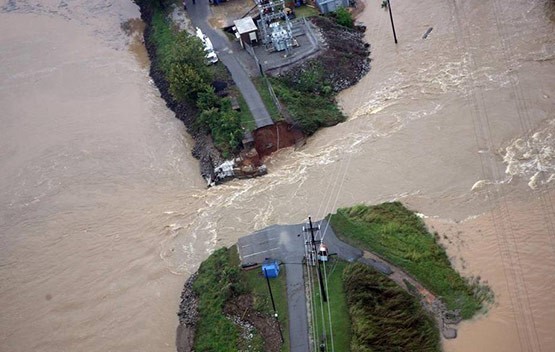
Scene of a failed dam
Disaster has not yet struck at Kano State’s Tiga Dam so there appears to be no sense of urgency in our slow crawl towards diffusing the ever-shortening fuse line. Major cracks have reportedly been evident on the embankment of Tiga Dam since late 1986 but, so far, nothing more than exploratory moves have been made towards repairing it. By all standards, we have a calamity on our hands, a smoldering keg of gunpowder, but it seems only a tragedy will make us move.
Dams have been known to collapse without notice. Our Tiga Dam has, however, kept us on notice for quite some time now. In France, for instance, Malpasset Dam collapsed in December, 1959 without warning. The ensuing flood eliminated everything in its path for a distance about 5km. indeed, at the town of Frejus, over 6.4km downstream, over 300 persons lost their lives.
The greatest dam tragedy in recent memory may, however, be the one in Italy in 1963. The Italian Vaiont Dam’s failure was triggered by a landslide from an adjoining mountain side. Over 2,000 Italians lost their lives. The Americans learnt a lesson from that disaster and quickly evacuated residents near Los Angeles’ Baldwin Hills Reservoir just before it collapsed also in 1963.
Engineers have since accepted that one of the uses of structural failures is their educational value. Even where it is not a structural failure, the signals of an impending disaster may be read clear and early and people evacuated out of harm’s way promptly. When disaster strikes, relief materials and refugee camps are scant consolations. It is gratifying that the authority in-charge of the Tiga Dam acted in early 1987 (March, to be precise) in getting in experts from the USA to study the cracks in the embankment which turned out to be “both longitudinal and transverse” and may cost nothing less than N26 million to mend.
Although it is not yet clear when real action will commence in the salvaging of this Kano State’s “main source of domestic and irrigation water supply”, it is wise to mention the past performance of the invited American experts in their own country. The Bureau of Reclamation (Bruce) has been designing and building dams since the early years of this century. The Teton Dam in eastern Idaho, designed by BuRec, failed in June 1976, killing 11 persons and injuring more than 2,000 others. Property worth over N4 billion and more than 7,000 homes and businesses were destroyed.
According to the Engineering News Record (ENR) of January 13 1977, the report of the panel reviewing the failure of the Teton Dam blamed “inadequate design and field monitoring by the Bureau of Reclamation for the breach, resulting in flooding that covered 300 square miles.” The report further stated that BuRec concerned itself with “keeping water from seeping through the dam rather than taking measures to render harmless whatever water did pass.” Thus, because of inadequate drainage, the embankment’s impermeable core material was eroded, eventually allowing water to burst through the dam’s downstream face.
The final report on the Teton Dam disaster was reviewed in the February 14, 1980 issue of ENR. Although it was noted that BuRec has since taken steps to avert other tragedies, the report called into “question the integrity of the Bureau of Reclamation’s other 290 dams.” In fact, the BuRec Commissioner even said that they would commission independent consultants to review BuRec’s major new dams instead of just inviting them for specific advice as had been their practice.
Dam safety appears to be one area in which engineers do not have sufficient answers. In the United States where a programme of dam inspection has commenced, the percentage of hazardous dams increases with the number of inspections. Check this out: in 1978, 20% of the inspected dams were found to be unsafe. In 1979, this had increased to 29% and, by March 1980, the figure was 32%.
Due to varying legislations, some states in the USA place less emphasis on design and construction control. At a time, West Virginia had a staggering 74% unsafe dams. Generally, leakages have been found to be greatest culprit in dam failures in recent times. Other identified major causes include: outlet work damage, slope instability, inadequate slope protection, overtopping, deterioration and embankment deformation.
Lax dam safety programmes have been noted as a serious problem. In some countries, the affluent create lakefront properties by building small private dams. Since they would not want to submit to strenuous checks, they fight against inspection laws and weaken safety programmes. 1976 witnessed a number of earth fill dam failures not the least being Pakistan’s Bolan Dam which failed in September of that year. The dam had no spillway and thereby encouraged an unmanageable build-up of water in the reservoir. The water, sadly, did the sensible thing – it just swept over the top, destroyed the dam and swept away 26 villages.
We do not have a long history of large dams in our country and, mercifully, failures have not resulted in catastrophes yet. The greatest tragedy associated with dam building in Nigeria remains the massacre of dispossessed peasants (Bakolori, 26/4/80), who resisted uncompensated appropriation of their land. The disquieting news about the Tiga Dam should attract urgent actions to avert a disaster. We have had sufficient notice, by all standards. The reported longitudinal and transverse cracks could be due to a number of factors which our geologists, hydrologists, civil engineers and other experts should bring to the notice of the authorities to underline the urgency to avert impending tragedy.
We do not know that what the Nigerian Society of Engineers has done about dam safety measures in Nigeria so far. If they have not done much in this direction, they need no further urging.
For a dam which watered the field that yielded 19,296 tonnes of rice valued at N19 million (The Guardian, 22/1/88) last year alone, N26 million is not a staggering amount for its repair. The danger now posed to life and property should not be left unaddressed for a day longer. We have sufficient lessons to learn from other lands, we do not require a dam disaster now or at any other time.
By Nnimmo Bassey (Director, Health of Mother Hearth Foundation – HOMEF)