33.7 C
Lagos
Sunday, December 28, 2025
Home Blog Page 1884

How one year of Trump administration has impacted US’ environment policy

0

One year ago, on January 20, 2017, Donald J. Trump was inaugurated 45th president of the United States. The year has however been seen by environmentalists and sustainable development campaigners as a challenging one, in the light of the number of controversial moves made by the White House within 365 days. Washington, DC-based non-profit organisation involved in education and advocacy related to climate change, Climate Reality, lists the decisions, saying however that it remains as hopeful as ever

Donald Trump
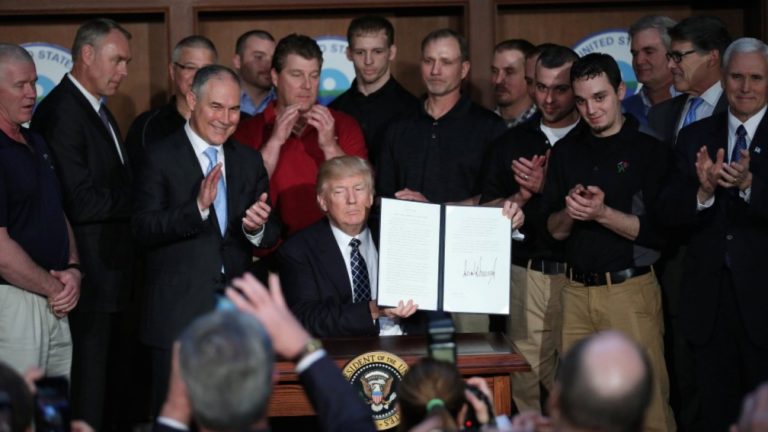
With coal miners gathered around him, President Donald Trump of the US signed an Executive Order rolling back a temporary ban on mining coal and a stream protection rule imposed by the Obama administration

Choosing Profits Over People
The White House has revoked or repealed dozens of environmental rules, including ones that prevent coal companies from dumping mining debris into local streams and ban offshore oil and gas drilling in the Atlantic and Arctic oceans.

A rule preventing coal companies from dumping mining debris into local streams – Revoked. A ban on offshore oil and gas drilling in the Atlantic and Arctic oceans – Repealed. A proposed rule asking mines to prove they can pay for potential future cleanup efforts – Reversed. Guidance for federal agencies to include greenhouse gas emissions in environmental reviews – Withdrawn. Review of strong fuel-efficiency standards for cars and trucks – Reopened. An Obama-era rule regulating royalties on oil, gas, and coal extracted from federal or tribal land – Rescinded.

So who loses? Pretty much everyone else.

To start, burning fossil fuels pollutes our air directly and immediately with irritants like particulate matter and soot, and as these greenhouse gases accumulate in the atmosphere and average temperatures rise, they also contribute to higher levels of ground-level ozone that can cause acute and long-term respiratory problems.

According to the World Health Organisation (WHO), “Climate change is among the greatest health risks of the twenty-first century. Rising temperatures and more extreme weather events cost lives directly, increase transmission and spread of infectious diseases, and undermine the environmental determinants of health, including clean air and water, and sufficient food.”

But instead of listening to the scientists at WHO and elsewhere, the administration seemed to be listening to, well, fossil fuel executives. The White House went even further and directed federal agencies to stop using the “social cost of carbon,” a tool for estimating the real monetary damage that comes with spreading disease, rising asthma rates, and other impacts of carbon pollution and climate change.

Climate Change and National Security
In December 2017, the White House dropped climate change from the list of global threats to the nation included in the official National Security Strategy (NSS). This action stands in stark contrast to the NSS under the Obama Administration, which recognised climate change as a key threat to national security.

What’s shocking about these moves is that they directly contradict the public stance of the current (and well-respected) secretary of defense, James Mattis.

“Climate change is impacting stability in areas of the world where our troops are operating today,” Secretary Mattis wrote in response to follow-up questions posed after his public confirmation hearing January. “It is appropriate for the Combatant Commands to incorporate drivers of instability that impact the security environment in their areas into their planning.”

Secretary Mattis and Secretary of State Rex Tillerson are said to have also arguedagainst President Trump’s decision to begin the process of withdrawing the US from the Paris Agreement.

There are countless ways the climate crisis impacts the internal stability of nations around the world. But don’t take our word for it. Just listen to some of our nation’s greatest military minds.

Not even a week before releasing the new NSS, the president signed the National Defense Authorisation Act, which includes a section titled “Report on Effects of Climate Change on Department of Defense,” where Secretary Mattis, Chairman of the Joint Chiefs of Staff Joseph Dunford, and former Secretary of Defense Robert Gates, among others, elaborate on the various and numerous threats climate change poses to the safety and security of America’s military.

The conclusion: “It is the sense of Congress that climate change is a direct threat to the national security of the United States and is impacting stability in areas of the world both where the United States Armed Forces are operating today, and where strategic implications for future conflict exist.”

EPA Leadership: Not That into Protecting the Environment
In October, the Trump Administration proposed repealing America’s Clean Power Plan, a centerpiece of President Obama’s commitment to tackle climate change by reducing the carbon footprint of US power plants.

EPA Administrator Scott Pruitt has set his sights on undoing America’s Clean Power Plan (CPP), in particular. In October, the Trump Administration proposed repealing the CPP, a centerpiece of President Obama’s commitment to tackle climate change by reducing the carbon footprint of US power plants.

Repealing the CPP moves the United States in exactly the opposite direction as the rest of the world is heading in increasingly shifting from fossil fuels to renewables. It’s also yet another example of the US abdicating its traditional role as a global leader (and the White House sacrificing real business opportunities for American companies and workers in the growing clean energy revolution).

Sadly, the writing was always on the wall once Pruitt was nominated to lead EPA. Prior to becoming administrator, Pruitt was an outspoken denier of climate science who led the coalition of state attorneys general suing the agency over the CPP during his tenure as attorney general of Oklahoma. He also received nearly $300,000 in campaign contributions from the fossil fuel industry, and took industry messages straight from lobbyists for official state correspondence to President Obama and EPA.

While in office, his close relationship with the very industries his agency regulates has only deepened while environmentalists and public interest groups have struggled for access. The consequences couldn’t be clearer in the growing list of environmental regulations now on hold, under review, or simply repealed. Which raises all kinds of questions about what happens to the EPA’s important mission of protecting human health and the environment in 2018.

The Paris Agreement

Perhaps, or at least among, the most public assaults on environmental regulation, climate science, public opinion, and common sense undertaken by the Trump Administration came in an announcement made last summer. In a speech from the White House Rose Garden, President Trump declared, “I was elected to represent the citizens of Pittsburgh, not Paris,” and announced the US would begin the lengthy formal process of withdrawing from the Paris Agreement.

The historic agreement, which was signed in 2015 and entered into force in late-2016, united the world around a major goal – to cut greenhouse gas emissions worldwide and together limit global warming. The accord rallied the world around the existentially important cause of limiting global average temperature increases to less than 2 degrees Celsius.

Adding insult to injury, during his Paris announcement, the president also declared his intent to stop payments to the Green Climate Fund, a United Nations programme “which helps fund climate finance investment in low-emission, climate-resilient development through mitigation and adaptation projects and programs in developing countries.”

Unsurprisingly, the president’s announcement was met with widespread condemnation from other world leaders, who promptly strengthened their commitments to fighting climate change – and then some.

We could say an awful lot more here, but we’ll leave it at this: The United States is now the only country in the world opposed to the Paris Agreement. That pretty much tells us all that we need to know.

So Where Do Things Stand?

All of this is pretty bad for the planet, of course, but it’s also antithetical to the administration’s “America First” policy. In any scenario where the US attempts to expand fossil fuel production as the rest of the world moves on quickly to renewable energy sources like wind and solar, everyday Americans citizens lose. Beyond even the obvious dangers the climate crisis poses to our short- and long-term well-being, we also lose out on being part of the future of energy and jobs – all so the Big Polluters of today can line their pockets before the jig is truly up.

“The irony is that we may well meet our obligations under the Paris treaty, even with the current administration playing an adversarial role,” Dr. Michael Mann told Climate Reality late last year. “That’s simply because of all of the progress that we are seeing now at the state level, at the municipal level thanks to efforts by folks like Al Gore to really mobilize the American people on this issue.”

He continued, “Ironically, (leaving the Paris Agreement) puts the US in a less competitive position. The rest of the world recognises that the future of our global economy will be in renewable energy. That’s the great economic revolution of this century. And what Trump and those whose agenda he’s advancing are doing is holding us back as the rest of the world moves on, and guaranteeing that we lose out in this economic race.”

In the face of these attacks on the health of our shared planet and the US’ role as a global leader, are you ready to be a voice of reality? Are you ready to take action?

Here’s the deal: As discussed above, the Trump Administration is working to repeal (and possibly replace) America’s Clean Power Plan. Backed by powerful oil, coal, and gas companies, EPA Administrator Pruitt claims the original CPP overstepped EPA authority. But we know this is really about protecting Big Polluters’ bottom lines – no matter the consequences.

Americans agree our families should have clean air to breathe, a safe climate to live in, and a thriving, job-rich future powered by renewable energy.


Africa’s progress depends on the creative energy of its youth, says Bouchamaoui

0

The 2015 Nobel Peace Prize Co-Laureate, Ouided Bouchamaoui, has warned that Africa’s growing youth population could be a plus for Africa or a political time bomb. This, according to her, depends on how leaders anticipate the future.

Ouided Bouchamaoui
Ouided Bouchamaoui

In remarks she made at the African Development Bank’s Eminent Speaker Series seminar on Monday, January 22, 2018 in Abidjan, Côte d’Ivoire, on the theme “African Cooperation: Dream or Reality?”, Bouchamaoui argued for a new vision for Africa that is hinged on modernity and progress that goes beyond economic development.

“My message is clear: let’s give priority to the youth, university cooperation, the development of initiatives, networking and institutional capacity-building,” she said, highlighting the need for African leaders to tap into the creative energy of the youth to pilot the projects of the future.

Bouchamaoui said integration should include partnerships in academia, the arts, entertainment, science, technology, governance and culture.

Bouchamaoui was the first woman elected to head the Tunisian Confederation of Industry, Trade and Handicrafts (UTICA). She was head of the organisation in 2015 when the Tunisian National Dialogue Quartet, which UTICA had formed with the Tunisian General Labour Union, the Tunisian Human Rights League and the Tunisian Lawyers Association two years earlier, won the Nobel Peace Prize.

The Quartet organised negotiations between Tunisia’s political parties to ensure a successful transition following the “Arab Spring” that led to the fall of President Zine Abidine Ben Ali.

In her presentation, Bouchamaoui called for greater economic cooperation among African countries and a greater focus on academic and vocational training, scientific research, technology, government and culture, which she said had remained largely untapped.

“Africa bucks current demographic trends because 70% of its total population is composed of young people below the age of 25 years, representing a market of over one billion consumers. By 2050, this population is expected to soar to 2.5 billion inhabitants, of which half will be less than 25 years old; and by 2025 there will be 500 million more urban dwellers,” she said.

The first step, she said, is to engage in active and massive training of the youth. She also advocated for the establishment of strategic partnerships among African universities as a key to strengthening intra-African bilateral and multilateral relations.

Bouchamaoui observed that leaders must invest in the acceleration of a Digital Africa to help create smart economies, smart cities, smart countries, and subsequently a smart continent.

According to the Nobel Co-Laureate, online learning remains a formidable tool for pooling energies and building bridges of innovative education for the benefit of African students. She reminded the audience that Africans in the diaspora are key to consolidating the linkages between African countries.

Africa should foster economic cooperation by developing new funding sources, growing the labour force, and training and technological innovation.

In her view, African cooperation and integration is possible.

Ouided Bouchamaoui was voted Best Business Woman of the Arab World in 2013 under the auspices of the G8 Deauville Partnerships, and awarded the Business for Peace Award in 2014.

In addition to the Nobel Prize, in January 2015, the Tunisian President, Beji Caid Essebsi, decorated Bouchamaoui with the Grand Officer of the Order of the Republic – First Class. In the same year, His Majesty, the King Carl XVI Gustaf of Sweden, decorated her with the Royal Order of the Polar Star. A month later, former French President François Hollande conferred her with France’s Legion d’honneur.

Bouchamaoui’s vision for Africa includes investing in the creative energies of Africa’s youth through skills development and dynamic partnerships between African universities – including an Erasmus programme to produce the next generation of Africa’s best brains.

The African Development Bank’s Eminent Speakers Lecture Series was launched in 2006. Its goal is to provide a platform for a robust exchange of ideas to meet the challenges of African development.

Zambia close to containing cholera outbreak

0

Zambia is close to containing a cholera outbreak that has killed 78 of the more than 3,600 people who have fallen sick since October, the government said on Tuesday, January 23, 2018.

Chitalu Chilufya
Zambian Health Minister, Chitalu Chilufya

Health Minister, Chitalu Chilufya, told reporters the number of cholera cases being recorded daily had dropped to less than a quarter of what was being reported two weeks ago.

“We continue to record a drop from an average 164 cases daily to an average 25 to 30 cases per day.

“In the last 24 hours, we have had a total of 32 cases,” Chilufya said.

Zambia on January 14 relaxed rules, including the closure of markets and schools, imposed to curb the spread of cholera as the number of new cases being reported halved.

Cholera is a bacterial disease transmitted through food and water that causes severe diarrhea that can lead to sometimes deadly dehydration.

Chilufya said the measures put in place to contain the outbreak were clearly working.

President Edgar Lungu last month directed the military to clean markets and unblock drains to help to fight the spread of the disease.

“The civil-military operation that has been going on has paid dividends,” Chilufya said, referring to the presidential order for the military to join the clean up exercise.

Chilufya said by January 20, the government had vaccinated 1.3 million people, including inmates in congested prisons, against cholera.

Cattle colonies not solution to herdsmen/farmers clashes, says group

0

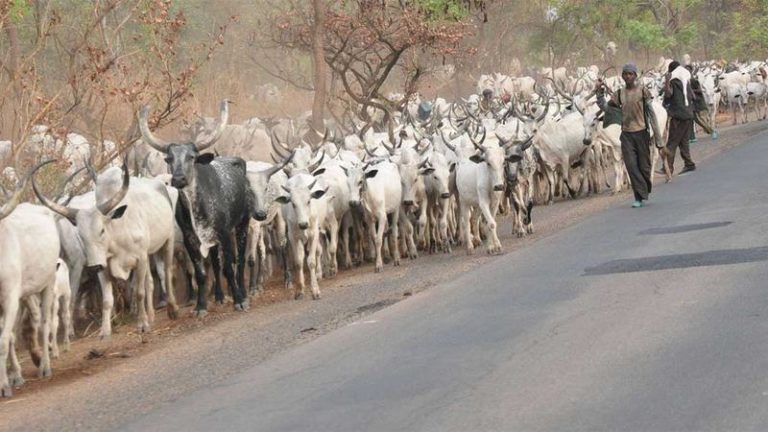
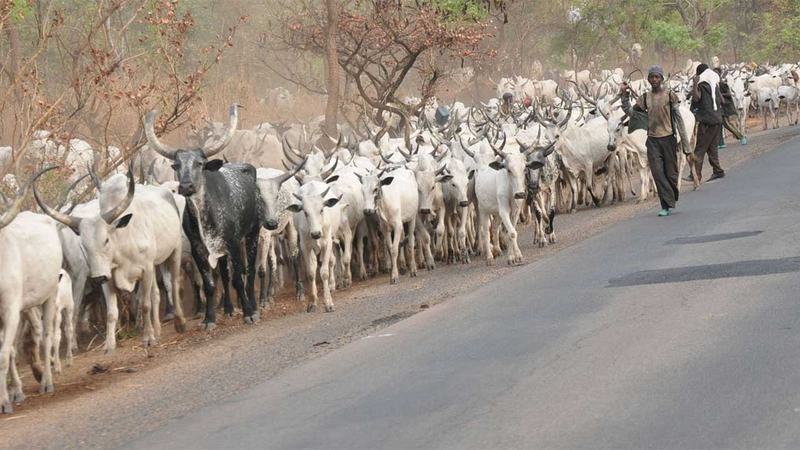
The Committee for the Defence of Human Rights (CDHR) says that the Federal Government’s proposed establishment of cattle colonies across the country will not bring lasting solution to herdsmen/farmers clashes.

Herdsmen
Herdsmen

Chairman of CDHR, Mr Emeka Anosike, said this in an interview with the News Agency of Nigeria (NAN) in Abakaliki on Tuesday, January 23, 2018. The CDHR is a civil society organisation (CSO) based in Abakaliki, Ebonyi State.

According to him, the measure will rather heighten tension in the long run.

He said herders that would settle in these colonies would eventually increase in population overtime and would sought for more lands to occupy which would likely result in more brutal clashes.

“The Federal Government’s decision to establish cattle colonies in the 36 states of the federation will not end killings and sporadic attacks on innocent and defenseless citizens of the Nigeria.

“What is required is comprehensive action plan acceptable by every citizen that will permanently solve the crisis and end the mindless slaughter of innocent Nigerians witnessed across the federation.

“We do not support the establishment of cattle colonies because it will breed more crises in the long run and deny owners of the lands the right of ownership.

“Our disagreement is predicated on the fact that the lands which will be donated for the colonies are arable lands belonging to the people which will deny them perpetual access to their lands,’’ Anosike said.

Anosike said that cattle owners should be able to acquire lands for ranching which was the practice in other civilised climes.

“Nigerian communities are agrarian in nature and need lands for their agricultural activities, hence confiscating the scarce agricultural lands will impede farming activities in our rural communities.

“Again, possible encroachment by either the herdsmen into the lands not allocated to them or the farmers into the colonies may lead to bloody clashes between farmers and herdsmen in future,’’ he added.

The rights activist noted that Nigeria landmass covers a total of 923,768 square kilometre, saying that the proposed cattle colony would cede a chunk part of the nation’s land mass to herdsmen.

According to him, under the proposed cattle colonies, the 36 states of the federation, including Abuja are expected to donate 10,000 hectares of land for this purpose.

“What this translates to is that 370,000 hectares of Nigeria’s land mass will have been given away to a particular group in the country for their personal business.’’

By Douglas Okoro

Expert wants stakeholders’ collaboration in reducing effects of climate change

0

Head, Climate Change Unit, Ministry of Water Resources, Mr Mukaila Babarinde, has reiterated the need for stakeholders to strengthen collaboration towards reducing the effects of climate change on the nation’s water resources development.

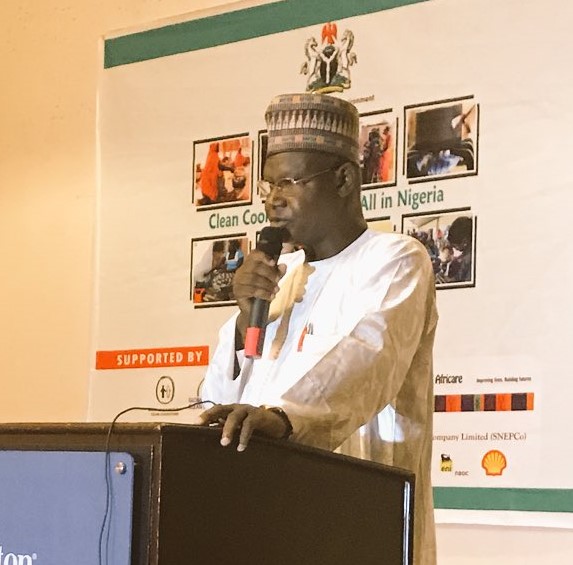
Clean Cookstoves
Minister of State for Environment, Alhaji Ibrahim Jibril

Babarinde spoke in an interview with News Agency of Nigeria (NAN) on Tuesday, January 23, 2018 in Abuja.

He said that there must be deliberate actions on the part of the Ministries of Environment, Water Resources, Agriculture and Power to address the countless problems associated with climate change.

The Head, Climate Change Unit, contended that much would not be achieved when there are duplicated efforts that were not addressing the myriad of problems in the environment.

“Climate change itself is a global phenomenon and the impact itself is crosscutting, it affects human being, it affects the ecosystem, the health, water sector, no sphere is exempted from its impact.

“As a result of this, efforts must be ensured for an effective collaboration between all sectors to manage the effects of climate change, this is the only way to minimise the impact.”

He said that the sector-specific collaboration involved those concerned in the emission of green house gases, saying they need to be proactive towards reducing the emissions.

On the impact of climate change on water, Babarinde stated that the emission of green house gases is minimal in the water sector.

He, however, stressed the need to carry out activities geared towards adaptation mechanisms and also balance the two extremes of drought and flooding, so as not to endanger the livelihoods of humans.

“Once there is a challenge of water in terms of being too much or being too small, when it’s too little its drought, when it’s too much, it’s flooding, so there must be a balance between the two extremes, and understanding them properly.”

The unit head called for implementation of an Integrated Water Resources Management plan to promote equitable distribution to maximise the use of water in each catchment area in the country.

Babarinde disclosed that the ministry’s action plan in 2018 included the publication of climate change information guide to help planners, geologists, civil engineers and other stakeholders in the river basins to incorporate climate change into design and planning in all water facilities.

He added that the ministry was also working out the production of a National Water Climate Resilience Safety Plan, to spell out safety mechanisms for water infrastructure and address the challenges of existing infrastructure, towards a climate-resilient environment.

He identified inadequate research, poor funding, inadequate dissemination of information to all tiers of government and population explosion as part of challenges in mitigating the effects of climate change.

Babarinde explained further that the challenge of population was an issue to climate change, adding that as it increases, its impact was putting pressure on the environment and its components.

“Now, if you look at Abuja now, the challenge was not like this in the 70’s or 60’s, these herdsmen that are grazing, moving around, they are nomadic; it is the pressure.

“The challenge was not as much then because the space was there in the past.

“But now, everything is getting choked up, the emission from Abuja now is destroying the ecosystem, heavy construction work, they use heavy equipment to destroy the soil.

‘‘People do agricultural practices that are not suitable for each catchment area and that is why a lot of sediments are going into the river,” he said.

By Tosin Kolade

Huge quake off Alaska triggers tsunami warning for U.S., Canada

0

A tsunami warning is in effect for the coastal areas of Alaska and British Columbia after a major 7.9-magnitude earthquake struck the Gulf of Alaska early Tuesday, January 23, 2018 the U.S. Geological Survey (USGS) said.

Alaska
Alaska

The USGS said the quake was centred 280 km south-east of Kodiak, Alaska, at a shallow depth of 10 km.

The tsunami warning extends from the Aleutian Islands at the western tip of Alaska to the entire coast of the Canadian province of British Columbia.

A lower-level tsunami watch was issued along the whole western coast of the U.S. as well as the Hawaiian islands in the Pacific Ocean.

Any potential hazardous waves generated by the quake, which hit at 0931 GMT, would take several hours to travel down the Pacific coast of the U.S. and Canada.

The USGS initially measured the quake as magnitude-8.2 before revising it down to 7.9.

Sokoto to inaugurate West Africa’s largest cattle breeding project

0

The Sokoto State Cattle Breeding Project, the largest of its kind in the West African sub-region, will be inaugurated in May.

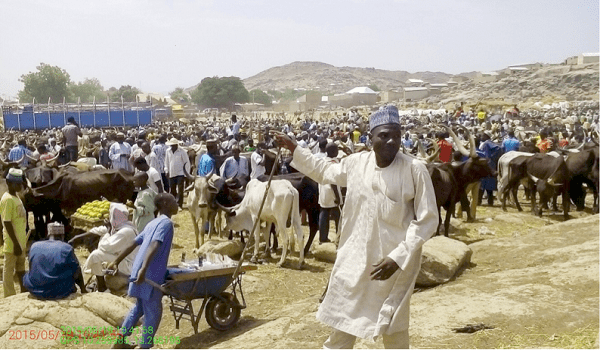
cattle-dealers
Cattle dealers

Alhaji Tukur Alkali, Commissioner for Animal Health and Fisheries Development, made this known when he conducted newsmen round the project site in Sokoto and Rabah Local Government Areas on Tuesday, January 23, 2018.

Alkali said that the project would improve the genetics of local cattle breeds by ensuring more milk and beef production.

According to him, this initiative will go a long way in empowering farmers with modern technique of livestock production.

“The government has spent N2.8 billion on the project inherited from the immediate past administration of Alhaji Aliyu Wamakko.

He said N1.5 billion was spent on acquisition of Argentinean cattle for cross-breeding, construction, training of personnel, provision of security and other logistics.

The commissioner added that N1.3 billion was for the purchase of equipment for the project.

He said the project was aimed at ending farmers/herdsmen clashes experienced across the federation, and in some neighboring West African countries.

“We hope to not only empower our farmers, but also impart modern knowledge on mechanised farming and cattle breeding techniques.

“About 13 cluster farms will be established to be run by private entities.

“All the cattle breeds will graze in these fields. We will also provide research centre and laboratory, veterinary services, among others,” he added.

NAN recalls that Sokoto State government had in 2010 signed a two billion Naira contract with an Argentine firm, South American Breeding Technologies (SABT), for the establishment of a cattle breeding, milk and beef production factory.

Based on the agreement, SABT will train and bring revolutionary changes in agriculture, genetic procedure, meat processing and milking machines.

By Hauwa Gold

Government to provide water, sanitation facilities for Oyo, Kebbi communities

0

The Federal Government says it will provide water and sanitation facilities for Sasa community in Akinyele Local Government Area of Oyo State to prevent outbreak of water-borne diseases in the area.

suleiman adamu kazaure
Suleiman Adamu Kazaure, Water Resources Minister

Mr Baba Galadima, Deputy Director, Water, Sanitation and Hygiene (WASH), Response and Collaboration, Federal Ministry of Water Resources, said this in an interview with New Agency of Nigeria (NAN) in Abuja on Tuesday, January 23, 2018.

He also said that four local government areas in Kebbi State had been targeted for intervention in 2018, as part of efforts to expand the people’s access to water, sanitation and hygiene.

He said that the local councils were Bunza, Maiyama, Jega and Zuru of Kebbi State.

Galadima recalled that there were confirmed cases of cholera in Sasa community in Oyo State in 2016, with some casualties.

He said that the ministry would construct pour-flush toilets, which relied on the use of minimal water, in the neighbourhood to facilitate the cessation of open defecation, while improving the people’s lives through enhanced access to potable water.

He said that the water supply department of the ministry had promised to drill boreholes with hand pumps for the community.

The deputy director said that part of the strategy was to ensure that as the water was pumped from the boreholes, the same energy would be used to store water for toilet use.

Galadima said that the ministry and some development partners carried out a sanitation survey of Sasa community and found out that the residents were living in a very filthy environment.

He said that the ministry had been receiving reports of cholera outbreak in the area in the last seven years.

He said that the outbreaks were also confirmed by the Director of Disease Control in Oyo State Ministry of Health.

“The ministry had carried out WASH assessments in the community and it found that sanitation and hygiene practices in the neighbourhood were quite low.

“Faeces were seen all over the place and the community had no access to potable water; the lack of water also compounded the problems they were facing,’’ he said.

Galadima said that it was saddening to note that the community members, mostly settlers, paid taxes but they were, nonetheless, denied access to basic water and sanitation facilities.

He said that the team also visited to those who lost their loved ones in the cholera outbreaks and condoled with them.

He said that preparations were underway to provide water, sanitation and hygiene facilities for the people of Bunza, Maiyama, Jega and Zuru area councils in Kebbi under the 2018 procurement programmes.

He said that the sources of water for the communities in the four local government areas were very poor and unwholesome.

The deputy director stressed that the promotion of water, sanitation and hygiene in the country was imperative in efforts to reduce the menace of cholera outbreaks, particularly as they affected under-five children.

He said that efforts were underway to spur behavioual change in the citizens by adopting Community-Led Total Sanitation due to the dangers of oral-faecal transmission of diseases, especially from poor hygiene practices.

By Tosin Kolade

Promoting mental healthcare for behavioural adjustment

0

Medical experts believe that mental health indicates the level of psychological wellness or absence of mental illness in somebody.

Dr. Matshidiso Moeti
Dr. Matshidiso Moeti, the World Health Organisation (WHO) Regional Director for Africa. Photo credit: pbs.twimg.com

According to them, it is a psychological state of someone who is functioning at a satisfactory level of emotional and behavioural adjustment.

They note that mental health, therefore, needs the same attention as physical health to live a healthy and meaningful life.

In spite of this, stakeholders in health sector observe that in most cases, attention has been given to physical health through policies and laws; focusing on individual’s or communities’ physical wellness with little or no consideration for mental healthcare.

They note that this development has caused increase in the number of people affected and others who are living with various forms of the mental disorder as they are afraid to seek help.

For instance, the World Health Organisations (WHO) says more than 800,000 people worldwide commit suicide every year due to mental health condition characterised by abnormal thoughts, emotion, behaviour and relationships with others.

The organisation said 75 per cent of suicides occur in low and middle income countries, emphasising that mental disorders and harmful use of alcohol contribute to suicides around the world.

In her message to mark the 2017 World Mental Health Day, Dr Matshidiso Moeti, the organisation’s Regional Director for Africa, therefore, urged employers globally to treat mental health illnesses with the same urgency and seriousness as physical illnesses.

Moeti said that mental health was often neglected as a key aspect of employees’ health, noting that an estimated 10 per cent of the employed population globally had taken time off work because of depression.

She urged employers to modify risk factors for stress in the workplaces, create an organisational climate that promotes wellbeing and creativity to facilitate care for those who need it.

Moeti also urged employees to take steps to learn the signs and symptoms of a mental health problem and engage in prevention including talking about it.

“The relationship between workplace stress and poor mental healthcare is well established but mental health is often neglected as a key aspect of employee’s health.

“Symptoms such as difficulties in concentrating and making decisions cause significant impairment in productivity at work.

“At least, 50 per cent of people with depression do not receive treatment; and in African region, lack of information, stigma and cultural issues are significant barriers that prevent people from seeking help,’’ she said.

She called for individual and collective efforts towards addressing the causes and consequences of work-related stress.

Moeti also recommended mental health-friendly workplace programmes and practices that promote employees’ wellness and work-life balance.

She reiterated the critical impact of mental health problems on economic development, observing that productivity loss from absenteeism was substantial and appeared to be increasing.

Concerned by this comment, stakeholders in the health sector in Nigeria, therefore, urged agencies of government and international donor organisations to pay more attention to mental healthcare in the country.

Dr Olusola Ephraim-Oluwanuga, Chief Consultant Psychiatry at the National Hospital, Abuja, said there were more people with mental health problems than those living with HIV and AIDS and other diseases.

She expressed concern that more attention was even paid to people living with HIV and AIDS than those with mental health disorders.

She noted that the Federal Government had continued to rely on the eight mental health institutions available across the country without finding ways to expand service delivery.

“Since the colonial era, we have had eight psychiatric hospitals in the country only and this is where most of the resources concerning mental health are deposited.

“We are all aware that only this number of institutions cannot serve the large populace adequately.

“Imagine that there is one institution in Maiduguri and that is all for the north-eastern part of the country.

“There is also only one in Sokoto and that is all for the north-western part; state hospitals and teaching hospitals are supposed to have psychiatric departments.

“There is need for outreach posts in local governments so that these services can be extended to people at the grassroots,’’ Oluwanuga said.

She said that pockets of crises experienced in the country and around the world have reinforced the need to give more attention to mental health and the development of mental healthcare services.

Oluwanuga said that with each crisis, the number of individuals who suffered psychological trauma increased, observing further that at least one in four persons suffered some form of psychological trauma.

She, therefore, called for the implementation of the mental health policy to strengthen institutions and improve service delivery.

“Mental health is as important as physical health but you find that agencies of government and international organisations focus more on catering to the physical needs of the people rather than mental needs.

“Nigeria has mental health policy, but this policy is not being implemented; this is not a document that needs reviewing because it is in line with global health practices,’’ Oluwanuga said.

Irrespective of this, Mr Omotayo Hamzat, an official of the WHO, promised the commitment of the organisation to support non-governmental organisations and civil society groups to addressing issues of mental healthcare in Nigeria.

Similarly, President Muhammadu Buhari in his electioneering in 2015, made some promises to improve the health sector.

He promised an improved life expectancy, increased number of physicians and increased national health expenditure per person per annum.

He also promised to increase the quality of all federal government-owned hospitals to world- class standard within five years.

Although fulfilling some of the promises are faced with many challenges, concerned citizens insist that with stakeholders’ goodwill and the commitment of the Federal Government to ensuring an enviable health sector, mental healthcare will receive a boost.

By Yashim Katurak, News Agency of Nigeria (NAN)

Rainy season: Calabar gets a facelift

0

The Cross River State Government on Tuesday, January 23, 2018 said it had begun the recovery of green areas in parts of Calabar, the state capital, in order to restore the town’s aesthetic values.

Calabar
Calabar, Cross River State, Nigeria

Mr Mike Eraye, the state Commissioner for Environment, said this on Tuesday while addressing newsmen in Calabar.

Eraye said that drainage channels in the city were also being cleared ahead of the commencement of the rainy season to avoid perennial flooding.

“What we are doing now is to recover the green areas and to clean the drains to allow free flow of water into the channels.

“We are preparing for the rains around April; we want to avoid flooding in parts of the city during the rains,’’ he said.

He alleged that some residents of Calabar were frustrating the efforts of the state government in maintaining the greenish status of the town.

“We did a lot before the carnival to clean up the city and now you can see that the drains are blocked again just few weeks after the event.

“Some residents who do not like the beauty and cleanliness of Calabar are bent on destroying it and frustrating our efforts,’’ he said.

According to him, the ministry has established a mobile court to try those flouting the sanitation laws of the state.

Eraye urged the residents to key into the state government’s vision of returning Calabar to its original status of most beautiful town in the country.

“I also want to tell the residents that they should desist from carrying out trading activities in the green areas.

“Anybody found violating the environmental laws of the state will be punished accordingly,’’ he warned.

The commissioner accused some big business concerns such as petrol stations of harbouring traders in their premises, thereby destroying the green areas.

According to him, government will take appropriate actions against such businesses while it takes measures to recover the green areas.

By Benson Ezugwu

×