Home Blog Page 1880

GWP-WA boss appointed chair of chairs of regional partnerships

Chair of Global Water Partnership West Africa (GWP-WA), Professor Amadou Hama Maiga, has been appointed as Chair of Chairs of the Regional Water Partnerships.
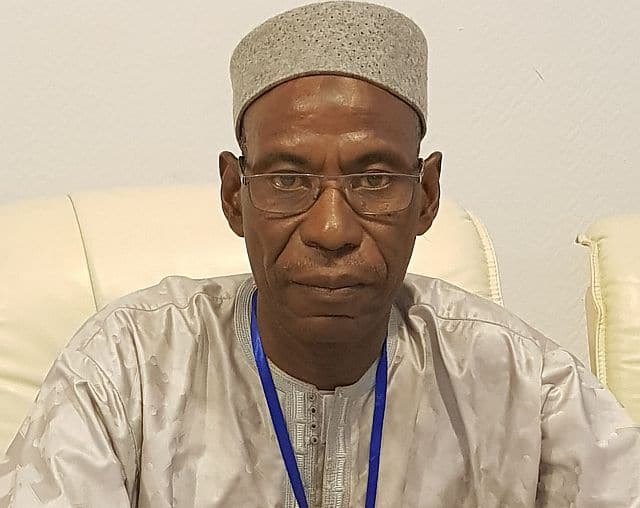
Professor Amadou Hama Maiga

This formed one of the major highlights of the Global Water Partnership (GWP) Regional Days meeting held from May 22 to 26, 2018 in Budapest, Hungary.

In this capacity, the GWP-WA Chair will be responsible for coordinating the exchanges of his fellow Chairs with the Global Secretariat, and will attend and speak on their behalf at the Global Steering Committee meetings during his two-year term.

“Prof. Maiga needs all of you to accompany him in this mission to our great satisfaction,” says Sidi Coulibaly, Communications & Knowledge Manager of the Ouagadougou, Burkina Faso-based GWP-WA.

Another fall out from Budapest was the resignation of the chair of the GWP, Oyun Sanjaasuren, which becomes effective from June 15, 2018.

“My expectation, and desire, was to serve out my three-year term as GWP’s chair until July 2019. However, I have a career opportunity to join the Green Climate Fund as their director of external affairs. Because of the full-time nature of the job, I will no longer be able to perform my duties as the GWP chair,” said Sanjaasuren.

The GWP steering committee acknowledged Sanjaasuren’s two years of successfully strengthening GWP’s international standing, raising the participation and profile of GWP in global political processes, while also guiding the organisation towards more focus and effective delivery.

The steering committee appointed one of its members, Ross Hamilton, as interim chair until a new chair is selected by GWP’s sponsoring partners. Hamilton has nearly 20 years of experience in sustainability and environmental fields across the private, public, and not-for-profit sectors. He is a senior advisor on water issues to both the UN Global Compact CEO Water Mandate and to the Pacific Institute and is a senior climate advisor to the International Finance Corporation.

In addition, one of GWP’s patrons (and a former GWP chair), Letitia Obeng, has agreed to take on a more active role to support GWP’s positioning at high level global fora as needed during the interim period.

“It is fortunate that GWP has a deep bench of leaders, including the new executive secretary, Monika Weber-Fahr, who has the skills, creativity, and charisma that bodes well for GWP’s future,” said Sanjaasuren. “There is continuity at other levels in the GWP network, so I am convinced that as GWP completes its current strategy to the end of 2019, and launches a new one, it will do so with the competence and commitment for which it is known.”

“GWP’s large and diverse network models how development work should be done in a sustainable world. Given the pivotal role of water in sustainable development, I truly believe GWP’s multi-stakeholder partnership contributes in a major way to solving the complex water-related challenges facing the world today,” she said.

Professor Maiga, a Malian, emerged chair of the GWP-WA in September 2017. He used to be the Director General of the International Institute for Water and Environmental Engineering (2iE). He has a 37-year professional career mainly dedicated to scientific and professional training and research & development in the fields of water, sanitation and environment in Africa and internationally.
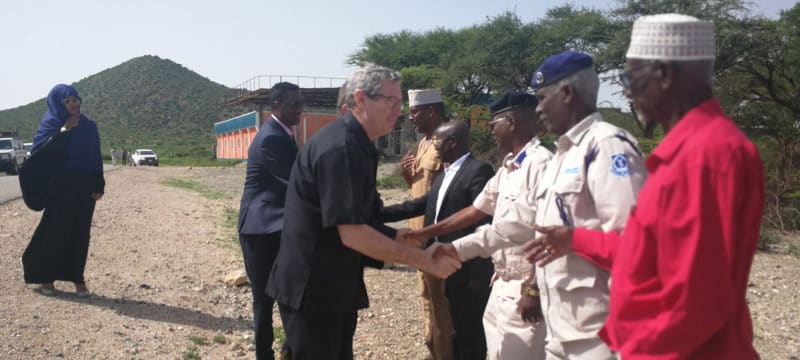
UN releases $2.7 million to help cyclone-hit ‘Somaliland’

0

Following a visit to a cyclone-hit community in “Somaliland”, the United Nations has released close to $3 million to help people affected by an unprecedented storm which delivered a full year’s worth of rain in just a few days, compounding damage caused by recent severe flooding.

Somaliland
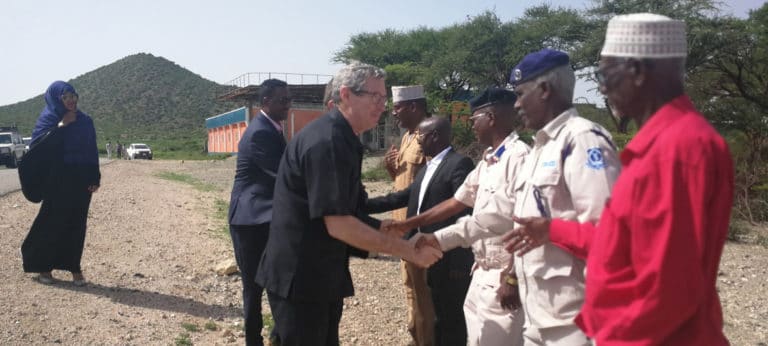
On a visit to Borama town, 180 kilometres southwest of Somaliland’s capital, Hargeisa, the UN Humanitarian Coordinator for Somalia, Peter de Clercq, is greeted by local officials who later shared with him information about the impact that Cyclone Sagar had on the community. Photo credit: UNSOM/Carlos Gomez del Campo

“Somaliland”, officially the Republic of Somaliland, is a self-declared state internationally recognised as an autonomous region of Somalia.

“We are on the ground, both the UN and NGOs, and we have already been providing assistance, particularly in the form of immediate food security assistance, and also non-food items, shelter items in particular, and health assistance – and this has kicked in, basically, from day one,” said the UN Humanitarian Coordinator for Somalia, Peter de Clercq, on Monday, May 28, 2018 in the wake of a visit to Borama, located some 180 kilometres south-west of Hargeisa, the capital of “Somaliland”.

“Just to reinforce the rebuilding of livelihoods I, moreover, pledged $2.7 million,” Mr. de Clercq added, with the money coming from the international donor-backed Somalia Humanitarian Fund (SHF), designed to address the most urgent humanitarian needs in Somalia, which also covers “Somaliland”.

The recent landfall of Cyclone Sagar on the northern Horn of Africa has affected some 160,000 people, killing dozens and causing severe damage to infrastructure and economic hardship, especially for traditional pastoralists.

Mr. de Clercq had been in Borama to see its impact first-hand, as well as meet with local partners, including government officials, representatives of non-governmental organisations, community elders and people directly affected by the storm.

“It was an opportunity to interact with people who were immediately affected by it,” he said. “They’ve lived through this year of near-famine already, and they had to endure not only this very difficult period of drought, but then floods, immediately followed by the cyclone.”

The UN official said the response to the combination of events – storm, floods and drought – highlighted the need for a response which addresses both the short- and longer-term humanitarian needs with the short-term; the longer-term being centred on building the resilience of communities like that of the Awhal region.

This will help to tackle the effects of climate change among the most vulnerable local populations, as resilience in these communities had already been extremely strained due to at least four failed rainy seasons.

“We still are dealing with the food insecurity, the lack of livelihoods as a result of the drought, and at the same time we’re dealing with people who’ve been displaced because their houses have been flooded, or because their livelihoods have been washed away,” said Mr. de Clercq, who also serves as the UN Secretary-General’s Deputy Special Representative for Somalia, and noted the need for increased funding of the SHF.

Currently, the Humanitarian Response Plan funding stands at $390 million – less than 50 per cent of the amount that was pledged at this stage in 2017.

“We really need to not just work on the relief, but on the increased resilience of the families that live in this area, the families that have to go through this kind of terrible humanitarian challenges year after year after year,” Mr. de Clercq said. “So, we should not be waiting until the next crisis hits us – we haven’t seen the last drought yet, we very well may not have seen the last cyclone here.”

FAO considers promoting biodiversity across agricultural sectors essential

0

Changing how countries across the world produce food is “fundamental” to protecting the future of the Earth’s ecosystem, said the head of the Food and Agriculture Organisation (FAO) on Tuesday, May 29, 2018.

josé-graziano-da-silva
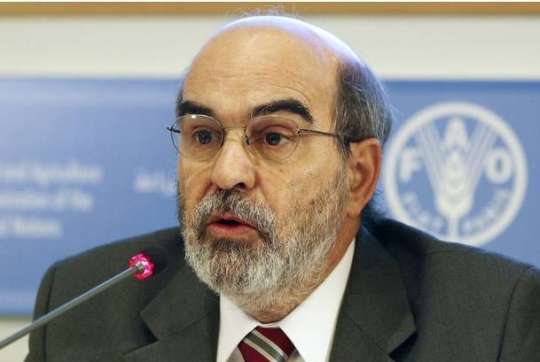
Jose Graziano da Silva, Director General of the FAO

With large swathes of the planet’s surface used to grow food, raise animals or produce products such as timber; the agricultural sector – if managed sustainably – can make significant contributions to protecting biodiversity, said FAO Director-General, José Graziano da Silva.

Addressing a three-day international dialogue on mainstreaming the key issue into agricultural policies and practices, he called for transformative changes in food production, aimed at producing healthy and nutritious food while simultaneously safeguarding the planet’s biodiversity.

“Biodiversity is essential for safeguarding global food security and nutrition, improving rural livelihoods, and enhancing the resilience of people and communities,” he said in keynote remarks.

However, planetary biodiversity – at the genetic, species and ecosystem levels – faces a number of threats, the FAO Director-General noted, adding that food production “is a big part of the problem”.

Pointing out that the world still produces food based mainly on 50-year-old principles, often using environmentally unfriendly chemicals, he also described how the loss of agricultural biodiversity poses a direct risk to food security.

“Only three staple crops – rice, maize and wheat – and three animal species – cattle, pigs and chicken – provide the majority of food energy intake in the world,” he said.

Diversifying food sources could play a critical role in ensuring food security; such as genetically diverse plants which are more tolerant to hotter and drier conditions, he said. Similarly, more diverse livestock would allow farmers and pastoralists to breed animals which could adapt to changing environmental conditions.

“This is especially important nowadays in the face of emerging challenges such as the impacts of climate change, rapid urbanisation and also a growing population with changing diets,” Mr. Graziano da Silva said.

At the farm level, implementing production practices that prioritize safeguarding biodiversity can also ensure that food can be produced sustainably.

To that end, the FAO conference gathers together people from across the whole sector, to consider real-world examples of how agriculture, fisheries and forestry have been successfully managed to safeguard biodiversity.

A series of working groups will also focus on avenues for mainstreaming biodiversity in agriculture, including global governance; national policies and legislation; financial incentives and investments; and supply chain measures.

Niger to spend N50b on water works reticulation

The Niger State Government said on Wednesday, May 30, 2018 that it would spend over N50 billion on the reticulation of Minna, Suleja, Bida and Kontagora water works.

Alhaji-Abubakar-Sani-Bello
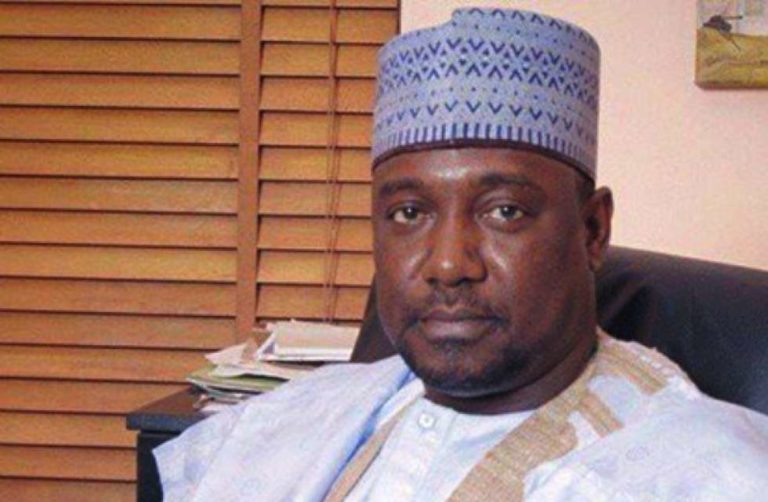
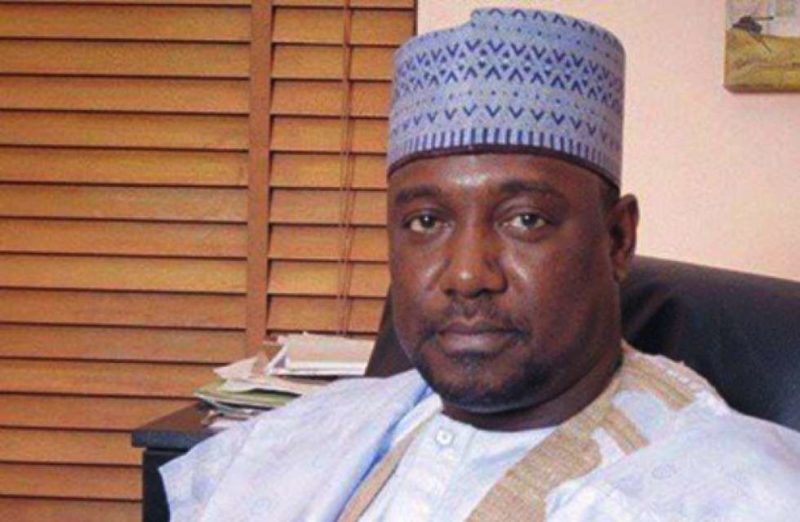
Alhaji Abubakar Sani Bello, Governor of Niger State

Gov. Abubakar Bello told newsmen in Minna, the state capital, that the state government would go into Public Private Partnership (PPP) to ensure adequate water supply in major towns in the state.

The News Agency of Nigeria (NAN) recalls that the state government had in 2016, declared a state of emergency on the water sector starting with Chanchaga water works.

Bello said that the government had spent N2 billion on the purchase of 60 water pumps and other equipment from Germany for Chanchaga water works.

He added that government would go into partnership with investors to install pumps, water meter and other relevant accessories across the major towns to enhance water supply.

“When we took over the government, we met a dilapidated water infrastructure – water pipes were broken down beyond repairs, the engines were not functioning; virtually everything was in bad shape.

“We started with Chanchaga water works; we constructed access roads, purchased new equipment and repaired broken water pipes and engines.

“We couldn’t fold our hands to watch our people continue to suffer for water; that was why we declared a state of emergency on water sector and I can say that we have recorded quite a success in water supply.

“Even though major cities in the state still do not have adequate water supply, we have taken a holistic approach and doing everything possible to ensure adequate water supply.

“We are going into partnership with investors through PPP to instal water pumps and water meters in the major cities. This is the only way can ensure regular water supply.”

The governor called for positive attitudinal change towards maintenance of government property.

He noted that negative attitude constituted a major problem hindering the development of the state.

The governor appealed to the media as partners in progress, to continue to support the government by publicising its programmes.

By Rita Iliya

Experts predict less eventful hurricane season

0

After the insurance industry paid out record damages for 2017’s hurricane season, climate experts are expecting this year’s tropical storm season in the North Atlantic to be less eventful.

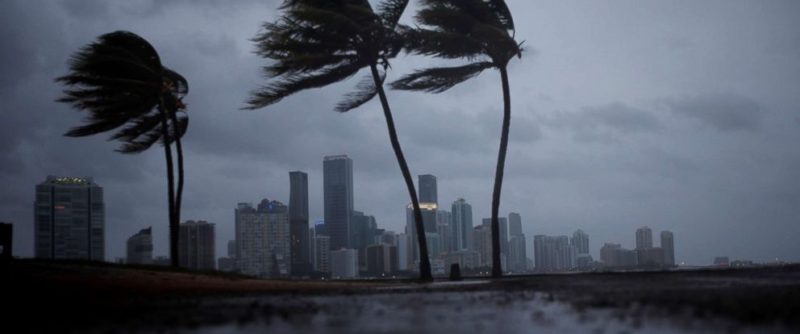
Irma
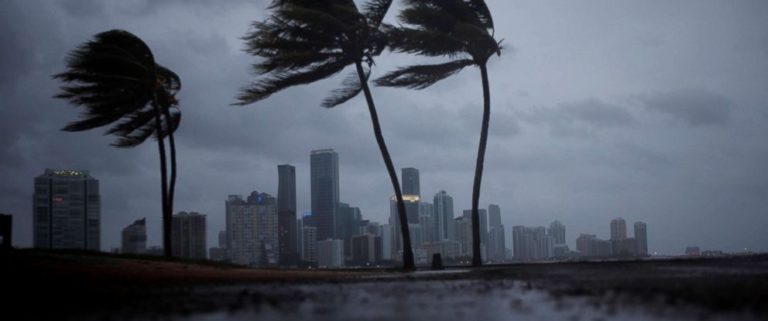
Dark clouds over the Miami skyline before the arrival of Hurricane Irma

“Forecasts by several research institutes say this year’s season will be average,’’ climate experts for German reinsurers, Munich Re, said on Wednesday, May 30, 2018.

The long-term average for the hurricane season, lasting from the summer until the early autumn off the coasts of the U.S. and Caribbean islands, is 6.3 tropical storms.

In 2017, there were 10 hurricanes, the most destructive being Harvey, Irma and Maria, which laid waste to the Caribbean and parts of the U.S. east coast.

Damages resulting from the 2017 hurricane season were a record $220 billion .

The hurricane season starts each year at the beginning of June.

“The coastal states must prepare themselves for a normal tropical storm season, in which one strong hurricane could hit them,’’ Munich Re climate experts, Eberhard Faust and Mark Bove, wrote in a report.

They expect between five and nine hurricanes, the same as the U.S. meteorological authorities.

The experts were proved wrong in 2017 when they said it would be a below-average season for hurricanes.

But instead, ocean temperatures in the North Atlantic were unusually warm, leading to more hurricanes.

Munich Re is the world’s largest insurer and has its own dedicated climate department.

Torsten Jeworrek of the company’s board has said Munich Re does not expect more storms, just more powerful and damaging ones, which could lead to higher payouts.

World No Tobacco Day: Tobacco and heart disease

0

The World No Tobacco Day 2018 focuses on the impact tobacco has on the cardiovascular health of people worldwide. Tobacco use, according to the UN, is an important risk factor for the development of coronary heart disease, stroke, and peripheral vascular disease.

Cigarette-smoking
According to scientists, tobacco smoking is dangerous to health

Cardiovascular diseases, doctors say, kill more people than any other cause of death, and tobacco use and second-hand smoke exposure contribute to approximately 12% of all heart disease deaths. The global tobacco epidemic kills more than seven million people each year. Nearly 80% of the more than one billion smokers worldwide live in low- and middle-income countries, where the burden of tobacco-related illness and death is heaviest.

Every year, on May 31, the World Health Organisation (WHO) and partners mark the World No Tobacco Day (WNTD), highlighting the health and other risks associated with tobacco use, and advocating for effective policies to reduce tobacco consumption.

The focus of World No Tobacco Day 2018 is: “Tobacco and heart disease.”

The campaign, according to the WHO, will increase awareness on the:

  • link between tobacco and heart and other cardiovascular diseases (CVD), including stroke, which combined are the world’s leading causes of death; and
  • feasible actions and measures that key audiences, including governments and the public, can take to reduce the risks to heart health posed by tobacco.

World No Tobacco Day 2018 coincides with a range of global initiatives and opportunities aimed at addressing the tobacco epidemic and its impact of public health, particularly in causing the death and suffering of millions of people globally. These actions include the WHO-supported Global Hearts and RESOLVE initiatives, which aim to reduce cardiovascular disease deaths and improve care, and the third United Nations General Assembly High-level Meeting on the Prevention and Control of NCDs, being held in 2018.

World No Tobacco Day 2018 aims to:

  • Highlight the links between the use of tobacco products and heart and other cardiovascular diseases.
  • Increase awareness within the broader public of the impact tobacco use and exposure to second-hand smoke have on cardiovascular health.
  • Provide opportunities for the public, governments and others to make commitments to promote heart health by protecting people from use of tobacco products.
  • Encourage countries to strengthen implementation of the proven MPOWER tobacco control measures contained in the WHO FCTC.

Government inaugurates Daura water schemes after 20-year neglect

The Federal Government on Monday, May 28, 2018 inaugurated the Sabke, Dutsi and Mashi water supply schemes in Daura, Katsina State, after two decades of abandonment.

suleiman adamu kazaure
Suleiman Adamu Kazaure, Water Resources Minister

The water schemes, conceived and started in 1998 by the defunct Petroleum Trust Fund (PTF) headed by President Muhammadu Buhari, was abandoned by previous administrations.

The News Agency of Nigeria (NAN) reports that the water schemes, completed also by Buhari-led administration, were inaugurated by the Ministers of Water Resources, Suleiman Adamu, as well as Information and Culture, Lai Mohammed, and handed over to Katsina State Government.

Speaking at the event, Adamu said that the Sabke dam water scheme is a conventional treatment pack with a capacity to provide 4,370 cubic metres per day or 1million gallons of portable water per day to Daura and environs.

He said the Dutsi and Mashi water schemes were packaged plants with each having capacity to provide 1000cubic meters per day or about 250,000 gallons per day of treated water to Dutsi and Mashi inhabitants.

The minister said that the three plants had a combined capacity to serve100,000 people daily.

He said the government had also provided for the construction of 38 borehole schemes to serve the Sabke Daura water transmission plant.

NAN reports that the Sabke water scheme is also being used for irrigation for farmers.

The minister said that the objectives of providing access to portable water in the communities had been achieved after many years of neglect.

“With the commissioning of the schemes, I am convinced that incidences of water borne diseases will be curtailed while sanitation and personal hygiene will be improved and income generation will be enhanced,” he said.

The minister urged the communities to safeguard the water schemes at all times.

NAN report that the projects were handed over to the state Governor, Aminu Masari who was represented at the event by the Secretary to the state Government, Dr Mustapha Inuwa.

The Minister of Information said that the project commissioning fitted into the ongoing agenda to showcase the achievements of the Buhari Administration, especially in the area of Infrastructure.

He recalled that the water project inauguration was the second in a week by the Buhari Administration, after the one inaugurated in Ugboha community in Edo State last Thursday

The minister also recalled other projects he had commissioned and inspected in showcasing the achievements of the administration.

Mohammed congratulated the Minister of Water Resources on the successful completion of the
water schemes as well as the people who would benefit from the projects.

He said the Buhari administration was on the right track for choosing to complete ongoing and abandoned projects instead of abandoning them as past governments had done.

“The administration believes that governance is about the well being of the people, and will continue to pursue projects that directly benefits the people,” he said.

Alh. Nuradeen Rafindadi, the Managing Director of Federal Road Maintenance Agency (FERMA), said he was part of the PTF team that surveyed the project at inception.

Rafindadi said the PTF completed the dam project and was about to start the treatment plant, portable water and the irrigation scheme when the Fund went defunct.

He said the project was then transferred to the Federal Ministry of Water Resource which was abandoned, and now finally revisited and completed by the present administration.

The Emir of Daura, Alhaji Umar Faruq, said the project sites had been taken over by reptiles before the Buhari administration came to their rescue to complete the project.

He underscored the need for any administration to take cue from Buhari’s policy of completing on-going and abandoned projects of his predecessors before embarking on new ones for continuity.

The Emir urged the government to expand the water schemes project to supply water to more rural communities as well as revive other abandoned dams in the state.

By Rotimi Ijikanmi

NCF takes up campaign against plastic waste pollution

0

Ahead of the World Environment Day (WED), the Nigerian Conservation Foundation (NCF) on Monday, May 28, 2018 said it was raising awareness on plastic waste pollution reduction to change the orientation of Nigerians.

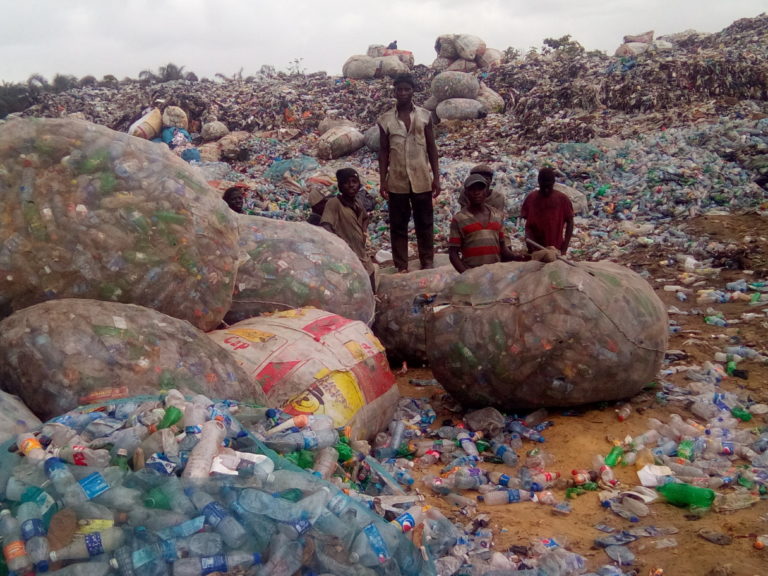
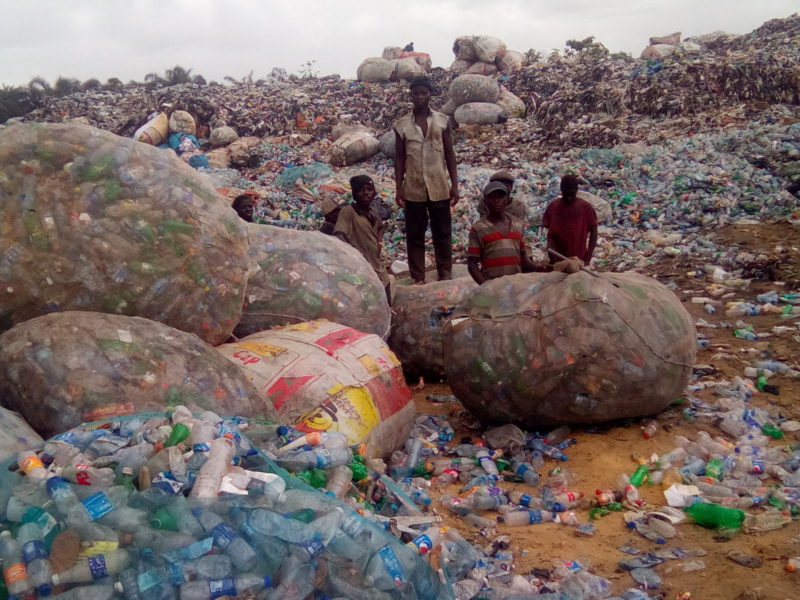
Plastic bottle scavengers
Plastic bottle scavengers and their wares at the Epe Landfill Site/EcoPark in Lagos, Nigeria

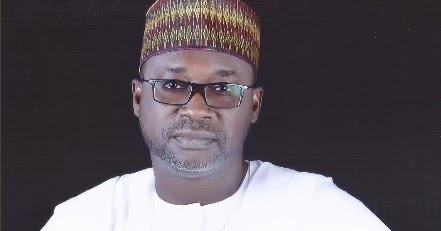
Dr Muhtari Aminu-Kano, the Director-General of the organisation, said in Lagos that the move was in commemoration of the 2018 WED with the theme: “Beat Plastic Pollution’’.

“WED is an environmental awareness programme aimed at promoting environmental education, ingenuity, teamwork and general environmental friendliness among children and youths.

“WED is used to produce environmental literate students and youths who are willing and capable of taking positive environmental actions,’’ he said in a statement.

Aminu-Kano observed that the event, over the years, has produced students and youths who were knowledgeable about their environment and had the right attitudes to situations with commitment.

He said they also had skills to work individually and collectively toward the solution of current problems and the prevention of new ones.

The NCF director-general said that plastic pollution involved the accumulation of plastic products in the environment that adversely affected wildlife, wildlife habitat and humans.

Aminu-Kano said the theme urged all stakeholders – producers and consumers as well as policy makers – to jointly explore sustainable alternatives.

He said they were also to urgently reduce the production and excessive use of single-use plastics polluting the oceans, damaging marine life and threatening human health.

He noted that the foundation had begun an advocacy to promote proper waste disposal in 17 communities and schools in Eti-Osa Local Government Area of Lagos State.

“In commemoration of the 2018 WED, NCF plans celebrating the event in form of an inter-school competition.

“There will be arts/crafts exhibition where students and groups will showcase art works/crafts made with plastics, thereby exposing their talents and creative instincts.

“Corporate organisations and Individuals are being solicited for sponsorship of this event,’’ Aminu-Kano said.

The director-general said that a World Bank survey revealed that the generation of solid wastes was tied to population, income and urbanisation.

“Although official data indicates that Lagos currently generates 13,000 tonnes per day – a figure which many stakeholders consider to be grossly understated – projections for the coming decades suggest a percentage increase.

“The United Nations Environment Programme (UNEP) reports that 80 per cent of litters are plastics, which may constitute more of foreign materials in the sea than marine mammals by year 2050.

“Overtime, this may lead to the obliteration of sea life and will alter the ecosystem and human race negatively,’’ Aminu-Kano said.

According to him, most plastic wastes came from improper disposal of refuse in drains as well as mismanagement of waste disposal due to inadequate infrastructure.

He called for all hands to be on deck to tackle the problem at the regional, national, and global levels.

World Environment Day: UN launches campaign to reduce plastic pollution

0

The United Nations has launched a global campaign to reduce plastic pollution, and is calling on people all over the world to participate via social media.

Myanmar Plastic waste
Plastic clogs up a waterway in Yangon, Myanmar

The new “Tag” campaign is part of UN Environment’s Beat Plastic Pollution initiative and has been kicked off with short videos by leaders including UN Secretary-General António Guterres, UN Environment head Erik Solheim and UN Climate Chief Patricia Espinosa.

In their videos, the leaders commit to make do without single-use plastic by highlighting one plastic item they are giving up, and tagging three people to do the same, ideally within 24 hours. The idea is the concept spread as far and wide as possible, with many people participating in the pledge ahead of the 2018 World Environment Day (June 5).

Holding a plastic stir stick in her “Tag” video, Patricia Espinosa says: “I have given up plastic sticks like this which are used for just one or two seconds to stir coffee and tea and then thrown away. Plastics are made out of oil and gas. They frequently end up in the sea and in the stomachs of marine animals, and then in our stomachs when we eat the fish.”

Replacing her plastic stick with a metal spoon, Patricia Espinosa concludes her “Tag” video with: “It’s that easy – you just replace plastic with reusable items like this and tag three people to do the same!”


Fighting plastic pollution helps reduce greenhouse gas emissions

Through the efforts of individuals and organisations around the world, the “Tag” campaign adds momentum for the international community to meet the UN’s Sustainable Development Goals and the objectives of the Paris Climate Change Agreement because a reduction in plastic use will bring about reductions in heat-trapping greenhouse gas emissions.

The fact that greenhouse gas emissions are produced during plastic manufacturing is often neglected.

Typically, the production of plastic starts with the processing of crude oil or natural gas. After being refined at a facility, components from natural gas or oil become the plastic products that are used around the globe.

A study by the Journal of Cleaner Production finds the entire lifecycle of a 1 kg plastic tray generates 1.538 kg of CO2 in emissions. The raw material manufacturing phase of plastic production contributes to the highest portion of its carbon footprint.

Plastic pollution also exists in forms outside of littered utensils, bottles and bags that end up in world´s rivers and oceans. According to the UN, during every minute, a dump truck of plastic waste is pouring to the sea and, by 2050, there will be more plastic in the ocean than fish.

So limiting the amount of CO2 and other greenhouse gas emissions, the reduction of plastic production and use will help keeping the oceans cleaner and achieving the objectives of the Paris Agreement, which is to limit the average global temperature rise to well below 2C above preindustrial levels and as close as possible to 1.5C.

UNFPA Sierra Leone converts to solar power to reduce greenhouse gas emissions

0

Nearly two weeks before World Environment Day, the United Nations Population Fund (UNFPA) turned on its new solar power system as a green step towards reducing greenhouse gas emissions, and making the office compound energy efficient. This change comes on top of energy reduction measures, such as the installation of energy efficient equipment, undertaken by the office in 2017.

Kim Eva Dickson
UNFPA Sierra Leone Representative, Dr. Kim Eva Dickson

Powered by a total of 336 solar panels and 380 batteries – security lights, air conditioning units, servers, computers – everything electrical in the office compound will now operate by solar power.

Prior to the solar power system being installed, the office was powered by diesel generators which were considered costly (approx. $197 spent per day on fuel), noisy, environmentally unfriendly, and only provided power on weekdays between the hours of 0700 – 1900.

In contrast, the new solar power system emits no sound, cost savings are projected in five to seven years, and power is now available 24 hours per day, seven days a week. The local electricity and diesel generators will only be used as a back-up when the solar power batteries need additional charging on rare cloudy days.

Speaking at the commissioning ceremony, UNFPA Sierra Leone Representative, Dr. Kim Eva Dickson, said, “The difference the new solar power system will make in our lives and the delivery of our work is enormous. We will not need to wait in the morning for someone to switch on the generator or to leave at night because we need to switch off the generator.”

Dr. Dickson added, “Our decision to make our office more energy efficient is a step in the right direction towards achieving the Sustainable Development Goal 7 for affordable and clean energy.”

In a country where only 20 percent of the population has access to electricity, 97 percent of the population cooks with firewood or charcoal, and the public power supply is unstable, UNFPA’s decision to switch to renewable energy to sustain local energy consumption is a clear example for others to replicate. This approach is deemed realistic because, in Sierra Leone, there is significant potential for the use of renewable energy, particularly solar energy and hydroelectric power.

The solar power system installation was undertaken by Enviroearth, with funds and technical advice from UNFPA Facilities Branch in New York, and in collaboration with UNFPA Procurement Services Branch in Copenhagen. Enviroearth, which has completed similar solar power installation projects in Nigeria, Tanzania, Maldives, Madagascar and Djibouti, set up the solar power system at the UNFPA office in Sierra Leone to generate a capacity of 90.72 kW in power.

The move taken by the UNFPA Sierra Leone office is also in line with the UNFPA Strategic Plan 2018-2022, in which the organisation is targeting a reduction of its greenhouse gas emissions by 10 percent over the timeframe of the strategic plan. The Sierra Leone office has made a start to achieve this goal.