The Amos Oluwafemi Olomola Memorial Foundation, in commemoration of two years of the passing of Dr Femi Olomola, has inducted an annual award at the Government Technical College Lagos, Agidingbi-Ikeja, Lagos, for the best Tech 3 student in Graphic Design.
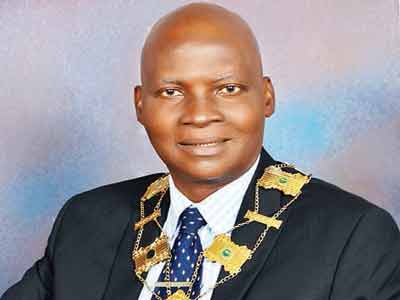
Late Dr Femi Olomola
Similarly, the Foundation is in the process of establishing a skills acquisition centre in Ilesha, Osun State (Femi Olomola’s hometown), aimed at alleviating poverty particularly among vulnerable groups such as women, widows and youth. The centre will focus on the acquisition of skills such as fashion design, confectionery and sugar craft, event decorations, and design appreciation.
The centre at Ilesha likewise incorporates an expansive hall that some Non-Governmental Organisations like the National Council of Women Society, International Association of Lions Clubs and Rotary Club will regularly hold their meetings and carry out some of their activities at no cost.
Lady Kunbi Olomola, Olomola’s widow, said the skill acquisition centre was informed by the need to address challenges faced by the underprivileged, and to assist widows both in line with the compassionate mien of the late Dr Olomola.
Lady Kunbi, a graphic artist and Head of Miscellaneous Department at the Government Technical College, disclosed that the newly inducted award was aimed as complementing a set of computer graphics equipment donated to the institution last year (May 31, 2017) to commemorate the one year remembrance of Dr Femi Olomola’s demise. The equipment donated includes 10 computers, one air-conditioning unit, as well as refurbishing of the Studio.
She said: “The commemoration is to actualise his (Femi Olomola’s) dream and uphold his legacy. The Foundation embarked on this project to partner with the Lagos State Government on the provision of qualitative and meaningful education, thereby adding value to learning and strengthening skills acquisition in the Graphic Arts Section of the Government technical College.”
According to her, Dr Olomola had several years ago commenced refurbishing the Computer Graphic Studio and was called to glory along the line.
Besides gifting numerous medical drugs to the Hospital where he was treated at Ogba in Lagos, the Olomola Foundation also donated two wheelchairs and a physiotherapy walker to the Department of Nephrology, Obafemi Awolowo University, Ile-Ife, Osun State.
Dr Olomola, aged 65, passed on in Lagos on May 31, 2016 after a brief illness. He was a town planner of repute in private practice and, until his death, Olomola was the President of the Nigerian Institute of Town Planners (NITP). He was a friendly, generous, cheerful and kind man. He was a good motivator, a man of integrity and embodiment of peace. He is greatly missed and the family prays he continues to rest peacefully in the blossom of our Lord God Almighty.
The Kano State Government has unveiled a five-year water development plan that would cost over N98 billion.
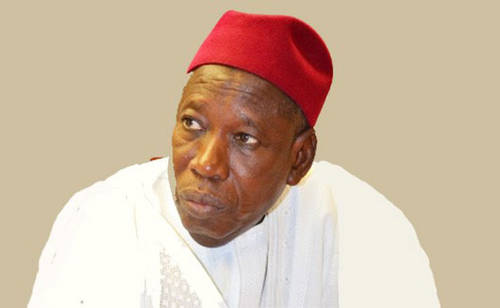
Gov. Abdullahi Ganduje of Kano State
Commissioner for Water Resources, Alhaji Usman Riruwai, who unveiled the plan at a Town Hall Meeting on Tuesday, May 29, 2018 in Kano, the state capital, said it was meant to overcome the persistent shortage of water in the metropolitan areas of the state.
The meeting was organised by the state government to celebrate this year’s Democracy Day.
Riruwai explained that the project would be funded by a consortium of foreign investors with contributions from the state and Federal Government.
The commissioner said that the Kano State Government would contribute N25 billion to the project, Islamic Development Bank N45 billion, French Development Agency N27 billion and European Union N21 billion.
Other donors are the Federal Government N3.5 billion, UNICEF N1.5 billion and the DFID N1 billion.
Earlier, the Commissioner for Education, Prof. Hafiz Abubakar, said that the state has over three million pupils and 6,000 primary schools.
The commissioner, who doubles as the Deputy Governor, said the number was the highest in the country.
He said over 2,000 teachers were sponsored for NCE certification by the state government to enhance teaching and learning.
Also, the Commissioner for Rural Development, Musa Kwankwaso, said the government is working with the World Bank to construct 500 kilometres of rural roads across the state.
He said that the project being executed under the Rural Access and Agricultural Marketing Project was to open up rural communities for enhanced social and economic development.
Governor of Zamfara State, Abdul’aziz Yari, says his administration has spent over N9.2 billion on 30 water projects across the state.
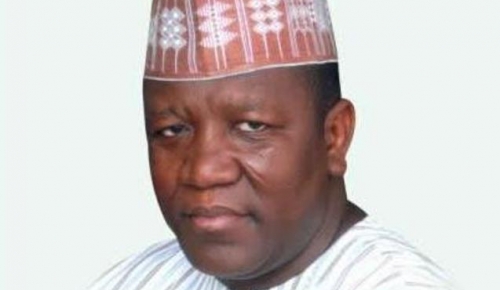
Dr. Abdulaziz Yari Abubakar, governor of Zamfara State
Yari disclosed this on Tuesday, May 29, 2018 while speaking at the 2018 Democracy Day Celebration held at Zamfara Trade Fair Complex, Gusau.
He said since water was considered as a necessity of life, his administration had since inception in 2011, came up with a special water policy to address the problems of water scarcity in the state.
“We copied an underground water system from the Millennium Development Goals (MDGs) water project executed in the state and selected 30 towns and villages across the 14 local government areas of the state that benefited from project,” he said.
According to him, other sectors that the state government gave emphasis to within his seven years of stewardship are in the area of education, health, agriculture and road.
He said as education remains bedrock for future development of every society, his government have invested extensively in the sector.
“Among the projects we executed under the sector were renovation of 18 Senior and Junior Secondary Schools across the state at the cost of over N4.7 billion.
“We also spent over N3.7 billion for renovation of 112 primary schools, local government education secretaries’ offices and three Model Primary Schools in Gusau and Talata-Mafara local government areas.
“Over 20 years after the state creation, the present administration came up with a policy to establish the state university which is going to be located in Talata-Mafara; we earmarked N8 billion for the project.
“We have already secured approval from the National Universities Commission; we are making efforts to ensure that the institution takes off next year.”
Yari added that the administration had built 130 mosques and Islamic schools at the cost of over N1.6 billion, spent N6.8 billion on fertiliser and over N3.6 billion on the renovation of health facilities.
“We are making arrangement to establish three referral hospitals in Gummi, Kaura-Namoda and Tsafe towns,” he said.
The governor further said that the administration had under the period of review spent over N2.2 billion to link 218 communities with national grid and N651 million on the construction of eight fire service stations across the state.
Yari also said various projects had been executed across the 14 local government areas including the construction of 20 kilometres of township roads in each of the local councils.
The World Health Organisation (WHO) has deployed 39 staff to contain the outbreak of cholera in Mubi North and Mubi South South Local Government Areas of Adamawa State.
Governor Bindo Umaru Jibrilla of Adamawa State
A statement from Chima Onuekwe, the Health Emergencies Communication Officer of WHO, made available to News Agency of Nigeria (NAN) in Yola on Tuesday, May 29, 2018, said there were plans to engage additional 15 ad-hoc personnel to boost the medical efforts.
The statement, which noted that 434 suspected cases had been recorded with 13 deaths as at May 26, described the development as worrisome.
It said that WHO was coordinating the response activities, including active surveillance within communities and health facilities, management of reported cases as well as daily review meeting at the Emergency Operations Centre, to ensure timely control of the outbreak.
Meanwhile, the Adamawa Commissioner for Health, Dr Fatima Atiku, said that the state was collaborating with WHO and other partners to ensure that the outbreak was contained.
Atiku said that the efforts were yielding results as indicated in the decline in the trend of case fatality ratio, which was 17 per cent as at May 12, but reduced to 3 per cent.
The Green Climate Fund, the African Development Bank and Africa50 investment fund are collaborating to bring solar energy to the Sahel, in support of the priority set by countries in the region.
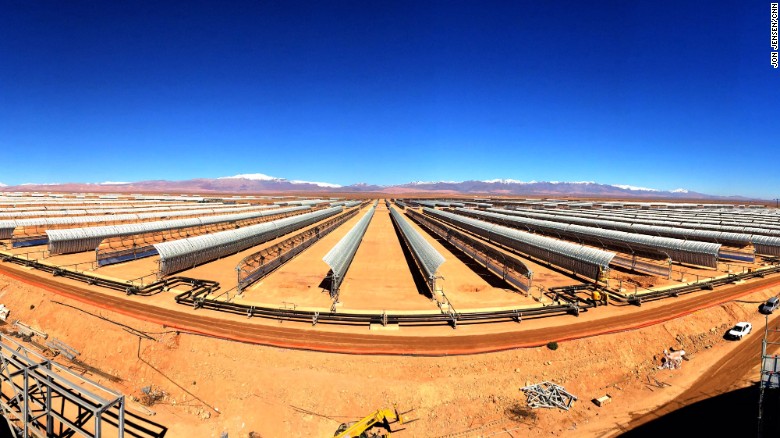
Light up the Sahel: The Noor Concentrated Solar Power (CSP) complex in Morocco is being constructed in a 30 square kilometre area outside the city of Ouarzazate, on the fringe of the Sahara desert
The three international organisations have announced that they will share ideas and resources about opportunities to make solar power available throughout the Sahel region, transforming African deserts into new sources of renewable energy.
The Desert to Power programme, initiated by the AfDB, aims to develop 10,000 MW of solar energy across the Sahel region. It is intended to provide solar generated electricity to 250 million people, including 90 million through off grid solutions, thereby enabling the development of agriculture and other economic activities.
GCF Executive Director, Howard Bamsey, highlighted the potential of Desert to Power.
“Sahel countries have identified the potential of solar power to bring green energy to people across the region. Renewable energy investment is a priority in their Nationally Determined Contributions (NDCs) under the Paris Agreement,” he added, referring to the action plans national governments are following to tackle climate change.
Mr Bamsey made the comments while signing a letter of intent detailing cooperation on the sidelines of the 2018 African Development Bank’s Annual Meeting, held in the Republic of Korea’s coastal city of Busan.
AfDB President, Akinwumi Adesina, welcomed GCF’s support to the initiative, which he said has the potential – with investment from the private sector – to become the world’s largest solar power zone.
“The Desert to Power programme will transform countries in the Sahel region by accelerating their access to energy through solar power. To realise this ambition, strong collaboration is needed. Therefore the partnership with the Green Climate Fund and Africa50 is a great milestone and will help us deliver at scale.”
Alain Ebobissé, CEO of Africa50, stated, “Africa50 is about leveraging partnerships to contribute to the continent’s growth through developing and funding high impact private and PPP infrastructure projects. This agreement allows us to leverage our project development capabilities and build a bigger pipeline of bankable projects that will provide millions of people and businesses on the continent with clean and affordable energy.”
The AfDB is promoting sustainable economic development and social progress throughout its member African countries, thereby contributing to poverty reduction. It has established Africa50 as an investment vehicle to focus on high-impact national and regional projects, mostly in the energy and transport sectors.
Africa50 is a new investment vehicle established by the AfDB, designed as an independent infrastructure fund that focuses on high-impact national and regional projects, mostly in the energy and transport sectors, with a particular emphasis on increasing the pipeline of investment-ready projects.
Stakeholders have advised Nigerians to do away with myths and practices associated with menstruation to enable women and girls manage their monthly cycles safely.
Menstrual Hygiene
They gave the advice in separate interviews with the News Agency of Nigeria (NAN) in Abuja on Monday, May 28 in commemoration of the 2018 Menstrual Hygiene Day.
Dr Priscilla Achakpa, National Coordinator, Women Environmental Programme (WEP), said that the culture of silence about menstruation was fuelling poor practices which were working against the wellbeing of women.
She said such practices included the use of unsafe materials to manage the monthly flow, adding that menstruation is an indicator of female health and vitality.
“Safe spaces for changing, cleaning and washing and drying at home, school, the market and work must be ensured for women and girls everywhere.
“This means changing the design, construction and maintenance of water, sanitation and hygiene facilities to serve a human lifecycle by age, gender and physical ability.
“Half of humanity is female. Women and girls menstruate as this enables them to have babies and reproduce humanity itself; the silence, taboos and stigma linked to menstruation violate a host of human rights.
“It is time for Nigerians to break the silence on menstruation so that women and girls can discuss the topic without fear and get the information they need about their natural physical cycle,” she said.
Achakpa said government at all levels could introduce policies to ensure that girls and women have separate private toilet facilities in schools and at workplaces.
She said such access could also include availability of essential products like clothes, pads and menstrual cups and the means to dispose of and clean them properly.
Also, the Coordinator, Alliance for Hygiene Promotion, Mr Victor Olaomi, urged government to introduce policies that would ensure that girls and women have separate, private toilet facilities in schools and at work places.
He urged community leaders to speak out against attitudes and customs which restrain menstruating women and girls from achieving their full potential.
Olaomi also called on all stakeholders to promote sanitation and hygiene, stressing that they are the drivers of health, social and economic development around the world.
“An environment that lacks sanitation and clean water is an environment where achieving other development goals is an impossible dream; the time to act is now,” he said.
Olaomi urged the media, schools, health practitioners and parents to talk about menstruation and ensure its management in order to replace shame with pride.
Mr Chris Elemewa, Head, Health and Promotion Division, National Primary Health Care Development Agency, said a lot of coordinating programmes had been conducted to address the issues of sanitation in schools.
He said that adequate sensitisation programmes are already put in place to reduce menstrual stigmatisation.
Also, Mr Tunde Aremu, Coordinator, PLAN International, an NGO, called for collaborations between the Ministries of Education and Health to promote reproductive and sexual health education in schools.
Aremu also urged private sector to support women and girls by reducing the cost of sanitary pad and also make them affordable and available.
He noted that 67 per cent of Nigeria population lack basic sanitation as half of the women and girls around the world are of reproductive age.
May 28 Menstrual Hygiene Day, also known as Menstrual Health Day, is an annual awareness day to highlight the importance of good menstrual hygiene management.
In low-income countries, girls’ choices of menstrual hygiene materials are often limited by the costs, availability and social norms.
From June 8 to 9, 2018, Canada will be hosting this year’s G7 Summit. In advance of the meeting, the Executive Secretary of UN Climate Change, Patricia Espinosa, in this piece published in the “G7 Canada: The Charlevoix Summit”, G7 members to unlock the promised and necessary funding to actualise their contribution to climate action and help the world reach the goals of the Paris Agreement
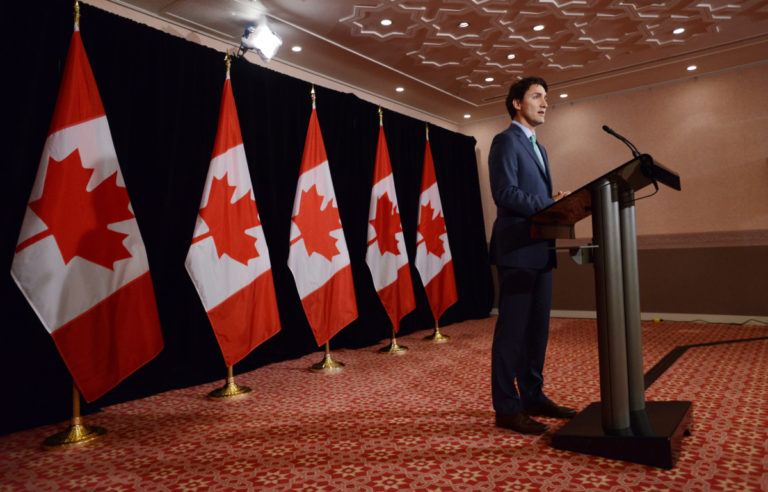
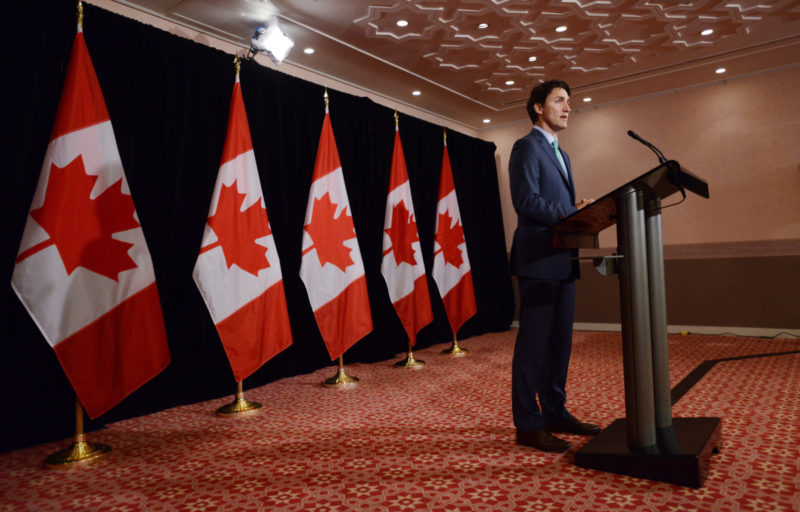
Justin Pierre James Trudeau, Prime Minister of Canada: Canada hosts the 2018 meeting of G7 leaders in Charlevoix, Quebec. Photo credit: THE CANADIAN PRESS/Sean Kilpatrick
Strong action now lays the foundation for stronger action later. Strong action now will also increase the chances of attaining the goals of the Paris Agreement, as well as reduce the cost of action in the future. Accelerating action before 2020 in all aspects of climate change action, including reducing emissions and scaling up climate finance, is critical for stronger action later.
At the UN Climate Change Conference COP23 in Germany last year, countries agreed to take stock of action before 2020, both at COP24 in Poland in 2018 as well as in 2019. This represents a good opportunity for countries to reconfirm progress on pre-2020 ambition. For G7 members – and for developed countries more broadly – taking stock also represents an opportunity to fulfil their collective pledge of mobilising $100 billion annually by 2020.
Many developing countries desperately need this support in order to make their contribution to climate action. I urge G7 members to unlock the promised and necessary funding to make this contribution possible. The contribution by developing countries will become ever more important in the future. Unlocking the promised funds will help the world reach the goals of the Paris Agreement.
The G7 is a very influential group that can make a huge contribution to stepping up climate action and ensuring that 2018 yields a successful outcome for all. The G7 has the power to raise ambition. The G7 can provide the vision to engender renewed political will. And the G7 has the leadership to ensure tangible progress and action before 2020.
A clear signal from the Charlevoix Summit would provide positive impetus for the climate change process in 2018. UN Climate Change stands ready to support all efforts by all countries towards shared success at COP24 in Katowice.
Around the world, one in three girls face inadequate toilets, and many others face social and cultural limits when on their periods. On the occasion of the 2018 Menstrual Hygiene Day observered on Monday, May 28, WaterAid Nigeria, an international organisation, is encouraging governments around the world to prioritise better toilets and washing facilities in schools, and to provide accurate information around menstruation, to ensure girls’ rights to education and equality.
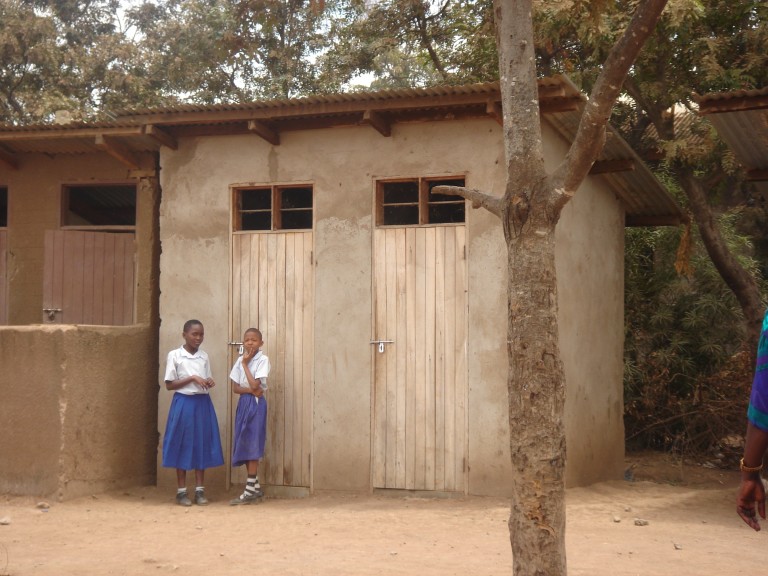
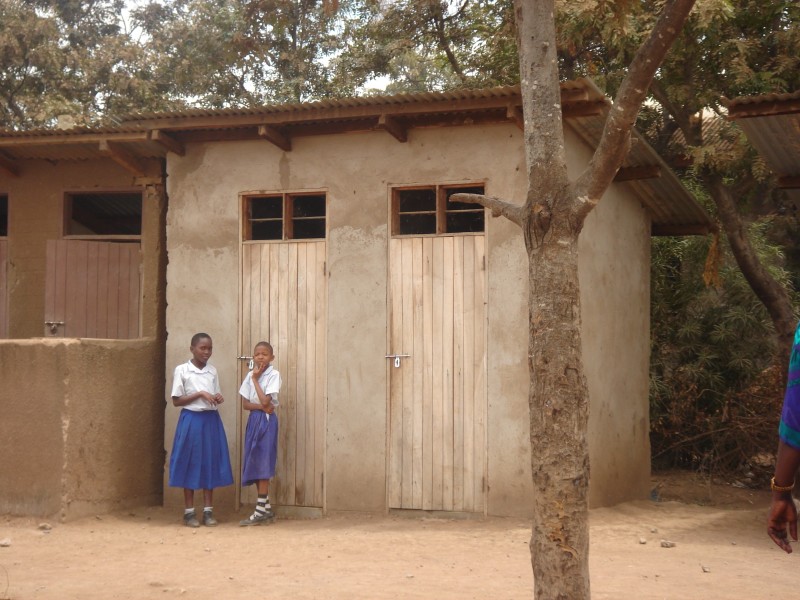
A school toilet for girls: Governments around the world are being urged to prioritise better toilets and washing facilities in schools
The call comes as nations prepare for a July 2018 review of the United Nations’ Sustainable Development Goal 6, to deliver water and sanitation to everyone, everywhere by 2030, which is expected to show that progress on sanitation is far behind.
As the world commemorates Menstrual Hygiene Day, WaterAid states that more than a billion women and girls around the world must manage their periods without a safe, private place to go to the toilet, risking infection as well as being subject to ostracism and shame because of the stigma that still surrounds menstruation.
“Globally, about half of women and girls, around a quarter of the world’s population, are of reproductive age; most of them will menstruate every month. Menstruation is an important issue yet it is shrouded in silence because of deeply rooted taboos and negative social norms. Cultural beliefs and myths about menstruation are perpetuated by society and often portray women and girls as inferior to men and boys. This reinforces gender inequalities, often constitutes discrimination and has a negative impact on the fulfilment of the universal human rights to dignity, health and education of women and girls.”
In many countries, women and girls are not allowed to cook, go to the farm or are even banished from the family home to an outdoor shed during each menstrual cycle. WaterAid’s study on menstrual hygiene management in selected states in Nigeria revealed deeply rooted attitudes and myths surrounding menstruation including the belief that a menstruating woman or girl is cursed and possessed by evil spirits and brings bad luck. Such beliefs result in restrictions being placed on girls and women during their menstruation – including exclusion from attending religious services and even holding their infants in some of the communities. To make matters works, these women and girls lack access to safe water or private toilets at home, in schools and in public places. The effects are devastating.
Nearly half of schools in low- and middle-income countries like Nigeria do not have basic toilets – meaning girls who are menstruating risk embarrassment and shame during this time, and may decide not to attend school. UNESCO estimates that 1 in 10 adolescent girls in Africa miss school during their menstruation and eventually drop out.
An article in the medical journal PLOS Medicine, co-authored by WaterAid, highlights a lack of guidance, facilities and materials for girls to manage their periods at school, affecting their health, their education and their self-esteem. Girls facing shame, fear and confusion around periods have this exacerbated when there is no clean source of water, soap, or safe, private girls’ toilet with space to wash in. A study by USAID has shown that safe, private toilets for girls in schools, combined with private places to wash, can boost their enrolment by 11%.
Proper menstrual hygiene management for women and girls requires inclusive water, sanitation and hygiene facilities in schools and public places; provision of protection materials at affordable rates; behavioural change and communication and a review of existing policies to address this important issue.
This year’s Menstrual Hygiene Day theme, #NoMoreLimits, highlights how crucial it is to support women and girls break free from limits and reach their full potential. In order to do this, we must break the silence surrounding menstrual taboos, stigmatisation; and ensure that menstrual hygiene management is taken seriously and girls and women have the required resources to manage their menstruation with confidence and dignity.
Country Director of WaterAid Nigeria, Dr ChiChi Aniagolu-Okoye, said: “Menstrual hygiene management is not just about providing sanitary pads. It’s more than that. It’s about helping young girls and the people around them, including the men in their lives, to have the information awareness and the knowledge around this issue. It’s about helping girls to have the confidence to manage their hygiene safely and with dignity and also to ensure that wherever they are, provision is made for them to be able to manage their menstrual periods safely and hygienically and for the products to be collected and disposed effectively.
“Menstruation is not just a women’s issue; it is a topic that should affect everyone as unhygienic management of menstruation matters to all of society at large. It is crucial we promote and advocate for long-term hygiene behaviour change.
“Menstrual hygiene management is a human rights issue that matters to the achievement of several Sustainable Development Goals including the goals on health (3), education (4), gender equality (5), water and sanitation (6), economic growth (8) and sustainable consumption and production patterns (12).
“This Menstrual Hygiene Day, we amplify our call for cooperation with the education and health sectors as well as those working in reproductive and sexual health to ensure girls are prepared for the onset of menstruation, to ensure they can care for themselves in a dignified and hygienic way, and to dispel the myths and taboos that often accompany menstruation.”
WaterAid calls on government and relevant stakeholders to support:
The mobilising of resources to facilitate infrastructural improvements in water, sanitation and hygiene facilities in schools that will provide safe and private spaces for school girls to manage their periods hygienically
Curriculum policy reforms that will ensure the continuing education of school girls on how to manage their menstruation safely.
Building the capacity of school teachers and other gatekeepers to provide quality and comprehensive education and appropriate support to girls in schools and in the wider community for managing their menstruation safely.
Menstrual Hygiene Day was started by WASH United in 2014 to build awareness of the fundamental role that good menstrual hygiene management plays in helping women and girls reach their full potential.
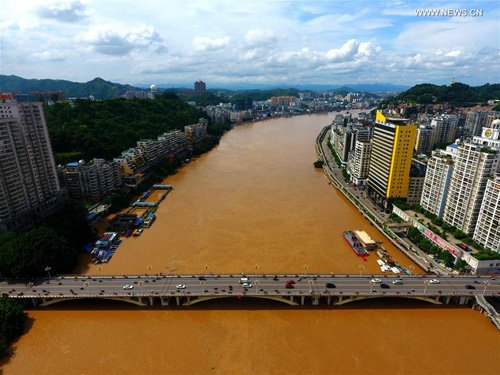
Intensifying river floods could lead to regional production losses worldwide caused by global warming. This might not only hamper local economies around the globe – the effects might also propagate through the global network of trade and supply chains, a study now published in Nature Climate Change shows.
The annual monsoon season has been accompanied by torrential rainfall in many parts of China
It is said to be the first to assess this effect for flooding on a global scale, using a newly developed dynamic economic model. It finds that economic flood damages in China, which could, without further adaption, increase by 80 percent within the next 20 years, might also affect EU and US industries. The US economy might be specifically vulnerable due to its unbalanced trade relation with China.
Contrary to US president Trump’s current tariff sanctions, the study suggests that building stronger and thus more balanced trade relations might be a useful strategy to mitigate economic losses caused by intensifying weather extremes.
“Climate change will increase flood risks already in the next two decades – and this is not only a problem for millions of people but also for economies worldwide,” says Anders Levermann, project leader from the Potsdam Institute for Climate Impact Research (PIK) in Germany and Columbia University’s LDEO in New York.
Without further adaption measures, climate change will likely increase economic losses worldwide due to fluvial floods by more than 15 percent accumulating to a total of about $600 billion within the next 20 years. While the bulk of this is independent of climate change, the rise is not.
“Not only local industries will be affected by these climate impacts,” says Sven Willner, lead author of the study from PIK. “Through supply shortages, changes in demand and associated price signals, economic losses might be down-streamed along the global trade and supply network affecting other economies on a global scale – we were surprised about the size of this rather worrying effect.”
World Bank Economist: “Natural disasters are not local events anymore”
The World Bank’s lead economist with the Global Facility for Disaster Reduction and Recovery, Stéphane Hallegatte, who pioneered research in the area of indirect disaster effects but was not involved in the present study, comments: “This work combines two very innovative lines of work: global risk assessment for natural hazards and network theory to understand how localised shocks propagate in time and space. It contributes to scientific progress in multiple ways, but one of the most important policy messages for me is that the world is so interconnected that natural disasters are not local events anymore: everybody can be affected by a disaster occurring far away. It means that risk management is more than each country’s responsibility: it has become a global public good.”
The study is based on projections of near-future river floods on a regional scale already determined by the greenhouse gas emissions that humans have so far emitted into our atmosphere – impacts after 2035 depend on future additional emissions. The authors investigate the overall economic network response to river flood-related shocks, taking into account the inner dynamics of international trade. They do so with the specifically designed, new Acclimate-model, a dynamic economic computer simulation.
Without major adaptation, China could suffer biggest direct losses
Without major adaptation measures, China could suffer the biggest direct economic losses from river floods – adding up to a total of more than $380 billion in economic losses over the next 20 years, including natural flood events not related to global warming. This corresponds to about 5 percent of China’s annual economic output. 175 billion of the total losses in China will likely occur due to climate change. “This is a lot,” says Willner, “and it is only the effect by river floods, not even taking into account other climate change impacts such as storms and heat waves.”
The European Union and the United States on the contrary might be affected predominantly by indirect losses passed down along the global trade and supply network. In the US, direct losses might be around $30 billion, whereas indirect losses might be $170 billion in the next 20 years.
“The EU will suffer less from indirect losses caused by climate-related flooding in China due to its even trade balance. They will suffer when flooded regions in China temporarily fail to deliver for instance parts that European companies need for their production, but on the other hand Europe will profit from filling climate-induced production gaps in China by exporting goods to Asia. This yields the European economy currently more climate-prepared for the future,” says Willner. “In contrast, the US imports much more from China than it exports to this country. This leaves the US more susceptible to climate-related risks of economic losses passed down along the global supply and trade chain.”
Global trade allows global buffering – India could be a winner
“More intense global trade can help to mitigate losses from local extreme events by facilitating market adjustments,” explains co-author Christian Otto from the Potsdam Institute and Columbia University. “When a supplier is impacted by a disaster hampering its production, international trade increases the chance that other suppliers can jump in and temporarily replace it. Interestingly, the global increase of climate-induced river floods could even cause net gains for some economies such as India, South East Asia, or Australia.”
The study’s focus is not on damages to production facilities of businesses, but to what extent a regional economy stagnates due to flooding. “We adopted a rather optimistic view when it comes to the flexibility and promptness of shifting production towards non-affected suppliers after an extreme weather event,” explains Christian Otto. “Hence our study rather underestimates than overestimates the production losses – things could eventually turn out to be worse.”
Trump’s tariffs might impede climate-proofing the US economy
“We find that the intensification of the mutual trade relation with China leaves the EU better prepared against production losses in Asia than the US. The prospect that the US will be worse off can be traced back to the fact that it is importing more products from China than it is exporting,” says PIK’s Anders Levermann. “Interestingly, such an unbalanced trade relation might be an economic risk for the US when it comes to climate-related economic losses. In the end, Trump’s tariffs might impede climate-proofing the US economy.”
For resolving this risk and balancing out the negative trade relation, there are generally two options: either isolation or more trade. “By introducing a tariff plan against China, Trump currently goes for isolation,” says Levermann. “But Trump’s tariff sanctions are likely to leave US economy even more vulnerable to climate change. As our study suggests, under climate change, the more reasonable strategy is a well-balanced economic connectivity, because it allows compensating economic damages from unexpected weather events – of which we expect more in the future.”
The UN Climate Change on Monday, May 28, 2018 confirmed that Asia Pacific Climate Week (APCW2018) will be convened in Singapore from July 11 to 13.
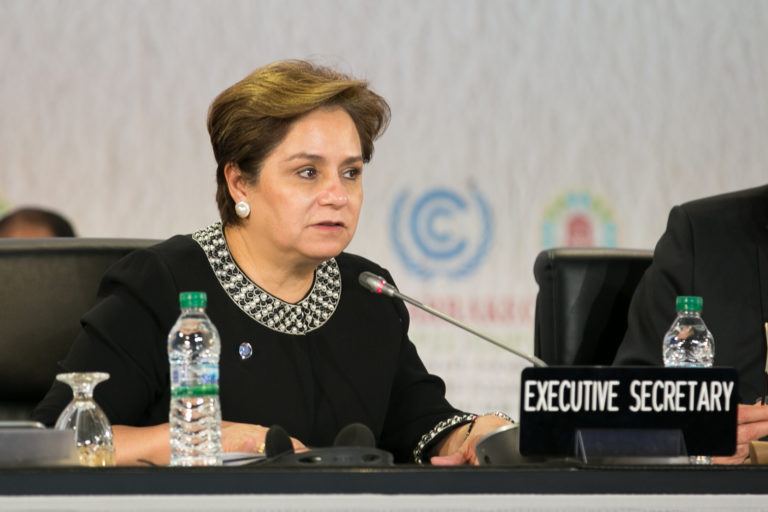
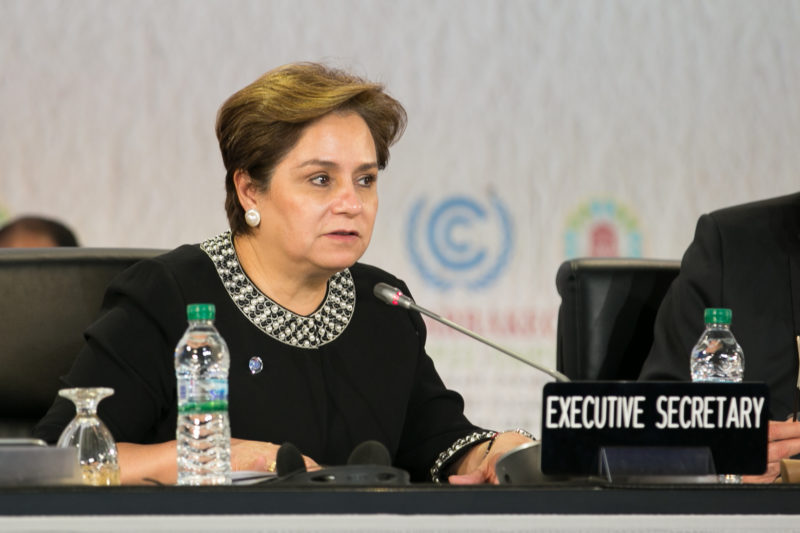
UN Climate Change Executive Secretary, Patricia Espinosa, will participate in the event
The event – which lands two months ahead of both the Global Climate Action Summit in California and New York Climate Week – will be instrumental in demonstrating that there is genuine international support for stepping-up climate action by mobilising actors across the Asia Pacific region.
APCW2018, which is being organised by the Nairobi Framework Partnership with support from the Singapore Government, will provide a critical stepping-stone on the wider journey towards completing the operational guidance for the Paris Climate Change Agreement at the international climate negotiations at COP24 in Katowice, Poland in December 2018.
UN Climate Change Executive Secretary, Patricia Espinosa, will participate in the event, alongside the High-Level Climate Champions, H.E. Minister Inia Seruiratu from Fiji and Mr. Tomasz Chruszczow, Special Envoy for Climate Change from Poland, as well as city and business leaders.
Patricia Espinosa said, “I welcome the hosting of Asia Pacific Climate Week at this critical moment, as it will make an invaluable contribution to spurring enhanced national climate ambition ahead of COP24.”
The theme of APCW2018 is: “Climate Action for Sustainable Development: Driving Change in Asia”. The high-level segment that takes place on Wednesday, July 11 will bring together the business community and focus on areas, such as: visions for NDC enhancement and implementation; challenges and opportunities for cities in the Asia Pacific region; the role of transport for sustainable development and climate action; and climate finance.
Other highlights at the event include the Asia Pacific Carbon Forum and a technical session on the cross-linkages between markets and the Sustainable Development Goals.
Owing to the political significance of the upcoming Talanoa Dialogue this year, APCW2018 will explore strategies for accelerating global climate action, including by realigning finance flows in the Asia Pacific region consistent with a pathway towards low greenhouse gas emission and climate-resilient development for the implementation of the Paris Agreement.
APCW2018 follows-on from the success of Africa Climate Week (ACW2018) hosted in Nairobi earlier this year. On August 20 to 25, the Latin America and Caribbean Climate Week will take place in Montevideo, Uruguay.
The goal of these Climate Weeks is to support the implementation of countries’ Nationally Determined Contributions (NDCs) under the Paris Agreement and climate action to deliver on the Sustainable Development Goals. In so doing, they will bring together diverse array of international stakeholders in the public and private sectors around the common goal of enhancing climate action.