The Plateau Government has given private waste evacuators in charge of Jos-Bukuru one week to clear all dump sites in the area.
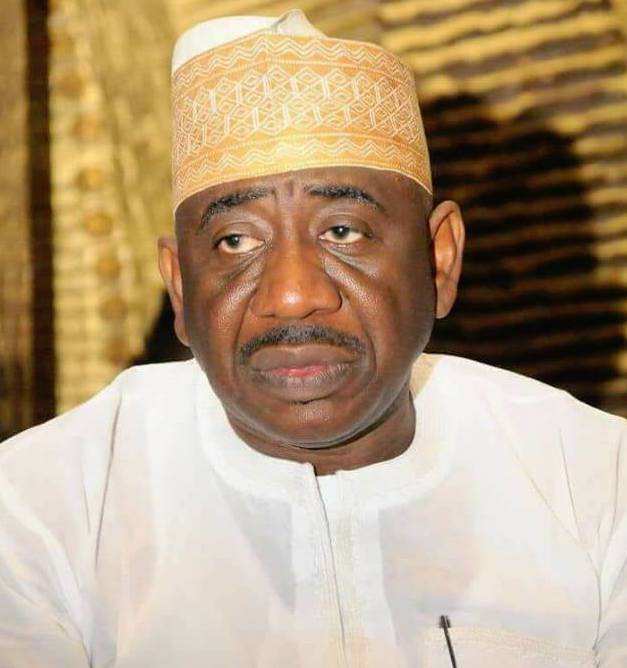
Abdullahi Abbas, Plateau State Commissioner for Environment
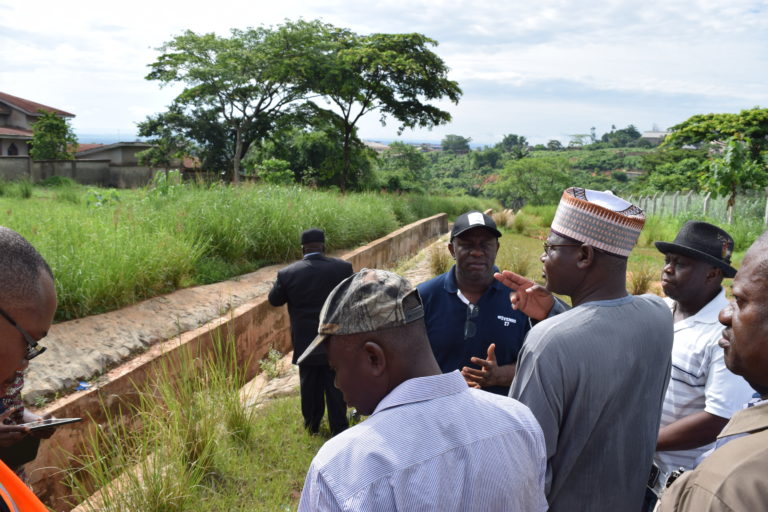
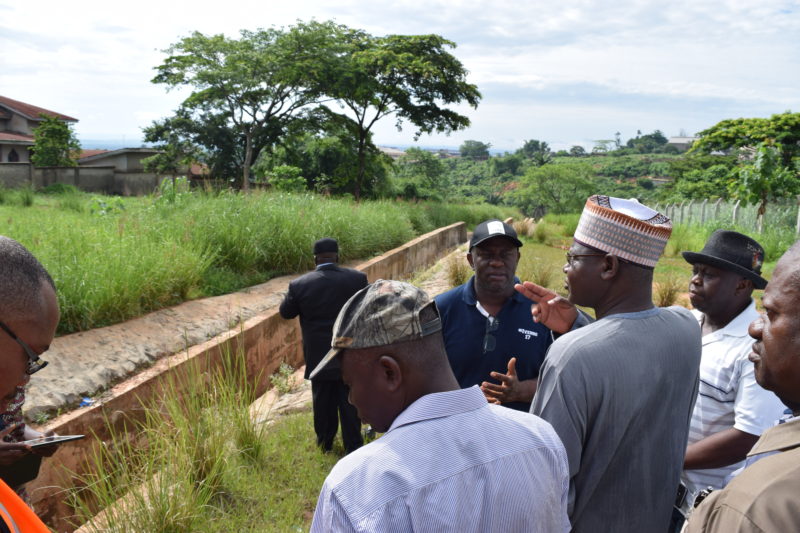
Mr Abdullahi Abbas, the state’s Commissioner for Environment, gave the deadline on Saturday, May 26, 2018 after an assessment tour of the 14 waste collection zones in the Jos-Bukuru metropolis.
Abbas said any of the evacuators who failed to adhere to the ultimatum stands the chance of losing his contract.
He said that most zones in Bukuru were littered with waste and was currently emitting foul smell, as well as blocking most of the water channels in the area.
According to Abbas, eight of the 14 evacuators have defaulted in clearing their designated zones.
He explained that the sites, which were not cleared, had become breeding spots for most vectors and rodents that transmit diseases such as cholera and Lassa fever virus.
One of the evacuators, Mr Stephen Kitnanka, the Chief Executive Officer of Laven Enterprises in charge of evacuating Zone 1 – Mararaban Jama to Bukuru, told NAN that people dumped waste indiscriminately.
Kitnanka appealed to the state government to put more emphasis on enforcement to curtail indiscriminate dumping of waste.
He also called for more awareness, using Ward heads to sensitise the people to the dangers of dumping waste indiscriminately, as well as the penalty it attracts.
The Plateau Government had in January awarded the contract for clearing of waste in the state to private evacuators.
Residents of Gishiri Community in Abuja Municipal Area Council have called on relevant authorities in the FCT Administration to provide potable water and other basic amenities for the benefit of inhabitants.
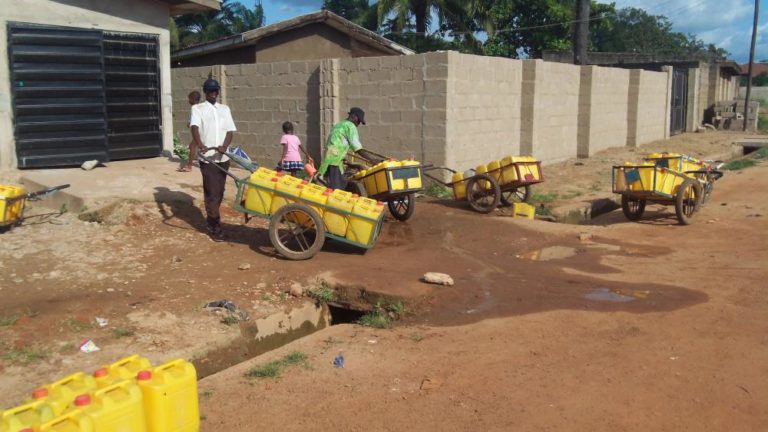
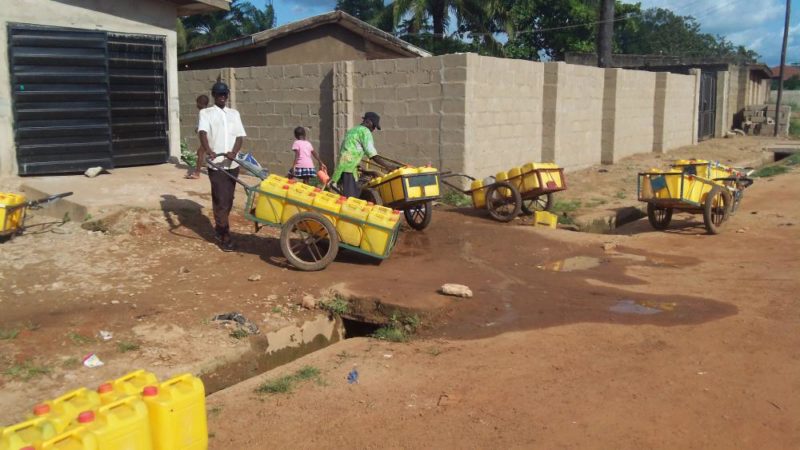
Due to lack of potable water, there has been an increase in activates of water vendors
They told the News Agency of Nigeria (NAN) on Monday in an interview that inadequate water supply and basic amenities made life difficult and unbearable for them in the community.
According to them, it is important for the FCT Administration and philanthropists, to provide a source of potable water to reduce the number of children dying from water-borne diseases in the village.
Some of the residents, who spoke with NAN, said women and girls usually spend long hours searching for water in distant streams and rivers.
They said that this was not giving them the space to source for their livelihoods.
A civil servant, who resides in the community, Yakubu Saleh, bemoaned the long hours spent in search of water.
He said this challenge was causing loss of man hours that should have been used to source for means of livelihood.
He said there were no recreation centres and other relaxation spots in the community, which was close to the nations’ capital, saying this trend needed to be reversed.
“We don’t have water at all, we go to far places to get water from the streams and rivers, the water is dirty, but that is the only source of water we have here.
“Since it is the only source of water in the community, the people are usually left with the option of using the water the way it is.
“We want the Federal Government and the FCT Administration to come to our rescue; so that our children will stop falling ill from preventable disease and water borne diseases.”
Saleh said children from the community usually fall sick from cholera and diarrhoea, saying this had led to most of them not being punctual at schools.
Another resident, Cecilia Audu, told NAN that she had to trek long distances before getting water for domestic use, saying this had caused untold hardship to most women.
She said women in the community gave birth at home and through the use of traditional birth attendants.
She expressed regret that the only health centre in their area had no infrastructure for delivery to take place.
According to her, a large number of them have died while giving birth, saying in most cases, the children died due to lack of emergency response to arrest pregnancy complications.
She said due to lack of potable water, there was an increase in activates of water vendors, known as “mairuwa”, who use the opportunity to make money, selling a 20-litre jerry can for N50.
Audu said the quality of the water sold by the water vendors could not be ascertained as that was the only available option.
“Although, some houses have boreholes, it is still not free, even if you want to fetch the water, you may wasting time because of the queue, and pay maybe N20 or N50, depending on your containers.”
Another resident, Adama Shuaibu, called on relevant authorities to provide access roads to the community, saying there were difficulties in conveying farm products to the markets.
“We need road in this community, cars find it difficult to get into this place, and we have to park at a distant place and use motorcycles.
“It is very difficult to take our goods into the market; some of us have fallen on several occasions, while climbing motorcycles into town,” Shuaibu said.
The Manager, Hope of Survival Orphanage, Mr Cephas Shedrach, said there was the need for private individuals to help in the provision of basic needs to the orphanage.
He called for concerted efforts from all stakeholders to help in the improvement of lives of all Nigerians.
Up to 150,000 New Zealand cattle will be culled as the government attempts to eradicate the disease “Mycoplasma bovis”.
Jacinda Ardern, Prime Minister of New Zealand
Mycoplasma bovis is a bacterium that causes diseases in cattle including udder infections, abortion, pneumonia and arthritis. Humans are not at risk of infection.
“This is a tough call – no-one ever wants to see mass culls,” Prime Minister Jacinda Ardern said in a statement on Monday, May 28, 2018.
The alternative was to risk the spread of the disease across the national herd of over 10 million cattle in more than 20,000 dairy and beef farms, she added.
The cull of around 126,000 cattle in 192 properties, in addition to cull of 26,000 already underway, will take place over the next 24 months.
The full cost of eradication over 10 years is projected at $615 million.
All farming lobby groups are supporting the decision.
There was no doubt the decision to attempt to eradicate Mycoplasma bovis from New Zealand was going to cause pain and anguish for more farmers, Federated Farmers President Katie Milne said.
“But industry has always, from the beginning of this, been committed to working with the government to eradicate, if the science said it was feasible,” she said.
The disease was first discovered in July on a farm on the South Island and has since spread to 37 farms around the country.
Some 260 farms are suspected to harbour the disease as well.
An investigation into how the disease got into the country is still underway.
It is unclear if it arrived through imported live cattle, frozen semen, embryos, veterinary medicines and biological products, feed, used farm equipment, or other imported live animals.
Farmers who have animals culled or their farm operations restricted will be eligible for compensation.
Mycoplasma bovis is a difficult disease to diagnose and to control, Agriculture and Biosecurity Minister Damien O’Connor said.
For this reason, it was possible that at some stage the government may have to let the fight go and learn to manage it in New Zealand herds, O’Connor said.
No country has managed to eradicate the disease so far.
Until July, New Zealand was one of only two major Organisation for Economic Co-operation and Development dairying countries that were free of M. Bovis. Norway is now the only one.
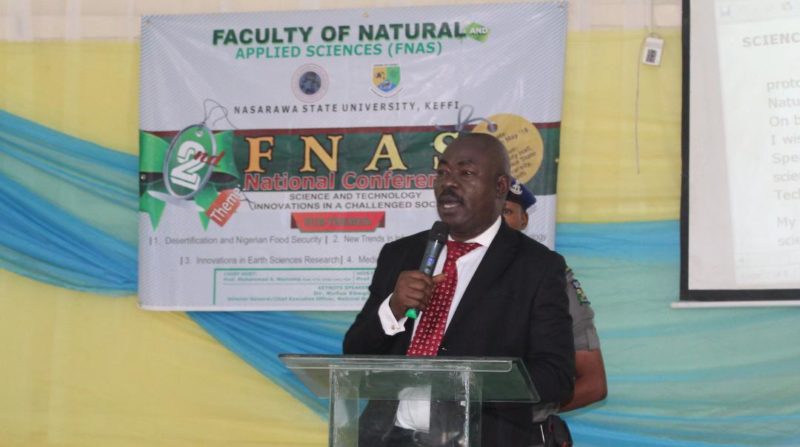
The National Biosafety Management Agency (NBMA) has stressed the need for the government to invest in Science, Technology and Innovation (STI) to properly drive change for country’s development.
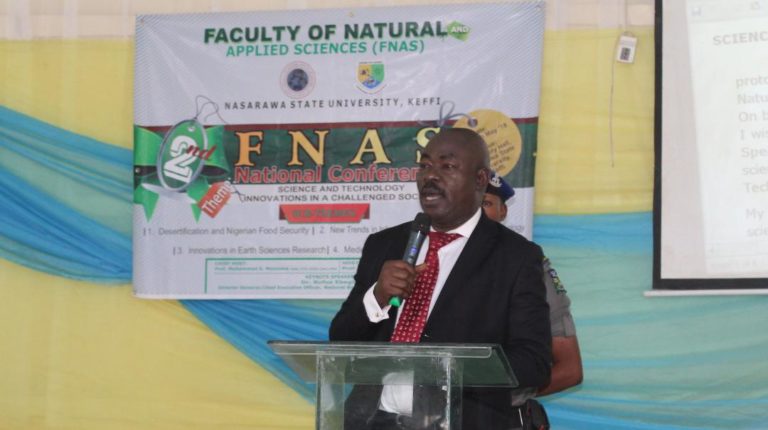
Dr Rufus Ebegba, D-G of the National Biosafety Management Agency (NBMA), making his presentation
Dr Rufus Ebegba, the Director-General of the agency, made the call in a presentation on Monday, May 28, 2018 at the 2nd National Conference on Science and Technology by the Faculty of Natural and Applied Science of Nasarawa State University, Keffi.
Ebegba said Nigeria had invested little in STI as the county’s gross expenditure for research and development “is very low’’.
“The country must look at developed nations and draw lessons on science and technology because they are drivers of change in any society. Investment in research and development must be improved in the country.
“The Federal Government has taken a step in the right direction with the approval of the National Science, Technology and Innovation Roadmap from 2017 to 2030.
“Among other things, this roadmap will help with the diversification of the economy and the development of indigenous technologies.
“Advanced countries such as the U. S. and the UK continue to invest greatly in research and development to sustain their industries and create new innovations.
“In recent years, many Asian countries, especially China and Korea, have invested aggressively in research and development, infrastructure and educational capacity.
“Nigeria ought to emulate this level of commitment and investment in science and technology,’’ he said.
Ebegba said there was need to place emphasis on science education at all levels of the country’s educational system.
“Mechanisms must be put in place to improve the quality of scientific infrastructure available for learning and research at the tertiary level.
“This will improve the quality of scientific research in our institutions and also create opportunities for innovation,’’ he said.
Ebegba stressed the need for collaborations between scientists and industry for the commercialisation of patents and innovations.
“Forums that bring scientists together should also endeavour to accommodate technologists, engineers and experts of industry, so that indigenous technologies can be advanced to solve challenges facing the people,’’ he said.
He noted that the Federal Government had provided structures to ensure that these innovations thrived and would not have adverse effect on humans and the environment.
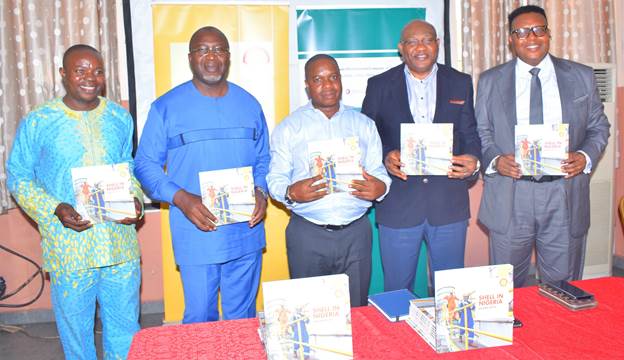
The Shell Petroleum Development Company of Nigeria Limited (SPDC), operator of the SPDC Joint Venture, has restated its active presence in Delta State against the belief in some quarters that the multinational energy firm has pulled out of the state.
L-R: Chairman, Warri Correspondents Chapel of the Nigeria Union of Journalists, Akpokona Omafuaire; Head, Government and Community Relations, The Shell Petroleum Development Company of Nigeria Limited, Alaye Dokubo; Michael Ikeogwu, State Chairman, Nigeria Union of Journalists, Delta State Council; SPDC’s Head, Community Interface, Evans Krukrubo; and Community Interface Coordinator, Jerry-Gaultney Udjo, at the media presentation of the 2018 Shell Nigeria Briefing Notes to Journalists in Warri, Delta State… on Thursday, May 24, 2018
As a proof of its significant footprints in Delta State, the company said it has implemented wide ranging projects in different parts of the state, including the disbursement of N1.88 billion to Global Memorandum of Understanding (GMoU) clusters in host communities and the establishment of a Professorial Chair at the Federal University of Petroleum Resources, Effurun (FUPRE).
SPDC’s General Manager External Relations, Igo Weli, said this at the presentation of the company’s 2018 Briefing Notes to journalists in Warri on Thursday, May 24, 2018 where he said the company recently donated N600 million facilities to five schools under a Youth Sports and Athletics Development Project (YSADP) to mark Nigeria’s centenary anniversary.
“These projects show our continuous presence and interest in the development of Delta State,” said Weli, who was represented by the company’s Head of Community Interface, Evans Krukrubo. “While it is true that SPDC divested from a number of assets in Delta State in line with our business strategy, and in support of the participation of more Nigerian companies in the oil and gas industry, we are still active in the state, for example, operating Forcados Terminal, flow stations, gas plants and a network of pipelines. There is no better way to relay this message than undertaking projects and initiatives that are helping to rebuild lives and communities in the state.”
The GMoU funding covers the three clusters currently active in Delta State since the inception of the concept in 2006. The Cluster Development Boards (CDBs), like their counterparts in other parts of the Niger Delta, are implementing health and educational projects, among others.
The centenary project in Delta State, which was inaugurated this month, includes the development of an athletic curriculum by Africare, an international NGO, using the American National Collegiate Athletic Association standards, the provision of facilities for long/triple jump, high jump, shot put, javelin, discus and hammer throw in five schools as well as the construction of a 400m six-lane rubberised track at Government College, Ughelli.
A key component of the project was the inclusion of 283 athletic and leadership training sessions, academic performance tracking and mentoring. A total of 150 students from across the five project schools benefitted from the leadership programme.
Delta State Governor, Senator Ifeanyi Okowa, had said that the project marked a major turning point in the lives of students and communities.
The Professorial Chair in Light Weight Automobile Engine Development was activated at FUPRE in December last year and is the latest of six established by SPDC JV. The Chair at Effurun is expected to contribute to the growth of local content in Nigeria’s automobile industry.
In a bid to boost employment especially among youths, more than 700 young men and women benefited from Shell’s LiveWIRE initiative between 2003 and 2017. Also, a total of 160 students from Delta State have received the SPDC flagship Cradle-to-Career scholarship awards since they were instituted in 2010. The programme offers fully-funded six-year awards for children from rural communities to attend some of Nigeria’s top secondary schools.
Mr. Weli added: “SPDC JV is always prepared and willing to contribute its quota to the development of its host communities in close collaboration with other stakeholders. It is however, necessary for communities to help create a conducive atmosphere to attract and retain investments in the Niger Delta. Violence, vandalisation of pipelines and other anti-social behaviours will not only discourage investments but also impede the holistic development we badly need in the Niger Delta.”
The Global Environmental Facility-Small Grant Programme (GEF-SGP) gave Nigeria a $4.9 million grant to fund 141 environmental related projects in 25 states between 2009 and 2017.
Among other schemes, the GEF-SGP undertook in-situ conservation of the critically endangered Sclatter’s Guenon monkey that is endemic to southern Nigeria
Mrs Ibironke Olubamise, GEF-SGP National Coordinator, who disclosed this to the News Agency of Nigeria (NAN) in Abuja, said that the grant was an additional fund to complement the environmental projects in the states.
She said that the grant was used to fund projects on biodiversity, climate change, land degradation, persistent organic pollutants and international waters.
GEF-SGP provides grant, technical and coordination support to poor, marginalised and vulnerable communities.
This is through national non-governmental organisations (NGOs) and community-based organisations (CBOs) to implement local environmental initiatives.
Funded by the GEF, SGP is implemented by UN Development Programme (UNDP) on behalf of the GEF partnership and is executed by the United Nations Office for Project Services (UNOPS).
The coordinator said the GEF-SGP had supported alternative livelihood activities that helped to reduce pressure on the environment and enhanced the quality of lives of the target communities, including widows and aged.
According to her, 800,000 poor rural dwellers – 65 per cent women and 35 per cent men – have benefitted directly from the projects.
“60 per cent of communities have either never experienced or benefitted from any development support or participated in such a way as allowed by SGP.
“GEF-SGP also demonstrates collaborative effort between NGO, community and private sector to address pollution. Many of SGP projects have been up-scaled/replicated,” Olubamise stated.
In addition, she said the programme supported over 40 climate change mitigation projects such as tree planting to regenerate forests, energy saving stoves to consumption of fuel wood.
“GEF-SGP has supported projects in several states to address erosion and loss of farmlands to boost food production capacity with modern farming techniques.
“It assists in establishing skills acquisition centre to train beneficiaries especially women, widows and youth on alternative livelihood activities to discourage unsustainable land exploitation.
“It also supports the awareness creation and teaching simple techniques such as rain water harvesting to reduce stress of water and impact of drought; pitcher irrigation technology to reduce stress of irrigation on farmlands,’’ she said.
Olubamise, who said the grant also addressed the issue of biodiversity, said over 500 indigenous plant species were currently being conserved.
She said that it supported the establishment of Community Forest Management Committees and capacity building for forest protection.
The GEF-SGP coordinator added that it also enhanced indigenous knowledge of biodiversity and revived interest in traditional medicinal values of plant species.
“We also undertook in-situ conservation of the critically endangered Sclatter’s Guenon monkey (Cercopithecus sclaterri) that is endemic to southern Nigeria.
“The animal is internationally rated No. 4 in the 2006 International Union for Conservation of Nature (IUCN) global Red Data list of endangered species of fauna,’’ she said.
Olubamise said the grant also supported the protection and restoration of over 1.2 million hectares of land in Nigeria.
She, however, said that effective monitoring and evaluation of the projects was responsible for the successes GEF recorded between 2009 and 2017.
“GEF in collaboration with NGOs/CBOs conducts pre-monitoring and evaluation of these projects, carry out the evaluation during and after the implantation of the projects,’’ she said.
Minster of State for Environment, Ibrahim Usman Jibril, has called on the Anambra State University to, as a matter of priority, establish a National Centre for Erosion Studies to address the alarming rate of flood and gully erosion devastating the state and other parts of the south-east.
Minster of State for Environment, Ibrahim Usman Jibril (third right), during the inspection
Jibril made the call at the weekend in Awka, the Anambra State capital, during his working visit to the state where he inspected some completed and on-going erosion-control projects being executed by his Ministry, the Nigeria Erosion & Watershed Management Project (NEWMAP) and the Ecological Fund Office in the Office of the Secretary to the Government of the Federation.
Accompanied by the National Project Co-ordinator of NEWMAP, Salish Dahiru, the Minister expressed concern where, in several locations, monstrous gully erosion had ravaged communities, resulting in loss of lives, devastated homes and severely dislocated socio-economic activities of the enterprising people of the state and some parts of the South East.
He emphasised that such a situation must not be allowed to continue by a government at the centre that is committed to saving our eco-systems, lives and prosperity as well as enhancing the living conditions of the people.
Jibril disclosed, “President Muhammadu Buhari is particularly concern about the environmental devastation in the South East brought about by flood and gully erosion, and has directed that all degraded land must be recovered for the good of the affected communities.”
According to him, it was in compliance with the Presidential directive that the federal government enhanced the activities of its three windows on erosion control in the country, namely, the Ecological Fund office in the Office of the Secretary to the Federal Government, the Federal Ministry of Environment and NEWMAP, to explore additional strategies of addressing all areas of concern.
In addition, the Minister called for concerted efforts and synergy among various stakeholders such as Federal, States and Local governments, with emphasis on town planners and structural engineers, as well as health, land and environment professionals together with the benefiting communities, to address the menace.
While noting that the common problem in the state was gully erosion with a small land mass that is threatening the living condition of the people, Jibril stressed on the need for a sound land management to ensure that building codes are strictly adhered to.
He expressed satisfaction with the work done at the Executive Business District where hitherto flood and erosion were threatening the existence of public buildings such as the Federal High Court, State Government establishments, roads and other structures.
“I am very pleased to now see the positive transformation in this area. The degraded land has now been recovered and public buildings and facilities are now saved, with normal activities back in place,” the minister added.
The UN Climate Change and CBL Markets are partnering to provide wider and easier access to emission reduction credits from projects in developing countries, via CBL’s spot exchange for energy and environmental commodity markets.
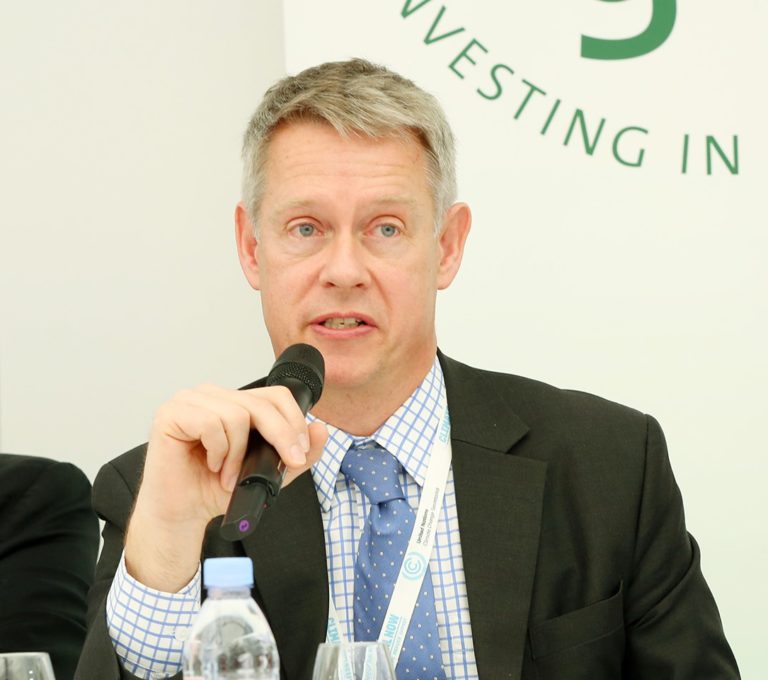
Niclas Svenningsen, Manager, Global Climate Action, at UN Climate Change
The certified emission reduction credits (CERs) come from projects registered under the UN’s Clean Development Mechanism (CDM). Under the partnership, CBL will integrate with the UN Climate Change CDM Registry to facilitate the listing, purchase and cancellation of CERs alongside other global compliance and voluntary products on its global energy and environmental trading screen, making it one of the first electronic trading venues to list CERs.
“We are happy to work with CBL to make UN certified emission reductions available to a wider group of users,” said Niclas Svenningsen, Manager, Global Climate Action, at UN Climate Change. “Clean Development Mechanism CERs are from emission-reduction projects that contribute to sustainable development. The CBL cooperation thereby offers a win-win solution for users who wish to offset their climate footprint while supporting real emission reductions in developing countries.”
Under the CDM, projects in developing countries earn a saleable credit for each tonne of greenhouse gas they reduce or avoid. The incentive has led to the registration of more than 8,100 projects and programmes in 111 countries – from clean cookstove and water purification projects to wind power and large industrial gases projects – and the issuance of more than 1.9 billion CERs, each equivalent to one tonne of carbon dioxide.
“CBL has been supporting global carbon markets since 2010, bringing innovation, liquidity and transparency to environmental commodity markets,” said Ben Stuart, Managing Director at CBL Markets. “The addition of CERs to our existing global market screen is a reflection of the demand from our clients and market participants.”
For a product which has historically relied on over-the-counter trading, CBL is well positioned to provide a seamless exchange-traded solution to assist participants looking to voluntarily offset CERs, as well as those who have obligations under compliance programmes, such as the Colombian Carbon Tax, the Republic of Korea emissions trading system and potentially CORSIA, Australia-based CBL Markets explained in its announcement.
By listing CERs, CBL expects to promote increased participation, price transparency, and confidence in the broader carbon markets, which play a pivotal role in connecting buyers and sellers to achieve climate mitigation, the company said.
“Given the increasing appetite for CERs across both voluntary and compliance carbon markets, combined with the transparency and price discovery of our exchange, we expect significant demand for CERs via the CBL platform,” said Stuart.
CBL has partnership agreements with environmental registries, financial intermediaries, all major carbon standards and industry associations, which play a safeguard role for the issuance and validity of offsets, the company highlighted in its release.
Established under the Kyoto Protocol, the CDM incentivises investment in emission reduction projects that also contribute to sustainable development. Countries or companies with an emission reduction obligation under the Protocol can use CDM CERs to meet a part of that obligation. CERs are also used for non-compliance purposes. For example, through the Climate Neutral Now initiative companies, organisations, events, schools and even individuals pledge to measure their emissions, reduce what they can and offset the rest with CERs.
The Lagos State Government says it will soon institute regulation on “waste to wealth” toward ensuring proper electronic waste (e-waste) management.
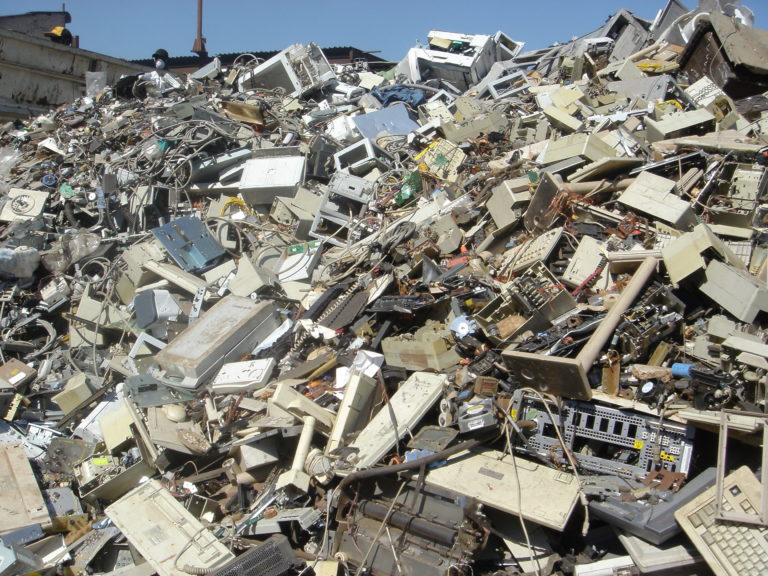
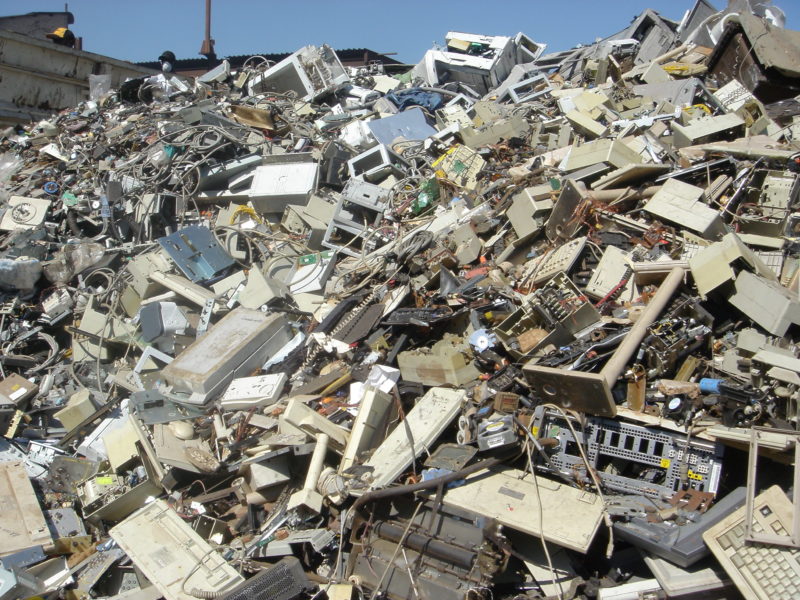
E-waste
Commissioner for Environment, Babatunde Durosinmi-Etti, told the News Agency of Nigeria (NAN) on Saturday, May 26, 2018 in Lagos that the regulation would ensure that e-wastes were properly disposed.
Durosinmi-Etti said that the Lagos State Ministry of the Environment was in contact with businesses at the Ikeja Computer Village to ensure proper management of large quantity of e-waste generated in the market.
According to him, the ministry would engage in advocacy to make sure that the citizens are well educated to enable them abide by the regulation.
“If e-waste is properly handled, it will create jobs for young entrepreneurs; there are some value chains in the process.
“E-waste management and job creation are in consonant with the plans and programmes of the ministry.
“We intend to start separating our waste before they get to the landfills, expanding on wealth creation outlet from waste created.
“At the end of the day, we make sure that these wastes are recycled and turned into other things that can be used,” he said.
Speaking earlier at E-Terra Technologies Ltd E-Waste Recycling Exposition 2018, the commissioner said that digital communication had helped foster innovation and transformed the way people live, conduct business and govern.
He, however, said that the tools of the transformation had resulted in an almost uncontrollable volume of electronic waste.
According to him, e-waste is considered a challenge that is not particular to Nigeria or the African continent alone, but indeed the whole world.
“Electronic Waste, the tons of out-of-use, obsolete electrical equipment thrown away each year, affect human health and has an increasing negative effect on the environment.
“According to the Global E-Waste Monitor, Recycling Today and other notable organisations, it is estimated that yearly 50 million metric tons of e-waste is produced globally, of which only 20 per cent is being recycled.
“Consequently, disposal of E-Waste in an eco-friendly manner has become an emerging global environmental and public health issue.
“We are aware that Africa, and to be specific West Africa, is the preferred destination or graveyard for most of these wastes generated in developed countries.
“Our counterparts in East and Southern Africa have implemented measures to check the indiscriminate dumping of e-waste from the West and we in Nigeria must begin to do the same,” he said.
Prof. Oladele Osibanjo, President of the Waste Management Society of Nigeria (WAMASON), said that apart from climate change, e-waste was one of the major environmental challenges of the 21st century.
Osibanjo said e-waste had therefore, became a global crisis not only from the quantity, but also from various hazardous contents such as heavy metals and endocrine disrupting substances.
The environmentalist said that e-waste was a paradox, as it was both a problem and an opportunity.
According to him, e-waste contained valuable ferrous (iron), non-ferrous (copper), precious (gold and silver) and strategic metals (indium, gallium) that are scarce.
“Many of these may be lost if e-waste is improperly processed.
“Nigeria and Africa should take full advantage of the economic and entrepreneurship potentials of e-waste in an environmentally sustainable manner.
“Regulations and guidelines are needed for collection, dismantling and recycling of e-waste for sustainability.
“Government should encourage private sector in the e-waste recycling industry, as this would take away e-waste from dumpsites, creating green jobs and alleviating poverty,” he said.
The Director-General of the Nigerian Conservation Foundation (NCF), Dr Muhtari Aminu-Kano, raised the alarm on Saturday, May 26, 2018 that erosion may soon wipe off the Lekki Conservation Centre (LCC) in Lagos.
The Lekki Conservation Centre, head offices of the NCF in Lagos
Aminu-Kano told the News Agency of Nigeria (NAN) that sand filling, dredging and land reclamation activities in various communities in the area directly threatened the existence of the park.
According to him, the development has endangered various animal and plant species in the reserve, requiring urgent intervention of the Lagos and Federal Government to save the reserve.
“Our problem is that with recent developments, we have become an island.
“This is one of the only few places where you have dense population of trees and animals and what that means is that all the buildings around us have raised the land above us so, we are now in a depression.
“When the rains come, all the water drains into this reserve; so we have a lot of flooding and areas that are not normally flooded are now flooded.
“We have, however, done a study and we are trying to improve the drainage without disturbing the natural ecosystem.
“But another problem we have is that of shoreline erosion.’’
He noted that with the ongoing protection of the Bar Beach shoreline and land reclamation activities around Maroko and Lekki, water was finding its level back on the conservation area.
“It means this reserve is under threat. The erosion is now eating up the area. What used to be Bar Beach erosion before is now coming to our part of Lagos.
“That is why we are asking the authorities, both Lagos State and the Federal Government, especially the Ecological Funds Office to do something urgently.
“Our appeal is not just for us alone but all the communities around us living or deriving their livelihoods from this area.’’
He said that the NCF was also speaking to researchers and other interests on ways to explore the bio-diversity of the reserve.
Aminu-Kano, however, lauded Gov. Akinwunmi Ambode for providing some facilities and constructing a major perimeter road to facilitate access to the park.
He appealed for more support to boost tourism at the park, lamenting that forests and game reserves in the country were facing deforestation, due to human activities.
A NAN correspondent, who visited the park, reports that some portions of the reserve, having low fence have collapsed while some other facilities have dilapidated.