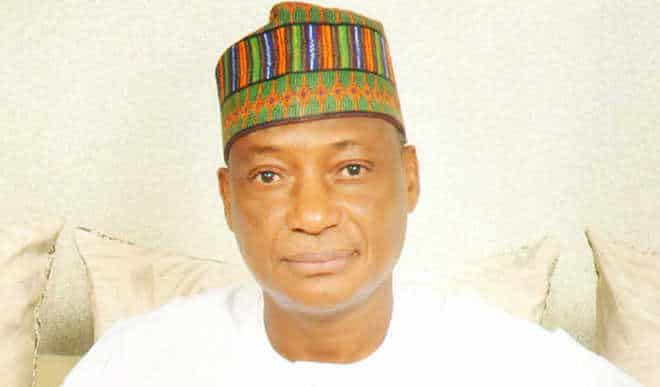
The Niger State Government on Tuesday, June 5, 2018 said that it would commence monthly environmental sanitation across the state in July to ensure clean environment and healthy living.
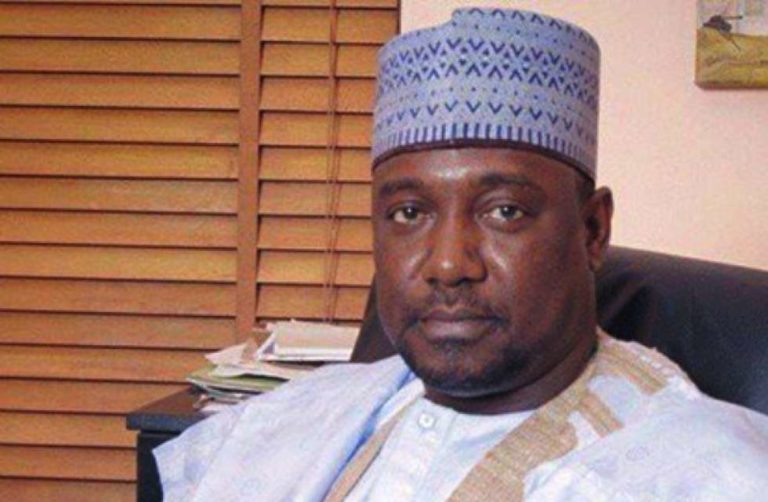
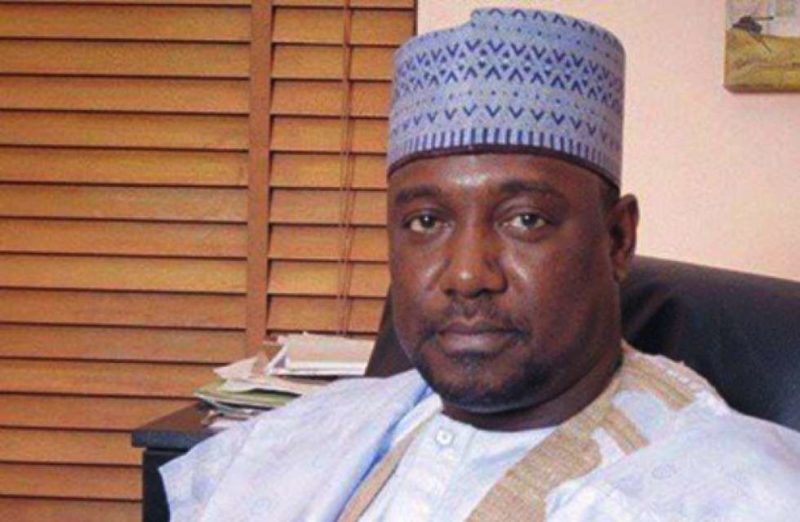
Alhaji Abubakar Sani Bello, Governor of Niger State
The state Commissioner for Environment and Forestry, Alhaji Idris Amin, made this known after a cleaning exercise carried out in Minna the state capital, to mark this year’s World Environmental Day.
Amin noted that the monthly exercise had become necessary saying, “we want our environments to be clean and safe for healthy living.
“We are starting the monthly environmental sanitation exercise as from next month and it will take less than two hours.
“We are almost implementing the sanitation process in the state and everyone must abide by it.”
According to him, there will be restriction on human and vehicular movements, except for those engaged in essential duties and inter-state journeys during the exercise.
Also speaking, the Permanent Secretary in the ministry, Hajia Ramatu Umar, promised that there would be massive awareness campaign to ensure compliance, adding that defaulters would be prosecuted.
Umar said that necessary measures had been put in place to ensure that the monthly exercise would be sustained.
NAN reports that the theme for this year’s Environment Day is ‘Beating Plastic Pollution.’
The International Labour Organisation (ILO) on Tuesday, June 5 underscored the need to curb plastics pollution globally, as the world marks the 2018 World Environment Day.
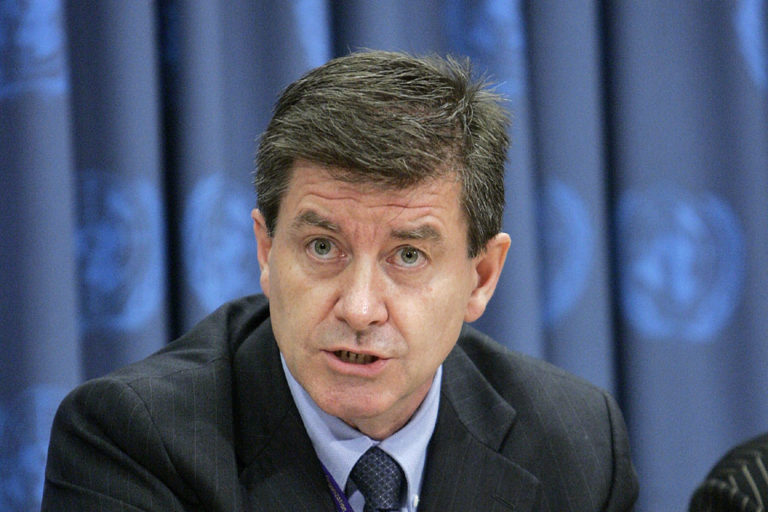
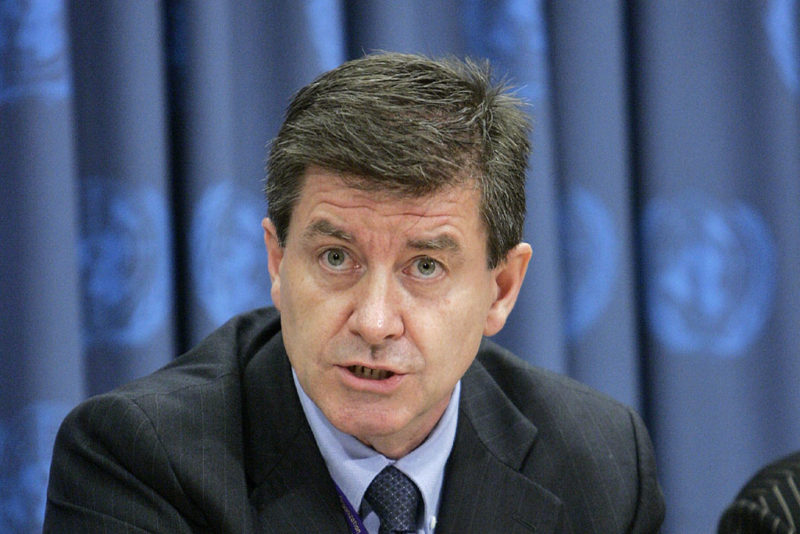
Director-General of the ILO, Guy Ryder
Mr Guy Ryder, ILO Director-General, said this while addressing over 5,700 workers, government representatives and employers at the 107th Session of the International Labour Conference with the theme “A Future with Decent Work” in Geneva, Switzerland.
Ryder said that plastics had become the workhorse of the modern economy and was found in all aspects of modern life.
The director-general said that while plastics were providing significant benefits, its current use had many drawbacks.
He said that paying attention to the drawbacks was necessary to curb pollution, as more than 32 per cent of plastics packaging escaped collection systems.
According to Ryder, most of it ends up in landfills, dumps or simply in the environment in cities, in the oceans or farmlands.”
He quoted the World Economic Forum and the Ellen MacArthur Foundation, unless the necessary action was taken now, there will be more plastics than fish in the oceans by 2050.
“The challenge before us is to transform the “make-use-dispose” plastics’ economy into a circular economy, based on recycling. We also need to reduce our consumption of single-use or disposable plastics.
“We can lessen the environmental damage that plastics pollution is causing by extending the use of plastic products for as long as possible, while recovering, reusing and recycling plastics at a much higher rate.
“This will not only reduce the environmental damage that plastic pollution is causing, but will also open up new opportunities for decent work.”
He noted that the ILO World Employment and Social Outlook: Greening with Jobs 2018 Report suggested a sustained five per cent annual increase in recycling rates for plastics.
He said that others as glass, wood pulp, metals and minerals could generate around six million additional jobs across the world.
Ryder said that the waste management and recycling sector already employed over 500,000 people in Brazil, and no fewer than the same number of workers in Bangladesh, the majority of whom were women.
According to him, the sad reality is that the handling of plastic waste as well as e-waste and other fast-growing solid waste streams, remain largely part of the informal economy in many countries.
“Workers face serious decent work deficits such as work-related hazards, discrimination, stigmatisation, violence and harassment, low earnings and long working hours.
“They often are not legally registered and are not protected by labour laws, with no access to social protection benefits.
“Addressing these gaps will greatly enhance opportunities for decent work. A coherent and integrated legal framework is a first step in that direction.
“Therefore, the ILO constituents — governments and employers’ and workers’ organisations have an important role to play.’’
Ryder said that next year, the ILO would convene a Global Dialogue Forum on decent work in the management of e-waste which is expected to generate new solutions and recommendations.
He said that the ILO had implemented successful projects around the world, to support formalisation in the waste management sector, skills’ development and entrepreneurship.
Ryder said that the ILO also played a major role in promoting social dialogue in partnership with industry, as well as with employers and workers’ organisations.
He noted that cooperatives and other social and solidarity economy organisations had been set up in countries such as Brazil, Colombia, India, Indonesia, Mexico, Philippines and South Africa, to increase the collective voice and negotiation power of waste pickers.
The ILO chief said that the world body would ensure their integration into waste management chains as recycling workers.
“Building on these successful experiences, we can do more to keep our planet safe, clean and fit for work,” he said.
The University of Lagos, Akoka (UNILAG) has appealed to Lagos residents to reduce the use of plastic to protect the environment from further degradation.
University of Lagos, Akoka
The institution made the appeal at a walk for the environment to commemorate the 2018 World Environment Day (WED) on Tuesday, June 5 in Lagos.
The theme for this year’s celebration, “Beat Plastic Pollution’’, aims at encouraging global action against the use of plastic.
Prof. Oluwatoyin Ogundipe, the institution’s Vice-Chancellor, said that the walk was to create awareness among students and members of staff of the institution to protect the environment.
“Plastic pollution is one of the biggest environmental concerns facing us today and this has constituted a global problem,’’ he said.
Ogundipe said that residents should be cautious about the use of plastics considering the topography of the state.
“We are flagging off the occasion with a walk and we want to involve everyone because we all have roles to play in taking care of the environment,’’ he said.
Mrs Sade Nubi, a Senior Environmental Engineer with the Department of Works and Physical Planning, said that the event involved a walk for the environment and a presentation on beating plastic pollution on campus.
The presentation by Nubi revealed that UNILAG generates an average of 2.5 tons of plastic waste per day and a huge volume of 840 tons per year.
Nubi said that the university had made progress in her recycling effort by being able to recycle an average of 10.4 tons of plastic per month.
She noted the need to cut down on the volume of plastic generation on campus through the use of reuse plastic.
Nubi urged the staff and students to pledge to keep to the habit of refusing single use plastic in line with international global practice and this year’s world environment day: “Beat Plastic Pollution’’.
“The earth’s potential is being threatened by poor disposal of plastic waste into the environment affecting the air, water and land.
“Currently, the world generates an average of one million single use plastic per minute.
“These mainly find their ways into the water bodies disintegrating to micro-plastic which are consumed by aquatic animals and ultimately kills them or are transferred into the food chain,’’ Nubi said.
She added that some health issues like cancer and food poison have been traced to issues of micro-plastic consumed from fishes and sea foods.
She urged everybody to think globally and act locally to ensure we beat plastic pollution through adherence to reuse plastic and creating alternative to single use plastic.
What is World Environmental Day being a global celebration of nature, a day to reconnect with the places that matter most to us.
A Platform for Action: World Environment Day is the UN’s most important day for encouraging worldwide awareness and action for the protection of our environment. Since it began in 1974, it has grown to become a global platform for public outreach that is widely celebrated in over 100 countries.
The People’s Day: Above all, World Environment Day is the “people’s day” for doing something to take care of the Earth. That “something” can be focused locally, nationally or globally; it can be a solo action or involve a crowd. Everyone is free to choose.
The Theme: Each World Environment Day is organized around a theme that focuses attention on a particularly pressing environmental concern. The theme for 2018 is “Beating Plastic Pollution”.
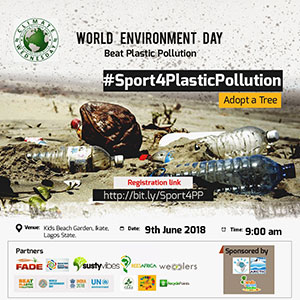
Plastic pollution has become an epidemic. Every year, we throw away enough plastic to circle the Earth four times. Much of that waste doesn’t make it into a landfill, but instead ends up in our oceans, where it’s responsible for killing one million seabirds and 100,000 marine mammals every year. For the good of the planet, it’s time to rethink how we use plastic. This year, Climate Wednesday registered as International Climate Change Initiative Development will be commemorating this year’s World Environment Day with an initiative tagged “#Sport4PlasticPollution”
#Sport4PlasticPollution: The “#Sport4PlasticPollution” capitalizes on the popularity of the sports industry. Individuals around the world have an up close and personal relationship with sports. Sporting activities require good weather conditions for trainings and events, to this end it is imperative that man’s negative impact on the environment is minimized. Individuals, organizations and civil society groups around the world are organizing different events to create awareness about this year’s theme “Beating Plastic Pollution” with the hope that this would spur governments, business leaders, and everyday global citizens to take action.
Sport is universal. So is Plastic Pollution. This is why Climate Wednesday is seeking support from organizations’ and relevant stakeholders to execute the #Sport4PlasticPollution event. The event would showcase how sports can be a driving force in tacking plastic pollution
This year’s activity on World Environment day with the theme “Beat Plastic Pollution” will involve the following activities:
Game/Sport on the beach (Teams from different Organization)
Adopting A Tree to conserve our beach.
Clean Up the beach.
Brief discussion about how we can reduce plastic pollution.
Why the concept #Sport4PlasticPollution?
To create awareness about the impacts of plastic pollution
To provide a playful and relaxed atmosphere where individuals can engage, discuss and share ideas on everyday actions that can help to reduce plastic pollution
The event would foster team work and collaborations as we can only “Beat Plastic Pollution” when we work together.
The event also aims to show that sports can be a driving force for reducing plastic pollution.
To see how individuals across Nigeria are standing up to beat plastic pollution.
To help discover how the global sports community is coming together to raise awareness and inspire action on Plastic Pollution.
Educating individuals to help promote and facilitate into committing themselves to the initiative.
#Sport4PlasticPollution is set to make a real, lasting difference.
Climate Wednesday – ICCDI can be contacted on Twitter via @ClimateWed
Mr Longinus Chima, a biologist, on Monday, June 4, 2018 said Nigeria could lead the world in phytomedicine and non-synthetic drug production if concrete effort was made at analysing its rich plant resources.
phytomedicine
Phytomedicine is the scientific investigation of the medicinal properties of plants or specific plant extracts. It also entails the evaluation, herbal preparation and use of herbal medicines on pharmacological principles.
Chima, a U.S. trained biologist, made the disclosure in Aba, Abia State, in interview with the News Agency of Nigeria (NAN).
He said that if the nation could invest in assessing, analysing and profiling its rich plant resources, it could be a health destination and a leader in natural drug production.
“Nigeria is blessed with plants that have better medicinal properties than those found abroad, hence the need for assessment, analysis and profiling of the plants to improve the nation’s fortunes.
“Phytomedicine is the future of medicine. We need additional analysis to get to know more about the functions or the constituents of the various plants.
“And if Nigeria wants to lead the world in phytomedicine, because it has the capacity to, there is the need to study the plants around us and know their constituents and functions.
“That Nigeria is in this tropical region of the world is an advantage. We in Nigeria experience C4 photosynthesis whereas the rest of the temperate regions of the world experience C3 type.
“As a result, our own photosynthesis and plants are richer and higher than their own and that is why plants here are much more effective in doing anything medicinal than those in the temperate regions.
“As Nigeria is tinkering with revenue diversification, this is the opportunity to study the plants and understand their constituents because somebody said ‘no plant grows in vain’, God puts them there for a reason.
“So every plant has something special given to it that makes it unique. And studying and understanding them will be of great benefit to our health system because all of them function as antigens when we take them in. They are all beneficial,” said he. He therefore charged the government to set up a mechanism for the special study of all available plants in Nigeria to reap the benefits of their richness in drug manufacturing and other uses.
Chima, who is a table yeast manufacturer in Aba, said that he holds 18 patents from his discoveries of how to produce table yeast from different plants.
He also urged the government to provide equipped laboratories to assist interested citizens investing in science to conduct researches at little or no cost to boost the nation’s scientific development.
“Plant yeasts have the possibility of solving some health problems because of the properties of the plants, they are isolated but lack of scientific help to verify some of the claims is a major challenge,’’ he said.
The Intergovernmental Panel on Climate Change (IPCC) is inviting governments to comment on the Final Draft of the Summary for Policymakers (SPM) of the Special Report on “Global Warming of 1.5ºC” (or SR15) ahead of the approval plenary for the SPM at the IPCC’s 48th session in early October, 2018.
Valérie Masson-Delmotte, Co-Chair of Working Group I, IPCC
The IPCC distributed the Final Draft of the report, whose full name is “Global Warming of 1.5°C, an IPCC special report on the impacts of global warming of 1.5°C above pre-industrial levels and related global greenhouse gas emission pathways, in the context of strengthening the global response to the threat of climate change, sustainable development, and efforts to eradicate poverty”, to governments on Monday, June 4, 2018 with a request to comment on SPM by July 29.
The review of the Final Draft is a key stage in the preparation of the report, allowing authors to prepare for the line-by-line approval session of the SPM that will take place in Incheon, Republic of Korea, from October 1 to 5,, 2018. The report, to be released on October 8 subject to approval by the Panel, will be the key scientific input into the Talanoa Dialogue at the UN Climate Change Conference to be held in Katowice, Poland, in December.
The aim of this final review, according to the IPCC, is to ensure that the Summary for Policymakers is accurate, well-balanced, presents the findings of the underlying report clearly, and is consistent with the scope of the full report as approved by the Panel at the 44thsession of the IPCC in October 2016.
“This is the last step of the IPCC review process. Chapter drafts have been finalized, and key findings have been distilled into the Summary for Policymakers,” said Valérie Masson-Delmotte, Co-Chair of IPCC Working Group I. “Governments will now review the report that we have prepared following their invitation to the IPCC in December 2015, at COP21.”
In line with IPCC procedures, the report has already undergone two formal review stages: the expert review of the First Order Draft from July 31 to September 24, 2017, and the government and expert review of the Second Order Draft from January 8 to February 25, 2018.
The Health of Mother Earth Foundation (HOMEF) and the Fishnet Alliance have stressed the need for individual and collective efforts to end plastic pollution.
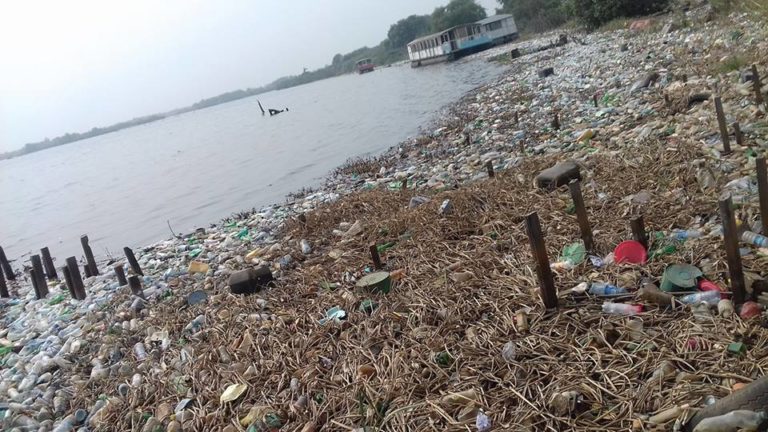
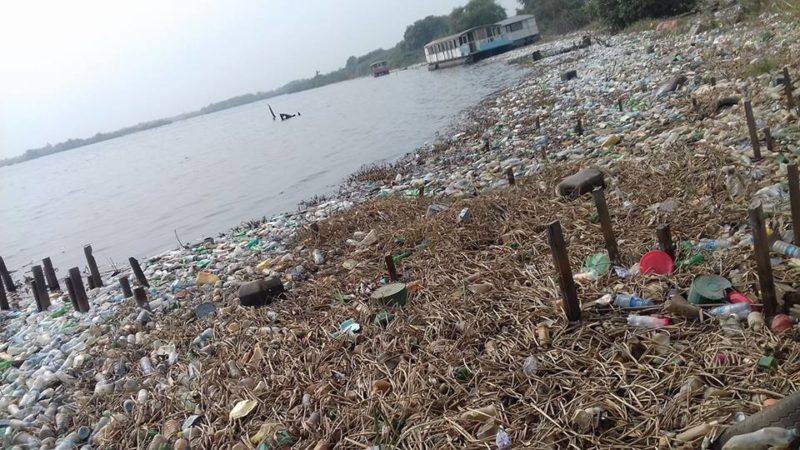
Ocean pollution (or marine litter) courtesy of plastics and plastic particles
In a statement made available to EnviroNews on Monday, June 4, 2018, the organisations emphasised that the environment is endowed with elements of life, support and sustenance. The oceans which cover about 71% of the Earth’s surface, and contain 97% of the planet’s water, carry in them plethora of essential ingredients that supports our weather, plants, seafood and humans, they added.
The themes for this year’s World Environment Day and World Ocean Day centre on beating plastic pollution and, according to HOMEF and Fishnet, thus serve as a wakeup call for mankind to take prompt actions to protect the environment and by extension human lives.
HOMEF Director, Nnimmo Bassey, stated that plastics out of sight do not mean plastics out of life as many think when they trash plastic materials.
His words: “Tons of these materials end up in the gutters, rivers oceans. 15 tons of plastics are said to end up in the ocean every minute with more than eight million tons being dumped in every year. An incredible one million seabirds and 100,000 marine mammals lose their lives to plastic pollution yearly.
“If this menace continues then we will definitely have more plastics than fish in our oceans and water bodies in years to come. Already, plastics have been found in more than 60% of all seabirds and in all sea turtles species that mistake plastic for food.
“We must learn to reject plastics and not just aim to reduce, reuse or recycle them. It is time to tackle this threat at source. It is time to terminate this plastic civilisation.”
Stephen Oduware, project officer at HOMEF, added that, in the midst of a multitude of pollutants offshore, oil and plastics are the most insidious and injurious. He underlined the need to clean up the oceans to help sustain the lives of the aquatic creatures and other life forms that depend on these water bodies for survival.
He said: “We have a collective duty to protect this awesome wonder of life from being turned into a dumping ground for plastics. Plastics cannot be digested by these fishes. Other sea creatures are not left untouched; sea turtles, seal and sea lions, sea birds, dolphins, whales, and all other life forms that depend on the ocean and its biodiversity for survival are all affected negatively. More so, plastics are not easily degradable. They float around in the oceans and other water bodies for hundreds of years. It is expedient that we take all necessary actions to beat this pollution and at all cost.”
HOMEF and the FishNet Alliance thus called on governments, diplomats, and everyone at all levels, to beat plastic pollution, adding that mankind should brace-up to reverse the situation, “else our fishes will be replaced by plastics and humans will be left in want”.
The groups also called for concerted efforts to phase out the exploration of fossil fuels from which majority of plastic materials are produced.
They want plastic bags and polystyrene foams banned, and paper made bags should be used in eateries and superstores rather than plastic bags.
“A lot more should be done to sensitise the public on the negative impacts of plastic pollution. The time to beat plastic pollution is now,” said the duo.
Renewable energy accounted for 70% of new global power generating capacity in 2017, the largest increase in renewable power capacity in modern history, according to REN21’s Renewables 2018 Global Status Report (GSR) published on Monday, June 4, 2018.
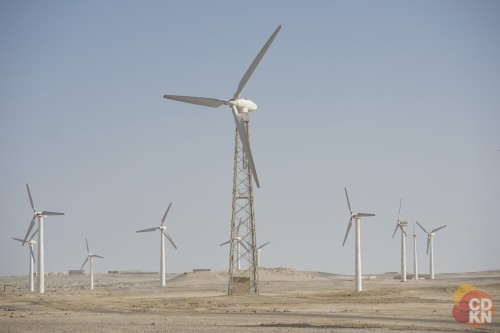
Renewable energy: Wind turbines in Egypt
According to observers, scaling up renewable electricity is crucial to meet the central goals of the Paris Climate Change Agreement, which is to hold the global average rise as close as possible to 1.5 degrees Celsius.
However, as the new report points out, the entire power sector and specifically the heating, cooling and transport sectors must also be transformed for a world to a stand a chance of meeting the Paris goals.
“We may be racing down the pathway towards a 100% renewable electricity future, but when it comes to heating, cooling and transport, we are coasting along as if we had all the time in the world. Sadly, we don’t,” said Rana Adib, Executive Secretary of REN21.
The fact is that the heating and cooling sectors have seen little change in renewables uptake over recent years. Modern renewable energy supplied about 10% of total global heat production in 2015. National targets for renewable energy in heating and cooling exist in only 48 countries around the world, whereas 146 countries have targets for renewable energy in the power sector.
To achieve 1.5 degrees C, the heating, cooling and transport sectors, which together account for about four-fifths of global energy demand, will need to follow the same path as the power sector – and fast.
Adequate Policy Frameworks are Crucial for Rapid Deployment of Clean Energy
For these sectors to change, the right policy frameworks need to be put in place to drive innovation and the development of new technology.
Arthouros Zervos, REN21 Chair, said: “To make the energy transition happen there needs to be political leadership by governments – for example by ending subsidies for fossil fuels and nuclear, investing in the necessary infrastructure, and establishing hard targets and policy for heating, cooling and transport. Without this leadership, it will be difficult for the world to meet climate or sustainable development commitments.”
Small changes are under way. In India, for example, installations of solar thermal collectors rose approximately 25% in 2017 as compared to 2016. China aims to have 2% of the cooling loads of its buildings come from solar thermal energy by 2020.
With 1.2 million electric passenger cars sold in 2017, the transport sector increases its level of electrification and offers new possibilities for renewable energy uptake. Still, the industry has a long way to improve since only 42 countries have national targets for the use of renewable energy in transport.
Investment added 178 GW of renewable power generation capacity in 2017 which was more than twice that of net, new fossil fuel and nuclear power capacity combined.
Thanks to their increasing cost-competitiveness, the share of renewables in the power sector is expected to only continue to rise. New solar photovoltaic capacity grew to a record 98 gigawatts in 2017, while 52 GW of wind power were added globally.
The report says that investment in renewables is regionally concentrated: China, Europe and the United States accounted for nearly 75% of global investment in renewables in 2017. Further, the Marshall Islands, Rwanda and many other developing countries have proportionally (according to gross domestic product) invested as much as or more in renewables than their peers in developed economies.
Some 288 institutional investors with $26 trillion in assets under management have issued a new call to climate action to governments, albeit with the support of the UN.
Patricia Espinosa, the Executive Secretary of UN Climate Change (second right), with some of the representatives of the institutional investors at the meeting in London
In a statement issued ahead of the upcoming G7 Summit in Canada and presented to Patricia Espinosa, the Executive Secretary of UN Climate Change, in London on Monday, June 4, 2018, the investors urged governments to step up their level of ambition to achieve the goals of the Paris Agreement on Climate Change.
“We are concerned that the implementation of the Paris Agreement is currently falling short of the agreed goal of ‘holding the increase in the global average temperature to well below 2 degrees Celsius above pre-industrial levels,” the investors said.
“The global shift to clean energy is underway, but much more needs to be done by governments to accelerate the low carbon transition and to improve the resilience of our economy, society and the financial system to climate risks,” they add.
Espinosa, on her part, spoke about the dramatically accelerating climate change impacts around the world and issued a passionate call to action, saying: “We can invest in the status quo, exploiting everything we can from the earth, knowing it will poison our air, our water and our very existence on this planet. Or we can invest in the future and capitalise on the fact that we are standing at the precipice of nothing less than one of the greatest transformational eras of modern times an era increasingly driven by clean technology, fuelled by renewable energy, and supported by a new economy.”
She pointed out that leveraging private finance to fund the transition to a low-emissions and low-carbon future in order to meet the goals of the Paris Agreement is a necessity, and one that public administrations cannot afford to do on their own. She called on investors to engage with national governments more directly on climate policies and how investors can contribute to the implementation of the agreement at the country level.
“While resources are available and investors like you have the vision, the majority of the developing countries do not receive significant amounts of investment flows for the implementation of their national climate action plans. Get in touch with the right ministries, the right people in charge of the programs and policies – the people who can affect real change, and specially with the people who right now are saying that finance is not available to them,” she told the investors meeting in London.
In the 2018 “Global Investor Statement to Governments on Climate Change” presented to Patricia Espinosa, investors note that they continue to make significant investments into the low-carbon transition across a range of asset classes, and increasingly incorporate climate change scenarios and climate risk management strategies into their investment processes, while engaging with the largest greenhouse gas emitters.
Specifically, investors are asking world governments to:
Achieve the goals of the Paris Agreement
Accelerate private sector investment into the low carbon transition
Commit to improve climate-related financial reporting
The Investor Agenda calls on global investors to accelerate and scale up the actions that are critical to tackling climate change and achieving the goals of the Paris Agreement. It is a comprehensive agenda for investors to manage climate risks and capture low-carbon opportunities, and a mechanism to report on their progress in four key focus areas: Investment, Corporate Engagement, Investor Disclosure and Policy Advocacy.
The Federal Government said on Monday, June 4, 2018 that no part of the country would suffer neglect owing to its geographical location or political affiliation.
Minister of Defence, Brig.-Gen. Mansur Dan Ali (rtd)
The Minister of Defence, Brig.-Gen. Mansur Dan Ali (rtd), gave the assurance at the inauguration and handing over of Magama Erosion and Flood Control Project, executed at about N530 million by the Ecological Funds Office (EFO) in Magama Local Government Area of Niger State.
“The project, which is one of the 18 ecological intervention projects across the six geo-political zones of Nigeria, will ameliorate and control some of the most outstanding flood and erosion problems in the area.
“The intervention project is intended to bring relief to the sufferings of the people of the community and reduce danger to lives and property associated with erosion and persistent flooding.”
He said that the execution of the projects across the country, demonstrates the sincerity of purpose of the Buhari-led administration toward entrenching justice, equity and fair play in the land.
He urged members of the community to take responsibility for maintaining and protecting the project as well as prevent indiscriminate dumping of refuse in the drainage channels.
Udochi Nwachukwu, the Deputy Director, Erosion and Flood Control, who represented the Permanent Secretary of the EFO at the inauguration, said the project would give the community a sense of belonging.
He said that the project was initiated following a request by Shehu Sale, representing Magama/Rijua Constituency in the House of Representatives.
“The project, which commenced in June 2017 and was completed in April this year, will ensure safety of lives and property as well as improve the general well-being of the people.”
The Vice Chairman of the local government, Sani Doma, thanked President Muhammadu Buhari for starting and completing the project.
“I really thank God for allowing me to see this project completed; we appreciate the FG’s effort because this is what we have been praying for and with God’s intervention, we now have it in place.
“This project is a good one because people die every year while crossing the big river, especially during the rainy season. With this intervention, lives will be saved and all the people of Magama are grateful.”
Doma, however, solicited more Federal Government assistance to construct the road leading from Kawon Auna to Tungan Bako.
He appealed to the Federal Government to ensure the completion of the entire scope of the work covering more stretches of degraded land within the community.