Home Blog Page 1867

Africa to advance momentum in SDGs implementation

0

The UN Economic Commission for Africa (ECA) stressed on Monday, June 25, 2018 Africa’s commitment to strengthen the momentum in the implementation of the global Sustainable Development Goals (SDGs).

Fatima Denton
Fatima Denton, ECA’s Director of Special Initiatives Division

The ECA further stressed that the continent would speak with one voice during the upcoming High-level Political Forum for Sustainable Development (HLPF) to be held at the UN headquarters in July.

The HLPF, which will be held in New York from July 9 to July 18, is expected to review implementation of some of the SDGs, including the SDGs Goal 6 on clean water and sanitation, Goal 7 on affordable and clean energy, Goal 11 on sustainable cities and communities, Goal 12 on responsible consumption and production, Goal 15 on life on land and Goal 17 on partnerships for the goals, according to the ECA.

“The ECA and its partners will take to the HLPF Africa’s position as agreed by stakeholders at the Africa Regional Forum on Sustainable Development (ARFSD) that was held in Dakar, Senegal, in May,” said Fatima Denton, ECA’s Director of Special Initiatives Division, on Monday.

“The key messages that came from the ARFSD will serve as Africa’s collective regional input to the annual high-level political forum,” Denton said.

According to the ECA, Africa needs to mobilise between $600 billion and $1.2 trillion annually if the continent is to achieve its targets as set in Agenda 2030 and its 50-year development plan, Agenda 2063.

Sylvain Boko, Head of the Development Planning and Statistics Cluster in the ECA’s Capacity Development Division (CDD), also stressed the need to join efforts in mobilising resources so as to strengthen the continent’s momentum in achieving the SDGs.

“Achieving the ambitious targets of the 2030 Agenda requires a revitalised and enhanced global partnership that brings together governments, civil society, the private sector, the UN system and other actors and mobilises all available resources,” said Boko.

According to the ECA, the ARFSD is an inter-governmental and multi-stakeholder platform to review progress, share experiences and lessons learned and build a consensus to accelerate the achievement of the SDGs contained in the 2030 Agenda for Sustainable Development and Africa’s Agenda 2063.

The ARFSD with regard to clean water and sanitation agreed that water is critical to achieving Africa’s desire of fast economic growth, which will lead to the attainment of a continent free of poverty and hunger, as encapsulated in Agendas 2030 and 2063, according to the ECA.

“The continent lags behind in access to clean water and decent sanitation services,” the ECA said.

“This has serious implications, including for the health and productivity of the people in the region, and undermines their capacity to cope with various shocks.”

The ARFSD recommended the full and effective implementation of the African Water Vision 2025 was crucial to addressing the multiple challenges, enhancing access to water and strengthening integrated water resources management on the continent.

With an increasing population and demand for socioeconomic development, water resources in Africa are projected to become a source of tension, conflict, environmental degradation and vulnerability, it was noted.

“For every SDG we discussed at the ARFSD we will be able to provide regional input to discussions at the HLPF with one voice as we seek ways together to effectively implement the SDGs to eliminate poverty and inequality,” said Denton.

She also stressed that “Africa was more than ready and committed to doing more in the implementation of the sustainable development goals.”

The ECA also revealed on Monday that it will hold a continental High-Level policy dialogue on development in Egypt’s capital Cairo from 10-12 July to evaluate resources and implementation of the SDGs.

The high-level policy dialogue, which will be held under the theme “Financing the SDGs in Africa: Strategies for Planning and Resource Mobilisation,” is expected to provide a platform for African development planners and finance experts to discuss and deliberate on strategies for financing the sustainable development goals (SDGs) in Africa, it was noted.

The high-level dialogue, among other things, is also expected to assess funding requirements and gaps for realising the SDGs in Africa; identify domestic and international funding sources, including innovative ones for SDG financing in Africa; enable African countries to exchange experiences on mobilising resources, including good practices and lessons, it was indicated.
Benue urged to establish pollution control board

0

An environmentalist, Mr Victor Asobo, has urged the Benue State Government to establish a pollution control board to facilitate efforts to protect the environment and people’s health.

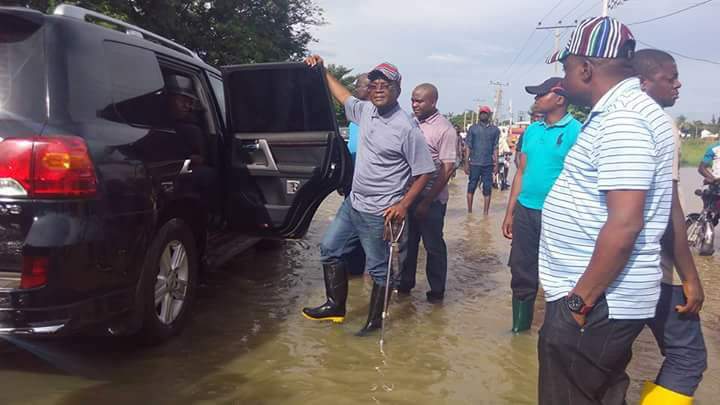
Makurdi flood
Governor Samuel Ortom of Benue State on a flood assessment tour of Makurdi

Asobo, the Chief Executive Officer, VIKTUWA Environment Managers Ltd., made the call on Monday, June 25, 2018 in an interview with the News Agency of Nigeria (NAN) in Makurdi, the Benue State capital.

He said that the proposed board should be directly responsible for the regulation and control of air, water and land pollution in the state.

Asobo said that the establishment of the board would aid efforts to contain the growing water and land pollution in the Wadata River bank as well as the Makurdi North Bank and High-Level areas, among other neighbourhoods across the state.

“It is necessary to create such a board because the outcome of the growing water and land pollution in those areas could be terrible.

“We have only one environment and if we don’t protect it; then, we are heading for doom,’’ he added.

Asobo said that the creation of a pollution control board was crucial to efforts to protect the environment, adding Kaduna and Lagos states, for instance, already had a similar agency in place.

“The board will be responsible for the control of air, water and land pollution. It will also take the responsibility of environmental pollution control off the sanitation agency.

“The work on the protection of the environment is beyond the capacity of the current agency, Benue State Environmental Sanitation Authority (BENSESA).

“This is a wakeup call for our policy makers,” he added.

Asobo said that whenever policies were strengthened, action plans would be drawn, while specific responsibilities would be attached to every action.

He underscored the need for the government and the private sector to work together in efforts to safeguard the environment from all forms of pollution.

He, however, urged government and other relevant stakeholders to initiate policies and programmes that could help to mitigate the impact of plastic pollution and other forms of pollution on the ecosystem.

The Third UN Environment Assembly in Nairobi, Kenya, in December 2017 noted that one in four of all deaths worldwide, or 12.6 million people, in a year could be attributed to environmental pollution.

By Bridget Ikyado

Lagos, PSP operators still at loggerheads over refuse evacuation

0

The Association of Waste Managers of Nigeria (AWAM) says conditions of operation in Lagos State have become unsuitable and undermining its members’ jobs.

waste managers
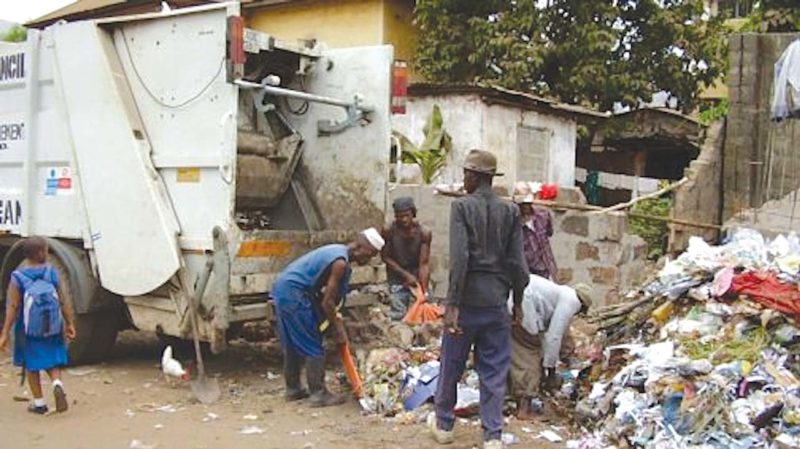
Lagos waste PSP operators at work

Chairman of AWAM, Mr Oladipo Egbeyemi, said on Sunday, June 24, 2018 that there was an effort to undermine AWAM members, popularly known as Private Sector Participation (PSP) operators, in waste management in the state.

Egbeyemi spoke with the News Agency of Nigeria (NAN) in Lagos.

He said that Mr Adebola Shabi, Special Adviser to the state Gov. Akinwunmi Ambode on Cleaner Lagos Initiative (CLI), instructed the residents not to pay PSP operators for refuse evacuation.

The AWAM chairman claimed that the development was meant to arm-twist PSP operators to work under Visionscape Sanitation Solutions, an environmental utility group contracted by the Lagos State Government to implement its new integrated waste management policy encapsulated in CLI.

According to Egbeyemi, the waste managers have invested much in waste management in the state, and need to recover their investment.

”A new compactor costs over N36 million and one of our members has brought five compactors to boost waste management in the state.

”If someone invested so much, how does he recover the investment?

”Engineer Adebola Shabi goes to local governments disseminating information that communities should desist from paying PSP operators.

”He said that the residents will be furnished with operators that will be handling their refuse, thereby trying to discountenance PSP operators in that environment,” the AWAM chairman claimed.

Egbeyemi said that the terms and conditions given to the waste managers were not viable.

According to him, PSP business will collapse with such conditions.

He said that waste management was capital intensive.

”Unless we are able to recoup the money we invested, we cannot continue in the business.

”Diesel price has gone up from N180 to N190 and now N250 per liter, and we can’t increase the price of our service.

”Nobody is ready to pay the amount given to him, let alone paying a higher rate. How will the business be profitable?” the chairman asked.

Reacting, Shabi said that there was no need for residents to continue to pay PSP operators since Visionscape was paying them.

The official said that the CLI team had been sensitising the residents on waste management.

According to him, PSP operators can have special arrangements with residents of organised estates so they can be paying them.

”But in areas where Visionscape and the operators have an agreement, Visionscape is the one that will pay PSP operators to evacuate waste free of charge.

”If the residents continue paying the operators, it means the operators are being paid double.

”We have resolved issues with the PSP operators such that some of them have been co-opted to work together with Visionscape,” he said.

According to Shabi,140 PSP operators had been certified by the state government.

“It is the remaining ones who don’t have compactor that don’t want to get certified.

”In the past, we had 350 operators but 140 have been certified by government,” he said.

By Florence Onuegbu

Ecologist advocates mitigation measures, proper planning to prevent flood

0

An Ecologist, Mr David Michael, has called for the adoption of effective mitigation measures and proper plans to prevent flooding in the country.

Flood-in-Lagos
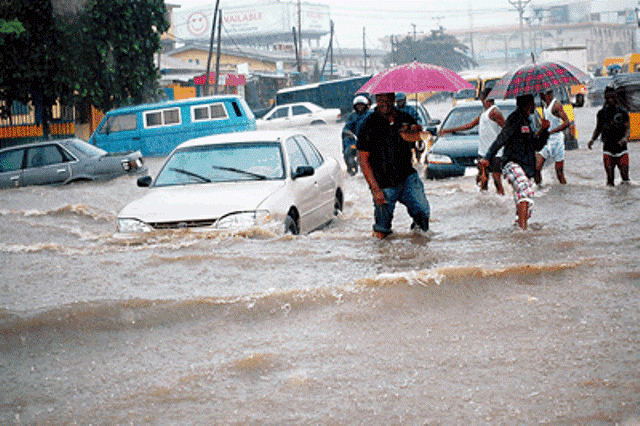
Flood in Lagos: The city of Lagos susceptible to flooding from rainfall

Michael, who is the Executive Director, Global Initiative for Food Security and Ecosystem Preservation, made the call in an interview with News Agency of Nigeria (NAN) in Abuja on Monday, June 25, 2018.

Michael noted that flooding could be controlled or prevented if there were improved drainage systems, as good drainage channels would ensure easy flow of excess water during and after rainfall.

He said that flooding could be prevented by constructing drainage and water canals, while also maintaining them.

“Flooding can be prevented in many ways but much more important is that while trying to prevent flooding, the first thing that should come to the mind should be the introduction of effective mitigation measures and proper plans.

“Flooding can be prevented through proper planning. Much of these measures should be taken in areas that are prone to flooding,’’ he added.

Michael also called for the integration of land and water management strategies so as to protect soils from erosion, salinization and other forms of degradation.

“There is need for protecting the vegetative cover, which can be a major instrument for soil conservation against wind and water erosion,’’ he said.

The ecologist underscored the need to integrate the use of land for grazing and farming where conditions were favourable, allowing for a more efficient cycling of nutrients within the agricultural systems.

Besides, Michael said that there was a need to apply a combination of traditional practices with locally acceptable and locally adapted land use technologies.

“We need to give local communities the capacity to prevent desertification and manage dry land resources effectively.

“Turning to alternative livelihoods which do not depend on traditional land uses, such as dry land aquaculture, greenhouse agriculture and tourism-related activities, is less demanding on local land and natural resources and yet, it provides sustainable income.

“There is need to create economic opportunities in dry land urban centres and in areas outside of dry lands,’’ he said.

He noted that even though flooding was a natural consequence of heavy rainfall, flooding could be aggravated by dumping of refuse into drainage channels.

He advised the people to desist from erecting buildings around watercourses because such structures could block the waterways during rainfall and thus, cause flooding.

By Deji Abdulwahab

Summit explores role of bamboo in achieving sustainable development

0

The Global Bamboo and Rattan Congress (BARC 2018) opened on Monday, June 25, 2018 at the China National Convention Centre in Beijing, China, welcoming around 1,200 participants, including 500 from other countries.

Bamboo
Bamboo

The three-day conference is expected to result in an outcome document on the role of bamboo and rattan in achieving sustainable development, especially with regard to the UN’s 2030 Agenda for Sustainable Development, as well as international development cooperation initiatives such as the Belt and Road Initiative.

Zhang Jianlong, Administrator, National Forestry and Grassland Administration (NFGA), conveyed a welcome message from Chinese Premier Li Keqiang, followed by video messages from Lenin Moreno, President, Ecuador, and Juan Manuel Santos, President, Colombia. There was also an address by Shitaye Minale, Deputy Speaker of the House, Ethiopia. Speakers highlighted their commitment to sustainable development and highlighted ongoing cooperation efforts on the use of bamboo and rattan in livelihoods, land restoration and mitigation of climate change.

Hans Friederich, Director-General, International Network for Bamboo and Rattan (INBAR), expressed appreciation to the Government of China for its role in organising the conference. Hao Mingjin, Standing Committee, China National People’s Congress, highlighted China’s readiness to promote and deepen South-South cooperation, support INBAR’s work, and cooperate with the international community to implement the 2030 Agenda for Sustainable Development.

Rubén Flores, Chair, INBAR Board of Trustees, presented Jiang Zehui, Chair, BARC organising committee, with a lifetime achievement award for her work in forest science, developing global standards for bamboo engineering, and enabling China’s support for INBAR and its establishment as an international organisation.

The opening day featured a ministerial summit, a plenary dialogue on South-South cooperation, and parallel sessions were convened around the venue, discussing experiences of bamboo and rattan-related cooperation among countries, public and private sectors, and industry and research actors.

BARC 2018 is jointly organised by INBAR, NFGA, and the International Centre for Bamboo and Rattan (ICBR), a research institute under the State Forestry and Grassland Administration of China. It is the first international, policy-focused conference on how bamboo and rattan can contribute toward achieving the Sustainable Development Goals (SDGs). The conference theme is “Enhancing South-South Cooperation for Green Development through Bamboo and Rattan’s Contribution to the SDGs”.

Americas urged to collaborate to tackle global challenges

0

Countries in North and South America have been urged to join hands to tackle cross-border and cross-cutting global issues that may be challenging to an individual nation.

Inter-American Institute for Global Change Research (IAI)
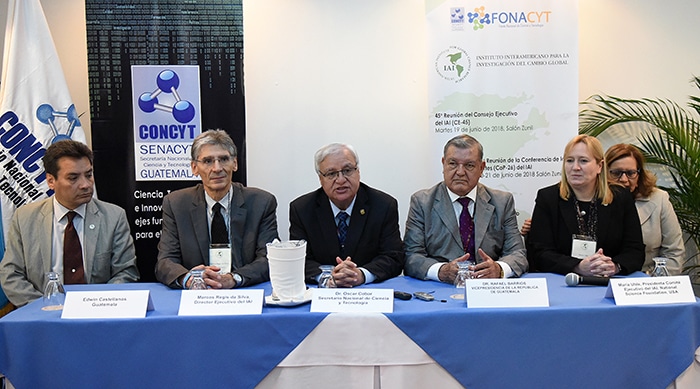
SAC Chair, Edwin Castellanos; IAI Executive Director, Marcos Regis da Silva; CoP Chair, Oscar Cobar; Rafael Barrios, Guatemala; and EC Chair, Maria Uhle, at a press conference during the IAI CoP-26

Executive Director, Inter-American Institute for Global Change Research (IAI), Marcos Regis da Silva, made the submission on Wednesday, June 20, 2018 during the opening of the 26th meeting of the Conference of the Parties (CoP-26) to the IAI in Antigua, Guatemala.

The IAI director emphasised the organisation’s efforts in providing transdisciplinary research with a regional framework that responds to the needs and priorities of Parties based on scientific knowledge.

While opening the CoP and welcoming delegates, CoP Chair and National Secretary for Science and Technology (SENACYT) in Guatemala, Oscar Cobar, stressed that scientific knowledge is the best resource for all countries in all regions to tackle the issues of global change.

Rafael Barrios, speaking on behalf of Guatemalan Vice-President Jafeth Cabrera, underlined the need for more and improved knowledge on climate change, highlighting the relevance of the IAI in this regard.

During the CoP, presentations were made on: Mayan science, culture and civilisation; Science-Policy Workshop recommendations; science and technology impact projects in Guatemala; and climate action in Guatemala.

The CoP adopted more than 30 decisions related to: financial and budgetary matters; a long-term communication strategy and plan; a 25th anniversary publication; the IAI Scientific Agenda; open data policy; and fundraising-related issues. The CoP also: retired the decision on the Tripartite Agreement; added three new IAI Associates, namely Rede Clima, Future Earth, and the American Association for the Advancement of Science (AAAS); elected new EC and SAC members; and accepted Ecuador’s offer to host CoP-27.

The CoP was preceded by the 45th meeting of the Executive Council (EC-45), a Science-Policy Workshop, and the joint meeting of the CoP’s advisory bodies: the Scientific Advisory Committee (SAC) and the Science-Policy Advisory Committee (SPAC).

SAC Chair, Edwin Castellanos, who is of the Universidad del Valle de Guatemala, presented outcomes and recommendations from the Science-Policy Workshop that was held on June 19. He underlined the importance for the CoP to have a better vision for the IAI’s direction in the coming years.

While discussing the work of the SAC and SPAC that was presented in the workshop, he highlighted work related to dry forest, nitrogen cycles and AGUASCAPES as examples of how the IAI promotes scientific research and links research to the national and international policy agendas.

Cobar described science and technology in the Guatemalan context, and outlined the ways in which financing is provided for research and science projects in his country. He noted that investment in science, technology and innovation (STI) represents only 0.029% of Guatemala’s GDP, the lowest in the region.

Cobar highlighted that: Guatemala is one of the few countries in the region with a constitutional article on science and technology; two laws have been passed to operationalise the article; and the budget exclusively for funding science and technology totals around $3 million annually. He called for: more student involvement in knowledge generation; building research skills; building a “knowledge society” based on STI; and more government investment in STI.

Speaking in his capacity as professor at the Universidad del Valle de Guatemala, Castellanos emphasised the need to accelerate national action towards reducing the impacts of climate change and bridging the gap between the current situation in Guatemala and what is required under the Paris Agreement.

He described the creation of the Guatemalan System of Climate Change Science (SGCCC), a national, multi-stakeholder science body on climate change, which: evaluates and generates scientific information on climate science, adaptation and mitigation; passes this information on to policymakers; and emphasises the importance of indigenous knowledge and traditional ways of life in Guatemala.

Tata Felix Sarazua, a representative from the Sotz’il, a Mayan indigenous community, presented actions on climate change, stating that Mayan science is “the energy” that fosters in-depth research and provides advice to their communities. He explained the concept of “cosmovision” in which Mayan science and technology combine ancestral knowledge, spirituality and epistemology obtained through observation and experimentation, and the formulation and verification of hypotheses.

Sarazua underscored the capacity of Mayan indigenous peoples to adapt to their environment as a result of their scientific knowledge, and that they, therefore, possess alternative solutions that can contribute to climate change adaptation. He underscored differences between Mayan and Western science and ways of accumulating and using knowledge, and called for a mixed approach using both sciences to tackle climate change.

Gap between consumers’ wish and companies’ act to respect biodiversity

0

New surveys of more than 5,000 consumers in five countries indicate that the majority (79 per cent) feel that “companies have a moral obligation” to have a positive impact on people and biodiversity in their sourcing of natural ingredients, but only 37 per cent feel “confident that companies pay serious attention” to these issues.

Rik Kutsch Lojenga
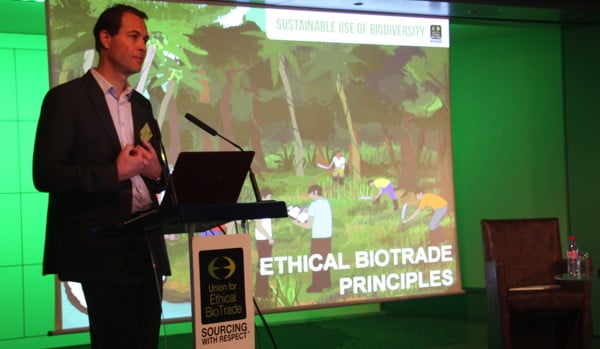
Rik Kutsch Lojenga, UEBT’s Executive Director

The non-profit Union for Ethical BioTrade (UEBT) published the 2018 edition of the Biodiversity Barometer on Wednesday, June 20, 2018. The report offers new insights as well as lessons from a decade of research on biodiversity awareness among over 60,000 consumers in sixteen countries.

The report was unveiled at the Beauty of Sourcing with Respect Conference, an annual event in Paris that brings together executives from global beauty brands, as well as company leaders from the natural pharmaceutical, specialty food, and personal care sectors, in addition to non-profit experts, policymakers and others.

One positive finding from Biodiversity Barometer is that awareness and understanding of biodiversity is rising each year.

Dr Cristiana Paşca Palmer, Executive Secretary of the UN Convention on Biological Diversity, said, “It is promising to see that consumers want action from business.   This trend shows the opportunity for businesses to embrace biodiversity at the core of their business models. The Biodiversity Barometer shows we are heading in the right direction to reach the global target of making people aware of the values of biodiversity and the steps they can take to conserve and use it sustainably. However, much more still needs to be done.”

New this year is the clear evidence that biodiversity awareness is becoming more mainstream, beyond the well-educated and higher income brackets: awareness among people in low income brackets grew 15 per cent points over the last 10 years. In addition, young consumers aged 16 to 24 who were able to define biodiversity correctly, grew 20 per cent points, compared to 10 per cent points growth in awareness across all those surveyed.

“Growing awareness, along with a clear disparity between what consumers want from brands, and how few brands they can actually name that are ‘walking the talk,’ shows an incredible opportunity for business to take concrete action to position their brands as leaders in sourcing with respect for biodiversity and people,” said Rik Kutsch Lojenga, UEBT’s Executive Director and a leading global expert on ethical sourcing.

The only brand that currently stands out among consumers on respect for people and biodiversity remains Natura Cosmetics in Brazil: 62 per cent of respondents mentioned Natura. Its sister brand, The Body Shop, was mentioned most often in the UK, but still with only 33 per cent recognition.   It must be noted that consumers might not be aware of the actions being taken to conserve and sustainably use biodiversity taken by other companies.

Respondents show a strong personal connection to biodiversity. Seventy-four per cent of those surveyed in the UEBT report agreed that it would “personally affect them” if biodiversity disappears. They find biodiversity conservation important for their personal well-being and that of future generations: more than 80 per cent of people in France, Germany and Brazil said that biodiversity is important to their quality of life.

The findings also show that people want to personally contribute to biodiversity conservation, although they don’t know how. Seventy-four per cent of respondents agree that buying products that respect biodiversity makes them “feel good.”

“This latest Biodiversity Barometer report is encouraging businesses to seize the opportunities offered by growing consumer awareness and contribute to a world in which people and biodiversity thrive,” said Dr Paşca Palmer.

Reconnecting to Mother Earth

0

Humans are rapidly losing a sense of being, of being human beings, of being just one of the beings among other beings on Planet Earth. Our inventiveness has radically changed our relationship with Nature and we give little thought to actions which severely disrupt the right of Mother Earth to maintain her cycles. This disruption of our intimate relations with nature comes at a price and the cost keeps mounting. The fact that something must be done to correct this has brought us together here.

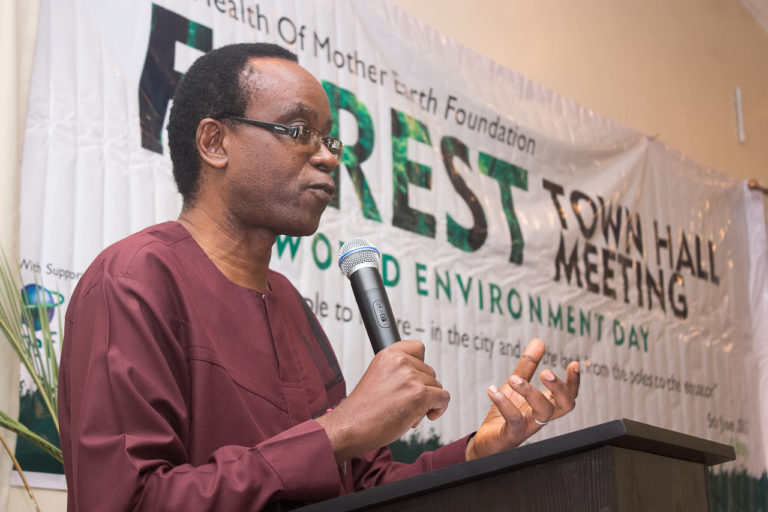
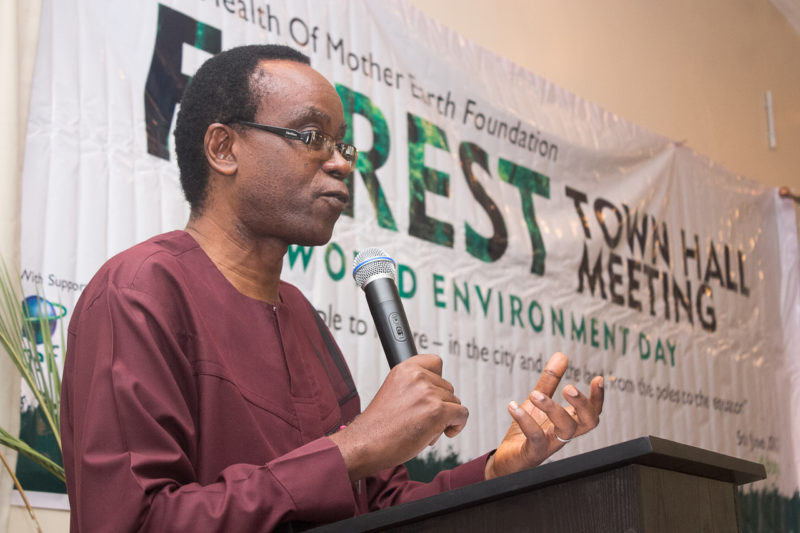
Nnimmo Bassey- Forest Town Hall
Nnimmo Bassey

This gathering presents us with an opportunity to remind ourselves of the brutal assault being unleashed on Earth defenders in parts of the world as they struggle to live in harmony with the Earth, defend their territories and resources and to live in dignity. It is hoped that in this gathering we will spare thoughts on the heroic struggles by brothers and sisters against the assault of extractive corporations bent on amputating the Earth through exploitative activities in mining, oil and gas. It is hoped that we will stand together to denounce corporations assaulting pollinators and soil organisms with agrotoxics and eroding biodiversity through genetic manipulations.

As we reflect on the assaults on the Nature and fashion ways to hold those that commit ecocide to account, we should also roundly condemn actions such as fracturing of the bones of the earth in search of shale gas and oil. We have already literally scrapped the bottom of the natural resource pot. It is time to pause and think. This is why we are here.

The maxim in today’s global political landscape appears to be that might is right. The rightness of that right may be contested, but the rise of unilateralism has rendered multilateralism almost cosmetic. The rise of prescriptive neo-liberalism couched in terms that suggest the respect of democratic ideals of liberty and fair competition has allowed an upsurge of military humanism in the world. The backdrop of this scenario has been appropriately captured as disaster capitalism – a situation where disasters are seen as opportunities to impose a pre-planned superstructure that inevitably denies powerless citizens of the world their rights. The whole idea is to hit the people so hard that they are pushed into a state of shock and while in that condition they are unable to react collectively or cogently to the harm being inflicted on them. Such disasters are increasingly man-made, although even natural disasters are equally exploited to dispossess the weak.

The path of current petroleum civilisation is strewn with blood and skeletons across the world. The recent situation in Nigeria is a glaring example. Many wars have been fought and nations destroyed over Natures gifts or resources. In 1999, as the first barrels of crude oil were shipped from Sudan, so did the war between government forces and those of the then Sudanese People’s Liberation Army escalate. While the bombs were still being dropped in Libya, oil was being exported. When Iraq was invaded and blown apart, the offices of the Petroleum Ministry were spared.

Everywhere there are conflicts and wars today we see the raw situation of war waged for profit and resource appropriation and control.[ii] If this scenario blossoms unchecked, what we experience today will end up being nothing more than a whimper.

There are also less openly explosive conflicts going on today in the world. The lack of climate action on the basis of justice and common but differentiated responsibilities show a tendency were more resilient nations care little about vulnerable ones, especially those set to go under the waves if sea levels continue to rise. We see the burden of climate action being placed on Nature rather than being tackled by checking human consumption appetite and polluting actions. Efforts are being made to label forests as carbon sinks and to displace forest dependent communities in order to secure the carbon stock in the trees or soils or rivers. Market environmentalism elevates ecosystem services as the new and monetized way to see Nature and our environment.

We cannot be silent over this posturing that permits business as usual and places the burden for this indulgence on the poor. We should denounce false climate solutions such as plans for seizing the planetary thermostat through geoengineering. We cannot close our eyes to extreme genetic engineering procedures (including gene editing) that are bound to have grave and irreversible intergenerational implications.

The commodification of Nature has done humans and other beings much harm. Our alienation from nature keeps us from seeing the intrinsic value of her gifts. The quest to appropriate, transform and accumulate resources has bred all manners of iniquitous social relations, oppressions and outright brigandage be they in the form of petty exploitation or outright neocolonialism and imperialism.

We are here on common grounds. We are firm ground. We care about Mother Earth and all beings, knowing that she is constantly fighting for our survival. Time is running out, and we shall not indulge in long talks, but spend time sharing on the way forward on the urgent matters impacting Mother Earth and our lives as individuals and collectives.

We cannot afford mindless conflicts and wars that we see in the world today. It is time to take difficult but essential actions including halting dependence on fossil fuels, stopping polluting activities and reducing consumption levels within planetary boundaries. Conflicts and harms are certain to intensify as the non-renewable re-sources run out and as habitable environment for the reproduction of renewable re-sources reduce.

Earth Trusteeship demands that we reconnect to our roots, to nature and remind ourselves that the Planet can do without humans and that our future can only be secured if we live in harmony with Mother Earth and in solidarity with one another.

This Earth Trusteeship gathering brings much hope. We may not agree on everything; we may not even have the same levels of intimacy with the Earth, but one thing is clear: we are gathered as children of the Earth. We are here on the common ground that we care about Mother Earth and all her children. We all realise that rapacious exploitation of the Planet cannot continue on the current trajectory except some clever guys can invent or have already invented and patented a Planet B. Together we can make a difference and get back on track aligned with Mother Earth.

By Nnimmo Bassey (Speaking outline at the Earth Trusteeship Gathering, The Hague, Netherlands, 22.06.2018)

Clean Games: Ogun residents sensitised to effective waste management

0

Residents of Sagamu in Ogun State have been, courtesy of the Clean Games, sensitised to proper and effective waste sorting, recycling and disposal.

Bolaji-Oyeleye
Ogun State Commissioner for Environment, Bolaji Oyeleye

The Clean Games Sagamu was organised by the Let’s do it Nigeria group in collaboration with Junior Chamber International (JCI) on Saturday, June 23, 2018.

The first Clean Games in Africa was held at Oja-Oba, Ekiti State, on May 5, by the group and the Sagamu Clean Games is the second edition of the concept of clean-up that started in Russia in 2014.

The Public Relations Manager of Let’s do it Nigeria, Mr Gafar Odubote, said the games was an opportunity to educate the residents and Nigerians on waste sorting, recycling and disposal.

“We adopted the Clean Games concept to bring solutions to waste management in a practical and fun way. It is one of the best ways to embark on waste management advocacy.

“The games would sensitise Nigerians on proper waste management and recycling, to sustain healthy environment nationwide.

“The Clean Games is a concept of cleaning the environment while educating the people on proper waste sorting, recycling and disposal,” he stated.

Odubote urged Nigerians to promote a sustainable environment culture as the game provided incentives to participants.

“The Sagamu Clean Games is simply a gamification of clean-up. The exercise took four hours while volunteers were grouped into teams. The competition involved collecting trash and sorting them accordingly.

“Points were allocated to the teams, based on waste collected. The teams get incentives and bonuses for getting their bags filled and also for sorting appropriately.’’

“Nigerians must have positive attitudes towards how to manage waste properly from home, encourage recycling while the government must implement enforceable regulations and infrastructures that will support the environment towards achieving a circular economy,’’ Odubote said.

On her part, Mrs Vivian Onije, the National Director, JCI Nigeria, said collaboration for a sustainable environment was most necessary.

“The Sagamu Clean Games is a product of collaboration between JCI Nigeria and the various environmental stakeholders in the country towards achieving the sustainable development goals (SDGs).

“The Clean Games Campaign has brought together various stakeholders in Nigeria to ensure our environment is clean and healthy through engagement and collaboration,” she said.

By Mercy Okhiade

Bauchi foundation embarks on tree planting to protect ecosystem

0

A non-governmental organisation (NGO) based in Bauchi State, the Natural Resources Conservation Foundation (NRCF), says it will embark on aggressive tree planting to protect ecosystem in the state.

Tree-Planter
Tree planting

Mr Ahmad Mai-Abba, the Chairman of the foundation, disclosed this on Saturday, June 23, 2018 while addressing newsmen in Bauchi, the state capital.

He said the foundation has resolved to plant the trees and embark on awareness campaign against indiscriminate dumping of refuse.

“The foundation has resolved to focus attention on two practical interventions in the areas of refuse collection, creation of drainage system among our communities and aggressive tree planting,” he said.

According to him, the recent destruction of properties in the state was the consequence of felling down trees and blockage of drainages.

“We resolve also to embark on massive awareness campaign on the negative activities of dumping of refuse in drainages and wanton felling of trees in forests,” he said.

Mai-Abba said the campaign would be conducted through active collaboration with private agencies and to be supplemented by the efforts of government.

He however flayed the attitude of some individuals towards disposal of waste and cutting of trees recklessly which has created artificial desertification.

He stressed that protection and conservation of natural resources was the responsibility of all, “hence the need for collective efforts towards safeguarding natural endowment from destruction’’.

On the recent windstorm and fire disasters recorded in the state, the chairman called on the state government to do everything possible to ensure the victims receive assistance.

By Mohammed Ahmed Kaigama