The Nasarawa State Government has offered the seven grazing reserves in the state to the Federal Government for its proposed ranching programme.
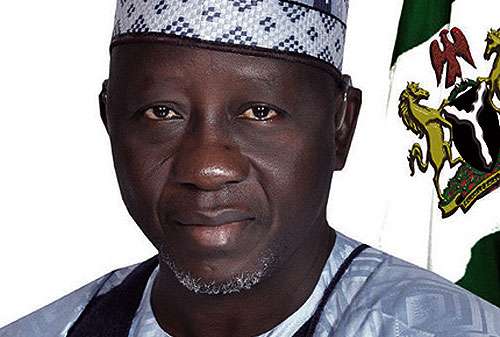
Governor of Nasarawa State, Umaru Tanko Al-makura
Alhaji Mohammed Abdullahi, the Secretary to the State Government announced the in a statement on Saturday, June 23, 2018 in Lafia, the state capital.
Abdullahi said the state government has keyed into the Federal Government ranching initiative aimed at finding sustainable solution to the recurrent farmers and herdsmen crises in the country.
“Governor Umaru Al-Makura has approved the utilisation of all the seven gazetted grazing reserves in the state, located at Awe, Keana, Doma, Assakio, Keana, Gitata and Kurudu for the purpose of the ranching programme in Nasarawa State.
“Consequently, the State Ministry of Agriculture, Ministry of Lands and Physical Planning, affected Local Government Councils and communities where these grazing reserves are located are not only requested to note this development, but also to accord all the necessary support and cooperation for the successful implementation of the programme in the state,” he said.
He said that Nasarawa State completely supported the Federal Government’s initiative and willing to provide all the necessary support for the success of the ranching programme.
“We see this initiative as an important proactive step towards assuaging and finding a lasting solution to the age-old challenge of farmer-herder conflict,” Abdullahi added.
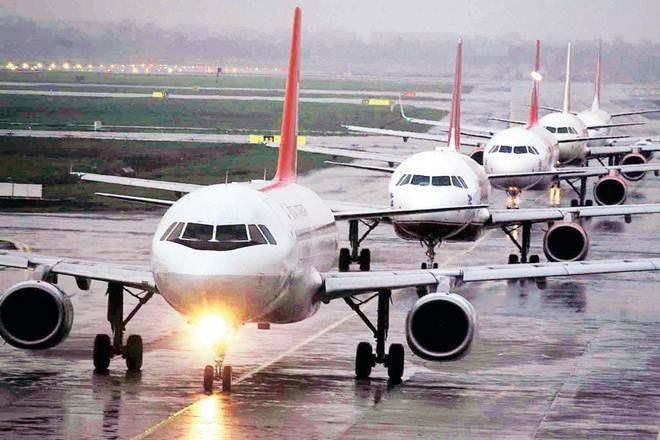
Against the backdrop of the theme of the 2018 World Environment Day (WED), the duo of the Nigerian Environmental Society (NES) and Federal Airports Authority of Nigeria (FAAN) has said that the aviation sector is the main area of note.
The aviation sector is said to be the biggest user of single-use plastic
The theme of the 2018 WED is: “Beat Plastic Pollution”.
At an event held in Lagos on June 5 to commemorate the WED, Dr Eugene Itua, Chairman, NES Mainland Chapter, explained that the aviation sector is the focus of the Day because, in commercial air travel, it is the biggest user of “single-use plastic”.
He said: “Have you ever found yourself silently cursing while battling to find the slightest bit of space available on your tray after having torn all the plastic wrapping of off everything from your individual tooth pick to your single bread loaf, before you can eat your meal?
“What happens to all those plastics? These wastes are often collected in bags.
“But at destination, are they sorted, recovered, reused, recycled? In number of cases of collection at destination, all these are unlikely.”
According to him, in today’s economy, the high cost of fuel and the push for lower ticket prices drive airlines to purchase aircraft that are as light as possible.
“With their light weight and resistance to high temperatures and corrosive materials, plastic materials are a great choice to replace components historically made of metal alloys or rubber. In the next decades, aircraft with plastic wings and tails are foreseeable,” he added.
He pointed out however that humans, flying or not, see the natural environment deteriorating, which has given the reason why man should “beat plastic pollution” before it destroys man.
“This forms the basis for this year’s World Environment Day Celebration. For NES and FAAN, our focus is the aviation sector which appears to be the biggest in single-use plastics.”
The Guild of Corporate Online Publishers (GOCOP) has expressed optimism that the newly launched Nigerian Media Code of Election Coverage (Revised Edition 2018) will to a large extent guide operators and separate trained journalists from those who suddenly found themselves reporting simply because they have access to a laptop or phone and data.
Guild of Corporate Online Publishers (GOCOP)
Dotun Oladipo, President of GOCOP, made this declaration on Friday, June 22, 2018 at the public launch and presentation of the Code during the ongoing International Press Institute Congress holding at the Transcorp Hilton Hotel, Abuja.
Oladipo said: “The Guild of Corporate Online Publishers is elated at this recent development in the Nigerian media space with the launch today of the Nigerian Media Code of Election Coverage.
“We have been a part of this as individual publications and as an association since the journey to review the Code began. We are proud to associate with this effort spearheaded by the International Press Centre, headed by our own Lanre Arogundade, and those who have supported the effort through funding and capacity building.
“For us, the Code represents what we believe in as an association, especially as it relates to election coverage.
“In coming together, the idea behind the formation of GOCOP was to serve as a peer review gathering of Online Publishers who have worked in the print for several years, with some of us rising to become Managing Directors/Editors-in-Chief, Title Editors and a minimum of Line Editors. Most of us also belong to the prestigious Editors’ Club in Nigeria, the Nigeria Guild of Editors.”
Oladipo said further that GOCOP is concerned with the upholding of journalism ethics, especially online, where, according to him, “ethics has been thrown away,” adding: “We pledge our support to this cause as we go on this journey to entrench the code.”
Speaking, the Director of International Press Centre, Lanre Arogundade, said the public launch and presentation of the Code “represents a strong statement that good election reporting matters to journalists and media institutions in Nigeria”.
Arogundade disclosed that the Code has been endorsed by six umbrella media professional groups: Newspapers Proprietors Association of Nigeria (NPAN); Broadcasting Organisation of Nigeria (BON); Nigerian Guild of Editors (NGE); Nigeria Union of Hours (NUJ); GOCOP; RATTAWU; 75 broadcast, print and online media; 15 media support groups; and two journalism training institutions – Nigeria Institute of Journalism and International Institute of Journalism.
Arogundade, therefore, enjoined all journalists and media organisations in Nigeria “to strive to read, digest, understand and implement the provisions of this Code”.
According to him, the ultimate goal is that through the credible reporting of the 2019 elections and the electoral processes before and after it, “we can all contribute to credible, free and fair and peaceful elections in the country”.
Arogundade thanked the European Union for supporting the production and dissemination of the Code.
In his presentation, the Chairman of the Independent National Electoral Commission, Prof. Mahmood Yakubu, said from their statistics, youths and women would play greater roles in the 2019 elections.
However, Yakubu assured that strategic plan has been put in place to ensure hitch free elections, noting that part of the plan was the release of election timetable in January 2018, a year ahead of the general elections billed for February 2019.
Yakubu reiterated that there will be no electronic voting in 2019, saying: “I want to assure you that the will of election voters will continue to prevail.”
He said no fewer than 85 media organisations have so far been accredited by INEC, adding that the 2019 elections will be the most widely covered in the history of election in Nigeria.
Speaking, EU Deputy Ambassador to Nigeria and ECOWAS, Richard Young, assured that the EU would continue to support process that is fair and transparent, saying it is important that the code of conduct has been put in place.
Young commended all the media organisations that partnered with International Press Centre to come up with the revised edition of the Code, noting that it would contribute to free, fair and transparent elections in 2019.
Present at the occasion were the creme de la creme of Nigerian media and their counterparts from across the world attending the IPI conference.
They included the owner of Channels Television, John Momoh; and the Chairman of NPAN and Publisher of THISDAY Newspaper, Nduka Obaigbena.
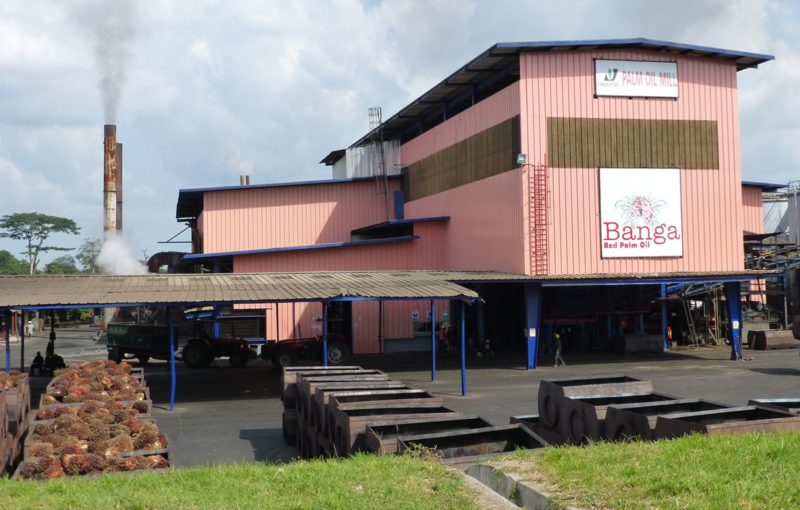
The management of Okomu Oil Palm Plc in Edo State says it is spending about N80 million on environmental and health safety initiatives for its staff and host communities in 2018.
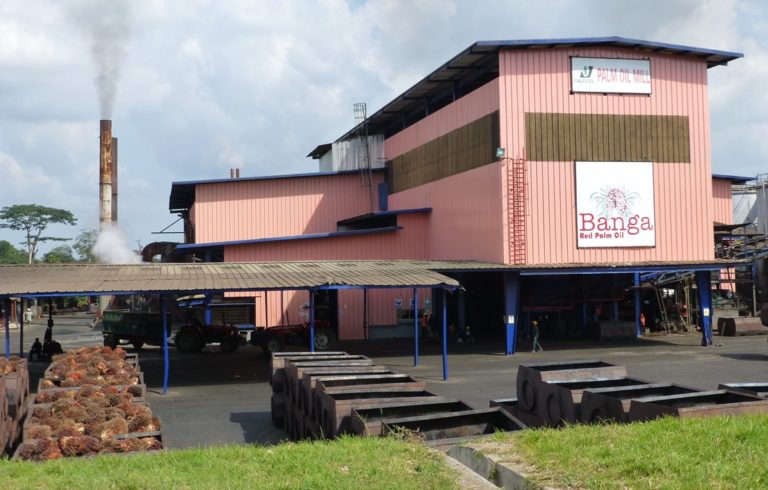
Okomu Oil Company Plc
This, the Managing Director of the company, Dr Graham Heifer, said is in line with international best practices.
Heifer spoke to the News Agency of Nigeria (NAN) on Friday on the side-lines of activities marking the company’s Health, Safety and Environment (HSE) Day.
NAN reports that the day was celebrated at the company’s corporate headquarters at Okomu in Udo, Ovia South West Local Government Area of Edo State.
Heifer said the company’s management, which had taken issues of HSE as a priority, was hopeful of getting the Round-table on Sustainable Palm Oil (RSPO) certification this year to meet global standards.
RSPO was established in 2004 with the objective of promoting the growth and use of sustainable oil palm products through credible global standards and engagement of stakeholders.
Heifer also said: “We will continue to focus our energy on environmental conservation, health, education and safety issues.
“This is to ensure that any negative impact on our staff, their families, communities, stakeholders and the surrounding biodiversity within our jurisdiction as result of our activities are mitigated and minimised.
“The company successfully completed all statutory environmental audits in 2017 without any state and federal sanctions and continues to pursue and maintain certifications by International Standards Organisation to ensure that stakeholders are guaranteed the highest standards possible.
“The company has designated more than 10 per cent of its total area as High Conservation Value (HCV) areas, a notable achievement in the area of conservation.
“In 2017, we spent N8.4 million on environmental impact assessments and audits.
“The company also spent N48 million on staff health, safety and welfare programmes, up from N35 million in 2016.
“This year, we hope to spend between N60 million and N80 million on HSE.”
The managing director further said that the company had invited independent auditors from internationally recognised NGOs who work closely with RSPO for independent assessment.
“The independent auditors have said we are good to go and all that is remaining is for us to book an appointment with an auditor from RSPO to do its order which we hope will take place in October.
“Once we are certified, we are then able to display the ISPO logo on our banner like the ISO certification.
“The certification will be pleasing to us as that will make Okomu Oil Plc the first Nigerian company to be so certified by RSPO,’’ he said.
Mr Benson Imasuen, the Edo State Chairman of the Agricultural and Allied Employees’ Union of Nigeria, commended the management of the company for its proactive measures, especially on HSE-related matters.
“It is wonderful to know what Okomu is doing with HSE to ensure safety of human beings and the environment.
“It’s one of the companies we know that is 100 per cent compliant with RSPO conditions.
“We as a union are confident that the company will get RSPO certification this year,’’ he said.
NAN reports that among those who attended the HSE Day were officials of the Labour, Employment and Environment Ministries as well as Okomu Zoological Park.
Dignitaries at the occasion also included the Iyase of Udo, Chief Patrick Igbinidu as well as leaders from the host communities of Ofunama, Inikorogha, Oke-Irhiue Odighe, Ekpan, Owan and Odiguetue.
NAN recalls that the company had on June 12 announced a N2.8 billion dividend after tax for shareholders.
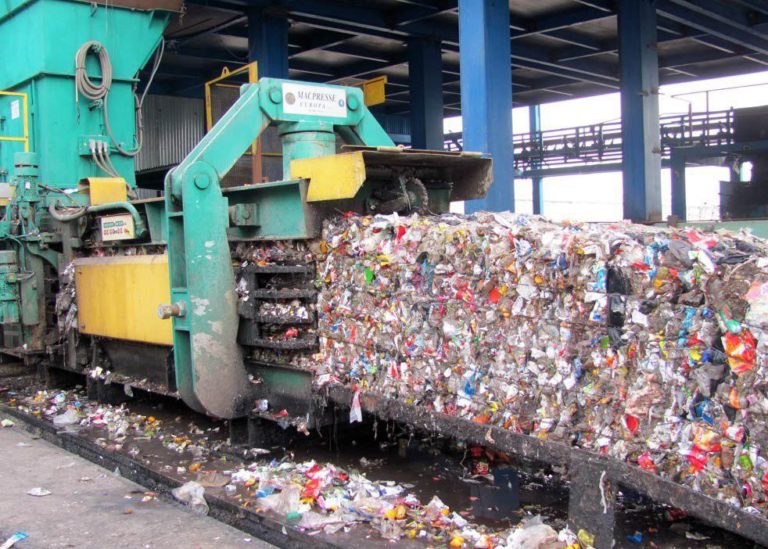
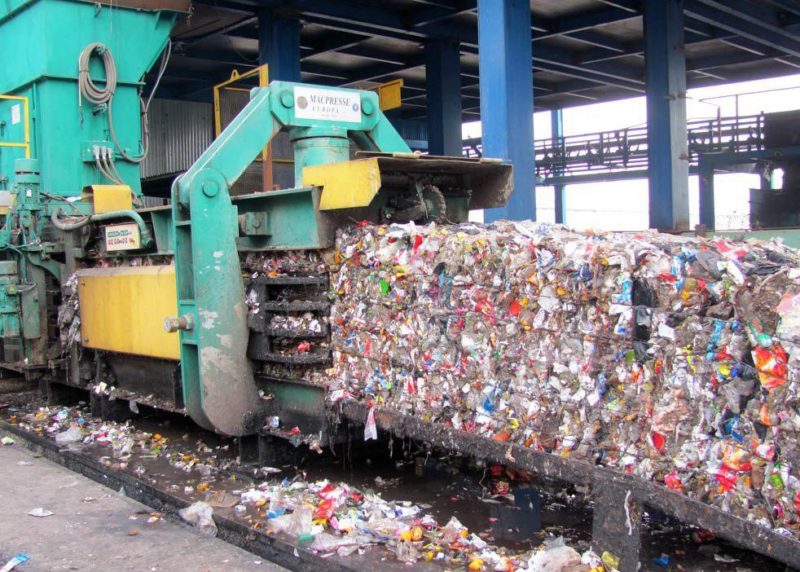
One of Nigeria’s leading environmental advocacy groups, #PickThatTrash, on Monday, June 18, 2018, used the public holiday as an occasion to lead a group of young people for an educational tour to two recycling plants in Abuja – Chanja Datti Recycling Limited and Environmental Expressions Limited.
Industrial waste recycling process
The aim of the educational tour was to bring the average young person closer to the realities of waste management and recycling process in Nigeria.
Welcoming the #TrashHaters to the Chanja Datti Recycling plant at Durumi axis of Area 1, Abuja, the CEO, Funto Boroffice, emphasised the global need to embrace recycling as a lifestyle. Ms. Boroffice also shared how her recycling business has consistently empowered thousands of Nigerian women and youths, since inception in 2015.
Mr. Habib Ahmad, the Managing Director of Environmental Expressions Limited, took the group through the company’s entire process of recycling. From the collection process to sorting, shredding, drying, melting into pellets, blowing into new nylons, cutting, packaging, and the cycle continues with a zero-waste system.
Responding to the government’s contribution towards recycling, Mr. Ahmad said: “The Nigerian government must put her mouth where her heart is. They must also create better funding options for start-ups and businesses in the recycling business.”
According to ‘Seyifunmi Adebote, the #PickThatTrash lead team in Abuja: “Many young people in Nigeria see ‘Recycling’ as a theoretical concept and more like a foreign thing – that is not for Nigerians. The purpose of this tour is to properly educate more young people on the dynamics of recycling in Nigeria and furthermore to position them to explore possible ways of keying into the waste value chain in Nigeria.”
In recent time, #PickThatTrash has come into the limelight in Nigeria’s environment space because of her active social media interactions. Furthermore, the group has also led numerous community activities which involve hundreds of volunteers across Nigeria towards achieving a mind-set change of cleanliness and environmental sanity.
This year’s theme for World Environment Day, “Beat Plastic Pollution”, set the tone for the numerous conversations and activities around ways to beat plastic pollution across the world. While some African countries have been applauded for placing a ban on single-use plastic, Nigeria, on her part, is yet to pace up and work out modalities for the operationalisation of such policy which undoubtedly will have grave effects on her copious population.
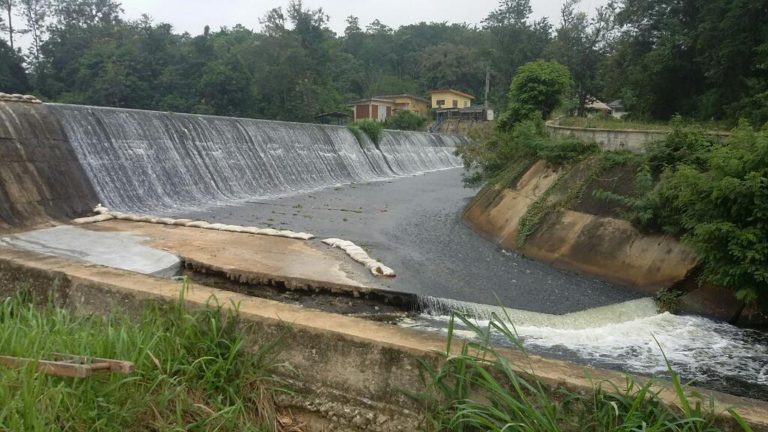
The Oyo State Government has concluded arrangements to dredge 64 streams and blocked drainage across the state as part of efforts to prevent flooding.
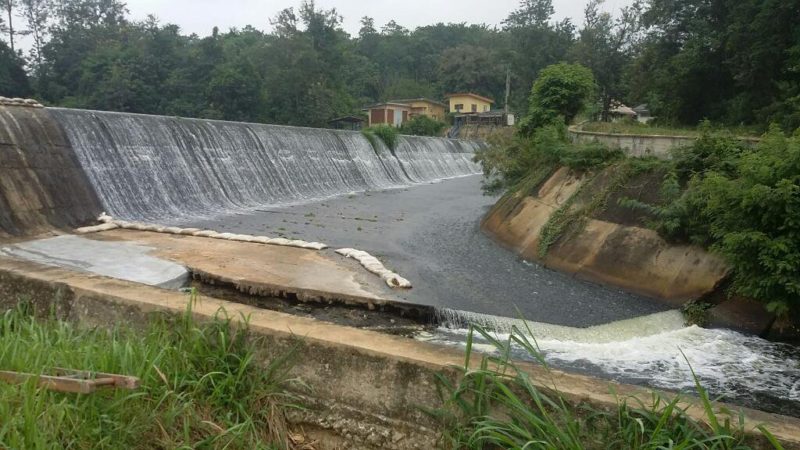
The Eleyele Dam is designed to mitigate flood in Ibadan
A statement signed by the State’s Commissioner for Environment and Water Resources, Chief Isaac Ishola, in Ibadan, the state capital, on Thursday, June 21, 2018 confirmed the government’s decision.
The News Agency of Nigeria (NAN) reports that the dredging is expected to be undertaken by the ministry in conjunction with the Ibadan Urban Flood Management Project (IUFMP).
Ishola stated that the Project Implementation Unit (PIU) safeguard team would be displaying Environmental and Social Management Plan (ESMP) for dredging of streams and clearing of blocked drains.
“The effort to be undertaken in line with the Safeguard requirement of IUFMP sub projects is to sensitise the general public on the social and environmental impact of the project,” he said.
He noted that the ESMP action would mitigate the negative impact of the project as stipulated by the guidelines of World Bank Projects.
The commissioner stated that there would be updates on Environment and Social Impact Assessment for Eleyele Dam rehabilitation to ensure the project matched best practices without any hazard to the society.
Ishola said that the 64 streams to be dredged were within the 11 Local Governments and their Local Council Development Areas (LCDAs) in Ibadan.
He assured that the dredging would begin immediately the disclosure and display of ESMP was completed.
He urged people to desist from dumping refuse into the rivers, streams and water channels.
The commissioner also warned that offenders would be treated in accordance with the provision of the environmental laws and regulations of the state.
Ishola said that government had taken steps to prevent flooding in the state, noting that citizens needed to complement government’s efforts by restraining from activities that could block waterways and drains.
He said that the government had continuously sensitised the public on environmental sanitation in addition to the expansion and dredging of some rivers in the state to ensure free flow of water.
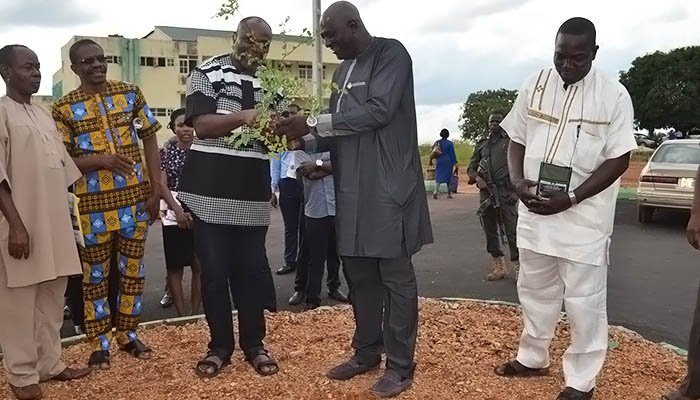
In support of the Campus-Green Initiative of the Alex Ekwueme Federal University Ndufu-Alike Ikwo, Ebonyi State, the Association of Nigerian Authors (ANA) led by the National President, Mallam Abdullahi Denja, has joined the Vice-Chancellor, Professor Chinedum Nwajiuba and other members of staff to plant trees in the university.
Vice-Chancellor, Professor Chinedum Nwajiuba, handing over a tree to the ANA National President, Mallam Abdullahi Denja, during the event
Members of the association were in the university for their 2018 Annual International Conference which the institution hosted to awaken the creative consciousness of Nigerians, especially that of the university staff and students.
Commending the Campus-green Initiative, Mallam Denja noted that he was awed by the serenity of the university, adding that the tree planting scheme would indeed make the institution more beautiful in time to come. He further thanked the Vice-Chancellor for his thoughtfulness and creativity in putting in place such a programme that, according to him, eventually turn the university to one of the best campuses in the country. He also expressed his happiness for the opportunity given him to plant a tree in the university, praying that it would grow to provide shades for future generation.
Also speaking during the event, the Secretary of the association, Dr. Ofonime Inyang, stated that the tree planting campaign was a symbol of everything good in the university in particular and the nation in general, adding that it was also a sign of a sustained partnership between ANA and the university. He further commended the infrastructural development going on in the university, stressing that the institution was blessed to have someone like Professor Nwajiuba as its Vice-Chancellor.
Five other members of the association also participated in the tree planting exercise; each expressing their delight in having the privilege of planting a tree in the university.
Earlier, while addressing the ANA members, the Vice-Chancellor shared his vision of having a green and beautiful campus that would be the cynosure of all eyes in Nigeria, adding that the initiative was also a way of giving back to the new and future generation what the society had given to the older generation. He decried the present situation where schools are built without trees unlike the schools the older generation attended while growing up that had fruit trees everywhere.
He further promised those that planted trees during the event that their names would be eked on it for future references and as a sign of honour to each of them.
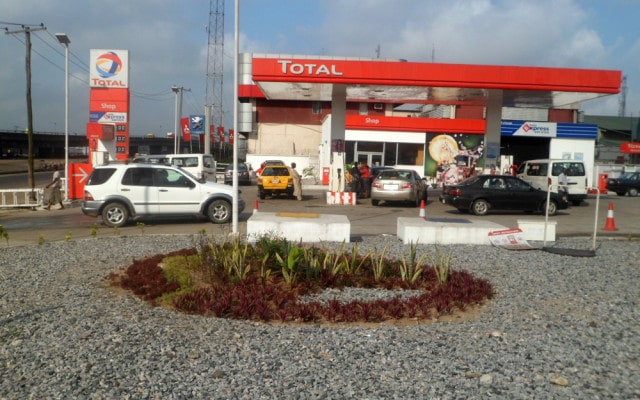
The Lagos State Government says it has sealed Total Filling Station in Akoka area over alleged pollution of water sources.
A Total Filling Station in Lagos
Commissioner for Environment, Mr Babatunde Durosinmi-Etti, said in a statement on Friday, June 22, 2018 that the filling station’s underground tank reportedly had leakage which polluted water sources in the community.
He said that the intervention of Lagos State Environmental Protection Agency (LASEPA) prompted the filling station to correct the leakage and stop further pollution of the environment.
“Going forward, we have directed that an Environmental Forensic Audit be carried out immediately to determine the exact source and extent of the pollution,” he said.
Durosinmi-Etti directed immediate closure of the filling station pending the outcome of the environmental forensic audit.
He said that government would not hesitate to take any meaningful measure to protect the health and well-being of the citizenry.
The commissioner called for the decommissioning of boreholes installed by Total as palliative for the affected residents.
He urged management of the Total Filling Station to liaise with the Lagos Water Corporation for the supply of pipe-borne water to the affected residents, while further findings on the pollution were ongoing.
Durosinmi-Etti said that LASEPA had been mandated to monitor and ensure the implementation of the directives given to the fuel station.
The Department of Agric Biotechnology of National Biotechnology Development Agency (NABDA), in collaboration with Mississippi State University, U.S., plans to adopt modern technology to enhance livestock production in Nigeria.
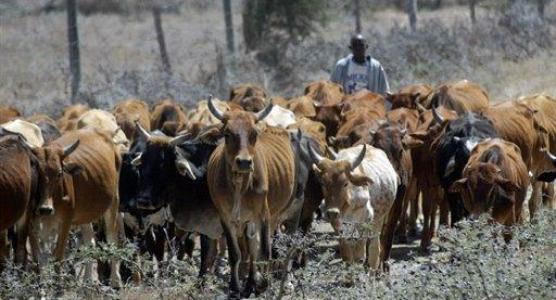
Livestock: Cattle rearing in Kenya
Dr Popoola Mustapha, the Chairman, Animal Genetic Resources Research (AGR) of NABDA, disclosed this when he led a team of farmers, headsmen and agric stakeholders on a field trip to Salbari Farm in Kuje Area Council of the Federal Capital Territory (FCT) on Friday, June 22, 2018.
Mustapha, who is also a reproductive biotechnologist, said that the process would be carried out through the application of Computer-Assisted Sperm Analyser (CASA).
This process, he said, would provide simple and rapid quantitative assessment of the quality of sperm and may predict the ability to fertilise eggs for quantity productions.
The chairman said that the country had in recent time lost some of its indigenous cattle to other regions in Africa through cross boundary movement to find feed which could result to the extinction of some of these species.
The biotechnologist explained that the only option was to adopt modern technology to revive the sector.
He said: “We have realised that due to trans-boundary movement of these animals to other regions to find feed, we as a country have lost some indigenous species.
“This is because from Nigeria to the Central Africa Republic, you will see pastoralists moving livestock and it has become difficult to identify some of the country’s species.
“In AGR, our interest is to look at the entire value chain of different livestock that we have in the country, those that we have been losing to movement across the border including the ones that had already vanished.
“As we speak, some of our indigenous cattle are found in the Lake Chad Basin region due to movement of animals without returning to the country.”
According to him, the introduction of the technology will go a long way to enhance the productivity of cattle and other animal species in the country.
He said NABDA as an agency had carefully observed that Nigeria was behind the global baseline in livestock production, adding that the situation could result to total extinction of some animals in the country.
Dr Jean Feugang, the Associate Research Professor, Animal Sciences, Mississippi State University, U.S., said Nigeria stood the chance of competing with other countries of the world with the adoption of biotechnology.
He said: “My mission to Nigeria as invited by NABDA is to see how we can collaborate to explore what the country has.
“We will also look at how we can implement some of the researches that I carried out in the U.S. to associate with what NABDA is doing in Nigeria to achieve what we want.
“We have strong collaboration to improve animal reproduction in the country because from what I have seen, there are a lot of challenges.
“We just want to know exactly where to start to have direct impact on the producers of the animals, find solutions to some of the animals that have gone on extinction
“I am very sure that with the things that I have seen in Nigeria, with the motivation that we have, and with the kind of farmers that we have, I am sure that the country’s productivity will be higher than what is on ground.”
Mr Yahaya Isah, the Chairman, Miyetti Allah Cattle Breeders Association, FCT chapter, described the innovation as a good one and urged the country to work toward it as the initiative would enlighten local farmers the more.
According to Isah, the country is far behind the initiative, adding that developed countries have
already keyed into it and have achieved greater results in productivity.
He said: “It is a very good innovation, it is what we should be working toward, it is something that will improve the quality and quantity of livestock production in Nigeria because it is so modelled.
“Although it will involve a lot of planning, a lot of strategies, a lot of stages are there and more so the fact that our cattle breeders in Nigeria today are still leaving in the ancient system of breeding.
“The country still believes in the ancient kinds of cattle we breed, we believe in quantity, not in quality.
“I believe the transition with which we plan to change this perception, change this belief and change the orientation of cattle breeders is enormous.”
Twenty-three nations have formally declared to step up their climate ambition.
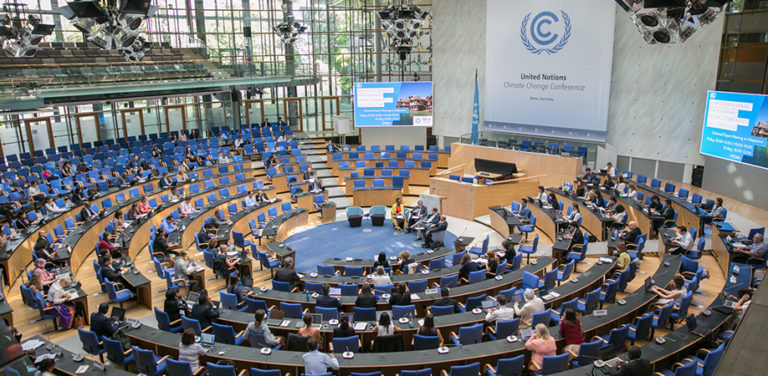
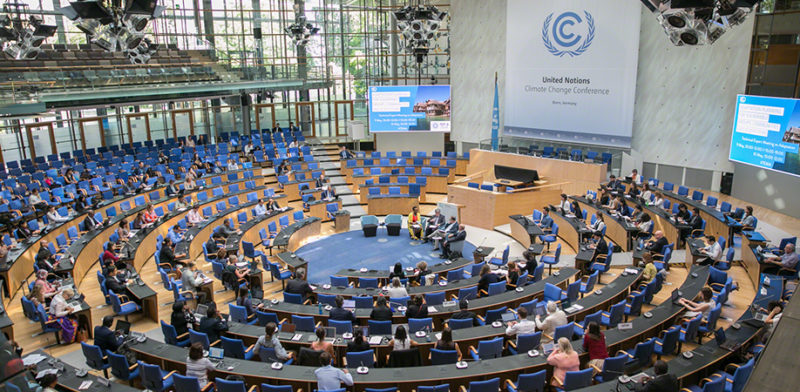
Climate action: A session during the Bonn conference in 2018
The declaration, issued on the sidelines of a week of ministerial meetings on climate change, is said to underscore the urgency for countries to enhance their Nationally Determined Contributions (NDCs) by 2020 in line with the Paris Agreement. The declaration, according to the Climate Action Network (CAN), also puts in place the necessary long-term strategies to reach net zero emissions; and secure the support and investment to ensure effective implementation.
Signatories to the declaration include Argentina, Britain, Canada, Chile, Colombia, Costa Rica, Denmark, Ethiopia, Fiji, Finland, France, Germany, Maldives, Marshall Islands, Mexico, Monaco, the Netherlands, New Zealand, Norway, Rwanda, Saint Lucia, Spain and Sweden.
Positive signals also came from the EU Commission, which announced it would be in a position to increase ambition.
CAN, a global network of over 1,200 non-governmental organisations (NGOs) working to promote government and individual action to limit human-induced climate change to ecologically sustainable levels, has welcomed the declaration, saying that countries now need to walk the talk.
“The International Panel on Climate Change (IPCC) Special Report on 1.5C due to be released in October is likely to confirm that limiting warming to 1.5C is feasible, but hard to achieve. This makes it essential and urgent for all countries to join these front-runners and step up to enhance their NDCs by 2020. The process requires adequate finance to flow to countries that need it to establish the necessary infrastructure for a green and carbon-free economy,” says the group.
It adds: “Around 200 nations collectively made a promise to their citizens in 2015 as part of the Paris Agreement to ratchet up their commitments and targets every five years. This declaration signals a step in the right direction, but many more countries should now similarly indicate they will fully implement the Paris Agreement and enhance their NDCs by 2020.
“These initiatives are important to drive both strong momentum for a positive conclusion of the Talanoa Dialogue and a strong outcome at the upcoming UN talks in Katowice, Poland. 2018 is a very important year to trigger the process of NDC revision by all countries. The political phase of the Talanoa Dialogue needs to result in a strong and universal decision as the first stock-taking exercise of countries’ efforts since Paris was agreed in 2015.
“Indeed the 2019 United Nations Secretary-General Climate Summit is an important milestone but all countries need to commit as early as December 2018 at the UN talks to prepare the ground nationally for raised and updated NDCs by 2020. The countdown has started and if countries start reviewing their NDCs right after COP24, that still only leaves one year to complete the process; that time is needed for multi-stakeholder engagement to build comprehensive and inclusive NDCs involving all actors of society. Governments will only succeed if people are on board.”
Stakeholders have equally welcomed the declaration, even as they called on other countries to join the fray.
Fernanda Carvalho, Climate and Energy Policy Manager, WWF International: “WWF strongly welcomes the step taken by the 23 countries that have signed the declaration but, with the window of opportunity to keep global warming to 1.5°C fast closing, we also need others to act fast. We need rapid and deep cuts to global gas emissions and, as state and non-state actors step up, we urge other countries to enhance and revise their NDCs by 2020.”
David Waskow, International Climate Director, World Resources Institute: “This declaration shows that countries understand the urgency of climate action and are actively looking into making bolder commitments. This is exactly the sort of leadership that we need ahead of the UN climate talks in Poland this December.
“While the IPCC’s Special Report on 1.5 C will be released in several months, the latest climate science already shows that the risks of inaction are dire and every fraction of a degree matters. 2018 is the year for governments to step up and commit to enhancing their national climate commitments, with actions such as greater investments in renewable energy, protecting forests and reducing energy waste.”
Wael Hmaidan, CAN Executive Director: “It is great to see these 23 governments joining the global call to step up climate action. The transition to 100% renewable energy is an economic opportunity for growth and job creation. Now, we need to see if the remaining countries are able to step up their climate ambition and enhance their targets as well by the next climate talks in Poland.”
Wendel Trio, Director, CAN Europe: “This declaration comes at the right time and is a much needed call to scale up climate action from incremental to transformational. It proves that a growing number of countries, including from Europe, recognise that more action is needed if we are to keep the objectives of the Paris Agreement within reach. European countries need to make sure that by the UN Secretary-General Summit in 2019 they are ready to present a new 2030 climate target in line with the commitment to limit temperature rise to 1.5°C.”