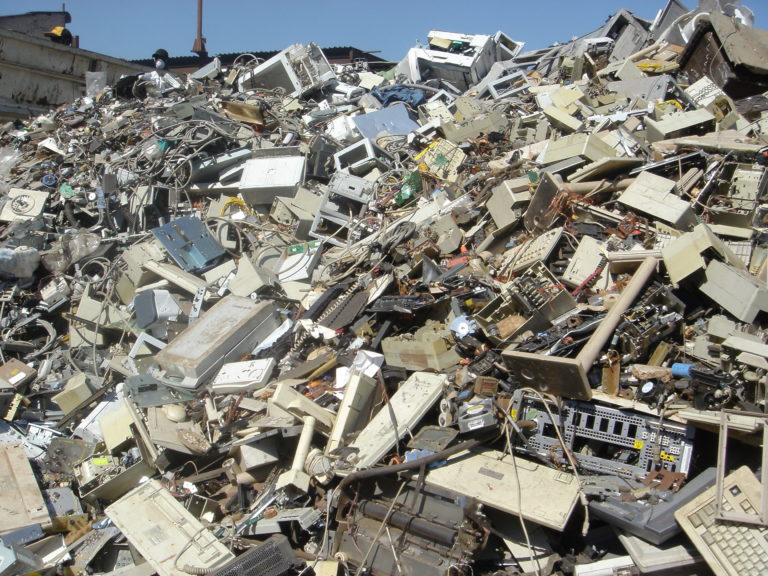
The E-Waste Relief Foundation, a non-governmental organisation (NGO), has canvassed for greater advocacy on the dangers posed by electronic waste to the environment .
E-waste
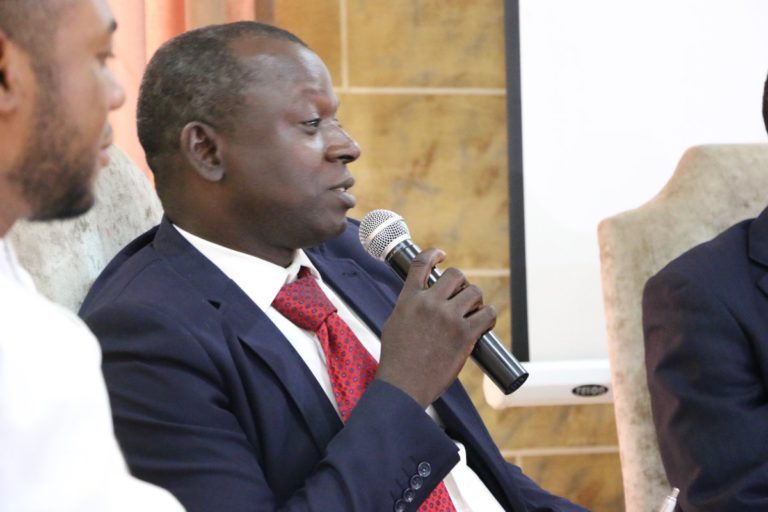
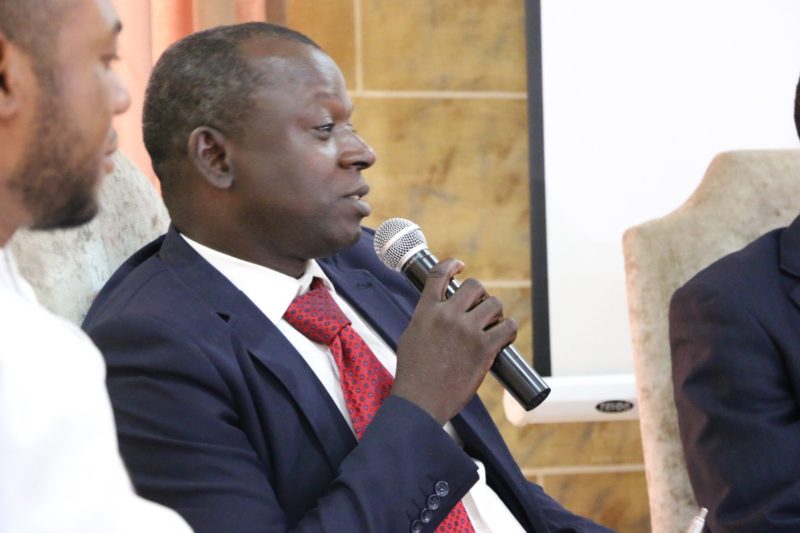
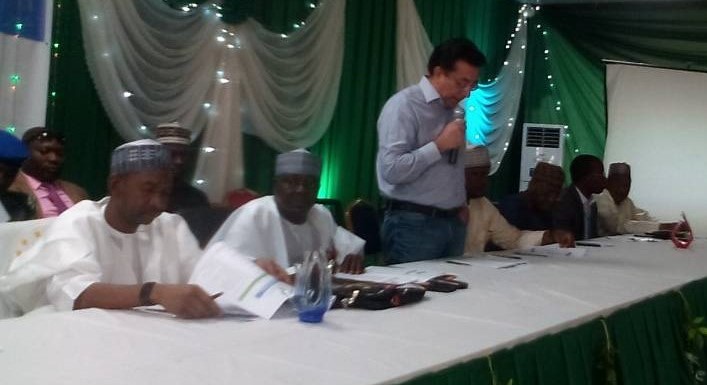
President of the Foundation, Mr Ifeanyi Ochonogor, who made the call at the inaugural meeting of the organisation‘s Board of Trustees (BoT) on Wednesday, March 7, 2018 in Lagos, warned that the threat of e-waste to the environment must be tackled urgently.
Ochonogor said that the foundation was conceived with the objective of ensuring safe disposal of electronic waste in Nigeria and the West Africa sub-region.
“Nigeria alone generates about 1.1 million tonnes of e-waste annually.
“ Therefore, it is only through sensitising the people and training the informal handlers of e-waste on standards of operation that Nigeria can successfully tackle the issue.
“There is a great need for a foundation driven by passion to aid in solving the e-waste problems within the country and beyond.
“We are charged with the task of educating people on the dangers of improper e-waste management as well as enlightening them on the right solutions that are available to stop the crisis at hand.
“It is in making people understand the threat we face that they saw reasons to join us in the process of putting an end to the e-waste challenges that beset us,” Ochonogor said.
Ochonogor said that a recent report published by the United Nations forecasts that global electronic waste would likely increase to 50 million metric tonnes in 2018.
Ahead of and during the upcoming UN Climate Change Conference in Bonn, Germany, in May 2018, youth from all over the world will be able to raise their voices and play an active role in helping to raise ambition to tackle climate change.
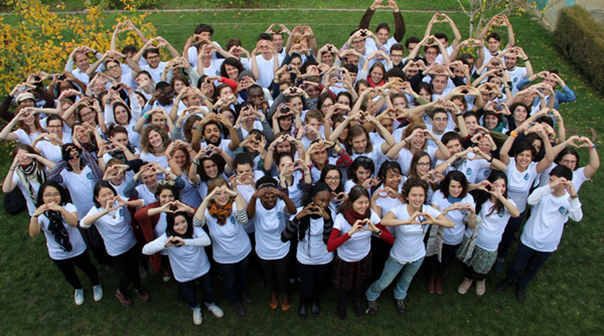
Participants of the Conference of Youth COY 11 in Paris. COY 12 focused on the role of education and capacity building in empowering young people to take action on climate change and to bring about positive change in society
Youth from all over the world are invited to participate in the Action for Climate Empowerment Youth Forum, taking place on April 29, in Bonn, Germany. Youth from developing countries that are seeking funding for participation have been enjoined by the UN to apply for a scholarship now.
The aim of the Forum, say the organisers, is to effectively engage young people in negotiations on Action for Climate Empowerment (ACE), which focuses on education, training, public awareness, public participation, public access to information and international cooperation. Additionally, the outputs of the event will be presented during a special ACE Workshop which will coincide with the negotiations at the Bonn Climate Change Conference, holding from April 30 to May 10, 2018).
Out of the hundreds of expected participants for the Forum, about 40 young people from the countries of the Global South will receive ACE Youth Forum Scholarships, which include complete funding and support for participation in the event. Applications for the scholarships can be submitted by March 12 by via the official website.
“In every corner of the globe, governments, cities, the private sector and civil society are framing that future around three crucial questions – Where are we? Where do we want to go? And How Will We get There?” says Patricia Espinosa, Executive Secretary of UN Climate Change (UNFCCC).
“The Youth Forum, the brainchild of the COP23 Fijian Presidency, is youth’s opportunity to provide their unique vision for answering these questions. In doing so, they can help be architects of the next phase of the Paris Agreement as nations look to get further and faster on track to a climate safe century,” she added.
Youth is already leading concrete action on how to tackle climate change. Two young climate activists from India and Morocco, for example, were selected last year as the winners of the 3rd edition of the Global Youth Video Competition.
Adarsh Prathap, from India, was the winner for the category “Oceans and climate change”, with the video “Let mangroves recover”, which underlines the importance of mangroves and shows how their conservation can save thousands of lives.
Younes Lamsaoui, from Morocco, won the category “Climate friendly and resilient cities”, with the production “Turning green”. The video highlights how Marrakech, or the “red city”, is responding to the challenges of climate change and how she is contributing to this transition.
Participants of the ACE Youth Forum will also have the opportunity to share stories of their climate action experiences, exchange best practices and lessons learned relating to the components of ACE, in addition to developing creative and effective ACE-related climate actions.
The ACE Youth Forum is an initiative of the Presidency of the 23rd UN Climate Change Conference (COP23) and YOUNGO (the official youth constituency to UN Climate Change), in partnership with the Government of Canada, United Nations Development Programme (UNDP) and UN Climate Change.
Climate Scorecard on Wednesday, March 7, 2018 launched the Global Spotlight Project aimed at helping the Paris Agreement achieve its important goals.
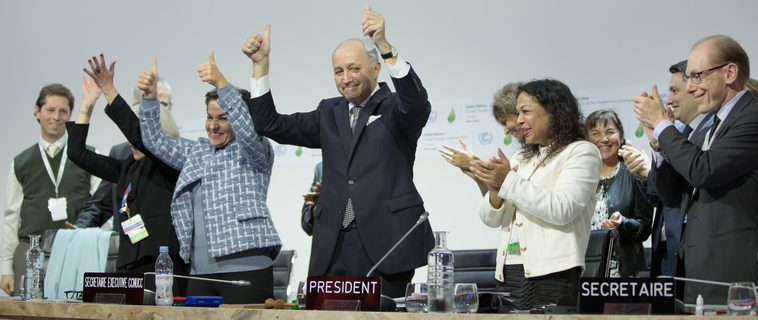
Jubilation greeted the adoption of the Paris Agreement in December 2015 in Paris, France. Photo credit: unfccc.int
According to Climate Scorecard Co- Founders, Ron Israel or Lois Barber, the campaign is launched against the background of recent scientific studies that suggest that existing country pledges to the Paris Agreement are insufficient to prevent the planet from exceeding the 2 degree Celsius global warming tipping point.
They pointed out that the Global Spotlight Project supports citizen and organisational-based efforts to advocate that countries fully comply with and strengthen their Paris Agreement pledges.
“The campaign provides citizens around the world with monthly News Briefs and Action Alert messages about what countries are or are not doing to further their commitment to the Paris Agreement. The Global Spotlight Project seeks to form a global alliance of civil society, business, and policy research organisations, working together to persuade leading greenhouse gas emitting countries to strengthen their Paris Agreement pledges,” Israel and Barber noted.
In conjunction with the Global Spotlight Project, a new Climate Scorecard website is now live. The site is designed to engage citizens around the world in advocating for countries to increase their compliance with Paris Agreement goals and objectives.
“If we want to prevent climate change from causing irreparable damage to our planet, all countries must fully implement and strengthen their nationally determined contributions pledges to the Paris Agreement,” said Israel and Barber.
The Paris Agreement’s aim is to strengthen the global response to the threat of climate change by keeping a global temperature rise this century well below 2 degrees Celsius above pre-industrial levels and to pursue efforts to limit the temperature increase even further to 1.5 degrees Celsius.
The Paris Agreement entered into force on November 4, 2016.
Pressure appears to be mounting on the Lagos State Government over its newly introduced Land Use Charge Law, in respect of which charges therein are said to be on the high side and are being contested by certain quarters.
Governor Akinwunmi Ambode of Lagos State
State governor, Akinwunmi Ambode, has been defending the charges, saying however that government is ready to dialogue on the matter.
On Tuesday, March 6, 2018, the Manufacturers Association of Nigeria (MAN) appealed to the Lagos government to reverse its current increment of land use charges to ensure the survival of the manufacturing sector.
Dr Frank Jacobs, MAN President, made the plea in an interview with the News Agency of Nigeria (NAN) in Lagos.
Jacobs said that the sudden rise in the land use charges in the state could lead to the collapse of the already burdened manufacturing sector.
The Lagos State Government had recently repealed its 2001 Land Use Charge Law and replaced it with a new Land Use Charge Law, 2018 to increase its internally generated revenue and continue to expand its tax base.
The state government had explained that the recent increase in the land use charge would provide more resources to the state to provide social services and infrastructure to the benefit of the general public.
It also extended the period for the payment of all annual Land Use Charge (LUC) Demand Notices for 2018, to Saturday, April 14, 2018.
This, it said, is to enable property owners and affected occupiers to take the option of enjoying the discounts available for the prompt and early payment of LUC invoices.
However, controversy had trailed the review of the land use charge as the Organised Private Sector (OPS) rejected the newly passed LUC Law, vowing to fight the law with every legal means at its disposal.
Jacobs said that the state government ought to have consulted widely before considering the implementation of the new charges law.
“The stakeholders in the manufacturing sector were not carried along adequately before the execution of the policy as the sector is already contending with a lot of challenges.
“One of the challenges of this policy is that, if allowed to stand, other states in the country will soon begin their own increment of the land use charges,’’ he said.
The MAN president said that the increase, if not reversed, would also make the cost of finished commodity to be too exorbitant for Lagosians to afford.
“The new charges can make our locally produced commodities to be too expensive compare to imported products.
“The new charge negates the Federal Government’s initiatives for the spread of locally manufacturing companies in the country,’’ he said.
But Governor Ambode has offered reasons for the reviewed charges, saying that Lagosians need to make sacrifices in the light of the level and cost of infrastructure being provided by government.
His words: “So, somebody comes and say we have increased by 400%. The question is the 400% of what? You were paying N10,000 before, now we say you should pay N50,000 and you are calculating and turning statistics upside down by saying it is 400%.”
He explained that while the revised Land Use Charge Law requires owner-occupiers to pay “just” 0.076 per cent, pensioners, churches, mosques, non-governmental organisations and government institutions are exempted from payment.
Ambode added: “The law was made in 2001. It provides that, every five years, we should review it and also find a way to increase. Fifteen years after in 2017, the law has never been reviewed. Now, the question is this: those who are having commercial properties, the rental income they were getting in 2002 as against the rental income they are getting in 2017, is it the same? The level of infrastructure that existed in 2002 as against what has happened in the last 15 years, are they the same? Did it not come at a cost?
“So, why is the market value of the property that you built with N1 million, 15 years after, you are selling at N20 million? Why do you think somebody who is a buyer will pay N20 million for it? Is it not because of the facilities around the property? So, we have to sacrifice; that is how it works everywhere.”
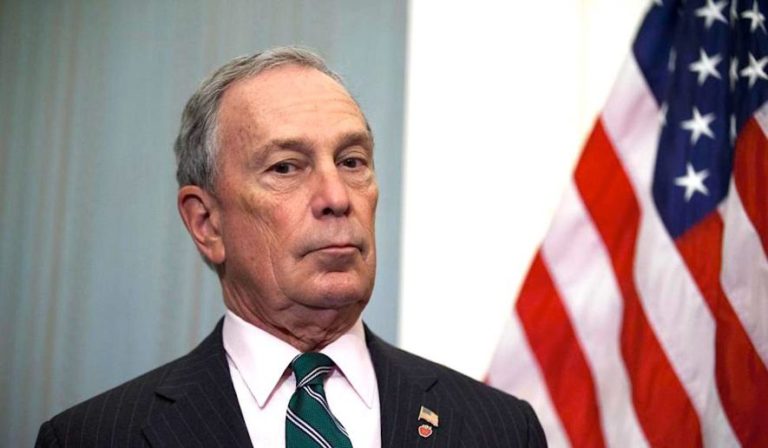
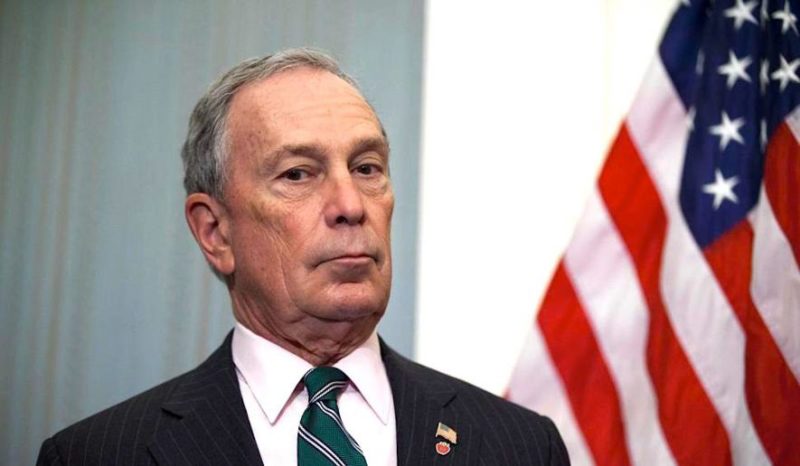
United Nations Secretary-General, António Guterres, on Monday, March 5, 2018 announced the appointment of Michael R. Bloomberg of the United States as his Special Envoy for Climate Action.
Michael Bloomberg
Mr. Bloomberg will support the Secretary-General’s climate strategy and efforts toward the planned 2019 Climate Summit at the UN Headquarters, says Guterres’ office, adding that the 2019 Climate Summit will mobilise stronger and more ambitious action towards 2020 climate targets.
The Special Envoy will leverage efforts in key areas of the Climate Summit to encourage rapid and enhanced implementation of the Paris Agreement in the context of sustainable development.
The Secretary-General will be engaging and inviting leaders from governments, businesses, finance and civil society organisations with a view to bending the emissions curve by 2020 and accelerating the implementation of the Paris Agreement. The Secretary-General and Mr. Bloomberg, the UN says, share the perspective that the emissions gap needs to be closed soon to limit global temperature increase to below 2 degrees Celsius. Climate Action, including those by cities and sub-national actors, play an essential role in driving ambition on climate change, it adds.
Mr. Bloomberg, alongside Governor Jerry Brown of California State, also launched the America’s Pledge initiative, which will aggregate and quantify the actions of states, cities and businesses and other non-national actors in the United States to drive down their greenhouse gas emissions, consistent with the goals of the Paris Agreement.
Mr. Bloomberg served as the 108th Mayor of the City of New York from 2002 to 2013. He began his career in 1966 at Salomon Brothers, and launched the financial news and information company Bloomberg LP in 1981. In 2007, Mayor Bloomberg addressed the United Nations Framework Convention on Climate Change (UNFCCC) in Bali, Indonesia.
He was appointed as UN Special Envoy on Cities and Climate Change on January 31, 2014 by the then Secretary-General, Ban Ki-Moon. In December 2015, Mr. Bloomberg was appointed by the Chair of the Financial Stability Board (FSB) Task Force on Climate-related Financial Disclosures (TCFD). The Task Force – which has finished its work – has developed voluntary, climate-related financial disclosures for use by companies in providing information to lenders, insurers, investors and other stakeholders.
On Monday, Bloomberg said he hoped Trump would change his mind.
“And if that’s the case, that shows a great leader who, when facts change, and they recognise something different, they’re not bound to what they did before, they’re willing to change,” he said.
“And its fair to say this president does change his views – generally it’s one day to the next, but over a longer period of time.”
Gueterres said: “Very little depends today in relation to climate change, on central government.
“The world has those that follow and those that lead. And those that lead, some lead in the wrong direction and some lead in the right direction.
“Mr. Bloomberg is of those that lead and have always led in the right direction and it is an enormous privilege for me to be able to work closely with you.”
Academic and environmental expert, Prof. Haruna Ayuba, has proposed evaporation suppression as an alternative technique of restoring Lake Chad to save it from extinction.
Prof. Haruna Ayuba
Ayuba, who teaches at the Nasarawa State University, Keffi (NSUK), made the proposal in an interview with News Agency of Nigeria (NAN) in Abuja on Tuesday, March 6, 2018.
He said that water transfer was the first option in restoring the lake, adding that this would require the movement of water from another river.
‘‘Suppressing evaporation can also help in the restoration of Lake Chad. We live in the tropics and we receive much water from rainfall.
‘‘The water disappears through evaporation; we can suppress the evaporation which is the amount of moisture that goes up into the atmosphere.
‘‘Part of the reasons for the drying up of Lake Chad is the high rate of evaporation of water,” he opined.
The don said that there was need to create more awareness through stakeholders on how to devise measures to save the shrinking of the lake.
‘‘Climate change is a developmental issue, every hand must be on deck.
‘‘We need to build capacity, tell people the signs of climate change, because some people don’t understand that.
‘‘We need all the experts, stakeholders to develop a policy framework that people need to follow,” he said.
Similarly, he said that science and technology, if properly utilised by indigenous scientists, could ameliorate the challenges of restoring the lake.
According to him, development of science and technology in the country is still laid-back, adding that there is lack of a strategic plan to build the sector.
He decried lack of equipment in tertiary institutions for the study of science-related courses, adding that it remained the bedrock of technology development.
Ayuba noted that polytechnics in the country, which were established to drive the technology sector, had been allegedly disregarded.
‘‘We have also killed our polytechnics; the polytechnics are supposed to help in building the technical manpower in the country.
‘‘Now, the emphasis is on paper qualification, even those who graduate from polytechnics are coming to take degrees all over again,” he said.
He stressed the need for the nation to lay serious emphasis on practical application of acquired knowledge as against the present craze for paper qualifications.
NAN reports that Lake Chad Basin’s 25,000 square kilometres size in the 1960s had shrunk to 2,500 square kilometres in 2000.
The Federal Government is set to launch a National Water Sanitation and Hygiene (WASH) fund to address the challenges of poor hygiene in the country.
Participants at the event
The Minister of Water Resources, Mr Suleiman Adamu, disclosed this at the opening of the 6th National Conference on Community-Led Total Sanitation (CLTS) Conference in Bauchi on Tuesday, March 6, 2018.
Adamu, who was represented by the Permanent Secretary, Dr Musa Ibrahim, said the ministry was also working to inaugurate a presidential campaign to eliminate open defecation practice in the country.
He noted that over the years, significant progress had been achieved in the provision of safe water supply while the sanitation component was still on the decline.
The minister said that optimal benefit from the provision of water supply could be obtained without the complementing efforts of promotion of sanitation and hygiene practices.
“The ministry is proposing to set up a National WASH Fund slated to take-off by the middle of the year which interested states can access in improving their institutions and infrastructures.
“Plans are also on to launch a national campaign to eliminate open defecation; all these efforts are intended to accelerate the achievement of the Sustainable Development Goals on water and sanitation by 2030.”
Adamu said it was the Federal Government’s desire to see that every state government demonstrated the same political will towards improving the WASH situation of their citizens.
He said doing this lead to reduction in water and sanitation morbidity and mortality, especially among under-five children, and the overall goal of improving the well-being of the society.
The minister commended the National Task Group on Sanitation and other development partners for their role in scaling up efforts to WASH, adding that this was evident with the success recorded in Local Government Areas in Bauchi and Cross River states.
Also speaking, Bauchi State Deputy Gov., Nuhu Gidado, applauded the Federal Government`s efforts in the fight against open defecation and promoting hygiene practices.
He said that the state government was working with development partners to evolve innovative approaches to sustain progress recorded in the water and sanitation sector.
Gidado said these efforts were obvious with the provision of Solar-powered lights to all boarding schools.
He said that ensuring the availability of a functional sanitation facility, would aid hygiene promotion and overall disease prevention.
He expressed the hope that Warji Local Government would soon be declared open defecation-free with the progress it had recorded in partnership with the state rural water supply and sanitation agency and development partners.
In a goodwill message, Mr Nanpet Chuktu said that ending open defecation was a collective effort, adding that saying that all tiers of government must collaborate to make this a reality.
He said that the impact of poor sanitation was evident, with frequent hospitalisation from preventable water-borne diseases such as cholera, diarrhoea and typhoid.
Chuktu said with the progress recorded in Dass Local Government Area of Bauchi, it was obvious that Nigeria could meet its National Roadmap for ending open defecation by 2025 and the SDGs goal six with sustained commitment.
Mr Peter Ojonuba, an official from the Federal Ministry of Education, urged all stakeholders to support schools by providing WASH facilities to reduce disease prevention and promote school attendance.
He said the place of WASH in the country could be over-emphasised as it impacts on health, education and development.
According to him, CLTS is an effective approach to promote sanitation and hygiene practices.
Ojonuba added that the National School Health Policy emphasised that creating a healthy and safe learning environment required adequate access to safe water supply, sanitation and hygiene facilities.
The News Agency of Nigeria (NAN) reports that the objective of the CLTS conference is to sensitise relevant stakeholders on progress made and what steps could be taken to improve sanitation and hygiene in the country.
The International Organisation for Migration (IOM) said on Tuesday, March 6, 2018 that 21 migrants were missing, and had probably drowned, after two boats, a rubber dinghy and a wooden boat, set off from Libya for Italy and had to be rescued.
A migrant boat in distress on the Mediterranean Sea
IOM spokesman, Joel Millman, told a news conference in Geneva, Switzerland, that 132 other people on the rubber dinghy had been rescued.
Late on Monday, SOS Mediterranee said there was one pregnant woman and 14 children with no family among the survivors.
The organisation said they come mostly from West Africa.
The migrants were first rescued on March 3 by a Cypriot merchant ship, and handed over to SOS Mediterranee late on Saturday.
Thirty were on a sinking wooden boat and, according to survivors, 21 people died in that shipwreck.
“There were five women on board, four drowned, including a pregnant one. One lost my brother,” a Gambian man was quoted as saying by SOS Mediterranee.
Most migrants are desperate not to be returned to Libya, where they face widespread abuse and torture.
According to SOS Mediterranee, the Libyan coastguard picked up about 90 people from the dinghy.
The Mediterranean is the world’s most dangerous sea migration route.
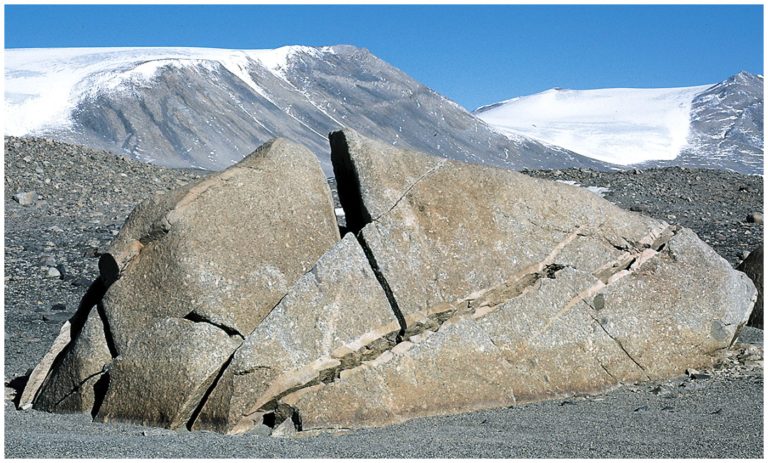
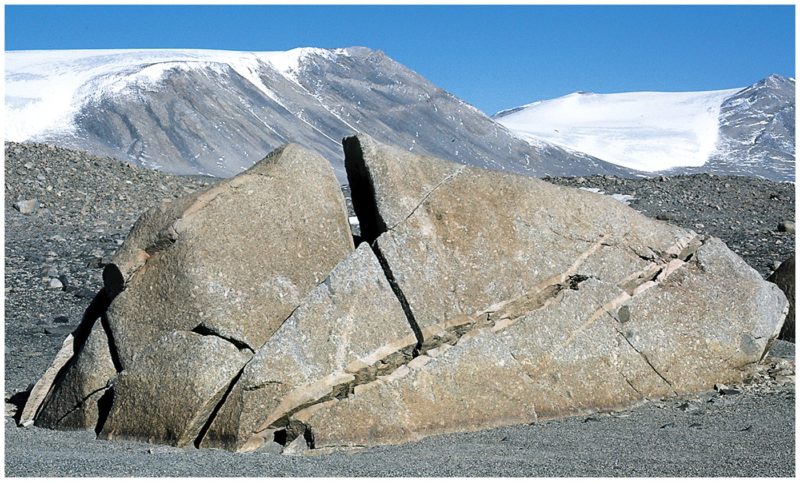
Weathering of huge amounts of tiny rocks could be a means to reduce the greenhouse gases in the atmosphere. While this is normally a slow natural process during which minerals chemically bind CO2, technological upscaling could make this relevant for so-called negative emissions to help limit climate risks.
Rock weathering
Yet, the CO2 reduction potential is limited and would require strong CO2 pricing to become economically feasible, according to the first comprehensive assessment of costs and possibilities now published in the journal Environmental Research Letters.
Weathering is the breaking down of rocks, soil, and minerals as well as wood and artificial materials through contact with the Earth’s atmosphere, water, and biological organisms.
“The Paris Agreement calls for a balance between anthropogenic greenhouse gas emissions by sources and removals by sinks in the second half of our century to keep global warming well below 2 degrees Celsius,” says lead-author Jessica Strefler from the Potsdam Institute for Climate Impact Research (PIK). “More than anything else this requires rapid and strong reductions of burning fossil fuels such as coal; but some emissions, for instance from industrial processes, will be difficult to reduce – therefore getting CO2 out of the air and storing it safely is a rather hot topic. The weathering of rocks, as dull as it might seem at first glance, is a scientifically exciting part of this.”
Hence the interest of assessing the economics of enhanced weathering for climate mitigation. Mining and grinding as well as transport and distribution were factored in. “Our calculations show that enhanced weathering could be competitive already at $60 per ton of CO2 removed for dunite, but only at $200 per ton of CO2 removed for basalt,” says Strefler. “This is roughly double of the carbon prices discussed in the current political debate, and substantially more than cost estimates for afforestation which are at 24 Euros per ton of CO2 removed. This is of course an important obstacle for any future implementation of enhanced weathering.”
India, Brazil, South East Asia, China seem to be the best suited locations
Strategies of carbon dioxide removal come with trade-offs. Planting huge numbers of trees to suck CO2 out of the air and store it in their trunks and branches for instance can come at the expense of land needed for food production. Also, carbon capture and underground storage (CCS) on an industrial scale is not accepted as safe by large parts of the population. Enhanced weathering, the spreading of rock material on land, may be easier to realise. However, dunite – the rock type most discussed amongst experts – contains harmful substances, such as chromium or nickel, that could get released during the process. This is why for the present study dunite is an important benchmark, but the researchers focus on basalt as a more sustainable option.
Current CO2 emissions are around 40 billion tons a year; natural weathering absorbs roughly 1.1 billion tons. Enhanced weathering could remove up to 4.9 billion tons per year if basalt is used, and up to 95 billion tons for dunite, according to the scientists’ calculations. It is likely, however, that in practice and considering all trade-offs, only a fraction of this potential could be realised. The best suited locations are warm and humid regions, particularly in India, Brazil, South East Asia, and China, where almost three quarters of the global potential could be realised. This is substantial, yet the uncertainties involved are also substantial, the scientists stress.
More than 3 billion tons of basalt needed to sequester one billion tons of CO2
“The annual potential of CO2 consumption is defined by the grain size and the weathering rate of the rocks used,” says Thorben Amann from Universität Hamburg’s Institute for Geology, Centre for Earth System Research and Sustainability (CEN), he is also lead-author of the study. To sequester one billion tons of CO2, more than 3 billion tons basalt would have to be spread, a mindboggling amount equal to almost half of the current global coal production. Grinding the rocks and spreading the powder over roughly one fifth of global cropland would be necessary, which is believed to be feasible, but – due to the gigantic amount of rocks involved – the costs eventually add up.
“We can say that Enhanced Weathering is not just a crazy idea but could actually help climate policy, yet it is still a challenge to get a precise understanding of the involved processes,” says Amann. “After all, there will be impacts on the agricultural soils, their properties will change, but this can also be beneficial. Basalt for example can actually supply certain nutrients to soils, acting as a natural fertiliser.”
The assessment shows that enhanced weathering especially of basalt rocks could be an attractive option to support climate change mitigation, especially for tropical and subtropical regions, where the CO2 uptake potential is the highest. Yet, given the costs and the mass of rocks that would need to be moved, it can likely provide only a small additional contribution.
Across Zambia, worsening impacts of climate change including more frequent and intense droughts and floods have led to food, water and energy insecurity, especially among the country’s most vulnerable rural communities.
Alexander Chiteme, Zambia’s Minister for National Development Planning
Other factors that contribute to the problem include, inadequate support for land use planning, poor agricultural and forestry resources management practices, untapped alternative livelihood options, and poor market access for marketable commodities and cash crops to farmers.
To address these urgent challenges, the Government of Zambia, with support from the World Bank, has launched a $33 million forest landscape programme to improve sustainable land management, diversify livelihoods options available to rural commodities, including climate-smart agriculture and forest-based livelihoods, and reduce deforestation in the country’s Eastern Province.
The Zambia Integrated Forest Landscape Programme, it was gathered, fits the Government of Zambia’s vision for addressing development and climate change challenges. It aims to enhance the benefits from sustainable forestry, agriculture and wildlife activities, and reduce the vulnerability of communities to the impacts of climate change. Delivering climate-smart agriculture technologies that boost productivity, improve resilience and reduce emissions to farmers is a key feature of the programme, sources disclosed.
“The programme will work directly with smallholder farmers and local communities to help them adopt more efficient and climate-smart farming technologies that will increase both productivity and the climate benefits they receive,” says Dr. Ademola Braimoh, World Bank’s Climate-Smart Agriculture Coordinator for the Africa region.
An estimated 215,000 people will benefit directly from the programme and, of these, at least 30 percent will be women, the promoters disclosed. Key beneficiaries are rural communities in the Eastern Province’s nine districts, namely Chadiza, Chipata, Katete, Lundazi, Mambwe, Nyimba, Petauke, Sinda, and Vubwi.
“My chiefdom, like many other areas in Eastern Province, has been affected by deforestation. I am happy that the project will help us mitigate the effects of climate change as a result of deforestation,” said Senior Chief Lwembe of Nyimba District.
According to sources, the programme will work with local institutions to improve land tenure security and land-use planning. Similarly, on-the-ground activities will focus on scaling-up climate-smart agriculture, enhancing agro-ecosystem resilience, and improving community forestry management. This will include working with farmers to improve soil fertility management, and engaging agribusiness to enhance market access for smallholder farmers.
Zambia’s programme area includes 5 million hectares of tropical miombo forests and grasslands, which are home to globally significant biodiversity. This includes the Luangwa Valley, abundant with wildlife and water resources, and the Lukusuzi and Luambe National Parks that have significant revenue potential. The programme will support these parks through investments in infrastructure for park management and ecotourism, including equipment for monitoring the park and enforcement of regulations, including for poaching.
Funds for Zambia’s Integrated Forest Landscape project include $17 million from the International Development Association, $8 million from the Global Environment Facility, and $8 million from the World Bank’s BioCarbon Fund Initiative for Sustainable Forest Landscapes (ISFL).
Zambia’s programme with the BioCarbon Fund was the impetus for the country’s new, larger-scale programme launched last week in Chipata. It provides the foundation for activities that can generate results-based payments for verified emission reductions across the Eastern Province from the BioCarbon Fund ISFL in the future.
The Integrated Forest Landscape Programme will also inform Zambia’s national strategy for reducing emissions from deforestation and forest degradation (REDD+), and will serve as a pilot for jurisdictional REDD+ adaptation, replication and expansion throughout Zambia. The programme will provide overall guidance on actions to be undertaken in key sectors such as agriculture and energy.