UN agencies said a record-breaking of about 123 million, or nine out of 10, infants, received at least one dose of diphtheria-tetanus-pertussis vaccine in 2017 globally.
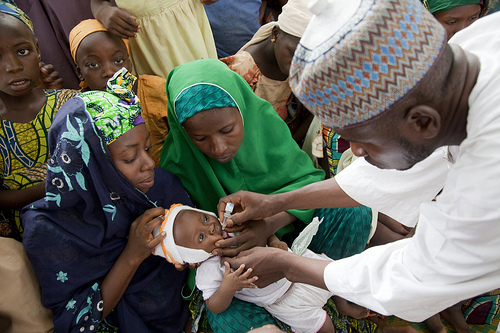
Polio immunisation in Nigeria. Photo credit: comminit.com
The vaccines protected the 123 million children from deadly infectious diseases, according to data from the World Health Organisation (WHO) and the UN Children’s Fund (UNICEF).
The data said an additional 4.6 million infants were vaccinated globally in 2017, compared to 2010, due to the pace of global population growth.
The data showed that 167 countries included a second dose of measles vaccine, as part of their routine vaccination schedule, and 162 countries now use rubella vaccines.
As a result, global coverage against measles and rubella increased from 35 per cent in 2010, to 52 per cent.
The human papillomavirus (HPV) vaccine was introduced in 79 countries to help protect women against cervical cancer.
Newly available inoculations are also being added as part of the overall package of life-saving vaccinations, such as those to protect against meningitis, malaria, and even Ebola.
“Despite these successes, almost 20 million infants did not receive the benefits of full immunisation in 2017.
“Of these, almost eight million, or 40 per cent, live in fragile or crisis-affected places, including countries affected by conflict,” the UN agencies said.
In addition, a growing percentage are from middle-income countries, where increasing inequality and marginalisation – particularly among the urban poor – prevent many from getting immunised.
WHO and UNICEF said as populations grow, more countries need to increase their investments in immunisation programmes.
Passionate African journalists who are excited about the health of the planet, future generations and the global discourses around low-carbon, climate resilient and green economic development pathways have been called upon to apply for the 2018 version of the ACCER Awards contest.
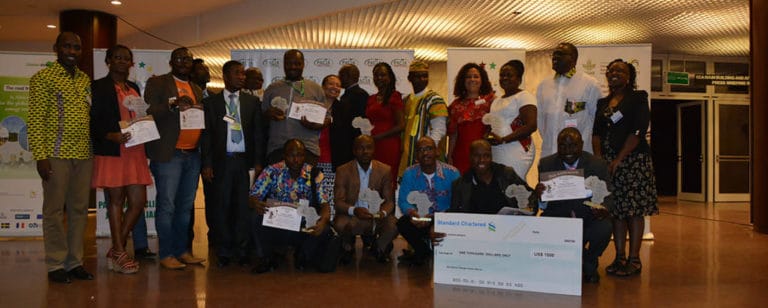
Past winners of the ACCER Awards
The Nairobi, Kenya-based Pan African Climate Justice Alliance (PACJA), organisers of the annual programme, disclosed that, besides improving capacity in reporting on environment and development issues, successful applicants can win prizes and secure an all-paid sponsorship to attend and cover the United Nations Climate Change Conference in Katowice, Poland in December 2018.
“The ACCER Awards contest offers various opportunities for incentivizing journalists and training them on the salient issues at global stage,” said Dr Mithika Mwenda, Secretary General of PACJA, adding that the theme, “Changing the Narrative on Environmental Challenges in Africa: the Case of Pollution”, would guide participants’ entries and awards based on how they demonstrate information delivery in specified categories.
He listed the categories to include: print, radio, television, photojournalism, and online (multi-media).
According to him, potential awardees are expected to present direct entries with brief citations demonstrating how their journalism may have practically enhanced access to information delivery in a specified area in either English or French.
Award selection criteria, he stressed, is based on: eligibility; originality, structure and quality of writing/broadcast, creativity (use of relevant interviews and examples to illustrate issues); variety of voices/quotes used; fluency (quality of the language- engaging writing/radio style, correct spelling and grammar); and, respect of the prescribed submission format.
The overall prize entails cash reward of $1000; full sponsorship (including return air ticket, accommodation and other living expenses) for UN Climate Change Conference from December 3 to 14, 2018 in Katowice, Poland; fellowship to participate in high-level reporting; and training throughout 2019 courtesy of ACCER Awards Partnership.
The Nigerian National Petroleum Corporation (NNPC) has commenced a community integration and stakeholders’ engagement to sensitise people in Cross River State ahead the planned oil palm-based bio-diesel project.
A biodiesel plant
A statement by the NNPC Spokesman, Mr Ndu Ughamadu, said the 26,000-hectare facility was designed to accommodate an oil palm plantation co-located with bio-diesel, crude palm oil co-generation plants and other facilities.
Ughamadu said officials of the NNPC Renewable Energy Division (RED) had embarked on the sensitisation campaign across affected communities, providing information on the rationale and projected benefits of the bio-fuels projects in the state.
“The NNPC Research and Development Division is also being engaged for the conduct of Environmental and Social Impact Assessment for the projects.
“The plant is projected to generate about 14 megawatts of electricity from empty fruit bunches and the residue from oil palms.
“Under the arrangement, the oil palm would be processed into fuel grade bio-diesel and industrial crude palm oil as by-products.
“The bio-diesel will be blended with diesel in a mix of 20 per cent biodiesel and 80 per cent diesel and sold as B20 in the domestic market.
“Any utilised bio-diesel quantity would then be exported to the international market,’’ Ughamadu said.
The Cross River bio-fuel project is in tandem with renewed drive by NNPC to develop bio-fuels, through partnership with core investors to create a low carbon economy and link oil and gas sector to the agricultural sector.
The News Agency of Nigeria (NAN) reports that it would also mitigate the adverse effect of climate change and the transformation of NNPC into an integrated energy company with diverse portfolio.
The business model would involve a Special Purpose Vehicle comprising NNPC, the State Government and the Core-investor.
Cross River is expected to provide land as equity, while core investor takes more than 50 per cent equity and operate the venture, leaving NNPC and the State Government with minority share of less than 50 per cent.
So far, Kebbi, Ondo, Taraba, Benue, Jigawa, Kogi, Adamawa have shown interest in partnering with NNPC in biofuels projects.
President Muhammadu Buhari on Monday, July 16, 2018 welcomed the interest of the Dutch Prime Minister, Mark Rutte, to support the restoration of the Lake Chad to its old glory.
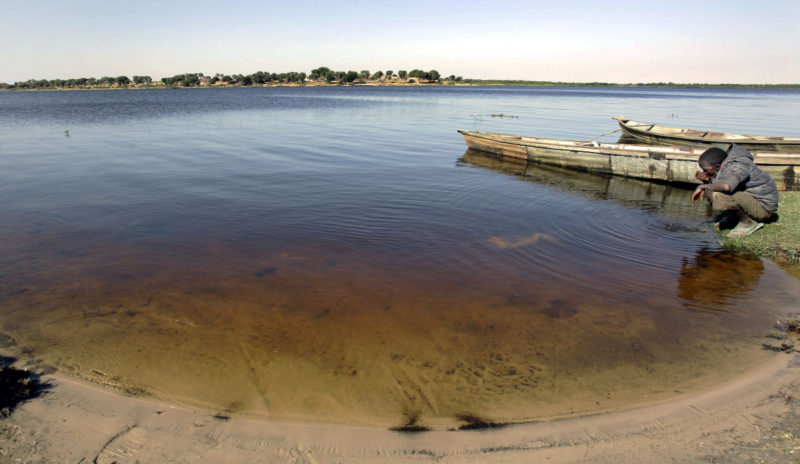
Scientists say the Lake Chad, that borders Nigeria and some other countries, has shrunken by 95 percent over the past 50 years. They have also linked the Boko Haram insurgency to the lake’s situation. Photo credit: AP/Christophe Ena
Buhari said this when he met with Dutch Prime Minister, Mark Rutte, at The Hague.
President Buhari also welcomed Netherlands’ commitment to establish a technical committee to work with the Nigerian side on the best approach to address the shrinkage of the Lake Chad.
The Nigerian leader stressed the need for workable solutions to restore the Lake Chad, including the inter-basin water transfer project from Ubangi River in Central Africa to the Lake.
President Buhari also raised the humanitarian crisis in the region, the receding of the Lake Chad and its impact on the economy of the communities living in the area.
The two leaders also discussed the fight against insurgency in the North East, climate change, economic cooperation, the fight against corruption and a range of other issues of mutual interest
President Buhari highlighted the progress made in the fight against insurgency in the North East, and the Dutch Prime Minister pledged the support of his government for the anti-terrorism efforts in the region.
Femi Adesina, the media adviser said President Buhari also expressed the firm commitment of his administration to recover more stolen funds and assets of the country stashed abroad. Buhari looked forward to working closely with the Netherlands on this, Adesina added.
Prime Minister Rutte congratulated Nigeria on the enormous strides being recorded on the economy, including Nigeria’s rising profile on World Bank’s Ease of Doing Business.
According to the Rutte, Netherlands is one of Nigeria’s biggest trading partners.
The two leaders agreed on the need for more collaboration to increase trade.
Meanwhile, Nigeria will be at the centre of global attention when President Muhammadu Buhari addresses the International Criminal Court (ICC), on Tuesday.
The Nigerian leader is the only President invited to grace the 20th anniversary of the adoption of the ICC Rome Statute.
“President Buhari will share his thoughts on the values and ideals of the Court, which was established to prevent impunity, and try cases of genocide, war crimes, aggression, and crimes against humanity,’’ Adesina said
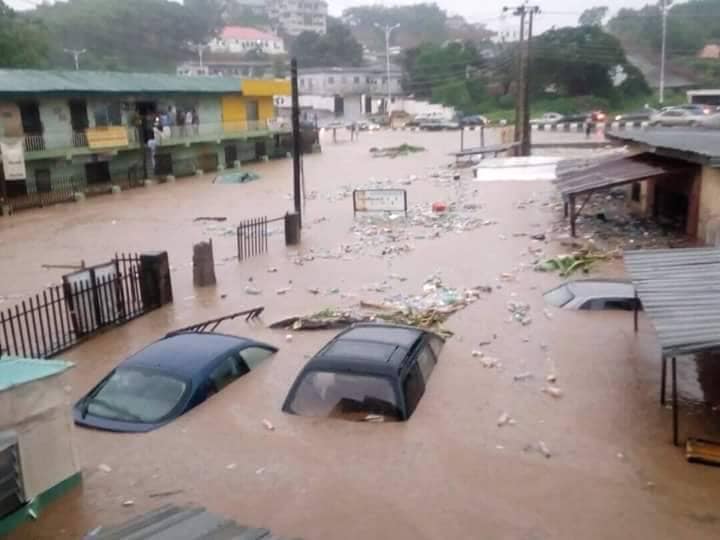
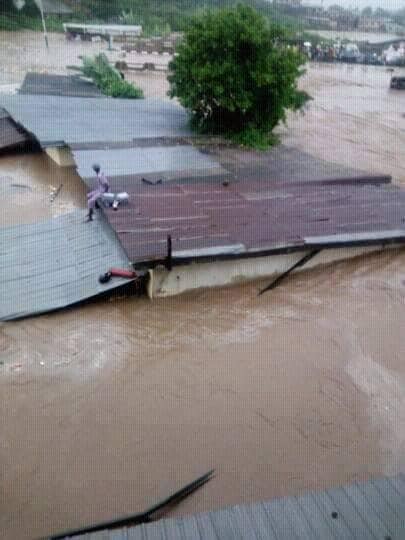
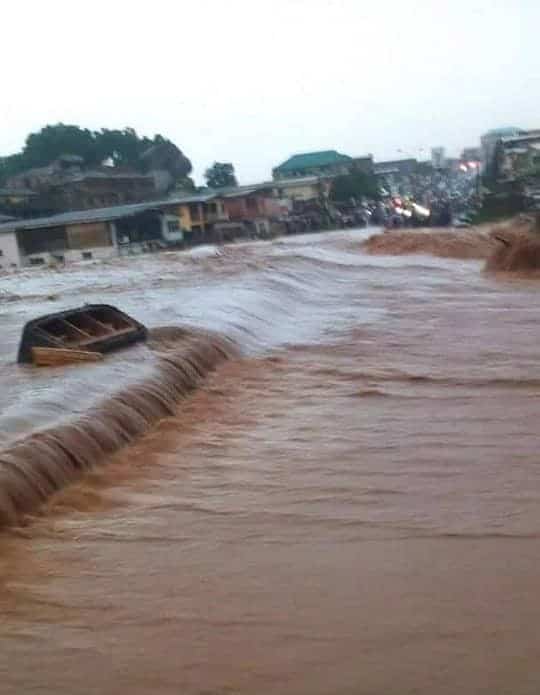
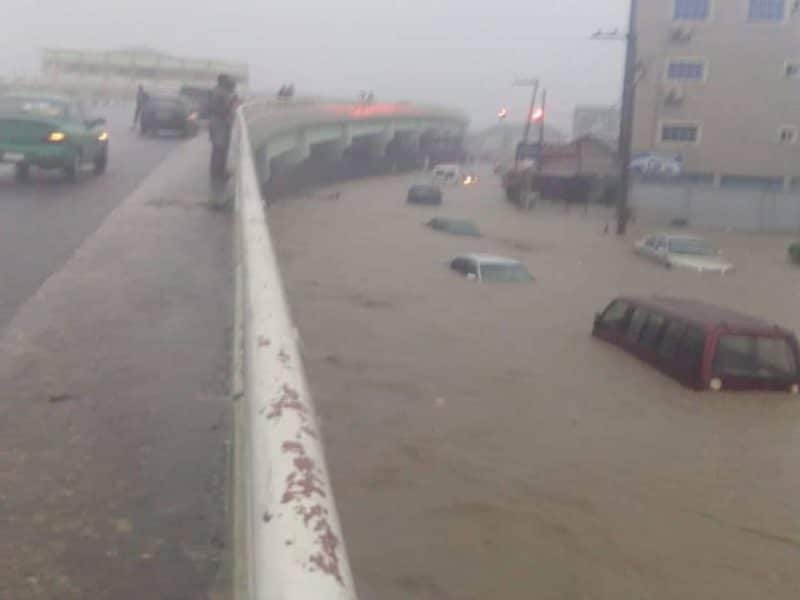
About four hours of heavy rainfall in Abeokuta, the capital of Ogun State in Nigeria, on Saturday, July 14, 2018 resulted in unprecedented flooding such that streets, vehicles and entire buildings were inundated.
Vehicles overwhelmedA hapless resident seeks refuge on a roof as flood water threaten to inundate the buildingThe flood waters go out of controlSeeking refuge on the flyover
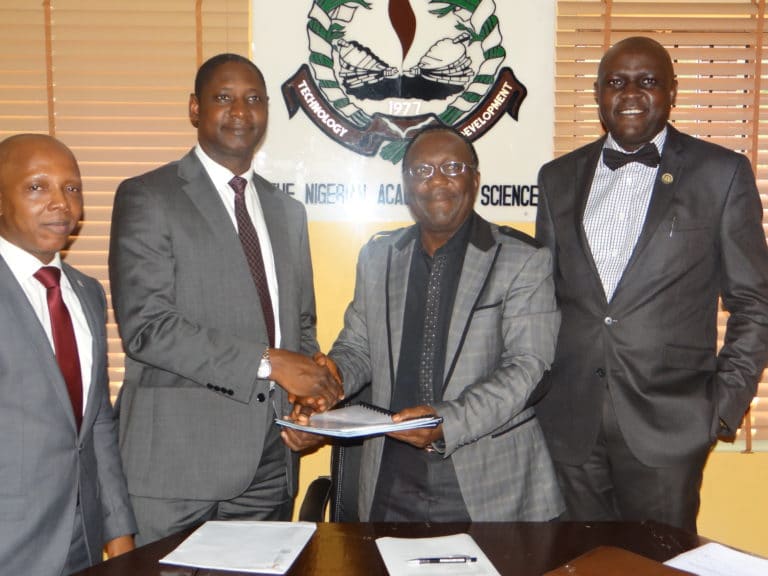
The Nigerian Academy of Science (NAS) and Vitafoam Nigeria Plc have agreed to maximise the benefits of science and increase the awareness of such benefits, in the hope that it will result in increased support for the development and application of science in the society.
Officials of the Nigerian Academy of Science (NAS) and Vitafoam Nigeria Plc during the agreement signing ceremony in Lagos
Courtesy of an agreement signed on Tuesday, July 10, 2018, both parties will partner over a period of three years to conduct periodic media roundtables and annual media awards. The roundtables and awards were reportedly instituted by the Academy to promote excellence in science and science-related journalism. This, NAS believes, is a crucial step in ensuring that public awareness and focus on science are increased through science reporting by the print, online and broadcast media.
“The Nigerian Academy of Science believes science reporting can be improved by holding media roundtables and awarding prizes to stimulate skills development and expertise among journalists. In this regard, media roundtables will be held regularly, and two science prizes will be awarded at an annual luncheon for science journalists. These would be for the science journalist of the year,” Dr. Oladoyin Odubanjo, Executive Secretary of the NAS, submitted in a statement.
The agreement signing ceremony was held at the Academy’s secretariat in Lagos. The team of Vitafoam Nigeria Plc, which was led by the Managing Director, Mr. Taiwo Adeniyi, includes the Group Head, Admin. & Legal Services, Mr. Lekan Sanni; General Manager, Vitapur Nig. Ltd, Mr. Yemi Mofikoya; and National Sales Manager, Mr. Dahiru Gambo. The President of the Nigerian Academy of Science, Professor Mosto Onuoha; and the Executive Secretary of the Academy, Dr. Oladoyin Odubanjo, were at hand to receive them at the secretariat.
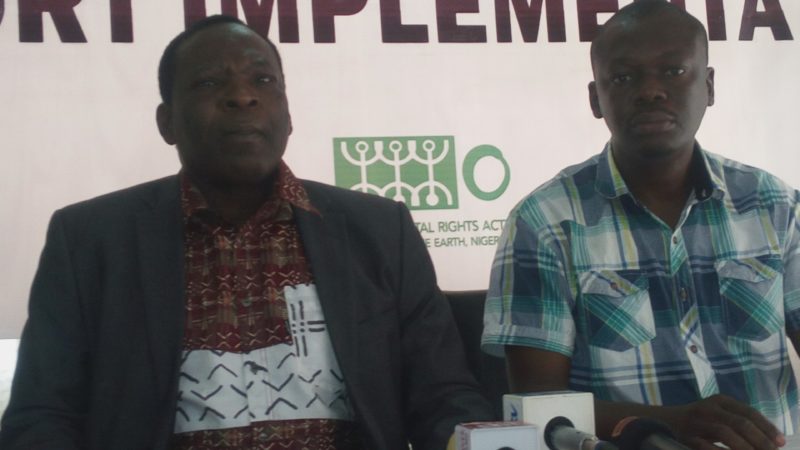
The Environmental Rights Action/Friends of the Earth Nigeria (ERA/FoEN) has frowned at the Federal Government’s plan to resume oil exploration in Ogoniland even when the clean-up of the Ogoni environment is yet to take off as recommended by the United Nations Environment Programme (UNEP).
Executive Director of Environmental Rights Action/Friends of the Earth Nigeria (ERA/FoEN), Dr. Godwin Ojo (left); with the ERA/FoEN Head of Media, Philip Jakpor
The ERA/FoEN position was informed by media reports indicating that Ogoni elders petitioned Vice President Yemi Osinbajo earlier this month, alleging that the delay in commencement of the Ogoni clean-up was because the Petroleum Minister was tying the clean-up process to resumption of oil exploration in Ogoniland.
The petition was said to have been signed by Rivers State Senator, Bennett Birabi, Dr. Desmond Nbete, Mr. Ledum Mitee, Mr. Baritor L. Kpagih, Prof. Johnson Nna, Chief Monday Abueh and five others.
In the letter, the petitioners expressed concern that “two years after the much-publicised flag-off ceremony for the clean-up of Ogoni land as recommended by the UNEP by the Vice President, the Minister of State for Petroleum Resources is now tying the expected commencement of the clean-up and remediation process to resumption of oil and gas activities in our land by his preferred company”.
ERA/FoEN Executive Director, Godwin Uyi Ojo, said: “This news is not surprising to us as we have over the course of the last three years alerted that the clean-up process was mired in needless controversy and lack of clarity.
“It is very disturbing that the quest to sure up oil revenue has taken front seat in the Ogoni clean-up exercise while the clean-up proper which will restore the dignity of the people is now subject to needless back and forth.”
Ojo said ERA/FoEN is in solidarity with the Ogoni people and Gbo Kabaari Ogoni that the clean-up of their violated environment should not be tied to resumption of oil exploration, even as he added that “the Ogoni people are getting frustrated at the government’s perceived lack of sincerity with the UNEP-recommended exercise”.
He noted that the Ogonis, Nigerians at large and the international community are anxious to see the first drop of oil to be cleaned properly so that restoration work can commence.
“Resumption of oil exploration is a distraction and secondary for now because the critical clean-up has taken the backseat. What the Ogoni people require and demand as a right is the immediate commencement of the clean-up. Enough of this drama,” Ojo insisted.
While health systems, clean water and education are a plain given in many parts of the world, millions of people still do not have sufficient access to these basic public goods. In fact, carbon prices could make substantial financial resources available for succeeding with the global Sustainable Development Goals (SDGs) set by the United Nations, a team of scientists now finds.
Lead author Dr. Max Franks of the Potsdam Institute for Climate Impact Research (PIK)
At the same time, carbon pricing could be a central contribution to meet global climate targets and limit global warming to well below 2°C until the end of the century.
“Currently we have a twofold problem,” explains lead author Max Franks from the Potsdam Institute for Climate Impact Research (PIK), adding: “There is a huge underprovision of basic necessary public goods such as public health systems, access to schools and clean water. On the other hand, greenhouse gas emissions are still rising and there is an overuse of the atmosphere, a global common good, as a disposal space for these emissions”.
So far, the two problems have mostly been dealt with separately. “But if you look at both climate and sustainable development policies at the same time, it turns out that carbon pricing could indeed address both problems simultaneously and effectively,” Franks says.
A switch from today’s fossil fuel subsidies to carbon prices for carbon dioxide emissions could generate additional revenue for governments to finance progress towards sustainable development, the scientists find in their study published in Nature Sustainability. Redirecting fossil fuel subsidies alone could completely cover public financing needs for the SDGs in Egypt, and to a large extent in other lower and lower-middle income countries in sub-Saharan Africa, like Togo, the Republic of Congo and Senegal, the researchers show.
“Moreover, revenues of a combined fiscal reform that removes subsidies and replaces them with a substantial carbon price could provide more than two thirds of the public funds required for the SDG agenda for several countries in South- and Southeast Asia,” Franks explains. “In India, more than 90 percent of the entire public financing needs for the SDGs could be covered, as our study shows, so there really is a huge potential of making use of carbon price dollars for health, education, and other public goods.”
Fossil fuel subsidies: a burden for both the environment and the public budget
In the least developed countries of sub-Saharan Africa, however, the financing potential of carbon revenues is often outweighed by the especially strong development needs. Nonetheless, the study identifies countries in which carbon pricing could contribute more than a fifth of the required public funds for reaching the SDGs – countries like Burundi, Mauritania, Nigeria, the Republic of Congo, Senegal, Swaziland, Togo, Uganda and Zimbabwe.
“Currently, governments subsidise fossil fuel in support of certain industries or to keep fuel prices low for consumers. This is not only a burden for the environment but also for national budgets. To give an idea, in the countries we’ve analysed, the total amount spent on fossil fuel subsidies would have been enough to finance 20 percent of the estimated total public financing needs for the SDGs,” Kai Lessmann from PIK says. “Removing these subsidies would free substantial domestic public funds for other urgent uses, like alleviating extreme poverty. National carbon prices instead of subsidies on fuels would, of course, generate still more public funds. At the same time this could be an efficient way to reduce carbon dioxide emissions throughout the economy.”
Development aid should focus on capacity building, for establishing tax administrations
The scientists compared the potential to mobilise domestic resources with a removal of all subsidies on fossil fuels and, in a second step, combined this with a carbon price consistent with the United Nation’s 2°C limit for global warming. Based on the Fifth Assessment Report of the Intergovernmental Panel on Climate Change (IPCC), the study assumes that price to start at $40 per ton of CO2 in the year 2020 and to rise to $175 in 2030. To put these prices in perspective, the UK was able to take a first important step in mitigating climate change by introducing a carbon price of £18 ($25) per ton of CO2 in 2013, which was already enough to phase out coal. Interaction effects such as reduced income of fossil fuel exporting countries, or positive growth effects due to better health, education and infrastructure could not be taken into account – hence the results should be taken with a grain of salt and are supposed to provide information on the magnitude of the potential rather than exact numbers. However, it still becomes clear that the additional revenues that become available for public finance are quite substantial, particularly with carbon pricing.
“Switching from fossil fuel subsidies to carbon pricing could make a key contribution to sustainable development in Asia and Africa by covering a significant part of the required public funds,” Ottmar Edenhofer concludes, Chief Economist and designated Director of the Potsdam Institute for Climate Impact Research and Director or the Mercator Research Institute on Global Commons and Climate Change (MCC). “It turns out that carbon pricing could balance the scales of climate policy and sustainable development agenda and help achieve global climate goals and progress towards sustainable development at the same time. Public support for carbon prices could also increase with the knowledge that recycling carbon pricing revenues to finance SDGs yields huge benefits for the broad population. An important take-away message of our paper is that development policies should focus on building local capacities for strengthening tax administrations, in particular with the aim of implementing carbon pricing.”
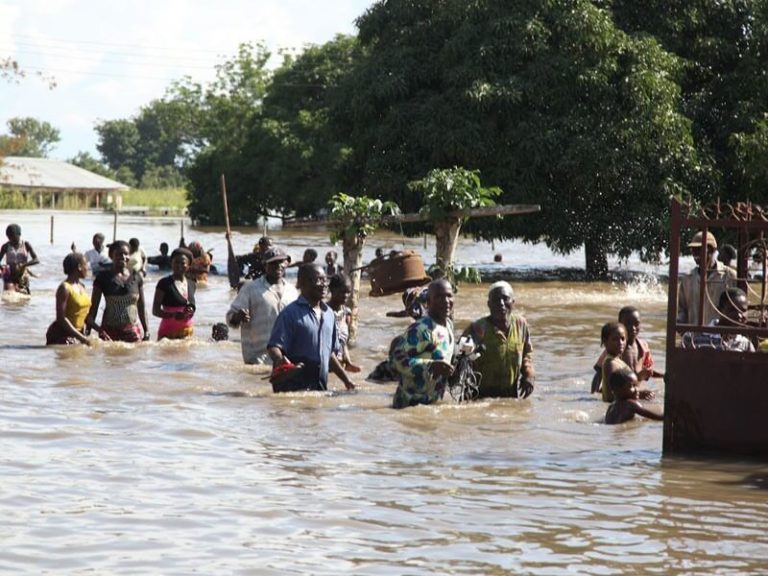
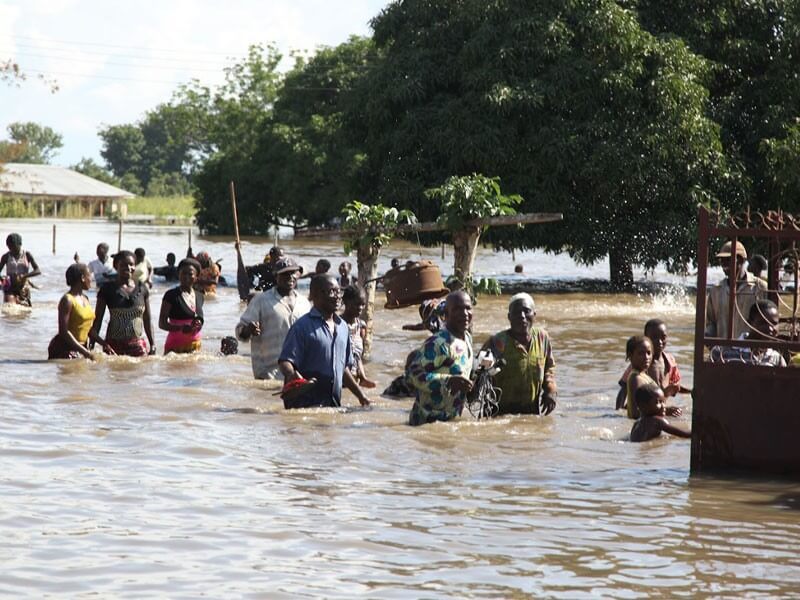
The Katsina State Emergency Management Agency (SEMA) on Monday, July 16, 2018 said that 38 persons had lost their lives following a rainstorm in Jibia Local Government Area of the state.
A flood ravaged community
Dr Aminu Waziri, the Executive Secretary of the agency, told newsmen in Jibia that the disaster, which occurred on Sunday night, lasted for several hours.
Waziri said areas affected by the disaster include Tundun Takari, Dan Tudu, Unguwar Kwakwa and Unguwar Mai Kwari areas located around river axis.
He said a rescue team was still in Jibia giving assistance to the people.
According to him, Gov. Aminu Masari has visited the area to assess the damage done to property.
“What we are doing presently is to find temporary accommodation for people whose houses have been washed away or damaged.
“As I speak with you now, no fewer than 38 people have lost their lives.
“Sympathisers from our neighbouring country, Niger Republic, helped us to remove two bodies from a river.
“We have already buried 21 bodies, while arrangements are being made to bury the remaining 17 dead bodies.
“Over 200 houses were either washed away or damaged by the rainstorm,” he said.
The News Agency of Nigeria (NAN) reports that the rainstorm has also destroyed several farms and killed hundreds of animals in the area.
The Federal Capital Territory Administration (FCTA) said on Monday, July 16, 2018 that it has initiated programmes under the Public-Private Partnership to address 1.7 million housing deficits in Abuja, the Federal Capital Territory (FCT).
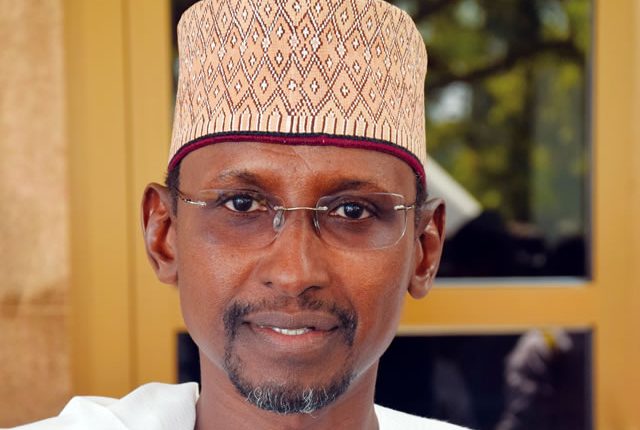
FCT Minister, Mohammed Bello
FCT Minister, Malam Muhammad Bello, said at the opening of the 12th Abuja Housing Show in Abuja that this initiative was in line with private sector driven housing policy.
The minister said that the Nigerian government had formulated a National Housing Policy in 1991 to ease the provision of adequate, accessible and low-cost housing for its citizens.
Bello was represented at the event by Mr Umar Shuaibu, Coordinator, Abuja Metropolitan Management Council (AMMC).
The conference has its theme as: “Driving Growth and Sustainability in Nigeria Housing and Mortgage Markets-Improving Structures and Policies for Impact”.
He noted that the goal of the policy was not realised due to several factors ranging from lack of political will, policy inconsistency, poor financing to weak institutional structures.
He said the policy was, therefore, amended in 2004 in which the Federal Government adopted a more market-oriented approach to housing delivery, limiting its role to that of an enabler and regulator instead of a provider.
“The limitation of the role of the public sector is to allow for more active private sector participation in direct housing provision.
“The revised policy established financial institutions and procedure that will make funds available through the primary mortgage institutions for affordable housing production.
“The new policy, therefore, acknowledged the private sector as a key partner in the delivery of housing for the country.”
The minister noted that due to the importance of housing, the Abuja Master Plan has apportioned a land area of 12,486ha for housing development, which represents 49 per cent of the total land area in the territory with 100 per cent funding by the government.
He, therefore, said since mid-2000, funds allocated to the FCTA by the Federal Government had continued to dwindle, thereby making it difficult to cater for the large population influx into the city.
Also, Mrs Amma Pepple, former Minister, Land, Housing and Urban Development, was worried about the challenges of housing which had remained the same since she left the sector.
Pepple called on stakeholders to put more efforts in addressing the supply and demand of housing in the country.
“I go to some areas in Abuja but discovered there are no infrastructures and landlords keep collecting rent without putting in place infrastructure for housing.
“When I visited other countries, they made available good road networks, electricity, water and others before you acquire a place.
“Government needs to participate in building projects because if it provides the land with low cost of materials, it will make it easier for Nigerians to acquire houses.”
Earlier, Mr Mustapha Boss, Secretary to the Government of the Federation, says affordable and accessible housing is human right as the constitution compels the Nigeria state to provide adequate shelter to all its citizens.
Boss, who was represented by his Permanent Secretary, Mr Gabriel Aduda, noted that access to decent and safe housing provision at affordable pricing should be a birth right for every Nigerians.
He, therefore, said that the government alone cannot do this, but needed the help of private sectors to address the issue of interest rate, politicisation and mortgage financing confronting the housing sector.
Gov. Godwin Obaseki of Edo State said there was need to turn housing policies to implementation action to enable Nigerians reach optimal capacity of acquiring shelter.
Obaseki, who was represented by Mr Festus Osagie, Director-General, Edo State Liaison Office, said Nigeria has the potential to grow its housing sector with the political will it has.
The show is a forum to bring together all real estate stakeholders to discuss and explore ideas to move Nigerians housing industry to international standard.
The conference, which began in 2005, has in attendance participants from private, public, housing sector and exhibitors.
Some of them are Urban Shelter, Platinum Mortgage Bank, Federal Mortgage Bank, Haven Homes, Nigerite Limited, NMRC, Brains and Hammers, among others.