24.9 C
Lagos
Thursday, January 1, 2026
Home Blog Page 1848

AfDB signs deal with International Solar Alliance to propel continental solar development

0

In what looks like a major boost for its Light up and power Africa initiative, the African Development Bank (AfDB) has entered into partnership with the International Solar Alliance (ISA) to scale up solar energy in Africa.
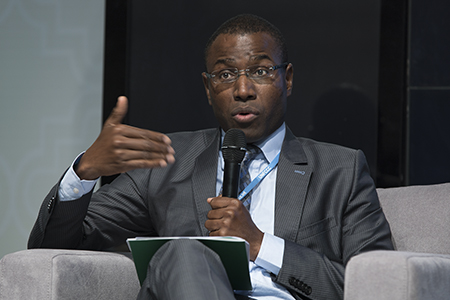
amadou-hott
Amadou Hott, AfDB’s Vice President, Power, Energy, Climate and Green Growth

The bank and ISA will jointly support technical assistance and knowledge transfer for solar development and deployment in sun-shine rich African countries. Both parties will also develop finance instruments for off-grid solar projects, as well as large-scale solar independent power producers for African ISA member countries.

As part of the new agreement, ISA will support the African Development Bank’s Desert to Power solar initiative – through which the bank intends to turn Africa’s deserts into new sources of energy. Working with partners to develop 10,000 MW of solar power systems across the Sahel, the initiative is expected to provide electricity to 250 million people, with 90 million of these being on off-grid systems.

The partnership agreement was sealed on the margins of the Founding Conference of the International Solar Alliance (ISA) held in New Delhi on March 11, 2018. The conference was co-chaired by Prime Minister Narendra Modi of India and President Emmanuel Macron of France.

“This signing is an important milestone for the Bank in its efforts to lead the continent’s transformation towards sustainable energy, through the use of solar technologies, and in its bid to reach universal access to energy in Africa,” said Amadou Hott, Vice President, Power, Energy, Climate and Green Growth at the African Development Bank.

In his opening remarks at the Conference, President Macron identified the three top priorities of ISA as the identification of solar projects, mobilisation of public and private finance at scale with a focus on guarantee instruments, and transfer of innovative technology solutions and capacity building.

Prime Minister Modi underscored the need to ensure that better and affordable solar technology is available and accessible to everyone.

The joint declaration recognises the Bank’s New Deal on Energy for Africa, its energy policy and its leadership in working with governments, the private sector, and bilateral and multilateral energy sector initiatives to develop a Transformative Partnership on Energy for Africa.

The declaration lays out areas of deeper cooperation between ISA and the Bank, including developing innovative financial instruments to reduce risks and costs associated with solar investments and to leverage climate financing and commercial co-financing and mobilising concessional financing through the Sustainable Energy Fund for Africa (SEFA) and other bank-hosted funds.

About 50 countries were represented by heads of state/government and ministers including 11 African Presidents and several African prime ministers, who were joined by solar manufacturers, developers, financial institutions, green funds, innovators, start-ups and NGOs.

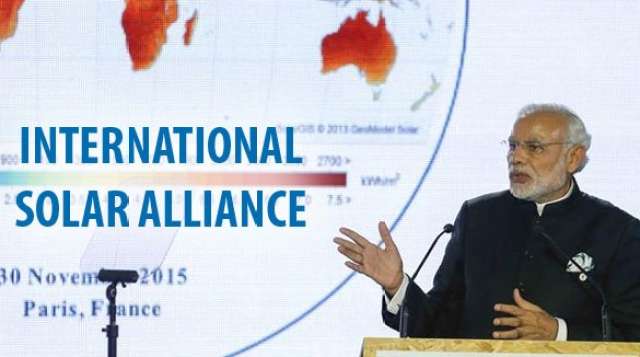
The International Solar Alliance initiative was launched at the UN Climate Change Conference in Paris in November 2015 by Prime Minister Narendra Modi and former French President Francois Hollande. The Alliance is a collaborative platform and a coalition of solar resource rich countries designed to address their special energy needs through a common and agreed approach. 32 of the 60-member countries who have joined the alliance are from Africa.
Egypt becomes first Eastern Mediterranean nation to eliminate lymphatic filariasis

0

Egypt has become the first country in the Eastern Mediterranean Region of the World Health Organisation (WHO) and the latest in the world to eliminate lymphatic filariasis (LF) as a public health problem.

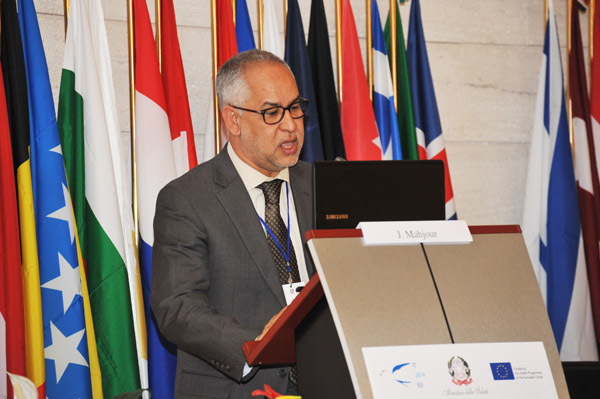
Jaouad Mahjour
Dr Jaouad Mahjour, Regional Director, WHO Eastern Mediterranean Region

Egypt’s success, according to the WHO, comes after almost two decades of implementing sustained control and prevention measures (including mass treatment of populations) and surveillance in affected/at-risk localities.

The country joins 10 others already validated by WHO as achieving this criteria. After implementing WHO-recommended large-scale treatment campaigns, Egypt continued surveillance for at least four years until elimination was validated.

The 10 countries are: Cambodia, Cook Islands, Maldives, Marshall Islands, Niue, Sri Lanka, Thailand, Togo, Tonga, and Vanuatu.

““This is a landmark achievement that brings prospects of hope and improved health to future generations of Egyptians” said Dr Jaouad Mahjour, Regional Director, WHO Eastern Mediterranean Region. “Egypt will continue to improve disease management among people who are already infected as well as ensure that appropriate surveillance is maintained to ensure zero transmission.”

In 2000, Egypt was one of the first countries in the world to implement a national elimination programme based on mass-drug administration (MDA). It followed a World Health Assembly resolution (WHA 50.97) on LF in 1997 that called for its global elimination by 2020.

“The strategy depended on high-level commitment, engaging local communities,and the availability of free medicines donated through WHO. Such combined action provided the greatest of opportunities for the sustainability of the programme” said Dr John Jabbour, WHO Representative in Egypt.

This required planning, logistics, coordination and collaboration with other ministries as well as building the capacity of healthcare workers and community workers.

At the onset, Egypt had to contend with several challenges and these included financing a national programme; prioritisation of a disabling, disfiguring disease in a resource-limited setting; determining its cost of implementation while leveraging the cost of disability management programmes such as hydrocele surgery.

After WHA 50.97, WHO invited countries to accelerate efforts to eliminate LF as a public-health problem and launched its National LF Elimination Programme (NLFEP) which set itself to:

  • interrupt LF transmission through mass drug administration of DEC and albendazole, and;
  • alleviate the suffering of affected people through morbidity management and disability prevention.

Remarkable efforts led to the implementation of several rounds of MDA until 2013 when surveys validated that infection has been reduced below transmission thresholds.

Final assessments conducted between 2014 and 2017 focused on both transmission and management of morbidity in affected patients and confirmed that Egypt has met all criteria for achieving elimination as a public health problem.

“Our ultimate aim was to eliminate this disease by adopting pro-poor, cost-effective public-health interventions,” said Dr Ayat Haggag, Undersecretary for Endemic Diseases, Ministry of Health and Population, Egypt. “Our government is determined to defeat other NTDs such as schistosomiasis, trachoma, soil-transmitted helminthiasis, leprosy, leishmaniasis and dengue”.


LF in Egypt

Egypt’s struggle to overcome lymphatic filariasis (also known as elephantiasis) is perhaps one of the oldest in the history of public health, with field activities going back to the early 20th century. Its clinical manifestations are shown in pharaonic statues and works of art, and are described in early Arabic literature, although its causal agent, the parasite Wuchereria bancrofti, was first documented there in 1874.

The disease burden was fully appreciated in the 20th century through large-scale surveys, which revealed its endemicity in rural areas, especially in the eastern Nile Delta region, where clinical manifestations such as lymphoedema and hydrocele (swollen limbs and genitals) were commonly observed.


Earlier control attempts

Disease control activities in Egypt started in the early 1960s, initially relying on the control of the mosquito vector Culex pipiens and on selective treatment with diethylcarbamazine (also known by its acronym, DEC).


New treatment, brighter prospects

In November 2017, WHO recommended IDA1 (combination of ivermectin, DEC and albendazole) – an alternative three drug regimen to accelerate the global elimination of lymphatic filariasis.

The recommendation followed large randomised community studies conducted in four countries (Haiti, India, Indonesia and Papua New Guinea) which found that IDA is as safe as the two-drug regimens when used during MDA.


The disease

Lymphatic filariasis is caused by infection with parasitic worms living in the lymphatic system. The infection impairs the lymphatic system triggering abnormal enlargement of body parts, causing pain, severe disability and social stigma.

The larval stages of the parasite (microfilaria) circulate in the blood and are transmitted from person to person by mosquitoes.

Manifestation of the disease after infection takes time and can result in an altered lymphatic system, causing abnormal enlargement of body parts, and leading to severe disability and social stigmatisation of those affected.

Almost 856 million people in 52 countries worldwide remain threatened by LF and require preventive treatment to stop its spread. Regular MDA reduces the density of microfilariae in the bloodstream and prevents the spread of parasites to mosquitoes.

MDA can interrupt the transmission cycle when conducted annually for 4–6 years with effective coverage of the total population at risk.

Salt fortified with DEC has also been used in a few settings to interrupt the transmission cycle.

Parasites that cause LF are transmitted by four main types of mosquitoes: Culex, Mansonia, Anopheles and Aedes.

African lawmakers seek accountability for greenhouse gas emissions

0

Legislators at the Pan African Parliament (PAP) are eager to seek accountability by industrialised countries, whose activities have resulted in excess emission of greenhouse gasses that are causing global warming, but the African civil society on climate change has a different message.

Mithika
Secretary General at the Pan African Climate Justice Alliance (PACJA), Mithika Mwenda. Photo credit: pamaccafrica.blogspot.com

These were some of the ideas at a training for Pan-African Parliamentarians conducted by the African Climate Policy Centre (ACPC) in collaboration with the Pan-African Climate Justice Alliance (PACJA) and the African Climate Legislative Initiative (ACLI) on uptake and use of climate information services (CIS) by vulnerable communities. The event convened at the PAP in Midrand, South Africa on the March 10, 2018 was attended by 31 members of parliament drawn from across the continent.

The training event was organised under the Pan-African component of the Weather and Climate Information Services for Africa (WISER) programme, which is implemented by ACPC. Mr. Frank Rutabingwa, the WISER coordinator at ACPC, informed participants that the objective of WISER is to contribute to enhancement of the policy and enabling environment for increased application of CIS in development planning.

Speaking at the event, participants recalled that the Paris Agreement on climate change calls for international interventions to hold the increase in the global average temperature to well below 2°C above pre-industrial levels and pursuing efforts to limit the temperature increase to 1.5°C.

According to Mithika Mwenda, the PACJA Secretary General, there is urgent need for legislators to work hand in hand with the civil society and researchers for climate adaptation and in advancing the climate discourse at the global level.

“We all need to embrace the Talanoa dialogue introduced in the UN Climate negotiation process,” said Mithika. The purpose of Talanoa is to share stories, ideas, skills, experiences, build empathy and to facilitate wiser decisions for the collective good.

Amongin Jacquiline, the Chairperson of the PAP Committee on Rural Economy, Agriculture, Natural resources and Environment, agreed with Mithika, saying that the Talanoa dialogue would help in stock taking of the achievements so far, as well as the challenges, which should inform the way Africa should engage in global climate negotiations.

In addition, Augustine Njamnshi, a board member of the Pan African Climate Justice Alliance (PACJA), noted: “The changing climatic conditions is a problem all over Africa, and the first thing we must do, is accept that there is a problem that must be tackled immediately before pursuing those who caused it.”

A Kenyan study commissioned by the International Development Research Centre (IDRC) Canada and the UK Department for International Development (DFID), and conducted by scientists from the Kenya Markets Trust (KMT) through a project known as Pathways to Resilience in Semi-arid Economies (PRISE), reveals that cattle population in the country has reduced by over 26% between 1977 and 2016.

“Our projections show that temperature is going to increase even further in the coming years, and the impact is likely going to be more devastating,” said Dr Mohammed Said, one of the PRISE researchers.

During the training, the lead trainer, Stephen Mutimba, pointed out that the African continent, especially sub-Saharan Africa, is exposed to climate variability and extremes at frequencies which exceed normal thresholds, and that such events could significantly erode gains already made in poverty reduction. There is therefore need for different countries to devise coping mechanisms so as to save livelihoods.

The trainer also underscored that governments can only prepare for disasters that may result from the extreme weather events only if they have access to adequate climate information

“Climate information and services are key resources for governments and communities to prepare for these changes and when well integrated into policy and practice, they can help reverse this trend and enhance cross-sectoral climate resilient development,” he told the legislators.

Studies have shown that Africa is highly vulnerable to climate change, especially in water, agriculture, forestry, and coastal development sectors, while the World Food Programme estimates that about 650 million people live in arid or semi-arid areas where floods and droughts impact lives and productivity.

In the arable land areas in sub-Saharan Africa, scientists say that there will be a decrease of 19% in maize yields, and 68% for bean yields. As a result, severe child stunting (leading to higher mortality risk) could increase by 31%-55% across the region by 2050 due to climate change.“The earlier we start tackling the challenge of climate change therefore, the better for our continent,” said Njamnshi.

The ACPC and PACJA committed to continue the engagement with both PAP and ACLI in order to further strengthen awareness and catalyse action on CIS application in development through robust policies and plans.

Courtesy: PAMACC News Agency

Government to publish details of spending, locations of water projects

0

Following a Freedom of Information (FoI) request by Socio-Economic Rights and Accountability Project (SERAP), the Federal Government has agreed to publish details of spending and locations of projects on water and sanitation for periods covering 2010-2016, as well as details of allocations to the 36 states of the federation.

suleiman adamu kazaure
Suleiman Adamu Kazaure, Water Resources Minister

SERAP had last week asked Suleiman Adamu, Minister of Water Resources, to “explain why Nigeria’s water and sanitation infrastructure have continued to deteriorate and millions of Nigerians have to resort to drinking water from contaminated sources with deadly health consequences, despite the authorities claiming to have spent trillions of naira of budgetary allocations on the sector since the return of democracy in 1999.”

Responding, Mr Adamu, an engineer, in a letter with reference number FMWR/LU/S/374/I, and dated March 12, 2018 said, “The Federal Ministry of Water Resources will work hard to provide SERAP with the details of spending, and the information requested as they relate specifically to Water and Sanitation projects from 2010 to 2016.”

Adamu added: “The Federal Ministry of Water Resources was demerged from the Federal Ministry of Agriculture and Rural Development in 2010. A copy of your letter will be forwarded to the Federal Ministry of Agriculture and Rural Development for action on the other years before 2010.”

The letter, signed on behalf of Mr Adamu by P.C. Mbam, Acting Director (Legal) of the Federal Ministry of Water Resources, also stated: “For emphasis sake, we advise that SERAP should send a separate request directly to the Federal Ministry of Agriculture and Rural Development for the period (1999-2010) outside the purview of the Federal Ministry of Water Resources’ projects. Please accept the assurances of the Honourable Minister’s warmest regards.”

Reacting to the development, SERAP’s deputy director, Timothy Adewale, said in a statement issued on Tuesday, March 13, 2018: “We welcome the firm commitment by Mr Adamu to explain to Nigerians what exactly have happened to trillions of naira budgeted for water and sanitation across the country between 2010 and 2016. Mr Adamu’s commitment is refreshing, especially coming at a time many public institutions and ministries such as the Nigerian National Petroleum Corporation (NNPC) are rejecting public requests for information and making information on the spending our commonwealth harder to access.”

SERAP’s reaction reads in part: “While the NNPC has been a vocal opponent of the Freedom of Information Act, Mr Adamu can become the public number one advocate and defender of the law if he makes good his commitment to publish the information requested without delay. We hope the NNPC and other ministries, agencies and departments can take a cue from the speed with which Mr Adamu responded to SERAP’s request, and his expressed willingness to embrace both the letter and spirit of the FOI Act, in terms of transparency and accountability.

“We hope that Mr Adamu will act promptly as promised but we will keep our legal options open should he renege on his commitment.

“When the information is finally released as promised, it will be an important step towards reversing a culture of secrecy and corruption that has meant that high-ranking government officials continue to look after themselves at the expense of the well-being of majority of Nigerians, and development of the country.

“We also appreciate Mr Adamu’s clarifications on the role of the Federal Ministry of Agriculture and Rural Development and will be sending the Minister Audu Ogbeh an FOI request very shortly to seek explanations from him on how public funds meant for water and sanitation were spent for the periods 1999 to 2010.”

It will be recalled that SERAP in a letter to Mr Adamu dated March 2, 2018 claimed that, “Many toilets in public offices are out of order because of lack of water while millions of Nigerians remain desperate for water in their homes, often resorting to contaminated sources and drilling their own boreholes that can become easily mixed with sewage, with negative environmental impacts, and devastating for people’s health.”

SERAP’s letter reads in part: “We are concerned that millions of Nigerians do not have access to clean and potable water and adequate sanitation. There is no water to show for the huge budgetary allocations and purported spending and investment in the sector since the return of democracy in 1999. Successive governments have failed to improve affordability of water for millions of low-income Nigerians, thereby denying them access to water.

“Contractors handling water projects are reportedly engaging in schemes like the deliberate use of substandard pipes, among others, to make profit, leading to loss of water. This dearth of water also affects sanitation. The large number of broken down water facilities across the country has hindered effective water supply to the citizens.

“We urge you to use your leadership position to provide within 14 days of the receipt and/or publication of this letter detailed information on the spending on specific water and sanitation projects and their locations carried out by the Ministry of Water Resources and Rural Development for the following years: 1999, 2000, 2001, 2002, 2003, 2004, 2005, 2006, 2007, 2008, 2009, 2010, 2011, 2012, 2013, 2014, 2015, and 2016 (1999-2016);as well as details of allocations to the 36 states of the federation.

“Should Engr. Adamu fail to provide the information within 14 days, SERAP would take all appropriate legal actions to compel the government toact on this matter.

“Millions of Nigerians (mostly children) lie sick, bodies ravaged by cholera, typhoid fever, dysentery among other diseases. An estimated 194,000 Nigerian children under the age of five die annually from these preventable diseases. There is almost no state and/or local government in Nigeria without abandoned water projects or one whose construction has gone on forever, creating a veritable opening for fraud and assuring the continued suffering of many.

“Nigeria has received donations running into several billions of dollars from the African Development Bank, the European Union, UNICEF, USAID, World Bank among others to implement water projects without any feasible improvement on access to water. The African Development Bank has invested over $905 million in the sector since 1971. Nigeria is currently investing over N85 billion in the water sector, yet millions of Nigerians do not have access to portable water, and have resorted to drilling of boreholes, with negative environmental impacts.”

AfDB’s Economic Outlook shows decline in regional economies

0

The African Development Bank (AfDB) has expanded its flagship publication, the African Economic Outlook, with five regional reports. The regional economic studies were released in Tunis (North Africa), Abidjan (West and Central Africa), Nairobi (Eastern Africa) and Pretoria (Southern Africa).

Célestin-Monga
Celestin Monga, Chief Economist and Vice President of the African Development Bank’s Economic Governance and Knowledge Management

“By offering regional approaches for the first time, we want to leverage the Bank’s expertise and give more depth of analysis and relevance to this publication,” said Celestin Monga, Chief Economist and Vice President of the African Development Bank’s Economic Governance and Knowledge Management.

“The integration of specific reports for each region reflects the importance the Bank’s focus on the regional dimensions of development and inclusive growth in Africa,” said Mohamed El Azizi, Director General of the North Africa Region.


North Africa: a positive outlook for 2018 and 2019

North Africa ended 2017 with growth of 4.9% of real GDP, up from 3.3% recorded in 2016. The region’s economic performance is above a 3.6% average for the continent, thanks to higher than expected oil production in Libya and the performance of Morocco, which saw growth rise from 1.2% in 2016 to 4.1% in 2017, on account of increased agricultural productivity. Egypt’s macroeconomic and structural reforms led to a 4% growth in 2017. Overall, growth in the North Africa region was fueled by new high value-added sectors such as electronics and mechanics, as well as private and public consumption. The region’s outlook remains positive for 2018 and 2019, on account of structural reforms. Growth in North Africa is expected to reach 5% and 4.6% respectively in 2018 and 2019.


East Africa: the best economic performance of the continent

According to Nnena Nwabufo, the Bank’s Deputy Director General for the East Africa Region, the East African Economic Outlook highlights a number of policies that member countries must implement to transform their economies.

East Africa, with thirteen countries, recorded the continent’s best economic performance with a GDP growth rate of 5.9% in 2017 – a rate much higher than the growth recorded by the other regions of the continent, and above the continental average of 3.6%. The good performance of the East African sub region is stimulated by six countries: Ethiopia, Tanzania, Djibouti, Rwanda, Seychelles and Kenya. The outlook remains positive for 2018 and 2019, with growth expected to continue, reaching 5.9% in 2018 and 6.2% in 2019.


Southern Africa: economic recovery started, but contrasting growth

Estimated at 1.6% on average in 2017, real GDP growth in Southern Africa is expected to improve to 2% in 2018 and 2.4% in 2019.

Deputy Director General of the Bank for Southern Africa, Josephine Ngure, said: “The Southern Africa region has made considerable progress in the fight against poverty and improvements in the quality of life of its inhabitants, through the implementation of policies targeting the acceleration of industrialisation and the promotion of growth and job creation.”

However, economic forecasts remain cautious, especially given the very different growth patterns of the region’s economies. The economic “locomotive” of the region, South Africa, shows signs of slow growth, and possibly declining growth, while low-income countries and the economies in transition, such as Madagascar and Mozambique, recorded more important growth.

“High fiscal deficits and rising public debt pose challenges to macroeconomic stability in several southern African countries. Governments should put in place measures to improve the mobilisation of domestic resources and funds from the private sector to ensure adequate levels of development spending, stimulate growth and create jobs, especially for young people,” said Stefan Muller, Bank’s Senior Economist for Southern Africa.


West Africa: Progress in a contrasting panorama

After several good years, economic growth in West Africa stagnated at 0.5% in 2016. The decline in the price of raw materials and the unimpressive performance of Nigeria, which alone accounts for about 70% of the sub region’s GDP, were some of the key factors identified as responsible for stagnation. Economic growth in West Africa rebounded to 2.5% in 2017 and is projected to rise to 3.8% in 2018 and 3.9% in 2019. Household consumption and the relative price recovery of certain materials are expected to contribute to this performance.

Marie-Laure Akin-Olugbade, Deputy Director General of the African Development Bank for West Africa, identified job creation, especially for young people as the big challenge for the sub-region.

“The 2018 Regional Economic Outlook for West Africa presents a comprehensive analysis of the economy and the labor market of 15 countries, focusing on macroeconomic stability, employment and poverty of the population living in West Africa. Let us not forget that some of the countries in this sub-region are facing enormous security challenges,” she said.


Central Africa: Better prospects after a modest performance

The Central African region recorded 0.9% real GDP in 2017, the lowest growth rate of the continent, although it represents a relative improvement over growth of 0.1% in 2016. This sub regional performance masks many disparities between countries: relatively good growth for Cameroon and the Central African Republic, and very low growth for Equatorial Guinea and Congo. The economic difficulties in Central Africa are largely due to lower raw material prices, which some countries in the region are heavily dependent on, as well as recurring security threats in others.

The outlook for 2018 and 2019 is more encouraging, fueled by rising world prices for raw materials and domestic demand. According to the Bank’s projections, real GDP growth in Central Africa is expected to reach 2.4 percent in 2018 and 3 percent in the following year. Other enabling factors include sound macroeconomic management and a more favorable institutional environment.

“With improvements in the economic situations of Congo and Equatorial Guinea, the economic performance of the sub-region is expected to improve in 2018 and 2019. It would be good to include this improvement over time through the diversification of economies of the sub region,” said Racine Kane, Deputy Director General of the African Development Bank for Central Africa.

Images: Shell Nigeria Gas visits manufacturers association

0

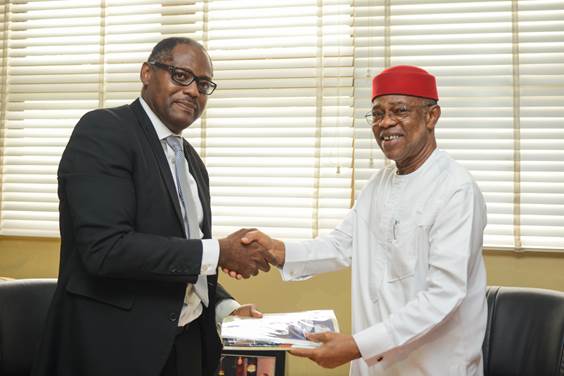
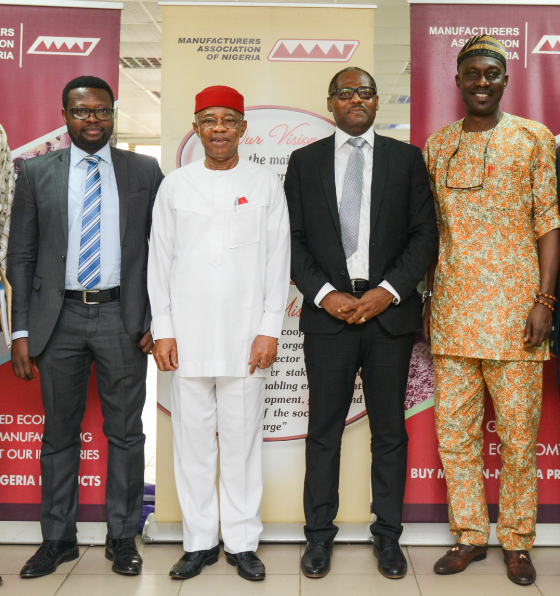
A team of the Shell Nigeria Gas leadership recently paid a visit to Manufacturers Association of Nigeria (MAN) offices at Ikeja in Lagos. A major topic of discussion was Nigeria’s industrialisation through domestic gas utilisation.

EnviroNews presents images of the event.

Shell Nigeria Gas
Managing Director, Shell Nigeria Gas, Ed Ubong (left), with President, Manufactures Association of Nigeria (MAN), Dr. Frank Udemba Jacobs, during a courtesy visit to MAN House in Ikeja, Lagos
Shell Nigeria Gas
L-R: Business Development Manager, Shell Nigeria Gas, James Makinde; President, Manufactures Association of Nigeria (MAN), Dr. Frank Udemba Jacobs; Managing Director, Shell Nigeria Gas, Ed Ubong; and Director General, MAN, Mr. Segun Ajayi Kadir, during a courtesy visit by Shell Nigeria Gas leadership team to Manufacturers Association of Nigeria office at Ikeja, to discuss Nigeria’s industrialisation through domestic gas utilisation

Fossils should be left in the ground to achieve Paris goals – Study

0

Fossil Fuel companies could be over-investing by $1.6 trillion if the world reduces its fossil fuel consumption in line with the central goal of the Paris Climate Change Agreement, according to a new study by the Carbon Tracker Initiative

coal-power-station
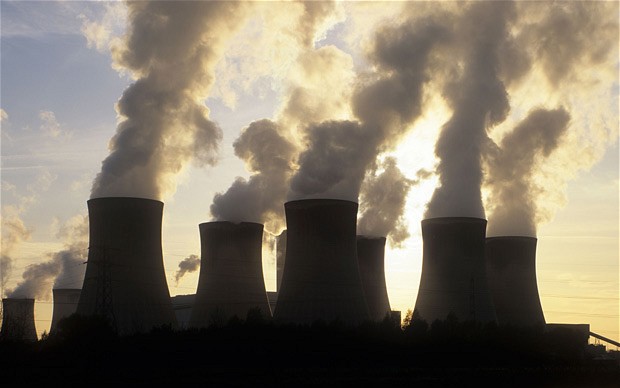
Fossil fuel pollution from a coal power station

The bulk of fossil fuel reserves would need to be left in the ground if the international community is to reach its goal of limiting the global average temperature to well under 2 degrees Celsius, as set out in the 2015 Paris Agreement.

Report author and senior analyst at Carbon Tracker, Andrew Grant, said: “At present, governments’ policies fall a long way short of the ultimate goal committed to at Paris, but we should expect a ratcheting up of international efforts. Companies that misread the signals and overinvest in marginal oil, gas and coal projects based on a false sense of security could destroy shareholder value worth billions of dollars.”

The study looked at three potential future temperature scenarios between 2018-2025. These outcomes are based on possible global action on climate change:

  • The New Policies Scenario: If the world continues “business as usual”, a predicted global temperature rise of 2.7 degrees Celsius is expected.
  • Sustainable Development Scenario: Is aligned with taking action to limit further warming to 2 degrees Celsius.
  • Beyond 2 Degrees Scenario: Where action is taken to keep temperature to a maximum global rise of 1.75 degrees Celsius-the mid point of the Paris Agreement.

According to the study, oil and gas account for over 90% of total investment under each scenario. Absolute financial risk is therefore dominated by the oil and gas industry due to its greater capital intensity than for thermal coal.

The study found that meeting energy demand in any of the three scenarios would still require some investments in fossil fuels between 2018-2025. Investments will amount to $4.8 trillion for the New Policies Scenario, $4.0 trillion for the Sustainable Development Scenario and $3.3 trillion for the Beyond 2 Degrees Scenario. A significant decrease in investment with the best case scenario of 1.75 degrees Celsius compared to the 2.7 degrees Celsius scenario.

The study is the first to model demand for oil, gas and thermal coal under the International Energy Agency’s Beyond 2 Degrees Scenario introduced last year, aligned with 1.75C. This temperature limit is the mid-point of the Paris Agreement goals. Carbon Tracker compare it with the IEA’s New Policies Scenario, aligned with 2.7C, consistent with emissions policies announced by global governments.

Fresh boost for renewable energy as International Solar Alliance is launched

0

The International Solar Alliance (ISA) received a significant boost on Sunday, March 11, 2018 at a launch ceremony in New Delhi, India attended by Heads of State and Government and top UN officials, including the head of UN Climate Change.

International Solar Alliance
Prime Minister Narendra Modi of India speaking at the launch of International Solar Alliance

Formed in parallel with the Paris Agreement, the alliance was first announced by India and France at the United Nations Climate Change Conference of the Parties (COP 21) in Paris in November 2015.

The initiative, meanwhile ratified by 30 countries and signed by 60, focuses on investment in large-scale solar energy in developing countries to both meet escalating energy demand and fight rapid climate change.

“We have to make sure that a better and more cost effective solar technology is available to all. Promoting its development and use can bring prosperity for all and can help reduce the carbon footprint on Earth,” said Prime Minister Narendra Modi at the summit in New Delhi.

Speaking on behalf of UN Secretary-General António Guterres, UN Climate Change Executive Secretary Patricia Espinosa stressed the important work of the ISA in breaking down barriers to real climate action:

“Our globally agreed goals in the Paris Agreement and the Agenda for Sustainable Development cannot be achieved without your (ISA’s) effort to scale up solar power generation and support countries with great solar potential. This is precisely what is needed to achieve those goals… This is our moment to deliver on the promise of a better future agreed in Paris,” she said.

The primary objective of the Paris Agreement is to limit the rise of global average temperature to well below 2 degrees Celsius and as close as possible to 1.5 degrees. Accelerating the transition towards a low carbon economy and boosting investments into infrastructure for renewable energy, notably solar power, is therefore critical to realizing the Paris goals.

The main goal of the International Solar Alliance is to lower the cost of finance and spur investments across the solar supply chain, including in manufacturing, project development and storage.

The initiative plans to mobilise $1 trillion in funds for future solar generation, storage and technology across the world and aims to create at least 1,000 gigawatts (GW, or 1,000 MW) of solar power capacity by 2030.

In support of this, the Indian government will undertake 121 different projects related to solar deployment and training people in renewable energy-related skills.


France Pledges an extra €700 million for Solar Climate Action

President of France Emmanuel Macron called on alliance members to “concretely act” on solar investment, while pledging an extra €700 million ($861.5 million) for solar energy projects in developing nations by 2022 in addition to the €300 million France committed in 2015.

“We only have one planet, we are sharing it, and there is no alternative. And this joint destiny means that we also have some joint duties,” he said.

Summit leaders emphasised the importance of working with private investors to finance solar projects and the enabling policies that give energy access to those most in need. Lowering the cost of investment across the supply chain is what the 32 signatories’ collective $1 trillion investment intends to do in order to meet these important objectives.

The ISA summit was attended by 21 heads of states and heads of government, several top ministers, in addition to participants from multilateral banks and UN Climate Change.

“It is evident that there has been a huge surge in interest in joining the ISA, and the commitment at the highest level of these founding states, towards clean, affordable, appropriate and sustainable energy,” said T S Tirumurti, the Secretary Economic Relations for the Indian Ministry of External Affairs.

ILO told to sever ties with tobacco industry

0

The Environmental Rights Action/Friends of the Earth Nigeria (ERA/FoEN) has thrown its weight behind global calls for the International Labour Organisation (ILO) to cut ties with Big Tobacco. The group insists that the ILO engagements with Eliminating Child Labour in Tobacco Growing Foundation, a non-profit funded by tobacco companies since 2002, reflects a conflict of interest in the United Nations (UN) system.

BATN
The British American Tobacco Nigeria (BATN) office complex in Ikoyi, Lagos

This call is coming as the governing body of the ILO meets this month to decide whether it would shutter one of the tobacco industry’s last-remaining avenues of interference in the UN, making it harder for it to weaken, delay and block live-saving public health and labour policies.

The vote comes two weeks after the Director-General, Michael Moller, issued a report calling on the ILO governing body to end its public-partnerships with Big Tobacco. The Director-General’s report comes on the heels of over 150 public health and labour leaders calling on the ILO to cut ties with the deadly industry and as the Secretariat of the World Health Organisation Framework Convention on Tobacco Control (WHO-FCTC) is demanding the ILO sever ties.

“ILO and Big Tobacco’s split is long past-due: The ILO must join other U.N. agencies in casting this deadly industry out for good,” said Akinbode Oluwafemi, deputy executive director of ERA/FoEN. “Big Tobacco has no place in any U.N. space. This month, the ILO has the opportunity to stand on the right side of history and show Big Tobacco the door.”

To date, the ILO has received more than $15 million from tobacco corporations for joint programs, including more than $10 million from Japan Tobacco International (JTI) for an effort to curb child labor in tobacco farming. The Director-General’s report finds, however, that the focused initiatives do little to curb child labor in tobacco fields because they do not shift the tobacco industry-driven cycle of poverty for tobacco farmers that forces children into the fields.

The tobacco industry commonly promotes programmes like these to boost its public image and maintain influence in policymaking spaces. In the same vein as JTI’s effort, Philip Morris International recently launched a Foundation for a Smoke-Free World, to which it will give nearly $1 billion over the next decade.

“The ILO is one of the last avenues of Big Tobacco’s influence into the U.N.,” said Jaime Arcila, Latin America organiser with Corporate Accountability’s tobacco campaign. “It’s high time the ILO recognise the harms Big Tobacco poses to public health, workers and the environment and end its partnerships with the industry.”

Despite Big Tobacco’s abusive labor practices and its membership violating a core tenet of the Global Tobacco Treaty, its influence still runs deep in the ILO: In November 2017, the Governing Body failed to come to a decision on whether or not to end its private-public partnerships with tobacco corporations.

In Nigeria, just as elsewhere, the tobacco industry has been identified with monopolistic practices that have made farmers go the extra mile to meet their demands, including forcing their kids as young as five years of age to work 24/7 on tobacco farms.

Also, British America Tobacco Nigeria (BATN) is yet to wriggle from anti-labour practices leveled against it by some ex-workers, some of whom now have debilitating illnesses due to poor factory conditions and exposure to tobacco dust.

WHO enlists “Disease X’’ among most dangerous epidemics

0

Along with Ebola, Zika and other well-known notorious diseases, Disease “X” was recently enlisted by the World Health Organisation (WHO) as the killer that is potential to trigger deadly global epidemic in the near future.

Dr Tedros Adhanom Ghebreyesus
Dr Tedros Adhanom Ghebreyesus, Director General of the World Health Organisation (WHO). Photo credit: FABRICE COFFRINI/AFP/Getty Images

After a meeting at its Geneva headquarters gathering in Switzerland of health experts across the world, the organisation released its 2018 Blueprint list of priority diseases, which include Ebola, Lassa fever, Severe Acute Respiratory Syndrome (SARS), Rift Valley fever (RVF) and Zika.

According to the WHO, the Blueprint is to improve global coordination, accelerate research and development on certain diseases, develop norms and standards on worldwide scope and promote response plan in some contexts.

Among eight diseases, last but not the least threat is Disease “X”.

“Disease X represents the knowledge that a serious international epidemic could be caused by a pathogen currently unknown to cause human disease,’’ the WHO said.

Report says it is the first time that the organisation puts an entry of unknown disease in its Blueprint to arouse global awareness of health experts and communities.

According to an analysis by the Telegraph, sources of Disease X could be experiments of bio-weapons, animal diseases that can be transmitted to humans, zoonotic diseases in general, and the potential evolution of existing diseases.

Actually, the above sources have been unveiled as the causes of some fatal diseases which are well-known now but were mysterious killers when they first appeared, such as Ebola, HIV and even the smallpox virus.

The WHO said all the named diseases “pose major public health risks and further research and development is needed, including surveillance and diagnostics.”

Outside the 2018 Blueprint, the WHO also mentioned dengue, yellow fever, HIV/AIDs, tuberculosis, malaria, influenza causing severe human disease and smallpox.

Other diseases are cholera, leishmaniasis, West Nile Virus and plague, saying further research and development is needed to tackle these diseases.

×