The African Development Bank (AfDB) will on Tuesday, March 27, 2018 launch 12 new projects funded by the Agriculture Fast Track Fund (AFT) on to support agribusiness small and medium-sized enterprises (SMEs) in Nigeria and five other countries – Burkina Faso, Ethiopia, Ghana, Malawi, Mozambique and Ghana.
Dr. Akinwumi Adesina, President of the African Development Bank (AfDB)
The launch period ends on Thursday, March 29.
The Agriculture Fast Track Fund is managed by the AfDB to support the development of a strong pipeline of “bankable” agriculture infrastructure projects, funded by the governments of the United States, Denmark and Sweden, in support of project preparation activities to facilitate the take-off of African SMEs.
The AFT finances the project development cost of a broad range of agriculture infrastructure spanning the entire value chain, from production to market. Target projects range from rural feeder roads to agro-processing and marketing facilities, and outgrower schemes. Emphases are on projects that contribute to food security and support to smallholder farmers.
The projects are being implemented in 10 eligible regional member countries of the AfDB – Benin, Burkina Faso, Côte d’Ivoire, Ethiopia, Ghana, Malawi, Mozambique, Nigeria, Senegal and Tanzania.
The year 2018 is poised to be a year full of important milestones where more detailed policy is to be put in place that can unleash higher ambition and stronger action now and in the future.
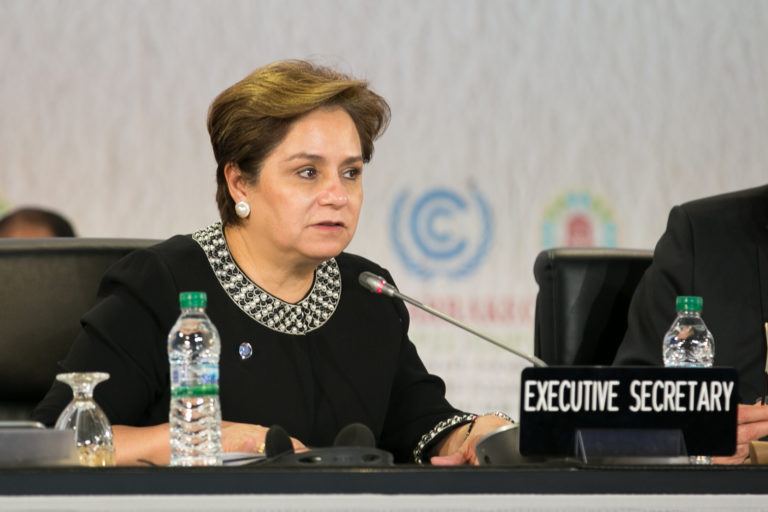
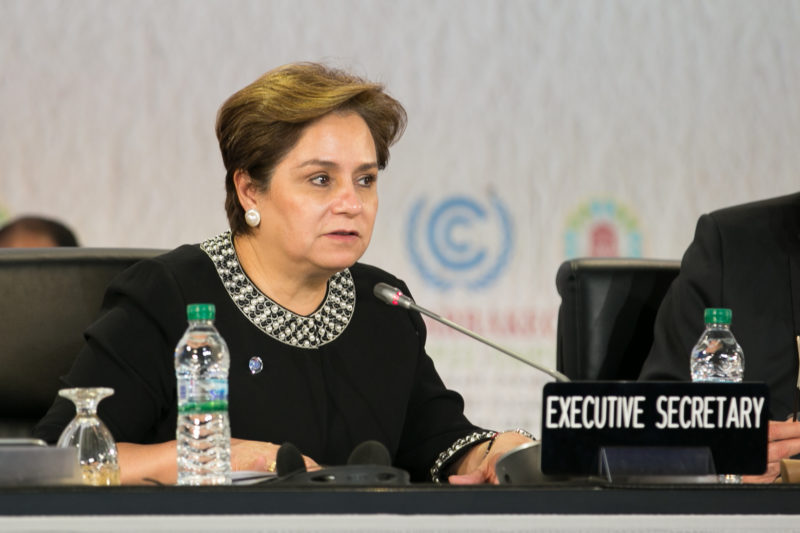
Patricia Espinosa, executive secretary of the UNFCCC
These milestones relate to catalysing increased climate action before 2020, coordinating an important international conversation to check progress and negotiations to unlock the full potential of the Paris Agreement.
Given the importance of reaching these milestones, UN Climate Change (UNFCCC) began assisting countries and chairs of specific negotiating forums as early as January 2018 to plan their work and map out the year.
“With countries clearly in the driving seat of the climate change process, we look forward to supporting nations towards the 2018 milestones throughout the year and at the 24th Conference of the Parties (COP24), to be held in Katowizce, Poland in December 2018,” said Patricia Espinosa, Executive Secretary of UN Climate Change.
Following the adoption and early entry into force of the Paris Climate Change Agreement, many may understandably ask why there is yet again talk of milestones in the climate change negotiations.
The short answer is that the negotiations need to enable the implementation of ever more decisive and defining climate action, including through policies. The long answer below will attempt to shed more light on this and to explain the milestones.
Action before 2020
Action before 2020 is critically important. This is mainly because countries want continuous action without any gaps given that their climate action plans (nationally determined contributions – NDCs) will likely be fully implemented from 2020 onwards.
But it is equally important because strong action now lays the foundation for stronger action later. To this end, the climate change negotiations have put in place the extension of the Kyoto Protocol up to 2020, a process known as the Doha Amendment. The Doha Amendment is subject to ratification at the national level.
In the run-up to 2020, the Protocol remains an essential vehicle for many developed countries to make more rapid and urgent cuts in their greenhouse gas emissions.
The protocol, since its adoption at COP3 on December 11, 1997, has become a beacon of climate action and an inspiring precursor to the 2015 Paris Climate Change Agreement, because it demonstrated that international climate change agreements can bring the countries of the world together to address a global problem.
As of 1 March 2018, 110 Parties have deposited their instrument of acceptance. To enter Doha into force requires 144 of the 192 parties to the Kyoto Protocol.
“Thanks to Kyoto, we have built a solid foundation, paving the way for even greater action in the context of the Paris Agreement,” said Ms Espinosa,. “I urge those countries which have not yet done so to deposit their instruments of acceptance as soon as possible,” she added.
To further boost action before 2020, a special forum will take place at COP24 in Katowice in December. In preparation for this, countries may make submissions around strengthened action before 2020 by May 1, 2018.
These submissions will serve as valuable input for the forum.
Lastly, it is very important that developing countries receive assistance to act. To this end, developed countries committed to provide $100 billion per year by 2020 to leverage further significant funding.
“Developing countries need this support so they can make their contribution to global climate action and build resilient societies able to cope with the risks and minimize the impacts already underway. I urge developed countries to continue showing leadership in the provision of this support,” Ms. Espinosa stated.
Reality check: clarifying the ‘what’ and the ‘how’ in preparation for further action
Countries agreed to assess progress in 2018 towards the goals of the Paris Agreement, including the key goal of limiting the global average temperature increase to well below 2 Celsius, while pursuing efforts to limit the increase to 1.5 C.
Under the leadership of Fiji, the current COP presidency, countries decided to conduct the Talanoa Dialogue.
“The 2018 Talanoa Dialogue is an important international conversation in which countries and non-Party stakeholders will check progress and seek to increase global ambition to meet the goals of the Paris Climate Change Agreement,” said Ms. Espinosa.
The dialogue will take place throughout the year and will be structured around three questions:
Where are we?
Where do we want to go?
How do we get there?
Both countries and non-Party stakeholders such as companies, cities or regions can input into the dialogue via the Talanoa Dialogue Online Platform. Parties and stakeholders are encouraged to provide input around the three questions, ideally before 2 April 2018. This provides everyone involved with the opportunity to share information on:
A vision of the future with respect to where people want to be in terms of climate change and established goals; and
Conditions required achieving that vision.
The Pacific island concept of ‘Talanoa’ aims at an inclusive, participatory and transparent dialogue.
The purpose of the concept is to share stories, build empathy and to make wise decisions for the collective good. The Talanoa method purposely avoids blame and criticism to create a safe space for the exchange of ideas and collective decision-making.
The dialogue will consist of a technical phase in 2018 and will end with a political phase at COP24 in Katowice.
“It is my sincere hope that the Talanoa Dialogue will culminate in providing real-world solutions to both countries and non-Party Stakeholders while providing a catalyst that can take ambition to the next level,” Ms. Espinosa said.
Unleashing full action through the Paris Agreement
While these building blocks, including the Talanoa Dialogue, are crucial towards building ambition beyond 2020, another key milestone in 2018 will be to ensure that the guidelines and rules are in place to enable the full implementation of the Paris Agreement.
Putting in place these guidelines and rules is referred to as the negotiations on the Paris Agreement Work Programme. The conclusion of this important work has been mandated to happen by the end of 2018.
The guidelines and rules are indispensable for unleashing the full potential of the Paris Agreement in all its aspects, including greater action on adaptation and building resilience to climate change impacts such as floods or droughts, reducing emissions, as well as providing the means of support to developing countries in terms of finance, technology and capacity-building.
The Paris Agreement is in and of itself a complete legal instrument. However, the completed work programme is needed to make it possible to transform legal articles of the Agreement into practical actions and to enable everyone to see how the agreement is being implemented by each individual country. As such, the work programme will be equally important to help determine whether the world as a whole is on track to achieve the goals of the Paris Agreement.
Without a completed work programme, the tools for monitoring and measuring the day-to-day efforts of implementation will not be available to countries. This could potentially undermine trust amongst countries, but also potentially lessen the scope for constructive cooperation on climate action amongst countries.
“The work programme negotiations now need to speed up to reach the important 2018 deadline,” Ms Espinosa urged. “The completed work programme needs to be balanced in terms of action for adaptation and action for reducing emissions, as well as in terms of the enabling support, and will help the world capitalise on the early entry into force of the Paris Agreement,” she added.
Some rural communities in Benue State are being economically empowered and provided employment opportunities, thanks to an initiative by the United Nations Development Programme (UNDP) and the Energy Commission of Nigeria (ECN) that is aimed at utilising renewable resources to meet their energy demands, especially for agro-processing.
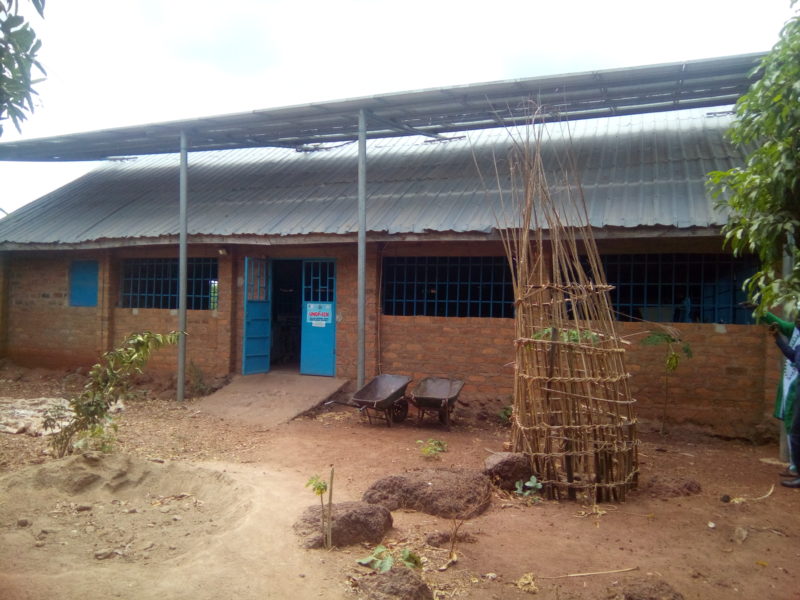
The factory building at Igyo Ali Farm in Mbatyou-Mbateva, Buruku Local Government Area (LGA) of Benue State
Via the establishment and operation of a “green” cottage industry, agricultural produce are now being processed faster, at reduced cost, and with less harm to the environment.
For instance, cassava processing into garri, a staple diet in the country, is now being powered by solar energy under the venture, which communities like Mbatyou-Mbateva, Mbator and Wanune that are off the national power grid, and with no access to reliable source of electricity, are beneficiaries.
The Igyo Ali Farm in Mbatyou-Mbateva, Buruku Local Government Area (LGA) of Benue State houses a solar-powered agro-processing facility, which is said to be the first cassava processing project in Nigeria that is fully powered by energy from the sun. A solar-powered water borehole nearby provides potable water to hundreds of households in the community.
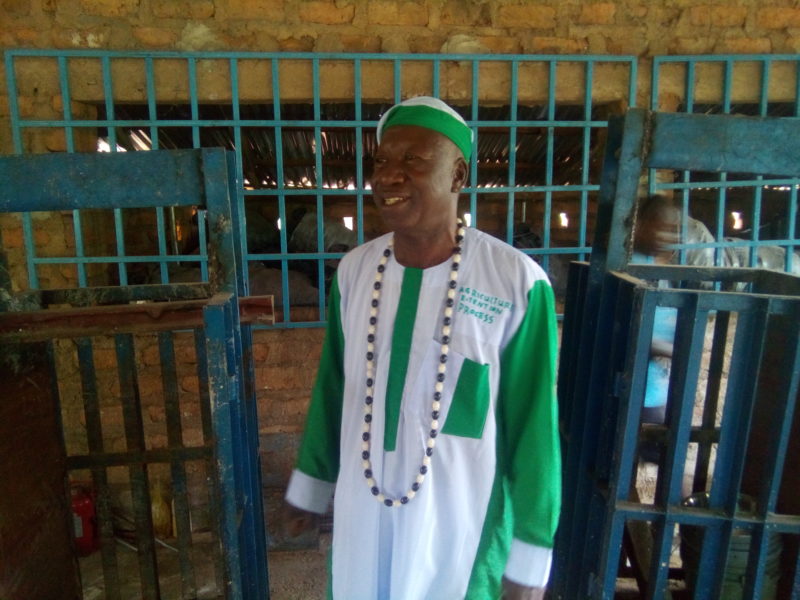
Chief Igyo Ali, Proprietor of Igyo Ali Farm
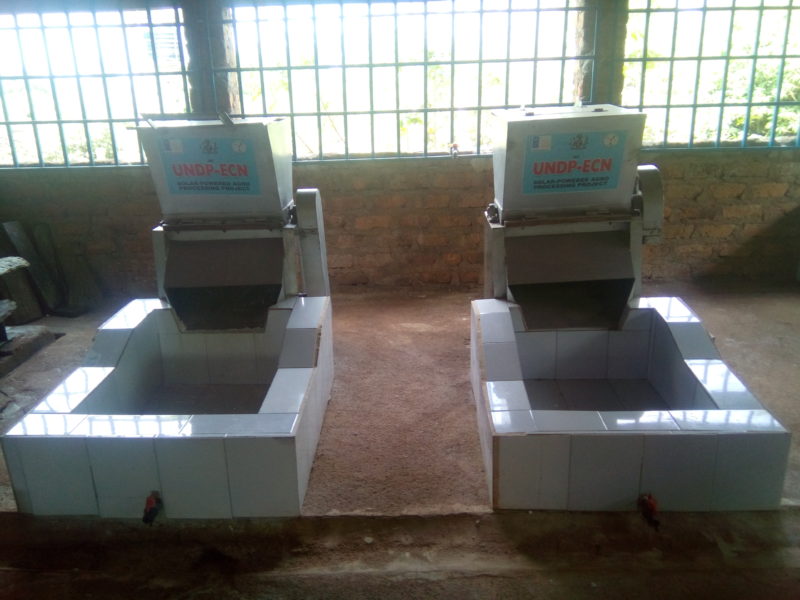
The factory comprises a cassava peeling machine, two cassava graters, three cassava pressers (to de-water the grinded cassava in preparation for the frying), one vibrating sifter, two gas or charcoal-fired garri fryers, and two cooling bowls.
Power is being supplied by a 15kva solar power station comprising 20 12-volt batteries, 60 360w solar panels, and three inverters in a control room which, along with the electro-mechanical equipment, are accommodated by a factory building.
Chief Igyo Ali, Proprietor of the farm, said that time, labour and cost of processing cassava to garri have been considerably reduced compared to what was obtainable before the UNDP/ECN intervention.
Some of the cassava processing machines in the factory
He said: “The equipment was installed between March and April, 2017. We produce up to 10 bags of garri in a day and, at 100kg per bag, that amounts to 1,000kg of garri per day. I have withdrawn my old equipment and method of processing garri and I have adopted this new process, which is faster and cleaner because I no longer use firewood to fry the garri and buy diesel for the diesel engines. We now use solar-powered electric engines and gas or charcoal instead of firewood. I will say maintenance of the factory is at zero cost in comparison to what was obtainable before.
“Besides the provision of a solar-powered borehole and water system to make available water for the factory and also for the community, the UNDP also trained my manager in handling the equipment right from inception. He has stepped down the training to others. We were advised to form a women cooperative society, which we did and which is now thriving.”
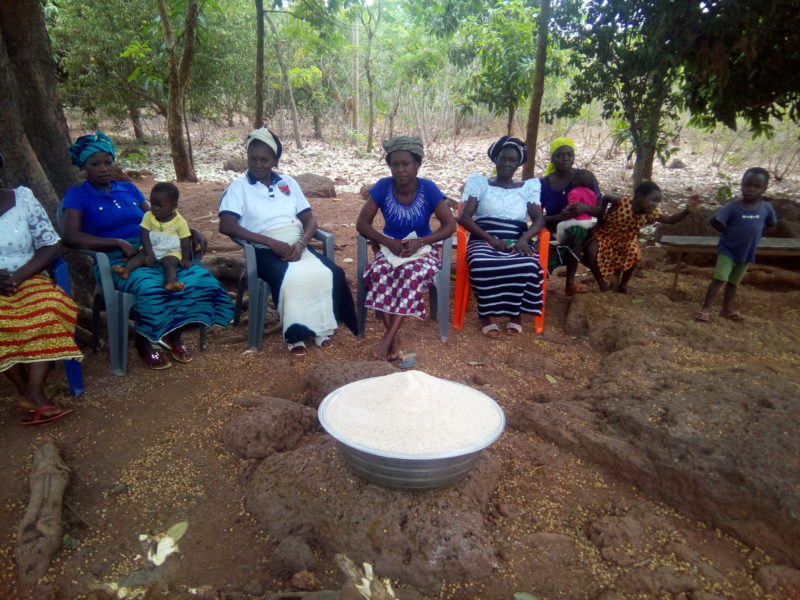
Some members of the Mbateva Cooperative Society, Garri Processing
Madam Mgueshima Torgba, Leader of the Mbateva Cooperative Society, Garri Processing, said: “We used to cut, peel, grate and fry the garri manually, a process that makes us bleed because we usually cut our hands. But this is now a thing of the past. We can now get up to 20 bags of garri in a day with less stress.
“And after processing, it is easier to sell, and earn more profit. This is because we have more to sell, and we sell more and the turnover is high, compared to what obtained before. The cooperative’s relationship with the factory is a symbiotic one. We work and help out in the factory, while the factory assists us as well.”
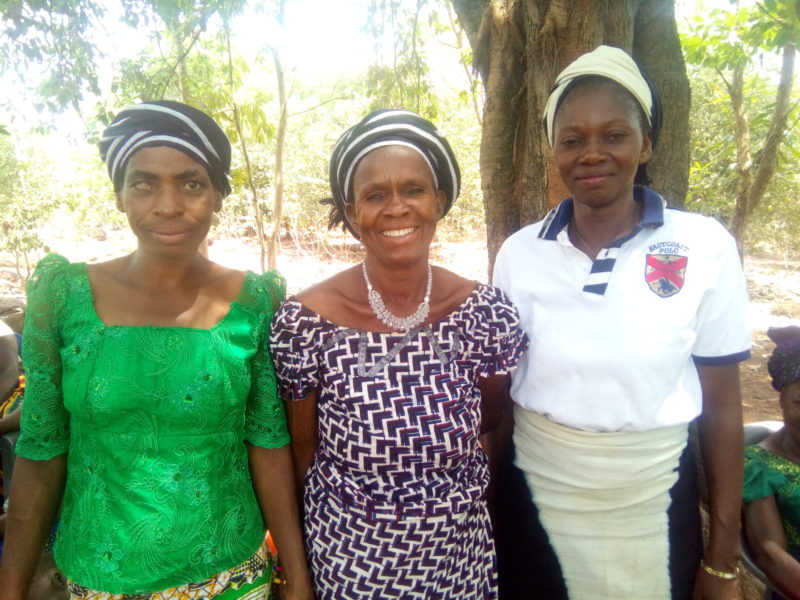
Madam Mgueshima Torgba, Leader of the Mbateva Cooperative Society, Garri Processing (centre), with Mwuese Ayila and Kpenhangen Igyo
A member of the cooperative, Mwuese Ayila, submitted: “The factory has increased the quantity of garri I produce, and I have more money, such that I now help in the running of the home, and reduced the pressure on my husband. Now, I can take care of basic home needs like foodstuff and part of the children’s school fees. My personal outlook has also improved as I can now afford better clothing. Previously, it was difficult for me to attain the status I have now attained.”
Another member of the cooperative society, Kpenhangen Igyo, explained: “Before now when we were processing garri manually, the quantity was less. But now that the process is more mechanised, we produced much more and, instead of going out to look for buyers as was the case previously, people now come here themselves to buy our product, which saves us the cost and stress of going afar to market the garri.”
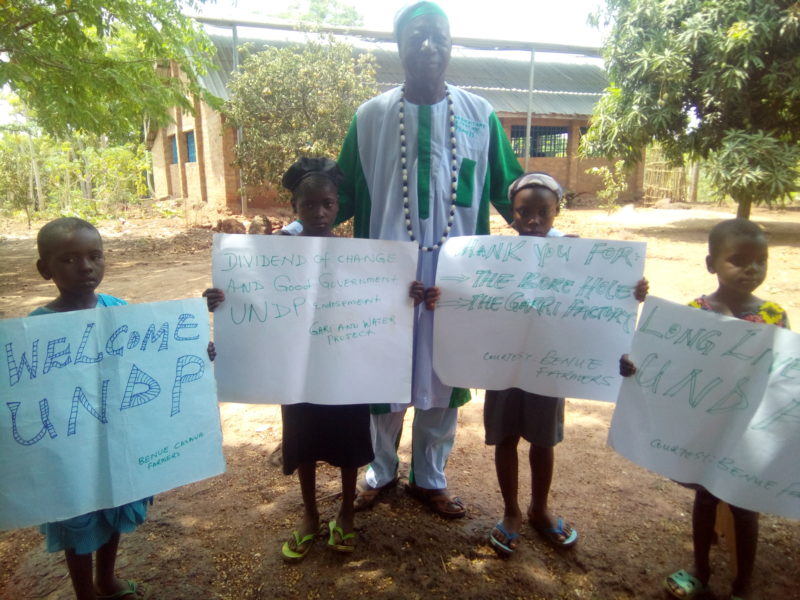
Chief Igyo Ali and some young ones expressing their appreciation
A retired Coporal in the Nigerian Army and farmer who patronises the factory, Zakari Wayo, contends: “The use of solar mills has considerably reduced the amount of manual processing, as well as reliance on diesel-fuelled mills. We are saving cost as a result of the reduction in the consumption of diesel fuel. The time hitherto spent traveling to mills and doing manual labour has been channelled to other income-yielding efforts that is alleviating poverty.”
Farm/factory manager, Polycarp Igyo Alli, disclosed: “I was trained by the UNDP to manage the factory and how to operate the machinery. I have trained someone in return, who is now my assistant. The machines are in perfect working condition. However, for a while we have not processed cassava, because the farming is not in season.”
Farm/factory manager, Polycarp Igyo Alli, with his assistant
Chief Alli, while lauding the UNDP and ECN for the gesture, however wants the organisations as well as the state government to come to their aid and fix the roads and provide farm equipment that will help the community to maximise the usage of the mill.
His words: “During the rains, access roads to the factory are not accessible. We also plead for a tractor that will enable mechanised cultivation and massive cassava production, to ensure that the machines are always kept busy. We need mechanised agricultural revolution. Also, fertiliser is not readily available and affordable. It should be subsidised and made available. Two bags of fertiliser per person are allocated by the government. This is not enough and should be increased.”
In Mbator, Konshisha LGA, project coordinator and community representative, Chief Tyodaa Emmanuel, said that the equipment, which was installed August 2017, comprises a peeling machine, two graters, three pressers, one vibrating sifter, two fryers, and one cooling bowl. A total of 58 solar panels, he adds, are powering the entire system as well as the borehole.
Mbator, Konshisha LGA, project coordinator and community representative, Chief Tyodaa Emmanuel
“For the people to benefit, monitor and manage the equipment, we formed a cooperative society known as Motive-In-Motion Garri Processors Cooperative,” he stressed, adding that while four persons (trained by the UNDP) operate the machines, two women fry the garri.
Emmanuel, who is the Zege Mzehemen U Tiv (Chief Progress of Tiv People), added: “The project has brought tremendous change and eased the suffering of the community in cassava production. It used to take weeks and months to process cassava. Now, a single farmer can get up to 21 bags of garri processed within a week. Garri is now produced faster and at reduced cost.
“To encourage farmers to bring their cassava for processing, the project is designed not to make profit, but to alleviate the sufferings of the community. The community is very grateful for this project.
“They really appreciate the UNDP and ECN for coming to their aid with this kind of initiative because it eases their garri production, as they used to expend a lot of time and energy and money to process cassava into garri. But the project has eased their production, and they can do more production now than they did before.
Bags of garri ready for collection at Mbator mill
“And also with the water in place, it has brought about access to clean and potable water to the community, and there are now fewer reported cases of water-borne diseases. Since there is no electricity in the community, the people use the electricity to charge their handsets (phones). Hitherto, they would go several kilometres to where they can get a generator to charge their phones.
“Cassava processing is something that has to be done within 24 hours and the community lacks vehicle to convey the cassava from the farms to the factory. The UNDP should please come to our aid by providing vehicle (a truck) to help us transport the cassava from the farms to the factory for processing to garri.”
Mrs Atser Mbahehen, a member of the cooperative society who works in the factory, stated: “The coming of UNDP to our community has helped us to address a lot of challenges in the processing of cassava into garri that we used to face by using the old, local method.”
Mrs Atser Mbahehen
Mbahehen, who is the chief coordinator of the women who fry garri in the factory, added: “I wish to register our appreciation to the UNDP because the factory has financially benefitted me and other women in the community.”
On Thursday, March 22, 2018, the international community celebrated World Water Day on the theme “Nature and Water.” The event was used to raise global awareness of how nature can be explored to address water challenges including pollution, threats of new and reemerging diseases, threats to livelihoods, access to sufficient safe water, sustainability of the water resource, and climate change impacting the world today.
Chief Nii Kwashie Gborbilor of Ngleshie Amanfro speaking at the event
In Ghana, a community durbar was held to mark the Day at the Manhean Fish Market near Galilea, Ngleshie Amanfro in the Ga South Municipal Area of the Greater Accra Region. The occasion was used to urge Ghanaians to desist from activities that pollute and destroy water ecosystems and water resources in particular. Members of communities near rivers and water bodies were specifically asked to be careful how they handle natural water resources in their areas.
“We urge fishermen, fishmongers and everyone in this area to be careful of how they handle the water, because your activities are impacting negatively on the resource, which has become polluted. And unless these activities are checked, the pollution level will rise and eventually destroy the resource completely.”
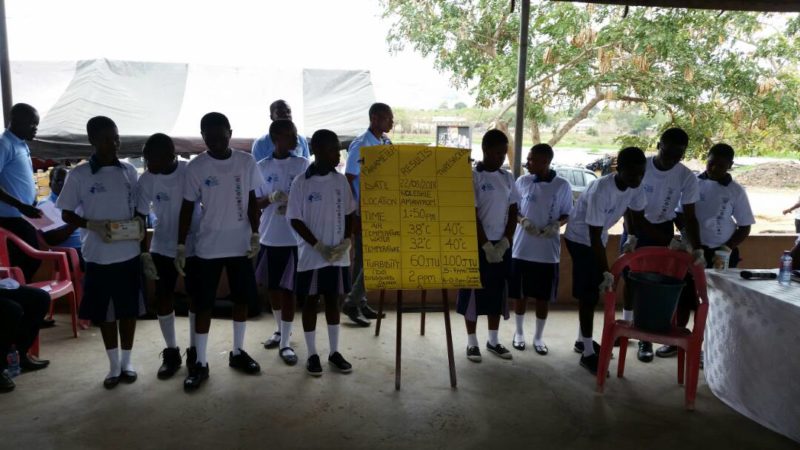
The call was made by a team of school children during the Community Durbar. They were presenting their findings after conducting a test on the water of the Weija Dam that lies within the portion of the Densu River Basin, which passes through the area.
The dam/river is an important source of livelihood for catchment communities of Manhean, Galilea and Ngleshie Amanfro among others. Thus, it plays a vital socio-economic role in the lives of the people. Additionally, it is one of the main fresh water bodies in the country and provides the bulk of raw water treated and supplied by the Ghana Water Company Limited (GWCL) to most parts of the Greater Accra Region.
But as pointed out by the children, human activities including the use of improper fishing methods, farming along the banks, dumping of refuse and faeces, open defecation, washing of clothing, utensils and vehicles, bathing, and watering of cattle are damaging the entire water ecosystem.
School children at the World Water Day event in Ghana
The 10 students selected from the Joy Academy School at Galilea, monitored the water to ascertain its health or pollution status. The exercise was part of activities marking World Water Day in Ghana. They used a simple Water Monitoring Kit to check for several things including thermal pollution or temperature of the water, the dissolved oxygen content, turbidity and PH.
Their findings indicated that the PH was 9, which is higher than the required limit of 6.5 to 8.5 and is a sign that the water is acidic; the dissolved oxygen content was 2 parts per million, which is far lower than the prescribed range of 5 to 7 parts per million, indicating the presence of high levels of organic matter such faecal substances; while, turbidity or cloudiness was 60, but should have been zero or clear, and suggests high amount of dirt in the water.
Both the water temperature, which was 32 degree Celsius and air temperature, which was 38 degree Celsius, and showing the level of thermal pollution were within the range of 40 degree Celsius for tropical water.
According to the children, in spite of the fact that thermal pollution was within limits, the overall result “is bad news for this water body,” and is a signal that “the water is stressed.” They maintained that the stress level was unacceptable and should be an issue of concern to all, especially as “there is currently no sign of dragon flies or butterflies around the area.” The presence or absence of these invertebrates is bio-indicators of the environmental integrity of the entire water ecosystem.
As the children presented their findings, one could observe that “they had caught the attention” of the dignitaries and other people present at the Durbar. Perhaps, it had now dawned on them that there is need to take immediate steps to halt negative human activities around the water body, to protect the entire water ecosystem and ensure its sustainable functioning. Perhaps also, they had remembered the death of the once vibrant Korle Lagoon at Korle Gonno, which experts blame on unchecked irresponsible human activities. It is one of the lagoons in Ghana’s coastal stretch that some years ago supported a thriving local fisheries industry.
Therefore, the call by the children on Ghanaians to be careful how they handle fresh water and its ecosystem, is also a call for Ghanaians to move away from the “business as usual” attitude and begin to value and protect natural water ecosystems such as forests, wetlands, mangroves and river banks.
The need for Ghanaians to reflect on the state of our water bodies was the focus of a message by the Minister of Sanitation and Water Resources, Kofi Adda to commemorate the occasion. In a statement read on his behalf, he urged Ghanaians to begin taking “practical actions to reforest our degraded river banks; restore our lost wetlands; and reconnect our rivers and floodplains to promote recession agriculture to improve livelihoods.”
For this reason, the Minister commended on-going initiatives to demonstrate natural infrastructure as “nature-based solution” for climate change adaptation and sustainable development. These initiatives are developing knowledge on how to use built water infrastructure such as dams and natural green infrastructure such as watersheds for poverty reduction, water-energy-food security, biodiversity conservation, and climate resilience.
His message further said, “It is also heart-warming to note that practical action is being taken to develop public-private partnerships to address the deteriorating Volta Delta through ‘win-win’ result oriented programs of restoring lost mangroves, improving the livelihoods of local resource users, biodiversity, and enhancing coastal defence.”
Mr. Adda additionally reminded Ghanaians be mindful of the impacts of climate change, which includes flooding, droughts, and increasing competition among users of our water resources. He cited the changing rainfall patterns that are impacting negatively on water availability for water-dependent sectors such as agriculture, livestock, and domestic water supply in sustaining livelihoods particularly in the northern regions of the country.
The minister was of the view that “this is an emerging area we seriously have to foster partnerships and cooperation among stakeholders to consider, adapt and promote simple, but important water conservation and utilization techniques and natural infrastructure towards addressing the vagaries of climate change.”
He said the theme for this year’s celebration Nature and Water, “is also a clarion call on us to inspire political, community, and media attention and action as well as encourage greater understanding for us to be more responsible towards water use and conservation.”
The Chairman for the Durbar was Chief Nii Kwashie Gborbilor of Ngelsei Amanfro blamed the current polluted state of the water in the dam/river on the in-disciplined nature of people. He did not mince words when he expressed his disgust at the practice of open defecation and dumping of refuse in water bodies, saying, “all who engage in such practices are mad people.”
Chief Gborbilor said a deeper reflection on the practice of open defecation and the dumping of refuse in water bodies “just doesn’t make sense.” He wondered: “why would people want to dress nicely and keep their immediate surroundings clean, and yet dump rubbish into rivers as well as defecate directly into them or wrap up the shit and throw into the nearest water body.”
He charged the District Assembly to start enforcing the relevant bye laws and arrest all defaulters adding that, “I, Nii Kwashie Gborbilor and my elders are ready to support you to discharge your duties.”
Earlier in the week, the National Planning Committee for World Water Day celebration in Ghana had issued press release to announce the event. It reminded the general public that “nature can only continue to deliver its services where ecosystems are healthy and functioning well. As we use and divert water, we must ensure that ecosystems receive the water they need. Nature is both the source of our water and a water user. Where this is not recognised, biodiversity is harmed and people lose the multiple benefits nature provides. Integral to water security therefore is water for nature and nature for water.”
It is worthy of note that Sustainable Development Goal 6 commits the world to ensuring that everyone has access to safe water by 2030, and includes targets on protecting the natural environment and reducing pollution. Target 6 states: “by 2020 protect and restore water-related ecosystems, including mountains, forests, wetlands, rivers, aquifers and lakes.”
If nations will account for nature’s services and invest wisely, nature will become a source of solutions to the 21st century water challenges.
The African Agricultural Technology Foundation (AATF) has commended the National Biosafety Management Agency (NBMA) for setting the pace for the regulation of modern biotechnology in Africa.
Dr. Rufus Ebegba, Director General/CEO, NBMA (centre), with the team from African Agricultural Technology Fund (AATF)
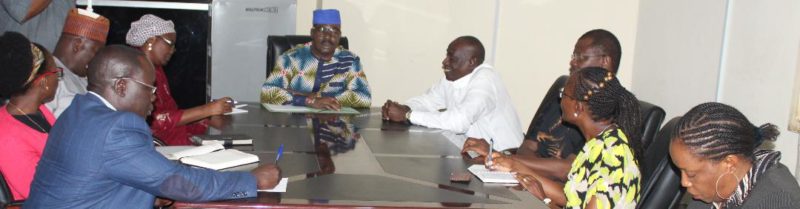
A delegation from the AATF on a courtesy call to the agency on Monday, March 26, 2018 in Abuja said that the NBMA has registered Nigeria’s preparedness to deploy biotechnology in a safe and responsible manner.
Dr. Issoufou Kollo, leader of the delegation and Head, AATF West Africa, said that the whole continent has benefited immensely from the NBMA’s decision to play by the rules to ensure the practice of modern biotechnology poses no harm to human health and the environment.
“We have followed the activities of this young agency since its creation and we are proud to be associated with it. It has not only set the standard in Africa but has also shown that the Nigeria has put in the necessary safe guards in place for the deployment of modern biotechnology,” he said.
Earlier, Dr Rufus Ebegba, Director General/CEO, NBMA, informed the delegates of the modest achievements of the agency since its creation. He listed these to include: granting over four permits for Confined Field Trials and one for commercial release and capacity building for its staff.
Dr Ebegba also informed the guests of the establishment of the state-of-the-art GM Detection and Analysis Laboratory by the agency for the purpose of detection and analysis of GMOs in foods or crops.
A researcher, Mr Gbenga Aina, has appealed to the Federal Government and Lagos State Government to support researches and inventions in waste conversion processes.
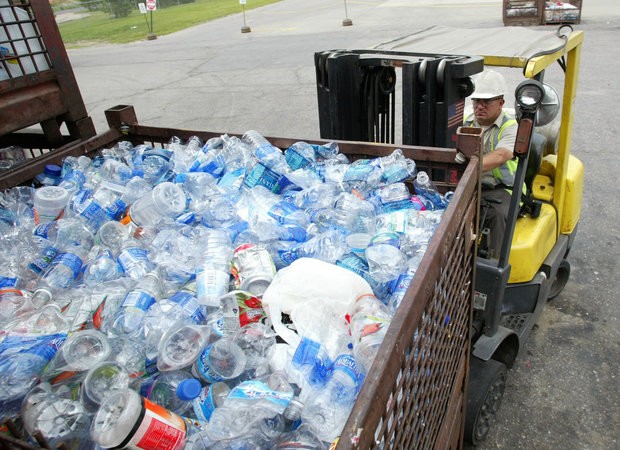
Disposal of waste plastic bottles. The researcher said that he has developed a process and machine which converts plastic bottles and water sachets into polycrete asphalt. Photo credit: Al Goldis / Associated Press
Aina, who is also a geologist, made the call in an interview with News Agency of Nigeria (NAN) in Lagos on Monday, March 26, 2018.
He said that he had developed a process and machine which converted plastic bottles and water sachets into polycrete asphalt that could be used for road construction and rehabilitation.
Aina said: “I have come up with a process which led to the invention of a machine.
“The process and machine turn waste plastic bottles and sachets into polycrete asphalt, which can be used as interlocks for roads or in form of asphalt for constructions and buildings.
“The idea is aimed at saving the environment from the huge waste generated from plastic bottles and bags, which pollute and degrade the environment as well as the entire ecosystem,’’ he said.
Aina said that work on the invention began in 2010 after a programme which he attended in India.
“I was sent to the programme as a representative from the Lagos State University (LASU); I got into this research because of the passion which I have for solving problems.
“My Indian friends and colleagues wanted to carry out a demonstration on the use of processed waste for road constructions; I picked up interest in it and I followed through with them.
“When I came back to Nigeria in 2010, I started working on how to replicate the invention; that was what gave birth to the production of polycrete asphalt.
“Polycrete asphalt is created from plastic waste, PET bottles, sachet nylon, polythene bags and silt packed from blocked drainage channels.
“This invention led me to building a locally made waste treatment plant and asphalt marine that converts all the waste into finished products, either as interlock or polycrete asphalt,’’ he said.
Aina said that he had carried out pilot studies with the finished products to repair some roads in Lagos State.
He, however, lamented that efforts to get the support of federal and state ministries, departments and agencies (MDAs) to support the invention had yet to yield any meaningful outcome.
“For instance, Lagos generates 35,000 metric tons of waste daily; we can convert this waste to repair about 22 kilometres of roads every day.
“The uniqueness of this invention is that it is 20 per cent cheaper, when compared to the conventional road surfacing technique, and it can last up to 35 years on the road.
“We have done test runs in Lagos and Ogun states as well as in some private jobs.
“If the government truly desires to have cleaner environment and durable road surfaces, the use of polycrete asphalt is the best and cheapest alternative.
“I appeal to the governments of Lagos and Ogun as well as the Federal Ministry of Power, Works and Housing to promote this invention which can save our environment and roads from degradation,’’ he added.
Worsening land degradation caused by human activities is undermining the well-being of two fifths of humanity, driving species extinctions and intensifying climate change. It is also a major contributor to mass human migration and increased conflict, according to the world’s first comprehensive evidence-based assessment of land degradation and restoration.
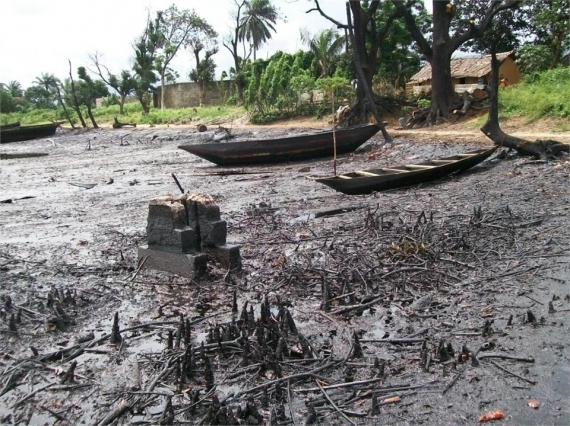
Land degradation from oil spill in Ogoniland, Nigeria
The dangers of land degradation, which cost the equivalent of about 10% of the world’s annual gross product in 2010 through the loss of biodiversity and ecosystem services, are detailed for policymakers, together with a catalogue of corrective options, in the three-year assessment report by more than 100 leading experts from 45 countries, launched on Monday, March 26, 2018.
Produced by the Intergovernmental Science-Policy Platform on Biodiversity and Ecosystem Services (IPBES), the report was approved at the 6th session of the IPBES Plenary in Medellín, Colombia. IPBES has 129 State Members.
Providing evidence for policymakers to make better-informed decisions, the report draws on more than 3,000 scientific, government, indigenous and local knowledge sources. Extensively peer-reviewed, it was improved by more than 7,300 comments, received from over 200 external reviewers.
Serious Danger to Human Well-being
Rapid expansion and unsustainable management of croplands and grazing lands is the most extensive global direct driver of land degradation, causing significant loss of biodiversity and ecosystem services – food security, water purification, the provision of energy and other contributions of nature essential to people. This has reached “critical” levels in many parts of the world, the report says.
“With negative impacts on the well-being of at least 3.2 billion people, the degradation of the Earth’s land surface through human activities is pushing the planet towards a sixth mass species extinction,” said Prof. Robert Scholes (South Africa), co-chair of the assessment with Dr. Luca Montanarella (Italy). “Avoiding, reducing and reversing this problem, and restoring degraded land, is an urgent priority to protect the biodiversity and ecosystem services vital to all life on Earth and to ensure human well-being.”
“Wetlands have been particularly hard hit,” said Dr. Montanarella. “We have seen losses of 87% in wetland areas since the start of the modern era – with 54% lost since 1900.”
According to the authors, land degradation manifests in many ways: land abandonment, declining populations of wild species, loss of soil and soil health, rangelands and fresh water, as well as deforestation.
Underlying drivers of land degradation, says the report, are the high-consumption lifestyles in the most developed economies, combined with rising consumption in developing and emerging economies. High and rising per capita consumption, amplified by continued population growth in many parts of the world, can drive unsustainable levels of agricultural expansion, natural resource and mineral extraction, and urbanisation – typically leading to greater levels of land degradation.
By 2014, more than 1.5 billion hectares of natural ecosystems had been converted to croplands. Less than 25% of the Earth’s land surface has escaped substantial impacts of human activity – and by 2050, the IPBES experts estimate this will have fallen to less than 10%.
Crop and grazing lands now cover more than one third of the Earth´s land surface, with recent clearance of native habitats, including forests, grasslands and wetlands, being concentrated in some of the most species-rich ecosystems on the planet.
The report says increasing demand for food and biofuels will likely lead to continued increase in nutrient and chemical inputs and a shift towards industrialised livestock production systems, with pesticide and fertiliser use expected to double by 2050.
Avoidance of further agricultural expansion into native habitats can be achieved through yield increases on the existing farmlands, shifts towards less land degrading diets, such as those with more plant-based foods and less animal protein from unsustainable sources, and reductions in food loss and waste.
Strong Links to Climate Change
“Through this report, the global community of experts has delivered a frank and urgent warning, with clear options to address dire environmental damage,” said Sir Robert Watson, Chair of IPBES.
“Land degradation, biodiversity loss and climate change are three different faces of the same central challenge: the increasingly dangerous impact of our choices on the health of our natural environment. We cannot afford to tackle any one of these three threats in isolation – they each deserve the highest policy priority and must be addressed together.”
The IPBES report finds that land degradation is a major contributor to climate change, with deforestation alone contributing about 10% of all human-induced greenhouse gas emissions. Another major driver of the changing climate has been the release of carbon previously stored in the soil, with land degradation between 2000 and 2009 responsible for annual global emissions of up to 4.4 billion tonnes of CO2.
Given the importance of soil’s carbon absorption and storage functions, the avoidance, reduction and reversal of land degradation could provide more than a third of the most cost-effective greenhouse gas mitigation activities needed by 2030 to keep global warming under the 2°C threshold targeted in the Paris Agreement on climate change, increase food and water security, and contribute to the avoidance of conflict and migration.
Projections to 2050
“In just over three decades from now, an estimated four billion people will live in drylands,” said Prof. Scholes. “By then it is likely that land degradation, together with the closely related problems of climate change, will have forced 50-700 million people to migrate. Decreasing land productivity also makes societies more vulnerable to social instability – particularly in dryland areas, where years with extremely low rainfall have been associated with an increase of up to 45% in violent conflict.”
Dr. Montanarella added: “By 2050, the combination of land degradation and climate change is predicted to reduce global crop yields by an average of 10%, and by up to 50% in some regions. In the future, most degradation will occur in Central and South America, sub-Saharan Africa and Asia – the areas with the most land still remaining that is suitable for agriculture.”
The report also underlines the challenges that land degradation poses, and the importance of restoration, for key international development objectives, including the United Nations Sustainable Development Goals and the Aichi Biodiversity Targets. “The greatest value of the assessment is the evidence that it provides to decision makers in Government, business, academia and even at the level of local communities,” said Dr. Anne Larigauderie, Executive Secretary of IPBES. “With better information, backed by the consensus of the world’s leading experts, we can all make better choices for more effective action.”
Options for Land Restoration
The report notes that successful examples of land restoration are found in every ecosystem, and that many well-tested practices and techniques, both traditional and modern, can avoid or reverse degradation.
In croplands, for instance, some of these include reducing soil loss and improving soil health, the use of salt tolerant crops, conservation agriculture and integrated crop, livestock and forestry systems.
In rangelands with traditional grazing, maintenance of appropriate fire regimes, and the reinstatement or development of local livestock management practices and institutions have proven effective.
Successful responses in wetlands have included control over pollution sources, managing the wetlands as part of the landscape, and reflooding wetlands damaged by draining.
In urban areas, urban spatial planning, replanting with native species, the development of ‘green infrastructure’ such as parks and riverways, remediation of contaminated and sealed soils (e.g. under asphalt), wastewater treatment and river channel restoration are identified as key options for action.
Opportunities to accelerate action identified in the report include:
Improving monitoring, verification systems and baseline data;
Coordinating policy between different ministries to simultaneously encourage more sustainable production and consumption practices of land-based commodities;
Eliminating “perverse incentives” that promote land degradation and promoting positive incentives that reward sustainable land management; and
Integrating the agricultural, forestry, energy, water, infrastructure and service agendas.
Making the point that existing multilateral environmental agreements provide a good platform for action to avoid, reduce and reverse land degradation and promote restoration, the authors observe, however, that greater commitment and more effective cooperation is needed at the national and local levels to achieve the goals of zero net land degradation, no loss of biodiversity and improved human well-being.
Knowledge Gaps
Among the areas identified by the report as opportunities for further research are:
The consequences of land degradation on freshwater and coastal ecosystems, physical and mental health and spiritual well-being, and infectious disease prevalence and transmission;
The potential for land degradation to exacerbate climate change, and land restoration to help both mitigation and adaptation;
The linkages between land degradation and restoration and social, economic and political processes in far-off places; and
Interactions among land degradation, poverty, climate change, and the risk of conflict and of involuntary migration.
Environmental and Economic Sense
The report found that higher employment and other benefits of land restoration often exceed by far the costs involved. On average, the benefits of restoration are 10 times higher than the costs (estimated across nine different biomes), and, for regions like Asia and Africa, the cost of inaction in the face of land degradation is at least three times higher than the cost of action.
“Fully deploying the toolbox of proven ways to stop and reverse land degradation is not only vital to ensure food security, reduce climate change and protect biodiversity,” said Dr. Montanarella, “It’s also economically prudent and increasingly urgent.”
Echoing this message, Sir Robert Watson, said: “Of the many valuable messages in the report, this ranks among the most important: implementing the right actions to combat land degradation can transform the lives of millions of people across the planet, but this will become more difficult and more costly the longer we take to act.”
About every five years, the usually powdery white snow turns orange in parts of Eastern Europe.
Orange snow
That happened again over the weekend, stunning skiers and snowboarders in Russia, Romania, Bulgaria, and other places in the region, with photos of the oddity appearing on social media.
“We’re skiing on Mars today,” exclaimed one social media user as he skied down the slopes.
According to The Independent, the phenomenon is understood to be the result of Sahara Desert sand and dust being carried into the atmosphere, where it mixes with snow and rain, and is then dumped over areas in Eastern Europe.
“There has been a lot of lifted sand or dust originating from North Africa and the Sahara, from sand storms which have formed in the desert,” UK Met Office meteorologist Steven Keates told the newspaper.
“As the sand gets lifted to the upper levels of the atmosphere, it gets distributed elsewhere.”
NASA satellite imagery shows plumes of dust from the Sahara moving across the Mediterranean, north toward the east of Europe. The Athens Observatory said in a Facebook post it was one of the biggest transfers of dust from the desert to Greece.
The African dust covered the entire country and concentrations were the highest in the last 10 years, according to the observatory’s meteorological service.
Earlier this year, a rare winter storm peppered the usually arid Sahara Desert with snow.
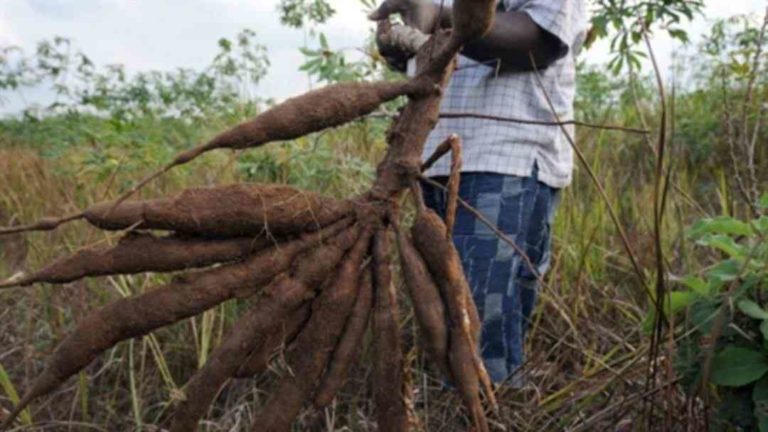
The Chairman, Cassava Growers Association, Cross River State chapter, Mr Austine Oqua, says registration of interested farmers for this year’s CBN Cassava Anchor Borrowers’ programme in the state had begun.
Cassava farming
Oqua, who disclosed this in an interview with the News Agency of Nigeria (NAN) in Calabar on Sunday, March 25, 2018 said 5,000 farmers were being targeted.
He said that 5000 hectares of land had been mapped out in the state for the Central Bank of Nigeria-sponsored cassava anchor borrowers’ programme.
“Cross River is among the participating states in the new CBN cassava anchor borrowers’ programme beginning in April.
“Cassava is one of the areas that the state has a comparative advantage and already, we have registered over 2000 farmers while we need 5000 farmers.
“We have been sensitising our farmers on the need to take advantage of the programme to increase their cassava production,” he said.
Oqua, who is also the Special Assistant to the Governor on Religious Matters, said that the proposed 5,000 hectares of land would be provided across the 18 local government areas of the state.
He added that every duly registered farmer would be provided with the necessary inputs and fund for the project.
He stressed the need for more women to be encouraged to participate in farming in the state, adding that they were more involved in farm work than the men.
The National Conscience Party (NCP) on Sunday, March 25, 2018 said that it would soon sue Lagos State Government for imposing a new Land Use Charge (LUC).
National Secretary of the NCP, Ayodele Akele
The National Secretary of the party, Mr Ayodele Akele, gave the hint at NCP’s Political Education and Membership Integration Programme in Lagos.
Akele said that NCP had established that the new charge was illegal and would go to court to stop its implementation.
The scribe said that the LUC was unaffordable and unacceptable even with the recent reduction by the state government following public outcry.
“We have already discussed with our lawyers to take the government to court very soon over the Land Use Charge.
“We are taking the action because we have been able to establish, from the face value, that the charge is unconstitutional.
“Based on that, we are challenging this new charge in court, apart from the political steps we have been taking to challenge it.
“The fact is that the new charge, even with the review, is unaffordable to most residents; it is outrageous and will inflict hardship on residents,’’ he said.
Akele said that the charge was not well thought out and would lead to sufferings.
The secretary advised the government to look for other means of raising funds, especially by reducing the cost of governance.
He said that it was improper to increase the charge when a new minimum wage had not been approved, adding that the state had introduced several other forms of taxes.
Akele said that the state residents had already been over-axed, and that only cancellation, not review, of the LUC would be acceptable.
He charged members of the party to be active in safeguarding the rights of the citizens, adding that they should ensure that the party would perform well.
The state Chairman of the party, Mr Fatai Ibu-Owo, said that the programme was organised to mobilise NCP members and give them the necessary political education ahead of the 2019 General Elections.
Ibu-Owo said that the ultimate goal of NCP was to take over government in Lagos State.
” Our next line of action is to take over the government of the state from Ambode.
“The state executive of NCP has put structures in every local government area so that the party can be very strong,’’ he said.
A presidential aspirant on the platform of the party, Mr Ebaye Ntan, said that all NCP members should play necessary roles to ensure the party’s success in 2019.
He urged the members to participate actively in the political process and embark on aggressive membership drive.
An NCP governorship aspirant, Mr Funsho Awe, urged the party members to have unity of purpose to ensure NCP’s success in the general elections.