The Nigerian Meteorological Agency (NiMet) has predicted dust haze weather in the central states of the country on Saturday, 31 March 2018 with horizontal visibility of two to five kilometres and visibility of less than 1,000m in some places.
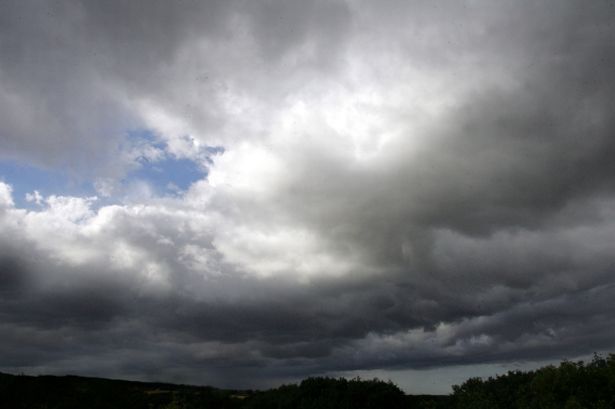
cloudy weather
NiMet’s Weather Outlook by its Central Forecast Office in Abuja on Friday also predicted day and night temperatures in the range of 30 to 35 and 19 to 25 degrees Celsius respectively.
Southern states will experience partly cloudy to cloudy morning hours with day and night temperatures in the range of 32 to 34 and 23 to 24 degrees Celsius respectively.
According to the agency, there is prospect of localised thunderstorms over Umuahia, Owerri, Awka, Akure, Lagos, Port Harcourt, Warri, Calabar and Eket in the afternoon and evening hours.
Day and night temperatures of 31 to 37 and 23 to 27 degrees Celsius respectively will be experienced over the southern cities.
In the Northern States, a thick dust haze condition is expected with day and night temperatures of 30 to 37 and 20 to 24 degrees Celsius respectively.
“Thick dust haze conditions are expected over the Northern cities, dust haze conditions are envisaged over most parts of the central cities while chances of cloudiness and thunderstorms over few places in the southern cities are also expected within the next 24 hours,” NiMet said.
An environmental group in Germany says it is taking legal action against 11 more German cities for violating EU air pollution limits, bringing the total to 28.
Vehicular traffic is a major source of air pollution in Germany
Compliance with the limits is only possible by rapidly implementing quickly effective measures, such as driving bans for dirty diesel vehicles, Deutsche Umwelthilfe (DUH) said in a statement on Thursday, March 29, 2018.
A German federal court ruled in February that diesel-fuelled vehicles could be legally banned from certain roads or areas in the cities of Dusseldorf and Stuttgart, in order to combat air pollution.
The 11 cities named by the DUH on Thursday are Dortmund, Bochum, Dueren and Paderborn in the western state of North Rhine-Westphalia, the central city of Offenbach, and Heilbronn, Ludwigsburg, Backnang, Esslingen, Marbach and Reutlingen in the southern state of Baden-Wuerttemberg.
Air pollution has become a growing problem in German cities, with much of the focus on nitrogen oxides, which could cause a variety of health problems affecting breathing and the circulatory system.
Vehicular traffic is responsible for 60 per cent of this pollution and diesel cars, which are popular in Germany, are a major portion of that.
Upper limits on the amount of such gases allowed in the atmosphere have been in place since 2010, but not universally enforced, despite lobbying efforts by environmental groups and actions by cities like Dusseldorf and Stuttgart.
Despite inherent concerns, genetically modified mosquitoes (GMMs) will be released in the USA for the first time in 2018. The Food and Drug Administration (FDA) recently approved a field trial (Phase 3) for a GMM strain of Ae. aegypti (Aedes aegypti) (OX513A) developed by Oxitec Limited to be released in Key Haven, Florida.
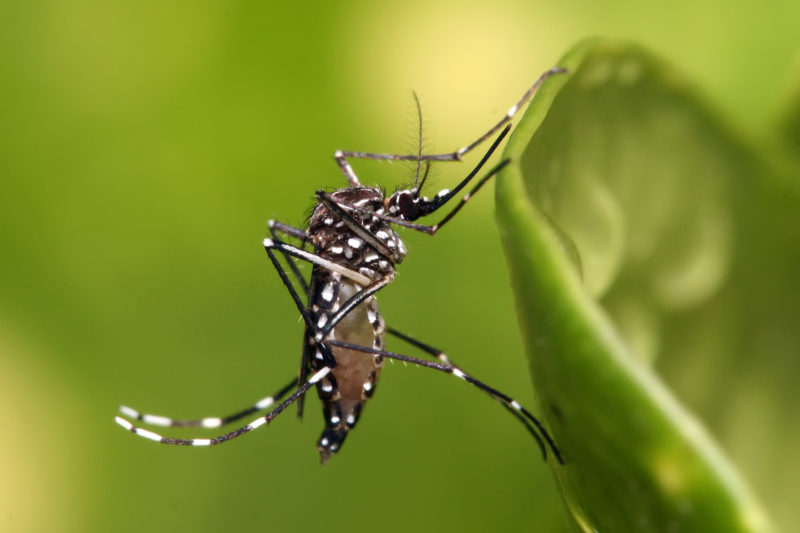
A genetically modified strain of Aedes aegypti, the yellow fever mosquito, is to be released on field trial in the USA in 2018
This disclosure was made in a recently published paper titled: “Transgenic Mosquitoes – Fact or Fiction?” and authored by André B.B. Wilke, John C. Beier, and Giovanni Benelli.
The Aedes aegypti, the yellow fever mosquito, is a mosquito that can spread dengue fever, chikungunya, Zika fever, Mayaro and yellow fever viruses, and other disease agents.
Technologies for controlling mosquito vectors based on genetic manipulation and the release of GMMs are reportedly gaining ground. But, according to the study, concrete epidemiological evidence of their effectiveness, sustainability, and impact on the environment and non-target species is lacking.
The writers contend that there is no reliable ecological evidence on the potential interactions among GMMs, target populations, and other mosquito species populations exists, adding that no GMM technology has yet been approved by the World Health Organisation (WHO) Vector Control Advisory Group. Strategies based on the release of GMMs are however currently being tested and evaluated by the Vector Control Advisory Group.
“Our opinion is that, although GMMs may be considered a promising control tool, more studies are needed to assess their true effectiveness, risks, and benefits. Overall, several lines of evidence must be provided before GMM-based control strategies can be used under the integrated vector management framework,” states the authors.
GMMs is said to be one of the emerging technologies for fighting mosquito-borne diseases (MBDs), which are among the most important infectious diseases that afflict humans, livestock, pets, and wildlife worldwide.
Taken together, dengue virus (DENV), Zika virus (ZIKV), yellow fever virus (YFV), chikungunya virus (CHKYV), West Nile virus (WNV), and malaria are responsible for endangering more than three billion people living in endemic areas, causing millions of deaths every year, countless long-term disabilities and sequelae, and costing billions of dollars annually in medical care and lost man-hours due to impairment of neurological and cognitive function.
Malaria and WNV are transmitted by several mosquito species with regional variation in their epidemiological importance, resulting in complex multispecies scenarios. Approximately 40 mosquito species of the genus Anopheles are capable of transmitting malaria to humans, and WNV has been detected in approximately 60 species from the genera Aedes and Culex.
Prospects for preventing (re)emerging MBDs indicate the difficulty in anticipating and controlling the spread of diseases. Between 2015 and 2016, ZIKV reached more than 60 countries, infecting more than 700,000 people. This epidemic highlighted the lack of tools available to effectively control mosquito populations and prevent the spread of vector-borne diseases. As a result, such diseases are a major issue for developed countries and are out of control in many developing countries that have undergone rapid unplanned urbanisation and lack the means to install proper mosquito surveillance and control strategies.
To date, MBD control has mostly relied on the use of insecticides to suppress mosquito populations. However, this strategy is losing effectiveness in several key species. Ae. aegypti is said to be rapidly developing resistance to common insecticides such as pyrethroids and organophosphates. A similar scenario can be found for Cx. quinquefasciatus, Anopheles funestus Giles, and An. gambiae. Moreover, the application of larvicides on potential breeding sites to control immature mosquitoes has also resulted in the development of resistance.
Considering the above scenario and the decrease in effectiveness of current mosquito-control strategies, as demonstrated by the recurrent outbreaks of MBDs, new technologies to control mosquito populations are being developed and tested in the field. One of such is the development of GMMs.
According to the study, the advent of functional and stable germ-line strains of GMMs has made available several new perspectives for controlling mosquito vector populations. Essentially, two strategies are available and they include:
Population replacement – self-sustaining, involves the release of transgenic mosquitoes refractory to a given pathogen to replace the wild population, thus disrupting the cycle of transmission; and
Population suppression – self-limiting, involves the release of mosquitoes carrying a lethal gene, impairing offspring production in a targeted mosquito population.
The World Health Organisation (WHO) has urged world leaders to live up to the pledges made toward advancing health for all while signing agreement on Sustainable Development Goals (SDGs) in 2015.
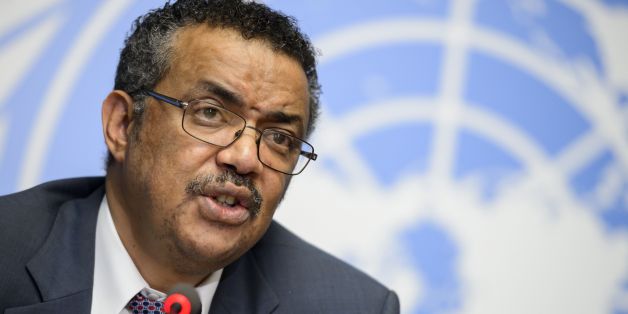
Dr Tedros Adhanom Ghebreyesus, Director-General of the World Health Organisation (WHO). Photo credit: AFP / FABRICE COFFRINI / Getty Images
The organisation made the call in a statement ahead of the 70th anniversary of “World Health Day’’ scheduled for April 7, 2018.
WHO said this meant leaders needed to ensure that everyone, everywhere could access essential quality health services without facing financial hardship.
It also urged world leaders to commit to concrete steps to advance health for all as half of the world’s population still did not have full coverage of essential health services.
According to the organisation, more than 100 million people across the globe are still being pushed into “extreme poverty’’ because they have to pay for health care.
It noted that over 800 million people, about 12 per cent of the world’s population, spent at least 10 per cent of their household budget on health care.
The world body stated that UN member states had agreed to achieve universal health coverage by 2030 as part of the SDGs.
It added that “protecting people from financial consequences of paying for health services out of their own pockets reduces the risk of people being pushed into poverty.
“This is because unexpected illness will require people to use up their life savings, sell assets or borrow, thereby destroying their future and often that of their children.
“Achieving universal health coverage is one of the targets the nations of the world set when adopting the SDGs in 2015.
“Good health allows children to learn and adults to earn, helps people to escape from poverty and provides the basis for long-term economic development.”
The theme for 2018 World Health Day 2018 is “Universal Health Coverage: Everyone, Everywhere.”
The Akwa Ibom State Commissioner for Environment and Mineral Resources, Dr Iniobong Essien, has said that government has embarked on various flood control intervention in the state since January.
Dr. Iniobong Ene Essien, Akwa Ibom State Commissioner for Environment and Mineral Resources
Essien stated this on Thursday, March 29, 2018 at Ikot Oku Ikono Junction in Uyo, the state capital, during the monitoring of the ministry’s flood intervention programme.
He said the exercise was aimed at ensuring that the impact of the flood in the state was minimal.
He listed Akpan Andem Market, Ewet Housing, Unity Park and Udo Udoma Avenue as flood prone areas, adding that the flooding was due to blocked drains.
“A lot of these areas are flood prone and we have discovered overtime that the drains have been silted and what we are getting is a backlog of water.
“Once there is an interruption in the continuous flow of water, it leads to flooding.
“We are trying to ensure that we reduce flooding to the minimum, particularly with the prediction from NIMET recently that the intensity of the rains this year will be more.
“So, we are preparing for the rains.”
The commissioner stressed the importance of free-flowing drain and expressed the hope that the impact of the rains this year would be minimal in the state.
He advised residents of the state to desist from the unwholesome practice of dumping refuse into drainage systems.
He noted that what were de-silted from the blocked drains were predominantly leftover food, domestic waste, metals, sachet nylon and bottles.
Essien urged the residents to add value to what the government was doing by indulging in positive activities that would lead to cleaner environment and enhance the beautiful ambience of the state.
Executive Director of the United Nations Human Settlements Programme (UN-Habitat), Maimunah Mohd Sharif, has pledged to strengthen the agency to make it more responsive to the needs of countries to address the challenges of rapid urbanisation and harness the benefits of good urbanisation.
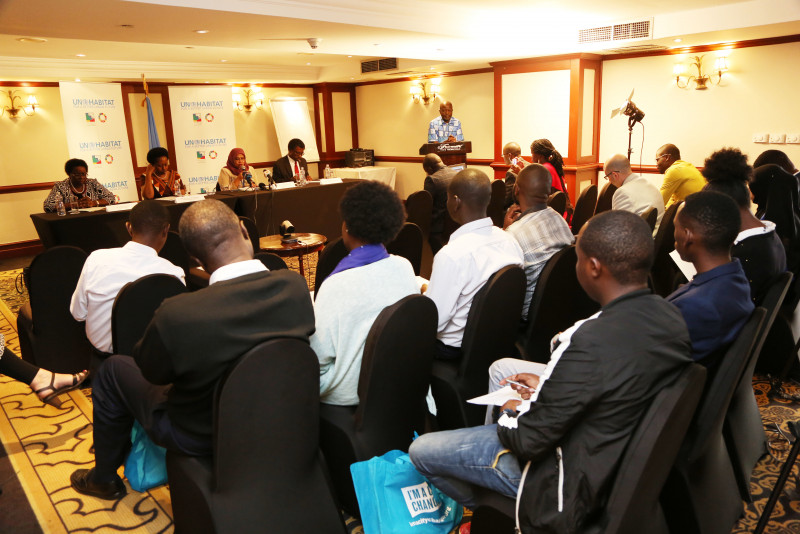
Executive Director of the UN-Habitat, Maimunah Mohd Sharif, flanked by her Deputy Executive Director, Aisa Kirabo Kacyira, and UN-Habitat’s Director for External Relations, Ms. Christine Musisi, and UN-Habitat’s Regional Office for Africa Director, Naison Mutizwa-Mangiza, addresses members of the Fourth Estate
At her maiden press conference held in Nairobi, Kenya on Thursday, March 29, 2018, Ms. Sharif highlighted that she would be guided by the principles of the New Urban Agenda and its implementation as an accelerator for the achievement of the Sustainable Development Goals (SDGs), especially SDG11 which aims to make cities and human settlements inclusive, safe, resilient and sustainable.
“In 2016, Member states adopted the New Urban Agenda which promotes a new paradigm on the way we plan, build and manage our cities and human settlements. UN-Habitat was recognised as a United Nations focal point for sustainable urbanisation. It is the moment to strengthen UN-Habitat to ensure we can effectively support countries to implement the New Urban Agenda in collaboration with all the United Nations system, all levels of government and other stakeholders.
Cities are centres of economic growth, contributing 70% of global GDP. Urbanisation, if well-planned, can be an important tool to achieve a good quality of life for everyone and can help us to achieve the sustainable development goals, in particular SDG11, and other SDGs such as SDG1: no poverty, SDG6: clean water and sanitation, SDG13: climate action, to mention just a few,” she said.
“I was the mayor in Penang in Malaysia and was the first woman to be appointed president of the Municipal Council of Seberang Perai. All my professional life, I have collaborated very well with journalists in delivering services to my employers – the people. Media is needed to increase awareness on urban issues which affect us every day such as basic services, mobility, public spaces or accessibility,” she said.
Ms. Sharif explained that, together with its sister agency UNEP, UN-Habitat was the only other UN agency headquartered in the developing world. She said that since its inception in 1976, UN-Habitat has stayed true to its course in addressing urbanisation and human settlements issues.
“We must look at human settlements of all sizes and think about how to improve the quality of life of those citizens living there. Many people migrate from rural areas seeking better opportunities in cities. If these people had adequate infrastructure and services in their communities, such as housing, good roads, education as well as economic opportunities, they might not leave their rural settings easily,” she said.
“As a focal point for human settlements and sustainable urban development in the UN system, UN-Habitat catalyses transformative change in cities and human settlements. We combine knowledge, policy advice, technical assistance, and collaborative action to support governments at all levels and stakeholders to ensure the well-being and dignity of all people living in cities and human settlements, be it in contexts of stability, crisis or post-crisis and recovery.”
She also announced UN-Habitat’s plans to maintain its excellent relations with Kenya, the host country, citing the government’s stated Agenda Four which has Housing as one of its key pillars. She has established a task force, led by UN-Habitat’s Director for Africa, to support more strategic and integrated programming in Kenya in line with the Government’s vision and to scale-up the good experiences in close collaboration with the UN Country Team and other strategic partners.
Affordable Housing is one of UN-Habitat’s priorities and specialisations. “As I have committed to the Cabinet Secretary of Foreign Affairs Monica Juma and the Cabinet Secretary of Infrastructure James Macharia, UN-Habitat is ready to offer its expertise to support the government to achieve its objective of providing some one million houses. We are more than ready to extend our knowledge and our tried and tested innovative solutions to the government of Kenya in its endeavours,” Ms. Sharif said.
The Executive Director highlighted some of the current linkages with Kenya as including: the establishment of a Long-term Solid Waste Management Strategy that Incorporates Youth Entrepreneurship through waste recycling in Kisii Town; Strengthening Planning for Resettlement and Integration of Refugee Communities at Kalobeyei New Site, Turkana County. Under this there was Peace and social cohesion, community resilience, humanitarian/ development nexus, as well as Land Tools to Support Tenure Security Enhancement in Informal Settlements in Nairobi and Mombasa.
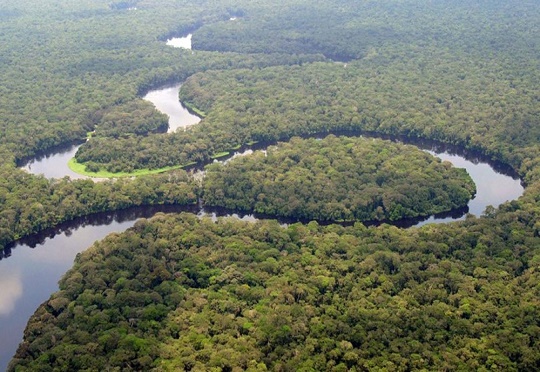
Seven Central African countries have committed to restore some 34.56 million hectares of forest under the Bonn Challenge.
The Congo Basin
The countries are: Cameroon, Central African Republic, Chad, Democratic Republic of Congo, Republic of Congo, Burundi and Rwanda.
The Bonn Challenge is a global effort to bring 150 million hectares (ha) of the world’s deforested and degraded land into restoration by 2020, and 350 million hectares by 2030. It was launched in 2011 by the Government of Germany and the International Union for the Conservation of Nature (IUCN), and later endorsed and extended by the New York Declaration on Forests at the 2014 UN Climate Summit.
Under the sub-continental initiative, the benefits of restoration that will accrue to the participating countries are health (water), economic (food, etc) and environmental (fuel, climate benefit). While it is projected that they will reap up to $11 billion, the nations will likewise sequester some 3.37gigatonnes (Gt) of carbon dioxide (CO2).
Cameroon, which has promised to restore 12 million ha by 2030, will reap about $3.7 billion and sequester 1.14 Gt of CO2. The Central African Republic, on its part, will restore 3.5 million ha, benefit $1 billion, and sequester 0.33 Gt of CO2.
Similarly, Chad intends to restore 5 million ha by 2030, reap $1.8 billion, and have 0.57 Gt of CO2 sequestered. Same for the Democratic Republic of Congo, which in 2014 pledged to restore 8 million ha of forest by 2020, with the aim of reaping $2.5 billion and sequestering 0.76 Gt of CO2. Next-door neighbour, Republic of Congo, is restoring 2 million ha by 2030, rake in $628 million, and sequester 0.19 Gt of CO2.
In 2011, Rwanda pledged to restore 2 million ha by 2020. Burundi did likewise four years later in 2015. Both nations have valued water and environmental benefits at $628 million, and to sequester 0.19 Gt of CO2.
Underlying the Bonn Challenge is the forest landscape restoration (FLR) approach, which aims to restore ecological integrity at the same time as improving human well-being through multifunctional landscapes.
The restoration of 150 million hectares of degraded and deforested lands in biomes around the world – in line with the FLR approach – will create approximately $84 billion per year in net benefits that could bring direct additional income opportunities for rural communities. About 90 per cent of this value is potentially tradable, meaning that it encompasses market-related benefits.
Achieving the 350 million hectare goal will generate about $170 billion per year in net benefits from watershed protection, improved crop yields and forest products, and could sequester up to 1.7 Gt of CO2 equivalent annually.
“The Bonn Challenge is not a new global commitment but rather a practical means of realizing many existing international commitments, including the CBD Aichi Target 15, the UNFCCC REDD+ goal, and the Rio+20 land degradation neutrality goal. It is an implementation vehicle for national priorities such as water and food security and rural development while contributing to the achievement of international climate change, biodiversity and land degradation commitments,” said a source.
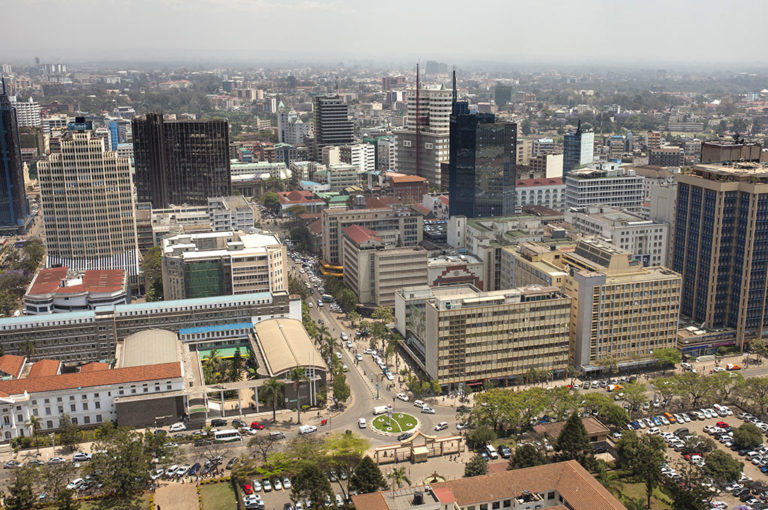
Action on climate change will receive a high-level boost when ministers from eight countries in Africa and senior United Nations and other officials converge on Nairobi, Kenya, for the Africa Climate Week, scheduled to hold from April 9 to 13, 2018.
Nairobi, Kenya will host the Africa Climate Week
Countries made an historic agreement in Paris in 2015. The work now is on implementation, to limit warming this century as close to 1.5°C as possible, foster climate resilience, and align global finance flows with a pathway towards low-emission, sustainable development, says the UN Framework Convention on Climate Change (UNFCC), adding that the current level of ambition is insufficient.
“Africa sees the dangers of climate change as well as the opportunities that can come from cooperation and investment in ambitious climate action. That’s what Africa Climate Week is all about and why it has attracted high-level interest and participation,” says Patricia Espinosa, Executive Secretary of the UNFCCC.
Public and private sector organisations and companies are said to have responded to the call to help shape and drive climate action at the first Africa Climate Week.
“Parties to the agreement know that success of the Paris Agreement will require broad-based, ambitious effort from all sectors of society, both public and private,” said Ms. Espinosa. “We need a massive and swift ramping up of ambition to get on track.”
An important feature of this Africa Climate Week is its harvesting of views for consideration in the official climate negotiations, through the Talanoa Dialogue process, launched in December at the UN Climate Change Conference (COP23) in Bonn, Germany.
For more than a decade, the Nairobi Framework Partnership has been bringing together stakeholders – in Asia, Latin America and the Caribbean, and Africa – around the common goal of addressing climate change, with focus on market-based mechanisms and finance. In 2017 it began broadening regional carbon forums to create Climate Weeks to strengthen and support implementation of Nationally Determined Contributions (NDCs) under the Paris Agreement.
Africa Climate Week will comprise workshops, panel discussions, exhibits, meetings, and high-level segments to capture regional concerns and feed them back into the formal negotiations under the United Nations Framework Convention on Climate Change, through the Talanoa Dialogue.
The events of Africa Climate Week will focus on NDC support and implementation, the United Nations Sustainable Development Goals, Global Climate Action, and include:
The Africa Carbon Forum
High-level sessions with the Champions of the Marrakech Partnership for Global Climate Action
High-level ministerial session
Talanoa Dialogue
LEDS – Low Emissions Development Strategy – Workshop
Climate Technology Centre and Network Workshop
UNEP DTU Partnership and Gold Standard Workshop
Technical Expert Meeting under UNFCCC
World Climate simulation.
Africa Climate Week will have as its cornerstone the long-running Africa Carbon Forum, with its programme of plenary sessions, side events and exhibition focused on market-based approaches, economic instruments and climate-aligned finance to drive investment in climate action.
The Nigerian Meteorological Agency (NiMet) has, over the years, shown commitment to producing timely Seasonal Rainfall Predictions (SRP) and other climate information to the public for the purpose of guiding people against climate change’s negative effects.
Director-General/Chief Executive Officer of NiMet, Prof. Sani Mashi
It has also confirmed that the SRP is based on strong observation and scientific study of the weather which application can be used in mitigating such impacts.
Stressing the importance of SRP recently in Abuja, NiMet Director-General, Sani Mashi, said that the country had been feeling the effects of climate change.
According to him, more frequent extreme weather events, increase in temperature, changes in annual and seasonal precipitation patterns, are prevailing across the country.
Mashi said that climatic variations caused rainfall variability which in turn affected availability of water resources with telling effects on agriculture.
“The quality, quantity, stability of food production and the natural environment, in which agriculture took place, are also affected in extreme cases.
“Also, the degradation of agricultural ecosystems could mean destruction of farm land due to flood or desertification.
“This can result in a total loss of the productive capacity of the land and consequently lead to increase in number of people at risk of malnutrition, poverty and famine.
“Other activities such water resources management, health sector, hydro-electric power generation and dam management, which depends on rainfall variability, are also affected.
“Similarly, conflicts over resources also exacerbate these impacts and contribute to the ongoing migration within countries in Africa.
“In this case, children and the elderly face physical danger even death due to diseases, floods, droughts and heat stress.
“Therefore, information is needed to understand climate change’s impact on agriculture and other aspects of the economy in Nigeria,’’ he said.
Mashi observed that NiMet’s annual climate review bulletin was produced to provide such information, helping policymakers to understand the uncertainties surrounding climate change effects.
“The bulletin will also give national and regional level guidance with implications for a range of policy decisions, such as investments in the development of new plant and animal varieties that are resistant to drought, water management strategies and many more policy areas,’’ he observed.
He added that part of NiMet had been monitoring and collecting different types of weather information such as temperature, precipitation and other weather parameter throughout the country over a long period of time.
“Analysis of these data has shown that there has been a persistent increase in the maximum temperature in the past decade over Nigeria.
“Similarly, the minimum temperature is also on the increase for the past nine consecutive years from 2009 to 2017,’’ he observed.
In the same vein, he said that NiMet has predicted normal to earlier-than-normal rainfall across the country in 2018 with possibility of flashes of floods in many parts of the country.
“The implication of this prediction according to NiMet is that there will be normal agricultural activities during the year leading to good yields and pumper harvest.
“That will be if NiMet warnings and recommendations in the SRP are taken seriously by the stakeholders in the agricultural sector,’’ he said.
The agency recommended that climate-smart agriculture should be encouraged, especially in the Sudano-Sahelian zone of the country through the use of economic trees like gum Arabic, date palm, shear and jetropha, among others, for fencing.
On livestock farming, NiMet warned that warmer-than-normal temperatures, predicted to occur in March and April, were expected to affect livestock production, particularly in the north-western region of the country.
It said that livestock mortality rate was expected to increase during these months due to temperature fluctuations, advising livestock farmers to acquire necessary vaccines for their animals.
NiMet also predicted that fish production was likely to be adversely affected as a result of the warmer-than-normal conditions, especially in the northern part of the country.
It urged fish farmers and aquaculture operators to take note of those areas which were predicted to have high run-offs to avoid associated impacts.
It observed that the annual rainfall across the country would positively impact on agriculture, power generation, recreation and manufacturing activities.
The agency warned Nigerians and health officials to take adequate precautions with a view to mitigating the prevailing warmer-than-normal temperatures across the country, noting that the prevailing condition would persist until April.
It said that while the cold season dominated in January and February, heat season was predicted to dominate March and April, explaining that greater parts of the country were expected to record near average temperatures in these months, while some places would experience hotter-than-the average seasonal temperature.
The health implication of this warmer-than-normal condition during the forecast period according to NiMet is that cerebrospinal meningitis and other heat related diseases, as well as human discomfort, are likely.
It explained that diseases such as heat rashes, dehydration, measles, chicken pox, avian influenza and general human discomfort, were expected to be rampant during the period, urging health workers to make adequate preparation to contain any outbreak.
The agency added that the period also coincided with peak of the dry season when there could be shortage of drinking water leading to high chances of consuming contaminated water that might result in typhoid fever.
It, therefore, and advised state and local governments to sensitise their communities on the need to drink from clean and hygienic sources during the period.
“Health workers are advised to improve surveillance to detect cases of disease outbreak early while the populace should improve their drainage system to avoid breeding of mosquitoes and ensure that they sleep under long lasting insecticide nets,’’ NiMet advised.
Rapid greenhouse-gas emissions reductions are needed if governments want to keep in check both the costs of the transition towards climate stabilisation and the amount of removing already emitted CO2 from the atmosphere.
Jessica Strefler of the Potsdam Institute for Climate Impact Research (PIK), lead-author of the analysis
To this end, emissions in 2030 would need to be at least 20 percent below what countries have pledged under the Paris climate agreement, a new study finds – an insight that is directly relevant for the global stock-take scheduled for the UN climate summit in Poland later this year.
Removing CO2 from the atmosphere through technical methods including carbon capture and underground storage (CCS) or increased use of plants to suck up CO2 comes with a number of risks and uncertainties, and hence the interest of limiting them.
“Emissions reduction efforts in the next decade pledged by governments under the Paris climate agreement are by far not sufficient to attain the explicit aim of the agreement – they will not keep warming below the 2-degrees-limit,” says Jessica Strefler from the Potsdam Institute for Climate Impact Research (PIK), lead-author of the analysis published in Environmental Research Letters.
“To stabilise the climate before warming crosses the Paris threshold, we either have to undertake the huge effort of halving emissions until 2030 and achieving emission neutrality by 2050 – or the emissions reductions would have to be complemented by CO2 removal technologies. In our study, we for the first time try to identify the minimum CO2 removal requirements – and how these requirements can be reduced with increased short-term climate action,” she adds.
At least five billion tons of CO2 removal per year throughout the second half of the century
It turns out that, according to the computer simulations done by the scientists, challenges for likely keeping warming below the threshold agreed in Paris would increase sharply if CO2 removal from the atmosphere is restricted to less than five billion tons of CO2 per year throughout the second half of the century. This is substantial. It would mean for instance building up an industry for carbon capture and storage that moves masses comparable to today’s global petroleum industry. Still, five billion tons of CO2 removal is modest compared to the tens of billion tons that some scenarios used in climate policy debates assume. Current CO2 emissions worldwide are more than 35 billion tons per year.
“Less than five billion tons of CO2 removal could drastically drive up the challenges of climate stabilisation,” says co-author Nico Bauer from PIK. “If for instance this amount of carbon dioxide removal (CDR) was halved, then the annual CO2 reduction rates between 2030 and 2050 would have to be doubled to still achieve 2 degrees Celsius. In addition, short-term emissions reductions would also have to be increased as the emissions reductions pledged so far by the signatories of the Paris Agreement are not sufficient to keep warming below 2 degrees if they’re not combined with CO2 removal from the atmosphere.”
“It is all about short-term entry points, like rapidly phasing out coal”
More CO2 removal could in principle reduce costs since, on paper, implementing the relevant technologies to compensate residual emissions in industry and transport is cheaper than pushing emissions reduction from 90 percent to 100 percent. However, CO2 removal technologies are afflicted with three types of uncertainties and risks.
First, the technical feasibility and also the costs are not well known so far. Second, they might have negative effects for sustainability; a massive scale-up of bio-energy production for instance could trigger land-use conflicts and come at the expense of food production and ecosystem protection. Third, the political feasibility is by no means given. In Germany, fears expressed by parts of the population made the government stop even small-scale carbon capture and storage implementation.
“This gives important information to governments – first, rapid short-term emissions reductions are the most robust way of preventing climate damages, and second, large-scale deployment of CDR technologies can only be avoided when reliable CO2 prices are introduced as soon as possible,” says Ottmar Edenhofer, co-author of the study and PIK’s chief economist.
“Ramping up climate policy ambition for 2030 to reduce emissions by 20 percent is economically feasible. It is all about short-term entry points: rapidly phasing out coal in developed countries such as Germany and introducing minimum prices for CO2 in pioneer coalitions in Europe and China makes sense almost irrespective of the climate target you aim for. In contrast, our research shows that delaying action makes costs and risks skyrocket. People as well as businesses want stability, and this is what policy-makers can provide – if they act rapidly,” he adds.