
On Thursday, September 6, 2018, officials of the Lagos State Government, traditional rulers, private sector players and other stakeholders embarked on the clean-up of the waterfront at Ibeshe in Ikorodu.
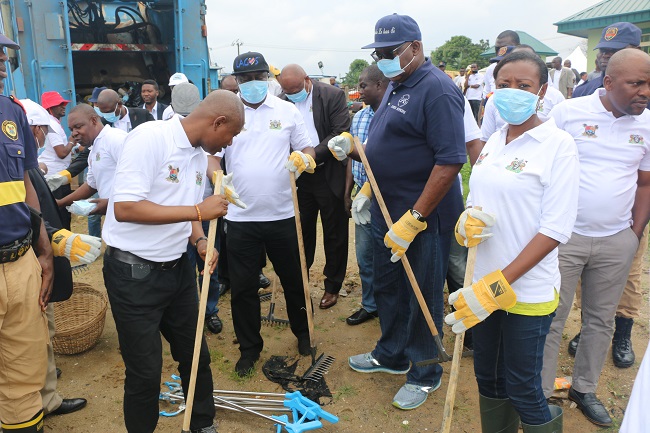
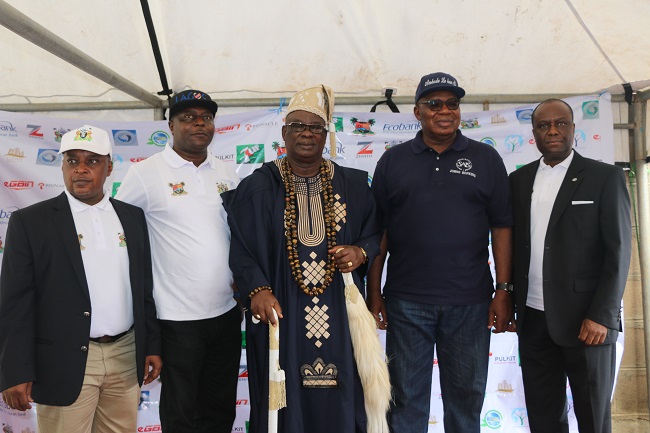
On Thursday, September 6, 2018, officials of the Lagos State Government, traditional rulers, private sector players and other stakeholders embarked on the clean-up of the waterfront at Ibeshe in Ikorodu.
A major report released by the Global Commission on the Economy and Climate finds that the world may be significantly under-estimating the benefits of cleaner, climate-smart growth. Bold climate action could deliver at least $26 trillion in economic benefits through to 2030, compared with business-as-usual.
The 2018 report was on Wednesday, September 5, 2018 presented to the United Nations Secretary-General António Guterres at a global launch at UN headquarters in New York City and arrives just one week before the Global Climate Action Summit in San Francisco, California.
The study finds that, over the last decade, there has been tremendous technological and market progress driving the shift to a new climate economy. There are real benefits to be seen in terms of new jobs, economic savings, competitiveness and market opportunities, and improved wellbeing for people worldwide, adds the research, stressing that momentum is building behind this shift by a wide range of cities, governments, businesses, investors and others around the world, but it is not yet fast enough.
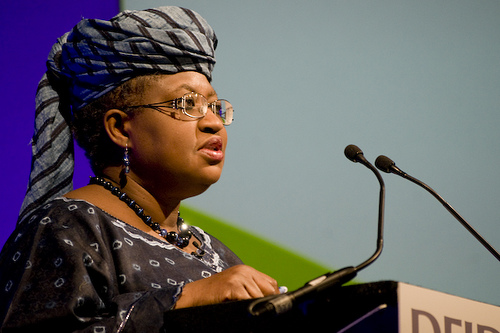
“We are at a unique ‘use it or lose it’ moment,” said Ngozi Okonjo-Iweala, former Finance Minister of Nigeria and Co-Chair of the Global Commission. “Policy makers should take their feet off the brakes, send a clear signal that the new growth story is here and that it comes with exciting economic and market opportunities. $26 trillion and a more sustainable planet are on offer, if we act decisively now,” added Okonjo-Iweala.
“The momentum from businesses, states, cities, investors and citizens is now unstoppable, not least because those taking bold climate action are already seeing tangible benefits,” said Paul Polman, CEO, Unilever and Co-Chair of the Global Commission. “But if we are to unlock the full benefits of this new low carbon growth opportunity and avoid runaway climate change, economic and financial leaders in both government and the private sector need to do even more, and fast,” said Polman.
The Report highlights opportunities in five key economic systems – energy, cities, food and land use, water, and industry. It demonstrates that ambitious action across these systems could deliver net economic gains compared with business-as-usual and:
“We can now see that this new growth story embodies very powerful dynamics: innovation, learning-by-doing, and economies of scale. Further, it offers us the very attractive combination of cities where we can move, breathe, and be productive; sustainable infrastructure that is not only clean and efficient, but also withstands increasingly frequent and severe climate extremes; and ecosystems that are more productive, robust, and resilient,” said Lord Nicholas Stern, I G Patel Professor of Economics and Government at the LSE and Co-Chair of the Global Commission.
“Current economic models fail to capture both the powerful dynamics and the very attractive qualities of new technologies and structures. Thus, we know we are grossly underestimating the benefits of this new growth story. And further, it becomes ever clearer that the risks of the damage from climate change are immense and tipping points and irreversibilities getting ever closer,” he added.
The Global Commission calls on governments, business, and finance leaders to urgently prioritise actions on four fronts over the next 2-3 years:
“The purpose of this Report is to demonstrate how to accelerate the shift to this new growth path,” said Helen Mountford, Programme Director of the New Climate Economy and lead author of the Report. “It lays out the benefits of doing so, the challenges ahead, and the clear accelerators or actions, that can be taken to fully reap the rewards of stronger, cleaner, and more equitable growth,” said Mountford.
Former President of Mexico, Felipe Calderon, Honorary Chair of the Commission, said: “This is more than just a Report. It is a manifesto for how we can turn better growth and a better climate into reality. It is time we decisively legislate, innovate, govern, and invest our way to a fairer, safer, more sustainable world.”
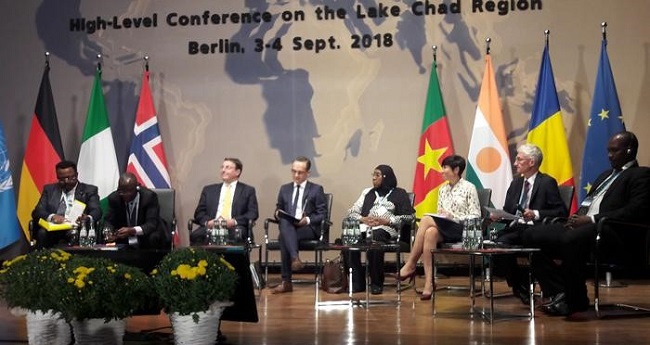
The World Bank has announced an additional $600 million (about N216 billion) for projects in the Lake Chad Basin region devastated by the Boko Haram terrorists.
The bank made the announcement at the Berlin Conference on Boko Haram crisis, which held from Monday, September 3 to Tuesday, September 4, 2018 in Berlin, Germany.
The two-day high-level humanitarian conference was organised by the Governments of Nigeria, Germany and Norway, together with the United Nations.
The African Development Bank (AfDB) and the Islamic Development Bank also supported the Lake Chad Basin region with grants and concessional loans respectively.
The UN Emergency Relief Coordinator, Mr Mark Lowcock, thanked the banks and countries for their generous donations and supports in a series of tweets.
“Thank you WorldBank for your incredible support to Lake Chad Basin and for announcing an additional $600M for projects throughout the region!
“Many thanks AfDB for your grant of $35.65 million to the Lake Chad Basin as well as the announcement of $57.3 million in concessional loans,” Lowcook said.
According to him, the Islamic Development Bank is supporting the Lake Chad Basin with $80 million in concessional loans.
The UN humanitarian chief also thanked Ireland for pledging €7.3 million; Sweden, £32 million; the Netherlands, £12.1 million; Italy, £15 million; and Poland, £230,000.
“I was so pleased to see the contributions from donors to development activities in the Lake Chad Basin through the UN Peacebuilding Support Office,” Lowcock said.
The News Agency of Nigeria (NAN) recalls that the conference raked in about $2.52 billion in pledges and concessional loans, with Germany, the host country, pledging €265 million and Norway, $125 million.
The others were Switzerland, $20 million; France, €131 million; Belgium, €45 million; Finland, €2.3 million; and Denmark, $72.5 million.
NAN recalls that the United Kingdom pledged £146 million; Canada, Can$68 million; European Union, €231.5 million; Luxembourg, €40 million and Spain, €3.2 million.
By Prudence Arobani
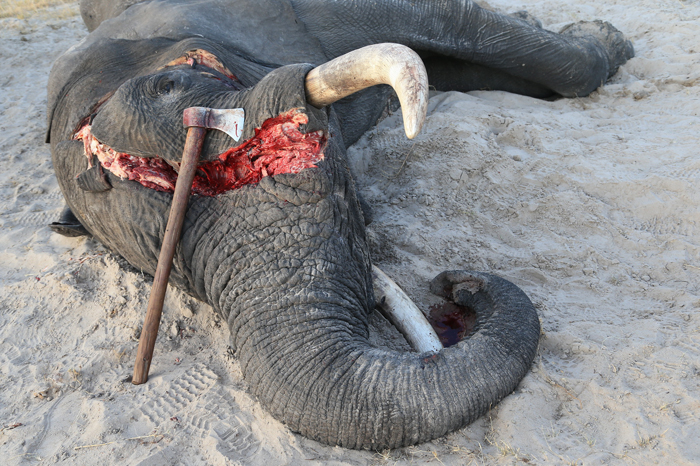
Botswana’s government on Wednesday, September 5, 2018 said reports about the poaching of almost 90 elephants were “unsubstantiated.”
“The government of Botswana has noted with concern unsubstantiated and sensational media reports on elephant poaching statistics,” it said in a statement.
The assertion comes a day after wildlife organisation Elephants Without Borders (EWB) said it discovered 87 elephant carcasses across the southern African nation while conducting a population survey.
“These statistics are false and misleading. At no point in August or recently were 87 or 90 elephants killed in one incident in any place in Botswana,” the statement read.
EWB had not claimed that the poaching occurred in a single incident: The organisation said it counted the carcasses over a period of three months.
The government acknowledged, however, that EWB reported to them the sighting of 53 elephant carcasses between July 5 and Aug.1.
“The scale of elephant poaching is by far the largest I have seen or read about in Africa to date,” according to Mike Chase of EWB.
The disarming of Botswana’s anti-poaching teams had directly coincided with the spike in poaching, Chase said.
Chase added that poachers were targeting older male elephants as they have the heaviest tusks, ideal for sale on the illegal ivory market.
In response, the government said the withdrawal of weapons “did not in any way affect the effectiveness and operations of the anti-poaching units.”
“The anti-poaching unit … continues to play a pivotal role in combating wildlife crime through other strategic interventions,” the statement read.
Past surveys have estimated Botswana’s elephant population to stand at around 130,000.
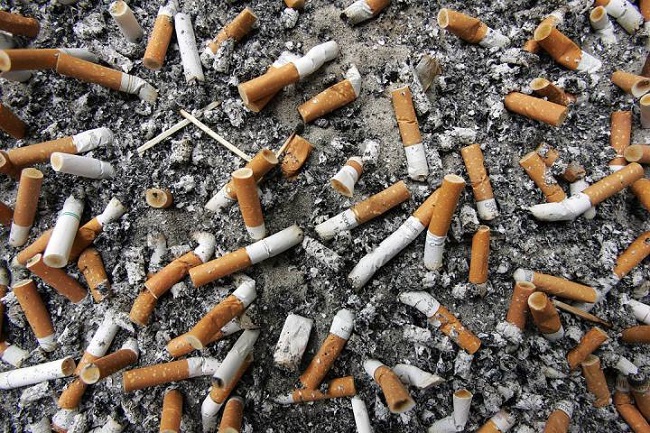
The World Health Organisation Framework Convention on Tobacco Control (WHO FCTC) says cigarette butts have become the most discarded waste item worldwide, with some 4.5 trillion thrown away each year, representing £1.69 billion of toxic trash annually.
WHO-FCTC said various studies indicated that this was compounded and accelerated as bans on indoor smoking took effect in many of the world’s cities and countries over the past two decades.
WHO FCTC is a global health treaty that advocates for the control of tobacco production, sale and use, as a way of reducing tobacco-related illnesses, deaths, environmental degradation and poverty across the world.
The UN tobacco control treaty watchdog warned that apart from deforestation to soil degradation and pollution, tobacco production and its use by consumers is “tremendously destructive” for the environment.
Dr Vera e Silva, the Head of the WHO FCTC Secretariat, said, however, that control measures could help curb its negative environmental effects, including the damaging impact of climate change.
“People often immediately think of the health impact that tobacco has, but there is not enough awareness of how tremendously destructive it is for the environment too, on land, under water and in the air,” she said.
She stressed that high amount of deforestation occurs, not only to create space for tobacco farming, but also because a lot of timber is required for the drying process of tobacco leaves after they are harvested.
Estimates show that tobacco farming causes up to five per cent of global deforestation, with 200,000 hectares of natural wood biomass loss each year.
“Studies indicate that tobacco growing could be up to 10 times more aggressive than all other deforestation factors,” e Silva noted.
In addition, the report stated that tobacco crop production led to accelerated soil degradation, as it stripped the earth of nutrients such as nitrogen, phosphorus and potassium faster and more extensively, than other major food and cash crops.
She said environmental pollution from tobacco started well before cigarettes were discarded, during the production phase, as tobacco crops required large amounts of chemical fertilisers, pesticides and growth regulators that pollute the ground, nearby waterways and aquifers.
“Among the pesticides used to grow tobacco are some highly toxic products that affect animals and humans alike, many of which are banned, or being phased out in several countries,” she explained.
The UN tobacco control watchdog also recommended that parties to the treaty urgently adopt regulations that would make the industry responsible for the impact that it had on the planet.
“Tobacco giants have been lobbying worldwide for policies that exonerate them from any environmental responsibility but ultimately, tobacco producers should be responsible for liability, economic costs and provision of information on the environmental impacts of their activities.”
She explained that “governments need to understand that tobacco control is a major component of any effective and holistic environmental protection effort they want to undertake”.
By Prudence Arobani
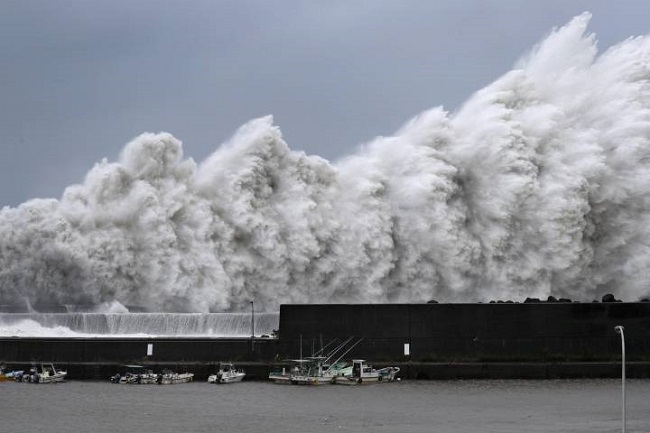
At least 11 people have been killed and about 600 injured after Typhoon Jebi ripped through Japan, the most powerful storm to hit the country in 25 years, local media reported on Wednesday, September 5, 2018.
Of the 11 deaths, eight people died in the western prefecture of Osaka, including four men, who fell from upstairs or the roofs of their houses after apparently being hit by strong winds, broadcaster NHK reported.
Three others died after they were hit by flying objects, the report said.
About 3,000 people spent the night at Kansai International Airport after a tanker hit the bridge connecting the offshore airport and the city of Izumisano, NHK said.
The ship was damaged, but its 11 crew members were not injured.
Authorities began taking some of those stranded to nearby Kobe Airport, which is also located on an artificial island, by ferry early Wednesday, while others were taken to the mainland by bus.
The ship, which had been anchored in Osaka Bay, was swept towards the bridge as the storm lashed Osaka.
The airport remained closed on Wednesday, leading to the cancellation of 162 flights, and it is still unknown when it will be back to normal operation, Kyodo News said.
One of its runways and the basement floor of a terminal building were flooded.
About half a million households in Osaka and five nearby prefectures remained without power, as of 11 am (0200 GMT), according to Kansai Electric Power.
The season’s 21st typhoon was downgraded to an extra-tropical cyclone over the Tatar Strait near Russia at around 9 am, the Meteorological Agency said, after dumping torrential rains on the northern island of Hokkaido overnight, toppling trees and utility poles.
Jebi made landfall around the southern part of Tokushima prefecture shortly after Tuesday noon, according to the agency.
Jebi was the latest in a series of weather-related disasters to hit the country in recent months.
In early July, torrential rains pummelled western Japan, triggering landslides and floods that left 226 people dead and 10 missing.
It was the country’s deadliest weather-related disaster in more than three decades.
An intense heatwave that enveloped the country immediately afterwards killed more than 130 people, as temperatures soared above 40 degrees Celsius in some places.
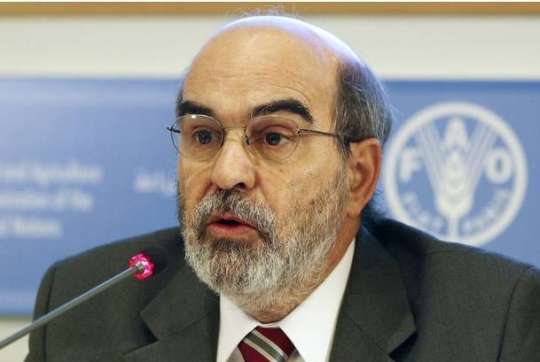
Five United Nations agencies are set to launch the new edition of “The State of Food Security and Nutrition in the World”.
The Food and Agriculture Organisation (FAO) said on Tuesday, September 4, 2018 that the launch would be on Sept. 11, in Rome, Italy, where it is based.
It said the five UN agencies are Food and Agriculture Organisation (FAO), International Fund for Agricultural Development (IFAD), World Food Programme (WFP), the United Nations Children’s Emergency Fund (UNICEF) and the World Health Organisation (WHO).
It disclosed that the head of the agencies, José da Silva, Director-General, FAO; Gilbert Houngbo, President IFAD; Tedros Ghebreyesus, Director-General, WHO; Henrietta Fore, Executive Director, UNICEF; and David Beasley, Executive Director, WFP, are expected to be the launchers.
The FAO said the report gave an updated estimate of the number of hungry people in the world, including regional and national breakdowns, and the latest data on child stunting and wasting as well as on adult and child obesity.
“It is indeed a snapshot on global hunger and malnutrition, and analysis of their main drivers.
“It is an important yardstick in measuring progress towards the Sustainable Development Goal of Zero Hunger,’’ it said in a statement.
It added that the report also offered analysis of the drivers of hunger and malnutrition, and this year included a special focus on the impact of climate variability and extremes.
By Hawa Lawal

Special Adviser to Lagos State Governor on Environment, Mr Babatunde Hunpe, has assured Lagosians that the state government is making efforts to ensure that refuse disappear in Lagos streets.
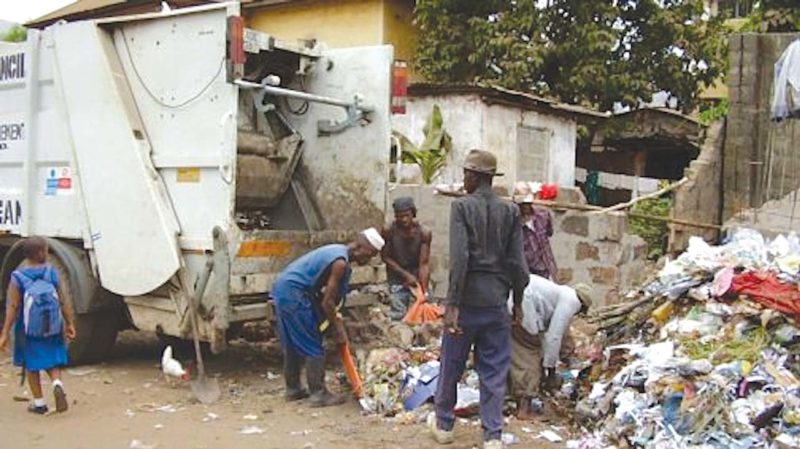
Hunpe gave the assurance in an interview with the News Agency of Nigeria (NAN) in Badagry on Wednesday, September 5, 2018.
According to him, government is working with the experts in the sector and Private Sector Participants (PSP) operators to ensure that things work out.
He said that waste had disappeared in some streets while it was still in some areas.
Hunpe blamed the challenges related to waste clearing on the PSP operators who, according to him, thought the Cleaner Lagos Initiative programme of the state government would take business away from them and give it to investors.
“Gov. Akinwunmi Ambode is not taking waste business from anybody; rather he is ready to put money into people’s pockets.
“What is paramount to the governor is rid Lagos of waste; I mean cleanup the state.
“This is why he invited experts in waste clearing to come in partnership with Lagos State Government (LASG) and together with our PSP operators to work together.
“Ambode assured them that they will not be out of business because with the population of Lagos now, their equipment cannot withstand the waste generation.
“Let these people who are experts in waste management with their new equipment come, we will give them domestic premises to work and PSP operators will have commercial premises.
“That’s why they stopped working before,” he said.
Hunpe, however, said that government and PSP operators had resolved the matter, adding that both parties had agreed to work together again.
“They are now back in the streets working together with the experts, I’m sure with time, they will clear all the waste in Lagos Streets,’’ Hunpe said.
By Raji Rasak
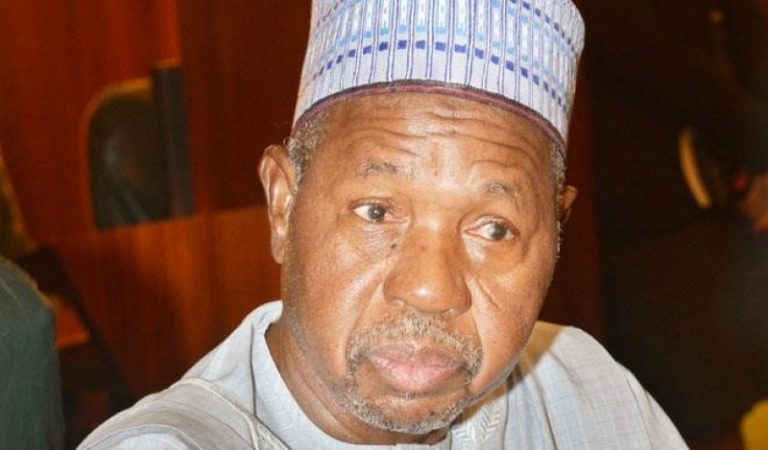
An EU agro-forestry programme known as Fuel Wood Balance (FUWOBA) has commenced distribution of 760,000 additional free tree seedlings in seven local governments in Katsina State.
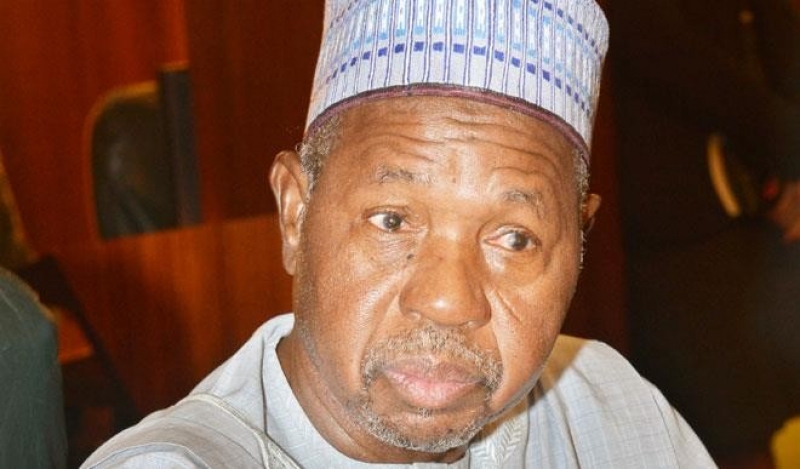
The Project Manager, Dr Chris Udokang, said the gesture was to promote afforestation and environmental conservation.
Udokang made the disclosure during the “National Annual Review Seminar on Improving Fuel Wood Balance’’ in the seven participating local governments in Katsina, the state capital, on Wednesday, September 5, 2018.
He said the seedlings were produced during the agency’s 2018 nursery activity through the “Farmer Manage Tree Regeneration Programme’’.
According to him, 7.09 million trees have been planted and maintained by farmers across the seven local government areas in the last three years under the FUWOBA.
He said that the trees planted represented 129.92 per cent of the target value trees set under the programme.
The project manager explained that 5 million trees representing 143.0 per cent of the target were also generated through “farmer managed regeneration approach’’ and two million seedlings through nursery approach.
He said the survival count conducted in December last year indicated that 4.5 million trees planted and maintained had achieved 69.48 per cent survival rate.
Udokang said 55, 638 farmers representing 101.16 per cent of the target households covering 147,355.92 hectare of land had been achieved since inception of the project four years ago.
He said the trees planted include, eucalyptus, mahogany of different varieties, moringa, zizipus and other relevant economic trees that would boost economic fortunes of farmers and conserve the environment.
According to him, the project has also produced and distributed 35,000 mud efficient clean cook stoves within the benefiting communities, 2,800 hoes, 6,800 watering cans.
Also distributed were 7,000 50kg of fertilisers, 7,000 litres of agri-chemical insecticides, 1,200 pressure sprayer machines and 700 animal plough.
Responding, Gov. Aminu Masari of Katsina State, represented by the Permanent Secretary, Ministry of Environment, Alhaji Sani Masari, commended the sponsors of the project for considering the state to benefit from the project.
He said the state government would procure and distribute 34,000 clean cook stoves for distribution free of charge to farmers in the 34 local governments.
According to the governor, each of the local governments will receive 10,000 clean stoves.
He said the state government would continue to support such excellent initiatives aimed at conserving the environment and empowering people of the state.
In a remark, Alhaji Abubakar Kusada, Speaker of the state House of Assembly, said lawmakers would collaborate with relevant agencies to enact relevant laws to protect the environment.
Mrs Kate Kanebi, an EU official commended the stakeholders on the level of implementation of the project and said the project would be extended to other local government areas.
She said the sponsors of the project would not hesitate to dedicate more funds for sponsoring the project.
The News Agency of Nigeria (NAN) reports that FUWOBA project was introduced in September 2014 by EU facilitated by Oxfam, Iceed and National Planning Commission.
The project is aimed at conserving the environment and economic empowerment.
The participating local governments in the Lot 2 programme of the project are Baure, Mai’adua, Mashi, Daura, Dutsi, Sandamu and Zango.
By Auwalu Yusuf
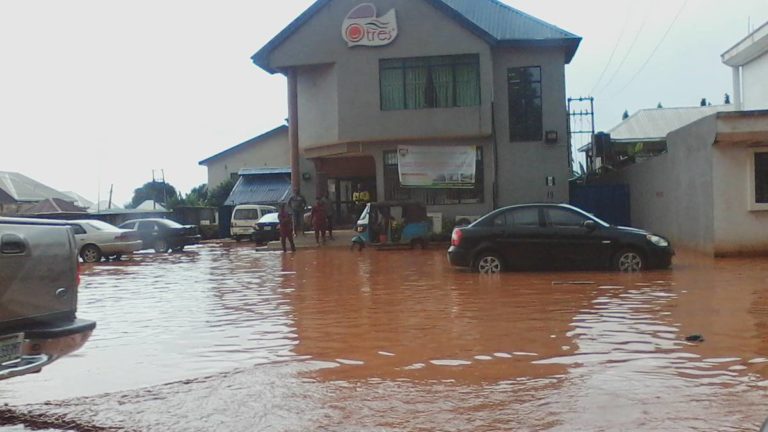
The Nigerian Hydrological Service Agency (NIHSA) has advised Nigerians to be ready to prevent and manage flood incidents as the country is now in the peak of rainy season.
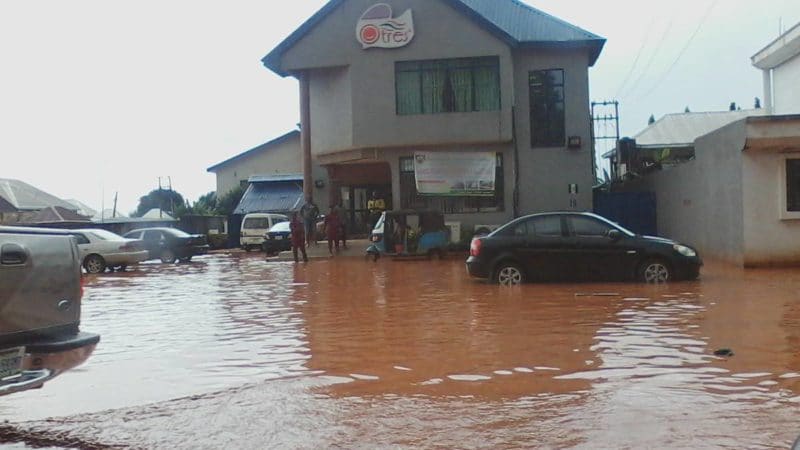
NIHSA gave the advice in a statement in Abuja on Wednesday, September 5, 2018 signed by its Acting Director-General, Alhaji Ahmed Bashar.
The agency said that the months of July, August and September remained critical periods for flooding incidents in the country.
‘‘The 2018 Seasonal Rainfall Prediction released earlier in the year by the Nigerian Meteorological Agency (NIMet) gave Sept. 28 as the earliest cessation date of rainfall in Sokoto and Katsina.’’
The prediction said December is the earliest cessation date for the southern coastal cities; this means that Nigeria is still within the peak of raining season.
‘‘In the light of the above, NIHSA wishes to inform the general public that the country is still in the peak of rains and should be prepared in the event of any flood incidents, it said.’’
According to the agency, the flood level and the discharge of River Niger have continued to increase.
‘‘A flood level (stage height) of 9.67m and a discharge of 20,578m3/5 have been recorded on Sept. 5. These figures are higher than the corresponding values of 9.34m and 19,456m3/5 recorded on Sept. 5, 2012.
‘‘This is the year the country witnessed the worst devastating incidents in recent history,’’ the agency said.
According to NIHSA, the Government of Cameroon has not commenced spilling water from the Lagdo Dam as being reported in certain quarters.
‘‘During periods of high flows (July, August and September), any rise in the water level leading to flooding in the Benue valley is often erroneously attributed to release of water from the dams.
‘‘It is often the inflows from the tributaries of River Benue that cause the flooding of their catchments,’’ it said.
NIHSA recalled that Nigeria signed a Memorandum of Understanding (MoU) with the Government of Cameroon to notify her ahead of time in the event of any planned release of water from the dam.
The agency said it was in constant touch with the managers of the dams and would continue to monitor the trends in levels of water in the nation’s rivers, and issue warning alerts as appropriate.
By Deji Abdulwahab