Home Blog Page 1790

Solar installation can increase vegetation in Sahara Desert, Sahel – Study

0

A study has shown that a massive wind and solar installation in the Sahara Desert and neighbouring Sahel would increase local temperature, precipitation and vegetation, thus benefiting the region.
solar
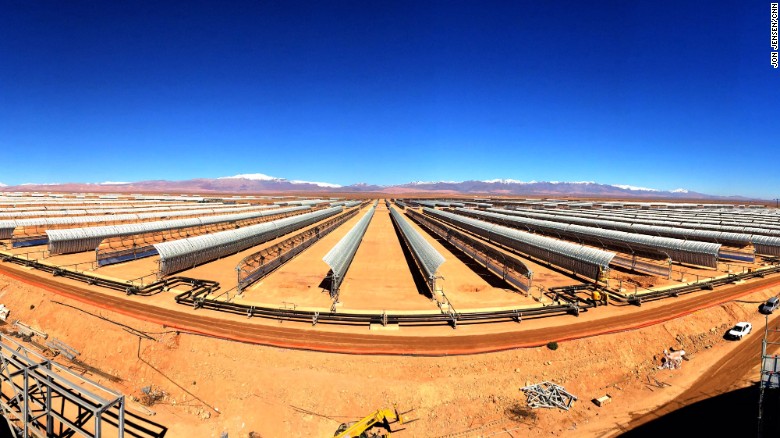
A solar plant being constructed in a 30 square kilometre area outside the city of Ouarzazate, on the fringe of the Sahara desert

According to its lead author Li Yan, a postdoctoral researcher in natural resources and environmental sciences at the University of Illinois, the study is among the first to model the climate effects of wind and solar installations while taking into account how vegetation responds to changes in heat and precipitation.

Wind and solar farms are known to have local effects on heat, humidity and other factors that may be either beneficial or detrimental to the regions in which they are situated.

The wind and solar farms simulated in the study would cover more than nine million square kilometers and generate, on average, about three terawatts and 79 terawatts of electrical power, respectively.

“In 2017, the global energy demand was only 18 terawatts, so this is obviously much more energy than is currently needed worldwide,” Li said.

The model revealed that wind farms caused regional warming of near-surface air temperature, with greater changes in minimum temperatures than maximum temperatures.

The greater nighttime warming takes place because wind turbines can enhance the vertical mixing and bring down warmer air from above, according to the study.

Precipitation also increased as much as 0.25 millimeters per day on average in regions with wind farm installations.

“This was a doubling of precipitation over that seen in the control experiments,” Li said.

In the Sahel, average rainfall increased 1.12 millimeters per day where wind farms were present.

This increase in precipitation, in turn, leads to an increase in vegetation cover, creating a positive feedback loop, said Li.

Solar farms have a similar positive effect on temperature and precipitation, but unlike the wind farms, the solar arrays have very little effect on wind speed.

“The rainfall increase is a consequence of complex land-atmosphere interactions that occur because solar panels and wind turbines create rougher and darker land surfaces,” said the paper’s co-author Eugenia Kalnay from University of Maryland.

The increase in rainfall and vegetation, combined with clean electricity as a result of solar and wind energy, could help agriculture, economic development and social well-being in the Sahara, Sahel, Middle East and other nearby regions, according to the study.

Deforestation: NCF partners IITA on tree planting

0

The Nigerian Conservation Foundation (NCF) is partnering with the International Institute of Tropical Agriculture (IITA) in Ibadan, Oyo State, on tree planting in order to tackle the problem of forest degradation in the country.

Izoma Asiodu
NCF President, Izoma Asiodu

NCF President, Izoma Asiodu, at a tree-planting event in Ibadan on Friday, September 7, 2018 decried what he called the negative attitude of Nigerians toward tree-felling without replacement.

He said that the effects of this were currently responsible for climate change in Nigeria.

Asiodu said that NCF had adopted an immediate priority to help the Nigerian government on green recovery initiative by planting more indigenous trees.

He said that indigenous trees were more protective of the Nigerian soil, adding that they enrich the soil, unlike most imported trees which come with certain diseases.

Asiodu said that planting of trees would help address forest degradation and the effects of climate change in a few years.

The Deputy Director of IITA, Mrs Hilde Koper-Limbourg, said she was delighted that NCF had interest in the protection and preservation of the environment and wildlife in Nigeria.

She described IITA as a non-profit institution that generates agricultural innovations to meet Africa’s most pressing challenges of hunger, malnutrition, poverty and natural resource degradation.

Koper-Limbourg said though forest conservation work was not IITA ’s main mandate, it was aware of its importance to the environment.

According to her, IITA recognises the importance of forests and appreciates the support offered by NCF and other partners.

“We promise to keep working on responsible agriculture and conservation,’’ she said.

Prof. Busoye Agbeja, the Chairman of Commonwealth Forestry Association, called on federal and state governments to address the challenges of forest reserves so as to prevent degradation.

The News Agency of Nigeria (NAN) reports that also present at the event were the Director-General of NCF, Dr Muhtari Aminu-Kano and Chief Ede Dafinone, the Chairman of Green Recovery Nigeria Initiatives.

By Suleiman Shehu

Adidas makes Real Madrid’s kit from recycled ocean plastic

0

Adidas and Parley for the Oceans have collaborated on the third kit for Real Madrid FC of Spain.

Real Madrid
A Madrid player modelling the kit

The kits, made from recycled ocean plastic, are being sold for £64.95 at the official Real Madrid Store and will be worn during the 2018/19 season.

The coral colour of the strip is designed to reflect the various shades of coral to highlight the importance of protecting the oceans.

A spokesman for Adidas said: “As a founding member, Adidas supports Parley for the Oceans in its education and communication programmes, as well as its comprehensive Ocean Plastic Programme that intends to end plastic pollution of the oceans through the three pillars of the Parley A.I.R. strategy: Avoid, Intercept and Design.”

Cyrill Gutsch, Parley for the Oceans Founder, said: “Real Madrid has the power to amplify our message, to share it with their massive global following and to bring it to life with their own decisions and actions.”

Parley for the Oceans is an organisation that addresses major threats to our oceans which they regard as the most important ecosystem of our planet. Recent studies showed that at least 5 trillion pieces of plastic waste, weighing over 250,000 tonnes, are now floating in our oceans.

Adidas and Parley for the Oceans have previously collaborated on sustainable clothing, including high-performance footwear. Through this partnership they have sold over one million shoes made from recycled ocean plastic.

Manchester United and Bayern Munich have also announced kits made from plastic in a pledge of sustainability.

Courtesy: Climate Action

Mercedes unveils new electric car, EQC

0

Mercedes-Benz has revealed its new electric car which is set to launch in 2019.

Mercedes-Benz EQC
The Mercedes-Benz EQC

The company is investing more than £9 billion in the expansion of its electric range. By 2022, they will offer 10 pure battery electric vehicles, this starts in 2019 with the launch of the EQC.

Mercedes said: “To support the shift away from fossil fuel powered vehicles to more sustainable alternatives, our eMobility range is growing year on year with a range of choice in hybrid and plug-in hybrid vehicles.”

The EQC, the first series production vehicle to emerge from the Mercedes-Benz EQ electric mobility programme, will have a power input of up to 300 kilowatt, a range of 450 kilometres and will be a serious competitor in the luxury SUV market. It can accelerate from 0-62 mph in under five seconds and can travel over 300 miles on one charge. Locally emission-free driving is achievable at all times, with an extensive range from a single charge.

The new electric car has undergone years of development, facing rigorous testing in the coldest parts of the world to the hottest.

Dieter Zetsche, Mercedes-Benz chairman, revealed that by 2025 he expects electric car sales to occupy 15 to 20 percent of the company’s sales.

Mercedes-Benz joins other car companies such as Nissan and Tesla who have created electric cars for a competitive market.

Courtesy: Climate Action

Lagos seeks protection of marine environment

0

The Lagos State Commissioner for the Environment, Mr Babatunde Durosinmi-Etti, has urged the residents of the state to always protect the marine environment due to its socio-economic values.

Ibeshe Waterfront
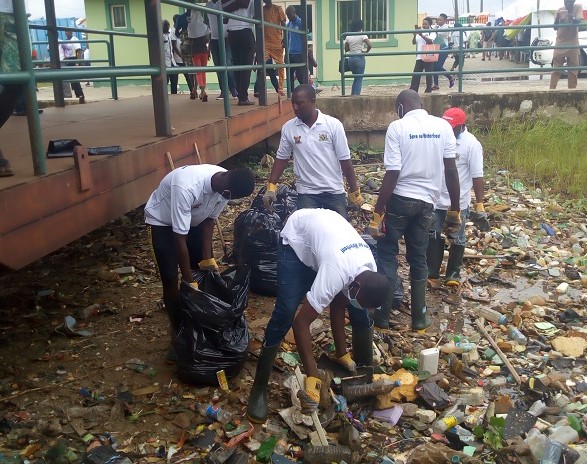
Clean-up of the Ibeshe Waterfront

Durosinmi-Etti said this on Thursday, September 6, 2018 during the clean-up of Ibeshe Waterfront in Ikorodu, marking the maiden edition of the Clean-up of Lagos Waterfront.

He said that residents should stop littering the roads, streets and highways with wastes, as such always find their ways into the marines.

Durosinmi-Etti said that Lagos State contributed more than half of wastes to the nation’s waterways.

The commissioner said that was due to the increasing population of the residents of the state which he put at over 22 million.

He also attributed it to the improper disposal of wastes by the residents.

The commissioner said that data generated in 2010 and captured in a Wall Street Journal Publication of Feb. 12, 2015 showed that Nigeria ranked 9th on the list of countries polluting the oceans and the waterways the most.

According to him, Nigeria contributes 0.34 million metric tonnes of mismanaged marine plastic debris.

“It will be safe to infer that more than half of these quantities emanated from Lagos, being the most populated of the country’s coastal states.

“Cleaning the waterfronts will amount to efforts in futility if the debris/wastes still continue to find their ways back to the waterways and the shorelines.

“We must, together, as a people resolve to stop this menace by embracing best waste management practices.

“We must live by example and encourage our neighbours, relatives, and friends to do same,” he said.

The commissioner said that the clean-up of Ibeshe Waterfront underscored the collective resolve to protect the Mother Earth, of which the waterfront was part.

He said that Lagos, like many other mega cities of the world, was faced with a wide range of socio-economic and environmental challenges; one of which was pollution.

Durosinmi-Etti said that pollution of the marine environment had become a major source of concern globally, in view of the socio-economic and public health implications.

He said that the marine environment was a delicate one that should be protected.

He said that this was because it served as the source of water for socio-economic activities such as transportation, power generation, and irrigation.

According to him, the water bodies serve as habitat to aquatic life, which must be protected to ensure a balance in the ecosystem.

“The Lagos Lagoon and the other lagoons, rivers and streams have their shares of pollution and degradation.

“This is ranging from deliberate dumping of wastes and untreated sewage to discharge of untreated effluents into them.

“The menace of plastic wastes and the attendant impacts on the aquatic environment has become a global concern.

“The issue made the United Nations to dedicate this year’s Earth Day and the World Environment Day celebrations to addressing plastic pollution.

“As we clean-up the waterfronts in the state, we must not forget that most of these wastes emanate from the inland and we must ensure that they do not find their way back into the waterfront,” he said.

Also, the Permanent Secretary in the ministry, Mr Abiodun Bamgboye, said that the consistently increasing population of the state had an attendant consequence on waste generation and management.

Bamgboye said that the clean-up was a commitment by the government to protect the environment and public health.

He said that the water bodies were priceless gifts of nature with huge aesthetic, tourism and economic values.

“As a people, we owe it a duty to ourselves and future generation to preserve these priceless gifts of nature,” he said.

Mr Monday Ayejuni, a fisherman said that the clean-up would help to keep the water environment clean and make their fishing work better.

Ayejuni said that it would ensure that there were no plastic items choking the fish.

Another fisherman, Mr Emmanuel Emiloju, said the clean-up would ensure that more customers patronise them.

The News Agency of Nigeria (NAN) reports that the exercise was in collaboration with Nigerian Ports Authority (NPA), and Eco Bank Plc.

Others are Zenith Bank Plc, Sand Dredgers Association, Ikorodu Branch, Pinnacle Oil and Gas Ltd., 7up, Czar Protects Ltd., among others.

By Florence Onuegbu

EU finances construction of public toilets in 14 towns in Ekiti

0

The European Union is financing the construction of model public toilets in 14 small towns in Ekiti West and Gbonyin Local Governments, Ekiti State, under its Water Supply and Sanitation Reform Programme (WSSSRP) III.

Ekiti West
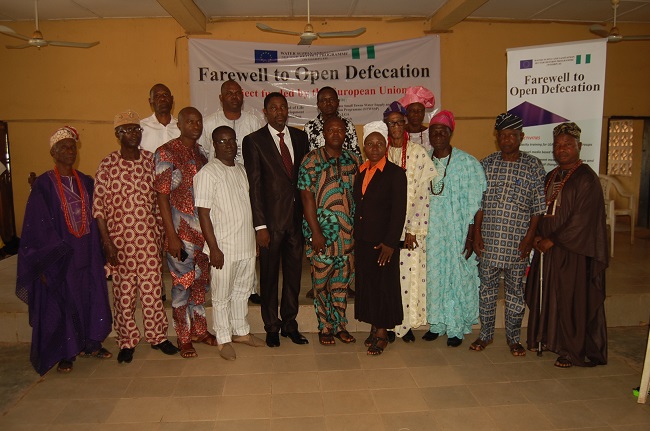
Community leaders in Ekiti West

The project, titled: “Farewell to Open Defecation”, is being implemented by Bread of Life Development Foundation in collaboration with the Ekiti State Small Towns Water Supply and Sanitation Programme, Gbonyin Local Government, and Ekiti West Local Government.

Ekiti State has a safe sanitation coverage of 32% in rural and small towns, and 38% in urban towns; open defecation which is 68%, is the highest in the southwest Nigeria according to State Water, Sanitation, and Hygiene (WASH) policy. In Gbonyin local government, a UNICEF 2014 survey shows that 92% of the communities are without public latrines; and in Ekiti West local government, 124 communities do not have any form of public latrines, according to the Ekiti West WASH profile 2014 report.

“Farewell to Open Defecation” will reduce open defecation in Ekiti State and its associated health effects; generally increase living standards; improve economic livelihoods through jobs and income creations; reduce economic losses due to incidences of diseases caused by poor sanitation and safe water; and result in safe sanitation behaviours, and safe hygiene practices in 14 small towns in Gbonyin and Ekiti West LGAs, Ekiti State.

The overall objective of the project, whose contract is already signed by the the contracting authority – National Authorising Officer/The Honourable Minister for Budget and National Planning and the European Union Delegation to Nigeria on April 29, 2018, is to strengthen  water and sanitation (WASH) governance institutions; increase prioritisation and funding of WASH sector by public and non-public actors; and  increase access to sustainably managed, safe Sanitation WASH facilities  in 14 Small towns in Gbonyin and Ekiti West Local Government Areas (LGAs), Ekiti State.

“Farewell to Open Defecation” is a WASH governance and service provision project, mobilising stakeholders for effective WASH management, and sustainably increasing access to safe WASH services through construction of Sanitation Demonstration Units (SDUs) in 14 Small towns, Gbonyin and Ekiti West Local Government Areas (LGAs), Ekiti State.

The project will result in the construction of modern public toilets in 14 small towns in Ekiti state between October 2018 and May 2019. The benefitting towns are: Iluomoba, Agbado, Egbe, Imesi, Ijan, Aisegba, and Ode in Gbonyin LGA; and   Erio, Ido-Ile, Ipole-Iloro, Aramoko, Oke Imesi, Erinjinyan and Ikogosi in Ekiti West LGA.

The public toilets, also known as integrated Sanitation Demonstration Units (SDUs), will be constructed in either a motor park, bus stop, garage, or market place; and comprise two blocks of three compartment pour flush toilets, urinals, handwashing facilities, bathing room, laundry, car wash, a sani centre, solar powered motorised borehole, and three prepaid meter public water standpoints.

The project will also support the Sanitation Task Groups in the two LGAs to discuss and address WASH governance issues particularly policy, regulatory, legal, institutional, and financial framework for accelerated access to safe sanitation ; facilitate several media based high level advocacy to key public and non-public service providers towards prioritising sanitation and mobilising financial resources for safe sanitation  in the two LGAs; support the two LGAs Sanitation Task Groups to organise WASH public enlightenment  meetings quarterly; and mobilise community leaders in the LGAs on strategies of accelerating safe sanitation and hygiene practices in the 14 small towns.

The constructed public toilets will be handed over to Public Toilet Management Committee (PTMC) for sustainable management, while Private Operators will be locally recruited to suitably operate and maintain the Public toilets through innovative public contracts. The public toilets will be operated using a business model, and revenues realised from user charges will be deposited in a Sanitation Revolving Fund, which is a financing mechanism for development of sanitation infrastructure in the small towns, at household and institutional levels.

A project launch was recently held in Ode Ekiti, Gbonyin Local Government and in Aramoko Ekiti, Ekiti West Local Government, to flag-off activities.

ITB has raised the bar in building standards, says Chidiac

0

Lagos-based construction company, ITB Nigeria Limited, has stated that the firm has redefined and raised the standards of buildings and construction in Nigeria.

ITB Nigeria Ltd
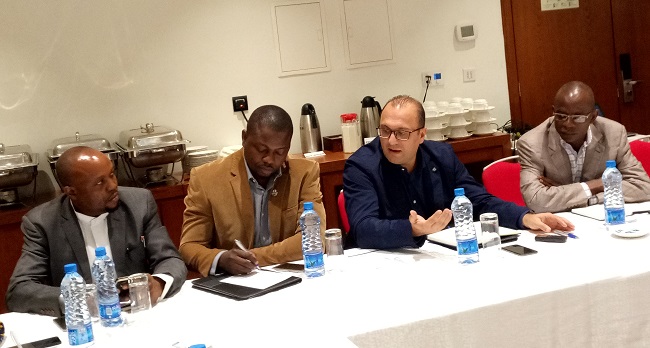
L-R: Idongesit Inyang, Human Relations Manager; Emmanuel Adeyemi, QA/QC Manager; Ramzi Chidiac, Managing Director; and Abadaike Elvis, Quantity Surveyor, during the media session in Lagos

Managing Director of ITB, Mr. Ramzi Chidiac, made the submission at a media session in Lagos on Thursday, September 6, 2018.

Speaking at the event, Mr. Chidiac stated that ITB Nigeria Ltd recently adopted a new slogan “Build it Right” to reflect the company’s adoption of international best practices – it’s use of the right technology; the right processes, the right systems and the right people. The slogan, he adds, reaffirms the company’s unrivaled quality, technology and standards in its various services and operations.

He said: “At ITB, our core value is to grow through creativity, invention and innovation. ‘Build it Right’ is our way of reaffirming our position. We currently have unrivaled technology in the Nigerian construction industry and the projects that we have carried out are a testament to that. We have certainly raised the bar in the way buildings are designed and constructed in Nigeria.

“In order to continue to improve on our services and increase clients’ satisfaction, we have gone ahead to invest in multiple resources and affiliates. We are adequately equipped to handle turnkey projects (design and build); we built the first LEED Certified building in Nigeria and we are advocates of smart buildings.”

ITB, he stressed, was established in 1995 to address the growing demand for innovation and improved engineering expertise in Nigeria.

“With over two decades of experience in the construction industry, the company’s teams of builders and civil engineering contractors have established ITB as the leading provider of top-quality construction services across the country. The company also has a successful record of accomplishment of delivered projects and strong clients’ relationship,” he noted.

Why the world should chart a path toward tackling climate change

0

Asad Rehman, executive director of War on Want; Meena Raman, legal adviser and senior researcher at Third World Network; Tom Goldtooth, executive director of Indigenous Environment Network; and Nnimmo Bassey, director of the Health of Mother Earth Foundation, say that the spate of climate talks in 2018 could make it the year that world governments chart a path toward tackling climate change, enhanced ambition and implementation of the Paris Agreement

Kerala
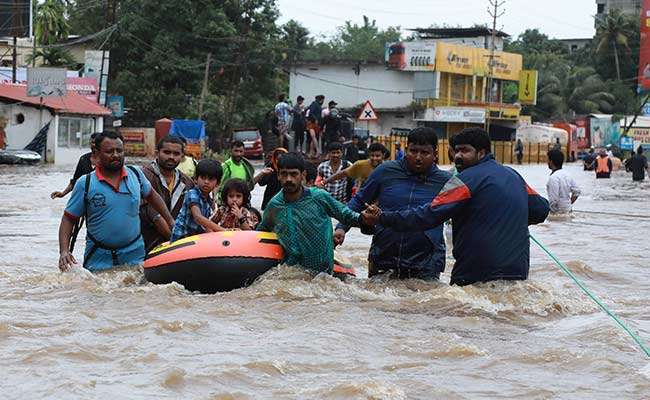
Killer flood: Flooding in Kerala, India

Killer floods and heat waves have made 2018 another record-setting year as the climate crisis intensifies. The UN climate negotiations in Bangkok (September 4-8), followed by the Global Climate Action Summit (GCAS) in San Francisco (September 12-14) and the UN Framework Convention on Climate Change 24th Conference of the Parties (COP24) in Katowice, Poland, (December) could make 2018 the year that world governments chart a path toward tackling climate change, enhanced ambition and implementation of the Paris Agreement. It could also be the time that global leaders fall dangerously short in reckoning with the climate crisis, condemning millions more to losing their lives and livelihoods.

Despite consensus that climate change is jeopardising life on Earth, there is a massive chasm between the action needed and what the fossil fuel industry – with governments in the Global North in its pocket – is pushing. If polluting countries and corporations are successful, ineffectual interventions – like carbon markets and geo-engineering – become central to the global response to climate change. The result: soaring emissions, lives lost, hundreds of millions of people displaced and species extinction.

This is the path we are on. We are here because of decades of mass deception and political manipulation by big polluters that has allowed them to undermine international, national and subnational climate policy to guard their profits. This political interference is directly correlated with the emergence of carbon market schemes as a “solution” to today’s crisis, despite their consistent failure.

Carbon pricing – putting a price on carbon and regulating it through markets including cap and trade and offsets (i.e., commodifying the air we breathe) – have been pushed by corporations and Global North countries as our fail-safe for the planet.

Carbon markets have not proven to be an effective way to reduce emissions. Instead of the Global North making emission reductions domestically, corporations located in the Global South can sell offset credits to corporations in the north to meet their emissions reduction limits. Human rights and environmental injustices are well-documented by communities who live near these so-called clean development projects in the Global South. Instead of holding northern economies accountable to change their production systems and consumption patterns, carbon markets allow for business as usual in the north, leaving the Global South to offset the Global North’s emissions and endure the impacts.

Such schemes are criticised for being rooted in the colonialism and environmental racism that is at the core of fossil fuel extraction. Indigenous peoples, small-scale farmers, forest peoples, youth, communities of color and women are most impacted by these schemes. For example: Kenya Forest Service guards have violently evicted the Sengwer Indigenous people in the Embobut Forest due to pressures from voluntary international offset schemes that provide financial incentives for forest preservation. In Colombia, Indigenous Wayuu fight for the ancestral rights to land and water due to impacts from the largest open-pit coal mine in Latin America, Cerrejon. Cerrejon has used the Clean Development Mechanism – which lets countries in the Global North purchase credits from Global South countries to continue polluting – to sell offset credits from a few wind power generators placed next to the looming mines.

In addition to the examples above, these schemes have failed in the very countries whose governments are pushing them, including the UK, the EU, Canada, Australia, and California in the US. Despite the documented global failures of carbon market schemes, big polluters are seeking to make these schemes the centerpiece of climate policy at upcoming milestones in Bangkok, San Francisco and Katowice. At GCAS, polluters are promoting an expansion of carbon pricing mechanisms that guarantee more fossil fuel extraction, despite needing to keep the vast majority of fossil fuel reserves in the ground to curb temperature rise. At COP24, the guidelines for Paris Agreement implementation are being used to link up international carbon markets. This creates an official space for polluters to continue polluting unregulated.

These upcoming meetings will chart the immediate future of climate action. Real, just solutions must receive the priority they deserve. We call on governments to listen to the people without delay at COP24, reject false solutions stemming from GCAS and to take urgent steps to protect our lives. Instead of permitting the very actors that fuelled the climate crisis to advance their own agenda, it is time governments embody true climate championship by embracing the meaningful solutions communities on the front lines of climate change already have. They are feasible and affordable, and they work. They include a managed decline of fossil fuel production; pacts to keep fossil fuels in the ground in the Global North immediately, with a phaseout for the Global South; finance and technology transfer; a total and just transition to community-led renewable energy; and a singular focus on keeping big polluters out of climate policymaking.

WaterAid, EU to drive improved WASH governance in Plateau

0

The European Union (EU) and the Plateau State Government are jointly supporting the implementation of the Water Supply and Sanitation Sector Reform Programme III (WSSSRP III) in Plateau State to improve governance of the sector and provide improved services in urban and rural areas of the state.

Simon Lalong
Plateau State governor, Simon Lalong

The project is being executed by WaterAid Nigeria as a technical support project aimed at improving the capacity of civil society to advocate for better governance in the water and sanitation sector in particular and to act as a potential driver for good governance in the broader context of the public sector service delivery.

Direct community engagement aspects of the project will be implemented in small towns in Riyom and Shendam Local Government Areas while advocacy work will be aimed at state wide stakeholders in the water supply and sanitation (WSS) sector to improve the effectiveness and sustainability of the project outcomes.

The ultimate goal of the project is to ensure that as many of the more than 336,897 residents of Riyom and Shendam LGAs as possible receive improved water, sanitation and hygiene (WASH) services through the advocacy and engagement of CSO partners – Society for Water and Sanitation (NEWSAN), Community-Based Development Non-Governmental Organisations’ (CBD-NGO) Forum, WASH Media Network and Joint National Association of Persons with Disabilities (JONAPWD) – with the government and the EU.

Crucial to the sustainability of the legal institutional reforms and service delivery outcomes of the Programme is introducing accountability components that provide platforms for citizen groups and powerful non-state actors in Plateau State to continue demanding for better governance and participate in sector governance processes to ensure the interests of the people, including marginalised groups, are considered in all decision making.

This led to the development of the EU-funded project: Technical Assistance to Civil Society Organisations (CSOs) to implement WSSSRP III action (TAC).

The TAC project is working towards a Plateau State where CSOs have enough capacity to support all citizens, including women and people with disabilities, to demand their rights to clean water and safe sanitation, and also ensure that citizens are heard in decision making platforms within the sector. WaterAid will also support government institutions in the WSS sector to be better able to fulfil their duties as outlined in the state WSS policies.

WaterAid says that, along with partners, it is committing to ensuring that children, women, persons living with disabilities and the most vulnerable and marginalised communities will benefit most from the project.

“We will work with government and CSOs to ensure resources are targeted to those who are most at risk from a lack of access to clean water and sanitation,” the group declares, adding:

“We commend the Plateau State Government for its support and ownership of the project so far and call on state and its people to work with us and participate in project activities as we continue the journey to make and keep access to water, sanitation and hygiene a priority in the state and to achieving universal access (SDG 6) for everyone in the state.

“In Plateau State, as is the case across most of the country, access to water supply and sanitation services have been inadequate. About 61% of the state’s household population currently live without clean water, 29% without access to a decent toilet and 54.8% defecate in the open. Without sufficient access to clean water and sanitation, it will be difficult for the state to meet the development goals it has set for itself, such as reduction in maternal and infant mortality, eradication of water borne, and poor sanitation induced diseases – cholera, dysentery, Lassa Fever etc. – as well as improvement in school attendance and reduction in dropout rates, especially for girls. In addition, a loss in economic activities due to time spend fetching water, especially for women, will also continue to have an impact on the economic growth of the state.”

Flooding submerges 64 communities in Kogi

0

No fewer than 64 communities have been submerged by flood in the Kogi/Kotonkarfe Local Government Area of Kogi State.

Yahaya-Bello
Governor Yahaya Bello of Kogi State

Mr James Ahmadu, Director of Relief and Rehabilitation of the Kogi State Emergency Management Agency, made the disclosure on Thursday, September 6, 2018 at Edeha community in Kotonkarfe.

He spoke to newsmen after visiting one of the IDPs’ Camps in Edeha community, saying that more than 150 households had been trapped by flooding in the past three days.

Ahmadu said that a man, popularly known as “Ibrahim Barrister”, lost his life to the flooding while trying to move upland.

“We are here for on-the-spot assessment of the flooding situation in Kotonkarfe. As you can see everywhere is flooded. Over 64 communities were submerged.

“Five temporary camps have been set up for the victims by the state in collaboration with the local government that is why NEMA is here for assessment of the situation.

“We thank God that NEMA is here and they are cooperating with the State Government in ensuring that necessary arrangement is made,” Ahmadu said.

Mr Bitrus Samuel, Head of Operations at NEMA Headquarters, represented by Mr Reubean Babatunde of the Abuja Operations Office of NEMA, said that NEMA was in Kogi to assess the extent of damage caused by the flooding.

“We were told there are five different IDPs Camps in Kotokarfe. We are in the first camp in Edeha community to see the displaced persons and get their data, take it back to Abuja, to see what NEMA can do to assist them.

“The local government official said that about 30 of the communities were submerged on Sept. 3 and another 34 on Sept. 4, making 64 villages submerged as at now.

“This is a natural disaster but NEMA would do its best to respond as fast as we can to ensure that those people that are trapped are rescued.

“We are doing on-the-spot assessments, but we are still appealing to people living in flood-prone areas in the state to relocate to the upland,” Samuel said.

Mr Yakubu Mohammed, the PRO/Desk Officer on Ecology of the Kotonkarfe Local Government Council, told reporters that residents started experiencing flooding a few days ago.

“We want NEMA to come to our aid. Many of our people are finding it difficult to move out of their communities because some are still trapped there.

“We lost one person three days ago. Our farm lands and property are submerged by the flood. We want the Federal Government to come to our rescue. We need facilities in the camps.”

He named some of the submerged communities as Akpaku, Akpo, Ajara, Banda, Kpakpasu, Ozale, Opkakere, Agbawu and Adabode, among others.

By Stephen Adeleye