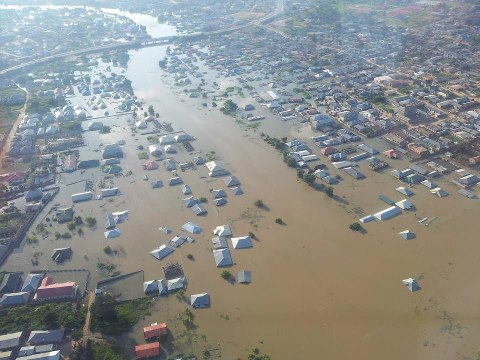
The Kebbi State chapter of Nigerian Fruit Sellers Association says its members have lost N25 million worth of fruits due to recurring flood at its main market in Birnin Kebbi, the state capital.
Fruits and vegetables
The association’s Chairman, Alhaji Aminu Abubakar, told the News Agency of Nigeria (NAN) in Birnin Kebbi on Saturday, September 8, 2018 that the absence of proper drainage had led to recurring flooding of the market annually.
‘‘We have no where else to go, it’s the only market we have, we just watch in agony as flood destroy our fruits and the loss has reached as much as N25 million.
‘‘You can see water all over the market yourself as if human beings are not living in the market,’’ he said.
Abubakar appealed to the state government to re-build the market to make it safer and conducive for business and earn more in revenue generation.
The chairman also urged the state government to provide support to members of the association to cushion their losses.
‘‘We are appealing to the government to support us with soft loan to boost our business.
‘‘Farmers, traders, and different types of business associations have been getting support from the state government, but we were never considered to benefit from such support,’’ he stressed.
According to Abubakar, the association has over 20,000 members in all the 21 Local Government Areas in the state.
‘‘We also employ over 3,000 unemployed youths who are helping to transport our goods and sell in major towns across the state.
‘‘Imagine the burden of the numbers of unemployed youths we can help government to reduce, if we have support and empowerment,’’ he said.
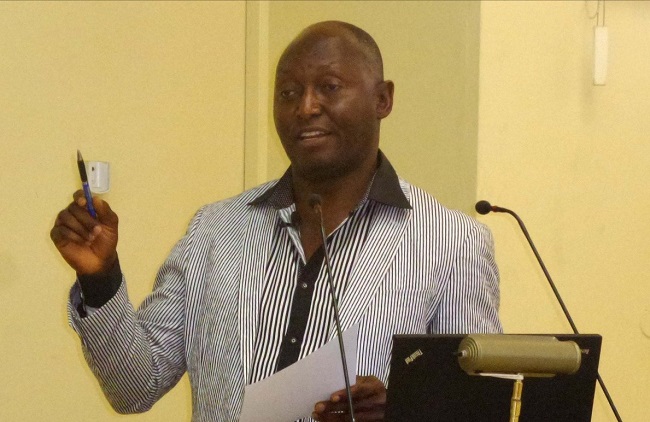
The Country Manager of HarvestPlus Nigeria, Mr Paul Ilona, said on Saturday that urbanisation was affecting the dietary diversity of Nigerians.
Country Manager of HarvestPlus Nigeria, Paul Ilona
HarvestPlus is part of the Consultative Group for International Agricultural Research (CGIAR) Programme on Agriculture for Nutrition and Health (A4NH).
Ilona told the News Agency of Nigeria (NAN) in Lagos that urbanisation had not been properly managed.
According to him, fruit trees have been overtaken by ornamental trees, affecting the country’s nutritional density, hence the need for bio-fortification.
NAN reports that bio-fortification is meant to increase the density of vitamins and minerals in the crop through plant-breeding or agronomy practices, so that when consumed regularly, such crops would generate the required vitamins and minerals for the body.
Ilona said: “Urbanisation is seriously affecting the dietary diversity of Nigerians, and there is need for more nutritious foods that will enhance our capacity.
“We have not done enough to add value to diversifying our foods; we have focused too much on urbanisation.
“In the olden days, on the way from school, you could climb any fruit tree; but we do not have that anymore because fruit trees have been replaced by ornamental trees.
“Ornamental trees are good, but will not add value to our nutritional requirements, which is why I say urbanisation is good, but we have not managed it well.”
The country manager said that it had become necessary to add value to the lives of Nigerians, thereby promoting wellness.
Ilona said that the current drive to promote bio-fortified foods was to fight against hidden hunger, which was taking a toll on children and pregnant women.
According to him, the country is over-concentrating on producing carbohydrate foods.
“It is not about how much food you have put into the system; it is the extent to which the food you have eaten meets the desires of the parts of the body.
“According to World Health Organisation (WHO) in 2015, 100 children under age five die; and 6 women of childbearing age die every hour in Nigeria, and this should be a concern to us.
“About 60 per cent of the reasons for their deaths have been attributed to malnutrition,” he said.
The HarvestPlus official described hidden hunger as a situation whereby one has eaten, but the body systems did not derive what they required from such food.
“Nigeria has come of age that we should not be hungry again. It is germane to ensure that Nigerians have access to nutritious food,” he said.
The Global Initiative for Food Security and Ecosystem Preservation (GIFSEP), an NGO, has called on aspirants vying for political offices to include issues of climate change in their manifestoes.
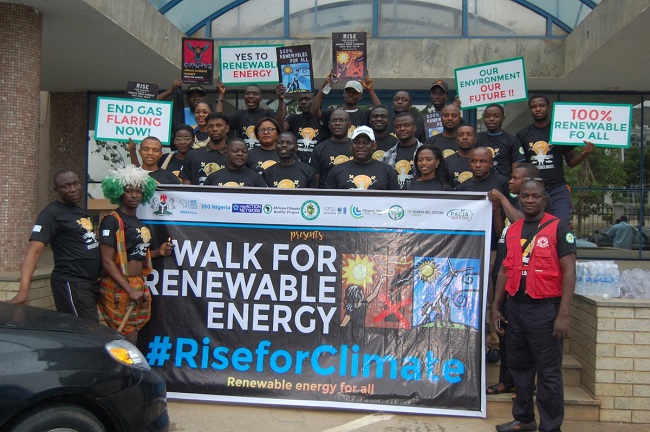
The Abuja Rise for Climate Walk
The Executive Director of GIFSEP, Mr David Michael, made the call at the Abuja Climate Summit Walk in Abuja on Saturday, September 8, 2018.
GIFSEP, in partnership with 350 Africa, Global Environmental Facility (GEF) and other relevant NGOs, organised the walk to sensitise Nigerians on the need to protect the planet.
Michael said that his organisation had observed that many aspirants were yet to include the issues of climate change in their programmes.
‘‘This is something that affects our health and the food we are eating, as well as our existence as human beings.
‘‘That is why we are walking to sensitise Nigerians to know that climate change is a real threat to us and the future generations.
‘‘It is a problem that affects all of us without discrimination, although some people and places are more vulnerable to climate change than others.
‘‘That is why people need to drive actions against climate change and send a clear message to the government for it to respond to the will of the people,’’ he said.
Mrs Ibironke Olubamise, the National Coordinator, Global Environmental Facility Small Grant Programme (GEF-SGP), urged Nigerians to support ongoing efforts to address effects of climate change.
Olubamise, who said individual efforts were imperative in this regard, urged the people not to abuse food and water consumption.
“If you waste and throw away food, you are contributing to the climate change, and if you are wasting water endlessly, you are contributing to climate change because all these have negative effects on the climate,’’ she said.
Hundreds of thousands of people are demonstrating over the weekend against political inaction on climate change even as negotiations carry on laying the groundwork for COP24
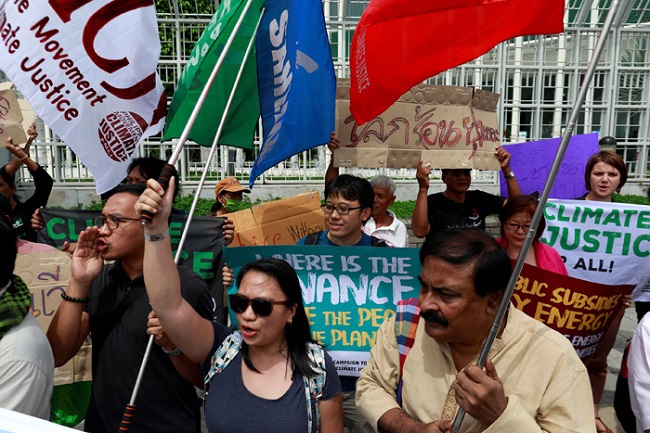
Environmental activists protest in front of the United Nations Conference Centre (UNCC) in Bangkok where the Bangkok Climate Change Conference is taking place
With a day to go until the Bangkok climate talks wrap up on Sunday, September 9, 2018, the glaring void of finance is staring the world in the face and threatens to erode trust in the negotiations. Some progress has been made on efforts to trim down the bulky rulebook text into a clear outline with options, but progress has been uneven.
The weekend more than 820 actions, involving hundreds and thousands of demonstrators, have been planned in 91 countries under the Rise for Climate movement even as discussions carry on in the negotiating rooms to lay the groundwork for COP24.
Committing to predictable, transparent and sustainable finance with real money for real action underpins trust in the Paris regime and is critical for averting a crisis in the months ahead. The European Union, Switzerland, Norway, Canada and Japan must step out from the shadow of the United States and match actions with words. Support to fully implement conditional aspects of the nationally determined contributions is an integral part of the Paris Agreement and the solution to strengthen overall ambition from all countries.
Discussions on the Global Stocktake, compliance and transparency made promising headways but developed countries must realise that without movement on finance success at COP24 will be at stake. Negotiators must feel the heat to untangle the technical issues in the next two days and provide clarity of options, so ministers can’t hide behind technical complexities when they arrive in Poland for final discussions. They must feel the pressure to come good on supporting common sense rules and processes that enable predictable, transparent and impactful finance.
Brandon Wu, ActionAid USA Director of Policy & Campaigns, said: “So far in Bangkok, it looks like rich countries are making a concerted effort to avoid any conversations that would ensure they live up to their existing obligations for providing climate finance. Of course, the US is setting a bad example, but what’s especially troubling is that other governments from the EU and Norway are hiding behind the US rather than providing any real leadership. Developed countries do not seem to be negotiating in good faith, which is jeopardizing the negotiations as a whole. This not only puts a huge question mark over the possibility of achieving the goal of the Paris Agreement, but also puts the lives and livelihoods of vulnerable communities around the world at risk.”
“There are two things needed for the Paris Agreement to prove effective, one is a robust rulebook to translate the accord’s pledges into action, the other is finance to help poor countries deliver their national emission reduction plans and adapt to a changed climate. In Bangkok rich countries like the UK and Canada are trying to avoid the finance element which is in danger of paralysing negotiations. It’s vital that these nations stop dancing to the tune of Donald Trump which will only result in damage to the negotiations and tragedy for the world’s poorest people,” Mohamed Adow, Christian Aid’s International Climate Lead, said.
Civil society organisations have called on Polish Presidency to lead diplomatic efforts ahead of Katowice and work towards a comprehensive COP24 package that includes a strong rulebook and a meaningful outcome on the Talanoa Dialogue with stronger climate targets by 2020 that is informed by the IPCC 1.5C Report. The report, which is due in a month, will be a klaxon on the growing urgency of the climate crisis.
For its creative work in generating solutions on and off the farm, innovative solutions that have improved the lives of millions in the face of climate change, and rampaging crop pests and disease, the International Institute for Tropical Agriculture (IITA) has emerged winner of the 2018 African Food Prize.
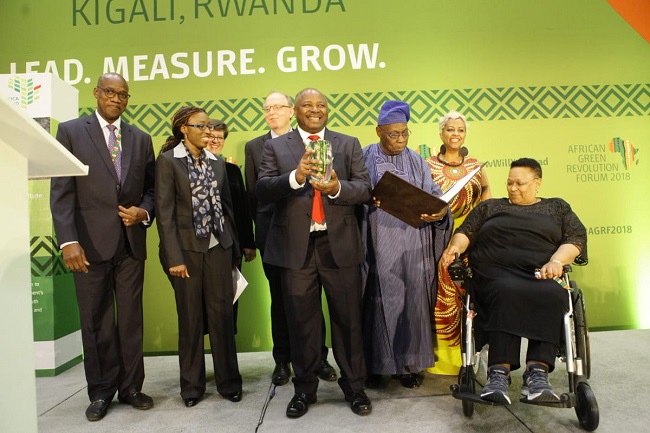
Dr. Nteranya Sanginga, Director-General of IITA, receives the Africa Food Prize on behalf of the institute
IITA is said to be the first institution to receive the distinguished Africa Food Prize as announced at the African Green Revolution Forum (AGRF) in Kigali, Rwanda.
The independent Africa Food Prize Committee, chaired by Olusegun Obasanjo, former President of Nigeria, selected IITA for its deep commitment over many decades to producing a steady stream of innovations that have boosted the nutrition and incomes of millions of people across Africa.
In recent years, that work also has included a critical focus on connecting crop science to creating employment for Africa’s youth, and ensuring African farmers can adapt to the stress of climate change and the growing threat for an array of crop pests and plant diseases.
“IITA stood out to us for its steadfast and inspiring commitment to a research agenda that aligns with both our African traditions as well as the evolving needs of African farmers and consumers for the latest advances food production,” said Obasanjo.
“From the cassava we’re still eating today, to the valuable and nutritious soybeans we now grow in our fields, to maize varieties that can withstand drought and deadly toxins – our diets and our agriculture businesses would be much poorer today without IITA’s leadership, and its willingness to forge powerful bonds with African farmers and African communities.”
Speaking as he received the Prize on behalf of his institution, Dr. Nteranya Sanginga, IITA’s Director General, stated his belief that a great deal of IITA’s success rests on its ability to develop relationships and collaborations that allow the fruits of its research to be scaled up and made available to millions of farmers.
“I’m extremely honoured to be receiving this prize on behalf of IITA and proud to be part of a group of researchers dedicated to building lasting and relevant solutions for the continent,” said Sanginga.
“But it would be remiss of me if I didn’t acknowledge the important role of our various partners, from other research centers to governments to the private sector, without whom our research might never have seen the light of day.”
Responding to today’s realities
In addition to its research work, the Africa Food Prize selection committee also cited the institute’s role in moving from being a developer to becoming the producer and distributer of Aflasafe – a product that can remove 80 to 99 percent of a deadly, cancer-causing fungus called aflatoxin that contaminates maize and groundnuts.
In order to prove there was a market for the product, IITA established a “Business Incubation Platform (BIP)” and manufactured and sold Aflasafe itself. The product was a hit with farmers, who found the savings generated by Aflasafe were many times more than the product cost. IITA eventually handed off production to a private sector partner and there are now manufacturing plants for Aflasafe in Nigeria and Kenya.
Congratulating IITA on this recognition, Svein Tore Holsether, President and Chief Executive Officer of Yara International, noted that “since its inception in 2005, the Yara Prize – now the Africa Food Prize – has honoured people and organisations who are strong voices in the African agriculture sector. Now, African agriculture is at a defining moment.”
“To achieve real transformation, we need to mobilise across sectors, and research organisations like IITA will play a crucial role, providing valuable science, vital in making sure we can produce enough food, which is also nutritious and environmentally friendly,” Holsether, added.
IITA was also praised for understanding and acting on the potential of agriculture to become a source of employment for young people on a continent that is grappling with a significant youth employment challenge. Under Dr. Sanginga’s leadership, IITA began a Youth Agripreneurs Programme in 2012 to help young Africans create profitable agribusinesses.
The programme has since been adopted by the African Development Bank as a model for its ENABLE Youth initiative. AfDB has tapped IITA to lead the efforts, which has ambitions to reach 800,000 young people in at least 20 African countries.
A model of superb African leadership and management
As the first African Director General to lead the organisation, Dr. Sanginga was recognised by the Prize committee as a powerful force behind many of the organisation’s impressive achievements – and for its imaginative new strategic direction that has taken it into areas like artificial intelligence and business development.
He also was praised for decisively extending IITA’s reach across the continent. When he was appointed in 2012, IITA’s physical presence in Africa was limited to its headquarters in Nigeria.
Today, it has 18 country offices and regional hubs in East, Central and Southern Africa – each with its own state of the art research facilities and stations.
“We want African governments and institutions to feel the presence of IITA and know that we are invested in the long-term future of the continent,” said Sanginga.
“For me, it was important to have more tangible connections with the communities we are serving and while I am a big fan of virtual collaborations, Africans still place a lot of value in face to face exchanges.”
In addition to Dr. Sanginga, also recognised by the committee were hundreds high-performing experts that IITA has recruited, trained and developed over the years, many of them going on to become pre-eminent leaders on the continent and champions for agriculture.
They include: Dr. Akin Adesina, President of the African Development Bank; Dr. Kanayo Nwanze, former Head of the International Fund for Agricultural Development (IFAD) and 2016 winner of the Africa Food Prize, as well as Dr. Agnes Kalibata, President of the Alliance for a Green Revolution in Africa (AGRA).
The National Emergency Management Agency (NEMA) and the National Hydrological Services Agencies (NHISA) have warned that 12 states across the country will soon experience flooding due to torrential rain falls.
Flooded parts of Lokoja in Kogi State in 2012. One of the forums explored how far banks and insurance companies can include into their corporate strategies environmental sustainability commitments, responsibilities and initiatives that can contribute to climate resilience
The two agencies gave the warning on Friday, September 7, 2018 during an emergency stakeholders’ meeting held with relevant stakeholders in Abuja.
Mr Clem Nze, Director, Engineering Hydrology, NHISA, listed the states to include: Kogi, Kebbi, Niger, Kwara, Edo, Anambra, Rivers, Bayelsa and Delta states, from the River Niger axis.
He also listed Taraba, Benue and Adamawa as states to be affected from the River Benue axis.
The expert also warned that the flood might be eminent, noting that all the indices that played out before the 2012 flooding had already manifested.
He said that the decision to raise the alarm was to ensure preparedness among stakeholders and residents of flood-prone communities.
Nze revealed that as at Friday, the height of River Niger in Lokoja was at 10.1 meters as against the 9.74 meters in 2012, adding that the continued to rise on hourly basis.
The director said that that the water levels were increasing due to the opening of the Shiroro, Kanji and Jebba Dams.
“As at today, our hydro-logical measuring station downstream the confluence in Lokoja recorded a stage height of 10.1m and a discharge value of 21, 326 cubic metre per second.
“As against lower values of 9. 74m and 19,762 cubic meters per second recorded on the corresponding date of 2012 when the flood occurred.
“From the foregoing, it could be said that all the indices that caused the 2012 river flooding have manifested, except spillage of water from the Lagdo Dam,” he said.
“It would be noted that it was on Sept. 29, 2012 that the maximum flood level of 12 .840m and the corresponding discharge of 31,692 cubic meters per second were recorded at our station in Lokoja, downstream the confluence.
“By the 2018 Seasonal Rainfall Prediction released earlier in the year, Sept. 28 is the earliest cessation date of rainfall in Sokoto and Katsina while December is the earliest cessation date for the southern coastal cities.
“The implication of this is that, the northern part of the country should be expecting more rains in the next three weeks.’’
Earlier, Mr Mustapha Maihaja, Director-General, NEMA, said that the emergency meeting was called following the update on the flood situation received from NHISA and described the development as alarming and urgent.
He said that the meeting would also review the situation with a view to classifying the possible dangers, assess preparedness at individual and collective levels.
Maihaja said that this was to ensure that every relevant agency was ready for any eventuality, if the water level keeps increasing.
“This is a serious meeting; we must put heads together to first classify the situation, whether it is still yellow or red.
“If it is red, surely we should act, and part of the acting is the suggestion to set up a committee of five groups of three personnel from various sector to visit the front line states.
“It is for them to meet with the officials, go down to the villages that are really critically under threat and use all avenues to enlighten them.
“To invigorate our enlightenment campaign electronically and physically to ensure that everybody is well informed as required by the law.
“Secondly, we access our preparedness, informing our stakeholders so that wherever there is any equipment that is required, it is ready for deployment, should anything happen,’’ Maihaja said.
He called on state governments to provide alternative accommodation for those in the flood affected areas so that they do not camp in schools, especially as the schools are now in session.
The News Agency of Nigeria (NAN) reports that stakeholders from the Nigerian Meteorological Agency (NIMET), Ministries of Environment, Water Resources, Education, Health and Agriculture attended the meeting.
Other stakeholders present include representatives from the Defence Headquarters, Federal Fire Service, Nigeria Security and Civil Defence Corp (NSCDC), relevant UN agencies and other international organisations.
The stakeholders affirmed their preparedness to swing into action in the case of any flood disaster in any part of the country.
Some scientists have called on regulatory agencies to check the incessant rock blasting in the country in order to prevent recurrence of earth tremors.
Abuja entrance and city gate
They made the call on Friday, September 7, 2018 in Abuja in separate interviews with the News Agency of Nigeria (NAN).
According to them, regulatory agencies should come up with rules and regulations that will prevent people from indiscriminate blasting of rocks in order to preserve the environment as well as save lives and properties from natural disasters.
They said persistent and uncontrolled blasting of rocks through the use of powerful explosives could lead to earth movements.
Prof. Mosto Onuoha, the President of Nigerian Academy of Science (NAS), said rock blasting may be responsible for the earth movements in Mpape and parts of Maitama, Abuja.
“The use of explosives to break or blast rocks would have vibrating power and ability to the last end of the rock.
“It will get to the stage that could be seen visibly and to the bottom of the ground where we cannot see but where the rock has ended.
“When this action is continuous, the vibration from the rocks blasted with explosives will be transmitted to the body-like water that is already settled under the ground.
“The release of the vibration in form of energy back to the earth will lead to earth shaking.
“The FCT Emergency Management Agency, National Agency for Space Research Development Agency (NASRDA) and other relevant organisations should continue to monitor the situation in Abuja and in other places,’’ he said.
Dr Adeneye Talabi, a former Director of Technology Acquisition and Adaption in the Federal Ministry of Science and Technology, urged the Federal Government to enforce all existing rules on exploitation of natural resources.
According to him, government must ensure that due processes are followed to address the earth movements that happened recently in the FCT.
Talabi explained that Nigeria was not immune to such occurrences, adding that appropriate measures ought to be put in place to avert future incidents.
“If there is a tremor, it is an indication or symptom that the eventual higher degree of it which will translate into earthquake can occur.
“Earth tremor is very close to earthquake. The earth tremor is just the shaking of the ground earth crust while earthquake is a total collapse or opening up of the ground, ‘’ he said.
He said the tremor recorded in the South-South Zone was as a result of distortion in the balance of the eco system during oil extraction.
Talabi said the vacuum created by extracting gas and crude oil ought to be replaced with close density commodity to avoid any future disaster.
“There is need for the Federal Government and the Nigerian National Petroleum Corporation in particular to enforce all the existing rules guiding exploitation of natural resources like crude oil.
“Regarding the tremor in Bayelsa and Rivers, a vacuum has been created through the exploitation processes and methods,” he said.
He urged the Federal Government to direct oil companies to ensure best practices in extracting natural resources such as crude oil and natural gas.
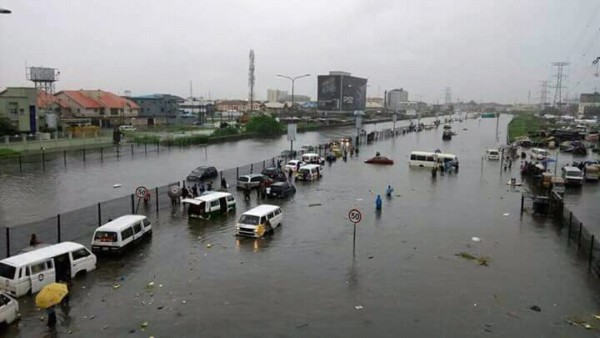
Some communities in Ikorodu area of Lagos State have been cut off following early morning three-hour downpour on Friday, September 7, 2018 which had rendered the road leading to the area impassable.
Flooded highway in Lekki, Lagos
Motorists plying the Agric-Isawo-Arepo Road had difficulty either coming out or going into the three communities of Isawo, Igbo Olomu and Arepo because of the flooded road.
The News Agency of Nigeria (NAN) reports that commuters using tricyles and motorcycles were forced to disembark and wade through the water to board vehicles at the other end to get their destinations.
Commercial motorcyclists and those who help commuters and residents to cross made brisk businesses.
“If you are coming to Isawo in a commercial bus or motorcycle from Agric Bus Stop, they will drop you at Oke Afa junction, then you will have to take another bus or motorcycle to continue with the journey.
“People pay between N100 and N150 for assistance to carry them on their back across the water especially pregnant women,’’ the Acting Baale of Isawo, Mr Bada Bakare, told NAN.
He, however, appealed to the Lagos State Government to construct a bridge at Oke Afa on the Agric-Isawo Road for easy passage.
“Whenever it rains, commuters, motorists and residents find it difficult to ply the road because of flood.
Bakare also appealed to the government to direct the contractor handling the road– Hitech Construction Company Ltd — to create a temporary bridge on the road.
Mr Apini Olanrewaju, a resident, also lamented the hardship commuters experience on the road, saying the fares have been increased by more than 100 per cent because of the condition of the road.
“I spend not less than N750 as fares when it rains which used to cost N200.”
In his reaction, Alhaji Owolabi Adisa, the Chairman, Committee on Agric-Isawo Road Project, urged the government to intervene without further delay.
Adisa said the slow pace of work on the road was affecting socio-economic activities in the area and also causing security problems.
“We appreciate the good work of Gov. Akinwunmi Ambode in awarding the reconstruction of the road but there is need for a bridge on the road,” he also told NAN.
Mr Adeola Alonge, the Secretary, Road Transport Association of Nigeria (RTEAN), Agric-Owutu Branch, commended the state government for embarking on the rehabilitation of the road but called for its speedy completion alleviate the sufferings of the people.
According to him, some of their members whose buses are old cannot put them on the road until the rainy season is over.
Also, the Chairman, Tricycle Association of Nigeria, Owutu Isawo Unit, urged the government to prevail on the contractor to speed up work on the road.
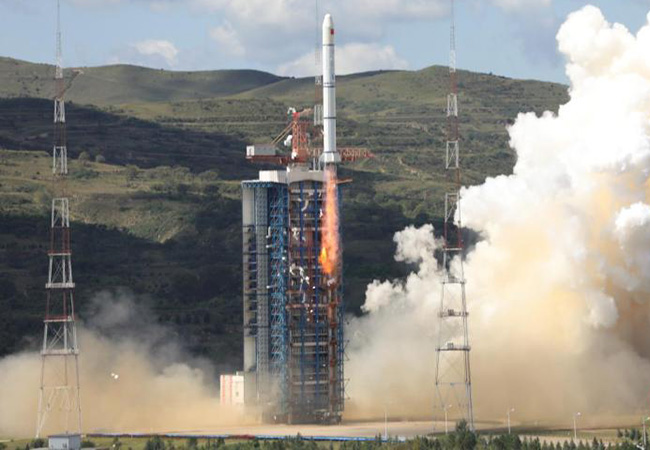
China sent a new marine satellite into orbit on Friday, September 7, 2018 to help improve understanding of maritime waters and climate change.
A Long March-2C rocket carrying the HY-1C satellite took off at 11.15 a.m. from the Taiyuan Satellite Launch Centre in Shanxi province
A Long March-2C rocket carrying the HY-1C satellite took off at 11:15 a.m. from the Taiyuan Satellite Launch Centre in north China’s Shanxi Province.
The satellite HY-1C will help monitor ocean color and water temperatures, providing basic data for research on the global oceanic environment, according to the State Administration of Science, Technology and Industry for National Defence.
Its data will also be used in the survey of the resources and environment of China’s offshore waters, islands and coastal zones, marine disaster relief and sustainable utilisation of ocean resources, said the administration.
With a design life of five years, the satellite was developed by China Spacesat Co., Ltd. under the China Academy of Space Technology.
Friday’s launch was the 284th of the Long March rocket series.
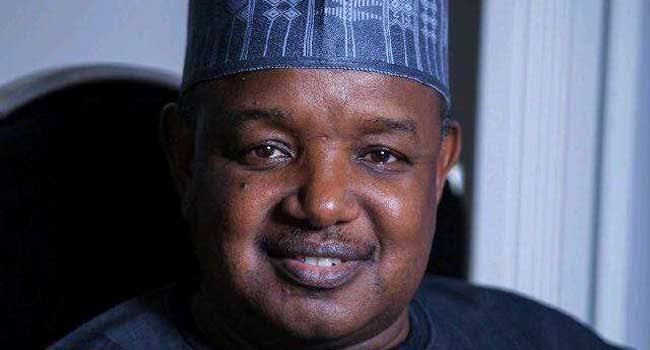
The Kebbi State Government will begin production of ethanol from sugarcane starting from 2019, the state governor, Atiku Bagudu, has said.
Alhaji Atiku Bagudu, Governor of Kebbi State
Bagudu made the disclosure on Thursday, September 6, 2018 when he received members of Security Watch Africa, who paid him a courtesy visit in Birnin Kebbi.
“As part of our efforts to increase security and empower our youth, the state government will begin the production of ethanol bio-fuel from sugarcane in order to increase our Internally Generated Revenues (IGA) and strengthen our economy,” he said.
Bagudu also said that that the administration would train 100 youth on bees keeping and castor oil distribution.
He commended the Federal Government for providing enabling environment to address security challenges in the country.
“We appreciate the performance of various security outfits in the state for assisting the state government to maintain peace, unity and tranquility which made it to be ranked among the top states with absolute peace in the country,” he said.
The governor assured that the state government would support security agencies in the state to perform optimally for the betterment of the society.
Earlier, the team leader, Mr Patrick Agbanbu, said they were on tour of selected states as approved by the Inspector General of Police, Ibrahim Idris, to assess security challenges and proffer possible solutions.
He commended the governor for keeping the state peaceful, adding that the team had visited Jega Local Government Area and other places to obtain first-hand information on security situation.