Home Blog Page 1792

Afforestation: EU, Oxfam distribute 760,000 tree seedlings in Katsina

0

An EU agro-forestry programme known as Fuel Wood Balance (FUWOBA) has commenced distribution of 760,000 additional free tree seedlings in seven local governments in Katsina State.
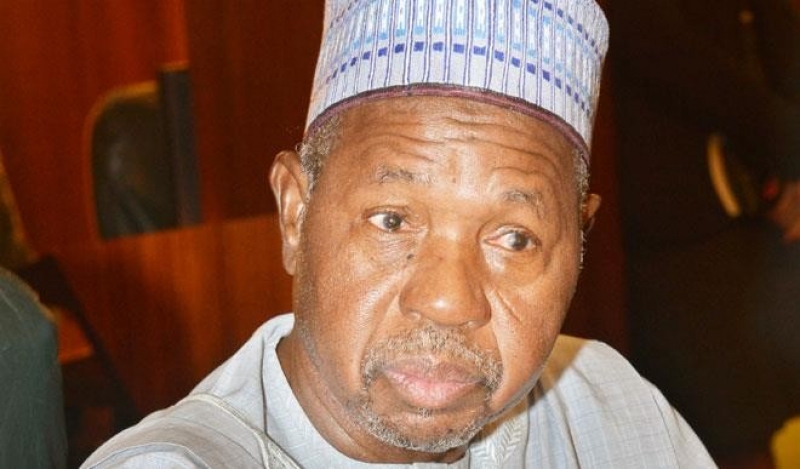
Alhaji Aminu Bello Masari
Alhaji Aminu Bello Masari, Governor of Katsina State

The Project Manager, Dr Chris Udokang, said the gesture was to promote afforestation and environmental conservation.

Udokang made the disclosure during the “National Annual Review Seminar on Improving Fuel Wood Balance’’ in the seven participating local governments in Katsina, the state capital, on Wednesday, September 5, 2018.

He said the seedlings were produced during the agency’s 2018 nursery activity through the “Farmer Manage Tree Regeneration Programme’’.

According to him, 7.09 million trees have been planted and maintained by farmers across the seven local government areas in the last three years under the FUWOBA.

He said that the trees planted represented 129.92 per cent of the target value trees set under the programme.

The project manager explained that 5 million trees representing 143.0 per cent of the target were also generated through “farmer managed regeneration approach’’ and two million seedlings through nursery approach.

He said the survival count conducted in December last year indicated that 4.5 million trees planted and maintained had achieved 69.48 per cent survival rate.

Udokang said 55, 638 farmers representing 101.16 per cent of the target households covering 147,355.92 hectare of land had been achieved since inception of the project four years ago.

He said the trees planted include, eucalyptus, mahogany of different varieties, moringa, zizipus and other relevant economic trees that would boost economic fortunes of farmers and conserve the environment.

According to him, the project has also produced and distributed 35,000 mud efficient clean cook stoves within the benefiting communities, 2,800 hoes, 6,800 watering cans.

Also distributed were 7,000 50kg of fertilisers, 7,000 litres of agri-chemical insecticides, 1,200 pressure sprayer machines and 700 animal plough.

Responding, Gov. Aminu Masari of Katsina State, represented by the Permanent Secretary, Ministry of Environment, Alhaji Sani Masari, commended the sponsors of the project for considering the state to benefit from the project.

He said the state government would procure and distribute 34,000 clean cook stoves for distribution free of charge to farmers in the 34 local governments.

According to the governor, each of the local governments will receive 10,000 clean stoves.

He said the state government would continue to support such excellent initiatives aimed at conserving the environment and empowering people of the state.

In a remark, Alhaji Abubakar Kusada, Speaker of the state House of Assembly, said lawmakers would collaborate with relevant agencies to enact relevant laws to protect the environment.

Mrs Kate Kanebi, an EU official commended the stakeholders on the level of implementation of the project and said the project would be extended to other local government areas.

She said the sponsors of the project would not hesitate to dedicate more funds for sponsoring the project.

The News Agency of Nigeria (NAN) reports that FUWOBA project was introduced in September 2014 by EU facilitated by Oxfam, Iceed and National Planning Commission.

The project is aimed at conserving the environment and economic empowerment.

The participating local governments in the Lot 2 programme of the project are Baure, Mai’adua, Mashi, Daura, Dutsi, Sandamu and Zango.

By Auwalu Yusuf
Hydrological service agency advises Nigerians on flooding

0

The Nigerian Hydrological Service Agency (NIHSA) has advised Nigerians to be ready to prevent and manage flood incidents as the country is now in the peak of rainy season.

Asaba
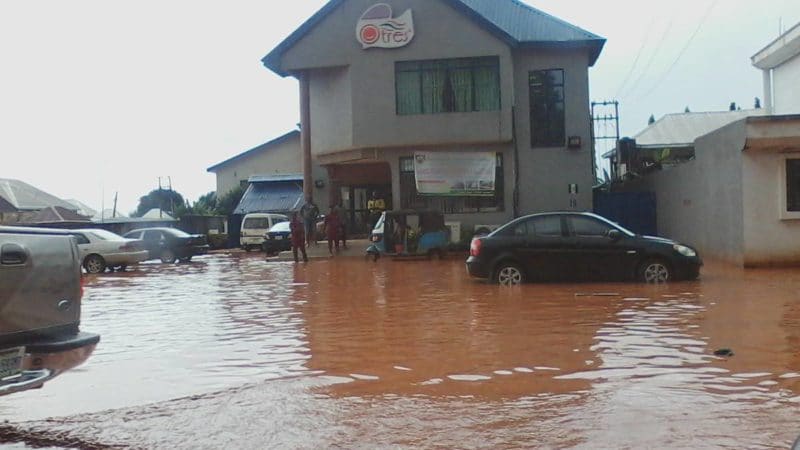
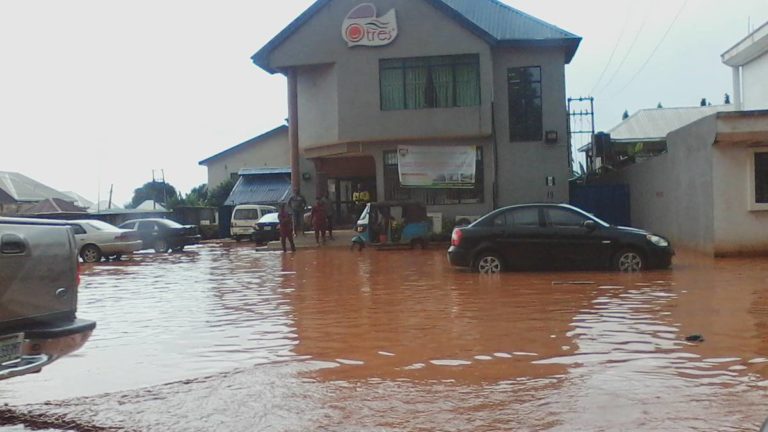
Flooding in Asaba, Delta State

NIHSA gave the advice in a statement in Abuja on Wednesday, September 5, 2018 signed by its Acting Director-General, Alhaji Ahmed Bashar.

The agency said that the months of July, August and September remained critical periods for flooding incidents in the country.

‘‘The 2018 Seasonal Rainfall Prediction released earlier in the year by the Nigerian Meteorological Agency (NIMet) gave Sept. 28 as the earliest cessation date of rainfall in Sokoto and Katsina.’’

The prediction said December is the earliest cessation date for the southern coastal cities; this means that Nigeria is still within the peak of raining season.

‘‘In the light of the above, NIHSA wishes to inform the general public that the country is still in the peak of rains and should be prepared in the event of any flood incidents, it said.’’

According to the agency, the flood level and the discharge of River Niger have continued to increase.

‘‘A flood level (stage height) of 9.67m and a discharge of 20,578m3/5 have been recorded on Sept. 5. These figures are higher than the corresponding values of 9.34m and 19,456m3/5 recorded on Sept. 5, 2012.

‘‘This is the year the country witnessed the worst devastating incidents in recent history,’’ the agency said.

According to NIHSA, the Government of Cameroon has not commenced spilling water from the Lagdo Dam as being reported in certain quarters.

‘‘During periods of high flows (July, August and September), any rise in the water level leading to flooding in the Benue valley is often erroneously attributed to release of water from the dams.

‘‘It is often the inflows from the tributaries of River Benue that cause the flooding of their catchments,’’ it said.

NIHSA recalled that Nigeria signed a Memorandum of Understanding (MoU) with the Government of Cameroon to notify her ahead of time in the event of any planned release of water from the dam.

The agency said it was in constant touch with the managers of the dams and would continue to monitor the trends in levels of water in the nation’s rivers, and issue warning alerts as appropriate.

By Deji Abdulwahab

Inactivity puts over 1.4b adults at physical, mental risk – WHO

0

The World Health Organisation (WHO) says insufficient physical activity is a leading risk factor for non-communicable disease, negatively impacting mental health and overall quality of life.

Physical ativity
Benefits of being physically active, including a lower risk of cardiovascular disease, hypertension and diabetes, as well as breast and colon cancer

A newly released study published in The Lancet Global Health journal on Wednesday, September 5, 2018 highlighted the well-established benefits of being physically active, including a lower risk of cardiovascular disease, hypertension and diabetes, as well as breast and colon cancer.

Additionally, physical activity has positive effects on mental health, can delay the onset of dementia, and help people maintain a healthy weight, the WHO study revealed.

The study’s lead author, Regina Guthold, who is of WHO Switzerland, warned that more adults are lagging behind the recommended levels of physical activity required for a healthy life.

“Unlike other major global health risks, levels of insufficient physical activity are not falling worldwide, on average, and over a quarter of all adults are not reaching the recommended levels of physical activity for good health,” Guthold warned.

The study detailed the levels of insufficient physical activity in different countries and estimates global and regional trends.

The findings reveal that there has been no improvement in global levels of physical activity since 2001 and that some one-in-three women and one-in-four men globally are not active enough to stay healthy.

Moreover, levels of insufficient physical activity are more than twice as great in high-income countries as compared to that of low-income nations, with a five per cent increase in higher income countries between 2001 and 2016.

There has been little progress in improving physical activity levels during that 15-year period, with data projecting that if these trends continue, the 2025 global activity target of a 10 per cent relative reduction in insufficient physical activity, would not be met.

Other main findings showed that by the end of 2016, in 55 of 168 countries, more than one-third of the population was insufficiently physically active.

More than half of all adults in Kuwait, American Samoa, Saudi Arabia, and Iraq were insufficiently active, while inadequate levels elsewhere of 40 per cent appeared in the U.S., 36 per cent in the United Kingdom and 14 per cent in China.

Only six per cent of adults in Uganda and Mozambique were insufficiently active – the lowest levels of all countries.

The greatest levels of insufficient activity comparing women and men appeared in South Asia (43 versus 24 per cent), Central Asia, Middle East and north Africa (40 versus 26 per cent), and high-income Western countries (42 versus 31 per cent).

Around one-in-three women and one-in-four men worldwide did not reach the recommended 150 minutes of moderate intensity, or 75 minutes of vigorous-intensity physical activity per week.

Across regions, many individual countries recorded large differences in insufficient activity between women and men, such as 40 versus 16 per cent in Bangladesh, 31 versus 14 per cent in Eritrea, 44 versus 25 per cent in India, 48 versus 32 per cent in the U.S., and 40 versus 32 per cent in the UK.

“Addressing these inequalities in physical activity levels between men and women will be critical to achieving global activity targets and will require interventions to promote and improve women’s access to opportunities that are safe, affordable and culturally acceptable,” said WHO co-author Fiona Bull.

The study is based on self-reported activity levels – including at work, home, and in transit, as well as during leisure time – for those aged 18 and above, from 358 population-based surveys in 168 countries, consisting of around 1.9 million people.

By Prudence Arobani

Lake Chad crisis not over despite progress made, UN cautions

0

The UN Emergency Relief Coordinator, Mr Mark Lowcock, has said that despite improvements in the humanitarian situation in the Lake Chad region, millions continue to remain dependent on life-saving assistance.

Food-distribution-site
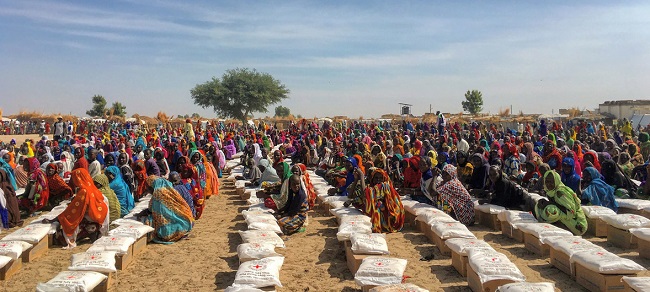
Displaced persons at a food distribution site in Rann, Borno State, Nigeria

The top UN relief chief at the Berlin Conference on the Lake Chad Basin region on Monday, September 3, 2018 urged greater international support for the region to safeguard the progress achieved.

“There is still a big humanitarian crisis. It is not over despite the progress we have made,” Lowcock told a high-level humanitarian conference on the region.

In February, the meeting at a UN-backed conference in Oslo, Norway, donors pledged over $650 million towards emergency assistance programmes in 2017 and beyond.

According to him, these resources helped achieve a significant scale-up in the humanitarian response, reaching more than six million people with assistance, and averting a famine in Northeast Nigeria.

However, he said that humanitarian needs had continued to grow and so do the resources needed to respond.

Of the $1.58 billion required for 2018, only about $600 million or 38 per cent had been received as of July 25, he said.

“The appeal we had on the humanitarian response plan this year has been generously financed but not to the degree where any of us can be comfortable that we can meet the needs of the people we can reach, still less of those we are still trying to reach,” Lowcock said.

The UN humanitarian coordinator urged additional funding and resources.

He noted that no fewer than 10 million people across the four countries – Nigeria, Cameroon, Chad and Niger – remained dependent on assistance.

At the same time relief workers face severe challenges reaching the worst affected due to Boko Haram violence, according to the UN Office for the Coordination of Humanitarian Affairs (OCHA).

Alongside life-saving humanitarian response, addressing the underlying cause is vital to ensure lasting solution to the crisis, the UN relief chief highlighted.

Lowcock noted that there was the need to scale up longer-term resilience and development assistance as well as promoting stabilisation.

“If we can make more progress with peace building, good governance, the creation of jobs and education opportunities and the respect of human rights – we work indeed with the underlying issues and this is what we need to do,” he said.

Organised by OCHA and the UN Development Programme (UNDP) together with the Governments of Nigeria, Germany and Norway, on Sept. 3 to 4 in Berlin, the conference seeks to maintain the momentum from the 2017 Oslo conference and increase and expand international support.

It is expected to reinforce an approach combining the response to immediate humanitarian needs with addressing the root causes of the crisis in a way that leads to sustainable, resilient development.

Education, he says, is one of the sectors desperately needing resources is education, an area that often lacks funds in humanitarian emergencies.

Earlier on Monday, Manuel Fontaine, the Director of Emergency Programmes at UN Children’s Fund (UNICEF), said that where there is insecurity, education can be both life-sustaining and life-saving.

With some 1,000 schools reported to have been closed or rendered non-functional due to violence or unrest across the region, ensuring access education “can be both life-sustaining and life-saving,” Fontaine said.

“Education supports children and young people’s life-long learning. It gives them the necessary skills to build a better future for themselves and their families, and to contribute to peaceful and prosperous communities.

“Yet too often, overall humanitarian education funding is lacking in emergencies,” the UNICEF official said.

UNICEF had called for $41.7 million to meet the education needs of children in the crisis but has received just eight per cent of this amount in the first half of 2018.

Other sectoral priorities for UNICEF include food security and nutrition, emergency shelter and non-food items, protection, health, water, hygiene and sanitation, and early recovery.

By Prudence Arobani

Negotiators seek to develop Paris operational guidelines as Bangkok talks open

0

The resumed sessions of the UNFCCC’s subsidiary bodies and the Ad Hoc Working Group on the Paris Agreement opened in Bangkok, Thailand on Tuesday, September 4, 2018 amid strong calls for progress.

Bangkok climate change conference
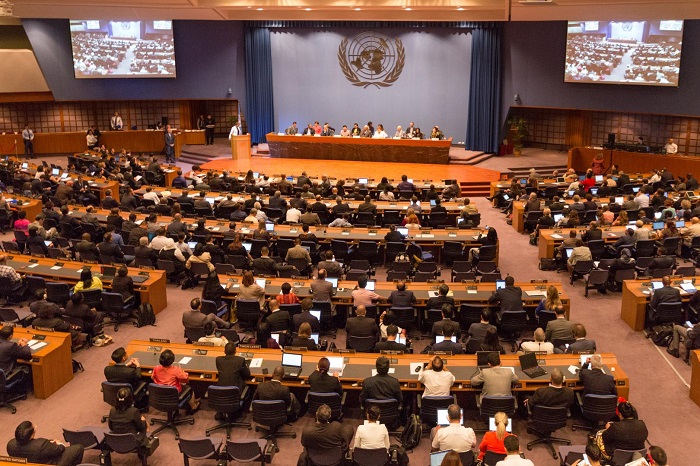
A view of delegates at the opening of the Bangkok climate change conference

At the resumed session, negotiators from some 190 countries will focus on developing the implementation guidelines of the Paris Climate Change Agreement. The guidelines are needed to provide guidance on how to implement the agreement and to see transparently how countries are progressing in their actions.

The opening of the session was graced with a brief addresses by the Prime Minister of Fiji, Mr. Josaia Voreqe Bainimarama, who is currently presiding over the climate change negotiations, as well as the Polish in-coming COP president, Mr. Kurtyka, who will preside over the negotiations at this year’s climate change conference – COP24 – to be held in Katowice, Poland in December.

Deputy Secretary-General of the United Nations, Ms. Amina J. Mohammed; General Surasak Karnjanarat, Minister of Natural Resources and Environment of Thailand; Mr. Kaveh Zahedi; Officer in Charge of the UN in Thailand; Patricia Espinosa, Executive Secretary of UN Climate Change, also addressed the opening.

All speakers strongly urged negotiators to step up the pace of their work and to move towards negotiating texts that capture clear options on the implementation guidelines that can swiftly be finalised and adopted in Katowice. This is crucial given the deadline that countries set for themselves to complete this work at COP24 this year, said the organisers.

Espinosa stated that COP24 was now right around the corner. “We are working against the clock. We must now complete the heavy lifting and we must do it rapidly. UN Climate Change stands ready to assist countries,” she said.

Current COP president Bainimarama impressed upon delegates that the six-day Bangkok talks were urgent. “In these few days, we have the opportunity to put the Paris Agreement on a path from words to action,” he said.

The implementation guidelines will unlock practical actions and bring the agreement’s institutions to life. This is vital for all aspects of climate action, including:

  • enabling ambitious global and national adaptation action and emission reductions,
  • developing fair transparency and compliance arrangements, and
  • mobilising means of implementation, especially with respect to finance, to support developing country action.

In-coming COP president Kurtyka said that non-state actors were steaming ahead and that governments had to keep up with that pace by putting in place the implementation guidelines.

He urged delegates to craft clear texts in Bangkok that they could work with at COP24.  “Clarity and a streamlined text is my request,” he said.

“These six days of additional negotiating time in Bangkok before COP24 are a golden opportunity for countries to prepare solid texts that can be finalised at COP24,” said Espinosa.

Government pledges commitment to TB control with increased budgetary allocation

0

The Federal Government has reiterated its commitment to ensuring that high premium was continuously placed on the health of Nigerians, while ending Tuberculosis (TB) remains on its priority list.

TB control
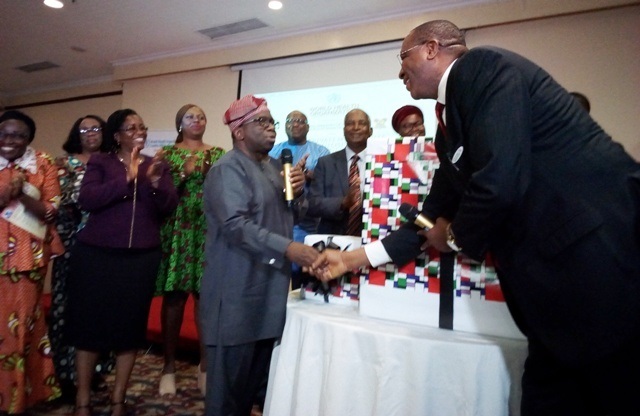
Minister of Health, Prof. Isaac Adewole (left), presenting a GeneXpert Machine to Prince Elochukwu Adibo of El-Lab Ltd., Lagos

Minister of Health, Prof. Isaac Adewole, who gave the assurance on Tuesday, September 4, 2018 in Lagos at the “National Public/Private Mix (PPM) Summit for Tuberculosis Control in Nigeria”, disclosed that budgetary allocation for TB control would be increased in the 2019 budget.

He wouldn’t give details of the allocation but added: “We will likewise put an incentive package for TB control in the 2019 budget. It doesn’t have to be in Naira; something to encourage you.”

The minister facilitated the donation of a GeneXpert Machine to El-Lab Limited, a health laboratory firm and private medical diagnostic and research centre.

Adewole said: “To achieve our goal of ending TB epidemic by 2030, additional support and effort are required.

“We must expand our current frontiers of control of TB as the disease impacts negatively on the health, welfare of individuals and economy of the nation.

“We require active involvement of private healthcare providers and corporate organisations to make Nigeria free of TB.

“This event is a demonstration of the commitment of this administration.

“As part of our commitment to this partnership, a GeneXpert machine procured by FMoH will be handed over to one of the private diagnostic centres to support active TB case finding in Lagos State.”

According to him, to scale up this gesture to other centres, FMoH requests corporate organisations to be enlisted to support in the provision of diagnostic facility to other health centres.

He said that TB has serious consequences on the affected individuals, families and the nation’s economy.

“It has orphaned children and taken many breadwinners away with severe consequences on the economic welfare of families and also on the economy of the nation.

“This trend must not be allowed to continue,’’ Adewole said.

On efforts made by the ministry in controlling the scourge, Adewole said that the ministry had established the National TB Control Programme, which developed the National TB Strategy 2015-2020 framework.

The framework is aimed at addressing the country’s TB burden.

“The framework is consistent with the ‘End TB Strategy’ and incorporates the most recent internationally recommended diagnostic and treatment strategies.

“With support from a coalition of partners, the country currently delivers TB treatment and care through a network of over 7,000 health facilities accredited by the National TB and Leprosy Control Programme (NTBLCP) up from 3,931 in 2,010.

“Similarly, the number of Drug resistant TB (DR-TB) treatment centres has been progressively increased from 10 in 2013 to 28 in 2017.

“There are ongoing efforts by the ministry to ensure Universal Coverage of TB care and prevention.

“To achieve this, a resolution was passed at the 60th National Council of Health meeting held last year, to include TB service delivery in the Primary Healthcare Minimum Health care package,’’ he said.

The minister added that the cutting-edged technology to enhance TB diagnosis in the country had also been developed.

Adewole said that, in spite of the progress recorded over the years, the TB control efforts was still challenging.

According to him, paramount are the issues of funding, creating awareness and stopping stigmatisation.

Others include locating an estimated 302,000 missing people with TB and 74 per cent of total estimated cases who were not detected annually.

Prince Elochukwu Adibo, the Laboratory Director of El-Lab, who’s firm received the GeneXpert machine, called for collaboration with other private health partners to wholly end tuberculosis.

The GeneXpert machine can detect tuberculosis in a sample of sputum.

Adibo said: “We are really happy to have this machine; it is a call for collaboration, rather than having any form of bitterness, rancor or misunderstanding; there is so much work to do.

“We have over 300,000 tuberculosis cases out there we should look for; people like you and I, our neighbours, colleagues, among others.

“These are cases that we should look out for and put our efforts together in diagnosis and treatment to make things different and eliminate this terrible disease that is really a scourge in Nigeria health sector.

“So, we are happy to be part of it and we are strongly representing ourselves as a key operator in the private sector to make a difference,’’ Adibo said.

Dr Tunji Akintade, the Chairman, Association of General and Private Medical Practitioners of Nigeria (AGPMPN), pledged commitment to collaborate with the government and other partners.

“My association is willing to partner with the government and the partners, even if it is to own the wellness on wheel machine and go into the country so that we can reduce tuberculosis burden in Lagos.

“Lagos is at a disadvantage because it is seen as an urban centre; minute by minute we see people trouping in to the state.

“We have created an opportunity to present a model.

“If honoured by the Minister and our Commissioner for Health, it is something that will reduce the burden in terms of detecting and reporting, as well as treating a tuberculosis case outright,’’ Akintade said.

Also, the Secretary of the Association of Community Pharmacist in Nigeria (ACPN), Mr Okotie Jonah, said that fighting tuberculosis was the responsibility of all.

“Tuberculosis fight is something we should all be involved in because there is responsibility for everybody.

“We are going to do a lot of referrals when persons with tuberculosis conditions come to us, we have partners we refer them to.

“Beyond the referrals, there are also drug centres whereby the persons will be referred to for diagnosis.

“So, it is a teamwork that should be brought together and change the narrative of health system globally,’’ Jonah said.

The event was jointly organised by the Federal Ministry of Health (FMoH), World Health Organisation (WHO), Lagos State Government, and Stop TB Nigeria, among others.

By Vivian Ihechu and Lydia Ngwakwe

World Bank announces first sustainable water bond

0

The World Bank has launched a Sustainable Development Bond series to raise awareness of the importance of ocean resources.

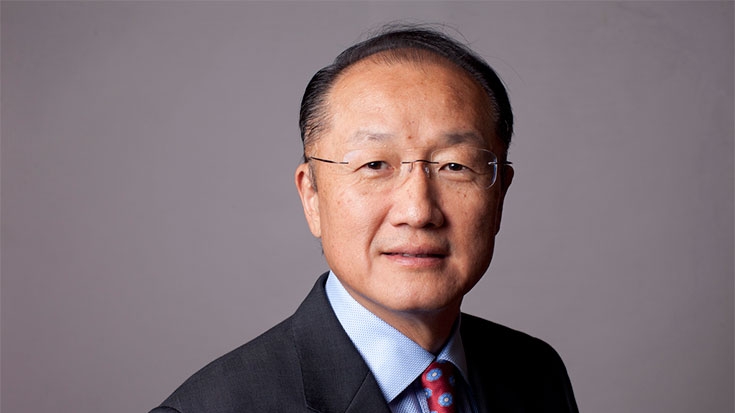
Jim Yong Kim
World Bank Group President, Jim Yong Kim

The international financial institution has plans to raise $3 billion to protect oceans and marine life.

The World Bank introduced the water bond, along with gender, health and nutrition bonds, to give investors opportunity to work towards the Sustainable Development Goals (SDG) set in 2015.

The focus for the new bond series is to support SDG 6, Clean Water and Sanitation, and SDG 15, Life below Water.

The bond series is framed by World Water Week, taking place just last week, and the “Our Ocean” conference in Bali set for October 2018.

Kristalina Georgieva, World Bank Chief Executive Officer, said: “Seventy per cent of the planet’s surface is water, yet degraded ocean resources and lack of access to safe water negatively affect the lives of hundreds of millions of people.”

The World Bank said it also “works with countries to promote strong governance of marine and coastal resources to support sustainable fisheries and aquaculture, make coastlines more resilient, establish coastal and marine protected areas, and reduce pollution.”

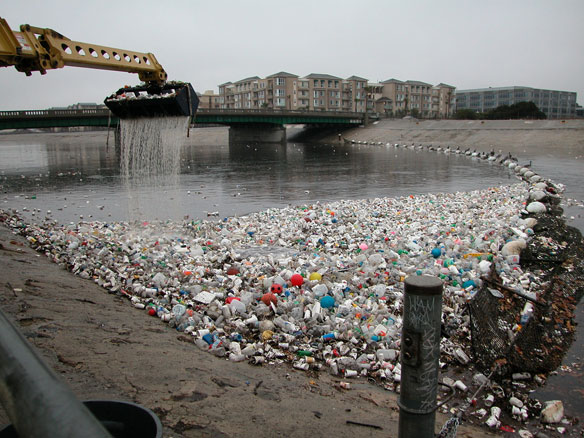
Currently, the oceans are being heavily polluted by land and sea-based activities. This has resulted in 100,000 marine mammals and turtles being killed by plastic litter each year globally.

Arunma Oteh, World Bank Vice President and Treasurer, said: “Following bonds issued earlier this year to raise awareness for gender and health and nutrition, we are pleased to launch this new initiative and engage with investors around another critical topic – clean water and healthy oceans, lifelines for people and economies the world over.”

Courtesy: Climate Action

30,000 tonnes of microplastics enter environment yearly – Study

0

The Fraunhofer Society, a German research organisation, says some 330,000 tonnes of microplastics are entering the environment each year.

Plastic pollution
Plastic pollution

According to a study released on Tuesday, September 4, 2018, researchers said the largest contributor of microplastics – tiny pieces of plastic that do not break down for many years and damage the bodies and tissues that absorb them – is the tyre industry.

Microplastics are released into the environment from the wear and tear of tyres from machines including vehicles, planes, diggers, shovels and bikes.

Other major culprits when it comes to microplastics pollution are sewage treatment plants, aeroplanes and construction sites, the study says.

“We can assume that microplastics already exist in all areas of the environment,” said Leandra Hamann, one of the study’s co-authors.

Government, UNDP collaborate to mainstream SDGs in states, councils

0

The Office of the Senior Special Assistant to the President on Sustainable Development Goals (OSSAP-SDGs) says it is partnering with the United Nations Development Programme (UNDP) to mainstream SDGs in states and local governments policies for effective implementation.

Adejoke Orelope-Adefulire
Senior Special Assistant to the President on Sustainable Development Goals (SDGs), Princess Adejoke Orelope-Adefulire

Mrs Adejoke Orelope-Adefulire, SSA to the President on SDGs, said on Tuesday, September 4, 2018 in Abuja that the mainstreaming was to fast-track the implementation of the SDGs at sub-national level.

She said that the SDGs were a universal call to action to end poverty, safeguard the planet and ensure that everyone enjoys prosperity and peace.

Orelope-Adefulire explained that the integration was essential because the states and LGAs were the closest tiers to the people and had adequate fiscal capacity to enable Nigeria achieve the 2030 target of “leaving no one behind.’’

“The 17 SDGs and 169 targets aim to tackle the root causes of poverty and unite us together to make positive change for both people and planet.

“Indeed, the SDGs work in the spirit of partnership and pragmatism to make the necessary choices to improve livelihood in a sustainable way.

“The SDGs cannot be achieved through stand-alone projects and programmes. They must be carefully mainstreamed into the Medium and Long-term plans of the State and Local governments, as implemented by the National Government’s Economic Recovery and Growth Plan (ERGP).

“It is our hope that any development plan at the sub-national level should be ‘SDGs-based’ Plan that consciously mainstreams the relevant SDG targets and indicators,’’ she said.

The SSA noted that most states had already put in place institutional structures to support the implementation of the SDGs within their jurisdictions and were currently implementing strategic programmes and initiatives.

She thanked UNDP for their support in facilitating the meeting, soliciting for more technical support at both national and sub-national levels to ensure meaningful progress in the implementation of the 2030 Agenda.

In his remarks the UNDP Country Director, Dr Samuel Bwalya, said that mainstreaming the SDGs would allow proper investment in priority areas as required by the states.

Bwalya explained that SDG was all about development and equity and most of the developmental projects were done at the state and local levels.

“We are now moving from federal to state and from state to local. The essence of today’s meeting is to dialogue with the state liaison office to see how SDGs can be achieved.

“SDG can be achieved only through strong political leadership, ownership and commitment on the parts of citizens and the government.

“UNDP is to assist in integrating all the states in the country including FCT in their SDG to deliver,’’ Bwalya said.

He urged the participants to reflect the objectives of SDGs in the administrative function and evaluate why the Millenium Development Goals (MDGs) failed, so that the gap could be bridged.

The News Agency of Nigeria (NAN) reports that the meeting was attended by the SDGs Liaison officers from the 36 states of the federation and the FCT.

By Kate Obande-Okewu and Angel Aluya

UN calls for better use of water-energy nexus for Africa’s development

0

The UN on Tuesday, September 4, 2018 called for better utilisation of Africa’s water-energy nexus to harness the continent’s resources towards sustainable development.

Linus Mofor
Linus Mofor, Senior Environmental Affairs Officer at the ECA

The UN Office for Sustainable Development (UNOSD), the UN Economic Commission for Africa (ECA), UN Environment, and the UN Department for Economic and Social Affairs (UN DESA) jointly made the call during a meeting in Ethiopia’s capital, Addis Ababa.

Experts and policymakers gathered at the meeting to discuss mainstreaming and implementing the water-energy for sustainable development in Africa.

Linus Mofor, Senior Environmental Affairs Officer at the ECA, said African countries are already experiencing catastrophic climate change and variability impacts in inter-related ways across many sectors – including water, energy and agriculture.

Mofor further stressed the need to set up integrated approaches in responding to the increasing energy and water demand to enhance livelihoods and sustain economic growth and address the additional pressures on natural resources due to urbanisation and population growth in a continent affected by the changing climate.

“That is why for us at the ECA the nexus work is of high importance, especially in view of how we support our member states with the implementation of their nationally determined contributions to climate change under the framework of the Paris Agreement,” said Mofor.

According to the UN, the 2030 Agenda for Sustainable Development recognises the centrality of energy and water resources to sustainable development, and the vital role that improved access to both water and energy play in advancing progress in other areas, including health, education and poverty eradication.

The UN further stressed that an integrated development of the energy and water policies is of paramount importance and not in isolation from each other.

According to figures from the UN, only 28 percent of the population in Sub Saharan Africa have access to electricity while many African countries are not on track to meet the global drinking water target.

Samba Thiam, Head of the UN Environment Liaison Office to the African Union (AU) Commission, also said that with the increasing demands for water and energy on the continent, it is important for experts to understand their interlinkages.

She als urged them to understand potential water-energy nexus options that can effectively contribute to meeting Africa’s water and energy demands.

“An integrated approach to the water-energy nexus can increase energy efficiency, decrease water pollution, reduce costs of energy and water delivery, increase access to services, and reduce greenhouse gas emissions,” said Thiam.

The three-day meeting, that attracted more than 100 participants from the African Region in Ethiopia’s capital Addis Ababa, discussed Africa’s water and energy targets and indicators, including cross-sectoral mainstreaming.

Participants also discussed the challenges related to the water-energy nexus and possible solutions, and other related issues as the continent seeks to achieve the Sustainable Development Goals (SDGs).

Organisers also expressed their hope to enhance knowledge management and best practices’ sharing on the water-energy nexus and inter-linkages with other SDGs; and strengthening advocacy and outreach in the areas of energy and water and their interlinkages during the next three days.

According to Jong Soo Yoon, Head of the United Nations Office for Sustainable Development (UNSOD), water was the key driver for sustainable development hence the need for such a workshop.

“At the end of the workshop we hope we would have contributed to developing the capacity of governmental institutions and relevant stakeholders in the African region to effectively manage the water-energy nexus and interlinkages with other SDGs for sustainable development to facilitate the implementation of the 2030 Agenda at national level,” he said.

“Integrated approach to water-energy can increase energy efficiency, decrease water pollution, reduce costs of energy and water delivery, increase access to services and reduce greenhouse gas emissions.”

Abraha Adugna, Ethiopia’s State Minister of Water, Irrigation and Electricity, also said during the gathering that water and energy were closely interlinked and interdependent hence water and energy problems should not be addressed in isolation or at the expense of each other.

“It is critical to better understand the water-energy nexus and the driving forces of the water and energy cycles for efficient and sustainable use of these resources,” he said.

He added that to manage both resources, planners and decision makers need to consider ways to maximise the supply of one while minimising the over use of the other.