International non-profit organisation, WaterAid, has called on the Enugu State Government to step up good sanitation practices by providing improved toilets for healthy living in communities in the state.
Governor Ifeanyi Ugwuanyi of Enugu State
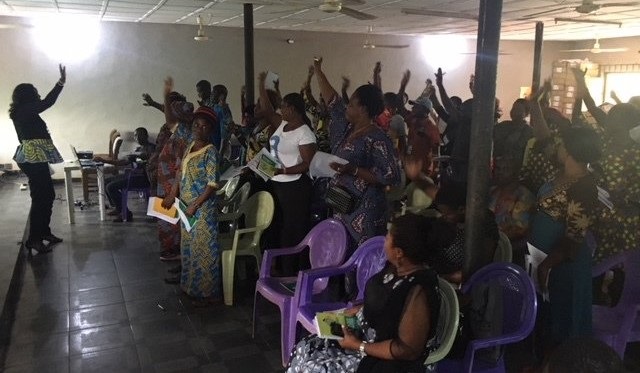
The Sanitation Coordinator for WaterAid in Nigeria, Mrs Nneka Akwunwa, made at an advocacy and communication planning workshop in Enugu, the state capital, on Wednesday, October 3, 2018.
Akwunwa told the government to create good sanitation environment by providing Water Easy Toilets (WET) to discourage people from defecating in open places.
She said that a common community-led total sanitation was not motivating latrine construction, adding that WaterAid had begun to encourage people to improve their existing latrines.
The coordinator noted that the encouragement should be by way of providing durable, affordable and accessible sanitation options to the communities.
Akwunwa said that WaterAid was willing to support communities with technical support, including training individuals or groups on how WET could be built.
Mr Saheed Mustafa, the Coordinator, Policy and Sector Capacity of WaterAid, noted that the group was using advocacy to achieve its goals in sanitation and hygiene.
“Advocacy is at the heart of WaterAid’s work to improve lives of millions of people through provision of water, sanitation and hygiene.”
The Communications Officer of WaterAid, Ms Blessing Sani, said that communication was important for the oganisation because it impowers citizens to demand their rights for water and sanitation.
Sani said that citizens should also demand for provision of sustainable clean water, noting that it was the right of every citizen to make such demands.
“As you demand for good roads and electricity from the government, it is also your right to demand for clean water from the government,” she said.
The World Health Organisation (WHO) on Wednesday, October 3, 2018 started a drive to vaccinate 1.4 million Zimbabweans amid a cholera outbreak that has killed 49 people in the capital Harare so far.
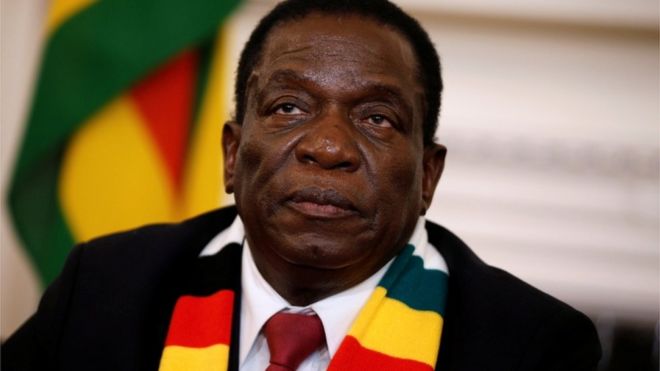
Emmerson Mnangagwa, President of Zimbabwe
Almost 140 people have been infected with the disease that is most often transmitted by contaminated water, according to the WHO.
The vaccination campaign will be rolled out in two rounds, focusing on the most heavily affected suburbs of Harare and Chitungwiza, located 30 kilometres Southeast of the capital.
To ensure longer-term immunity, a second dose will be provided in all areas at a later stage, according to the WHO.
The organisation is also working with the Zimbabwean government to provide affected communities with access to clean water and providing antibiotics to clinics, among other measures.
With almost 8,000 cholera cases suspected, the cash-strapped Zimbabwean government declared a health emergency in early September.
Cholera can cause severe diarrhoea and vomiting and can be fatal for children, the elderly and the sick.
A 2008 cholera outbreak in Zimbabwe lasted over a year and killed more than 4,000 people.
Non-governmental organisations have placed the blame squarely on the government.
Amnesty International said: “The current cholera epidemic is a terrible consequence of Zimbabwe’s failure to invest in and manage both its basic water and sanitation infrastructure and its health care system.’’
Zimbabwe’s once-vibrant economy is in tatters after almost four decades of rule by former President Robert Mugabe.
Mugabe was ousted in a military coup in 2017 and his former right-hand man, Emmerson Mnangagwa, was voted in as president in July elections.
The National Agricultural Seeds Council (NASC) has affirmed its commitment to ensuring global best practices in the supply of seeds to farmers to spur Nigeria’s economic diversification efforts through agriculture.
Director-General of NASC, Dr Philip Ojo
The Director-General of NASC, Dr Philip Ojo, conveyed the commitment on Wednesday in Abuja during a road walk organised to create awareness on the benefits of using quality improved seeds and their adoption by farmers.
He said that the council was ready to apply the full weight of the law to deal with the menace of fake dealers in the seed business space.
The director-general, who described those marketing adulterated seeds as economic saboteurs, urged farmers to always verify the authenticity of the seeds they acquired from the right channel before planting.
“The mission of the NASC is to transform the Nigerian seed industry into a foreign exchange earner, a key employer of labour and a means of wealth creation.
“Today’s road walk is the first of its kind in the history of the Nigerian seed industry. We are hoping that the road march shall be replicated in all the six geopolitical zones of the federation to cascade the awareness creation to the grassroots to reach the rural farmers,’’ he said.
Ojo advised farmers to use quality seeds, instead of grains, so as to boost food production across the country and earn foreign exchange.
Speaking, the Minister of Agriculture and Rural Development, Chief Audu Ogbeh, encouraged farmers and investors who intended to go into agribusiness to prioritise the use of quality seeds and verify the authenticity of the seeds from NASC before planting.
Ogbeh, who was represented by Mr Quadiri Olakekan, a director at the ministry, said that good results could not be achieved at the end of the day without the use of quality seeds.
He also warned fake seed dealers to desist from their nefarious act or risk jail term.
On his part, Alhaji Ibrahim Musa, a member of the Board of Trustees of NASC, said that the road walk was organised to sensitise farmers to the differences between quality seeds and grains.
He also said that the sensitisation walk was meant to educate all the citizens on the importance of farming with improved seeds in efforts to boost agricultural productivity in the country.
Mr Yarama Ndipaya, Executive Director, Agricultural Research Council of Nigeria, said that his agency was happy to partner with NASC in the road walk and called for the sustenance of the activity because of its benefits.
Minister of State for Health, Dr. Osagie Ehanire, has urged the global community to promote guidelines and international cooperation that will protect public health policies from commercial interests of tobacco companies.
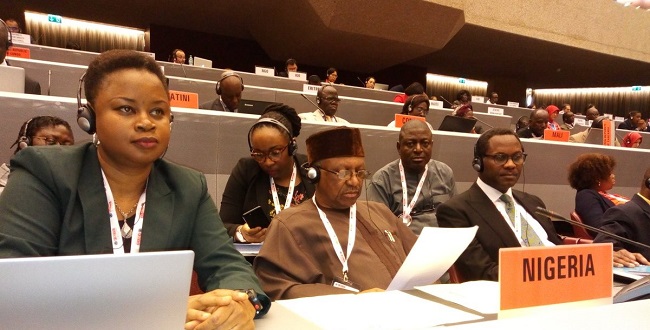
L-R: Florence Adeyemi, Permanent Missions Geneva; Dr. Osagie Ehanire, Minister of State, Health; and Mr. Babatunde Irukera, Director-General, Consumers Protection Council, at the ongoing Eight Conference of Parties of the Framework Convention on Tobacco Control, holding in Geneva
Ehanire, who spoke at the ongoing Eight Conference of Parties of the World Health Organisation Framework Convention on Tobacco Control (WHO-FCTC) holding in Geneva, Switzerland, disclosed that Nigerian has in the past few years made significant progress in tobacco control.
The minister said: “Through multi-sectoral engagements involving Government and Civil Society Organisations, the Nigerian government has begun mass awareness campaigns on provisions of the National Tobacco Control Act 2015, to create the enabling environment for enforcement.
“Nigeria is strongly desirous of protecting its citizens, particularly the youths, from reckless access to tobacco products. We therefore adopted the regional Economic Community of West African States (ECOWAS) directive on harmonisation of excise duty on tobacco products in Member States, and revised excise tax regime on tobacco products from 16% to 23.2%. This is to be further reviewed upwards over the next two years, as we work with our regional ECOWAS block, towards meeting the WHO recommended excise tax level corresponding to 70% of retail price of tobacco products.
“The Nigerian government has reviewed the Standards for Cigarettes to include the complete ban on cigarettes with characterising flavour, including menthol. Nigeria ratified the Protocol to Eliminate Illicit Trade in Tobacco Products. The instrument of accession will be finalized and deposited at the UN Headquarters imminently.”
On concerns that tobacco multinationals are conducting covert activities to undermine tobacco control activities across the African region, the minister disclosed that Nigeria is strongly committed to the sanctity ofits tobacco control policies.
“I am pleased to announce that every member of the Nigerian delegation at this COP8 meeting signed the Declaration of Conflict of Interest (DOI) form, which shall be made available to the COP Secretariat. This is to be Nigeria’s practice for all subsequent COPs,” the minister proclaimed.
The minister, who also spoke on the linkage between tobacco control and climate change, explained that tobacco growing leads to deforestation due to land clearing, cutting of trees for curing of tobacco leaves, contamination due to extensive pesticide use, among other factors. He invited collaboration with the international community in promoting sustainable environment against the negative impacts of tobacco farming.
Following from the ministers’ speech, the Framework Convention Alliance (FCA) which is a global alliance of NGOs working to achieve the strongest possible FCTC has awarded Nigeria the orchid award for making a strong statement on its intent to fully implement the FCTC, including its support for the Global Strategy and transparency of delegations, among others.
The treaty talks ends on Saturday, October 6, 2018.
In a related development, the Federal Government has renewed its commitment to reduce the use of tobacco in the country.
Mrs Boade Akinola, the Director, Public Relations in the Ministry of Health, made the submission on behalf of the Minister of State for Health on Wednesday, October 3, 2018 in Abuja at a public awareness forum on the dangers of tobacco consumption.
According to him, efforts had been made towards the implementation of the National Tobacco Control Act (NTCA) of 2015.
NTCA is a domesticated WHO Framework Convention on Tobacco Control (FCTC).
Ehanire said government had began mass awareness campaigns on the provisions of the NTCA 2015 to create the enabling environment for enforcement in collaboration with Civil Society Organisations.
He said government had reviewed the standard for cigarettes to include the complete ban on cigarettes with characterising flavour, including menthol.
The minister also announced that government had ratified the protocol to eliminate illicit trade in tobacco products, adding that the instrument of accession would be finalised and deposited at the UN headquarters.
Ehanire pointed out that tobacco farming leads to deforestation due to land clearing and curing of tobacco leaves, it also increases land and water contamination due to extensive pesticide use, among others.
Senior officials from Beijing, Fuzhou, Qingdao and Shanghai have pledged to remove greenhouse gas emissions from their buildings.
Qingdao, China
The initiative, led by C40 cities, will develop a range of innovative policies to reduce emissions from existing buildings. This will ensure that they meet ultra-low energy consumption levels and promote the use of buildings as a source of low carbon energy by 2020.
Yong Wu, President of the China Association of Building Energy Efficiency, said: “The China Association of Building Energy Efficiency is looking forward to cooperating with C40 on the China Buildings Programme.”
China is rapidly urbanising with a further 280 million greenhouse gas emissions expected to be added by Chinese citizens.
China continues to build an average of two billion square metres of new buildings each year. As a result, buildings contribute to 20 per cent of china’s emissions and measures need to be implemented to reduce this growing air pollution.
The Chinese Government hope to ensure that global leaders can follow in their footsteps.
Mark Watts, Executive Director of C40 Cities, said: “The C40 China Buildings Programme will not only help accelerate and strengthen such policies in Chinese cities, but the lessons learnt in Beijing, Fuzhou, Qingdao, and Shanghai will inspire mayors around the world to step up their ambition and help deliver on the Paris Climate Agreement.”
Other cities across the world have also taken to reducing their buildings emissions. Notably, New York has pledged to cut energy in the biggest buildings by 20 per cent by 2030 to keep on track with their ultimate goal of 80 per cent by 2050.
The World Bank has visited the Alex Ekwueme gully erosion site which is threatening the Federal High Courts, Awka and other properties in the Awka Central Business District area, promising speeding intervention.
The Federal High Court, Awka is under serious gully erosion threat and at the verge of imminent collapse
Mr Rachid Benmessoud, Country Director of the World Bank, led a team of the bank’s officials to inspect the site on Sunday, September 30, 2018 for an on the spot assessment of the devastation the erosion had done to the area.
The World Bank has marked the site for rescue works through the Nigerian Erosion and Watershed Management Project (NEWMAP) in conjunction with the Anambra State Government.
The World Bank team was in Anambra for its Country Programme Portfolio Review in the South-East and South-South geopolitical zones.
The programme review is done annually in collaboration with the Federal Ministry of Finance to appraise the success of its interventions in the country.
Benmessoud said that work at the Federal High Court in Awka would commence between the end of October and early November after the formal process of documentation.
“This is the first time of our visiting Anambra State and we have seen the site, hopefully we will see to the process very shortly.
“This is an emergency case and we are concerned about what we have seen; we are not talking about starting this work in a matter of years, it is a matter of months to start work,” he said.
Prof. Solo Chukwudobelu, Secretary to the Anambra State Government, who led the state’s team, described the site at the Federal High Court as critical and needed urgent intervention.
According to him, we took the opportunity of the World Bank’s visit to the state to show them the site and others, it is a critical intervention they are going to do for us.
“They are trying to fast track the process,” he said.
Chukwudobelu said the gully erosion at the Federal High Court was developing daily, noting that the state government was pleased that the World Bank would fast-track the process.
He said that by end of October or early November, the contractor would move to site to commence work.
Justice Iniekenimi Oweibo of the Federal High Court commended the World Bank and Anambra Government for the intervention to save the court from imminent cut off.
“You can see for yourself that it is a threatening. We are about to be cut off. All along we have been praying for this intervention.
“Sometime ago, we met with the officials of the state government and they promised to come to our rescue. We thanked them for bringing this promise to pass,” he said.
The visiting team also included officials of NEWMAP, State Environment and Economic Planning/Budget Ministries.
Kenya and her East African neighbours have been identified as the epicentre of Quelea birds’ attack on key staples hence putting their food security initiatives in jeopardy.
Quelea birds
Scientists affiliated with Desert Locust Organisation for Eastern Africa (DLCO) on Tuesday, October 2, 2018 said that the East and Horn of Africa states affected by invasion of Quelea birds on farms could face widespread hunger.
Stephen Njoka, the director of DLCO, revealed that the birds had invaded thousands of acres in the region while ravaging crops ready for harvest.
He said it was becoming a challenge for experts to contain Quelea birds and other pests due to budget constraints and hence the need for member countries to offer support.
Njoka said in the last one year alone, an estimated 191 million birds invaded the farms with Kenya and Tanzania being the most affected.
He said despite the hiccups, they were determined to control the birds just like other migratory pests.
He noted they were working with farmers across the member nations to ensure the pests were controlled and ensure high yields for their produce.
“These cases were well controlled by the farmers using cultural and chemical control methods and we will continue even with other areas where the prevalence is high,’’ he said.
During the meeting, Njoka noted that the fall army worm had continued to cause massive destruction of crops mainly maize with no solution in site.
The chairman of the organisation, Heruy Asghedom from Eritrea, admitted that the fall army was a concern to them and called for exchange of information and technology to address it.
With Nigeria anticipating a major smart home rollout to the tune of $50 billion by 2025, the opportunities from an economic perspective are endless. This is because the concept will be implemented as a whole, providing a training opportunity for Nigerians and allowing them to caretake and oversee the project. The business that is introducing the models to the country will collaborate with locals in order to provide guidance as to the project management. Africa is on the cusp of a major technological breakthrough, and smart technology is at the heart of it.
Smart City
South Africa Set to Implement IoT in Smart Cities
Telecoms company MTN was part of a recent dialogue at the ITU Telecom World Conference 2018 where the subject of smart cities was a major topic. For South Africans, the reality of a smart city hinges largely on access to broadband data which is at the moment still very unstable and costly. The design of the smart city is not just important due to the obvious benefits to infrastructure, but also the effect these cities have in minimizing the effect on the environment. Smart cities focus on renewable energy sources to power up the grid, as well as reducing the environmental impact of their creation cities.
Mauritius The Unlikely Frontrunner
Thanks to massive streams of foreign investments, Mauritius is leading the race in terms of smart technology in the home and in the city’s infrastructure. The Smart City Scheme is becoming a reality as more investors are coming on board, allowing the island nation to be a catchment area of sorts for urban developers from across the world. The scheme is said to focus on ten cities and since its implementation in 2015 has garnered investments of around $3.5 billion.
Sustainability is at the heart of these cities as it not only needs to be a model that the locals can uphold, but it also needs to be environmentally friendly and a boon for future generations. Part of the sustainability index of the project is using local labor as far as possible and renewable resources as part of the build.
North Africa Part of Smart City Project
North Africa and the Middle East are earmarked for a $2.6 million global Smart City investment. The northern African countries have close ties with the Middle East and seem a good target for proposals to start coming through. While North Africa has battled tough terrain and climate for centuries, the Smart City development is proven to improve energy efficiency. This helps cities do more with less and effortlessly connects households to basic amenities previously unheard of.
Smart cities in Africa will allow smart developments in the home as well. The integration from a household as a part of the community, and the community as part of the nation lies at the heart of the smart city ethos.
Prime Minister of the United Kingdom, Theresa May, announced on Thursday, September 27, 2018 at the UN General Assembly in New York that the UK would provide £160 million of funding for greener energy systems in developing countries.
Prime Minister of the United Kingdom, Theresa May. Photo credit: United Nations
The UK Government has committed to sharing its expertise and help developing countries tackle the global problem of climate change.
At the General Assembly, the Prime Minister set out to provide £60 million to share the UK’s technical expertise for green energy.
Claire Perry, Energy and Clean Growth Minister, said: “This £60 million programme could provide the boost they need to begin their own clean growth movements, building economies fit for the future.”
The Prime Minister also pledged £94.5 million to focus on the effects of climate change such as providing support to families most affected by droughts in Northern Kenya.
Lastly, £15 million would go towards making it more profitable for companies to buy from smallholder farmers in sub-Saharan Africa, helping to build resilience against rising food demand and climate shocks.
The UK will also join the Carbon Neutrality Coalition to support ambitious action in support of the Paris Agreement’s collective goals of net zero global emissions.
Penny Mordaunt, International Development Secretary, said: “When drought strikes in the developing world, it is the most vulnerable communities which are hit the hardest by damage to livestock and crops. I witnessed earlier this year in northern Kenya how the swift support of UK aid and our partners helped households, which would otherwise be at risk of sliding deeper into poverty.”
This news follow the World Bank announcing an investment of $1 billion into battery storage for renewable energy in developing countries.
About 100 farmers from various communities in Edo State on Friday, September 21, 2018 gathered in the conference hall of Girls Power Initiative (GPI), Ugbiyoko Community in Benin City for a one-day dialogue on food and farming systems organised by Health of Mother Earth Foundation (HOMEF).
Participants at the HOMEF dialogue with farmers
The dialogue provided a platform for examining the challenges facing agricultural production and the special threats posed by opening of the flood gates to Genetically Modified Organisms (GMOs) into Nigeria and also discussion on the way forward for improved agricultural productivity with emphasis on agroecology and support for small scale farmers.
In his opening words, Nnimmo Bassey, Director of HOMEF, stated that dialogues such as this are vital for sharing ideas, best farming practices and ways of preserving seed and our overall biodiversity.
He recounted that small-scale farmers are the main food providers to more than 70% of the world’s people and they produce the food with less than 30% of the resources – including land, water and other inputs. The industrial food system under which agricultural modern biotechnology thrives, however, uses at least 75% of the world’s agricultural resources, is a major source of Green House Gas emissions yet provides food to less than 30% of the world’s population.
Mariann Bassey-Orovwuje, Chairperson of the Alliance for Food Sovereignty in Africa, in one of the presentations that preceeded the dialogue, stated that although attempts to overcome agricultural challenges have led to many innovations and have resulted in production of improved natural crop and livestock varieties, corporate industrial systems attempt to control food production and displace small scale farmers through the push for genetically modified crops.
Her presentation made it clear that a majority of small-scale farmers have no idea what GMOs are about and what threats they pose to their health, environment or livelihoods. This was obvious as about 98% of the farmers gathered had not heard of GMOs.
The food sovereignty activist pointed out the risks agricultural biotechnology poses to small scale farmers and consumers at large, included diseases resulting from the use of toxic chemicals, soil degradation, and the loss of farmers‘ right to save and reuse seeds.
Adeoluwa Olugbenga, senior lecturer of agronomy at the University of Ibadan, speaking on “Agroecology, Securing Farmers‘ Income and Agricultural Productivity in Nigeria”, noted that, to improve productivity, there is need for proper understanding of agroecology management and practices. This also ensures the sustainability of their agro ecosystem and increase in their income levels.
This session enlightened the farmers on natural indigenous practices that can be used to combat pests and diseases, improve productivity in minimal land space and replenish the soil health in the process.
During the dialogue session, the farmers discussed in groups among other things the major challenges facing agriculture today. They lamented that, in addition to shortage of capital, they had challenges with availability of land as it is being taken up for development projects. They also complained of bad roads and high transportation costs, unavailability of seeds, lack of processing facilities and invasions by pests and diseases. The farmers also discussed the solutions to these challenges.
The farmers, which included crop and livestock producers, expressed gratitude to HOMEF for the enlightenment and acknowledged that they needed more of these dialogues and training. They rejected GMOs and with one voice and called on the government to provide them with more support to improve productivity with local/indigenous varieties.
Gloria Okon, one of the participating farmers from Katsina State, acknowledged that the Community Dialogue was very useful.
She said: “It helped me as a farmer know how to farm without using chemicals and also to know the difference between GM seeds and natural seeds.”
According to her, she saw the use of accessible language, especially pidgin English, as key to making the meeting successful. She added that she would organise similar dialogues for other farmers in her state.
The following resolutions were reached by the participants at the end of the dialogue:
The government through its Ministries of Agriculture should devise strategies to combat the use of harmful chemicals and pesticides by farmers. Focus should instead, be on promoting safe natural/traditional means of pest and weed control.
Extension officers should be trained and stationed in farming communities to share knowledge on agroecological methods of agriculture that build on practices developed over the millennia.
The government should make provisions for rural infrastructure, storage and processing facilities and financial loans to assist farmers.
There should be land access to farmers and gender equity should be enforced.
Farmers should form cooperatives within and across communities to facilitate exchange of both ideas and inputs.
Children and youths should be carried along in agricultural practices to ensure continuity of indigenous knowledge.
Civil Society groups should intensify enlightenment programmes and continue to amplify the farmers’ voices.
GMOs are harmful and not needed. The government should place a ban on GMOs and urgently carry out a radical revision of the National Biosafety Management Agency (NBMA) Act 2015 and install a neutral Biosafety Regulatory Agency that will put the interest of the people first.
Some of the communities represented who signed on to the resolutions include: Ugbiyokho, Utagban, Evbuodia and Uholor Communities in Edo State.
Organisations represented were: The Alliance for Food Sovereignty in Africa, Association of Organic Agriculture Practitioners of Nigeria, Health Promotion Education and Community Development Initiative, Nigerian Women Agro Allied Farmers Association, Idama Coorperative Farm, Ibaji, Women & Children Life Advancement Initiative and Health of Mother Earth Foundation.