The U.S. Agency for International Development (USAID) has inaugurated a new urban water and sanitation programme to support efforts of six states to improve their water agencies for effective performance.
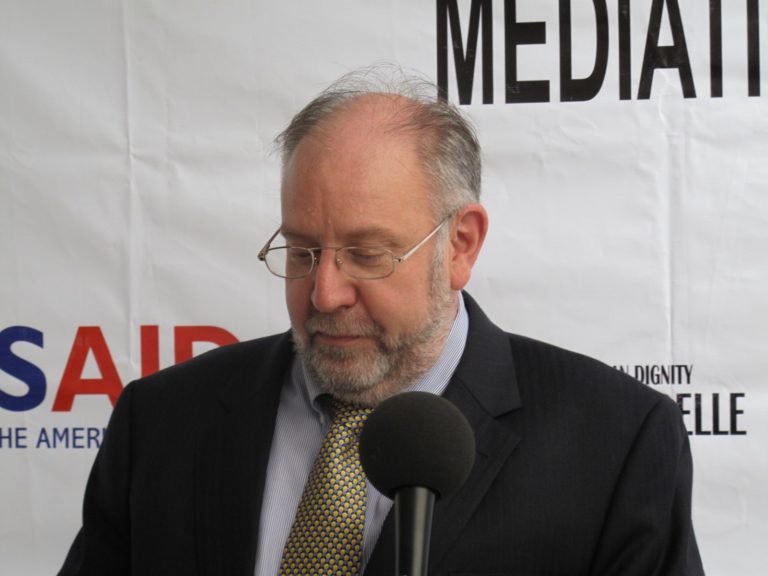
Nigeria Mission Director of USAID, Stephen Haykin
The states are: Abia, Delta, Imo, Niger, Sokoto and Taraba.
At the announcement in Abuja, the USAID Mission Director, Mr Stephen Haykin, said the four-year $60.4 million programme would provide technical assistance to strengthen governance and sustainability structures of the states’ water agencies.
According to him, the selected criteria included the states’ willingness to reform, existing functionality of infrastructure and potential for positive impact.
He said it was saddening to note that no fewer than 57 million Nigerians lack access to safe drinking water, saying annually water-borne diseases kill as many as a million under-five children.
This, Haykin said, could be prevented with access to safe drinking water, adequate sanitation and good hygiene.
He said Nigerian Government was making progress towards expanding access to clean water for its citizens, which was done as a priority, and further emphasised in its constitution.
“These institutions are all making significant investments to rehabilitate and expand existing water and sanitation infrastructure across the country to advance reforms.
“The alignment of these investments with the government, and with each other, is crucial to their successful outcomes and impact,’’ he said.
The mission director added that through the course of the programme, the agency would encourage the states’ water boards to emphasise quality towards better performance and qualitative services for its customers.
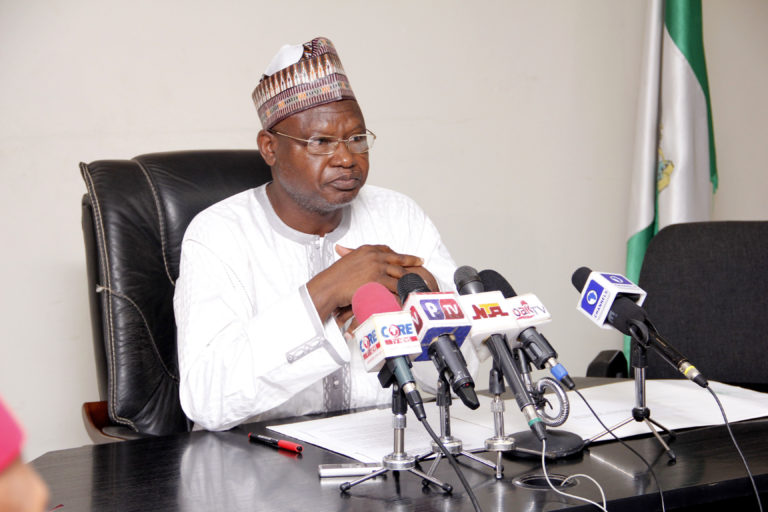
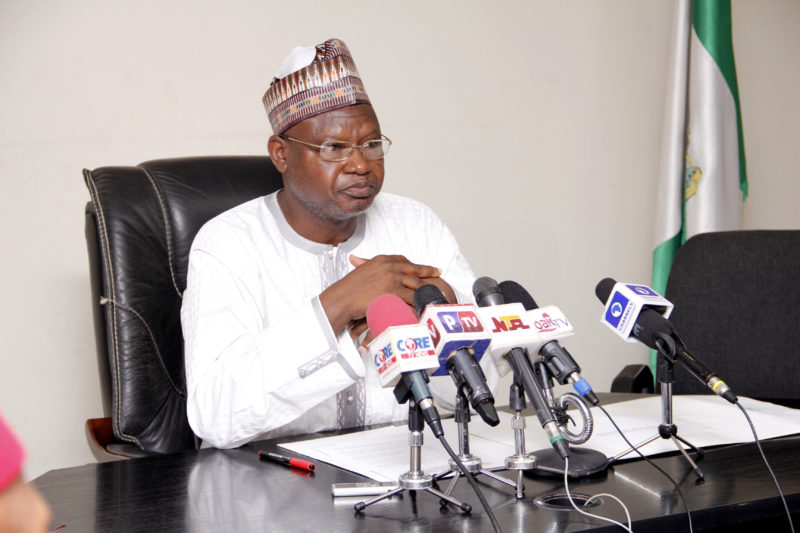
The Minister of Water Resources, Mr Suleiman Adamu, said the WASH intervention programme was in line with the National WASH action plan which was recently approved by the Federal Executive Council.
Adamu, represented by Mr Benson Ajisegiri, Director, Water Supply with the ministry, said the partnership would help in the achievement of the Sustainable Development Goals.
According to him, the action plan has five thematic areas of Governance, Sustainability, Improved sanitation, Funding and also Monitoring and Evaluation, saying the E-WASH programme fits perfectly.
While commending USAID for prompt interventions, the minister stressed the need for making all state water boards commercially viable, stressing that with proper governance structures this would be achieved.
The USAID Effective Water, sanitation and Hygiene Services programme in Nigeria works to improve the availability of clean water and sanitation in urban neighbourhoods.
The programme focuses on ensuring state water services through operational improvements, better governance and accountability for institutional reforms.
Gov. Godwin Obaseki of Edo State says his administration is very much committed to sustaining the ongoing One Million Trees for Peace and Afforestation project in the state.
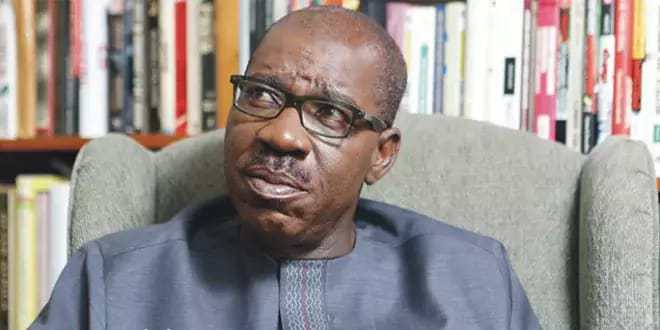
Governor Godwin Obaseki of Edo State
Obaseki expressed his commitment when he received the board members of the Association Bernadette Strebel World Peace (ABSWP) in Switzerland and Spain at the Government House, Benin City, on Wednesday, October 24, 2018.
He said the forest cover of the state had dropped to less than six per cent, noting that replenishment through continuous tree planting was paramount.
The governor said his administration was committed to the protection of the forest covers in Edo in order to tackle climate change and preserve a beautiful state for future generation.
“We are ready to support the replenishment of our forest trees which is our heritage,” he said.
He also gave the assurance that with the setting up of the proposed Edo Forestry Commission, the state would be able to plant a million trees in two years.
Earlier, ABSWP’s President, Mrs Bermadette Strebel, said the association had promised in 2008 to support the state government’s reforestation programme, by raising one million trees to be planted in the state.
Strebel said however that about 270,000 forest trees had been planted in the state since the inception of the project.
She said that the world forests were depleting at an alarming rate and commended the Obaseki-led administration for giving support to forest regeneration.
“The establishment of the Advisory Committee on Forestry and the proposed Edo Forestry Commission are welcome development.
“You are working in line with the saying that the best time to plant a tree was 20 years ago and the second-best time is now,” she said.
She also appreciated the cooperation among the Africa Initiative for World Peace, ABSWP in Europe and the Edo government in the implementation of the project.
The Nigerian Conservation Foundation (NCF) has called on the Federal Government to develop a policy framework to harness international forest recovery aids available to African countries.
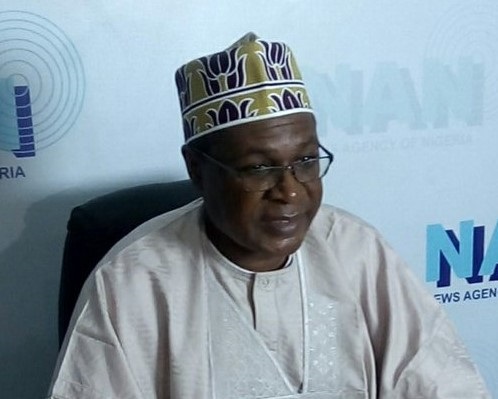
Director-General, Nigerian Conservation Foundation (NCF), Dr Muhtari Aminu-Kano
The Director-General of the Foundation, Dr Muhtari Aminu-Kano, made the call at the Foundation’s presentation of its 2017 Annual Report at its Annual General Meeting (AGM) in Lagos on Wednesday, October 24, 2018.
Aminu-Kano called for a multifaceted approach in the restoration, maintenance and preservation of the nation’s lost forests.
He lamented what he called “the premature termination of laudable initiatives aimed at restoring and preserving the nation’s forests by previous governments”.
He said it compounded dessert encroachment, gully erosion and other effects of climate change.
The director-general said that in 2015, a global meeting called the UN Forum on Forests was held in Germany and African countries made commitments to restoring the forests and had begun work but that Nigeria had done nothing to that effect.
He said the foundation was ready to use its expertise to help the country to meet its obligations in the restoration, recovery and preservation of forests.
Aminu-Kano said the effects of climate change were devastating as felled trees were not being replaced.
“Nigeria made a specific commitment of restoring four million hectares of forests by 2030. Three years is now going, yet nothing has happened in Nigeria.
“Other neighbouring countries like Republic of Benin, Chad, Niger and Cameroon made commitments; they have developed a template, they have a strategy and a plan, Nigeria has nothing yet.
“We (NCF) can work together and help to develop the plan for Nigeria to actualise those four million hectares.
“We can do as much as we can as an NGO in terms of the implementation as well as bringing people together to develop this framework and do it,” he said.
Aminu-Kano called on the Federal Government to prioritise forests restoration and preservation by developing a policy template for all tiers of government as well as increase funding to the Ministry of Environment.
He said the foundation was improving on its membership drive to increase participation of the public in saving the environment.
Earlier, Chief Philip Asiodu, the President, NCF Board of Trustees, said the foundation’s promoters had been established in seven states to promote the agenda of where trees should be planted and for what purposes.
He noted the need to have a template for the Green Recovery Nigeria project, adding that tree seedlings needed to be produced, nurtured and maintained to maturity.
Asiodu observed that international funding on the restoration of several forests in the North in the 1970s were terminated causing depletion and destruction of the forest reserves.
He said that new sawmills were springing up daily around Ondo State and trees which were over 150 years in the forests were being destroyed with no replacements.
Dr Joseph Onoja, the Programme’s coordinator, highlighted the importance of vultures in forests preservation.
He said vultures in their lifetime provided sanitation service of over four N4 million by freeing the environment of harmful bacteria from carcasses of animals.
He added that the absence of vultures usually gave rodents and dogs access to carcasses with no ability to process the bacteria, which causes illnesses such as tuberculosis, cholera and other epidemic in humans.
The African Development Bank (AfDB) on Wednesday, October 24, 2018 provided a grant of $43.5 million to South Sudan to help in the fight against hunger.
Benedict Kanu, AfDB Country Manager in South Sudan
According to Benedict Kanu, AfDB Country Manager in South Sudan, the donation seeks to provide immediate food assistance to hunger-hit areas of South Sudan.
Kanu added that the contribution would support efforts to improve people’s resilience and food security by strengthening the capacity of the South Sudanese government to plan, coordinate and implement disaster risk management and humanitarian responses.
The bank said the Short-Term Regional Emergency Response Project (STRERP) would be implemented by the UN World Food Programme (WFP).
“STRERP reflects the Bank’s commitment to support its Regional Member Countries in addressing the drivers of food insecurity and unstable food production systems,’’ Kanu said in a statement issued in Juba.
Adnan Khan, WFP Country Director in South Sudan, said that the funds would enable WFP to provide food aid to an estimated 300,000 people across South Sudan.
“The donation will go a long way in helping us provide life-saving support at a critical period and ensure people have the means to feed themselves not only today but also in the future,’’ Khan said.
According to the food security analysis report, three UN agencies and the government warned that 6.1 million South Sudanese face extreme hunger and 36,000 others are experiencing famine-like conditions in parts of the country.
Although the report projected improved food production in the next three months, it warned that some 36,000 people in the east African country face real threat of famine in the first three months of 2019 if nothing is done to abate the situation.
Manasseh Lomole, chairperson of South Sudan’s relief agency, the Relief and Rehabilitation Commission (RRC), said the AfDB assistance would make positive impact on the livelihoods of South Sudanese and help boost food security.
“Signing of the document has come at the right time indeed when our people have returned to the path of peace.
“When most of our people are returning from exile or internally displaced camps to their homes, this will surely assist our people greatly,’’ Lomole said.
South Sudan descended into civil war in late 2013, and the conflict has created one of the fastest growing refugee crises in the world as some 4 million people are said to be displaced internally and externally since 2013.
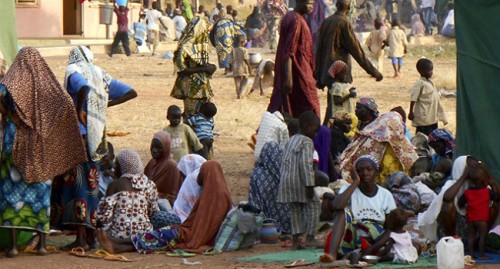
Mariam Shuaibu is one of the 845 victims of insurgency residing at the Gongola Internally Displaced Persons (IDP) Camp, in Abuja, Nigeria’s Federal Capital Territory.
Women and children in a IDPs camp. The displacement was informed by the Boko Haram insurgency. Photo credit: channelstv.com
Mariam, like other peers suffering the same fate, finds succor in this camp, after activities of insurgency in Madagali Local Government Area of Adamawa State made them flee their homes in 2015 after being ravaged by terrorists.
During a visit to the temporary make-shift community along airport road, one could see the untold, glaring hardship, with look of despondency, not knowing where the next meal or succor would come from.
Narrating her ordeal was a tale of dashed hopes of resettlement and rehabilitation of their home in Madagali Local Government Area in Adamawa, North-east Nigeria.
According to her, several attempts at relocation to their base met a brick wall, following continuous insurgent attacks.
Mariam noted that the camp which had become home to her family and other settlers, was being neglected by the government of the day, noting that these was evident without access to potable water and sanitation facilities.
“We don’t have any good source of water here, all we use is the stream that is a kilometer away; there were two occasions when two women going to fetch water were bitten by snakes.
“This is not the first time that this has happened, we had to take them to the health center in Karamajiji Lepers village, a distant community to assess first aid care for them.
Mariam, a mother of four, also bemoaned the lack of toilet facilities at the make-shift community, saying they had to make use of surrounding bushes to defecate in the open.
Another settler, Hannatu Peter, is worried about continued cases of occurrence of infection women suffer from lack of toilet, saying the cost of hospitalisation was taking its toll on them.
“We go to the stream, we don’t have water here, even toilets, it is the use of bush, a woman was bitten by a snake while defecating in the bush, and another one was bitten when she went to pick firewood for cooking.
“We want them to help us, especially on this toilet and water issue, some women urinate anywhere and get infected, majority of us are having infections, to treat it in hospitals is expensive,” Peter said.
Curious to know the hygiene situation of the community, I had the opportunity to witness poor living conditions, with the smell of open defecation permeating the air.
Without being told, one would believe that open defection practice in that community was the reason why a large number of the children had bouts of cholera.
The camp Chairman, Mr Joseph Jauro, noted that there was the need for immediate interventions from the relevant stakeholders, saying this was necessary to forestall future occurrences.
He recounted numerous cases of diarrhea and cholera cases and deaths among under-five children, saying this was been linked to poor sources of drinking water.
Jauro narrated the difficulty in getting water, adding that water vendors usually came around to sell water for some persons in the community.
“The issue we have in this camp is malaria, cholera and snake bite, Because of the bushes around, there are times when they come into your room.
“We don’t have water and toilets here, some of us go to the bushes around to do their thing, there are times when we buy the water outside, one 20 litres of water is bought for N50.
“Some water vendors called ‘mairuwa’, usually come to sell water for us, we buy from them at N20 per 20 litres jerry can.
“There are times when you do not have the money to buy the water, you end up going to the stream to fetch the water the way it is.
“We want government to help us, to alleviate our sufferings in this camp, how can we call ourselves Nigerians when we do not have the basic necessities of life,” he added. The chairman also called for the construction of a borehole, provision of electricity, health center and a school.
Highlighting the state of access to water and sanitation in Nigeria, an NGO, WaterAid, has called on tiers of government to develop cross-ministerial coordination for the implementation of water and sanitation policies and programmes.
According to the organisation’s Communications and Media Manager, Oluwaseyi Abdumalik, only 13 per cent of Nigerians have access to basic hand washing facilities, with 157 million people lacking access to hand washing facilities.
She said promotion of hand washing with soap could reduce diarrheal disease by 48 per cent, calling on policy makers to prioritise nutrition-sensitive water, sanitation and hygiene interventions.
Earlier, an official of the National Task Group on Sanitation, Mrs Chizoma Opara, noted that Federal Government was working with some stakeholders to pass the hand washing messages round, with the provision of potable water.
She said the visit to the IDP camps was one of the activities to commemorate the 2018 Global Hand Washing Day, with the theme, “Clean Hands, a recipe for health”.
She said hand washing is one of the avenues to break the cycle of transmission of diseases, saying that the group was carrying hygiene messages to eight IDP camps.
“We are aware of the large number of vulnerable persons in the camps, which is why we are carrying the hand washing messages to them.’’
Opara said in 2017, the group carried out hygiene messages to schools and public places, noting that children have been known to lead behavior change among their peers and family members.
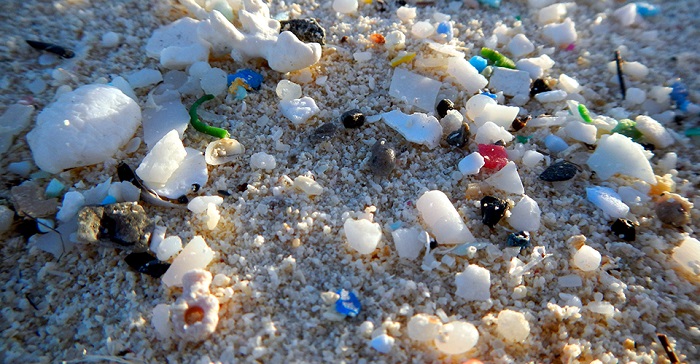
A new study has found that humans are ingesting microplastics.
Microplastics
The study, commissioned by the Federal Environment Agency and the Medical University of Vienna, has found microplastics in the human stool.
The international study involved five women and three men aged 33-65 who lived in different parts of the world. They kept a nutrition diary for one week and then gave a stool sample.
The study found that all participants consumed plastic-packed food or beverages from PET bottles, most of them consumed fish or seafood and no one was fed on exclusively vegetarian food.
The Federal Environment Agency analysed the participants stool in the laboratory about 10 of the most widely used plastics in the world. For the eight people studied, on average 20 microplastics particles per 10 grams of stool were found.
Philipp Schwabl, first author who works at the Division of Gastroenterology and Hepatology at Medical University Vienna, said: “Due to the small number of volunteers, we are unable to establish a reliable connection between nutritional behaviour and exposure to microplastics. The effects of the microplastic particles found on the human organism – on the digestive tract – can only be investigated in the context of a larger study.”
In other studies, the highest microplastics concentrations were found in animals in the digestive system, but smallest plastic particles were also found in blood, lymph and even in the liver. It has also been reported that 90 per cent of seabirds have plastic in their stomach.
Philipp Schwabl added: “Although there are initial indications that microplastics can damage the gastrointestinal tract by promoting inflammatory reactions or absorbing harmful substances, further studies are needed to assess the potential dangers of microplastics for humans.”
This news follows the UK Government announcing to implement a ban on straws, cotton-buds and stirrers in attempt to reduce the growing plastic pollution.
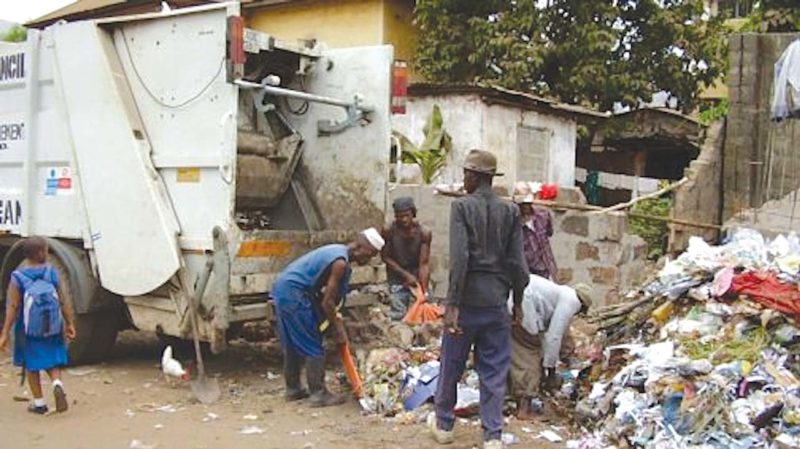
The Lagos State Government has met with PSP operators in waste management, saying they should go back to their various areas of operation and restore door-to-door evacuation of waste.
Lagos waste PSP operators at work
Addressing operators at the meeting held at LAWMA Office in Ijora on Tuesday, October 23, 2018, Secretary to the State Government, Tunji Bello, stated that, in making good its promise to achieve a cleaner and healthier environment, the Lagos government had constituted a committee headed by the Secretary to the State Government to thoroughly review the situation and design template for the restoration of the services of PSP operators.
“This move is to reassure you that we are set on a new beginning and it is to consolidate what we have achieved. Everybody must work together to restore the glory of Lagos,” he said.
He said that the government had appointed Mr. Ola Oresanya, former General Manager of LAWMA, as a consultant to work with the state to fashion out a format for the restoration of door-to-door waste collection.
He urged the PSP operators to be ready for work and set aside any misgivings, adding that he was in constant touch with the leadership of the Association of Waste Managers of Nigeria (AWAM) who had assured him of their cooperation.
Earlier, Commissioner for the Environment, Mr. Babatunde Durosinmi-Etti, urged all stakeholders to recognise the urgent need to clear the backlog of waste in the metropolis, while a holistic solution was being worked out simultaneously.
“Being aware that PSP operators were in business to make profit and sustain employment, government therefore enjoins residents to pay for waste collection by the PSP operators,” he added.
Speaking on behalf of the PSP operators, the Chairman of AWAM, Mr. Oladipo Egbeyemi, expressed his appreciation to the government for the development and urged for thorough situation review and provision of enabling environment for unhindered performance by his members.
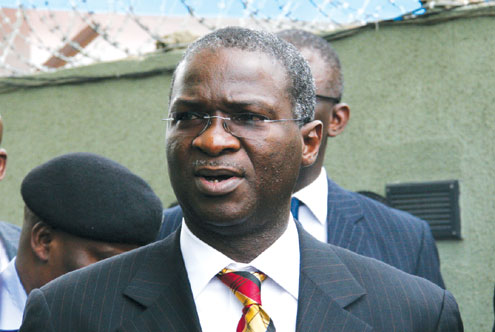
There is prospect Nigerians keen on knowing why the power sector reforms in the country have not yielded any tangible result and why the citizens continue to stay in darkness but still made to pay crazy electricity bills, despite the huge spending on the sector, may soon have some answers, as the Federal High Court in Ikoyi, Lagos on Tuesay, October 23, 2018 granted leave to the Socio-Economic Rights and Accountability Project (SERAP) to seek its reliefs to compel the Minister of Power, Works and Housing, Mr Babatunde Fashola, to account for the spending.
Minister of Power, Works and Housing, Babatunde Raji Fashola (SAN)
Hon. Justice C.J. Aneke granted leavr to SERAP, which is praying to seek judicial review and order of mandamus to compel Mr Fashola over the “failure to account for the spending on the privatisation of the electricity sector and the exact amount of post-privatisation spending on generation companies (GENCOS), distribution companies (DISCOS) and Transmission Company of Nigeria to date, and to explain if such spending came from budgetary allocations or other sources.”
Justice Aneke granted the order for leave following the hearing of an argument in court on exparte motion by SERAP counsel Ms Bamisope Adeyanju. The Court also ruled that Mr Fashola be put on notice and adjourned the matter to Tuesday, November 20, 2018 for mention.
SERAP had in June sued Mr Fashola in suit number FHC/L/CS/972/18 at the Federal High Court seeking “an order for leave to apply for judicial review and an order of mandamus directing and/or compelling Mr Fashola to provide specific details on the privatisation of the electricity sector, the names of all the companies and individuals involved; and to publish widely including on a dedicated website any such information.”
The suit followed SERAP’s Freedom of Information request dated May 7, 2018 to Mr Fashola giving him 14 days to provide “information on the status of implementation of the 25-year national energy development plan, and whether the Code of Ethics of the privatization process which bars staff of the Bureau of Public Enterprises (BPE) and members of the National Council on Privatisation (NCP) from buying shares in companies being privatized were deliberately flouted.”
The suit reads in part: “Most of the companies that won the bids had no prior experience in the power sector and little or no capacity at all to manage the sector. The privatization of the Power Holding Company of Nigeria (PHCN) have yielded the country total darkness. The gains of privatization have been lost through alleged corruption, manipulation of rules and disregard to extant laws and lack of transparency in the exercise.
“The Goodluck Jonathan government reportedly spent over N400 billion on the power sector while the present government spent over N500 billion on the sector despite privatisation. It is unclear if this spending is drawn from budgetary allocations and if these are loans to generation companies (GENCOS), Distribution companies (DISCOS) and Transmission Company of Nigeria.
“Publishing the information requested and making it widely available to the public would serve the public interest and provide insights relevant to the public debate on the ongoing efforts to prevent and combat a culture of mismanagement of public funds, corruption and impunity of perpetrators.
“To further highlight the seriousness of the situation, several years after the country’s power sector was privatized, millions of Nigerian households particularly the socially and economically vulnerable sectors of the population continue to complain about outrageous bills for electricity not consumed, and poor power supply from distribution firms. Millions of Nigerians continue to be exploited using patently illegal estimated billing by DISCOs. One wonders the essence of the privatisation if there has been no corresponding improvement in power for Nigerians.
“Enforcing the right to truth would allow Nigerians to gain access to information essential to the fight against corruption and provide a form of reparation to victims of grand corruption in the power sector. The UN Committee on Economic, Social and Cultural Rights in its General Comment 3 has implied that privatization process should not be detrimental to the effective realization of all human rights, including access to regular electricity supply.
“SERAP has the right to request the information under contention on the basis of several provisions of the Freedom of Information (FOI) Act, 2011. By Section (1) of the FoI Act, SERAP is entitled as of right to request for or gain access to information, including information on post-privatization spending by the Federal Government and accounts of spending on the private entities such as GENCOS and DISCOS.”
The suit is seeking the following reliefs:
A DECLARATION that the failure of the Respondent to furnish the Applicant with information on specific details on the spending on the privatisation of the electricity sector, the exact amount of post-privatisation spending to date and the names of all the companies and individuals involved; as well as explain if such spending came from budgetary allocations or other sources is unlawful as it contradicts and in conflict with the obligations of the Respondent under the Freedom of Information Act 2011.
A DECLARATION that the failure of the Respondent to furnish the Applicant with information on the details of spending on and status of implementation of the twenty-five (25) year national energy development plan is unlawful as it contradicts and in conflict with the obligations of the Respondent under the Freedom of Information Act 2011.
A DECLARATION that the failure of the Respondent to clarify to the Applicant the degree of compliance with the Code of Ethics of the privatization process which bars staff of the Bureau of Public Enterprises (BPE) and members of the National Council on Privatization (NCP) from buying shares in companies being privatised is unlawful as it contradicts and in conflict with the obligations of the Respondent under the Freedom of Information Act 2011.
AN ORDER OF MANDAMUS directing and/or compelling the Respondent to furnish the Applicant with information on specific details of spending on the privatization of the electricity sector, the exact amount of post-privatisation spending to date and the names of all the companies and individuals involved; as well as to explain if such spending came from budgetary allocations or other sources, and to publish widely including on a dedicated website any such information.
AN ORDER OF MANDAMUS directing and/or compelling the Respondent to furnish the Applicant with information on the details of spending and status of implementation of the twenty-five (25) year national energy development plan, and to publish widely including on a dedicated website any such information.
AN ORDER OF MANDAMUS directing and/or compelling the Respondent to clarify the degree of compliance with the Code of Ethics of the privatisation process which bars staff of the Bureau of Public Enterprises (BPE) and members of the National Council on Privatisation (NCP) from buying shares in companies being privatised.
“The privatisation of power assets has already caused major crises, ranging from illiquidity, load rejection, metering problems, corrupt practices, lack of gas to power the stations, disinterestedness of investors, lack of injection of fresh capital after acquisition of financing, tariff interest, consumer apathy, foreign exchange hostilities, and a host of other sundry issues associated with it.”
The Minister of State for Environment, Alhaji Ibrahim Jibril, has called on relevant stakeholders to intensify efforts to address environmental degradation in the country.
Environment Minister of State, Ibrahim Usman Jibril
Jibril made the call in Abuja on Tuesday, October 23, 2018 at a news conference on the 12th National Council on Environment (NCE) scheduled to hold between Oct. 29 and Oct. 31 in Akure, Ondo State.
The theme of the conference is entitled “Environment and Security in Nigeria: Consolidating Nigeria’s Environment Sector Reforms towards Sustainable Development.”
The minister underscored the need for relevant stakeholders in the environment sector to double efforts towards arresting the rapidly growing environmental degradation.
“World over, the major headlines on news and discussions of major fora especially the global bodies like United Nations, regional and sub-regional international bodies have been dominated by issues relating to environmental challenges and its sustainability.
“This is due mainly to extreme danger posed by the rapidly growing environmental degradation whose threat has assumed a global catastrophic dimension.
“The environmental adversities in Nigeria and the effects on the economy and security can no longer be kept in silence,” Jibril said.
According to him, more needed to be done in order to address the growing concerns.
The minister said that the theme of the upcoming NCE was carefully chosen to reflect the resolve of the Federal Government to implement fully the Economic Recovery Growth Plan.
According to him, the effort is aimed at guaranteeing the sustainability of the nation’s environment.
Also, the Commissioner for Environment, Ondo State, Mr Funso Esan, said that, that government was ready to host NCE event.
He assured that the organising committee was working assiduously to achieve a successful conference.
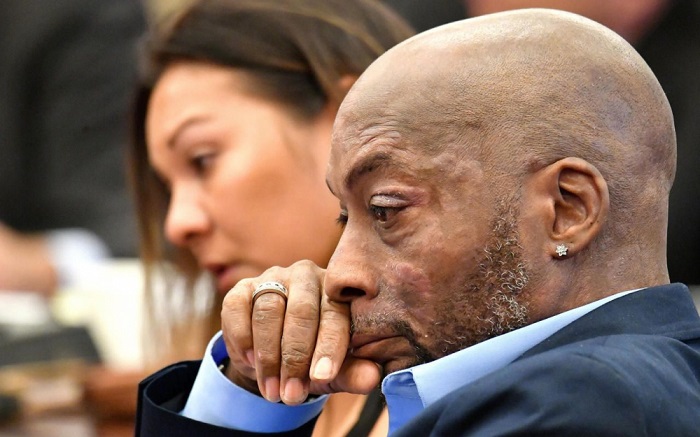
A San Francisco judge made a surprise ruling on Monday, October 23, 2018 and upheld a jury’s verdict that Monsanto‘s Roundup weedkiller gave a California groundskeeper cancer, and that the company failed to warn him of the danger, CNN reported.
Plaintiff Dewayne Lee Johnson during the Monsanto trial in San Francisco
Superior Court Judge Suzanne Bolanos had issued a tentative ruling on Oct. 10 ordering a new trial over the punitive damages awarded to plaintiff Dewayne “Lee” Johnson, saying he had failed to prove that Monsanto acted with “malice or oppression.” After reviewing arguments from both sides, however, Bolanos instead upheld the verdict, but lowered the punitive damages from $250 million to $39 million. A new trial will only take place if Johnson’s lawyers don’t accept the reduced award.
“The evidence presented to this jury was, quite frankly, overwhelming … Today is a triumph for our legal system. We care deeply for Lee and his family, and we are excited to share this important win with them and all those who supported this case,” Johnson’s lawyers said in a statement reported by The Guardian.
His legal team added also said the reduction in damages was “unwarranted” and that they were “weighing the options.”
“The court’s decision to reduce the punitive damage award by more than $200 million is a step in the right direction, but we continue to believe that the liability verdict and damage awards are not supported by the evidence at trial or the law and plan to file an appeal with the California Court of Appeal,” Bayer said, as CNN reported.
Johnson was originally awarded a total of $289 million in August – $39 million in compensatory damages and $250 million in punitive damages. The verdict was historic because it was the first of more than 8,000 similar pending lawsuits against Monsanto claiming that glyphosate, the active ingredient in its Roundup product, caused cancer in plaintiffs or their loved ones.
Johnson was awarded an early trial because he is not expected to live past two years, and California grants early trials to dying plaintiffs.
Before Bolanos issued her final ruling Monday, five of the jurors who had decided in Johnson’s favor wrote letters to her asking her not to overturn their decision, Reuters reported.
“You may not have been convinced by the evidence but we were,” juror Gary Kitahata wrote in a letter to Bolanos reported in The San Francisco Chronicle. “I urge you to respect and honor our verdict and the six weeks of our lives that we dedicated to this trial.”
Bolanos did not address those letters in her ruling, but said the jury was entitled to its feelings, Reuters said. In the end, her decision to reduce damages was not based on lack of evidence, but California due process law.
“In enforcing due process limits, the court does not sit as a replacement for the jury but only as a check on arbitrary awards,” Bolanos wrote in her ruling Monday, according to CNN. “The punitive damages award must be constitutionally reduced to the maximum allowed by due process in this case – $39,253,209.35 – equal to the amount of compensatory damages awarded by the jury based on its findings of harm to the plaintiff.”