The Nigerian Cartographic Association (NCA) on Monday, October 22, 2018 in Abuja urged the National Assembly to pass the bill to establish the Cartographers Registration Council of Nigeria.
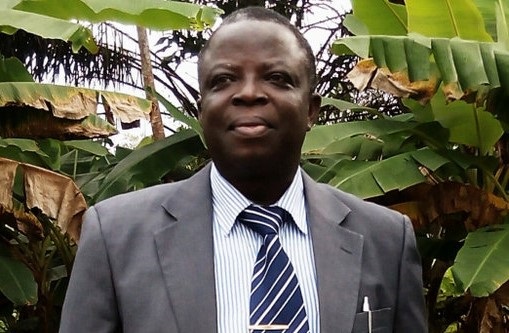
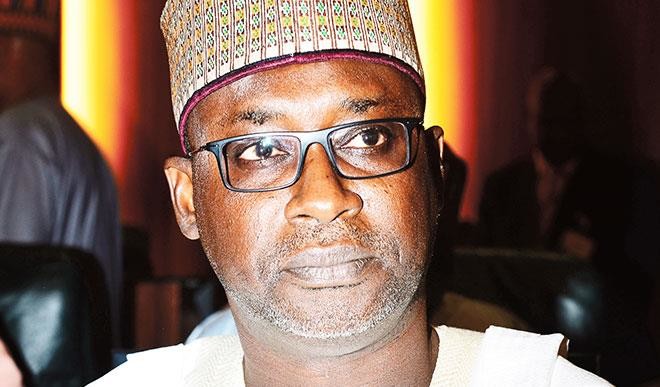
Prof. Andrew Obafemi, President of the Nigerian Cartographic Association (NCA)
Prof. Andrew Obafemi, the President of NCA, made the call at the 40th anniversary and annual general meeting of the association.
The theme of the conference was “Cartography and Geospatial Revolution: Decision Tools for National Security, Disaster Management and Economic Recovery”.
Cartography is the art, science and technology of making maps and map alternatives. It is also the art of graphically representing a geographical area usually in a flat surface.
According to Obafemi, the bill, if passed into law, would ensure that the practice of map making in the country is regulated.
“We wish to revive our call on the National Assembly to pass a bill establishing the Cartographers Registration Council.
“This is to ensure that the practice of map making in the country is regulated with the guidance and coordination of the Office of the Surveyor General of the Federation, which has the constitutional responsibility of overseeing surveying and mapping activities in Nigeria,’’ he said.
Obafemi further urged the Federal Government to set up a National Cartographic Centre to undertake the production of a diverse range of thematic and special maps in the country.
He pointed out that the centre would promote cartographic professionalism in Nigeria and would be supervised by the Office of the Surveyor General of the Federation.
He also called on the military to brace up to the challenges of acquiring and publishing maps for national security.
Mr Ebisintei Awudu, the Surveyor General of the Federation said that professional mapping of the country would help avert earth traumatic issues that could lead to tremors, flood disasters and earthquakes.
“With maps, we will be able to send the right message whether learned or illiterate. You will discover that you can connect with people better.
“We can have maps for population census, electioneering, for flooding, prediction and also giving advice to the local people,” Awudu said.
According to him, mapping can be deployed in precision agriculture and areas free locations in terms of terrorists’ attacks.
Awudu further called on professionals in the surveying and mapping area to upgrade their skills in mapping, adding that it would make them more relevant.
Prof. Olayinka Balogun, former NCA President, while talking on “Transition to a Digital Map of Nigeria”, said that a single map of Nigeria would make it easier for usage.
“With these current developments in computer technology, digital cartography and GIS, we should move ahead toward the conversion of all paper maps to digital maps.
“This we can scroll to any part of the country using a grabber, a cursor or a search command.
“We should not leave various innovators to come out with embarrassing maps of Nigeria,” he said.
He added that Nigeria was still spending scarce resources on importing digitisers, scanners for everybody and departments of government to use.
Balogun, however, said that it was the responsibility of cartographers to produce digital maps and not scientists.
The 21st meeting of the Green Climate Fund (GCF) Board ended on Sunday, October 21, 2018 in Bahrain, with the organisation approving over $1 billion of new projects and programmes to support climate action in developing countries, and formally launching the Fund’s first replenishment.
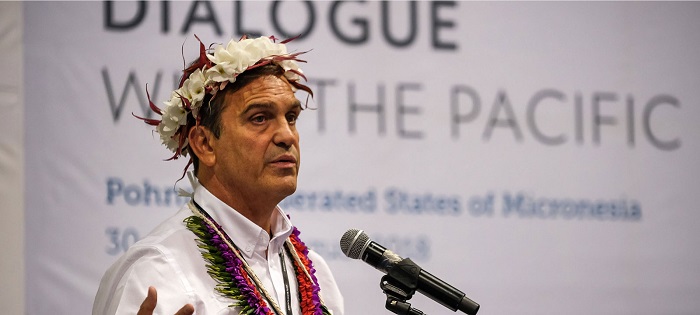
Javier Manzanares has emerged interim Executive Director of the Green Climate fund
The 19 new projects amount to a total investment from GCF of $1,038 million, and including co-financing the projects will channel over $4,244 million of climate finance for low-emission, climate-resilient development. GCF now has a portfolio of 93 projects amounting to over $4,605 million of GCF resources.
Nigeria is one of the numerous country beneficiaries to the GCF investments, appearing in no fewer than three programmes totalling some $446.5 million.
For instance, under FP092, the sum of $67.8 million is allocated for “Programme for integrated development and adaptation to climate change in the Niger Basin (PIDACC/NB)” in Nigeria, Benin, Burkina Faso, Cameroon, Chad, Cote d’Ivoire, Guinea, Mali, and Niger with the African Development Bank (AfDB) as accredited entity.
Similarly, $279.7 million is earmarked under the FP095 for “Transforming financial systems for climate” in Nigeria, Benin, Burkina Faso, Cameroon, Cote d’Ivoire, Ecuador, Egypt, Kenya, Madagascar, Mauritius, Morocco, Namibia, Senegal, South Africa, Tanzania, Togo, and Uganda with the Agence Française de Développement (AFD) as accredited entity.
Also, $100 million is budgeted under the FP099 for “Climate Investor One” in Nigeria, Burundi, Cameroon, Djibouti, Indonesia, Kenya, Madagascar, Malawi, Mongolia, Morocco, and Uganda, with the Nederlandse Financierings-Maatschappij voor Ontwikkelingslanden N.V. (FMO) as accredited entity.
Director, Department of Climate Change in the Federal Ministry of Environment, Dr. Peter Tarfa, in a reaction, disclosed that Nigeria would commence negotiating with the AfDB, Dutch FMO and French AFD towards accessing the fund “for the benefit of the vulnerable in the country”
“There is a need for the next steps as we jump-start the implementation stage,” he said.
This is the second time Nigeria will be benefiting from a GCF facility, the first being the $26 million Acumen Resilient Agriculture Fund (ARAF) (FP078), a climate change resilience project in the agriculture sector.
At the close of the four-day meeting, the Board decided to launch the process for the Green Climate Fund’s first formal replenishment, marking a key moment in the development of the world’s largest dedicated fund for climate action.
Co-Chair Lennart Båge stated, “The B.21 Board meeting exceeded expectations with more than a billion dollars of important projects approved, and the launch of the GCF replenishment process.”
Co-Chair Paul Oquist stated, “Climate finance and climate project formulation are the two greatest bottlenecks to climate action in the developing countries. GCF has a critical role to play in both.”
Javier Manzanares, Executive Director ad interim, stated, “With a rapidly growing portfolio, accelerating implementation on the ground, and a pipeline of $17 billion showing huge demand, GCF is now entering its first replenishment ready to step up its support of developing countries’ climate action.”
The Board meeting also approved the applications of 16 new Accredited Entities, the partner organisations that implement GCF projects. GCF now has 75 Accredited Entities, 41 of which are direct access, providing national and regional channels for developing countries to access GCF funds, as well as via GCF’s international Accredited Entities.
The Board also made several other significant decisions, including adopting a selection process for the recruitment of a new Executive Director and appointing Javier Manzanares as interim Executive Director, deciding to initiate a performance review of GCF to be carried out by the Independent Evaluation Unit, and selecting and appointing the World Bank as GCF’s trustee. The Board also held in-depth discussions on developing a process for decision-making in the absence of consensus.
GCF has approved 42 new projects in 2018, mobilising a total of $8,056 million in climate financing since the start of the year (including co-financing). During 2018, it has also made a somewhat rapid acceleration in implementation on the ground. GCF now has 39 projects under implementation, worth $1.6 billion in GCF resources that are being deployed as climate finance in support of developing countries’ climate ambitions under the Paris Agreement.
The 21st GCF Board meeting approved the following projects and programmes:
FP083 – $100 million for Indonesia Geothermal Resource Risk Mitigation Project with World Bank
FP084 – $43.4 million for Enhancing climate resilience of India’s coastal communities with UNDP
FP085 – $49 million for Green BRT Karachi in Pakistan with ADB
FP086 – $101.4 million for Green Cities Facility in Albania, Armenia, Georgia, Jordan, Moldova, Mongolia, Serbia, The Former Yugoslav Republic of Macedonia, and Tunisia with EBRD
FP087 – $22 million for Building livelihood resilience to climate change in the upper basins of Guatemala’s highlands with IUCN
FP089 – $35.8 million for Upscaling climate resilience measures in the dry corridor agroecosystems of El Salvador (RECLIMA) with FAO
FP090 – $29.9 million for Tonga Renewable Energy Project under the Pacific Islands Renewable Energy Investment Program with ADB
FP091 – $28.6 million for South Tarawa Water Supply Project in Kiribati with ADB
FP092 – $67.8 million for Programme for integrated development and adaptation to climate change in the Niger Basin (PIDACC/NB) in Benin, Burkina Faso, Cameroon, Chad, Cote d’Ivoire, Guinea, Mali, Niger (the), and Nigeria with AfDB
FP093 – $28.3 million for Yeleen rural electrification project in Burkina Faso with AfDB
FP094 – $41.9 million for Ensuring climate resilient water supplies in the Comoros Islands with UNDP
FP095 – $279.7 million for Transforming financial systems for climate in Benin, Burkina Faso, Cameroon, Cote d’Ivoire, Ecuador, Egypt, Kenya, Madagascar, Mauritius, Morocco, Namibia, Nigeria, Senegal, South Africa, Tanzania, Togo, and Uganda with AFD
FP096 – $21 million for DRC green mini-grid program in Democratic Republic of Congo with AfDB
FP097 – $15.5 million for Productive investment initiative for adaptation to climate change (CAMBio II) in Costa Rica, Dominican Republic (the), El Salvador, Guatemala, Honduras, Nicaragua, and Panama with CABEI
FP098 – $55.6 million for DBSA Climate finance facility in Eswatini, Lesotho, Namibia, South Africa with DBSA
FP099 – $100 million for Climate Investor One in Burundi, Cameroon, Djibouti, Indonesia, Kenya, Madagascar, Malawi, Mongolia, Morocco, Nigeria, Uganda with FMO
The Board decided to defer its consideration of proposal FP082, Catalysing Climate Finance (Shandong Green Development Fund), until its next meeting.
The following projects were also approved under the Simplified Approval Process (SAP):
SAP002 – $8.6 million for Climate services and diversification of climate sensitive livelihoods to empower food insecure and vulnerable communities in the Kyrgyz Republic with WFP
SAP003 – $2.16 million for Enhancing climate resilience of the water sector in Bahrain with UNEP
SAP004 – $10 million for Energy efficient consumption loan programme in Mongolia with XacBank
The GCF Board also approved the accreditation application of the following entities: Caixa Economica Federal (CEF) based in Brazil, Fondo para la Acción Ambiental y la Niñez (Fondo Acción) based in Colombia, IDFC Bank Limited (IDFC Bank) based in India, Ministry of Finance and Economic Management (MFEM) based in the Cook Islands, National Rural Support Programme (NRSP) based in Pakistan, Nordic Environment Finance Corporation (NEFCO) based in Finland, Pegasus Capital Advisors (PCA) based in the United States of America, and Austrian Development Agency (ADA, Austria) based in Austria.
Others include: Compañía Española de Financiación del Desarrollo S.A. S.M.E. (COFIDES) based in Spain, Financiera De Desarrollo Territorial S.A. (Findeter) based in Colombia, Fundo Brasileiro para a Biodiversidade (Funbio) based in Brazil, LandBank of the Philippines (LandBank) based in the Philippines, Protected Areas Conservation Trust (PACT), based in Belize, BNP Paribas S.A. (BNP Paribas), based in France, Consortium of International Agricultural Research Centers (CGIAR), based in France, and Inter-American Investment Corporation (IDB Invest), based in the United States of America.
Based in Incheon, South Korea, the GCF is a fund established within the framework of the United Nations Framework Convention on Climate Change (UNFCCC) as an operating entity of the Financial Mechanism to assist developing countries in adaptation and mitigation practices to counter climate change.
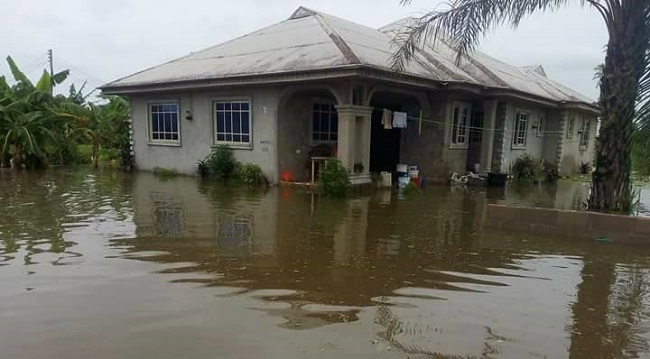
Flood has taken over parts of Otuoke Community, hometown of former President Goodluck Jonathan, in Bayelsa State.
Flooding in Yenagoa, Bayelsa State
Otuoke is in Ogbia Local Government Area of the state and one of the communities mostly affected by flooding.
Some residents of the community now use canoes to assess their homes following the overflow of River Orashi-Taylor and Epie creeks, respectively traversing Rivers and Bayelsa states.
The flood affected the house of Dr Jonathan in 2012.
One of the residents affected by the flood, Mr Solomon Oru, called on the Federal Government and National Emergency Management Agency (NEMA) to come to their aid, as most of them now access their homes through canoes.
He said most of their properties have been damaged by the flood.
Oru also told NAN that the flood has dispatched reptiles around the communities, threatening lives.
Another resident, Mr Emmanuel Peter, said they can’t leave their homes, because thiefs are looting their properties.
He also called for the intervention of the state government and security agencies to support and protection.
A NAN correspondent who visited the Federal University Otuoke however reports that the institution was not affected by the flood as normal academic activities lectures were ongoing.
The Global Environmental Facility-Small Grant Programme (GEF-SGP) has supported Nigeria with $4.9 million grant to fund 141 environment-related projects in 27 states between 2009 and 2018.
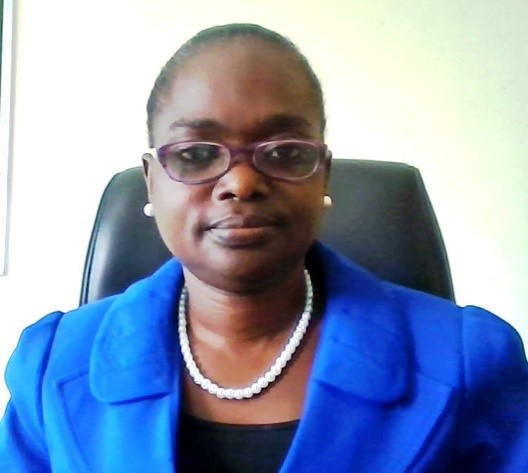
GEF-SGP National Coordinator, Mrs Ibironke Olubamise
GEF-SGP National Coordinator, Mrs Ibironke Olubamise, disclosed this in an interview with the News Agency of Nigeria (NAN) in Abuja on Sunday, October 21, 2018.
Olubamise said that the grant was an additional fund to complement the environmental projects in about 200 communities.
“GEF operates in phases. Nigeria joined GEF-SGP during Operational Phase 4 (OP4) in 2009. Presently, GEF is in OP6.
“The total number of projects supported by GEF-SGP since 2009 was 141 in about 200 communities in 27 states,’’ the national coordinator said.
She said that the grant was used to fund projects on biodiversity, climate change, land degradation, persistent organic pollutants and international waters.
“GEF-SGP provides grant, technical and coordination support to poor, marginalised and vulnerable communities.
“This is through Non-Governmental Organisations (NGOs) and Corporate Body Organisations (CBOs) to implement local environmental initiatives.
“Funded by the GEF, SGP is implemented by UN Development Programme (UNDP), on behalf of the GEF partnership and is executed by the United Nations Office for Project Services (UNOPS),’’ she said.
The coordinator said the GEF-SGP had supported alternative livelihood activities that helped to reduce pressure on the environment and enhanced the quality of lives of the target communities, including widows and aged.
According to her, 800,000 poor rural dwellers, 65 per cent women and 35 per cent men have benefitted directly from the projects.
“60 per cent of communities have either never experienced or benefitted from any development support or participated in such a way as allowed by SGP.
“GEF-SGP also demonstrates collaborative effort between NGO, community and private sector to address pollution. Many of SGP projects have been up-scaled/replicated.’’
In addition, she said the programme supported over 40 climate change mitigation projects such as tree planting to regenerate forests, energy saving stoves to consumption of fuel wood.
“GEF-SGP has supported projects in several states to address erosion and loss of farmlands to boost food production capacity with modern farming techniques.
“It assists in establishing skills acquisition centre to train beneficiaries especially women, widows and youth on alternative livelihood activities to discourage unsustainable land exploitation.
“It also supports the awareness creation and teaching simple techniques such as rain water harvesting to reduce stress of water and impact of drought; pitcher irrigation technology to reduce stress of irrigation on farmlands,’’ she said.
Olubamise, who said the grant also addressed the issue of biodiversity, said over 500 indigenous plant species were currently being conserved.
She said that it supported the establishment of Community Forest Management Committees and capacity building for forest protection.
The coordinator added that it also enhanced indigenous knowledge of biodiversity and revived interest in traditional medicinal values of plants species.
“In-situ conservation of the critically endangered Sclatter’s Guenon monkey (Cercopithecus sclaterri) that is endemic to southern Nigeria.
“The animal is internationally rated No. 4 in the 2006 International Union for Conservation of Nature (IUCN) global Red Data list of endangered species of fauna,’’ she said.
Olubamise said the grant also supported the protection and restoration of over 1.2 million hectares of land in Nigeria.
She, however, said that effective monitoring and evaluation of the projects were responsible for the successes GEF had recorded between 2009 and 2017.
“GEF in collaboration with NGOs/CBOs conducts pre-monitoring and evaluation of these projects, carry out the evaluation during and after the implantation of the projects,’’ she said.
The Minister of Water Resources, Suleiman Adamu, appears to have fulfilled a promise he made to the Socio-Economic Rights and Accountability Project (SERAP) to account for spendings on water projects across the country.
Suleiman Adamu, Minister of Water Resources
According to a statement made available to EnviroNews on Sunday, October 21, 2018, the minister has provided what looks like a detailed information on expenses running into billions of Naira on 292 projects between 2010 and 2016. The documents were reportedly presented last week before the Federal High Court in Lagos.
Adamu, an engineer, had in September asked the court to grant the Ministry more time within which to compile and furnish SERAP with information on the spending on water, and locations of specific projects, in view of the high volume of the information involved.
When the case up on Friday, October 19, the court asked the minister’s lawyer: “If SERAP is asking for information, why is your ministry not providing it?” The lawyer reportedly answered: “We have just furnished SERAP with the information they requested.” The court welcomed the action by the Ministry of Water Resources and said that the Ministry of Agriculture too should give SERAP the information requested rather than coming to court.
SERAP’s deputy director, Timothy Adewale, said: “We are studying the large documents on spending on several water projects, with some completed but also several more uncompleted. Our team is analysing the total project sums, comparing the amounts spent on projects. We will publish the full information together with our analysis on our website and social media platforms shortly. We are now sharing the information on just 19 of the 292 projects, with summaries of some of the amounts spent. We have also set up a verification team to check the status of projects against the total amounts reportedly spent.”
SERAP added: “We welcome Mr Adamu’s demonstrated commitment to the Freedom of Information Act. He is our Public Defender Number 1 of the FOI. We call on the Minister of Agriculture and Rural Development, Mr. Audu Ogbeh, to emulate Mr Adamu by immediately releasing information on spending in his ministry, as stated by the court. The National Assembly, ministries, agencies and departments should also learn from the good example shown by Mr Adamu by honouring and respecting the FOI Act, and thereby contributing to the efforts to achieve greater level of transparency and accountability in Nigeria.”
The cover letter, together with a bundle of documents presented in open court and signed on Mr Adamu’s behalf by P.C. Mbam, Acting Director (Legal), with reference number FMWR/LU/S/401, reads in part: “I have been directed to forward to SERAP the attached information you requested under the Freedom of Information Act 2011 from the Minister of Water Resources.”
The documents reveal spending on 292 projects in several parts of Nigeria between 2010 and 2016.
The documents read in part: “Out of the N2,000,000,000.00 of the total project sum for assisted small town water supply and sanitation programme in Adamawa, Delta and Ekiti states, N20,537,667.00 was appropriated and reportedly spent in 2011. N30,000,000.00 was appropriated and spent in 2012; N150,000,000.00 was appropriated and spent in 2013; N110,000,000.00 was appropriated and spent in 2014; N11,764,706.00 was appropriated and spent in 2015; and N60,000,000.00 was appropriated and spent in 2016.
“The total project sum to construct Otor-Iyede water supply in Isoko North local government, Delta State was N489,169,002.26. However, the project was stated to be only 30% completed; with zero appropriation and spending for 2010; 2011; 2012; 2013; 2014 and 2015. But N50,000,000.00 was appropriated and spent on the project in 2016.
“Both the rehabilitation/upgrading of Kafin Hausa water supply scheme in Kafin Hausa Local Government Area of Jigawa State with total project sum of N91,340,065.53; and the improvement of water supply in major towns in Kaugama local government area of Jigawa State with total project sum of N42,278,610.00 were said to be 100% completed. For the Kafin project, N100,000,000.00 was appropriated but only N82,886,174.95 was spent in 2016. While N250,000,000.00 was appropriated for 2016 for the Kaugama project, only N38,435,100.00 was spent.
“Improvement of water supply in major towns of Malam Madori/Kaugama; Kirikasanma/Kaugama/M. Madori; Kaugama; and Auyo Local Government Areas of Jigawa State with total project sums of N40,372,750.00, N42,323,600.00, N65,221,114.99, and N44,542,102.00, respectively, and the projects were said to be 100% completed. The construction of 11 handpump boreholes in Hagejia West Senatorial District of M. Madori/Kaugama local government of Jigawa State with total project sum of N15,331.299.09 was also said to be 100% completed.
“Both the drilling of four solar/motorised boreholes in Birnin Kebbi/Kalgo/Bunza, Kebii State with total project sum of N45,095,803.65 and the drilling of four boreholes, installation of treatment plant, storage tanks and limited reticulation for Oji River regional water supply with total project sum of N45,803,361.41 were said to be 100% completed.
“Construction of solar powered motorised borehole scheme with tanks and water collection points in 43 wards of Kauran Namoda, Zamfara State with total project sum of N44,011,662.07 was said to be 100% completed. However, only N40,213,480.00 was spent in 2011. Also, similar project for additional 15 wards in the state with total project sum of N44,011,662.07 was said to be 100% completed; but only N42,754,001.00 of that sum was reportedly spent in 2011. The same project in four wards of Maru Local Government Area of Zamfara State with total project sum of N27,089,990.06 was also said to be 100% completed. But only N26,838,932.35 of that sum was spent in 2011.
“Of the total project sum of N21,788,555.87 meant to construct solar powered motorised borehole scheme with tanks and water collection points at the Usman Danfodio University, Sokoto, only N18,268,283.00 was said to be spent in 2011 and the project 100% completed. No further spending indicated for 2012, 2013, 2014, 2015 and 2016. Also, similar water project in Ishiagu town, Ebonyi State had N25,365,928.94 but only N21,561,045.60 of that total project sum was spent in 2011, with no spending reported for 2012, 2013, 2014, 2015 and 2016.
“Construction of solar powered borehole in Kwakuti BI-water palkoro local government area of Niger State had N3,200,000.00 as total project sum and was said to be 100% completed. But only N2,950,000.00 was reportedly spent in 2012. There was no further spending for between 2013-2016. Similar water project in Magajiya Suleja with total project sum of N3,200,000.00 was also said to be 100% completed; however, only N2,950,000.00 was spent on the project in 2012, with no further spending reported for 2013-2016. N3,200,000.01 was budgeted and spent in 2012 on construction of solar powered boreholes in Katambo bologi village of Edoti Iga, Niger State. However, the project was said to be only 50% completed.
“N9,600.000.00 was said to be spent on similar project in Rasat, fan and Gashish B/Ladi, Plateau State in 2012, with status of 100% completed. N9,600,00.00 was spent on the construction of three solar powered boreholes in the Helpang (Lolo Pwo-mol) area of the state.”
The Nigerian Conservation Foundation (NCF) on Saturday, October 20, 2018 called for the enforcement of sanitation laws in Lagos State to serve as deterrent to abuses on the environment compounding plastic pollution.
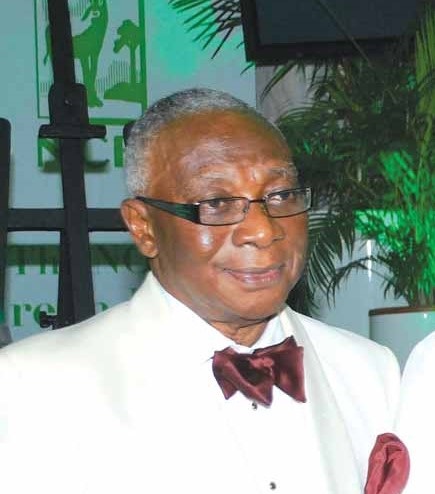
NCF President, Izoma Philip Asiodu
NCF President, Board of Trustees (BOT), Chief Philip Asiodu, made the call at the “2018 Walk for Nature”, an annual initiative aimed at raising environmental education in Nigeria organised by NCF and the Lagos State Government.
Asiodu lauded the 11th edition of the programme and called for continuity and sustainability of the event as well as enforcement of sanitation laws in Lagos to save the environment.
He said that sanitary inspectors in the past enforced sanitation laws which put people in check and curbed pollution because of adherence to the rules of hygiene.
“In colonial days, we had them as sanitary inspectors called `Wole Wole’ and they can enter your house anytime,” he said.
He said that pollution had become a major menace in most cities of the world, adding that Lagos had more than 18 million people which was more populous than other cities in Africa
Asiodu called for change in lifestyle, consumption pattern that favours recycling and promotion of the refusal of plastics, their reuse and up cycling to save the environment.
“We must continue to sensitise the public on the need to discourage single use of plastic.
“It is not bad if we return to the days where you are not allowed to eat and drink in public so that we can reduce plastic waste,” he said.
He said that millions of non-biodegradable materials were being disposed wrongly and going into the ocean, adding that it was a self-destructive looming disaster against the whole of humanity.
The BOT president said that the NCF had begun recycling programmes in 17 communities in Eti-Osa Local Government Area where residents earned money for their participation.
He advised the state government to attach incentives to waste recycling to encourage participation and also called for embracing of up-cycling which allows use of old materials to reduce plastic pollution.
Gov. Akinwunmi Ambode of Lagos State, represented by the Commissioner for The Environment, Mr Babatunde Durosinmi-Etti, said that pollution affected all aspects of human existence hence, the need to shift consumption pattern to environment-friendly methods.
“To achieve this, both the government and the citizenry must work together to enforce policies that will prevent people from embarking on human activities that will have negative impact on our environment and by implication our society.
“Our administration’s focus is on sustainable development, and we will not hesitate to review the state environmental policy where necessary to ensure a cleaner and healthier society.
“It is on this basis that we have premised the concerted efforts of the state government at aggressive greening and landscaping through the redevelopment of abandoned areas, roads, setbacks and verges in the state to provide scenic gardens and conservation parks for the benefit of the over 23 million citizens of Lagos State,’’ he said.
Ambode commended the efforts of the NCF at raising awareness annually and called on residents to refrain from dumping refuse in drains and other activities that had negative impact on the environment.
The Commissioner for The Environment, represented by the Permanent Secretary, Mr Abiodun Bamgbose, also commended the early inculcation of safe environmental practices in young school children through the annual event.
“It gladdens my heart that the seed of environmental sustainability is being planted in the young ones who are always part of this programme,’’ Durosinmi-Etti said.
The News Agency of Nigeria (NAN) reports that various sponsors of the event took turns to reel out their achievements in the fight to save the environment.
The programme began with a five-kilometre walk from the State House Marina Car Park at about 8 a.m.
The participants, which included various schools and organisations, walked through inner and outer Marina in various branded T-shirts bearing the theme of the event.
The event was supported by some corporate organisations, including Chevron Nigeria Ltd., Fidelity Bank Plc and Fan Milk Nigeria Plc, among others.
Relevant government agencies were present to provide support services, including the Lagos State Traffic Management Authority (LASTMA), Lagos State Ambulance Service (LASAMBUS), Lagos State Environmental Sanitation Corps (LAGESC) and the Police.
The theme for the 2018 Walk for Nature Rally was “Beat Pollution, Live a Sustainable Lifestyle’’.
The Governor of Lagos State, Mr Akinwunmi Ambode, has urged the citizenry to change their lifestyle in favour of nature conservation towards sustainable environment in the state.
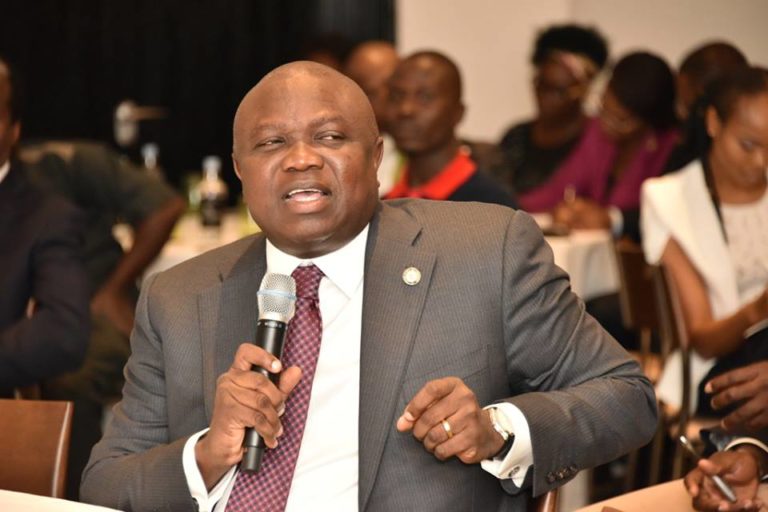
Governor Akinwunmi Ambode of Lagos State
Ambode gave the advice on Saturday, October 20, 2018 during the 2018 Annual Walk for Nature organised by the state in conjunction with the Nigerian Conservation Foundation (NCF) to advocate sustainable living and conservation of natural resources.
Represented by the Commissioner for Environment, Mr Babatunde Durosinmi-Etti, the governor said that it was imperative to combat the impacts of pollution on the nation’s ecosystem.
He said that it was important to combat pollution on biodiversity and human health by shifting to a more conscious approach to consumption and interaction with the environment.
“The theme of this year’s annual walk for nature, ‘Beat pollution, live a sustainable lifestyle’, is very appropriate in view of the ever increasing pollution levels in our society due to human activities,” he said.
Ambode urged the people to optimise the use of natural resources and exert minimal impact on the environment.
He said that both government and the citizenry must work together to enforce policies that would prevent people from embarking on activities that have negative impact on the environment.
The governor said that the concerted efforts of his administration at greening, landscaping and provision of scenic gardens and conservation parks were geared towards achieving sustainable development for the benefit of the over 23 million citizens of Lagos.
He said that the impact of pollution on the ecosystem could not be overemphasised as it affected the planet through the food we eat, the water we drink and the air we breathe.
He said that the annual Walk for Nature was a wakeup call to all residents of Lagos to rise in defense of the environment.
Ambode said that it was a call for collaboration towards addressing the unconscionable pollution of the environment by focusing on attitude that despoils the land.
“Nature has blessed us with the resources that we need to survive; it is up to us to optimise their usage and conserve them for posterity.
“This is so that we do not compromise the benefits of future generations,” he said.
The governor urged the people of Lagos to refrain from activities that could cause pollution and degradation of the environment.
He enjoined all to advocate the culture of re-use, recycle and clean production.
On his part, Durosinmi-Etti said that it was of immense benefit for all stakeholders to raise awareness on nature conservation.
Durosinmi-Etti was represented at the event by the Permanent Secretary in the Ministry of Environment, Mr Abiodun Bamgboye.
He said that stakeholders should raise awareness on sustainable living and most importantly, the preservation of the rich biodiversity of Lagos state through the Walk for Nature.
The commissioner said that the walk was an important campaign to propel the people towards positive behaviour to the environment.
The walk for nature is held annually to advocate sustainable environment.
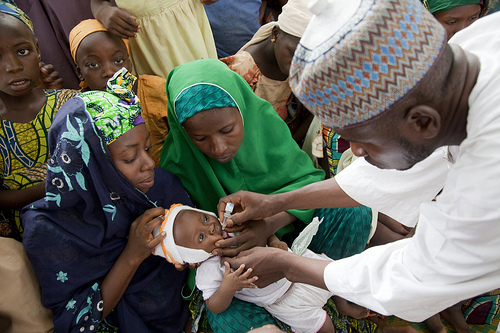
As the world prepares to mark the 2018 World Polio Day, Rotary International clubs have advocated for clean and hygienic environment to end transmission of the ailment.
Polio immunisation in Nigeria. Photo credit: comminit.com
Flagging off the World Polio Day programme on Saturday, October 29, 2918 in Abuja, the incident manager, National Emergency Operations Centre for Polio, Director National Primary Health Care Development Agency (NPHCDA), Dr Usman Adamu said the environmental component was key to eradicating polio in Nigeria.
He said though there was no reported case of polio in the past 25 months, there were evidences of polio viruses in the environment.
Dr Usman, who represented the executive director of NPHCDA, Dr Faisal Shuaib, said though the country was close to eradicating polio, all hands must be on deck to achieve a polio-free generation.
“In 2012, 100 cases of polio were reported across Nigeria; the last was seen in 2016.
“We have come a long way, 25 months without a case of wild polio type. We are close, but we are not there yet, we are still seeing polio viruses in the environment,” he said.
The vice chairman, Nigeria National Polioplus Committee, Dr Kazeem Mustapha, said it was not yet uhuru for the fight against polio in Nigeria.
Dr Kazeem said the advocacy was to ensure that the tempo was maintained by getting every child immunised against polio and other diseases.
He added that different campaign platforms were engaged by Rotary International to create awareness and increase sensitivity in individuals, organisations and encourage stakeholders not to be complacent.
The Managing Director, United Healthcare Ltd., Dr Kolawole Owaka, called on Nigerians to imbibe healthy lifestyles to ensure a healthy living.
He said healthy living should not stop with good food but exercises.
Owaka recommended that there should be gymnasium centres in all the local governments where people could go to and partake in aerobic exercise to remove waste products from the body.
He added that the united healthcare, which promotes good health, does not believe in curative but rather steps to prevent diseases and other ailments.
The World polio Day will be celebrated on Wednesday, October 24.
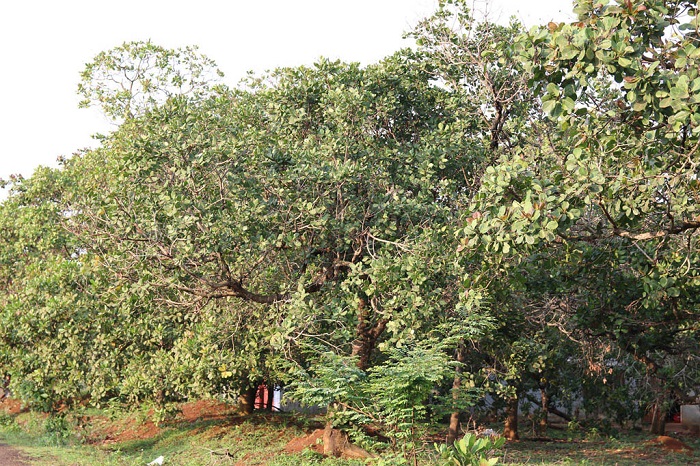
Cashew Desk Officer in the Enugu State Ministry of Agriculture, Mr Chijioke Egbo, has called for planting of cashew in the southeast to prevent and control soil erosion.
Cashew trees
Egbo,who gave the advice in Enugu, the state capital, in an interview with the News Agency of Nigeria (NAN) on Saturday, October 29, 2018, said cashew trees have the potential of saving the area from the current erosion menace if planted.
The desk officer explained that the extensive root system of the cashew tree enables it to spread to vast portions of land beyond the point where it is planted.
He said the root has the capacity to hold the soil firmly without being washed away by erosion, adding that the branches and leaves could also lower the density of rain on the soil.
“Cashew trees help in checking soil erosion due to their widespread branches and roots together with their leaves.
“Before cashew became an economic value crop and as one of one of the exporting commodities, the trees were planted for the purpose of a forestation, soil conservation which was used to check soil erosion,” he said.
Egbo, however, said that many people are not willing to plant cashew trees on their land due to the widespread of the roots.
He, however, called on cashew farmers in the state to embrace the planting of the trees as they would add to their economic values and as well prevent soil erosion in the area.
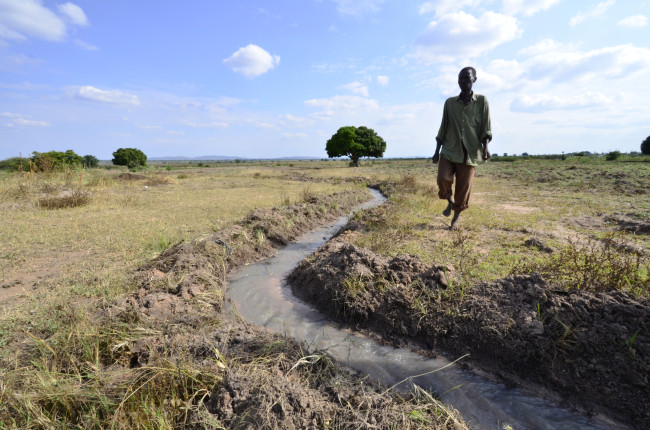
The Head of Training, National Water Resources Institute (NWRI) Kaduna, Dr Martin Eduvie, has cautioned farmers against the use of waste water for irrigation.
A man walks over an irrigation channel. Photo: Courtesy Neil Palmer/CIAT
He told News Agency of Nigeria (NAN) on Saturday, October 20, 2018 in Kaduna that some farmers rely on water from drains, lavatories, septic tanks or soakaway, among others, for irrigation, which are not ideal for agriculture.
He said that, in most cases, waste water from industries move into the river, and from there, farmers use the water directly, not knowing that most water from drains and industries contain chemicals that are not suitable for plants.
Eduvie advised consumers to be careful about the source of their vegetables, its smell, as well as how long vegetables last.
He, however, added that the issue of how long vegetables last might not be directly related to the type of water used in its irrigation until research is carried out.
He said farmers could source for cheaper methods of getting good water like the tube wells within the fadama zones, saying that there are lots of people ready to assist them to have tube wells that they could use both for agricultural purposes and for drinking.
He reiterated the readiness of the institute to train local farmers on how to acquire such water system.
He added: “NWRI offers free consultancy service in terms of drilling boreholes.
“We train farmers on the best sources of water for their plants, how to go about sourcing for the water, as well as educate them on the health hazards of using unsuitable water for irrigation on humans.”
Meanwhile, a NAN correspondent who went around farms in Rigasa, Igabi Local Government Area of Kaduna State found that most of the farmers use water from the gutter for irrigation.
Malam Musa Mohammed, a dry season farmer in Rigasa, said that 75 per cent of water used in his farm is from the gutter.
He explained that most farmers in the area believe that water from the gutters contain nutrients needed by plants to grow faster and thought it had no impact on humans.
Mohammed said majority of the local farmers preferred waste water for crops like tomatoes, lettuce, carrot, vegetables, okra, onion, cabbage, among other things cultivated during dry season.
Another farmer, Usman Aminu, also said waste water is considered low priced fertiliser because most of the farmers believe it contains nutrients.
He said that last year majority of wheat farmers recorded huge loss due to water scarcity across the northern states, saying “We depend on the waste water so that our crops will not die.”