Home Blog Page 1743

UK, IFC mobilise $2b to finance green construction

0

IFC, a member of the World Bank Group, and the government of the United Kingdom announced on Monday, December 10, 2018 a new partnership to help transform construction markets by crowding in as much as $2 billion in public and private sector financing for certified green buildings in emerging markets.

Green building
Green building

The UK-IFC Market Accelerator for Green Construction Programme will be the first UK-IFC partnership in blended concessional finance for climate change mitigation. The U.K. government’s contribution of £105 million will include £80 million for investments and £25 million for advisory services. The funds will be used to incentivise the development of green buildings through certification with IFC’s EDGE and other leading certification systems.

Globally, buildings generate 19 percent of energy-related greenhouse gas emissions and consume 40 percent of electricity. Every year, an additional 5.5 billion square meters of floor space is constructed, mainly in emerging markets where green construction makes up only a small fraction of new buildings. The global built environment is expected to double by 2050, and green construction can secure lower emissions for decades. By accelerating the construction of certified green buildings, the program aims to mobilise $2 billion in investments to help tackle climate change.

“Green buildings represent a powerful opportunity to address climate change in emerging markets,” said Hans Peter Lankes, IFC’s Vice President for Economics and Private Sector Development. “Investments in green buildings certified with EDGE and other standards could represent a $3.4 trillion opportunity over the next decade. Blended finance is a valuable tool to help create new markets for green construction by mobilizing private capital through financial intermediaries.”

“To date the UK has supported 47 million people across the globe cope with the effects of climate change and provided 17 million people with improved access to clean energy, helping to raise $100 billion a year by 2020 and sharing expertise to keep us secure too,” said Claire Perry, Minister of State for Energy and Clean Growth. “One year on from the launch of our modern Industrial Strategy, we are making the most of the economic opportunities that go hand-in-hand with tackling climate change. This exciting new programme will encourage greener construction practices in developing countries to improve energy efficiency and reduce emissions, creating opportunities for UK businesses to invest in new markets,” she concluded.

IFC plays a key role in advancing climate solutions led by the private sector. It has an ambitious commitment to ensure 35 percent of its investments are climate-related by 2030. Since 2005, IFC has invested $22.2 billion in long-term financing from its own account and mobilised another $15.7 billion from investors for climate-related projects. IFC green building commitments were $1.4 billion in fiscal year 2018. EDGE certification is available in 144 countries with more than four million square meters of floor space certified.

IFC’s Blended Finance practice helps unlock private sector capital by using concessional finance to mitigate risks, enabling private investors to undertake high-impact development projects that are on the cusp of commercial viability. In fiscal year 2018, IFC committed more than $218 million of concessional donor funds, catalysing $1.5 billion in private investment.
Flood-hit rice farmers unable to meet loan obligations

0

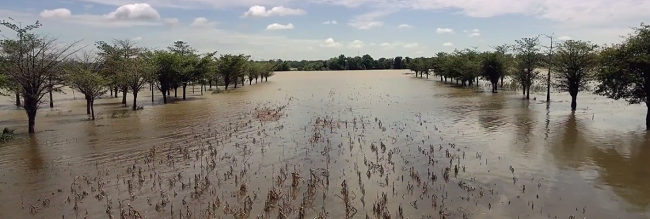
The Rice Farmers Association of Nigeria (RIFAN) has appealed to the Federal Government to grant farmers affected by recent flooding fresh loans to enable them to engage in dry season farming.

Flooded farmland
A flooded farmland. Photo credit: FAO

The National President of RIFAN, Alhaji Aminu Goroyo, told newsmen in Abuja on Monday, December 10, 2018 that this would also enable the farmers to service their loans.

Goroyo, who decried the plight of its members following the last massive flooding in the country, said that the huge losses resulting from the incident had compounded the difficulty of rice farmers in meeting their loan obligations to lenders.

According to him, no fewer than 360,000 farmers that got loans from the Central Bank of Nigeria through its Anchor Borrowers’ Programme are affected.

“Most of the affected farmers no longer have the capacity for loan repayment, having lost most of their crops to floods,” he said.

Goroyo thanked President Muhammadu Buhari; the Minister of Agriculture and Rural Development, Chief Audu Ogbeh; and the CBN governor, Mr Godwin Emefiele, who worked hardto ensure the success of the Anchor Borrowers’ Programme.

RIFAN’s appeal came days after Buhari assured that farmers affected by the massive rains this year would be compensated.

Buhari gave the assurance at an event to mark the Farmers Day 2018 in Yenagoa, Bayelsa State on Dec. 1, his Special Adviser on Media and Publicity, Mr Femi Adesina, said in a statement.

“I want to assure all flood-affected farmers and fishermen that you will be helped. This government is with you in your time of need.

“As I speak to you now, the modalities for this compensation programme are being finalised and very soon, we shall start implementation,” Adesina quoted him as saying.

In October 2018, Ogbeh also warned that the country might experience rice shortage as a result of the flooding in the states producing rice.

Speaking at a seed exhibition in Abuja, he stated that major rice producing states, including Jigawa, Kebbi, Anambra and Kogi, were badly affected.

The minister had said that government and other stakeholders must find a way to assist the victims to avert the looming scarcity of the staple.

By Philomina Attah

Scientists to test tailor-made vaccine tech to fight flu, Ebola, Rabies

0

A global coalition set up to fight disease epidemics is investing up to $8.4 million to develop a synthetic vaccine system that could be tailor-made to fight multiple pathogens such as flu, Ebola, Marburg and Rabies.

Ebola
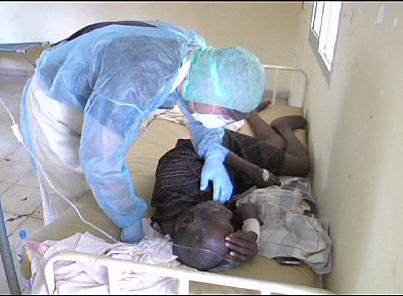
An Ebola patient receiving treatment

The deal, between the Coalition for Epidemic Preparedness Innovations (CEPI) and a team of scientists at Britain’s Imperial College London, is aimed at progressing a “vaccine platform” which uses synthetic self-amplifying RNA (saRNA).

A vaccine platform is a system that uses the same basic components as a backbone or framework and can be adapted to immunise against different diseases by inserting new genetic sequences from, for example, the flu or Marburg or rabies virus.

“It could be very transformative. It would change the way people view how to make vaccines,” said Robin Shattock, a specialist in Mucosal Infection and Immunity who leads the Imperial team developing the system, known as RapidVac.

He said there are several years of research and testing ahead but hopes the technology could one day lead to rapid production of “single shot” vaccines against an emerging epidemic, or of “cocktail” vaccines against several different infectious diseases.

The thinking behind the saRNA approach is to harness the body’s own cell machinery to make an antigen – in other words a foreign substance that induces an immune response – rather than injecting the antigen itself directly into the body.

“The other advantage is that it’s very rapid to manufacture because it’s a synthetic process,” Shattock said in a telephone interview.

Infectious disease epidemics such as Ebola outbreaks in Africa or Zika spreading from Brazil, are sporadic, unpredictable and fast-moving. Yet developing vaccines to combat them can currently take up to 10 years or more.

CEPI, which was set up at the start of 2017, aims to dramatically speed up the development of vaccines against new and unknown diseases – collectively known as Disease X.

“We cannot predict where or when Disease X will strike, but by developing these kinds of innovative vaccine technologies we can be ready for it,” said Richard Hatchett, CEPI’s chief executive and a specialist in medical countermeasures.

Under this agreement deal, Shattock’s team will work with German firm BioNTech RNA Pharmaceuticals and use the RapidVac platform to produce vaccines against a flu virus, the Rabies virus, and Marburg virus.

They aim to start safety trials in animal models in the lab early in 2019 and move to early stage clinical trials in humans within two years.

Impacts of human-induced climate change coming earlier than expected, say scientists

0

Many impacts of human-induced climate change, from drought and heat waves to Antarctic ice melting, are coming earlier than expected, scientists have said.

Yenagoa
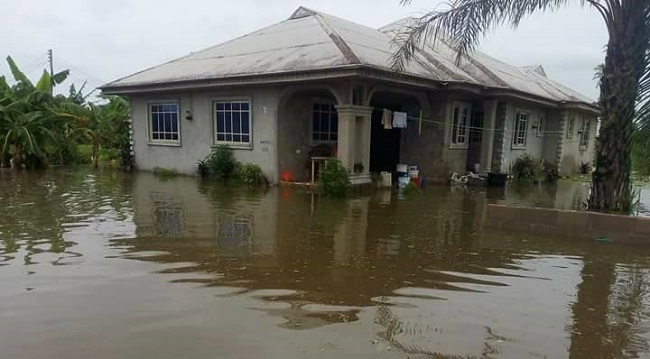
Flooding in Yenagoa, Bayelsa State

Extreme events, such as recent fires in North America and floods across Asia, can with increased certainty be linked to global warming. Halving global emissions over the next decade is technically achievable and would save the world billions of dollars, the experts said in a new statement to coincide with the UN annual climate talks in Katowice, Poland.

Their warning comes as global emissions are projected to rise for a second consecutive year to a new historical high after three stable years.

Professor Johan Rockström, Co-Chair of Future Earth and Chair of the Earth League, the organisations that produced the statement, says: “Emissions must peak by 2020. The world cannot allow climate catastrophe to unfold when all the solutions to solve this challenge are here in front of us.”

“Our analysis of the most recent research shows that a global transition to clean energy is affordable, achievable, and already underway,” says Future Earth Executive Director Amy Luers. “But to avoid catastrophe, we must ratchet up the pace and move beyond energy. The research shows clearly that we must cut emissions by half across all economic sectors in the next decade, to have a chance of avoiding the worst impacts of the climate crisis.”

The statement, titled “10 New Insights in Climate Science,” will be presented at the United Nations Framework Convention on Climate Change 24th Conference of the Parties, on Monday, December 10, 2018 and distributed to negotiators in Katowice. It is published by Future Earth and the Earth League, two major international organisations representing networks of global sustainability scientists, and summarises recent Earth-system science, policy, public health and economic research.

The 10 new Insights in Climate Science are summarised to include:

Extreme weather events are now clearly attributable to climate change

The frequency and intensity of extreme events, including flooding, heat waves, and drought conditions have been increasing. Until recently, it was difficult to clearly attribute these events to climate change. Now, more accurate observations and progress in modelling has made the link clear.

Growing climate impacts show risks of critical tipping points

Changes have been observed in major Earth systems – like a weakening of the Atlantic overturning circulation, mass mortality of the world’s coral reefs, and the tripling of ice loss from the West Antarctic ice sheet. These and other systems could reach points where they rapidly collapse, or a major, largely unstoppable transformation is initiated. The risks are growing.

Every half degree matters: Large difference in impacts between 1.5°C and 2°C degrees of warming

This year’s Intergovernmental Panel on Climate Change (IPCC) Special Report on 1.5oC has shown that the magnitude and risk of a range of climate change impacts increase significantly between 1.5°C and 2°C.

New understanding of the acceleration of sea level rise and its future

The rate of ice loss from Antarctica is increasing. It is now almost twice as high as projected by the latest IPCC assessment (2014). Limiting warming to 1.5°C instead of 2°C can avoid the inundation of lands currently home to about 5 million people.

Managing plants and soil: a prerequisite for meeting the Paris Agreement

Between 2007 and 2016, land use change was responsible for annual global emissions of, on average, 4.7 billion tons of CO2, which is around 12 percent of CO2 emissions. Natural climate solutions could potentially provide over one-third of the cost-effective climate mitigation needed between now and 2030 to stabilise warming to below 2°C.

Options to remove CO2 from the atmosphere are limited

Scenarios that have recently been assessed by the IPCC show that the world will need to draw down between 100 and 1000 billion tons of CO2 out of the air, so-called Carbon Dioxide Removal (CDR), during this century to achieve the 1.5oC target. But research shows that CDR at the upper end of this scale conflicts with other sustainable development goals.

Major socio-technical transformations needed to meet the 1.5°C target

Globally, approximately halving greenhouse gas emissions by 2030 is consistent with meeting the Paris Agreement goal to stay “well below 2°C.” This is technically feasible, but this scale of emissions reductions requires transformations of full socio-technical systems, across all sectors and scales. There is already considerable momentum in the energy sector that it could see major shifts towards very low emissions, with the right support. However, there is worryingly little progress in reducing emissions from buildings, transport, food systems and industry.

Stronger policy measures would reduce climate risks

Global fossil fuel subsidies remain massive. Phasing out these would reduce global carbon emissions and strengthen public budgets, but reforms should consider acceptance, effects on poverty, and possible adverse effects such as shifts from gas to coal. A portfolio of policies including standards, regulations, incentives, and carbon pricing would effectively support and accelerate a low-carbon transition.

Transformation of food systems needed for global health and reduced greenhouse gas emissions

Decarbonising and building resilience in the world food system is a prerequisite to succeed with the Paris Agreement. Dietary shifts away from unhealthy “Western diets” towards reduced meat and dairy consumption are a significant way to reduce greenhouse gas emissions and improve health.

Benefits for global health by addressing climate change

Climate change is increasing the numbers of injuries, illnesses, and deaths from, for example, extreme weather and climate events, infectious diseases, and undernutrition. Efforts to combat climate change would have significant co-benefits for health, chiefly, saving millions of lives through lower air pollution.

Research gives cities leeway to simultaneously tackle GHG emissions, air pollution

0

C40 research highlights actions that could yield an 87% reduction in GHG emissions, a 49% reduction in PM2.5 levels, 223,000 premature deaths averted and up to $583 billion in economic benefit 

Mauricio Rodas
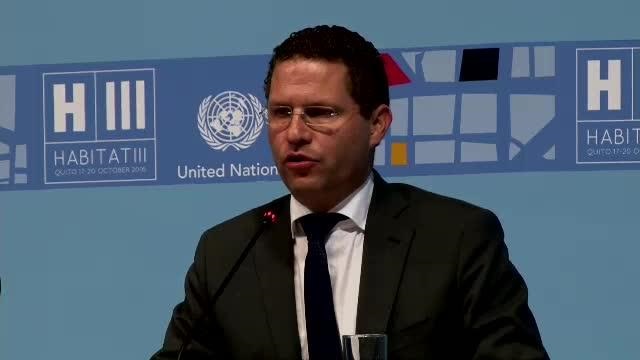
Mayor of Quito and Vice-Chair of C40, Mauricio Rodas.

C40 has released research findings that identify a set of priority actions that cities can take to tackle climate change and air pollution simultaneously, placing the transport, buildings and industry sectors at the top of the list.

The research shows that if C40’s 96-member cities take the ambitious actions outlined to achieve clean transport, buildings and industry, in combination with a decarbonised grid, the resulting benefits would include: an 87% reduction in Greenhouse Gas emissions, a 49% reduction in PM2.5 levels, 223,000 premature deaths averted and up to $583 billion in economic benefit.

The research is funded by a grant from Johnson & Johnson Services, Inc. and conducted by C40 in collaboration with BuroHappold and expert consultation from London School of Hygiene and Tropical Medicine (LSHTM) and Cambridge Environmental Research Consultants (CERC).

Cities are already taking decisive action to fight air pollution. Mexico City introduced a self-regulation scheme to reduce industrial emissions; Santiago, Chile is replacing domestic wood burning stoves with cleaner, high-efficiency stoves; Chennai, India is developing a roadmap for implementing electric buses. And many more cities have committed to clean transport, buildings and energy through declarations on fossil-fuel free Green & Healthy Streets, Net Zero Buildings, and 100% renewable energy.

The research presents specific actions that will yield significant benefits in both emissions reductions and air quality improvements:

In transport, priority actions include: Implementing ambitious walking, cycling and mass transit policy and action; prioritising transit-oriented development; introducing stringent emission standards; policies to support shift to zero tailpipe-emission vehicles; freight optimisation; and introducing zero emission areas.

In the buildings sector, priority actions include: Introducing stringent standards for new buildings; retrofitting the building envelope; improving heating, ventilation and air conditioning (HVAC) and water heating; and lighting, automation and controls.

In the industry sector, priority actions include: industrial operational improvements and energy efficient technologies; emissions capture; fugitive emissions control; and maintenance and monitoring.

Urban air pollution is widely regarded as a global health emergency: a recent WHO report estimates that, globally, 630 million children under five years old are exposed to unsafe air. This was also a major focus of the first-ever WHO Global Conference on Air Pollution and Health.

“Climate action is an opportunity to achieve sustainable development in our cities,” said Mayor of Quito and Vice-Chair of C40, Mauricio Rodas. “By supporting and implementing actions for a cleaner public transport like strengthening opacity regulations, creating a zero emissions zone at the historic center and migrating to a municipal electric bus fleet, we will improve air quality, public health and make our cities more livable.”

“This research quantifies and provides the business case for what mayors have long known to be true: taking bold climate action also improves public health,” said C40 Executive Director Mark Watts. “There is no longer any trade-off for cities between delivering policies that benefit the environment, drive economic growth and improve the health of citizens.”

“We are proud to partner with the C40 Cities Climate Leadership Group on this research which will help connect the dots between climate action, improved air quality, and measurably better health benefits in vulnerable urban communities,” said Paulette Frank, Worldwide VP of Environmental Health, Safety & Sustainability for Johnson & Johnson.

“Curbing climate change and air pollution are two of the biggest challenges of our time,” said Duncan Price, BuroHappold Director. “The evidence from this study shows the importance of taking ambitious action now to create resilient and healthier cities.”

The research is part of C40’s global effort to help cities make the case for climate action by establishing evidence that a climate-safe city is a healthy, prosperous and livable city. Through this work, C40 is highlighting how effective climate action can also deliver health, equity, and economic benefits, in addition to reducing emissions and climate risk.

C40 and Johnson & Johnson are said to have an active collaboration centred on key research which explores and measures the health benefits of climate and air quality action, working with 26 cities to date.

Countries act towards safer passage for migratory waterbirds

0

After five days of intense discussions, the 7th session of the Meeting of the Parties to the Agreement on the Conservation of African-Eurasian Migratory Waterbirds (AEWA) concluded in Durban, South Africa on Saturday, December 8, 2018 with parties agreeing on measures to tackle threats from climate change and to increase the protection of individual species and seabirds.

MOP7
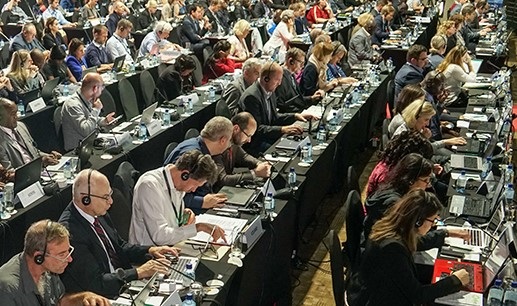
Delegates at plenary session during the second day of MOP7 in Durban, South Africa

The triennial Meeting of the Parties (MOP) is the Agreement’s principal decision-making body and among the main decisions taken in Durban were the adoption of the Strategic Plan and the Plan of Action for Africa for the period 2019-2027 as well as agreement on key species action plans focusing on some of the African-Eurasian flyway’s most charismatic and endangered waterbirds.

Jacques Trouvilliez, Executive Secretary of AEWA, said: “This MOP marks a milestone in the history of AEWA because we have adopted a new Strategic Plan and a Plan of Action for Africa for the next decade. Parties have done a tremendous job here in Durban to reach consensus on all subjects. With this mandate all countries will be able to work together to ensure a future for waterbirds across a flyway that stretches from the very tip of Africa, across the Middle East to the High Arctic.”

With reference to the plan for Africa, Barirega Akankwasah, AEWA National Focal Point for Uganda and Vice-President of AEWA MOP7, said: “The AEWA Plan of Action for Africa presents a renewed framework for responding to contemporary waterbird conservation issues in Africa. All AEWA contracting parties and partners should support its implementation. The Plan will undoubtedly improve the conservation status of waterbirds in Africa and across the Flyway.”

MOP7 was held under the theme: “Beyond 2020: shaping flyway conservation for the future” and delegates considered reports on the conservation status of the species listed under the Agreement and the effects of plastic on waterbirds as well as prioritising work on seabirds, thought to be among the most threatened groups of bird species in the world.

Parties adopted a number of International Single Species Action and Management Plans (ISSAPs and ISSMPs) while retiring those concerning the Light-bellied Brent Goose and Black-winged Pratincole and extending the duration of the plans for the Great Snipe, Ferruginous Duck, Lesser Flamingo, Eurasian Spoonbill, Black-tailed Godwit, Maccoa Duck, White-winged Flufftail, and Madagascar Pond Heron for a further ten years. The ISSAP for the Lesser White-fronted Goose was extended for another three years until MOP8. New ISSMPs for the Barnacle Goose and Greylag Goose were also adopted.

Among the other Resolutions adopted included one on AEWA’s contribution to the Aichi Targets and the Agreement’s relevance to the Sustainable Development Goals, strengthening the monitoring of migratory waterbirds, guidance on the implementation of the AEWA Action Plan, climate resilient flyways, financial and institutional arrangements.

“Among the many threats that waterbirds have to face are the effects of climate change as a key driver of species decline. We are working to make the flyway more resilient to climate change and of course we need everybody on board to fight against these effects not only on the habitats but on the birds themselves,” said Trouvilliez. “AEWA’s great strengths are its science-based decisions and the good cooperation between its member countries from northern Europe to southern Africa. The treaty also relies on the efforts of highly dedicated individuals, local and national bodies to achieve its goals.”

In recognition of these efforts, the AEWA Waterbird Conservation Award was established in 2005 to recognise individuals, as well as government and non-government organisations and enterprises which have made a significant contribution towards the long-term conservation and sustainable use of waterbirds in the African-Eurasian region.

Ohad Hatzofe, Avian Ecologist of the Israel Nature and Parks Authority, was declared the winner of the 2018 AEWA Conservation Award in the individual category, while the Egyptian Environmental Affairs Agency was successful in the institutional category.

The awards were presented at a special ceremony on the opening day of the meeting, where David Stroud MBE, Senior Ornithologist at the Joint Nature Conservation Committee, was also declared Honourary Patron of the Agreement having been part of the bedrock of AEWA since its inception and having contributed widely to its development and implementation.

Norway and the European Union were recognised as “Champions” of waterbird conservation, respectively for their support of the European Goose Management Programme and the AEWA African Initiative. Launched in 2014, the Migratory Species Champion Programme offers a portfolio of initiatives for donors willing to commit for three years or more to the implementation of a large programme targeting a species, a group of species or a cross-cutting issue.

MOP7 attracted a total of 289 participants, including delegates representing 56 of the 77 Parties, 10 Non-Parties and 42 observers from NGOs, IGOs and the press, making it one of the largest such meetings in the Agreement’s history, according to the organisers.

The next Meeting of the Parties will be held in Hungary in 2021.

Seabird conservation: Governments adopt measures to tackle plastic pollution

0

Plastic pollution is believed to pose serious health risks to wildlife, and a new report presented to governments at the 7th Session of the Meeting of the Parties (MOP7) to the African-Eurasian Migratory Waterbird Agreement (AEWA) that held from December 4 to 8 in Durban, South Africa, has shown how migratory waterbirds are affected. However, increasing public awareness and changing habits have the potential to turn the tide.

Birds - Plastic pollution
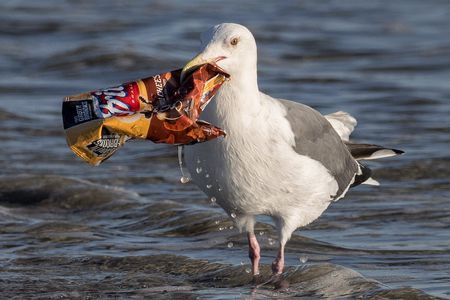
Plastic pollution is believed to pose serious health risks to seabirds

According to the report, of the 254 species covered by the AEWA, more than 40 per cent have been shown to interact with plastics: 22 per cent contain ingested plastic, 31 per cent were entangled in plastic debris, and 8 per cent use plastic items in their nests.

“The growing scourge of plastic pollution across our planet is affecting waterbirds in many ways. When ingested, it can lead to malnutrition and even starvation. Plastic floating in the oceans, along rivers or stranded along our shorelines and in wetlands can cause injuries, impede mobility and cause birds to drown,” said Jacques Trouvilliez, Executive Secretary of AEWA.

One way in which plastic affects waterbirds is through ingestion. Birds often mistake plastic for food but cannot digest it. Plastic items can become lodged in the digestive tract, either blocking the throat and causing choking, or accumulating and filling in the stomach which can lead to malnutrition and starvation. As an example of this, approximately half of all phalaropes, a small migratory shorebird species, have been found with plastic in their digestive systems. In many cases these birds live in remote locations far from humans, but the collection of plastics in the environment means that even they are susceptible.

Another way in which plastics pose a danger to waterbirds is through entanglement. Because plastic does not decompose, floating items such as fishing gear, long filaments and ring-shaped items threaten waterbirds with injuries, impeded mobility and drowning. The number of seabird species affected in this manner has tripled since the mid-1990s. Northern Gannets, an AEWA-listed seabird species, are particularly prone to entanglement with old fishing gear as they follow fishing vessels at sea.

Lastly, microplastics are an increasing contributor to the scourge of plastic pollution. These originate either from small plastics such as microbeads or from degradation of larger items. Microplastics are commonly ingested by prey species which are then consumed in turn by predatory birds.

The report “Waterbirds and Plastics”, which was the first of its kind presented to governments at AEWA MOP7 notes a geographical bias towards Europe and South Africa in studies concerned with waterbirds and plastic pollution.

“It is important that studies elsewhere in the African-Eurasian Flyway fill the knowledge gaps, so we better understand thefull impact of plastics on all waterbirds within the geographic range of AEWA. At the same time, we cannot wait for these studies to fill knowledge gaps but must act now to address the problem globally and collectively across all the world’s flyways,” said Jacques Trouvilliez, Executive Secretary of AEWA.

AEWA MOP7 has taken the actions recommended in the report and included them in a resolution on seabird conservation for Parties to consider for adoption at the final day of the meeting. This will hopefully generate action across much of the African-Eurasian flyway in addressing the issue of plastic pollution. The announcement was also made during plenary that the theme for World Migratory Bird Day 2019 will be “Protecting birds from plastic pollution”.

Andrew de Blocq, a penguinologist from the conservation NGO BirdLife South Africa who attended AEWA MOP7, said: “Plastic pollution is a growing threat to waterbirds and seabirds, and we as conservationists are extremely concerned about it. However, the silver lining is that people around the world are fast becoming aware of the consequences for wildlife, and we are seeing a culture change associated with a movement away from single-use plastic items and toward a more conscious, eco-friendly lifestyle.”

Appeal Court nullifies conviction of Shell MD, others

0

The Court of Appeal sitting in Port Harcourt has set aside the order of a High Court of Rivers State which sentenced the Managing Director of The Shell Petroleum Development Company of Nigeria Limited (SPDC), Osagie Okunbor, and two other senior officers of the company to three months in prison for contempt. The appellate court gave the ruling on Wednesday, November 5, 2018 following an appeal of the committal order filed by SPDC.

Osagie Okunbor
Mr. Osagie Okunbor, Managing Director, The Shell Petroleum Development Company of Nigeria (SPDC) and Country Chair of Shell Companies in Nigeria

The High Court had on October 9, 2018, ordered Osagie; SPDC Company Secretary, Nike Oyinlola; and the Managing Counsel for Litigation, Sub-Sahara Africa, Keibi Atemie, to be committed to prison for disobeying a 2008 judgement of the High Court to forfeit the land on which the Bonny Oil Export Terminal is built.

But SPDC, in a statement after the committal order, said the company had not disobeyed any court order and had appealed the conviction.

“We do not accept that SPDC has disobeyed any lawful order of court and have accordingly appealed this judgement. SPDC has utmost respect for the courts and the laws of Nigeria,” said the SPDC statement.

The Bonny Oil Terminal on Bonny island in Rivers State is said to be a critical national asset in which the Federal Government holds 55 percent interest. The terminal receives crude oil from international and local oil companies through the Trans Niger Pipeline and the Nembe Creek Trunk Line for export.

C40 supports nine cities to deliver transformational projects

0

Nine cities will receive specialist financial advice and bespoke support from leading global experts to develop sustainable infrastructure projects from great ideas and plans into fully financed reality.

Pretoria - Tshwane
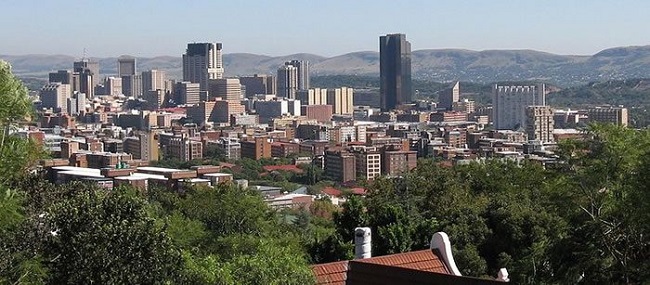
Pretoria, in the City of Tshwane

The Colombian cities of Bogotá, Bucaramanga, Cali, Montería, along with Tshwane, South Africa; Quito, Ecuador; Curitiba, Brazil; Quezon City, The Philippines; and Dar es Salaam, Tanzania, will receive support over the next two years from the C40 Cities Finance Facility. This support will allow the cities to prepare a financially sound business proposal for projects that they have identified as priorities to meet their ambitious visions of being world leaders in delivering sustainable and inclusive climate action.

The support, provided by a host of national and international experts, will enable each city to develop high-quality infrastructure projects which fit the needs of its citizens. The initiative will also ensure the cities retain the skills and structures to produce a pipeline of sustainable infrastructure projects throughout the city.

The C40 Cities Finance Facility selected nine cities following a rigorous and competitive process including a call for applications in early 2018, and a competitive process to select suitable projects. Support has been offered to cities in the sectors of transportation, energy and adaptation. The following cities have been offered support for their infrastructure projects:

  • Bogotá, Bucaramanga, Cali, Montería – The C40 Cities Finance Facility will help create Public Bikeshare Systems in four cities across Colombia. The project will make cycling more accessible and affordable, providing a healthy and safe mode of transport.
  • Tshwane – The C40 Cities Finance Facility will help create a 17km bicycle spine through the city and support the construction of a combined heat and power biogas plant at the Zeekoegat waste water treatment works.
  • Quito – The C40 Cities Finance Facility will help Quito electrify the Ecovía Bus Rapid Transit (BRT) corridor. The project will improve air quality and provide greener, healthier streets for the citizens of Quito.
  • Curitiba – The C40 Cities Finance Facility will help install solar panels on four bus terminals and the deactivated Caximba Landfill in Curitiba. The project will pave the way for scaling up of rooftop solar projects across all public buildings and bus stops in Curitiba.
  • Quezon City – The C40 Cities Finance Facility will help install solar panels on 50 schools to provide reliable and undisrupted power supply to support disaster risk management for Quezon City. The project will build resilience to managing climate change related extreme weather events while increasing clean, renewable energy generation in the city.
  • Dar es Salaam – The C40 Cities Finance Facility will help reduce the vulnerability of the Msimbazi floodplain to extreme climate related flooding. The project will create much needed employment and protect the city’s most vulnerable citizens from extreme weather events.

The announcement of support was made at the CFFactory – an international conference on cities, climate change, and finance – in Berlin. The conference brought together cities, urban practitioners, national governments, NGOs and financial institutions to explore solutions to financing challenges for cities; across developing and emerging economies. The CFFactory wass co-hosted by the C40 Cities Finance Facility and Senate of Berlin, and held from November 28 to 30, 2018 at the Berlin City Hall.

“The mayors of the world’s great cities know what needs to be done to create the healthy, prosperous and sustainable cities of the future. Investors and global financial institutions need to step up and match the bold ambition being displayed by mayors,” said Anne Hidalgo, Mayor of Paris and Chair of C40. “I’m delighted that, with support from the C40 Cities Finance Facility, these nine cities will deliver the transformation that citizens are demanding for their communities.”

“The scientific evidence is now absolutely clear that we need urgent and radical transformations in our cities to prevent climate breakdown,” said Mark Watts, C40 Executive Director. “The C40 Cities Finance Facility is so valuable because it helps unlock the finance needed to make great ideas on paper, a reality on city streets. The challenge now is to increase the speed and scale that these sustainable infrastructure projects are built, including in cities beyond the C40 network. That’s why we’re thrilled that three non-C40 cities in Colombia are included in the list of cities benefiting from CFF support today.”

“The CFF underscores the importance of development partnerships for an effective and truly transformative international cooperation,” said Andreas Proksch, Director General, GIZ Sector and Global Programmes Department GIZ. “With an integrated and demand-driven approach we are enabling cities to access infrastructure finance and combat climate change, one of the defining challenges of our generation.”

COP24: Civil Society representatives denied entry to Poland

0

Civil society organisations have alleged that Polish authorities denied entry and/or deported at least 14 of their colleagues due to attend the United Nations climate talks in Poland.

COP24 opening
The COP24 opened on Sunday, December 2, 2018

The alleged deportations follow the enactment of national legislation earlier this year passed by the Polish Government in relation to the 24th Session of the Conference of the Parties to the United Nations Framework Convention on Climate Change (UNFCCC COP24) currently underway in the southern city of Katowice, from December 2 to 14, 2018. Several United Nations human rights experts have publicly questioned the compatibility of the law with international human rights standards.

“The fact that these are not isolated instances are extremely worrying and we view the actions by the Polish border authorities in an extremely serious light,” said Dr. Stephan Singer, Interim Executive Focal Point at Climate Action Network (CAN). CAN is a network comprising over 1,300 organisations working in over 120 countries. Under its network, CAN reportedly convenes the largest share of environmental non-governmental organisations under the UN climate convention.

“The full and effective participation by civil society is entrenched in the Convention and, in fact, is imperative in our efforts to urgently transition to a new climate regime.”

Several civil society organisations have registered strong objection to the incidents that occured since the beginning of the UN conference.

“We strongly condemn the denial of entry and deportation of colleagues who have not been allowed into Poland in order to take part in COP24. From what we understand the reasons for refusing entry are due to allegations that they are a ‘threat to national security.’ These staff members and volunteers are individuals committed to tackling the climate crisis the world faces through campaigning for sustainable solutions,” said May Boeve, Executive Director of 350.org.

“It is the belief of all of us at 350.org, and our partners, that the biggest threat that we face to our international and national security is that of not tackling the climate crisis and taking the urgent and necessary action to leave fossil fuels in the ground now.  This is underscored in the recent IPCC Special Report on 1.5C Global Warming.

The voices of those denied entry to COP24 are essential to the unfolding climate talks and it is unacceptable that their presence at the climate talks should be impeded in this way. Ongoing restrictions on civil society will not stop a resilient climate movement.”

Greenpeace Poland Office Director, Bohdan Pękacki, said: “As host of the most important climate summit since Paris, Poland has the eyes of the world on it and the question is, what sort of host does Poland want to be? Will it embrace the demands of people demanding action and allow their voices to be heard or silence them through denied entry?”

Friends of the Earth Germany’s Ann-Kathrin Schneider said: “We are working together with civil society groups from all over the world in Katowice to hold our leaders accountable and demand a response to the climate crisis. We are extremely worried about the decision of Polish authorities to deny individuals from our partner group entry into the country. We demand that everybody who wants to come to the climate conference is allowed into the country to enact their right to participate in peaceful civil society actions for the climate.”

Iryna Stavchuk, Executive Director of the Centre for Environmental Initiatives “Ecoaction” (Ukraine), said: “Participation of representatives of civil society organisations in climate negotiations is crucial, as they act as important leverage in decision-making. All this is to make sure that achievement of Paris Agreement goal to keep global warming at 1,5 – 2 °С level becomes a reality. We find the actions of Polish authorities denying entry of peaceful activists unacceptable.”

Wendel Trio, Director Climate Action Network Europe, said: “It is appalling and a disgrace that one of our collaborators who successfully co-organised a March of 65.000 people in Brussels last week has been denied entry into Poland. People are demanding climate action from our governments and should be supported for doing so. The Polish government is afraid to see the reality that also they need to act.”