Home Blog Page 1744

COP24: Negotiators expected to hash out key technical elements on rulebook

0

Delegates at the ongoing UN climate change summit (COP24) in Katowice, Poland unpacked the various elements of the rulebook that are currently being negotiated to give an overview of the state of progress, or lack thereof, that must be resolved before ministers arrive next week to take on more political issues.

Katowice
The UNFCCC COP24 holds in Katowice, Poland

A focus was given to several technicalities including: the level of flexibility given to developing countries, the scope of the rulebook, and reaching consensus on climate finance.

Yamide Dagnet, Senior Associate, World Resources Institute, called on ministers to provide signals on ambition, which would result in a COP decision with commitments to enhanced NDCs by 2020.  She noted that we need to make sure that the Paris rulebook does not backslide and is compatible with the ambition we need to see for a 1.5C pathway.

Dagnet said: “We call to the leaders and to the negotiators not to stay in the negotiator bubbles. We need to salvage the multilateral regime, but also connect with the real world. Therefore, we need both a strong rulebook and strong signals for ambition.”

Common Timeframes are the heartbeat of the Paris regime and refer to the duration of future NDCs. Through properly defined time frames, the ambition of different countries can more accurately be compared. A prevailing risk, according to observers, is that the existing guidelines allow for low ambition to be locked in for long periods of time. They feel that the negotiations have, so far, failed to make significant progress towards the implementation of recurring five-year periods.

“Instead of reaching a conclusive and substantive decision that would launch five-year NDCs in the future, we are only going to reach a procedural decision,” said Li Shuo, Senior Climate & Energy Policy Officer, Greenpeace East Asia Office.

The slow-moving negotiations may indicate fears that this addition to the rulebook would allow for increased accountability of commitments, Shuo added.

Sven Harmeling, Global Policy Lead on Climate Change and Resilience, CARE International, recognised the importance of further developments on the Warsaw International Mechanism for Loss and Damage because, according to him, its acknowledgement and implementation would provide a foundation for which vulnerable countries could build upon to address climate change impacts.

“Loss and damage caused by climate disruption threatens the livelihoods of millions of people, particularly in developing countries. Loss and damage was highlighted in the Paris Agreement and developing countries are asked to integrate measures to avert and address loss and damage in their own national planning. Thus, it is essential to anchor the issue in Paris Rulebook here at COP24.

We do not yet have all the answers on how to address loss and damage and how to finance the needs of poor countries, but we must start acting now. Developed countries who are committed to the Paris Agreement, like the EU, New Zealand and Canada, must work proactively with vulnerable, developing countries to jointly push for a strong rulebook, rather than hide behind the inaction of the USA,” said Harmeling.

As the week’s negotiations come to an end, key developments on finance in the rulebook appear to unfold. The recently released biennial assessment gives a signal that climate finance is being mobilised, noted Harmeling, adding that the assessment outlines the current opportunity to enhance and ensure balance between mitigation and adaptation support.

“We need to leave Katowice with a clear and strong understanding that developed countries are committing to scale up! . . . Next week we should set high expectations in relation to the Green Climate Fund replenishment. Germany has committed to double their commitments and others must do it,” said Eddy Perez, International Policy Analyst, CAN Canada.

He emphasised that a process must be agreed to adopt post-2025 finance goals. Better clarity and predictability on finance can unlock ambition and instil trust among countries, he added.
Activist slammed for exploiting African farmers’ images to promote GMOs

0

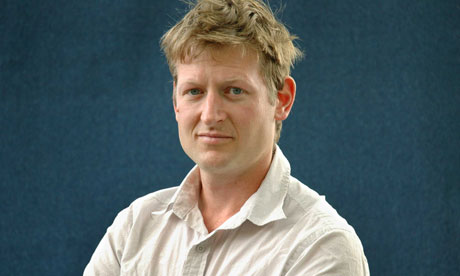
British pro-GMO activist, Mark Lynas, appears to have angered African farmers over what looks like a misuse of their images on the internet to promote his agenda. The farmers have demanded that Lynas remove their images and names from all online platforms.

Mark Lynas
Mark Lynas

These developments are documented in a new report by Dr Eugenio Tisselli, an IT specialist, and his co-author, biosafety scientist and agroecologist, Dr Angelika Hilbeck of ETH Zurich, Switzerland. Since 2011, Drs Tisselli and Hilbeck have coordinated a project, “Sauti ya wakulima” (“The voice of the farmers”), aimed at supporting Tanzanian farmers create a collaborative network of shared knowledge.

Drs Tisselli and Hilbeck felt compelled to speak out when they discovered that some Tanzanian farmers, whom they know personally, were used in Lynas’s public relations campaign to promote GM crops in Tanzania. Drs Tisselli and Hilbeck emphasised that the farmers know nothing of the GMO “debate” or Lynas’s role in it. They are only concerned that their voices were used without their knowledge or consent in a context they do not understand and do not want to be a part of.

Lynas is a Visiting Fellow at Cornell’s Office of International Programmes at the College of Agriculture and Life Sciences, where he promotes GM crops. Lynas describes his role at Cornell as “advising on Cornell’s vital work on public sector biotechnology in developing countries to support environmental and food security improvements via the Cornell Alliance for Science”. The Alliance promotes GM crops in the developing world.

Lynas used images of the Tanzanian farmers and their crops on his Twitter thread to put forward his views on how “anti-GMO activism and politics” block the advancement of agricultural biotechnology, which, according to him, will prevent local staple crops from being devastated by drought, disease, and pests.

In the posted series of images is one depicting a pair of hands holding three stunted maize cobs, with the following caption: “We really need the President [of Tanzania] to allow farmers to grow improved crops with drought tolerance and pest resistance. This is what it looks like when they grow the old varieties with no resilience.”

Drs Tisselli and Hilbeck write in their report: “This image and caption are grossly misleading, since they imply that this is the general appearance and outcome of the farmer’s traditional open-pollinated maize varieties. They also imply that these crops would lack the resilience of other ‘improved’ ones – presumably Mr Lynas’s favoured GM hybrid varieties.”

The image is followed immediately by another, depicting a group of four children with sad faces and torn, dirty clothes, with Lynas’s caption: “Is that (the three maize cobs from the image above) enough to feed this hungry family [the four children)? All the European-funded NGOs say, ‘Yes, these farmers should stick with farmer-saved seeds and traditional varieties.’ So these children must stay hungry thanks to their ideology.”

A few tweets below, a third image is posted of a woman with Lynas’s caption: “I am sick of having to explain to farmers here (in Tanzania) why they must continue to suffer this global injustice. It is past time for progressives everywhere to speak up. Science is for everyone, not just the world’s rich.”

Drs Tisselli and Hilbeck happened to know the woman in the third image, a farmer whom they call Mrs R. They describe her as “an innovative and progressive farmer” who enjoys a “good quality and quantity of food production” using locally-adapted varieties that are also non-GMO. In reality, they say, her life is “the opposite of what Mr Lynas’s Twitter thread misleads the reader to believe”. Far from the implication of the image posted by Lynas of starving children, Mrs R’s farm has been profitable enough to enable her to put her children through school and all now lead independent lives.

Drs Tisselli and Hilbeck report that Mrs R. did not give permission for the use of her image in this context and that she “is shocked that she was implicated in a context that, by association, could imply that she is needy, starving, and leading a life of deprivation”. They add, “Mrs R. demands that her image is deleted from all social media and internet platforms immediately.”

Drs Tisselli and Hilbeck found that Lynas’s employer, the Cornell Alliance for Science, repeatedly used the image of the stunted maize cobs in publicity materials promoting the Gates-funded WEMA (Water Efficient Maize for Africa) project and a Monsanto GM maize event, (MON 87460). Monsanto claims that MON 87460 is drought-tolerant and insect-resistant but in November 2018 South African regulators rejected it for cultivation on the grounds that there is no evidence that it actually increases yield under water-limited conditions – or that it effectively resists pests.

Carbon emissions level from buildings skyrockets – UN

0

Heat-trapping emissions from buildings and construction appear to have peaked at a global level, the United Nations said on Friday, December 7, 2018.

Nick Nuttall
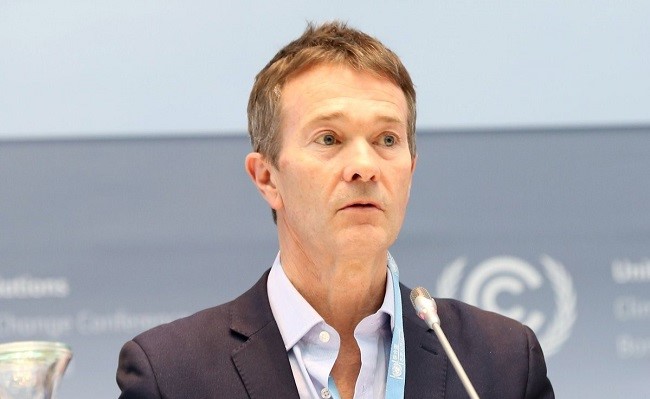
Nick Nuttall, UN Environment spokesperson

This is a trend that could encourage countries to take up the issue more aggressively as a way of curbing climate change.

Greenhouse gas emissions have been attributed to buildings levelled off over 2015-2017.

However, they still represent about a third of the global emissions that cause climate change, a report by UN Environment and its partners said.

The finding is a rare bright spot amid a spate of warnings that not enough is being done to stop the planet heating up.

Global carbon emissions are set to rise nearly three per cent this year due to continued fossil fuel use, scientists said this week.

The statement dashes hope that an increase in 2017 was temporary after two years of slowdown.

The UN Environment report called for more pledges to make building construction greener, in national climate action plans submitted for the 2015 Paris Agreement to curb climate change.

“It’s a very complex field, but one that’s absolutely critical,” Nick Nuttall, a UN Environment spokesman told reporters on the sidelines of U.N. climate talks in Poland.

Delegates from more than 190 nations’ party to the Paris Agreement are gathered in the Polish city of Katowice to meet an end-of-year deadline to agree rules on how to enforce the pact.

The “rule book”, as it is known, is expected to include details about how countries will report and monitor curbs on greenhouse gas emissions and strengthen their national plans.

A positive outcome at the negotiations could encourage governments to double down on promises to cut emissions from the construction industry, said Nuttall.

“That might increase the enthusiasm of nations to revise their (action plans),” he said.

“If they’re revised upwards to include the building and construction sector, then what happens here will have a very strong impact on the sector being able to move forward faster.”

To encourage energy-efficient buildings, the national plans could push for better insulation and windows by aspiring to revamp building codes and set up energy certification schemes.

They could also plan to lower emissions from common building materials like cement and steel whose manufacturing generates large amounts of carbon, the report said.

Even if such rules require consumers to open their wallets to retrofit a home, for example.

It is unlikely to cause the kind of public anger seen recently in France over fuel taxes, said Jennifer Layke, global director for energy with the Washington-based World Resources Institute.

Higher fuel taxes proposed by French President Emmanuel Macron to fight climate change have stoked violent protests in the European nation, forcing the government to shelve the plan this week.

“If you told everyone they had to spend 1,000 dollars next month to renovate their home, you would see a backlash,” said Layke.

But most countries had “proven strategies” to help consumers shoulder the costs, such as financing or rebates, she said.

In June, the European Union gave its member states 20 months to put into law a goal to dramatically increase the energy efficiency of buildings by 2050.

Cocoa companies fail on pledge to stop Africa deforestation, says report

0

Major chocolate companies have failed to keep a promise they made a year ago to stop forests in West Africa being destroyed for cocoa production, a campaign group said on Friday, December 7, 2018.

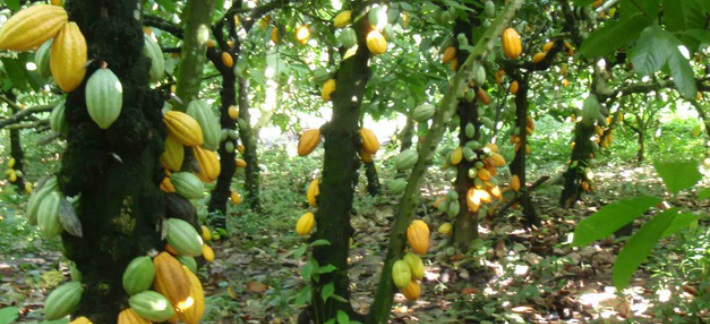
cocoa plantation
A cocoa plantation. Photo credit: thebreakingtimes.com

Companies from Mars to Hershey to Barry Callebaut joined the governments of Cote d’Ivoire and Ghana to launch the Cocoa and Forests Initiative last year, pledging to eliminate the production and sourcing of cocoa from protected forests.

But satellite images of Cote d’Ivoire’s southwest cocoa-growing region showed about the same amount of forest had been lost in the 12 months.

They were lost since the pledge was made as in the previous year, campaign group Mighty Earth said in a report.

“I would have expected to see some deforestation continue because it’s very hard to transform an entire industry overnight.

“However, I did not expect to see it continue exactly the same as before,’’ said the report’s author, Etelle Higonet.

If deforestation continues unabated, Ivory Coast – the world’s top cocoa producer – risks losing all its forest cover by 2034, environmental campaigners say.

But stopping it is a challenge since the cocoa grown on that land provides livelihoods for hundreds of thousands of farmers and their families.

The land is scarce, so poor farmers often expand into forests or parks to raise their incomes, experts say.

Mighty Earth recorded 13,748 hectares of deforestation – equivalent to 15,000 football fields – in Ivory Coast’s southwest region between Nov. 2017 and Sept. 2018.

This put it on track to reach about the same figure as last year – 14,827 ha – by November, Higgonet said.

The group was not able to obtain data as precise from Ghana, but observed a similar lack of change there, she added.

The World Cocoa Foundation (WCF), the industry group behind the Cocoa and Forests Initiative, said recent reports show there has been a progress in national parks and classified forests.

“Our immediate priority has been to stop deforestation in the most ecologically important and environmentally sensitive areas.

“’We are encouraged to see positive results in less than one year,’’ said WCF president, Richard Scobey.

Most of the recent deforestation hotspots are in rural areas outside protected forests, which is legal but still environmentally damaging, he told the Media.

Mighty Earth also accused companies of not upholding their pledge to stop buying cocoa from national parks.

Cote d’Ivoire has estimated 40 per cent of its cocoa comes from protected areas.

“I feel like people are taking me for a fool because if you do the math … somebody’s buying it,’’ said Higgonet.

Zambia’s regulator under attack for allowing importation of GMO foods

0

Consumer groups in Zambia on Friday, December 7, 2018 took a swipe at a state-run institution that regulates Genetically Modified Organisms (GMOs) for allowing the importation of GMO foods.

GMOs
GMOs

Genetically modified foods, also known as genetically engineered foods, or bioengineered foods are foods produced from organisms that have had changes introduced into their DNA, using the methods of genetic engineering.

On Thursday, December 6, the National Biosafety Authority (NBA) granted three conditional distributing new permits to import products that may contain GMOs.

The regulator said the decision was arrived at after risk assessment was conducted by an advisory committee which later recommended to the board after finding that various products were found to be safe for human and the environment.

However, the Zambia Consumer Association (ZACA) and the Africa Consumer Union (ACU) said it was unfortunate that the regulator has decided to allow for the importation of GMOs foods despite well-known position that the safety of GMOs was still a matter of contention and controversy in many parts of the world.

“We condemn this unwise move which ignores the wishes of the Zambian people to maintain a GMO-free country.

“NBA appears to undertake unilateral decisions in the interest of global food giants not the Zambian people,’’ the organisations said in a joint statement.

The two organisations have since demanded that the permits granted should be cancelled and that the board of the regulator should be dissolved because it was allegedly peddling selfish interests.

On Thursday, a farmers’ body revealed that there was a ploy by some organisations to legitimise GMOs in the country.

The Zambia National Farmers Union (ZNFU), an umbrella body of both commercial and small-scale farmers, said it was aware of maneuvers by some organisations that were trying to propagate the importation of GMOs into the country.

However, the regulator said the law allows for importation of GMOs under strict supervision and verification.

Meanwhile, a total of 24 applications for placing products of GMOs on the Zambian market have been authorised through issuance of permits.

Nigeria to adopt biotechnology in cowpea production

0

Country Coordinator of the Open Forum on Agricultural Biotechnology in Africa (OFAB), Mrs Rose Gidado, says Nigeria is ready to adopt bio-technology (BT) in boosting production of cowpea.

Cowpea
Cowpea

Gidado made this known in an interview with News Agency of Nigeria (NAN) in Abuja on Friday, December 7, 2018.

Bio-technology is a term adopted by an international convention to refer to techniques for the manipulation of genetic materials and the fusion of cells beyond normal breeding barriers.

According to Gidado, scientists developed the intervention called BT cowpea to help farmers due to huge percentage loss of yield to insects.

She explained that BT cowpea, which was developed via modern biotechnology, would tackle the insect called Maruca that destroyed cowpea yield.

She said: “The maruca pod borer feeds on every part of the cowpea plant, this occurs every season which results in yield losses through premature dropping of flowers.”

She noted that the BT cowpea, which built its own potential against the insect called maruca lava, was, however, not dangerous to humans.

She noted that “work on BT cowpea has been completed and confining trials have been carried out. Due process was followed for the past nine years.

“Data has been generated, multi-location trials and farm trials by some selected farmers have also been observed.

“Farm trials means some farmers were given the crops. They actually planted the BT beans along their own local varieties for two years and recorded huge difference.

“The gene in the BT cowpea is for insect resistant. Once you plant beans and it gets to the stage of flowering, the maruca at its lava stage feed on the flowers and seed formation, causing great loss to farmers.

“The farmers suffer loss, they lose up to 80 per cent of their yield,” she said.

On the BT Cotton recently launched by the Minister of Science and Technology, Dr Ogbonaya Onu, she said farmers would soon experience high yield of cotton through enhanced protection from insects/pests and diseases.

Gidado said that the BT cotton, which matured earlier than the conventional one, had increased intolerance to heat, drought, environmental stress, and significant reduction in the use of pesticides.

“The benefits of BT cotton to consumer include extra income for the family, healthier oil, increased protein and good textile materials.

“BT cotton helps to reduce agriculture’s negative impact on land, conserves soil and energy, reduces greenhouse gases, thereby mitigating the effects of global warming, minimises use of toxic herbicides and conserves soil fertility and natural resources.”

OFAB is an informative platform which brings together stakeholders in the field of biotechnology and the public as a whole to facilitate interactions.

The organisation also promotes the sharing and exchange of knowledge, experiences, contacts and explores news avenues to bring the benefits of biotechnology to agricultural sector.

OFAB is an initiative of the African Agricultural Technology Foundation (AATF), Nairobi.

In Nigeria, the National Biotechnology Development Agency (NABDA) is the host organisation of OFAB, while the Agricultural Research Council of Nigeria (ARCN) is the co-host.

By Gabriel Agbeja

Chinese scientists develop bioactive material for skin regeneration

0

Chinese scientists have designed a new biodegradable and bioactive material that can enhance wound-healing and skin regeneration.

Skin regeneration
Skin regeneration

It is difficult for skin wounds to completely heal in cases of large-area burns, severe microbial infections and diabetes.

Chronic wounds greatly increase the pain and medical costs of patients. There is, therefore, a great need for biomedical materials that can facilitate wound-healing and efficient anti-infection capacities.

Researchers with Xi’an Jiaotong University in northwest China’s Shaanxi Province have designed a kind of biomimetic antibacterial material that can facilitate skin regeneration.

It has skin-like elasticity and good biocompatibility and can help prevent multidrug-resistant bacterial infection.

In experiments conducted on mice, the material enhanced the wound-healing and regeneration of skin appendages such as hair follicles, and finally lead to skin tissue regeneration.

The designed biomaterial could become a competitive multifunctional dressing for bacteria-infected wound-healing and skin regeneration.

The research provides a new strategy for the design of biomedical materials for regenerative medicines.

The study was published in the journal ACS Nano.

Nigeria lauds international support on Boko Haram, Lake Chad

0

Nigeria has lauded the international support to the country and neighbouring countries in addressing the challenges caused by the Boko Haram terrorists and the shrinking of the Lake Chad.

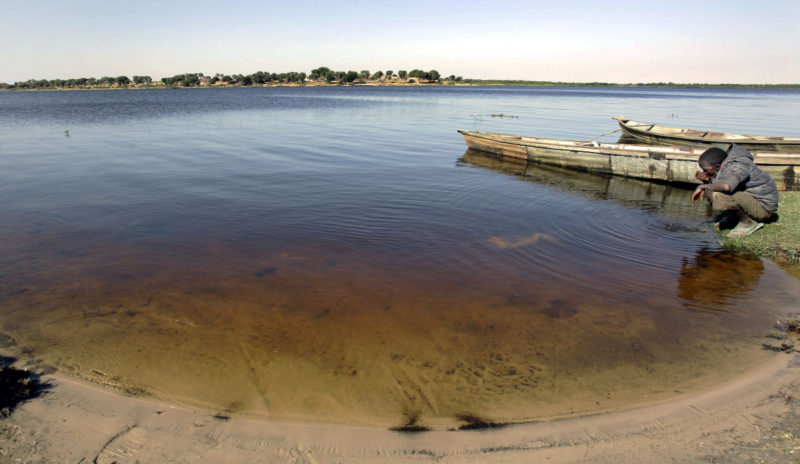
Lake Chad
Scientists say the Lake Chad, that borders Nigeria and some other countries, has shrunken by 95 percent over the past 50 years. They have also linked the Boko Haram insurgency to the lake’s situation. Photo credit: AP/Christophe Ena

Nigeria’s Ambassador and Permanent Representative to the UN, Prof. Tijjani Bande, stated this in New York at the Security Council Open Debate on the Role of States, Regional Arrangements and the United Nations in the Prevention and Resolution of Conflict.

Bande said: “As we all know, the Lake Chad region has been facing its worst crisis ever, primarily because of the impact of climate change.

“However, the ability of the Lake Chad basin countries to obtain international support and attention is paying off.

“An array of countries – Norway, Germany, UK, U. S., China, Canada and others – have joined the UN to provide financial and technical support to the on-going efforts to not only conquer Boko Haram, but also work at the same time across the whole pillars, as the only way forward.

“Indeed, so successful has this been, since the visit by the Security Council in March 2017, and the various pledging conferences – Abuja, Oslo and Berlin – that we are even talking of recharging of the basin, to restore and or stabilise the livelihood of some 45 million people affected by this unfortunate situation.

“Through it all, ECOWAS, AU and the UN have been working very well together to galvanise support, towards the same end”.

Bande pledged Nigeria’s resolve to continue to support efforts at maintaining peace and security in all regions of the world.

According to him, more than ever, there is the need to strengthen collaboration between the UN and the various regional and sub-regional organisations around the world.

The need to ensure that effective and mutually reinforcing mechanisms (both regional and global) that are flexible and responsive enough to ensure peaceful coexistence among communities are prioritised, he said, were critical.

Bande said it was imperative to ensure that a means of financing regional bodies-led peace support operations that were authorised by the Security Council would be predictably and sustainably worked out.

“We owe this to the millions that suffer and are waiting for our help.

“In this regard, I wish to commend the Secretary-General on the current AU-UN partnership on peacekeeping, as this is a right step in the right direction,” he said.

The envoy said in the effort to prevent and resolve conflicts, there is the need to also take due cognisance of the structural challenges to peace and security.

These challenges, like climate change, mismanagement of natural resources, cross border and international crime, are at the root of some of the worst conflicts of our time, he said.

The Nigerian envoy added that the challenges are best tackled through a broad collaboration among States, sub-regional and regional organisations and the UN.

According to the UN, nine years into the conflict, the humanitarian emergency in the Lake Chad region is among the most severe in the world.

The world body says while the crisis is unfolding in a region already affected by severe underdevelopment, poverty and climate change.

The impact on the lives of around 17 million people is devastating, with women, youth and children bearing the brunt.

In 2018, more than 10 million people require humanitarian assistance and protection.

The humanitarian response was expanded significantly in 2017, reaching over six million people with life-saving assistance and protection, and effectively averting a famine.

But needs in the affected regions remain acute and will persist at large scale into 2019 and beyond. Humanitarian organisations are requesting 1.6 billion dollars for 2018.

Support from the international community to national efforts will be essential in the coming months to ease hunger, provide water, shelter, hygiene, healthcare, protection and education, and help communities rebuild their lives and livelihoods.

The UN also said without continued assistance, hard hit communities risk sliding back into distress.

By Prudence Arobani

Environment minister emerges new Emir of Nasarawa

0

Minister of State for Environment, Alhaji Ibrahim Usman Jibril, has been selected as the 13th Emir of Nasarawa emirate in Nasarawa State.

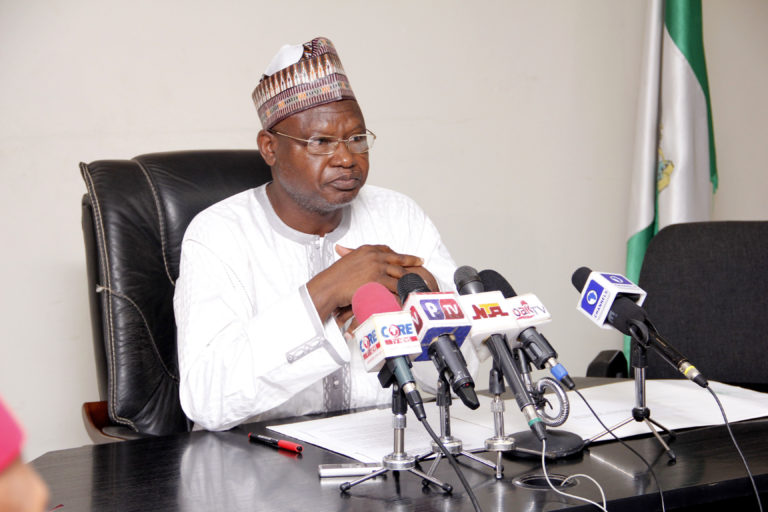
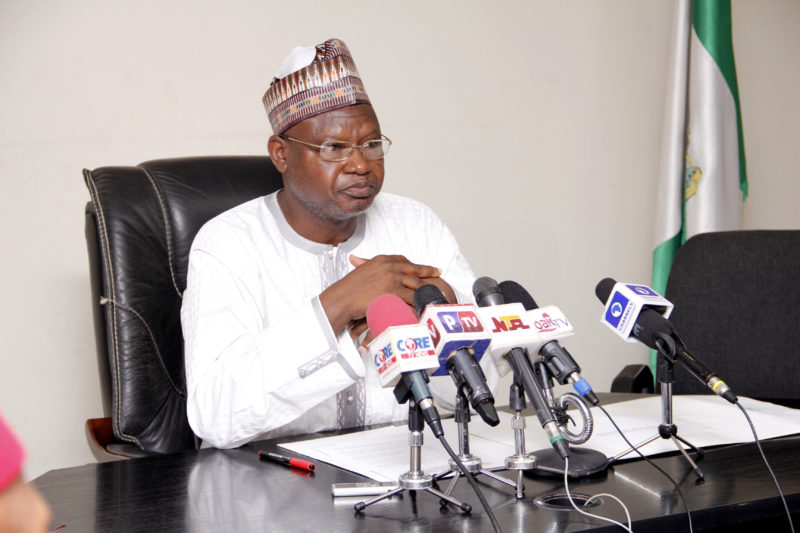
Ibrahim Usman Jibril
Environment Minister of State, Ibrahim Usman Jibril

The emergence of Jibril as the new emir followed the death of Alhaji Hassan Abubakar II, the 12th emir, who died earlier in Novembber after a brief illness.

The appointment was announced by the commissioner for Local Government and Chieftaincy Affairs in the state, Mr Haruna Osegba, on Thursday, November 6, 2018 in Lafia, the state capital.

He said Gov. Umaru Al-Makura had already approved the selection of Jibril as the successor to late Abubakar 11.

The new Nasarawa emir has over 30 years of working experience, 25 of which were spent as a Land Officer in the administration of the Federal Capital Territory, Abuja.

Jibril is a land reform specialist, a former Deputy Director, Development Control Abuja, and has worked with more than five FCT Ministers.

He was once the Director of Land Administration Department of the FCT.

He was a seasoned technocrat with specialisation in urban renewal, spatial data management and land information system, Nasarawa Geographic Information System (NAGIS) where he became known as the “NAGIS’s Brain Box.”

Termed as a workaholic, strict disciplinarian, experienced and a corrupt-free technocrat by his colleagues and those whom have worked with him, Ibrahim holds the highly ranked traditional title of – Wamban Nasarawa.

Osegba said the governor has met with traditional rulers to ratify the decision of kingmakers from the emirate.

He disclosed that the meeting also ratified the selection of Mr Lawrence Sylvester Ayih, as the new “Abaga Toni” of Toni kingdom to succeed his late father, Dr Sylvester Oho Ayih, who died in September 2017.

The commissioner said the governor was satisfied with the choices of the kingmakers and commended their maturity during the selection process.

He also congratulated the new first-class chiefs for ascending the throne of their forefathers and wished them a happy and prosperous reign in their chiefdoms.

By Isaac Ukpoju

Stakeholders evaluate environmental guidelines for petroleum sector

0

Since its issuance in 1991 by the Department of Petroleum Resources (DPR) in the Ministry of Petroleum Resources, the Environmental Guidelines and Standards for the Petroleum Industry in Nigeria (EGASPIN) has remained an imperative document in the Nigerian oil and gas sector.

OGEES Institute
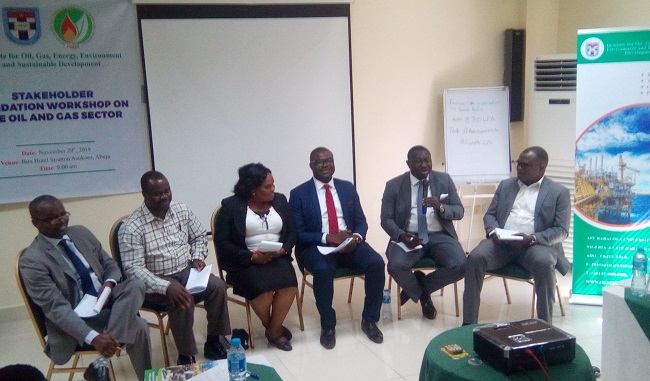
L-R: Bashir Mohammed Bello (General Manager, Business and Government Relations, Shell), Chima Williams (legal practitioner and activist), Dr Florence Masajuwa (Dean, Faculty of Law, Edo State University, Iyamho), Prof. Damilola Olawuyi (Director, OGEES Institute), Dr Abdul Karima Kana (Attorney General and Commissioner for Justice, Nasarawa State), and Oladipo Obanewa (National Oil Spill Detection and Response Agency), at an experience sharing session during the validation workshop in Abuja

EGASPIN outlines environmental and safety standards that must be complied with by oil operators in the country to prevent, minimise and control pollution from the various aspects of petroleum operations. In line with the DPR’s resolve periodically update the publication “as new knowledge becomes available”, EGASPIN was revised and updated in 2002.

Sixteen years later in 2018, the Institute for Oil, Gas, Energy, Environment and Sustainable Development (OGEES Institute) of the Afe Babalola University, Ado Ekiti in Ekiti State, appears to have revisited the much-vaunted document, in an apparent bid to determine its alignment with international best practices.

OGEES Institute, which has been undertaking a comprehensive review of the regulatory framework for environmental protection in the Nigerian oil and gas sector, embarked on a study in this regard. The findings by the institute’s research team on the project were the subject of discussion by a gathering of stakeholders at a validation workshop that held in Abuja on Thursday, November 29, 2018.

“Given the significance of EGASPIN to enhancing environmental sustainability and good governance in the Nigerian oil sector, it is pertinent to review and assess various aspects of the document in the light of the current knowledge and advancements in international best practices, laws, governance methodologies and pollution control technologies,” said Prof. Damilola Olawuyi, Director, OGEES Institute.

He listed the objectives of the study to include:

  • Reviewing and evaluating EGASPIN to determine its alignment with international best practice on environmental protection, especially during approval, operations and decommissioning phases of the oil and gas sector value chain;
  • Identifying existing gaps; and,
  • Providing recommendations and improvements that would increase its effectiveness.

Authored by Prof. Olawuyi and Dr Zibima Tubodenyefa (of the Niger Delta University), the study, among others, compared EGASPIN with the environmental regulation and processes in the comparator countries with respect to stringency, transparency and compliance.

International best practice on stringency, transparency and compliance, it was gathered, were drawn looking at three stages in the life cycle of an oil and gas project: approval of the project, construction and operations, and closure or decommissioning.

“This report and its recommendations aim to help stakeholders in the Nigerian oil and gas industry, especially the DPR, to improve EGASPIN’s contribution to achieving efficient, safe, orderly and environmentally responsible development of Nigeria’s oil and gas resources,” stated Dr. Tubodenyefa.