Home Blog Page 1745

India’s polluted air claimed 1.2m lives in 2017, says report

0

India’s toxic air claimed 1.24 million lives in 2017, or 12.5 per cent of total deaths recorded that year, according to a study published in the Lancet Planetary Health on Thursday, December 6, 2018.
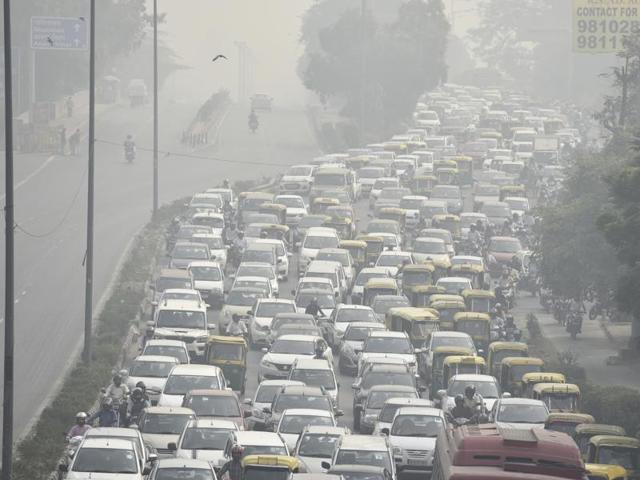
Delhi pollution
As Delhi’s pollution levels rise to severe, the EPCA has directed governments to impose all conditions under the Graded Response Action Plan under severe category

More than 51 per cent of the people who died because of air pollution were younger than 70, said the study conducted by academics and scientists from various institutions in India and around the world.

It was funded by the Bill & Melinda Gates Foundation, the Indian government and the Indian Council of Medical Research.

Of the total, about 670,000 died from air pollution in the wider environment and 480,000 from household pollution related to the use of solid cooking fuels.

The Indian capital, New Delhi, was most exposed to the tiny particulate matter, known as PM 2.5, that can reach deep into the lungs and cause major health problems, the study concluded. Some Northern states closer to Delhi were almost as bad.

“The findings of this study suggest that the impact of air pollution on deaths and life expectancy in India might be lower than previously estimated, but this impact is still quite substantial,” the study said.

Delhi’s air was “very poor” on Thursday, according to a federal pollution agency. The city’s quality of air has swung between “severe” to “hazardous” levels multiple times in the past two months.

The city residents’ apparent lack of concern about the toxic air – whether through ignorance, apathy or the impact of poverty – gives federal and local politicians the cover they need for failing to vigorously address the problem, pollution activists, social scientists and political experts have said.

Earlier this year, the World Health Organisation said India was home to the world’s 14 most polluted cities.

Average life expectancy in India in 2017 would have been higher by 1.7 years if air quality was at healthy levels, the report said.

That isn’t as gloomy as some other recent studies. For example, the University of Chicago’s report released last month said prolonged exposure to pollution reduces the life expectancy of an Indian citizen by over four years.

Still, the new study shows India has a higher proportion of global health loss due to air pollution – at 26.2 per cent of the world’s total when measured in deaths and disability – than its 18.1 per cent share of the world’s population.

UN-Habitat donates 50 public toilets to Kogi

0

The United Nations Human Settlements Programme (UN-Habitat) has donated 50 public toilets to the Kogi State Government.

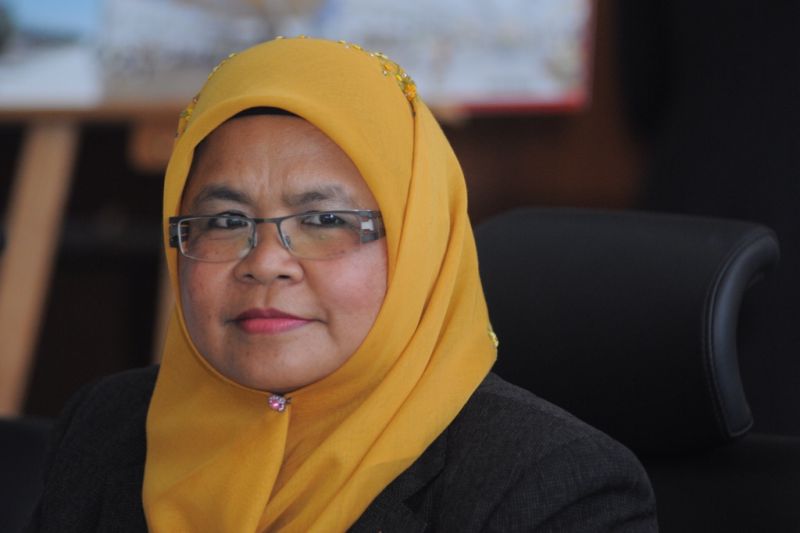
Maimuna Moh’d Sharif
Maimuna Moh’d Sharif, Executive Director of the United Nations Human Settlements Programme (UN-Habitat)

Director of Sanitation in the Ministry of Environment, Mr Aaron Zakari, disclosed this on Thursday, December 6, 2018 in Lokoja, the state capital, during a town hall meeting organised by the Justice, Development and Peace Development Commission (JDPC).

Zakari, who said that the donation was made early this year, said that five of the toilets had reached different completion stages and would be ready for use early next year.

He said that construction work on 15 of the toilets would begin in March 2019, saying that UN-Habitat had decided that the toilets will be built in phases.

The Director said that the ministry would ensure that the public toilets were sited in strategic locations across the state’s three senatorial districts.

According to him, 19 of the public toilets were built in different parts of Lokoja by non-governmental organisations and public spirited individuals.

The Director, however, said that lack of water and other accessories had made it impossible for government to inaugurate the toilets for public use.

Zakari said that the state government was planning to provide boreholes for each of the toilet early next year.

The JDPC is implementing a project on increasing citizens’ participation in inclusive governance for improved water, sanitation and hygiene practice in 13 communities in Kogi State.

On sanitation, Zakari said that the dump site at Felele area of Lokoja would be relocated within the next 90 days.

He said that the state government had acquired another vast pice of land on Agbaja Road as the new dump site, even as he appealed to residents to continue to bear with the government.

Also speaking, the General manager of the Kogi State Water Board, Mr Abdulsalam Mohammed, said that the water scarcity being experienced in Lokoja in the past 10 days was due to electricity problem.

He said that efforts were being made to rectify the problem and restore normal supply to the city.

The general manager said that the reticulation of the Greyare Lokoja Water Works to Felele, Zone 8, Crusher and Zango Daji communities was being delayed by lack of funds.

The Lokoja District Coordinator of JDPC, Rev. Fr Leonard Odomeja, appealed to the state government to speed up action on all ongoing water projects in the state.

Odomeja, who was represented by his Programme Manager, Mr Simon Enejoh, also pleaded for the establishment of public toilets along highways and native areas to reduce open defecation and improve personal hygiene of the people.

Community leaders of Kabawa, Adankolo, Sarki Nnoma and Felele, who were present at the meeting, gave update about water supply, hygiene and sanitation in their various communities.

They pleaded with the state government and political office holders to take the issues of water, sanitation and hygiene seriously to ensure improved condition of living for the people.

World food prices lowest in more than two years in November

0

World food prices declined in November to their lowest level in over two years, led down by much weaker vegetable oil, dairy and cereal prices, the United Nations food agency said on Thursday, December 6, 2018.

Suffyan Koroma
Suffyan Koroma, FAO Representative in Nigeria

The Food and Agriculture Organisation’s (FAO) food price index, which measures monthly changes for basket of cereals, oilseeds, dairy products, meat and sugar, averaged 160.8 points in November.

It was down from a revised 162.9 in October, reaching its lowest level since May 2016.

The October figure was previously given as 163.5.

FAO said global cereals output in 2018 to 2019 was seen at 2.595 billion tonnes, down marginally from the previous forecast and 2.4 per cent below 2017 record high production.

FAO’s forecast for world wheat production in 2018 and 2019 was 725.1 million tonnes, 2.8 million tonnes lower than the previous forecast.

AfDB earmarks $220m for projects in Nigeria

0

The African Development Bank (AfDB) has earmarked $220 million for various intervention projects in the country.

Akinwumi Adesina
Dr. Akinwumi Adesina, President of the African Development Bank (AfDB)

President of AfDB, Dr Akinwumi Adesina, said this at the official launch of Inclusive Basic Service Delivery and Livelihood Empowerment Integrated Programme (IBSIP) in Abuja on Thursday, December 6, 2018.

Adesina was represented by the Senior Director of the bank, Mr Ebrima Faal.

He explained that $20 million would be approved soon by the management of the bank, for its programme designed as “say no to famine” by addressing food insecurity and malnutrition.

He said that $200 million which had been approved by the management would be used for rural electrification projects across the country.

“The Say No to famine will address challenges of food insecurity and malnutrition in conflict affected states of Borno, Adamawa and Yobe with the means to resume agriculture-based and environment friendly livelihoods.

“The project will set the foundations for longer-term resilience building and sustainable economic and social development.

“This will be achieved through the combination of skills development and productive measures supported in the same locations by conditional voucher food support.

“The Nigeria electrification project is countrywide and aimed at delivering energy access to unserved and underserved communities in the country.

“The project will provide electricity to households, small to medium sized enterprises and public institutions at a least cost and timely manner through off and mini grid solutions.

“The project comprises the provision of solar hybrid mini grids for rural economic development, productive appliances and equipment for off grid communities and energising institutions.

“Adamawa state is included as one of the states to benefit in the first phase of the programme,” he said.

By Mustapha Sumaila

COP24: Finance pledges unleashed as Global Climate Action opens

0

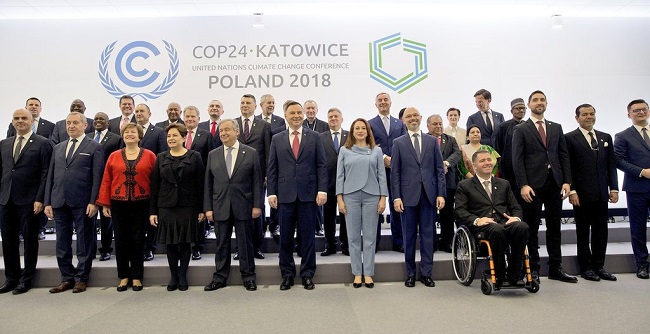
The United Nations Climate Conference (COP 24) on Wednesday, December 5, 2018 convened a high-level session launching eight days of focused events and dialogues on Global Climate Action, aimed at building a bridge between government delegates and non-Party, public and private stakeholders in the global response to climate change.

World leaders
World leaders at the opening of COP24

The event, which featured United Nations Secretary-General António Guterres, Poland’s Prime Minister Mateusz Morawiecki, COP 24 President Michał Kurtyka, and UN Climate Change Executive Secretary Patricia Espinosa, highlighted the mutually reinforcing and critically important cooperation between state and non-state actors needed if the world is to keep on track to the 1.5C goal of the Paris Agreement.

Speakers matched their words with action – including ING CEO, Ralph Hamers, who announced a landmark finance collaboration with BBVA, BNP Paribas, Standard Chartered and Société Générale to measure the climate alignment of their lending portfolios, with the aim of steering them in line with the Paris Agreement. Specifically, the banks – which have a combined loan book of €2.4 trillion across a range of sectors – have signed a commitment letter, pledging to finance change and put their balance sheets to work.

Of this commitment, Mr. Hamers said, “It shows that banks are becoming increasingly ready to take the bold steps needed to play our part in achieving a low-carbon economy.”

To support the bridge-building effort, First Minister of Scotland, Nicola Sturgeon, announced £200,000 for the Marrakech Partnership for Global Climate Action, to encourage collaboration between government, business, and wider society to immediately lower emissions and increase resilience against the impacts of climate change.

In his remarks opening the morning’s session, United Nations Secretary-General António Guterres spoke on the central theme of the event, Embracing Inclusive Multilateralism: “Only global answers can solve global problems. Embracing inclusive multilateralism is the way to go, but it needs to adapt to the meet the global challenges we currently face. We now need networked multilateralism.”

Dr. Mae Jemison, the first African American woman in space, joined the Secretary-General in sounding a note of urgency for assembled delegates, saying, “We need reality checks and we need hope. The earth doesn’t need us; we need the earth.”

After these remarks, presided over by Poland’s Prime Minister, Mateusz Morawiecki, and COP 24 President, Michał Kurtyka, the focus of the session moved to a second stage, in the main Plenary for conversations moderated by explorer Bertrand Piccard, who led a discussion on the need for and opportunities to be found in global climate action, with First Minister Nicola Sturgeon, Dalmia Cement CEO Mahendra Singhi, ING CEO Ralph Hamers, and Indigenous Leader Hindou Oumarou Ibrahim.

First Minister Sturgeon acknowledged the imperative of a just transition, from societies’ present reliance on fossil fuels to a climate neutral future: “We have a moral responsibility to do what we can to prevent and mitigate the effects of global climate change. That’s why we’ve created the Just Transition Commission to demonstrate that there is nothing to fear and everything to gain from the transition to a low-carbon economy.”

Leading-up to the close of the event, the High-Level Climate Champions, H.E. Minister Inia Seruiratu and Special Envoy Mr. Tomasz Chruszczow, highlighted the central role that global climate action must play in driving enhanced national action.

Minister Inia Seruiratu said, “The message for urgent action has been the message throughout 2018 – coming from all stakeholders, across all regions, but most especially from us in vulnerable regions and small island developing states. We will build the vision of tomorrow for a net-zero emissions world and resilient societies.”

Concluding statements, in the spirit of State and non-state collaboration, were made by Parties; namely, European Union, Saint Lucia, Palestine, and Japan.

1 million lives could be saved annually by meeting Paris climate goals- WHO

0

The World Health Organisation (WHO) on Wednesday, December 5, 2018 said the lives of 1 million people around the world could be saved each year by 2050 if the goals for reducing air pollution in the Paris accord were adhered to.

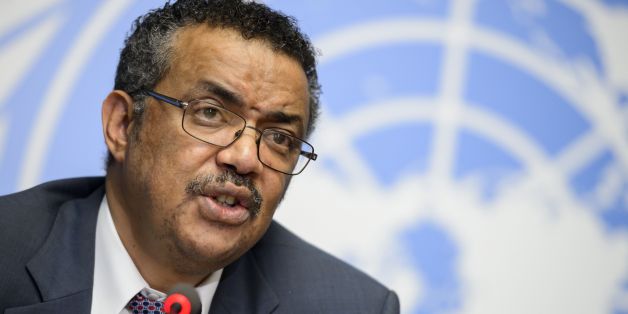
Dr Tedros Adhanom Ghebreyesus
Dr Tedros Adhanom Ghebreyesus, Director-General of the World Health Organisation (WHO). Photo credit: AFP / FABRICE COFFRINI / Getty Images

The report, released at the UN Climate Change Conference (COP24) in Katowice, Poland, underlined the effects that pollution-producing human activities had on human health and offered possible solutions for policy makers around the world to consider.

According to WHO’s Head of Public Health, Maria Neira, the true cost of climate change is felt in our hospitals and in our lungs.

“When health is taken into account, climate change mitigation is an opportunity, not a cost,’’ Neira said

According to the WHO, the main driver of climate change, the burning of fossil fuels, is also a major contributor to air pollution, which causes 7 million deaths around the world annually and costs 5.1 trillion dollars in welfare losses.

“In the 15 countries that emit the most greenhouse gases, the health impact of air pollution costs more than 4 per cent of their GDP,’’ the WHO estimated.

Representatives from just under 200 states have gathered in Katowice to focus on fleshing out the rules for financing and implementing the 2015 Paris Agreement.

Report says the pact provides an outline for countries working together to limit the earth’s warming to between 1.5 and 2 degrees Celsius.

Lagos residents urged to halt soil degradation

0

The Lagos State Government has urged residents to halt the destruction of soil in the state, for a better and safer environment.

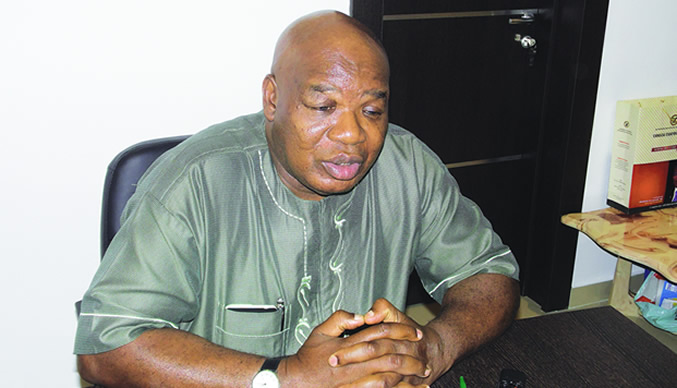
Babatunde Durosimi-Etti
The Lagos State Commissioner for Environment, Mr Babatunde Durosimi-Etti

The Commissioner for the Environment, Mr Babatunde Durosinmi-Etti, said during the commemoration of the 2018 World Soil Day in Ikeja on Wednesday, December 5, 2018 that there was the need to find lasting solution to soil pollution.

Durosinmi-Etti said that pollution was a major soil threat and a serious global concern, hence, Lagosians should be mindful of their impact on the environment.

He said that residents should make the protection of the environment a priority, bearing in mind increasing challenges arising from soil pollution.

According to him, it is important to raise awareness and seek solution to the increasing challenges raised by polluting the soil.

“The State Government could not have found a better opportunity to do this than the World Soil Day with the theme: “Be the Solution to Soil Pollution”.

“Interestingly, this year’s theme is, on one hand, aimed at raising awareness on the need to sustain healthy ecosystems and human well-being by addressing the increasing challenges in soil management.

“On the other hand, it is also intended to raise the profile of healthy soil by encouraging organisations, communities and individuals around the world to give attention to the pressing issues affecting soils.

“As in other spheres, Lagos State has taken the lead by blazing the trail for Nigeria with the maiden celebration of this Day on December 5th, 2016,” he said.

Durosinmi-Etti said that the event marked the 3rd consecutive edition of the World Soil Day observance in Lagos state, which demonstrated the commitment to using global advocacy platforms to encourage friendly behaviour towards the environment.

He said that communities and individuals must be watchful and give the deserved attention to sources of soil pollution.

According to him, such sources include agrochemicals, petroleum-derived products, chemicals used in or produced as byproducts of industrial activities and wastes such as domestic, livestock and municipal wastes (including wastewater).

“These chemicals are released to the environment accidentally through oil spill or leachate from landfills.

“They are sometimes released intentionally as is the case with the use of fertilizers and pesticides, irrigation with untreated wastewater or land application of sewage sludge.

“Soil pollution also results from mining activities, transportation, poor waste disposal, flood and erosion among other activities impacting negatively on soils,” he said.

The Commissioner said that soil pollution, which often could not be visually perceived, was a hidden danger that jeopardised valuable soil ecosystem services.

He said that the valuable soil ecosystem services include climate regulation, nutrient cycling, food production, water purification, food quality and habitat for organisms, among others.

“Soil pollutants directly harm soil microorganisms and larger soil-dwelling organisms, thereby affecting soil biodiversity and the services provided by the affected organisms.

On its impact on humans, Durosinmi-Etti said that soil pollution was capable of directly affecting human health through contamination from heavy metals such as arsenic, lead and cadmium.

He said that food security would be compromised, as crops produced from polluted soils became unsafe for both human and animal consumption.

The commissioner said that to protect the soil, everyone should desist from indiscriminate disposal of spent oil, uncontrolled use of agrochemicals and improper disposal of urban and industrial wastes.

He said that the level of adherence to the advice would determine the quality of the soil, water and many other elements critical to human existence.

December 5 of every year has been designated by the United Nations as the World Soil Day, following the adoption of the 68th UN General Assembly Resolution in 2013.

By Florence Onuegbu

NEMA advocates tree planting to check windstorm, erosion in southeast

0

The National Emergency Management Agency (NEMA) has called on residents of the southeast to imbibe the culture of tree planting to check windstorm and gully erosion in the zone.

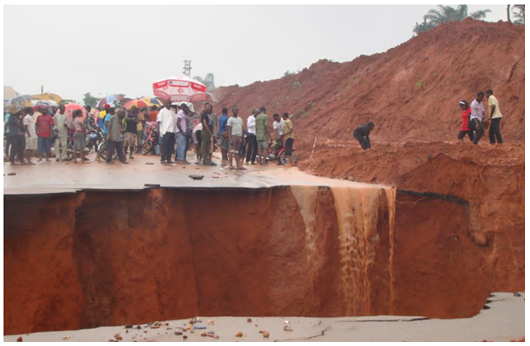
Gully erosion
Gully erosion in southeast Nigeria

Mr Walson Ibarakumo, NEMA South-East Zonal Coordinator, gave the advice in an interview with the News Agency of Nigeria (NAN) in Enugu, Enugu State on Wednesday, December 5, 2018.

He advised the residents to plant trees around their homes, public buildings such as hospitals, schools, worship centres and markets.

He said that the measure would help to naturally check impacts of erosion currently ravaging different communities in the zone.

He said that trees played significant roles in balancing the environment and checking other natural and man-made environmental disasters.

According to him, tree planting does not attract so much financial cost and burden to the people, except at the initial stage of grooming.

“NEMA has gone from reactionary emergency response strategy to pro-active emergency response strategy and we want Nigerians to go along with the agency in this direction.

“I have spent time advocating and educating Nigerians, especially southeast residents in each community I had visited, on the tremendous good trees can do to them and their environment.

“Apart from providing us with shade for coolness and relaxation as well as edibles, trees also help to balance activities of nature around us.

“When you plant medium-size trees around your home or public buildings, you are securing such buildings from windstorm and erosion menace.

“The trees will naturally take up and break the force of a windstorm, which will ensure that the deadly wind does not hit at your home or building directly.

“Likewise, the roots of the trees help to hold soil together, especially areas with weak or in-adhesive clay soil type, thus checking erosion,’’ the NEMA boss said.

He however cautioned that huge and very tall trees near buildings posing risks to human lives and properties should be cut down.

Ibarakumo advised that only shrubs and medium-size tress should be planted as erosion-control measures.

NEMA recently distributed some relief materials to 1,280 victims of windstorm at Agbogugu community in Awgu Local Government Area of Enugu State.

By Stanley Nwanosike

Microplastics contaminate deepest part of world’s ocean – Study

0

The deepest part of the world’s ocean and its hadal bottom waters have been polluted by microplastics, according to a study published in Geochemical Perspectives Letters on Wednesday, December 5, 2018.

Plastic pollution
Plastic pollution

Millions of metric tonnes of plastics are produced annually and transported from land to the oceans.

Finding the fate of the plastic debris will help define the impacts of plastic pollution in the ocean.

The researchers from the Institute of Deep-sea Science and Engineering of Chinese Academy of Sciences, collected bottom water and sediment samples at depths of 2,500-11,000 metres and 5,500-11,000 metres respectively, from the southern Mariana Trench.

The researchers reported on the abundance of microplastics in the deepest part of the world’s ocean and found that microplastics at the bottom waters range from 2.06 to 13.51 pieces per liter, several times higher than those in open ocean subsurface water.

Moreover, microplastic abundance in hadal sediments of the Mariana Trench varies from 200 to 2,200 pieces per liter, distinctly higher than those in most deep-sea sediments.

At 10,903 metres in depth, the microplastic abundance reaches 11.43 pieces per liter.

The microplastics are fibrous, rod-like and roundish in shape, and mostly blue, red, white, green and purple.

Plastic microfibers dominate in all the microplastics and are commonly one to three millimeters in length in seawater samples and mostly 0.1 to 0.5 millimeters in sediment samples.

The results suggested that plastics have contaminated the most remote and deepest places on the planet.

The hadal zone is likely one of the largest sinks for microplastic debris on Earth, with unknown but potentially damaging impacts on this fragile ecosystem, according to the study.

UN launches $25bn aid for 93m people in Nigeria, others

0

The United Nations has launched a global humanitarian appeal of $25 billion to provide support to no less than 93 million people in need of humanitarian assistance in Nigeria and other countries in 2019.

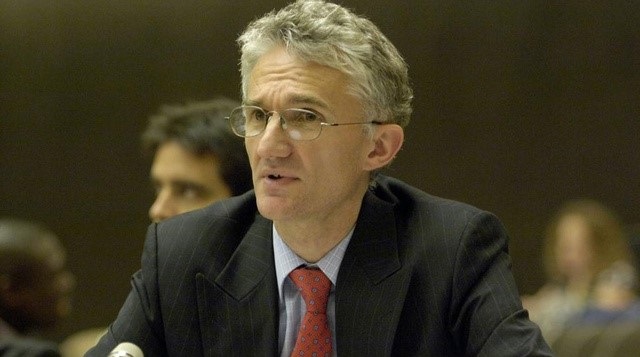
Mark Lowcock
Mark Lowcock

Speaking at the launch of a major annual analysis of global humanitarian needs in Geneva, Emergency Relief Coordinator Mark Lowcock said that 132 million people would need assistance next year.

He said conflict had pushed tens of millions of people into a situation where they were in urgent need of help, adding the appeal for funds could top $25 billion to support life-saving aid projects in over 40 countries next year.

Of that number, the UN and its partner organisations aim to support 93.6 million, noting while conflict was the main cause, climate-related risks such as drought and tropical storms were also significant contributors to the number of people in crisis.

Lowcock said: “Something like one person in 70 around the world is caught up in crisis and urgently needs humanitarian help or protection.

“We have a larger number of people displaced, mostly by conflict than we have seen in the world before, nearly 70 million.”

The UN’s Global Humanitarian Appeal for 2019 amounts to $21.9 billion; it is expected to increase to $25 billion, once Syria’s financial needs have been calculated.

As of mid-November, donors have provided a record $13.9 billion in funding, which is about 10 per cent more than at the same time last year, according to the UN Office for the Coordination of Humanitarian Affairs (OCHA).

“The country with the biggest problem in 2019 is going to be Yemen,” he said, before insisting that the UN’s coordinated response plans helped the humanitarian community “to deliver, more and better” to millions of people.

Beyond Yemen, needs will remain “exceptionally high” in Syria, the Democratic Republic of the Congo (DRC), Ethiopia, Nigeria and South Sudan, Lowcock said.

Every month in 2018, humanitarians have reached eight million Yemenis with food assistance and 5.4 million Syrians with supplies, medical assistance and protection, Lowcock explained.

“This is happening even as threats to the safety of aid workers are on the rise,” the UN relief chief noted.

People’s insecurity has also worsened significantly in Afghanistan because of drought, political instability and an influx of returning refugees, according to the Global Humanitarian Overview 2019, Republic (CAR).

In another finding, the OCHA report showed that the average UN humanitarian response now lasted more than nine years; in 2014, the norm was 5.2 years.

In 2018, moreover, nearly three-quarters of people receiving assistance are in countries that have been affected by humanitarian crises for seven years or more.

In other finding, the OCHA report also highlighted that food insecurity had increased in recent years after a long period in which it had improved.

An increasing number of crises had also translated into gender inequality, the report noted, with girls in conflict settings more than 2.5 times more likely than boys to be out of school.

By Prudence Arobani