Home Blog Page 1742

Ban Ki-moon: UN poverty reduction goals achieved thanks to China

0

Former UN Secretary-General, Ban Ki-moon, said that eliminating poverty, the number one goal of the UN Millennium Development Goals, had been achieved thanks to the development of China.
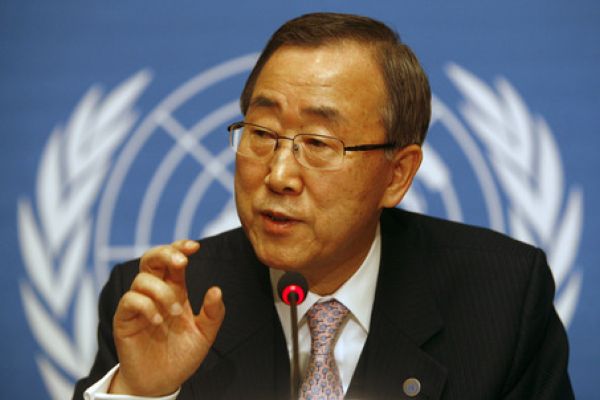
Ban Ki-moon
Former U.N. Secretary-General, Ban Ki-moon. Photo credit: www.afrik.com

Speaking in China on the sidelines of a forum on international affairs in China’s southern city of Guangzhou, Ban said China’s reform and opening-up have lifted hundreds of millions, both in China and elsewhere, out of poverty.

“The World Bank announced proudly in 2010 that the number one goal of the UN Millennium Development Goals was achieved if we look at the statistics internally, it is because of China,’’ Ban said.

“China has also been contributing a lot to development issues and this is a highly commendable contribution.’’

Ban noted China’s voiced determination to carry on with its reform and opening-up.

“Now that you’re beginning another 40 years of reform and opening-up, I am quite confident that this will help greatly in implementing Sustainable Development Goals,’’ he said.

“Again, number one goal of Sustainable Development Goals is to eradicate all the absolute poverty around the world.’’

Ban said during the 2018 Imperial Springs International Forum, which gathered some 200 former world leaders, renowned scholars and business elites in Hangzhou for discussions on the theme: “Advancing Reform and Opening-up, Promoting Win-win cooperation’’.

The South Korean career diplomat, who served as UN secretary-general from 2007 to 2016, also highlighted recent increasing challenges to multilateralism that had underpinned the world peace and prosperity over the past decades.

“The international peace, security, and prosperity have been underpinned during last seven decades under the multilateralism systems, and multilateralism is now symbolised with the UN and the UN Charter,’’ Ban said.

Some countries are “not respecting multilateralism, which has been backbones of international society. This is really worrisome’’.

Ban also mentioned the trilateral meeting between him, the Chinese and American leaders during the Group of 20 (G20) Hangzhou Summit in 2016, when both China and the U.S committed to the Paris Agreement.

That has really accelerated the process of the Paris Agreement coming into effect.

“So, that was a great step in terms of China’s contribution to international multilateralism,’’ he said.

Ban said it was important that the U.S. and China, the two largest economies and most important leading countries, should be able to work together harmoniously, to deal with all global challenges.

The diplomat said he was encouraged by the Belt and Road Initiative proposed by China, which meant that people around the world could share the benefit from China’s development achievement.

“We share a future,’’ said Ban, adding that the Belt and Road Initiative is in line with Chinese President Xi Jinping’s vision of building a community with a shared future for mankind.

“It’s very important that the countries along the Belt and Road will benefit and corporate with each other, to build infrastructure and have economic and social development.

“This will help not only those countries, but also China. So, it’s a mutual cooperation,’’ he said.

“The global challenges require global solutions. We are all in this together. We have to work together.’’
Germany to increase financial aid to combat climate change

0

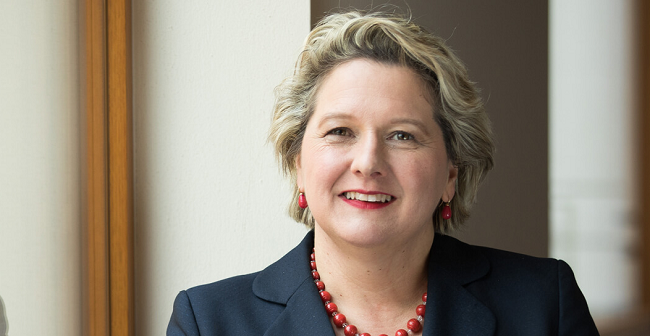
Germany will increase its financial aid for developing countries in the fight against climate change, German Environment Minister, Svenja Schulze, said on Tuesday, December 11, 2018.

Svenja Schulze
German Environment Minister, Svenja Schulze

Germany will increase its financial aid by €70 million (479 million), in what Schulze said is “a symbol of solidarity.”

“Those who suffer most under climate change are the ones who have contributed the least to it happening,” she said.

She was speaking at a UN climate conference in Katowice, during which delegates from around 200 states are focusing on fleshing out a rulebook for financing and implementing the 2015 Paris agreement.

The Paris pact provides an outline for countries working together to limit the Earth’s warming to between 1.5 and 2 degrees Celsius.

Most efforts to prevent the planet heating up relate to stopping the release of greenhouse gases as soon as possible.

The rulebook is set to be agreed upon by Friday – however, if necessary, the climate conference could end up taking longer than planned.

Germany is the main contributor to the fund for developing countries faced with dealing with climate change.

So far, it has invested €240 million overall.

Schulze was due to hold a speech at the conference on Tuesday afternoon, in which she would highlight Germany’s further efforts to combat climate change.

COP24 heading towards weak outcome, group warns

0

Independent public research and advocacy think tank based in New Delhi, India, the Centre for Science and Environment (CSE), believes that the 24th Session of the Conference of the Parties (COP24) to the United Nations Framework Convention on Climate Change (UNFCCC) that is ongoing in Katowice, Poland, is heading towards a weak outcome.

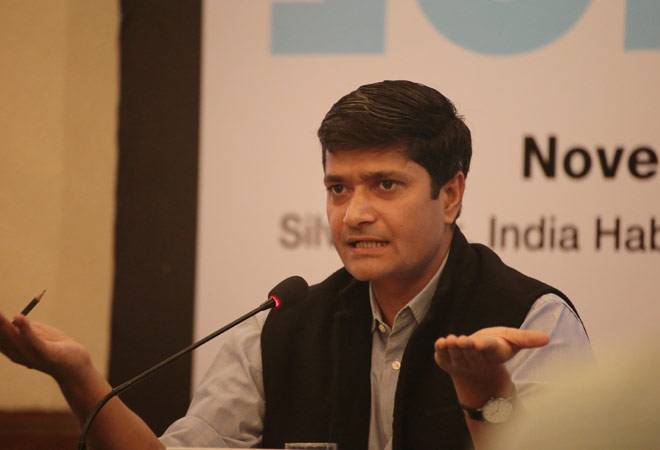
Chandra Bhushan
Chandra Bhushan, Deputy Director General, Centre for Science and Environment (CSE)

CSE analysts attending the global negotiations say there are major disagreements between Parties on a wide range of major and minor issues, and that there is little time left to bridge those disagreements.

“Considering that the Paris Agreement itself is a weak regime, having a weaker rulebook will make it inconsequential. This is something that the world cannot afford. It would be a better choice to have no rulebook here at Katowice than have a weak, ineffectual rulebook,” said Chandra Bhushan, the CSE deputy director general, who is heading the group’s delegation at the COP.

CSE, COP-watcher and analyst organisation, is recommending that countries should work for another year to develop a consensus on a robust and meaningful rulebook and then finalise it by 2019.


Contested terrains

The disagreements at Katowice run across the entire rulebook. Major points of contest relate to the issue of differentiation between developed and developing countries:

Equity

There are a few elements under the Paris Agreement where equity between the countries must get operationalised. These include communication on NDCs, ex-ante provision and review of financial commitments, and global stocktake on collective progress to meet the goals of the Paris Agreement. The process of operationalising equity has become a serious bone of contention between developed and developing countries. Developed countries are opposing an ex-ante review of their financial commitments and operationalisation of equity in GST. In fact, there is not even a consensus on what “finance” should mean.

Transparency

How would flexibility (less stringent reporting requirements) be reflected in the transparency framework is another issue of concern. While the US and EU have pushed for selective flexibility meant only for least developed countries and island states, India and China are demanding flexibility for all developing countries.

Reporting on NDCs

The current set of Nationally Determined Contributions (NDCs) are heterogenous. There is a need for clarity and guidance on standards to make the NDCs standardised for easier assessment and comparability. However, there has been no agreement on common time frames, baselines, scope or technical duration of NDCs.

Adaptation and loss and damage

Developed countries have opposed provision of finance in implementation of adaptation communications, while developing countries have sought parity of mitigation and adaptation finance. Developing countries are fighting hard for inclusion of loss and damage as sources of input under the Global Stocktake process, as also its inclusion under the transparency framework for reporting of action and support; developed countries are opposing it.

The discussions on other issues including new market mechanisms are likely to be pushed down to next year owing to greater technicalities and complexities in different countries’ stances.

The IPCC Special Report on 1.5oC makes it clear that the 2oC threshold referred to in the Paris Agreement is more dangerous than previously thought, and that unprecedented economic transformations are needed in the next decade to keep warming under the 1.5oC benchmark. This requires rapid phase-out of fossil fuels and drastic curtailment of wasteful consumption.

According to the recently released UN Emission Gap Report, the level of ambition needs to be multiplied five-fold to stay under 1.5oC. Even then, at Katowice, countries like US and Saudi Arabia are fighting over whether to welcome the IPCC Report or just take note of it under SBSTA. Further, there is not even a discussion happening on how to raise ambition, say CSE analysts.

“There is no discussion on how countries will revise and update their NDCs by 2020, which is critical to keep temperature increase within liveable limits,” says Vijeta Rattani, programme manager-climate change, CSE.

“The bottomline is that countries are sparring even on procedures. For example, they failed to reach a consensus on the adoption of the IPCC Special Report on 1.5oC, which was commissioned under the Paris Agreement. All this shows that countries are not ready and willing for a meaningful negotiation. In such a situation, forcing a weak rulebook in the name of consensus would be very harmful for the world,” added Bhushan.

Sports launch climate action framework at COP24

0

The sports sector and UN Climate Change on Tuesday, December 11, 2018 launched the Sports for Climate Action Framework to gather sports organisations, teams, athletes, and fans in a concerted effort to raise awareness and action to meet the goals of the Paris Agreement.

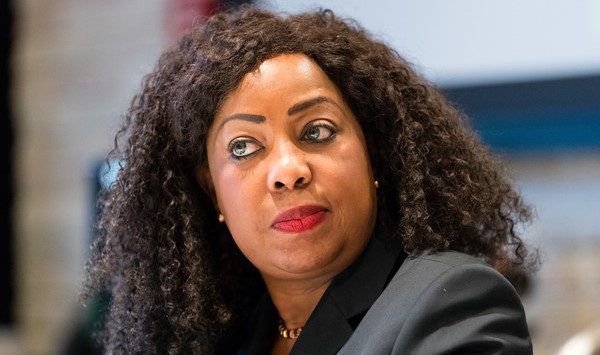
Fatma Samoura
FIFA Secretary General, Fatma Samoura

Representatives of the diverse global sports industry, working with UN Climate Change over the past year, created the Framework to drive emission reductions of sports operations and tap the popularity and passion of sport to engage millions of fans in the effort.

The launch event, which took place on the margins of the UN Climate Change Conference (COP24) in Katowice, Poland, featured founding signatories: International Olympic Committee (IOC), FIFA, International Sailing Federation, World Surfing League, Forest Green Rovers Football Club, and the French Tennis Federation (Roland Garros), Tokyo 2020 Summer Olympics, and Paris 2024 Summer Olympics.

“The IOC is proud to have taken on a leadership role in the Sports for Climate Action Initiative,” said HSH Prince Albert II, Chair of the IOC Sustainability and Legacy Commission, speaking at the event. “With its global reach, universal appeal and the power to inspire and influence millions of people around the globe, sport is uniquely placed to drive global climate action and encourage crowds to join in. As countries here in Katowice prepare to turn their climate commitments into reality, we stand ready to leverage the power of sport to support their efforts.”

The Framework has two overarching objectives: achieving a clear trajectory for the global sports community to combat climate change and using sports as a unifying tool to drive climate awareness and action among global citizens.

Sports organisations recognise in the Framework that they need to take an active part in achieving the goal of the Paris Agreement, climate neutrality by mid-century, and they see their climate efforts also contributing to the broader Sustainable Development Goals.

“You recognise that because you’ve built significant global trust and moral leadership, and because sports touches on every cross-section of society, you can drive positive change throughout the world,” said UN Climate Change Executive Secretary Patricia Espinosa. “I’m here to encourage you to use your significant global leadership position to help us address the greatest challenge of our time: climate change.”

Sports produces climate-changing emissions in many ways, through associated travel, energy use, construction of venues, catering, and other ways. Work has in fact already begun. The International Olympic Committee and UN Climate Change have cooperated in the production of a climate action guide – “Sustainability Essentials: Sports for Climate Action” – for use by sports federations and others, which was released at the event.

As part of IOC’s contribution to the initiative, IOC also released at COP24: “Carbon Footprint Methodology for the Olympic Games and Paralympic Games”, which provides detailed guidance to the Organising Committees on how to measure the carbon footprint of the Olympic and Paralympic Games.

Together, these publications provide essential guidance for how to make sports more sustainable and climate smart and are an essential initial input to the new initiative.

The sports sector accepts its responsibility to reduce greenhouse gas emissions in line with the goal of the Paris Agreement – limiting global average temperature rise to 2 degrees Celsius and to strive for the safer 1.5-degree target. Sports for Climate Action now invites sports organizations, governing bodies, federations, leagues, and clubs to join this initiative by uniting behind a set of principles to get on track for the net-zero emissions economy of 2050.

“Our commitment to protecting our climate remains unwavering. We recognize the critical need for everyone to help implement the Paris Agreement and accelerate the change needed to reach greenhouse gas emission neutrality in the second half of the 21st century,” said FIFA Secretary General, Fatma Samoura. “FIFA welcomes the UN’s development of the Sports for Climate Action Framework, and I am pleased to confirm that FIFA will support the vision outlined in the new framework.”

Sport also recognises its unique, indeed unparalleled, ability to inform and mobilise millions of people around a love of sport and admiration for their sport heroes.

“Climate change is the biggest challenge facing the planet. UEFA firmly believes that football, with its strong and ever-growing environmental conscience, in particular in areas such as sustainable event management, has a duty to play a role in addressing this issue. This is why we are happy to have the opportunity to sign the United Nations Sports for Climate Action Framework,” said UEFA President Aleksander Čeferin.

The 17 signatories who signed on to the framework are: International Olympic Committee, AC Fukushima United Co. Ltd., FIFA, Forest Green Rovers Football Club, Formula E, French Tennis Federation – Roland Garros, International Sailing Federation, Kamakura International Football Club and Gangsters, Kyoto University American Football Club, Kyoto University Football Club, Paris 2024 Summer Olympics, Rugby League World Cup 2021, Sano High-School Rugby Club, Tokohu Ice Hockey Club Co., Ltd (Free Blades), Tokyo 2020 Summer Olympics, UEFA and World Surf League.

The sport sector believes it can do more by working together, according to the principles and objectives laid down in the Sports for Climate Action Framework.

In early 2019, the adopters of the Framework will be invited to form working groups to plan, pursue and enhance work under each of 16 principles laid out in the Framework.

Minister reiterates need for water supply, good sanitation

0

Minister of Water Resources, Mr Suleiman Adamu, on Tuesday, December 11, 2018 called on governments at all levels to ensure access to adequate water supply and sanitation.

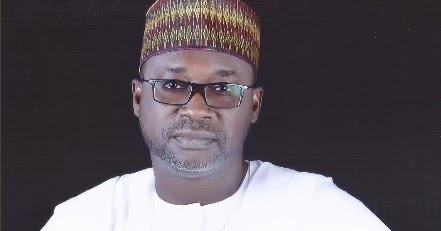
suleiman adamu kazaure
Suleiman Adamu Kazaure, Water Resources Minister

Adamu made the call at the inauguration of the Kamomi Aketi Accelerated Water Scheme at Ogbese in Akure North Local Government in Ondo State.

He explained that the consequences of lack of access to water and sanitation included economic losses, high prevalence of water related diseases, reduced school enrolment and attendance, loss of dignity, increased risks of insecurity and violence against women and children.

Adamu said such consequences should be avoided.

“Water is life and has no substitute. However, our country today still has significant challenges of access to adequate Water supply, Sanitation and Hygiene (Wash).

“Recent statistics from the WASH-NORM (National Outcome Routine Mapping) survey indicate that about 67.9 percent of our population has access to improved water supply from all sources while 41.5 percent have access to basic sanitation facilities.

“Furthermore, about 25 percent of our population practice open defecation and this makes our country number two rank amongst all nations still practicing open defecation in the world,” he said.

The minister further assured that resources would be mobilised from the Federal Government, beginning with 2019 budget and from the development partners, in support of the programme.

“We will also promote the programme delivery modality to other states to give the necessary prominence that Ondo State deserves on Rural Water Supply.

“I will like to encourage the State Government to please include provision of sanitation facilities in the public places in the programme so as to make Ondo State Open Defecation Free (ODF) by 2025 which is the target year for ODF in our country,” he said.

Earlier, Gov. Oluwarotimi Akeredolu of Ondo State said a government must be responsible and responsive to the needs of the people.

“We have been able to do that. We met water supply at four percent. It is not something any government can stand but with all these boreholes rehabilitated, it has really improved,” he said.

He further said Ondo State laws on open defecation would be improved to end open defecation and urged everyone to have toilets in their homes.

“Our minister has challenged us to take along the issue of public toilets so that open defecation will end, and all these water-borne diseases will be a thing of the past,” he said.

The governor also urged the people of Ogbese to utilise the water scheme properly and warned them not to pay anyone money as toll for water.

Also, Mrs Yetunde Adeyanju, chairman, Ondo State Rural Water Supply and Sanitation Agency (RUWASA), said the scheme would optimally utilise underground water unlike the stand-alone motorised and handpump boreholes that would serve a lesser population.

Adeyanju further explained that the scheme was to improve, sustain and expand safe water supply to over 3,000 communities in the state.

“It is designed to have 5km reticulation and distribution network with a storage tank of 50m capacity that would discharge at full capacity twice a day with 100 public standpipes, 200 fetching points while one fetching point will serve 50 people.

“The Scheme is powered with solar energy and two deep boreholes and the Sanitation component is to achieve 100% open defecation free, three months after provision of safe water access in aggressive approach in the benefited community”, she said.

She, however, explained that intervention in Ogbese was necessary because Ogbese had nine handpump boreholes and two solar powered boreholes which were not functioning, hence making it very difficult for the community to have access to improved water source.

By Ayodeji Alabi

Group inaugurates project to address pollution

0

A not-for-profit organisation, Ecolife Conservation Initiative, says it has inaugurated an environmental sanitation project titled: “Keep Naija Clean, Make Life Better”, and aimed at addressing air, water and land pollution in the country.

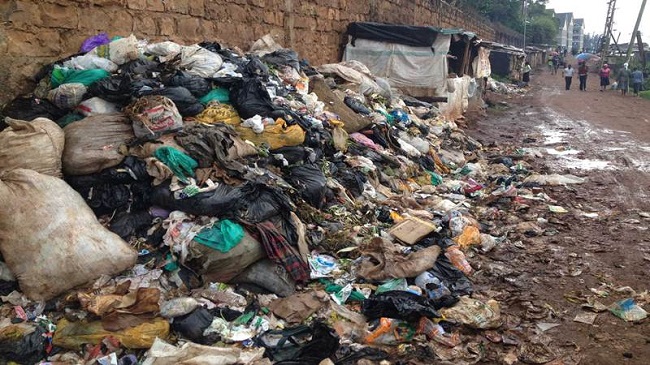
waste disposal
Indiscriminate waste disposal

Mr Akubuike Chibuzor, Executive Director of the organisation, told the News Agency of Nigeria (NAN) in Abuja on Tuesday, December 11, 2018 that the project is aimed at sensitising the public on the consequences of indiscriminate waste disposals.

Chibuzor said that the project is also aimed at partnering with religious leaders, traditional rulers, and other relevant stakeholders to take awareness campaign to rural communities, churches, mosques, markets, schools, motor parks and government establishments.

“The specific objective of this project is to bring about an attitudinal change from the culture of indiscriminate dumping of waste in public places to disposing waste properly in waste bins in Nigeria, beginning from the FCT.

“The impact of improper waste disposal can be seen across the country as litter is seen lying around everywhere on our roads, drainages and public places.

“In some instances, litter is seen being thrown out unto our roads from moving vehicles and even pedestrians. These wastes litter the roads, block drainages and cause air, water and land pollution,’’ he said.

The project, according to him, lays emphasis on plastic waste as it is non-biodegradable, “which means it cannot be changed to a harmless natural state by the action of bacteria and will remain in the environment for many years, therefore, damaging the environment”.

“A desk study carried out by the Water and Sanitation Programme (WSP) of the World Bank revealed that the economic impact of poor sanitation costs Nigeria the equivalent of 1.3 per cent of the country’s GDP which is about N455 billion.

“Poor and inadequate sanitation destroys the aesthetics of the environment. It causes air, water and land pollution. It breeds mosquitoes and rodents. It can substantially lead to high level of morbidity.

“Diseases like malaria, cholera, diarrhoea, acute respiratory infections and gastroenteritis could become severe in their onset and lead to an epidemic and eventually high mortality, affecting large numbers of people, especially children.

“Every year, an estimated 124,000 children under the age of five die mainly due to poor sanitation in Nigeria,’’ the executive director said.

Chibuzor, who said that cleanliness prevents illnesses, solicited the cooperation of Nigerians toward achieving the goals of the project aimed at making Nigeria a dirt-free environment.

By Deji Abdulwahab

UN celebrates 70th anniversary of Universal Declaration of Human Rights

0

UN Secretary-General, Antonio Guterres, says the Universal Declaration of Human Rights has inspired millions of people to demand their rights and contest the forces of oppression, exploitation, discrimination and injustice.

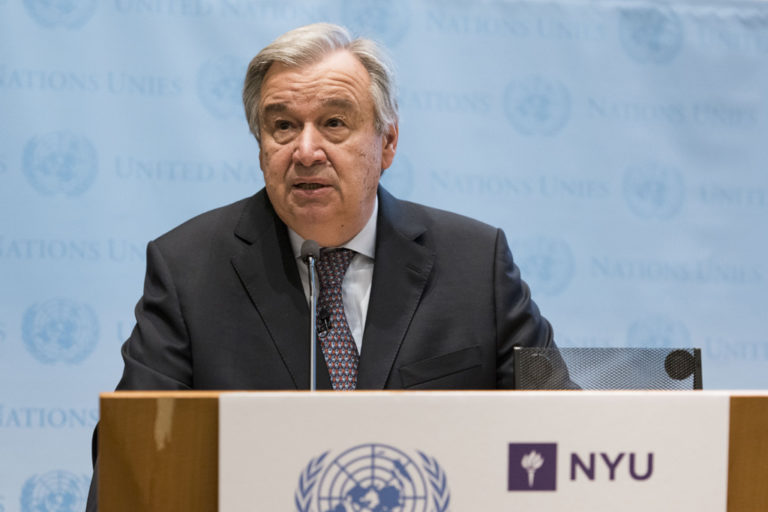
António Guterres
Secretary-General António Guterres. Photo credit: UN /Mark Garten

Guterres said this on Monday, December 10, 2018 in Marrakech, Morocco, at a special event to mark the 70th anniversary of the Universal Declaration of Human Rights.

The event was organised on the sidelines of the Intergovernmental Conference on Migration during which the Global Compact for migration was unanimously adopted by the participating 164 UN member-states.

He said that the safety articles of the Declaration constitute practical measures for achieving peace and inclusive sustainable development.

He noted that it had given birth to movements of all kinds from indigenous peoples to persons with disabilities.

He, however, observed that 70 years after the declaration, the violation of human rights persisted, ranging from torture, execution, extra-judicial killings, detention without trial, among others.

Guterres said that the solution to societies’ problems lay in “staying bound to our shared commitment to uphold human rights and the inherent dignity and equality of each human being’’.

Also, Mrs Michelle Bachelet, the UN High Commissioner for Human Rights, described the Global Compact for Safe, Orderly and Regular Migration adopted on Monday as a vital human rights document.

Bachelet said the adoption of the Compact demonstrated that multilateral cooperation resulted in better outcomes than isolationism and disdain for others.

According to her, the Compact is a reminder that the human rights of all migrants must be “respected, protected and fulfilled at all times.

“At a time of heightened anxiety and the changing realities of a globalised world, when some view migrants as convenient scapegoats for political gain, the Compact reminds us that the human rights of all migrants must be “respected, protected and fulfilled at all times.

“The Global Compact inspires us to greater international cooperation and collective efforts to end conflicts, reduce inequalities and ensure greater freedom and opportunity for all.’’

She recalled that 70 years ago, the global community recognised, for the first time, that all people had universal human rights and promised to promote and protect those rights.

She listed them as the right to equal protection of the law, right to life, liberty and security of person, the right to education, healthcare, food, shelter and social security.

Others are the right to be free from any form of discrimination, the right to freedom of expression and the right to privacy, the right to freedom of thought, conscience and religion.

On the list also are the right to due process and fair trial; the right to be free from torture, and from unlawful or arbitrary arrest or detention.

According to her, “the force of these and other fundamental rights binds us together as human beings, regardless of sex, race, belief, sexual orientation, nationality, migration status or any other factor.

“We share a common destiny on this planet where we live. We share the core values and principles enshrined in the Universal Declaration, which are essential to the maintenance of our mutual peace, prosperity, and sustainable development.’’

She explained that lessons learnt from the World Wars made it imperative to draft treaties and conventions that would create conditions for more enduring peace.

Bachelet noted that great progress had since been made as women and men had been inspired by the Universal Declaration, to demand their human rights.

According to her, hungry, desperate human beings seeking safety and dignity necessary to life are not a hostile invasion or a catastrophic tidal wave.

“They are victims, not perpetrators; they are people just like us — tired and in need. And they are moving – many of them – because they have no other realistic choice.

“Although no state is bound to accept every person who arrives at its borders, all human beings are bound by the imperative of compassion.

“Blood has one colour. Pain is the same, no matter what language we scream in. We are equal, all of us — regardless of the location of our birth, our gender, our race, ethnicity or belief, our disability status or our possession of specific administrative documents. ‘’

She described the principles of the Universal Declaration of Human Rights as a living document, adding that the universal values contained in it could safeguard the world.

“Universal Declaration is a living document, just as powerful and valid today as it was in the ashes and rubble of global destruction.

“May it guide the world’s nations to greater peace, dignity and justice in the years to come,’’ she said.

By Nkechi Okoronkwo

COP24 urged to step up ambition in response to IPCC report

0

Ministers arriving in Katowice this week for the UN climate talks have been called on to demonstrate their understanding of the current climate emergency through words but more importantly through actions.

Jennifer Morgan
Jennifer Morgan, Executive Director, Greenpeace

Jennifer Morgan, Executive Director, Greenpeace, who made the call on Monday, December 10, 2018, said ministers must anchor messages of the IPCC 1.5 report, ensure that the Paris rulebook drives ambition, and pledge greater financial support to aid the developing world calling on countries like Norway, New Zealand, Australia, Japan, and the EU countries to deliver on financial pledges.

Morgan expressed concern over the present COP Presidency, saying: “There is no working group on ambition. How can you be a COP President of all the countries in the world after the IPCC report and not set up a group to figure out a signal that needs to be sent here on ambition? We call on him to open up such a negotiating group and to get real about what’s happening on climate change.”

Apart from persistently blocking the current negotiations, the United States is said to be hosting a sideshow at COP24 supporting fossil fuels – and reportedly undermining its credibility in the negotiations. Observers expect the American ministers to struggle to find strong footing in the political discussions as a result of their ongoing disruptions of constructive climate dialogue.

However, the USA is also represented through the “We Are Still In Coalition”, which represents half of the domestic population and over $9.4 trillion in economic activity.

“The leadership that you can see at the US Climate Action Centre more accurately reflects the transition that is underway in the United States and should be the symbol that other ministers and the political leaders this week use to guide their own ambition for the future of the Paris Agreement,” said Lou Leonard, Vice President, Climate Change, WWF-US.

Saturday’s failure to acknowledge the IPCC 1.5 report in Subsidiary Body for Scientific and Technological Advice (SBSTA) should send a clear message to the arriving ministers that delivering a full ambition package is crucial in this week’s negotiations.

“Without ambition, without concrete actions to deal with the climate crisis, the most wonderful rulebook in the world wouldn’t make a difference,” said Jennifer Tollmann, Researcher, Climate Diplomacy, E3G.

“With regards to the rulebook we have seen progress being made, but we are now at a crossroads. Ministers may now strengthen it and add ambition as a concrete element or they can water down the rulebook, thus undermining the Paris regime. Today’s start on finance consultations is equally crucial in developing the rulebook groundwork on which ambition can be built. Further, Tollman highlighted the existing loopholes, transparency framework, and loss & damage and land use accounting which could undermine ambition. These need to be addressed in ernest to streamline options before presenting text to Ministers.”

Svitlana Romanko, EECCA Regional Coordinator, 350.org, spoke out against the Polish authorities attempts to silence civil society through arrests, detention and deportation. Several civil society activists have been detained and deported as they tried to reach Katowice for COP24. These events are starkly contrasted by today’s 70th anniversary of the UN’s Declaration of Human Rights. Romanko asked the UN to set clear and strict guidelines for hosts countries to prevent such repression and stop the arbitrary detention of civil society activists.

The first week of negotiations have reportedly failed to develop a backbone for climate finance. Kashmala Kakakhel, Climate Finance Specialist and Advisor, set expectations for week two by describing the four key elements that need to be discussed.

Kakakhel said: “Firstly, we need to acknowledge the rising costs of climate change and the imperative to put the needs of the people in the forefront. Secondly, although there are existing arguments that several hundred billion dollars are already being put into climate related initiatives, we need to consider the net value and the actual assistance seen on the ground.

“Thirdly, developed countries must stop blocking dialogue on post 2025 financial targets. If we ask countries to lay out plans till 2030 how can we not have a discussion on support for post-2025? Lastly, finance is the key driver for ambition and we need to see greater commitments to the Green Climate Fund. Real money will lead to real climate action.”

Africa to need $7b for rice imports by 2020 – FAO

0

The UN Food and Agriculture Organisation (FAO) has predicted that Africa will need a whopping $7 billion for its rice imports annually by 2020.

Abebe Haile-Gabriel
Abebe Haile-Gabriel

Abebe Haile-Gabriel, Officer-In-Charge of the FAO Regional Office for Africa, said this in his message on Monday, December 10, 2018 at the opening of the two-day conference on Sustainable Rice Systems in Sub-Saharan Africa, in Ada in Ghana.

He therefore noted that there was the need for effective leadership and political will coupled with concerted efforts for Africa to achieve self-sufficiency in rice production and end hunger.

The African Rice Project is under the UN South-South Cooperation programme.

China is one of the major development partners supporting the South-South Cooperation programme especially in Africa and Asia.

Official data by FAO indicated that in 2015 alone, African countries had imported about 36 per cent of their rice requirements at the cost of about 4 billion dollars.

“The projection for 2020 does not seem to change that percentage, only that the drain on foreign exchange to foot the import bills are expected to rise to $7 billion annually,” the official said.

Haile-Gabriel urged that rice self-sufficiency for Africa should not only target meeting consumption needs locally but also at the multiplier effect through the re-allocation of the much-needed foreign exchanges.

He also called for investing in the rice value chain development initiatives that would create and expand employment opportunities for youth and women.

Represented at the up-scaling conference were delegates from the ministries of food and agriculture of Ghana, Uganda, Cameroon, Benin, Mali, Cote d’Ivoire, Nigeria, Tanzania, Guinea, Kenya and Senegal.

Nigerians urged to adopt environmental sanitation to reduce malaria

0

The Federal Government on Monday, December 10, 2018 urged Nigerians to adopt environmental sanitation measures to reduce breeding of mosquitoes and prevent malaria.

Malaria-anopheles
The malaria-causing anopheles mosquito feeding on a victim

Dr Audu Mohammed, the National Coordinator, National Malaria Elimination Programme (NMEP), gave the advice at the Fourth Quarter Media Chat in Abuja.

Mohammed, who was represented by Mr Chukwu Okoronkwo, Head of Advocacy, Communication and Social Mobilisation, said that malaria was still a major cause of morbidity and mortality in the country.

He said that although malaria was endemic in Nigeria and constitutes a major public health problem; Nigerians must adopt the right health seeking behaviour, for the elimination of malaria.

“About 191 million Nigerians are estimated to be at risk of the disease, based on the 2018 world malaria report by the WHO.

“Estimated number of malaria cases has risen from 52.4 million in 2016 to 53.7 million in 2017.

“Total number of deaths due to malaria has reduced from about 98,378 in 2015 to 81,640 in 2017.

“The first strategic objective of NMEP’s 2014-2020 strategic plan; highlights that at least 80 per cent of Nigerians utilised appropriate preventive measures by 2020,” he said.

Mohammed said that environmental management seeks to reduce the abundance of all mosquitoes as well as targeted malaria vector species.

He added that the government at both federal and state levels have through new construction and renovation of road systems, with good drainage systems, assisted in reducing breeding sites of the vector.

He underscored the need for individuals to maintain environmental sanitation in and around the places they live and work.

Mohammed enjoined the media to educate Nigerians on guidelines for treatment of malaria, which recommended diagnosis, in all suspected cases before administration of treatment.

“Usually, there are two types of tests: Microscopy and Rapid Diagnostic test.

“The test is meant to provide evidence of the malaria parasite in the blood of the patient, before he/she can be treated.

“Our guidelines emphasise the importance of high-quality microscopy and where not feasible or available, quality assured rapid diagnostic tests should be used,” he explained.

By Jessica Onyegbula