Home Blog Page 1739

UN to COP24: Prepare Africa for ravages of climate change

0

The United Nations Development Programme (UNDP) has called on the international community to evolve measures to prepare the African continent for the ravages of climate change.
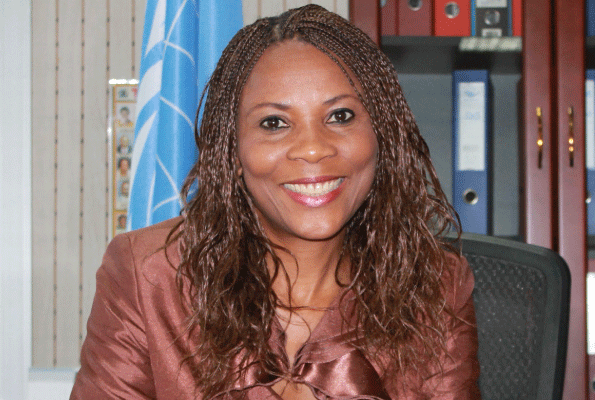
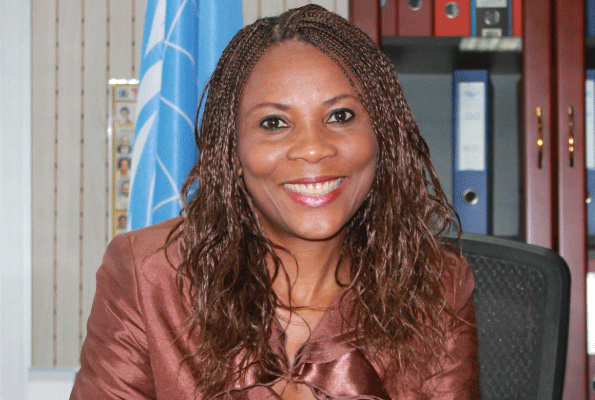
Ahunna Eziakonwa
Ahunna Eziakonwa

Ms Ahunna Eziakonwa, Director of UNDP’s Africa Bureau, who made the call at the 24th Session of the Conference of the Parties (COP24) to the United Nations Framework Convention on Climate Change (UNFCCC) in Katowice, Poland, said preparing Africa for the reality of climate change “cannot be an afterthought.”

Eziakonwa said: “Taking reactive approaches to food security and disaster recovery costs the people of Africa billions of dollars in lost GDP, and syphons off government resources that should be dedicated to education, social programmes, healthcare, business development and employment”.

According to a new report launched by the UNDP, Africa is at a “tipping point” as global warming increases, and urgent action needs to be taken across the continent now to mitigate risks and safeguard a decade of social and economic gains.

For two weeks, the COP24 has brought together thousands of climate action decision-makers, advocates and activists, with one key objective: adopting global guidelines for the 197 parties of the 2015 Paris Agreement.

At the Paris Agreement, countries committed to limiting global warming to less than 2 degrees centigrade – and as close as possible to 1.5 degrees centigrade – above pre-industrial levels.

Ahunna noted that despite major structural inequalities, nations across the continent have achieved “impressive economic, political and social growth in recent decades.”

She, however, argued that “climate change, droughts, floods, changing rainfall patterns and conflict have the potential to unravel efforts to reduce hunger and achieve the goals outlined in the Paris Agreement, and the 2030 Agenda for Sustainable Development.”

The UNDP study shows that, should the world fail to limit global warming to less than 2 degrees centigrade, families will find it hard to feed themselves, and the risk of famine and increased poverty will rise along with temperatures.

Higher levels of poverty would further limit the capacity of communities to manage climate-related risks, according to the report.

The report warned that failure to mitigate climate-related risks could translate into more risky migration patterns, serious epidemics such as the 2014 Ebola outbreak across West Africa, and greater political instability.

Drawing on years of data from projects geared to enabling communities to adapt to a changing climate and build resilience, the report shows that as emissions continue going up, support for climate adaptation initiatives must be increased urgently and accelerated across the continent, especially across the 34 African least developed countries.

However, measures to enable communities to adapt to the changing climate is a costly matter that would require creative financial mechanisms and substantial engagement with the private sector to meet.

It would also require developed nations to make good on their 2015 Paris Agreement commitments to dedicate $100 billion annually to supporting climate action in developing nations.

The report analyses several noteworthy successes in climate change adaptation in Africa over the past decade, including projects aimed at improving food security in Benin, Mali, Niger and Sudan.

It also analysed supporting governments in having improved climate information and early warning systems to save lives from fast-acting storms; and empowering women to be effective climate action champions.

By Prudence Arobani
Renewable energy critical to addressing nation’s electricity deficit, says don

0

A Professor in the University of Agriculture, Markurdi, Benue State, Prof. Isaac Itodo, has urged the Federal Government to come up with a better regulatory framework on renewable energy to address the nation’s electricity deficit.

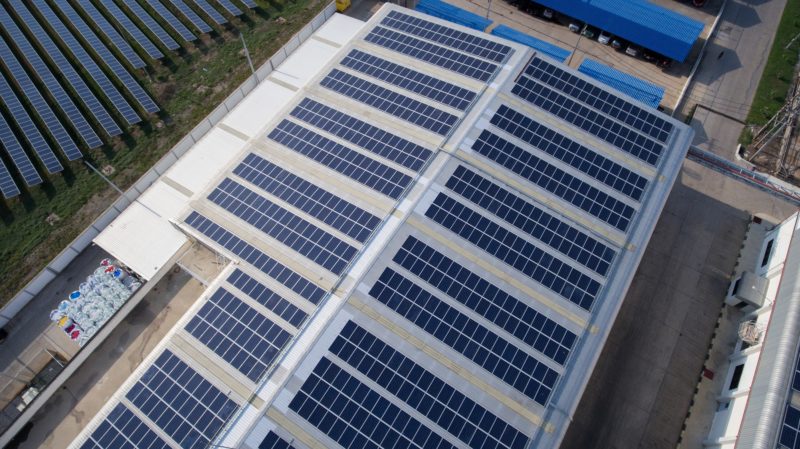
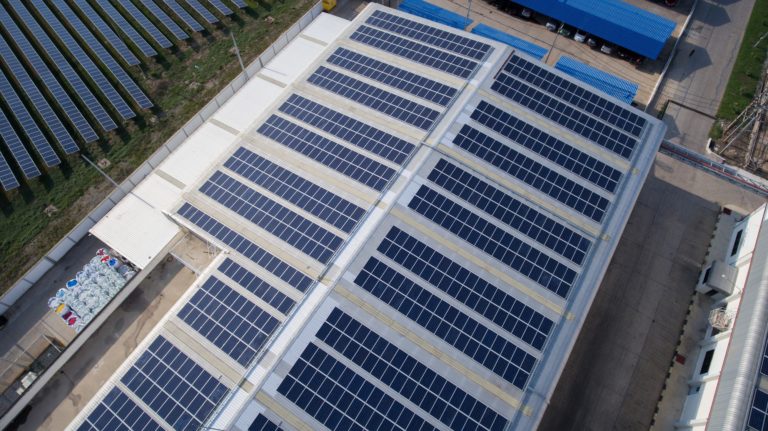
Solar panels
Aerial view of solar panels on rooftop

Itodo made the call on Saturday, December 15, 2018 at a “Knowledge sharing Workshop on: Sustainable Biogas Generation as an Alternative Energy Resource in Nigeria” in Delta State.

The event was organised by the Higher Education Partnership for Subsaharan Africa (HEP-SSA) projects and held at the Federal University of Petroleum Resources (FUPRE), Effurun.

Itodo, who spoke on “Sustainable Energy Resources: Practical Experience with Biogas Production and Utility”, said renewable energy in the country lacked proper regulation and technical expertise among others.

According to him, most of the biogas plants built in Nigeria were based on “try and error”, adding only about 25 biogas facilities are functional in a country of over 180 million population.

The biogas expert said that Nigeria cannot meet her huge energy demand through hydro power source hence the need to urgently diversify.

“The 8,000 megawatts we generate as electricity is a mere theory, Nigeria needs a minimum of sustained 35,000 megawatts to drive her industrialisation and other sector of the economy.

“Energy consumption per capita is a parametre for measuring the economic index of a nation,” he said.

Speaking with newsmen, Itodo said there were different forms of renewable energy among which are: biofuel which includes biogas, solar and thermal, among others.

“We must keep fate with the renewable energy technology because that is the only way the country can be energy independent and by implication stimulate other infrastructure like the ICT.

“Renewable energy is the only way we can reduce our electricity deficit and improve our energy per capita consumption.

“Our energy per capita consumption is very low compared to average countries in Africa like Gabon and others,” he said.

Itodo said there was need for experts in the renewable energy sector to meet periodically to brainstorm and deploy various technology to meet the electricity demands of the country.

“To build a biogas plant is try and error in Nigeria, it takes me almost three years to get a biogas facility working despite having a Phd in it.

“What you have in the laboratory is almost different from what you have in the field, so people should form groups certified by the regulatory agency and start training on biogas,” he said.

Earlier, Dr Omonigho Otanocha, project coordinator, FUPRE-HEP-SSA, said the aim of the workshop was to share knowledge on the importance of biogas to the people, environment and the country.

He said the programme was aimed at propagating the sustainable production of biogas as well as scale up technology so that Small and Medium Scale Enterprises and households can use the organic substances generated to produce energy.

“This project will last for two years between 2018 and 2020.

“It will be held in other four universities in Nigeria which include: Edo State University, Iyamho; University of Abuja; Alex Ekwueme University, Ebonyi; and Federal University of Agriculture, Abeokuta to build research and development,” he said.

The FUPRE Vice Chancellor, Prof. Akaehomen Ibhadode, who was represented by Prof Akpofure Oke, declared the workshop open.

Other resources persons including Prof. Kai Cheng of Brunel University, London also spoke at the event.

By Edeki Igafe

Group, research institute to collaborate on afforestation

0

A not-for-profit outfit, The Rural Environmental Empowerment (TREE) Initiative, has signed a Memorandum of Understanding (MoU) with the Forestry Research Institute of Nigeria (FRIN) on the conservation of the forest.

Forestry
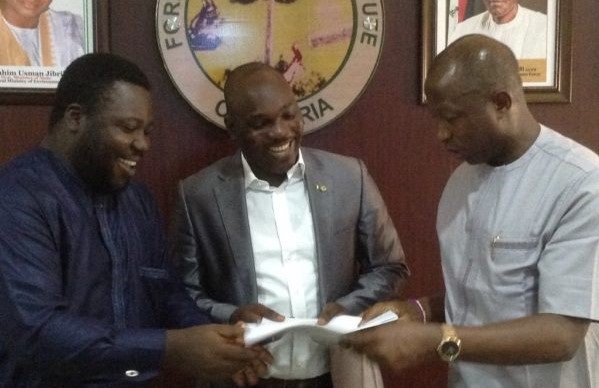
Dr. Shola Adepoju, Director-General, Forestry Research Institute of Nigeria (FRIN) handing over the signed Memorandum of Understanding to the Co-Founders of The Rural Environmental Empowerment (TREE) Initiative, Mr Sola Kolawole (second left) and Mr Ropo Egbeleke (left) at the institute in Ibadan, Oyo State

The News Agency of Nigeria (NAN) reports that the MoU was signed at the institution by Dr. Shola Adepoju, the FRIN Director-General, and the TREE Initiative founders.

Dr Oladapo Akinyemi, FRIN Research Coordinator, told NAN that it was imperative for the institute to sign such MoU aimed at afforestation, agroforestry and re-vegetation.

“This is a welcome development from TREE Initiative. As a reputable institution vested with a mandate of conserving the forest, we will always partner organisations or groups with similar objectives,” he said.

Akinyemi, who said the MoU was in line with the institute’s mandate, stated that the implementation of the MoU takes immediate effect.

Mr Sola Kolawole and Mr Ropo Egbeleke, the Co-Founders of TREE Initiative, appreciated the management of FRIN for considering the collaboration as important and strategic.

Kolawole, Executive Director, TREE Initiative, told NAN that the organisation had since establishment advocated tree planting to mitigate the negative consequences of climate change occasioned by massive deforestation and desertification.

“The Goal 17 of the SDGs is ‘Partnership for the Goals.’ As we approach the 2030 date, it is important that we all come together to save our planet for future generations.

“For countries in the Tropics, it is collaborations like this between sincere Community Based Initiatives and State Actors that can help solve the climate change debacle and facilitate the achievement of the 2030 Agenda,” he said.

He said that deforestation was at the front burner of any climate change conversation or gathering, saying the World Bank at COP24 in Katowice, Poland has made a commitment to protect additional 120 million hectares of forests.

Kolawole urged Nigerian banks and the organised private sector to support foremost institutions like FRIN and dedicated civil society initiatives working hard to restore depleted forests.

According to him, “the collaboration with FRIN will boost our advocacy in our core thematic areas such as Tree Planting, Food Security and Sustainable Livelihood.

“It will also enable the Nigerian public, particularly communities facing direct impact of these challenges to know that Federal Government through agencies like FRIN is making remarkable progress in the fight against deforestation and desertification.”

Egbeleke told NAN that the initiative was aimed towards planting and nurturing no fewer than 10 million trees by 2025 through a mix of afforestation programs and farmer-owned agroforestry projects.

He said the aim was to address the combined global challenges of deforestation, hunger and rural poverty.

Egbeleke said that the organisation has launched “One Student One Tree Project” through a partnership with Ladoke Akintola University of Technology (LAUTECH), Ogbomoso.

“This is one avenue of achieving this medium-term goal. We intend to carry the One Student One Tree Project advocacy to all tertiary institutions located in rural environments across the Nigeria over the next few years.

“We are also coming up with a Shea Tree Restoration Advocacy Programme, an agroforestry propagation project in partnership with farmers, especially smallholder women farmers across the country.

“It is an initiative to save the Shea Butter Tree which supports the livelihood of about 500,000 women in Nigeria from extinction,” he said.

COP24 overshoots closing day amid hopes for a deal

0

Negotiators were preparing to work well past the official close of the UN Climate Change Conference in Katowice in the evening of Friday, December 14, 2018.

The COP Presidency announced late Friday evening that the draft decision for 1/CP.24, 3/CMA.1 and other related decisions would be available after 1 a.m on Saturday, and that the plenary meetings would start at 4 a.m.

Katowice COP24
There are hopes for a decent outcome from COP24

This was to address unresolved issues and ensure that a deal eventually emerged as a new draft text had been released hours earlier.

The outline decision contains plans for a common rulebook for all countries, with flexibility for poorer nations.

There are also calls for all countries to increase their carbon cutting commitments by 2020.

Most ministers believe the strength or weakness of the final outcome is still in the balance.

Among the key issues not yet decided is the question of loss and damage.

This issue has bedevilled climate negotiations for many years as developing countries seek recognition and compensation for the damages caused by rising temperatures.

The idea of being legally liable for causing climate change has long been rejected by richer nations, who fear huge bills well into the future.

At these talks, the question of loss and damage only features as a footnote in the text at present, something that has irritated developing countries.

But many observers believed that overall, some progress is being made.

“It was never going to be great, not least because the US is playing a laggard role, but I think we can get a decent outcome, if it’s framed in the right way,” said Alden Meyer from the Union of Concerned Scientists.

Earlier, the former president of the Maldives, and now their lead negotiator, Mohamed Nasheed, made an impassioned plea for urgent progress on cutting carbon.

“It’s just madness for us to allow global CO2 levels (in the atmosphere) to go beyond 450 parts per million, and temperatures to shoot past 1.5 degrees,” he told a press briefing on Thursday.

“That can still be prevented. If we come together on the basis of the emergency facing us, we can do it.

“Every country at this summit will have hell to pay if we don’t.”

Representatives from 196 states are here trying to sort out some very tricky questions pertaining to the rulebook of the Paris agreement which comes into force in 2020.

These are the regulations that will govern the nuts and bolts of how countries cut carbon, provide finance to poorer nations and ensure that everyone is doing what they say they are doing.

It sounds easy, but it is very technical. At the moment countries often have different definitions and timetables for their carbon cutting actions.

However, some progress is being seen in shaping the rules.

“Some of the text that is key to the rulebook, in terms of the transparency of countries reporting their mitigating actions are pretty strong. It is better than it was a week ago,” said one senior negotiator.

Chile to host UN climate talks in 2019

0

Chile has been selected to host the next United Nations’ climate conference in 2019, it was announced at the current meeting in the Polish city of Katowice on Friday, December 14, 2018.

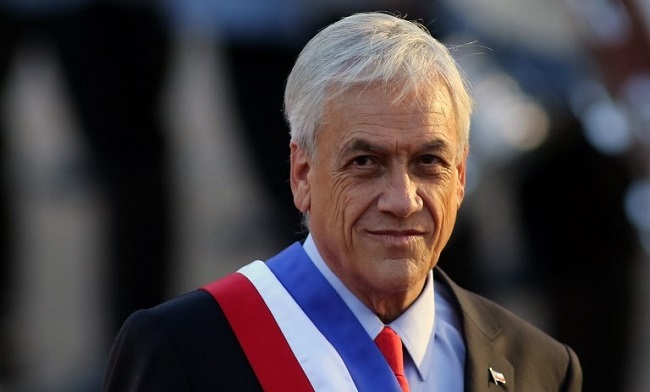
Sebastian Pinera
Chilean President, Sebastian Pinera. Photo credit: AFP / CLAUDIO REYES

Brazil was initially slated to host the talks, but far-right president-elect Jair Bolsonaro pushed the Brazilian government to withdraw its offer to host conference.

Under UN rules, next year is the turn of a Latin American or Caribbean country to host the event.

Chile and Costa Rica were the forerunners. Costa Rica withdrew because of the costs but offered to help Chile in the organisation of the so-called 25th session of the Conference of the Parties (COP25) to the UN Framework Convention on Climate Change (UNFCCC).

“We are delighted to tell you that for COP25, we will be working with Costa Rica,” Chile’s environment minister Carolina Schmidt told the conference in Katowice on Friday.

COP24: We organised a top-class event, says Polish leader

0

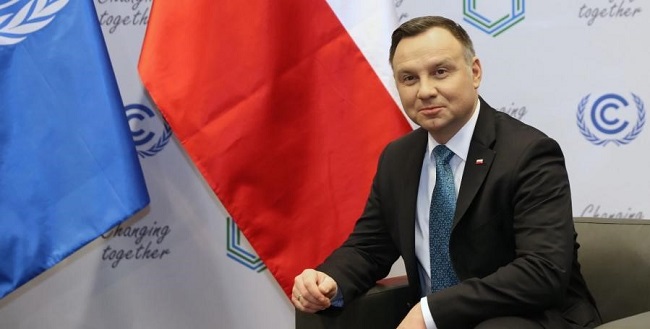
“Once again, we passed the exam, we organised an absolutely top-class world party at the highest level,” President Andrzej Duda of Poland said on Friday, December 14, 2018 in the sidelines of the 24th Session of the Conference of the Parties (COP24) to the UN Framework Convention on Climate Change (UNFCCC) in Katowice.

Poland had previously hosted the COP in Poznan (2008, COP14) and Warsaw (2013, COP19).

Andrzej Duda
President Andrzej Duda at COP24. Photo credit: Polska Agencja Prasowa / Andrzej Grygiel

The president had once again visited the Katowice summit where he met, among others, with UN Secretary General Antonio Guterres, chairman of the Intergovernmental Panel on Climate Change (IPCC) Hoesung Lee and COP24 president Michał Kurtyka.

“I have great satisfaction because everyone praises the organisation of the climate summit. All the people I spoke with emphasise that it is perfectly organised, that everything is going very well,” said the president after the meetings. “We, Poles, are responsible for this organisation, because we are the host of the summit, the summit is in Katowice.”

He added: “I am glad that once again we passed the exam. We’ve organised an absolutely top global event at the highest level. Everything is done as planned, everything goes very smoothly, the participants are happy, and everyone underlines it very strongly.

“I am glad that from the organisational side, for which – I stress – we bear responsibility, everything went well. I am counting on the fact that it will be complemented by a compromise, concluded – I hope – even today.”

While declaring his support in seeking a compromise at the summit, he went further: “Everyone is focused on this at the moment. I am also trying to support these aspirations, and it was precisely on this subject that I spoke with both secretary general Antonio Guterres and the president of the conference Kurtyka.”

It was initially thought that the summit, which attracted about 21,500 participants from around world, would be extended until Saturday, but COP organisers were optimistic that that might not be necessary as a “road map” of the implementation of the Paris Agreement could emerge late on Friday.

UK bids to host COP26 in 2020

0

“We have to make sure we can deliver a good COP, as 2020 will be a really vital COP, and we absolutely want to be part of that process. So, today I am announcing I have officially written to express the UK government’s interest in formally hosting COP in 2020.”

With these words, Claire Perry, Minister of State at the Department for Business, Energy and Industrial Strategy, formally declared the United Kingdom’s willingness to host the 26th Session of the Conference of the Parties (COP26) to the United Nations Framework on Climate Change (UNFCCC) in two years’ time.

Theresa May
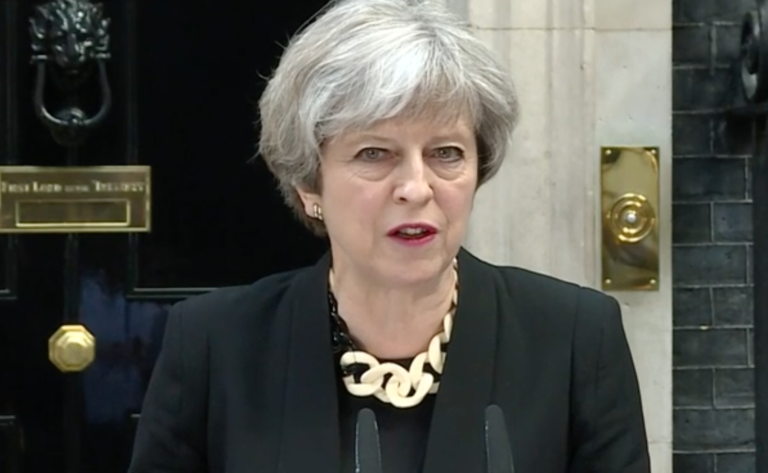
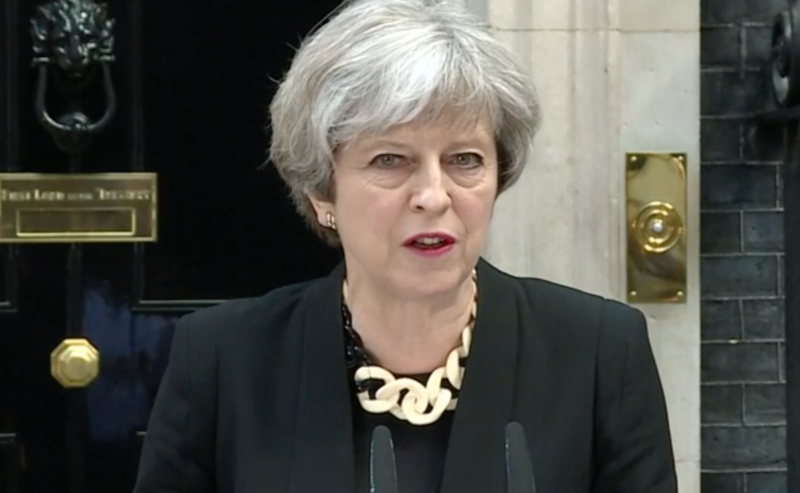
Theresa May, Prime Minister of the United Kingdom

The COP24 ended on Friday, December 14, 2018 in Katowice, Poland, having brought together governments from across the world to discuss how to keep global average temperature rise well below 2.0 degrees Celsius.

The UK has been at COP24 for the last two weeks to reinforce their commitment to reduce greenhouse gas emissions and invest in green jobs.

Thérèse Coffey, Parliamentary under Secretary of State for the Environment, discussed the importance of a circular economy at the Sustainable Innovation Forum. In the response to the growing plastic pollution, she said: “There is no reason in the UK to drink bottled water.”

The climate talks in 2020 will be crucial for countries to show they have met deadlines set at the Paris Agreement. If the UK is successful in their bid, it would strengthen the government’s determination to remain a world leader after Brexit.

The location of COP25 in 2019 is however yet to be announced but Chile and Costa Rica have been included as firm favourites. Brazil has withdrawn from hosting in 2019 as the new President-elect Jair Bolsonaro said on his campaign that he may pull out of the Paris Agreement.

This news follows the Mayor of London, Sadiq Khan, announcing a new 1.5C Compatible Plan to combat climate change.

Eight shark species to benefit from greater protection

0

After five days of intensive discussions, the 3rd session of the Meeting of the Signatories to the Memorandum of Understanding on the Conservation of Migratory Sharks (CMS) ended in Monaco, France on Friday, December 14, 2018.

Angel Shark
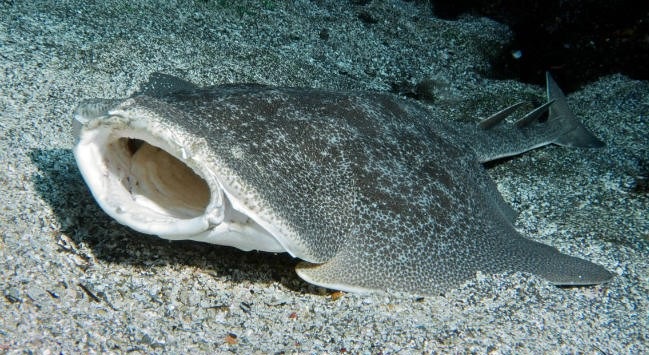
The Angel Shark is assessed as Critically Endangered in the IUCN Red List

Among the main decisions reached was agreement to include a further eight species on the instrument’s Annex meaning that they should benefit for greater international cooperation to enhance their conservation.

Scientists estimate that one quarter of sharks and ray species worldwide are threatened with extinction.

The eight species concerned are:

  • The Dusky Shark
  • The Common Guitarfish
  • The Smooth Hammerhead
  • The Oceanic Whitetip Shark
  • The Bottlenose Wedgefish and two look-alike species, the Smoothnose and White-spotted Wedgefish, also known as the Giant Guitarfish
  • The Angel Shark

The Angel Shark, which was proposed by the host of the meeting, the Principality of Monaco, is assessed as Critically Endangered in the IUCN Red List. Although the species was very common during the 19th and early 20th centuries, the global population has been depleted by target fisheries and, more recently, as a fisheries bycatch. The species’ last remaining stronghold is around the Canary Islands, but it is still recorded very infrequently across much of its former coastal range.

Agreement could not be reached on listing the Blue Shark proposed by Samoa and Sri Lanka and Signatories asked that the proposal be resubmitted at the next Meeting in three years’ time when further assessment of the populations of the species in the Atlantic, Pacific and Indian Oceans will have been undertaken.

Shark numbers have fallen dramatically in recent years, primarily because of overfishing and bycatch, while prey depletion is also affecting their conservation status, with many species now categorised as Critically Endangered, Endangered or Vulnerable on the IUCN Red List.

Representatives of 34 governments plus the European Union attended the meeting along with several leading NGOs dealing with marine conservation and international organisations including the Food and Agriculture Organisation of the United Nations and CITES, the Convention on International Trade in Endangered Species.

Defenders of Wildlife, an organisation with 20 years’ experience dealing with sharks, was accepted as the Memorandum’s twelfth “cooperating partner”.

The meeting took place at the Oceanographic Museum at the invitation of the Government of the Principality of Monaco.

The CMS or the “Bonn Convention” aims to conserve terrestrial, aquatic and avian migratory species throughout their range. It is an intergovernmental treaty, concluded under the aegis of the United Nations Environment Programme, concerned with the conservation of wildlife and habitats on a global scale.

The Memorandum of Understanding (MOU) on the Conservation of Migratory Sharks is the first global instrument for the conservation of migratory species of sharks.

COP24 delegates clamour women empowerment to save Africa from climate change

0

Africa must unlock the power of its women and girls if it is to adapt to climate change, cope with disasters and build its green energy sector.

Women
When women are involved in decision making, agreements on the environment are more likely to be ratified

That is the message from African delegates as the world deliberates on the implementation the Paris Agreement on climate change in Katowice, Poland.

Research shows that when women are involved in decision making, agreements on the environment are more likely to be ratified and projects around natural resources, such as water, are more likely to succeed.

If given access to education and finance, African women can contribute to finding technological solutions and driving the continent’s renewable energy industry too, according to experts.

“When you empower women in the context of climate change you empower a family, a community and a country,” says Dana Elhassan, senior gender expert at the African Development Bank (AfDB), which allocates international funds to development projects.

“You cannot solve a problem with half the team. A lot of the unpaid work that women do, such as collecting firewood and water, and caring for the family, are massively affected by climate change – so we have to make sure adaptation initiatives address their needs, vulnerabilities and potential.”


Women as agents of change

Studies show that when women are part of decision making, ratification of multilateral agreements on the environment are more likely, adds Mafalda Duarte, head of the $8.3 billion Climate Investment Fund, one of the largest climate financing instruments in the world.

There is also strong evidence that women play a vital role in dealing with disasters by mobilising communities – something that will become increasingly important as climate change advances, she says.

“Discourse is quite tilted to considering women as victims of climate change – but we are agents of change and if we are perceived as such this will make a big difference,” says Ms Duarte.

“Our empowerment represents greatly under-utilised opportunities to build our economies and tackle climate change.”

When women are empowered – given access to finance, assets and decision making – there are big impacts across sectors, she adds.

“Renewable energy is traditionally seen as a male sector but if you are deliberate in giving access to women, they become entrepreneurs and help us push forward that agenda,” says Ms Duarte.


Women can drive business and technology solutions

When women are empowered equally to men there is a massive leap forward in economic gains: a recent McKinsey study found that if women were participating economically as much as men, they would be adding 28 trillion dollars to global GDP by 2025.

In Africa, lack of access to finance has resulted in an estimated $42 billion financing gap for women entrepreneurs across business value chains.

Yet unlocking African women’s ingenuity and giving them access to finance could generate technological advancements that help deal with climate change, believes the African Development Bank.

As mobile phone technology has proven, Africa is capable of leapfrogging into an era of digitisation, which minimises risks and cuts costs of doing business.

African women have shown potential to compete in this digital work-space – Mfarm, AppsTech, JuaKali, Nandimobile, Hehe Ltd, Obami, DotNxt, are only a few of the women-led tech startups in Africa listed by Forbes.

“If we women are given the right platforms, we will achieve the change we wish to see in the world,” says Ms Duarte.

Unlocking investment in African women holds incredible return and transformational impact potential. Women form the backbone of African economies, accounting for a majority of small- and medium-sized businesses and dominating the agriculture sector as primary producers and food processors.

COP24 is the 24th Session of the Conference of the Parties to the United Nations Framework Convention on Climate Change (UNFCCC). This year countries are preparing to implement the Paris Agreement, which aims to limit the world’s global warming to no more than 2C.

Firm provides seeds adaptable to climate, soil

0

An Agriculture and seeds company, Agritropic Ltd., says it provides local farmers seeds that are suitable for Nigerian climate and soil.

Hybrid seeds
Hybrid seeds

Mrs Nonye Igbo, spokesperson for the company, made this known in an interview with the News Agency of Nigeria (NAN) in Lagos on Friday, December 14, 2018.

Igbo said: “Getting the right crop or vegetable seed that suits both soil and climate conditions has also been an issue for local farmers, hence the introduction of climate-friendly seeds.

“We sell tropical seeds, suitable for the Nigerian climate. The seeds are packaged in such a way that it fits into the Nigerian climate and suitable for our soil.

“Some local farmers complain of seeds sourced from foreign climes and how they do not sprout or geminate because the seeds are not adaptable to our climate or soil.

“It only points that such seeds were not produced or packaged putting into consideration our tropical weather.

“The seeds we provide for local farmers are ready-to-use and are easily adaptable to the soil and climate in Nigeria, Ghana etc.

“If farmers and even non-farmers apply the seeds the way they are taught, there will be no complaint concerning our seeds.’’

She also highlighted the contributions of the firm in boosting productivity in the seeds sector and the company’s responsibility in training local farmers on proper application of the seeds.

“Mile 12 market in Lagos state is a proof of the impact we have made in the Nigerian seed industry; with the truck-loads of tomatoes coming from the North, East and West.

“Our seeds are naturally-packaged and are not genetically modified. We have both hybrid and open pollinated seeds as well.

“We have various types of seeds both for farmers and non-farmers.

“We organise trainings for local farmers across the country on how to adequately plant both crops and vegetable crops and get the desired yields.

“We have workshops and seminars where we train local farmers on cropping, farming and the fumigation aspect of cultivating healthy crop and vegetables.

“We also provide technical assistance to local farmers, to make farming easier for them. Most local farmers are not conversant with how to plant packaged seeds and the entire process involved,’’ Igbo said.

According to her, it is not just about buying seeds; it is not about making money but to groom farmers on modern best practices in agriculture.

By Mercy Omoike