The Food and Agricultural Organisation (FAO) has urged member countries to adopt innovations and encourage collaborative efforts at achieving sustainable agriculture and food security globally.
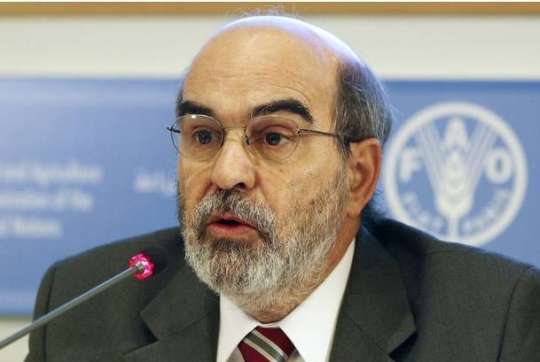
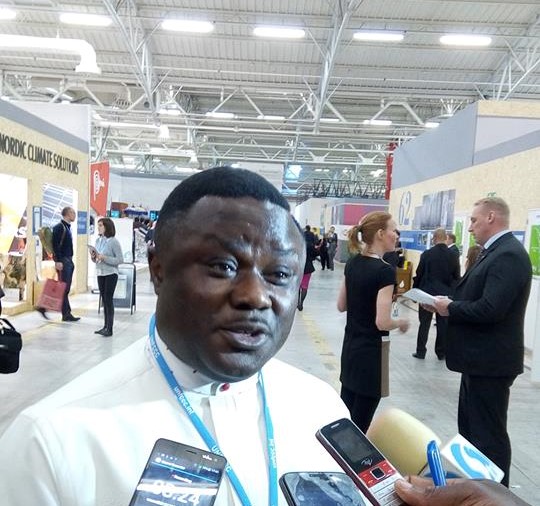
Jose Graziano da Silva, Director General of the FAO
The organisation’s Director-General, Mr José da Silva, made the call in his address on Friday, December 14, 2018 at the end of the council’s week-long meeting held in Rome, Italy.
He said that no country could overcome all the challenges facing agriculture and food production, stressing that it must be “a collective responsibility”.
“Countries cannot achieve the Sustainable Development Goals (SDGs) on the basis of traditional agricultural approaches, we need innovations,’’ he said.
Da Silva expressed confidence that the 2030 SDGs would help to eradicate extreme poverty, hunger and ensure a viable environment if all hands were on deck.
He also urged member states to support the various programmes of FAO with appropriate funding, noting that “countries continue to ask FAO to do more and more with less and less”.
Highlights of the council’s meeting include budgetary blueprints and discussion on proposals by member states or technical committees on agriculture, forestry and fisheries.
The council deliberated on 32 specific items that will require budgetary resources.
It commended FAO’s leading role in sustainable agriculture and food production, describing the deliberation as “the right forum to tackle these matters”.
Mongolians are lodging an online petition for the attention of the United Nations regarding the heavy air pollution in Ulan Bator, the country’s capital, having gathered some 36,500 signatures within about 36 hours.
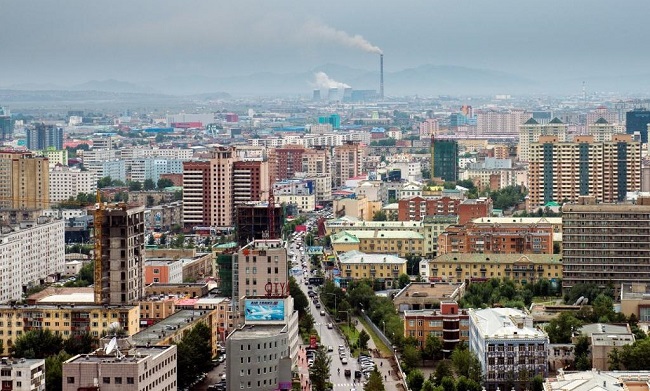
Ulan Bator, Mongolia
The appeal of “Death from Smog in Mongolia #HumanRights’’ was initiated more than 40 hours ago by an Ulan Bator resident who called himself Bat-Enkh.
It was put forward on the petition website – change.org.
Any petition on the website must collect at least 50,000 signatures before it can go forward for consideration.
The air pollution in the capital of landlocked Mongolia is said to be among the world’s heaviest.
The city is home to about half of the country’s population of 3.2 million.
In Ulan Bator, over 800,000 residents burn raw coal and other flammable materials to keep warm and cook meals during the six-month-long winter season, contributing 80 per cent of the local air pollution.
Since the early 2000s, the Mongolian government, international donors and development organisations, including the World Bank and the Asian Development Bank, have spent millions of U.S. dollars combating the air pollution in Ulan Bator.
However, the city has yet to see significant improvements.
Its air pollution on Jan. 30, this year was more than 130 times the safety level set by the World Health Organisation.
President Muhammadu Buhari has approved the appointment of Alhaji Suleiman Hassan as the Minister of Environment, following the resignation of the Minister of State, Ibrahim Jibril.
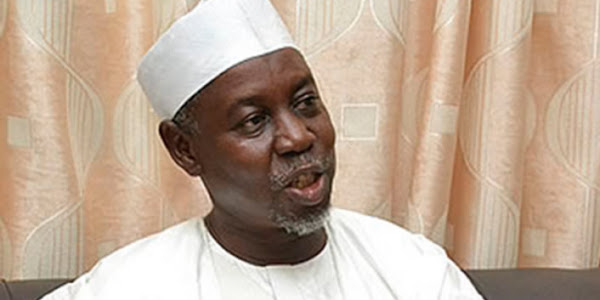
Alhaji Suleiman Hassan
Before his appointment, Hassan was the Minister of State, Power, Works and Housing.
Hassan’s appointment was conveyed in a statement by Garba Shehu, the Senior Special Assistant to the President on Media and Publicity in Abuja, on Thursday, December 13, 2018.
Jibril had on Wednesday announced his resignation from the Federal Executive Council (FEC) to enable him to assume his new position as Emir of Nasarawa.
Jibril, who appeared in traditional attire during the FEC meeting presided over by President Muhammadu Buhari at the Presidential Villa in Abuja, thanked the president for according him the opportunity to serve in the cabinet.
The minister said the appointment had afforded him the opportunity to serve the country in the last three years.
“The last three years had been full of opportunities and I must thank the Almighty God for giving us the strength and the courage to serve under your wonderful leadership.
“There is no doubt that I have personally learnt a lot from your sense of fairness to all and your commitment to the entire nation and the desire to fight corruption to a standstill.
“We learnt a lot from these outstanding qualities,’’ the minister said.
He also thanked members of the cabinet for their support and cooperation throughout the period he served.
Jibril was on Dec. 7 appointed Emir of Nasarawa in Nasarawa Local Government Area of Nasarawa State by the state governor, Alhaji Tanko Al-Makura.
As governments meet in Poland for another round of climate talks, a major milestone was reached on Thursday, December 13, 2018 in the worldwide movement to divest from the fossil fuel companies driving the climate crisis, with the announcement that over 1000 institutions with managed investments worth almost $8 trillion (€7 trillion) have committed to divest.
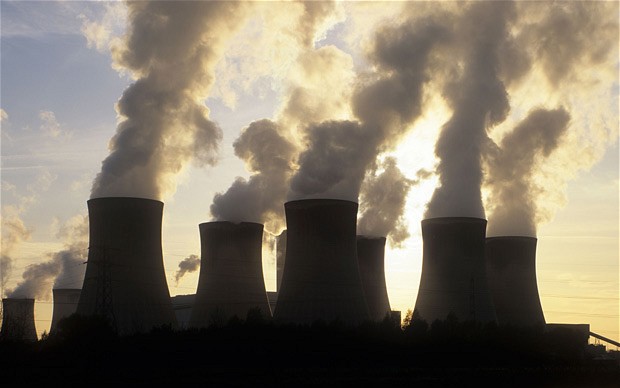
Fossil fuel pollution from a coal power station
The 1000th institution to divest was the Caisse des dépôts et consignations (CDC), which manages France’s public sector pensions, savings, and investments worth €173 billion ($196 billion). It recently announced that from 2019 it will no longer invest in companies that make more than 10% of their business from coal – this implies that the top 200 companies in the coal-industry are now effectively blacklisted.
The latest commitments propelling the campaign to over 1000 institutions include: AG2R la mondiale ($114 billion), Australian Vision Super Fund ($9 billion) and Brandeis University ($997 million).
Launching a report detailing the history of the “divestment” movement and highlighting the 1000th divestment commitment at the UN Climate Summit in Katowice, May Boeve, Executive Director of 350.org, said: “When this movement started in 2012, we aimed to catalyse a truly global shift in public attitudes to the fossil fuel industry, and people’s willingness to challenge the institutions that financially support it. While diplomats at the UN climate talks are having a hard time making progress, our movement has changed how society perceives the role of fossil fuel corporations and is actively keeping fossil fuels in the ground.”
The report details that since 2012 the number of institutions commiting to fossil fuel divestment has increased rapidly, as has the total number of dollars of those who commited to sell their fossil fuel investments.
Boeve added: “The reach and impact of this global movement is huge — major institutions with almost $8 trillion in assets have commited to divest from the likes of Exxon and Shell. The momentum has been driven by a people-powered grassroots movement – it’s ordinary people pushing their local institutions to take a stand against the fossil fuel industry – the industry most responsible for the current climate crisis.”
Nico Haeringer, an organiser who supports divestment groups globally at 350.org, said: “Getting our public institutions to go fossil free is something that we can all do. Whether it is our university, our municipal government, or our pension fund we can turn off the money tap to polluting industries and we can force them to make better choices like investing in local renewable energy. It’s something that we see happening everywhere, with a momentum all of its own.”
The exponential rate of growth in the number of institutions and total funds divested from fossil fuels companies;
The global breakdown of divestments including numerous commitments on every continent;
The sectoral breakdown of divestment actions, which demonstrates the moral leadership of the faith sector on the issue of divestment;
Politically significant commitments such as those of the sovereign wealth funds of Ireland, Norway and city divestments of Cape Town and New York.
The first fossil fuel divestment commitment made since the movement was launched was made by Unity College (Maine) in the United States in 2012.
On the momentum for divestment since 2013, Nico Haeringe said: “This is a moral movement as well as a financial one. Just five years ago we had 181 divestment commitments and $50 billion shifted away from polluting industries and today we’re over 1,000 and approaching $8 trillion dollars.
“Despite the enormous progress and the spike of divestment commitments, we need hundreds more to move their money out of dangerous fossil fuels. Massive pension funds like New York State, to moral authorities like the Vatican, to iconic institutions like the Nobel Foundation, to premiere universities like Harvard, Yale, Oxford, and Cambridge, and US based insurance giants AIG, and Berkshire Hathaway. The tide is turning and the time to divest is now.”
On the theory of change of the movement, Boeve said: “The fossil fuel industry is one of the most powerful political actors in the history of the world. The tentacles of this industry reach into the offices of the powerful, including at this UN Summit where they’ve been welcomed on the red carpet. The divestment movement gives every person the opportunity to join the dots and make clear that climate change is not ‘just happening’ – it’s being actively fueled by corporations like Exxon and Shell and anyone who funds them.
“This movement started to send a clear message to the fossil fuel industry that we would not sit by while they profited by selling fuels that cause climate breakdown. It’s not just about the bottom-line, it’s also about their reputations in the public square. The scale of this movement shows that selling products that you know cause climate change is not acceptable, and nor is investing in them.”
On trends and opportunities in investment decisions relating to fossil fuels, Nico Haeringer said: “New people powered campaigns are starting almost daily to get local and prominent institutions to divest divest and also fund managers are increasingly making this decision of their own accord as it becomes clear that in 2018 an investment in fossil fuels is not ethical and is also risky financially.
“The next step in our campaigns will be to push this number past 2000 commitments and to actively call on these fund managers to invest in the just transition to 100% renewable energy for all.
“All financial analysis of changes in the sector show there are real limitations to simple shareholder engagement and we we are running out of time to change the course of these polluting behemoths. If extracting climate-change-causing fuels is the core business of a corporation then that’s not likely to change. The divestment strategy is the most forceful and impactful approach we have to signal a global standard that we cannot invest in or build any new fossil fuel projects.”
Speaking on a local divestment campaign Miriam Frank, Community Organiser of the Divestment campaign at Green Course, said: “Divesting the Hebrew University’s investments from fossil fuels contributes to weakening the legitimacy of the fossil fuel industry, by calling them out for the harm they cause to our planet and the exploitation of people. Israel is not doing enough in the fight against the Climate Crisis, even though recent studies show that the Middle East is a high-risk area and will be severely affected by the costs of climate change, that’s why in Green Course we are taking matters into our own hands.”
The Paramount Ruler in Khana Local Government Area in Rivers State, King Baridam Suanu, has urged the Federal Government to make visible progress in implementing the Ogoni clean-up project.
King Baridam Suanu
Suanu made the call in an interview with the News Agency of Nigeria (NAN) on Thursday, December 13, 2018 in Port Harcourt, the state capital.
The paramount ruler, however, commended the present administration for having the political will to launch the Ogoni clean-up recently.
According to him, this has unveiled continued government commitment to the project since the launch.
He, therefore, urged the Federal Government to do the needful by contracting the project as well as monitoring its funding and disbursements to achieve success in the exercise.
He said that, so far, the amount of money released to the Hydrocarbon Pollution Remediation Project (HYPREP) board and the ingenuity of companies shortlisted for the exercise showed some insincerity in its implementation.
“I heard that monies have been released to the HYPREP board, we were also told that 20 companies have already been shortlisted for the clean-up and as I speak these companies are yet to be seen on site.
“Though, I have my reservation about some of the companies shortlisted because I don’t think most of them even applied officially for the contract.
“Basically, I think there is a form of political situation going on at the seat of power.
“People just award contracts, my fear is that most of these companies that have been awarded the clean-up contracts may end up subletting them and that is not going to be very good for the exercise.
“For me, I think that the Federal Government is not yet keen at addressing Ogoni clean-up, whenever they are ready to achieve success in that regard, we will know,’’ he said.
Suanu said that, apart from an indigenous company known as Geo-Services Company among the shortlisted contractors, others had remained secretive in their operations.
“For now, I’ve not actually seen any of the companies being mobilised on site, but I know from the report available to me, there may be one indigenous company, Geo-Services among them.
“Others are unpopular companies that my instinct tells me may not have the technical knowhow to deliver on the clean-up project.
“Apart from a company like Geo-Services whose directorate and operations are known in this region others are new to me,” he said.
Resident Representative of the Food and Agriculture Organisation (FAO) in the Gambia, Madam Perpetua Katepa-Kalala, has revealed that the objective of the Canary Current Large Marine Ecosystem (CCLME) project is designed to help countries to bring together knowledge and capacity-building in order to establish adequate mechanisms of good governance.
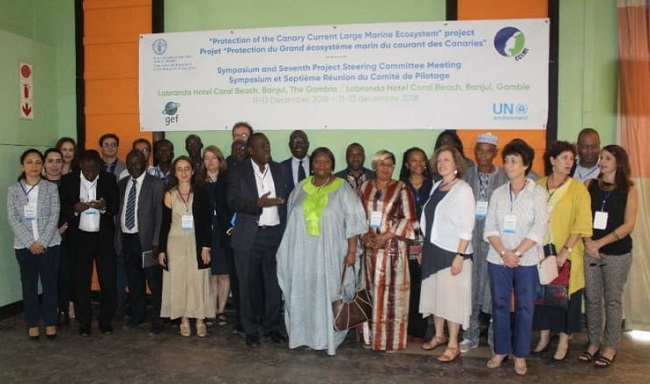
Participants at the Seventh Steering Committee Meeting of the project on the Protection of the Canary Current Large Marine Ecosystem, in Banjul, The Gambia
This, according to her, is aimed towards managing and reversing the trend of degradation of this ecosystem caused by overfishing, habitat change and changes in the quality of the water, by adopting a management based on the ecosystem approach.
She spoke at the official opening ceremony of the Seventh Steering Committee Meeting of the project on the “Protection of the Canary Current Large Marine Ecosystem” (CCLME) held in Banjul.
“The current phase of the CCLME project was initiated in 2010 and is jointly funded by the Global Environment Fund (GEF), countries of the region and partners. It is being implemented by FAO and the United Nations Environment Programme (UNEP) with two components: Fisheries and Environment. This project will benefit seven countries namely Cape Verde, The Gambia, Guinea, Guinea Bissau, Mauritania, Morocco and Senegal,” she pointed out.
Katepa-Kalala disclosed that it was at the CCLME first project steering committee meeting held in Dakar, Senegal in 2010 that agreement was made on the establishment of eight technical working groups to assist the process of development of a Transboundary Diagnosis Analysis (TDA) and the elaboration of a Strategic Action Plan (SAP) for the CCLME. These tasks, she noted, were achieved with success while the Strategic Action Plan (SAP) was signed by 12 Ministers of Environment and Fisheries of the seven countries.
Madam Katepa-Kalala further disclosed that CCLME demonstration projects have also made significant progress to respond to the issues addressed in their frameworks, while diverse actions could be replicated in the frame of the implementation of the Strategic Action Plan.
“This Seventh Steering Committee meeting will allow you to review the achievements of the project and examine the status of the main products of the project, while it also serves as an opportunity to analyse plans for the coming year,” according to her.
Speaking on behalf of the Minister of Environment, Climate Change and Natural Resources, Senior adviser to the Minister Dr. Malanding Jaiteh disclosed that the complexity of the ecosystem and the diversity of the interventions that it undergoes explain the relevance of the participatory approach taken by the project. It promotes across national boundaries, the agreement at the regional level that will enable countries to adopt a coordinated approach to deal with cross-border problems in various countries sharing this marine and coastal environment,” he stated.
This collaborative approach is probably the best way to improve the health of this ecosystem, he pointed out, adding that the participation of the Gambia in the project reflects the interest of the country in the management of its marine and coastal environment as the engine of environment development and with the conviction that it is only through sharing of expertise that the country can meet the challenges facing the country in all areas, including that of fishing.
Dr. Bamba Banja, Permanent Secretary of the Ministry of Fisheries, Water resources and National Assembly Matters, noted that the CCLME is one of the main global systems of transboundary currents with upwelling, and it also ranks third in the world in terms of primary productivity, after the large marine ecosystems (LMEs) of Humboldt and Benguela, and it provides the highest fish production of any African LME with an annual production between two and three million tons.
Dr. Banja revealed that it also provides ecosystem goods and services including habitats for fishes and other coastal species, freshwater coastal and estuarine rivers, mangrove forests, maritime and coastal areas for agriculture, aquaculture, urban tourism and transportation. The CCLME is a vital food and economic resource, not only for the coastal populations bordering the Large Marine Ecosystem, but also for much of West Africa, and beyond, he concluded.
A coalition of African environmental civil society organisations (CSOs) under the umbrella of the Pan Africa Climate Justice Alliance (PACJA) has expressed concern about lack of concrete outcomes so far, following the ongoing climate change negotiations in Katowice, Poland.
Mithika Mwenda, Secretary General of the Pan African Climate Justice Alliance (PACJA). Photo credit: cloudfront.net
“We detest the fact that, despite working to beat the deadline to deliver a credible report as mandated by COP21 held in Paris in 2015, the Intergovernmental Panel on Climate Change (IPCC) is under contemptuous attack by a coalition of climate deniers revolving around the United States,” said Mithika Mwenda, Executive Director for PACJA.
“There is no doubt that we leave Katowice when the IPCC Special Report has been trashed by a section of parties to the Climate Change Convention thus posing a credibility gap to the report,” he said.
The coalition feels that this is not good news to climate diplomacy which has traditionally relied on IPCC to inform the conversations. And this, sadly, could be a victory to those who have fought to reverse gains made to combat climate crisis. The functionality of the Kyoto Protocol is currently on “life support machine” and may be declared dead by 2020 because 23 Parties/countries have deliberately declined to ratify the Doha Amendment.
“We therefore urge the COP24 Presidency to expedite the consultations both under the Presidency and the Ministerial consultations on such critical areas of finance; Modalities, Procedures and Guidelines (MPGs) under the Paris Agreement with a focus on Transparency, Guidance on Mitigation/NDCs, Global Stocktake and compliance; Technology; Adaptation; and Cooperative Implementation under Article 6 of the Paris Agreement,” said Mwenda.
He elaborated the issues as follows:
Climate finance: We are greatly disappointed with the negotiation progress and lack of concrete and ambitious outcomes on the climate finance. A day to the conclusion of the negotiations, there is still no clear roadmap to fulfil pre-2020 commitments climate finance commitment; no conclusion on discussion of the robust climate finance communication and reporting framework for developed countries. In addition, there is no clear guidance on how the Adaptation Fund will serve the Paris Agreement and its resource mobilisation, as well as lack of a way forward on initiating discussion for a new quantified climate finance goal.
We also convey our discomfort with the emerging trend where developed country Parties want to shift their climate finance obligation to private companies. As non-state actors recognised in the Paris Agreement, private companies may contribute to the mobilisation efforts, but developed country Parties should be guided by their obligation under Article 4.3 of the Convention, to provide public, grant-based, new and additional financial resources to developing countries. We wish to reiterate that developed country Parties should not exploit the finance provisions under the Paris Agreement to escape their obligation to provide new and additional climate finance under the Convention.
We welcome the pledges of $129 million to Adaptation Fund which broke the single-year record of resource mobilisation. However, it falls short of around $264 million required for the Fund. Much more need to be done to support adaptation. We further welcome pledges for Green Climate Fund, but additional substantial pledges should be made and fulfilled to make the replenishment process a success. Assessment should therefore be done to identify the amount of funds necessary to assist developing countries in implementing the Convention.
Adaptation: This is an essential pillar in African climate responses at all levels. We thus are worried about the disagreements on which Parties should be encouraged to provide resources for the implementation of the work of adaptation-related institutions; an inventory of relevant methodologies for assessing adaptation needs; and the role of the IPCC in that process.
Loss and Damage: Africa continues to suffer enormous economic losses in billions of dollars as a result of climate change impacts. This is coupled with un-costed social losses due to climate induced displacement of persons thus triggering conflicts. Our conviction is that insurance is not the best solution for loss and damage. As we continue calling for a predictable and grant-based financing approach for loss and damage, we reiterate that Loss and damage must be reflected separately throughout the Paris Agreement Work Programme and should be integrated into every agenda item.
Enhanced Transparency Framework: We demand for flexibility as guided by the principle of Common but Differentiated Responsibility and Respective Capabilities (CBDR-RC) for developing countries; and financial support with capacity building for the enhanced transparency framework.
Technology Transfer: We re-emphasis the need for provision of support to the technology mechanism, and that a clear and effective framework is put in place for the periodic assessment of the support provided by developed countries on technology development and transfer.
We urge the COP Presidency that he has a life-long legacy to cultivate, in avoiding any manoeuvres to open re-negotiations of the Paris Agreement by upholding the principles of transparent and participatory consultations. Ministers have the potential to simplify the complexities that remain outstanding under the technical negotiations. We encourage our African Ministers to be steadfast on the African Position to ensure the outcomes in Katowice reflect our peoples’ expectations and needs.
A new study by Rocky Mountain Institute (RMI) shows how rural mini-grids can rapidly scale across sub-Saharan Africa by addressing key barriers and cost reduction pathways to reduce costs over 60 percent by 2020.
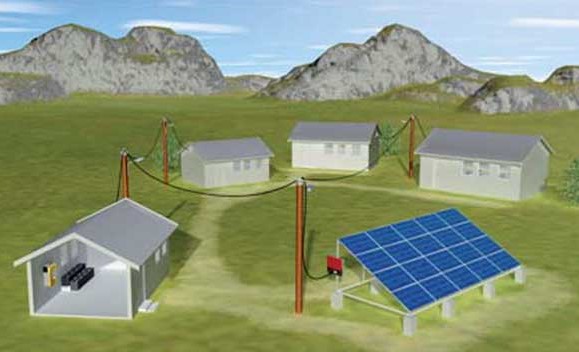
An impression of a mini-grid solar system
More than 600 million people, 65 percent of sub-Saharan Africa, lack electricity access. Hundreds of millions more have only an unreliable and intermittent supply at best.
The traditional path of bringing power to these unserved millions is to expand the electricity grid, build new fossil-fuel-based power plants and run transmission and distribution lines to far-flung villages, farms and homes. That model works in the developed world, where strong government agencies and locally organised cooperatives have driven electrification.
Yet the approach has not been as effective in sub-Saharan Africa and other developing regions for several reasons, including: high infrastructure costs, low ability of end-users to pay, disproportionately small end-use demand in villages and unreliable and intermittent electricity supplied via grid extension.
In the face of these challenges, alternative approaches like mini-grids are being considered to provide energy access to remote communities. Mini-grids – small-scale distribution networks with local generation based primarily on solar PV power and backed up by batteries or gensets for reliable 24/7 power – can provide significant levels of power in isolated, rural locations.
“There’s a transformative effect that comes with larger, more reliable amounts of electricity – whether it’s grinding millet or cassava, washing coffee beans, running welding equipment or driving irrigation pumps. These are essential appliances for real economic growth in rural Africa, and the kind of development so many African governments and citizens are seeking,” said Kelly Carlin, manager at RMI.
However, while successful examples exist, mini-grids have yet to scale across the continent. Addressing and overcoming barriers is critical for mini-grids to deliver benefits for the populations that need them most. The barriers to scaling rural mini-grids in Africa include high cost, an underutilisation of their generation capacity, expensive or unavailable financing and regulatory and policy barriers.
RMI identified a pathway to address these barriers and reduce mini-grid costs by 60 percent. Following this pathway would rapidly accelerate market growth for mini-grids by cutting the levelised cost of electricity of minigrid-produced power from between $0.60 per kWh and $1.00 per kWh today, to $0.25 per kWh by 2020, making it cheaper than alternatives like diesel gensets, and in many places, traditional grid extension.
Steps along the cost-reduction pathway
Reduce costs of mini-grid hardware. Leverage the ongoing fall in renewable energy costs by bulk purchasing components and streamlining procurement. Develop standardised, modular designs and simplify construction methods.
Ensure that the electricity generated is fully utilised. Focus on the productive use of electricity for activities like agro-processing by prioritising areas with existing businesses and by supporting business growth that will use power.
Focus on customer acquisition and relationship management. Engage the community and local groups to sign up customers, inform them of opportunities and retain their business.
Cut costs of construction and operation. Cluster isolated mini-grids together to improve efficiency, take advantage of remote monitoring technology and utilise local labour.
Enable low-cost financing. Increase the availability of, and reduce the cost of capital for, mini-grid projects through standardised financing and coordinated government and development partner efforts.
Reduce regulatory barriers, costs, and risks. Create transparency and an enabling environment for off-grid electrification and mini-grids in particular by setting clear and well-crafted regulations, fair and stable taxation and customs regimes and clear policies around grid extension.
More and more rainfall extremes are observed in regions around the globe – triggering both wet and dry records, a new study has shown.
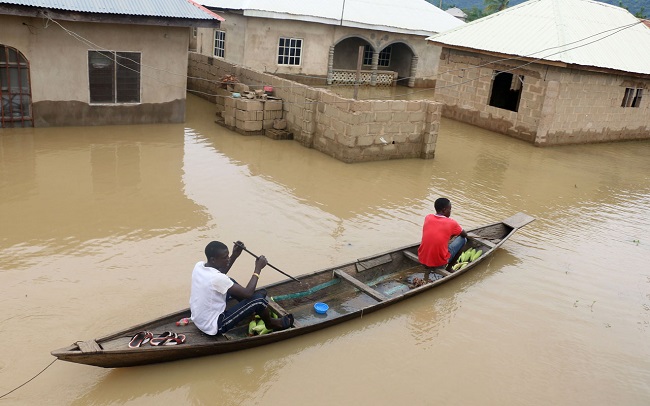
Residents steer a dugout canoe past flooded houses following heavy rain in the Nigerian town of Lokoja, in Kogi State, on September 14, 2018. Photo credit: AFP / Sodiq Adelakun
There are however big differences between regions: the central and eastern US, northern Europe and northern Asia have experienced heavy rainfall events that have led to severe floods in recent past.
In contrast, most African regions have seen an increased frequency of months with a lack of rain. The study is said to be the first to systematically analyse and quantify changes in record-breaking monthly rainfall events from all over the globe, based on data from roughly 50,000 weather stations worldwide. Climate change from fossil fuel greenhouse gases has long been expected to disturb rainfall patterns, say scientists.
“We took a close look at observed monthly rainfall data – if it’s not just a few days but several weeks that are record wet, this can accumulate over time and lead to large river floods, or to droughts if it is record dry,” says lead author Jascha Lehman from the Potsdam Institute for Climate Impact Research (PIK). He adds that the impacts on people’s livelihoods in the affected regions can be huge, ranging from flooded houses to endangered food security due to large-scale agricultural losses.
Downpour in parts of US, Europe, Russia – drought in parts of Africa
The US has so far seen an increase of record wet months by more than 25 percent in the Eastern and central parts over the period 1980-2013. Argentina and bordering countries have experienced an increase of 32 percent. In central and northern Europe, the increase is between 19 and 37 percent. In the Asian part of Russia, the increase is around 20 percent, while South East Asia shows an increase of about 10 percent.
The scientists ran strict tests for the statistical significance of observed changes. Therefore, they so far see significant changes in dry extremes just in Africa south of the Sahara and in the Sahel zone where dry records have increased by up to 50 percent.
“This implies that approximately one out of three record-dry months in these regions would not have occurred without long-term climate change,” says co-author Dim Coumou from the Institute for Environmental Studies (IVM) at Vrije Universiteit Amsterdam. “A central conclusion from our study is that, generally, land regions in the tropics and sub-tropics have seen more dry records, and the northern mid- to high-latitudes more wet records – this largely fits the patterns that scientists expect from human-caused climate change.”
UN climate summit decides about future rainfall extremes
The scientists compared observed wet and dry rainfall extremes to the number of extremes that would be expected in a climate without long-term changes.
“We checked for new records – monthly rainfall values that have never been observed before in a given region since the beginning of systematic measurements more than a hundred years ago. Of course, one expects to see some rainfall records simply due to natural variability. Normally, record weather events occur by chance and we know how many would happen in a climate without warming,” explains Jascha Lehmann. “It’s like throwing a dice: on average, one out of six times you get a six. But by injecting huge amounts of greenhouse gases into the atmosphere, humankind has loaded the dice. In many regions, we throw sixes much more often with severe impacts for society and the environment.”
“It is worrying that we see significant increases of such extremes already at just one-degree global warming,” adds Lehmann. “Right now, governments from countries all over the world meet at the UN climate summit – if they do not agree on solutions to limit warming to well below 2 degrees, we’re headed for 3-4 degrees within this century. Physics tells us that this would boost rainfall extremes even further.”
The Federal Government has declared Ikom and Yala Local Government Areas (LGAs) of Cross River State open defecation free (ODF).
Gov Ben Ayade of Cross River State
The declaration was made at a news conference held in Calabar, the state capital, on Thursday, December 13, 2018 by the state Ministry of Water Resources.
Speaking at the occasion, the Minister of Water Resources, Mr Suleiman Adamu, who was represented by Mr Emmanuel Awe, a Director in the ministry, commended the state government for the feat.
According to the minister, while Nigeria made significant progress in the provision of safe water supply in the past decade which had contributed to socio-economic development, the same could not be said of sanitisation and hygiene.
“Nigeria was reported to be the country with the highest number of people practising open defecation in Africa, with over 46 million people involved.
“To this end, the Ministry of Water Resources in collaboration with United Nations Children Education Fund (UNICEF) developed the strategic document -Making Nigeria Open Defecation Free,” he said.
The minister noted that, on Nov. 8, President Muhammadu Buhari also declared a state of emergency in the Water Sanitation and Hygiene (WASH) sector and launched the National Action Plan for the revitalisation of the sector.
“More recently, the ministry launched the Open Defecation Free Nigeria (Rural) 2025 campaign during the last National Water Resources Council meeting held in Abuja.
“These are geared to ensure that Nigeria meets the 2025 target of making the country open defecation free,” he said.
Similarly, the state’s Commissioner for Water Resources Mr Ntufam Gabe-Odu said all the communities in Ikom and Yala had satisfied the National Open Defecation Protocol.
He thanked the Community-led Health Improvement through Sanitisation and Hygiene Promotion in Nigeria (CHISHPIN) and all the other agencies that supported the initiative.
The commissioner also urged all hands to be on deck in order to make the state the first state to be declared ODF in the country.
Earlier, the traditional rulers of Ikom and Yala LGAs thanked the government for its efforts =and called for increase funding for such laudable initiatives to ensure sustainability.
“Sustainability is key to whatever we are doing; some communities operating this scheme in the states do not have boreholes and depend on streams which dry up in the dry season.
“We depend on what donors give to this state to survive and so if the state government increases its counterpart funding for projects like this, I think we will benefit more,” he said.
So far, five LGAs in the state – Obanliku, Bekwarra, Yakurr, Ikom and Yala – have been declared ODF.