The Nigerian Conservation Foundation (NCF) has said that,
through its Green Recovery Nigeria (GRN) initiative, it will establish a
reforestation scheme in 25% (230,942 sq. km) of Nigeria’s total landmass
(923,768 sq. km) from 2017 to 2047.
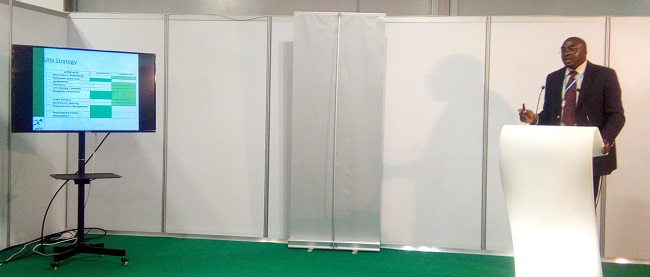
Dr Onoja Joseph of the Nigerian Conservation Foundation (NCF) making the presentation at the Nigeria Pavilion on Wednesday, December 12, 2018 during COP24 in Katowice, Poland
NCF’s Director, Technical Programmes, Dr Joseph Onoja, told delegates at a side-event during the UN Climate Change Conference (COP24) in Katowice, Poland in December 2018 that the initiative, which was informed by the alarming rate of loss of the nation’s forestry resources, would also promote actions to curb deforestation and forest degradation.
“The goal will be achieved through 75% natural regeneration
(173,206.30 sq. Km) and 25% afforestation (57,735.50 sq. Km),” disclosed Dr
Onoja, adding that the GRN strategies include setting up of structures and
policy instrument to arrest the alarming deforestation rate in the country.
On what informed the GRN, he said: “In just about 15 years,
Nigeria lost about 46,500 sq. km of forest, thus putting the annual rate of
forest loss to an estimated 3096.14 sq. km. If the appalling rate continues
unabated, other countries north of Nigeria in the arid zones may boast of
having more forestlands than Nigeria by 2040.”
According to him, the GRN would strategise on how best to reclaim,
rehabilitate and restore marginal/abandoned/degraded lands to forest cover. He
added that, besides improving livelihoods, mangrove restoration and rehabilitation
would equally be prioritised.
Implementation for the pilot phase of the GRN is already
underway and it seeks to plant about 2.2 million trees covering 2,000 ha from
2017 to 2019. Community tree nurseries established during this period will be
maintained and operated throughout the life span of GRN initiative, added the
Lagos-based not-for-profit group.
But Onoja disclosed that the NCF would not solely execute
the project.
His words: “The NCF recognises the fact that this is a
daunting task. NCF is leading (coordinating) efforts of GRN, but certainly will
not do it alone. It can only be achieved by all stakeholders in the forestry
sector in Nigeria.
Stakeholders who will be key in the implementation of GRN
include but not limited to: federal and state governments and their relevant
agencies, local communities, national and international donor and development
agencies (DfID, CIDA, USAID, ECOWAS), the private sector, and International
organisations (UNEP, UNDP, etc).
“We are also harnessing the efforts of other stakeholders
such as governments of Lagos (intends to plant 10 million trees by 2020), Imo (acquired
about 634 hectares of land across the state in various communities for tree
planting), Ekiti (intends to plant 250,000 trees in secondary schools across
the state) and Kaduna (planting 1 million trees annually to combat
desertification).”
A group of settlement development practitioners appears to
have taken the bull by the horn in what looks like a spirited bid to inject a
fresh lease of life in the practice of their profession.
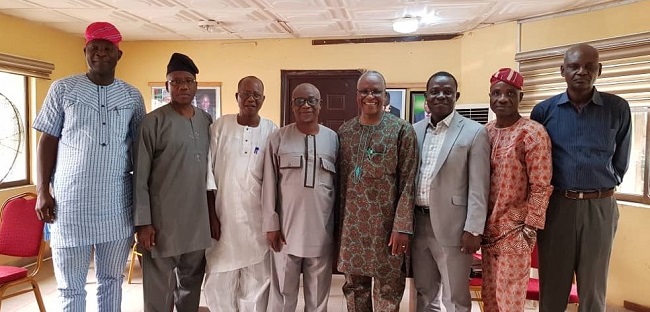
L-R: TPLs Moses Ogunleye, Tunji Odunlami, Bunmi Ajayi, Waheed Kadiri, Toyin Ayinde, Wale Alade, Ayo Adediran and Michael Simire, at the PPRI Formal Inaugural Meeting held on Thursday, January 10, 2019 at the Joseph Awogbemi House, Lagos NITP Secretariat, Alausa, Ikeja
Bothered about the the somewhat unsavoury image being projected to the public, no fewer than 10 town planners have embarked on a journey to right perceived wrongs and set the path of the urban planning profession towards a prosperous future.
Under the aegis of the Physical Planning Renaissance
Initiative (PPRI), a not-for-profit outfit that they recently established, the
experts have set out to not only highlight the essence of planning and what
they do as professionals, but also to galvanise the public to further stimulate
their interest in participatory planning.
The founding members of the PPRI are Yacoob Abiodun, Bade
Falade, Bunmi Ajayi, Waheed Kadiri, Toyin Ayinde, Moses Ogunleye, Tunji
Odunlami, Wale Alade, Ayo Adediran and Michael Simire.
At a formal inaugural meeting held on Thursday, January 10,
2019 in Lagos, members renewed their determination to realise the set vision,
mission, goals and objectives of the organisation.
They likewise underscored their resolve to:
harp on the roles of government, the lawmakers
and Policy-makers in order to guarantee institutional and legal support for
planning;
spotlight planning achievements and best
practices for wider dissemination;
report the sterling achievements of the
individual or corporate planners to encourage mentoring and to create a retinue
of proteges; and,
embark on self-appraisal by starting to fix any
wrong perception(s) about planning and planners in order to reassure the Nigerian
public that “we care”.
Abiodun, planning advocate and convener of the PPRI, said: “The
emergence of the PPRI will lead to a medium where urban planners will use
to get the reading public informed about the essence of planning, what planners
do, showcases planning success stories and best practices for people to know
where such planning interventions exist in Nigeria. Members of the profession
around the country will also have the knowledge of what their counterparts are
doing in the states of the federation.
“The medium will also carry contemporary news/practices
about planning beyond the shores of Nigeria that could be applicable to the
country’s planning situation. In a nutshell, the PPRI platform will give a new
lease of life to planning in Nigeria. The students of planning will use it as a
resource material including the academics. As for the prospects, the
sustainability of the platform will drive the prospect.
“Once it is introduced to the Nigerian media market and the
reporting is good in contents with arrays of interesting planning topics, the
demand for the magazine will be enhanced. The prospect is ‘hopefully’ good once
every hand is on deck to make it a successful venture. The PPRI will be filling
a vacuum created by paucity of information about planning in Nigeria and among
Nigerians.”
Ogunleye stated: “The birth of the group will bring in
alternative views and perspectives to the delivery of effective services in
physical planning. It will stimulate stakeholders for greater action and
facilitate inclusiveness. It will be most beneficial to government at all
levels as they will, among others, be able to feel or gauge the expectations
including anxieties of the public.
“Ultimately, the body will become Nigeria ‘s leading group
raising awareness on matters that affect human settlement development for
economic growth, livelihood advancement and broad sustainable development.”
Odunlami stressed: “Things have gone so bad and the human
space is not left out. Our spatial experience is stressful and accusing fingers
are pointed at the managers of space – the town or urban or physical planners.
Virtually everyone has abandoned his spatial responsibility. There is no longer
adherence to standards and rules of building and use of space, and enforcement
is comatose.
“There is need for intervention to refocus all of us to the
issues, reinforce our roles and reverse the trend. This has given birth to
Physical Planning Renaissance Initiative, a non-governmental group of
concerned, experienced and passionate professionals with a vision to
continuously interrogate physical planning and development issues, educate all
actors, offer opinions and proffer realistic but simple solutions to issues of
urban and rural space management in order to achieve a salutary environment for
all.”
Adediran submitted: “The PPRI emerged as an outcome of the concern of some planning practitioners led by Tpl Abiodun Yacoob with respect to the negative perception of the public on physical planning activities and planners. The group concluded there must be a platform or forum for projecting positive image of planners and planning activities. It is all about continuous development of planners and public enlightenment on what planning is all about. The group is also out to rebrand planning through various channels of communication. It is aimed at complementing the activities of the NITP/TOPREC in the areas of advocacy and public policy formulation.
“The prospect of the group in achieving the fundamental objectives of planning principles and practice is high. It will give experienced members of the profession and the public opportunity to proffer wide range of solutions to challenges in the environment and physical planning because of its independence.”
Kadiri stated: “It will be recalled that, in January 2016, a group of concerned town planners held a colloquium in Lagos in reaction to a series of questions raised on various social media platforms on the position of the profession in the nation. Though the colloquium was highly successful with almost 250 urban planners in attendance, however, it was realised that the momentum achieved was not sustainable. This pushed Tpl. Yacoob Abiodun to suggest to some urban planners to come together in a formal corporate body to be at the driving seat of pushing for the visibility of the profession.
“The group, now known and registered as Physical Planning
Renaissance Initiative, is an NGO with the aims of putting into public space
all that physical planning stands for. The NGO has set for itself the goal of
bringing up dispassionate analysis of issues related to physical planning and
the built environment. With this, the NGO will become a ‘go-to’ organisation
for ideas and comments on issues surrounding the built environment.
“It will also provide the forum for all to discuss issues
and policies. Envisaged is a publication of a specialised medium that will not
only provide information but will also be medium of dissemination of research
findings.
“The NGO will also not lose sight of the need for an
ombudsman in the built environment process. All these are envisaged to be
achieved in collaboration with NITP, TOPREC and ATOPCON and other groups and
persons wanting a livable environment for all Nigerians no matter where they
are.”
The Abuja Branch of the Nigerian Institution of Estate
Surveyors and Valuers (NIESV) has called on practitioners to commit to
professional standards by ensuring that they carry out their practice in line
with the ethics of the profession.
Charles Oghenero Ebiai
They were also urged to work towards ensuring that the
practice is for the betterment of society and advancement of humanity through
accurate valuation and timely delivery of projects.
The call was made on Monday, January 7, 2019 by the Chairman
of Abuja NIESV, Charles Oghenero Ebiai, in his new year message to members.
Ebiai also called on Nigerians, especially those who engage
the services of estate surveyors, to give the necessary recognition to the
contributions of estate surveyors and valuers in the development of the real
estate sector, while urging them to shun quacks who are desperate and out to undermine
the ethics of the practice.
He said: “As committed estate valuers, we must at all times
seek to uphold the ethics of our noble practice in all that we do. We must shun
all forms of violations of standards. The NIESV is committed to seeing that members
are well trained and equipped with modern skills through relevant trainings. I
urge our members to take advantage of these trainings to the benefit of their
individual practice and our collective service to our country, while I also
call on all Nigerians to patronise registered estate surveyors and valuers so
that sanity will be maintained.”
He added that, in order to improve the quality of manpower
requirements, the Abuja NIESV Abuja would partner with the University of Abuja
and other higher institutions of learning to provide professional trainings to
current and future practitioners as a way to ensure that the institution is
always ready with needed manpower and able to meet the demands of society.
Penultimate week, an NGO went to the press with the news
that the yet-to-be released genetically modified Cowpea developed by the
Institute for Agricultural Research, Ahmadu Bello University, Zaria, will cause
cancer among Nigerians.
Cowpea
Their conspiracy theory was targeted at discrediting the 10-year
research work undertaken by scientists in one of Nigeria’s top universities.
Although the faces behind the NGO claimed to be scientists,
their claims showed they lacked basic knowledge of biology making their claims
and position not only faulty but lacking scientific basis.
Using common sense, one is even surprised that the NGO is
shouting at roof top when no one has been granted access to the beans to have
cooked, eaten and found it to be cancerous.
Prof Ishiyaku Mohammed, a professor of plant breeding who
led the research, pointed out clearly that the rules of substantial equivalence
applied in the development of the Bt. Beans.
According to Mohammed, all the research efforts that went
into the production of the Cowpea (Beans) was conducted by Nigerian scientists
using tax payers’ money from the university; how then will they engineer a crop
to kill Nigerians?
In food safety, the concept of substantial equivalence holds
that the safety of a new food, particularly one that has been genetically
modified, may be assessed by comparing it with a similar traditional food that
has proven safe in normal use over time.
Substantial equivalence is a concept, first described in an
Organisation for Economic Co-operation and Development (OECD) publication in
1993, which stresses that an assessment of a novel food, in particular one that
is genetically modified, should demonstrate that the food is as safe as its
traditional counterpart.
The concept of substantial equivalence was developed
proactively before any new genetically modified (GM) foods came to the market.
It was first described in an OECD publication in 1992, produced by about
60 experts from 19 OECD countries, who spent more than two years discussing how
to assess the safety of GM foods. Most of these experts, all nominated by
governments, were regulatory scientists from government agencies and ministries
responsible for consumer safety.
In 1996, participants at an expert World Health Organisation/Food
and Agriculture Organisation consultation recommended that “safety assessments
based upon the concept of substantial equivalence be applied in establishing
the safety of foods and food components derived from genetically modified
organisms”. This represented an endorsement by experts based on three years’
experience in the safety assessment of various GM foods.
According to Nature,
an international journal of science, substantial equivalence is not a
substitute for a safety assessment. It is a guiding principle which is a useful
tool for regulatory scientists engaged in safety assessments. It stresses that
an assessment should show that a GM variety is as safe as its traditional
counterparts. In this approach, differences may be identified for further
scrutiny, which can involve nutritional, toxicological and immunological
testing.
The approach allows regulators to focus on the differences
in a new variety and therefore on safety concerns of critical importance.
Biochemical and toxicological tests are certainly not precluded.
Since the concept of substantial equivalence was first
described, several new foods have been assessed and knowledge has accumulated
on how to use the concept. In parallel, the OECD, its governments and others have
continued to review its adequacy in food safety assessment and to develop
supporting tools.
The OECD’s task force on the safety of novel foods and
feeds, in particular, continues to focus on the application of the concept.
This includes work on assessment methodologies when substantial equivalence
cannot be applied, as well as efforts to identify the critical nutrients and
toxicants found in major crop plants, as a focus for the demonstration of
substantial equivalence.
In the case of the Bt. Cowpea developed in Nigeria by the
IAR, Dr Francis Onyekachi, a plant breeder with the African Agricultural
Technology Foundation, put it mildly when he said that the only person that can
differentiate the Bt. Cowpea from the ordinarily beans is the Maruca pest for which
the beans was engineered to withstand.
“The modification carried out on the beans has nothing to do
with its looks, taste, colour, size nor its nutritional composition. The
Cowpea was only conferred with the resistance to the Maruca pest,” he added.
Dr Theodore Akpan, a food scientist, said that singling out
the Bt. Cowpea as a cancer-causing agent is the highest level of ignorance,
aimed at purely spreading falsehood.
“We have to understand that just because it was modified
does not change it from what it was originally,” Dr Akpa said.
The development of the Bt. Cowpea (Beans), mainly to
withstand the ravaging impact of Maruca, is a great feat on the part of
Nigerian scientists and they should be celebrated rather than discrediting
their 10-year effort to uplift Nigeria.
Chief Audu Ogbe, Minister of Agriculture and Rural
Development, said recently that Nigeria has become the dumping sites for
finished goods and products from all part of the globe. He challenged Nigerian
scientists to step up their game and turn around the tides and make Nigeria a
proud leader in the global innovations and inventions.
Chief Ogbe lamented the situation that has turned Nigeria
into a net importer of everything including toothpicks and said that with
support and encouragement, Nigerian scientists can excel.
We should support our own and encourage them to do more
rather than collect peanuts from foreign interest and run-down genuine efforts
capable of transforming our landscape for better.
Energy experts on Saturday, January 12, 2019 identified
ignorance and misconception as major setbacks to the adoption of renewable
energy in Nigeria.
Minister of Power, Works and Housing, Babatunde Raji Fashola (SAN)
An engineer of solar energy, Ayo Adenigba, and Mrs Ruth
Ifah, energy researcher at Nexgen Energy and Allied Services, disclosed this in
separate interviews with the News Agency of Nigeria (NAN) in Ibadan.
Adenigba stated that the major issue that needed to be
addressed in the country in terms of the deployment of renewable energy was the
lack of up-to-date information on technology and its possibilities.
“Although there is a widespread awareness of the potentials
of renewable energy, there are lots of misconceptions about the technologies
used in harnessing this energy; photovoltaic (solar) cells are perceived to be
incapable of powering industrial loads.
“That is not the case anymore, we now have large scale
`multi megawatt’ solar and wind power stations across the world powering cities
and industries.
“The technology in harnessing the renewable sources and
particularly, solar energy itself, has improved rapidly, making the deployment
very attractive.
“There is also the conservative approach to purchasing
Renewable Energy (RE) products on the premise that it might not work, since
they have no experience with such technology before,” he said.
Adenigba, however, said that although a lot of policies were
in place to encourage private investors in the renewable energy industries, the
framework was still not clear enough to guarantee return on investment, hence
the little investment being made in the industry.
He said that sustainable development goals could only be
achieved in Nigeria if the country embraced renewable energy solutions.
“One can only begin to consider a much more efficient and
safer (green) way of energy utilisation when the energy is readily available for
use and very reliable.
“In Nigeria, we have found ourselves caught in the middle of
a serious quest to provide enough energy in view of the growing demand and
meeting the global objectives to do so in the most climate-friendly way.
“Nexgen has provided reliable electricity by deploying solar
Hybrid solutions all across Nigeria, so as to reduce the excessive pressure on
the national grid and thereby increasing the reliability of power supply for
end users.
“There has been a recorded increase in productivity for all
users of this solution. A large proportion of the Nigerian populace are
undeserved, despite the appreciable increase in the power generated through the
national grid in recent times.
“The solar alternative compliments the grid supply, hence all
electrically powered business operations can still continue even when the grid
fails,” said Adenigba.
The solar energy expert further said the damage done by
petrol/diesel generators was irrecoverable.
“If you take a close look at the noise level introduced to
the environment by these generators, they reduce the innate ability to
concentrate.
“This negatively affects the quality of one’s night rest and
the neighborhood. But with a solar solution, you can be sure to have a sound
sleep with no toxic fumes from the system.
“Lives will also be preserved through the deployment of
renewable energy such as a solar generator, instead of a highly toxic ‘I better
pass my neighbour’ petrol generator,” he said.
The expert, therefore, urged government at all levels to ease
transportation of products for renewable energy service providers in the
country.
“Government can enhance Small and Medium Scale Enterprises
(SMEs) in the RE industry like Nexgen Energy, by solving the incessant problem
of congestion and gridlock at the Apapa Port, Lagos State; as this will
facilitate more deployment and availability of renewable energy products.
“Another innovative strategy to solve the problem of SMEs is
to give tax credits to citizens who adopt any renewable energy solution.
“This would be a motivating factor for those who are
indifferent about the new trends of energy utilisation,” he said.
In her submission, Ifah stated that the two main factors
that people considered were the initial cost or capital and the inadequate
knowledge or awareness of the value of renewable energy on the long run.
“We are solving these problems through diversification on
solar range solutions to ensure several classes of persons can afford a solar
solution, and we are also working in partnership with foreign bodies for
Rural Electrification in Nigeria.
“We strongly believe that government could help with
subsidised customs taxes so that renewable energy providers can make solar
solutions available at affordable rates to the masses.
“This will in turn reduce dependence on the national grid
like it is being done in other climes,” she said.
An ecologist, Mr Richard Inyamkume, has urged government at
all levels to sensitise Nigerians, particularly food handlers, to the negative
effects of wrapping hot foods in nylons and plastics.
Food in plastic container
Inyamkume, the Executive Director, Ambassadors of Dialogue,
Climate and Reintegration, an NGO, gave the advice in an interview with
the News Agency of Nigeria (NAN) in Abuja on Sunday, January 13, 2019.
According to him, one of the most serious environmental
challenge of the 21st century is plastic and nylon pollution, as well as its adverse
effect on health when used for packaging hot food.
“The practice of wrapping hot foods in nylons and plastics
have become prevalent in urban and rural communities across Nigeria and it
increases exposures to toxic and harmful chemicals which is leached into our
foods.
“Nigerians need to know that plastics contain Bisphenol A
(BPA), a chemical that once ingested, can mimic estrogen in our bodies,
especially in adult women.
“In fact, scientific studies show that certain chemicals
contained in nylons and plastics are capable of stimulating human breast cancer
cell growth and can affect sperm production in adult males,” he said.
Inyamkume said that pregnant women, infants and children were not exempted from
its adverse effects once they come in contact with such chemicals.
“A study conducted in the U.S in 2004 found traces of BPA in
93 per cent of urine samples that were taken from a given sample population.
“This indicates that many humans already have traces of BPA
in their systems and need to limit further exposures.
“One thing is certain, the more plastics are heated and
cooled, the more chemicals in such containers begin to break down into our
food.
“We need to let people know that for every encounter with a
plastic container or nylon, especially when such is used in packing hot foods,
our health is at risk,” he said.
According to him, people need to be aware so that they can
take precautionary measures when handling hot foods, aware of the adverse
chemical effect of plastics when these come in contact with it.
“Though I understand that it is nearly impossible to run a
fully equipped kitchen without plastics or nylons as most of the food we eat
are even wrapped in nylons and plastics such as bread, peanuts, and beans.
“We could do something to limit exposures to chemicals
contained in plastics by opting for products that are free from plastic and
nylon.
“We need to change our consumption attitudes and engage in
healthy lifestyles, and also reduce plastic waste generated in communities,” he
said.
A new report has found that spending one hour on the tube is
more toxic than spending all day on above ground in ambient London air.
The London Underground
The latest figures from the Committee on the Medical Effects
of Air Pollutants show that the London Underground suffers from poor air
quality, compared to others, because of its age and the depth of its tunnels.
Tests found that the Northern Line had the highest
concentration PM (particulate matter) 2.5 with the air on platforms at
Hampstead station. This is the deepest station, reaching 60 metres below ground
level, recording an average of 492 micrograms per cubic metre of air.
This is 30 times higher than the annual average of 16
micrograms per cubic metre from a roadside monitoring site in the city.
Exposure to ambient air pollution, in particular particulate
matter, increases mortality and morbidity risks. In England, the total NHS and
social care cost due to PM was estimated to be over £41 million in 2017.
This number could rise if air pollution is not regulated.
Peter McNaught, Director of Asset Operations at TfL, said:
“It is vital that we operate with the very latest understanding of the risks
arising from particles in the air, which is why we commissioned COMEAP to
undertake this research. Although the report emphasises further monitoring and
research is needed, it is an important contribution to the study of health
effects associated with dust exposure. We are committed to maintaining the
cleanest air possible for our staff and customers when using the Tube.”
In 2017, Sadiq Khan initiated a deep clean of the tube which
resulted in pollution on the platforms being reduced by 44 per cent.
This news follows the Mayor of London’s new pollution charge
that will be introduced at the end of April. The ultra-low emission zone will
charge £12.50 to polluting vehicles that don’t comply with strict emission
standards. Sadiq Khan has said that this initiative will result in fewer than
60,000 cars paying the fee per day.
The Nigeria Integrated Water Resources Management Commission
says the National Water Resources Bill, if passed will ensure provision of
potable water and promote its efficient use in the country.
Suleiman Adamu Kazaure, Water Resources Minister
Mr Peter Onoja, the Acting Executive Director of the
commission, made this known in a report titled: “Implementation of
Effective Regulations of Water Resources in Nigeria”, made available to the
News Agency of Nigeria (NAN) on Friday, January 11, 2019 in Abuja.
Onoja added that the bill would also ensure the
safety of drinking water and to protect public from contracting water
related diseases.
He said that water regulatory systems under the bill would
be catalytic to achieving the Sustainable Development Goal (SDG) 6 and achieved
the universal and equitable access to safe and affordable drinking water for
all.
SDG 6, which is one of the 17 SDGs established by the UN in
2015, aims at ensuring availability and sustainable management of water and
sanitation for all people by 2030.
According to Onoja, the enactment of the water bill by the
National Assembly and the President can fast track the achievement of
the SDG 6.
He said that the regulation of water sector in the
country was imminent to eliminate irregularities, stressing that the
commission was duly committed to work toward it.
Onoja pointed out that the objectives of the “Water Use
Regulations included protection, conservation and control of water
resources for equitable and sustainable social and economic development
and maintenance of environmental integrity.
He said that other objectives were to ensure allocation,
supply and distribution of water resources for all users with a view to
promoting global best practices.
The Minister of Water Resources, Mr Suleiman Adamu, had
recently said that the bill was an amalgamation of Water Resources
Laws that had been in existence as enshrined in Law of Federation 2004.
It is to promote efficient use of water resources and reduce
duplication of efforts in line with international best practices.
The bill provides for professional and efficient management
of all surface and ground water for the use of all people.
The bill is for both domestic and non-domestic use,
irrigation, agricultural purposes, generation of hydro-electric energy,
navigation, fisheries and recreation.
The Federal Government aims under the bill to protect
the nation’s water resources; to use, develop, conserve, manage and control
water in a sustainable manner for the benefit of all persons.
The water resources bill will also provide for the creation
of an enabling environment for public and private sector investment.
It also provides for capacity-building processes to foster good governance while establishing a water use and licensing framework to ensure sustainable financing for water sector.
U.S. carbon dioxide emissions rose an estimated 3.4 percent
in 2018, according to new research – a jarring increase that comes as
scientists say the world needs to be aggressively cutting its emissions to
avoid the most devastating effects of climate change.
Donald Trump, US president
The findings, published on Tuesday, January 8, 2019 by the
independent economic research firm Rhodium Group, mean that the United States
now has a diminishing chance of meeting its pledge under the 2015 Paris climate
agreement to dramatically reduce its emissions by 2025.
The findings also underscore how the world’s second-largest
emitter, once a global leader in pushing for climate action, has all but
abandoned efforts to mitigate the effects of a warming world. President Trump
has said he plans to officially withdraw the nation from the Paris climate agreement
in 2020 and in the meantime has rolled back Obama-era regulations aimed at
reducing the country’s carbon emissions.
“We have lost momentum. There’s no question,” Rob Jackson, a
Stanford University professor who studies emissions trends, said of both U.S.
and global efforts to steer the world toward a more sustainable future.
The sharp emissions rise was fueled primarily by a booming
economy, researchers found. But the increase, which could prove to be the
second-largest in the past 20 years, probably would not have been as stark
without Trump administration rollbacks, said Trevor Houser, a partner at
Rhodium.
“I don’t think you would have seen the same increase,”
Houser said, referring to the electric power sector in particular.
Emissions from electric power generation rose 1.9 percent in
2018, the analysis found, driven chiefly by more demand for electricity, which
was largely satisfied by more burning of natural gas. This fuel emits less
greenhouse gas than coal when burned but is still a major contributor overall.
At the same time, emissions from the transportation sector
rose 1 percent thanks to more airline travel and greater on-road shipping.
Industrial emissions from factories and other major facilities also rose
significantly in 2018, the analysis found.
The figures, based on data from the U.S. Energy Information
Administration and other sources, remain an estimate because some data from
last year is not finalized. But the trend line is consistent with a recent
estimate from a group of academics associated with the Global Carbon Project,
which found U.S. emissions likely to rise 2.5 percent in 2018.
Rising emissions are not just a U.S. problem. Global
emissions also reached
a record high in 2018, and the increase in the United States goes hand
in hand with rising emissions in other countries, such as China and India, said
Michael Mehling, deputy director of the Centre for Energy and Environmental
Policy Research at the Massachusetts Institute of Technology.
“It’s not an isolated phenomenon,” Mehling said, adding that
the trend makes it difficult to solely blame the Trump administration’s
deregulatory push and its dismissal of climate action for the change. “Such
political developments, including the rollback of domestic climate policies in
the U.S., tend to have a considerable lead time before you can actually see
their reflection in physical emission trends.”
The green energy sector, water, climate smart food systems and low carbon constructions for human settlements are some of key priority areas for private sector investments that will support South Africa’s climate change outcomes, according to new study released on Thursday, January 10, 2019 on the sidelines of the Partnership for Action on the Green Economy (PAGE) Ministerial Conference.
President Cyril Ramaphosa of South Africa
The study, released by the Southern Africa Climate Finance Partnership (SACFP) with support from the UK Department for International Development (DFID) and the Swiss Agency for Development Cooperation (SDC), further points out that investment in waste recycling and management, where the waste materials are converted into energy such as biogas, is another priority area for investment for positive climate outcomes.
“This study is important because it seeks to build on the
existing body of knowledge pertaining to the mobilisation of private sector
finance for climate change action,” said Mohamed Allie Ebrahim, the lead author
of the study on “the potential private sector investment priorities that
support South Africa’s climate change outcomes”.
“Moreover, (the study) provides broad recommendations on how
to enhance efforts to mobilise private sector finance at scale through leveraging
the concessionality of the Green Climate Fund’s financial instruments within
South Africa,” said Ebrahim in a statement.
The importance of private sector funding in achieving
national climate change response actions is further recognised in South Africa’s
National Climate Change Response Policy (NCCRP).
However, appropriate and innovative climate finance
mechanisms are required to catalyse and scale private sector finance for
low-carbon climate-resilient development.
The 123-page document points at the use of market aggregator
mechanism to create scale, pool risk, reduce costs and improve project
viability as one of the selected innovative climate finance mechanisms
and/or concepts that can be used.
Another innovative mechanism identified is the use of funding
solutions that address the upfront infrastructure finance gap, by introducing
credit-worthy third-party owners and or operators of infrastructure who, in
turn, enter into long-term contracts with end-users – among many other
mechanisms.
It further explored the possibility of establishing a South
African Climate Finance Lab, similar to the Brazil Lab or India Lab, which
serves as a mechanism for identifying and incubating standalone high-impact,
transformative projects.
It called for a sustained capacity building with
respect to project development, project finance and project implementation,
especially at the sub-national level (municipalities, local project developers
and financial institutions), including enabling environment support, policy
advocacy and technical assistance including understanding the role of Executing
Entities under the Green Climate Fund (GCF).
In South Africa, the energy sector is the single largest
contributor to the country’s total greenhouse gas emissions (81.7% in 2012).
Despite the significant increase in renewable energy to the national energy mix
from 2000 to 2012, the overall carbon intensity of the national energy system
remained fairly constant.
However, the government has committed to its shared
responsibility for responding to climate change, through the ratification of
the United Nations Framework Convention on Climate Change (UNFCCC), the Kyoto
Protocol and the Paris Agreement.
In terms of South Africa’s Nationally Determined
Contributions, South Africa has committed to a GHG emission trajectory that
peaks between 2020 and 2025, plateau for approximately a decade (until 2035)
and begin declining in absolute terms thereafter.